

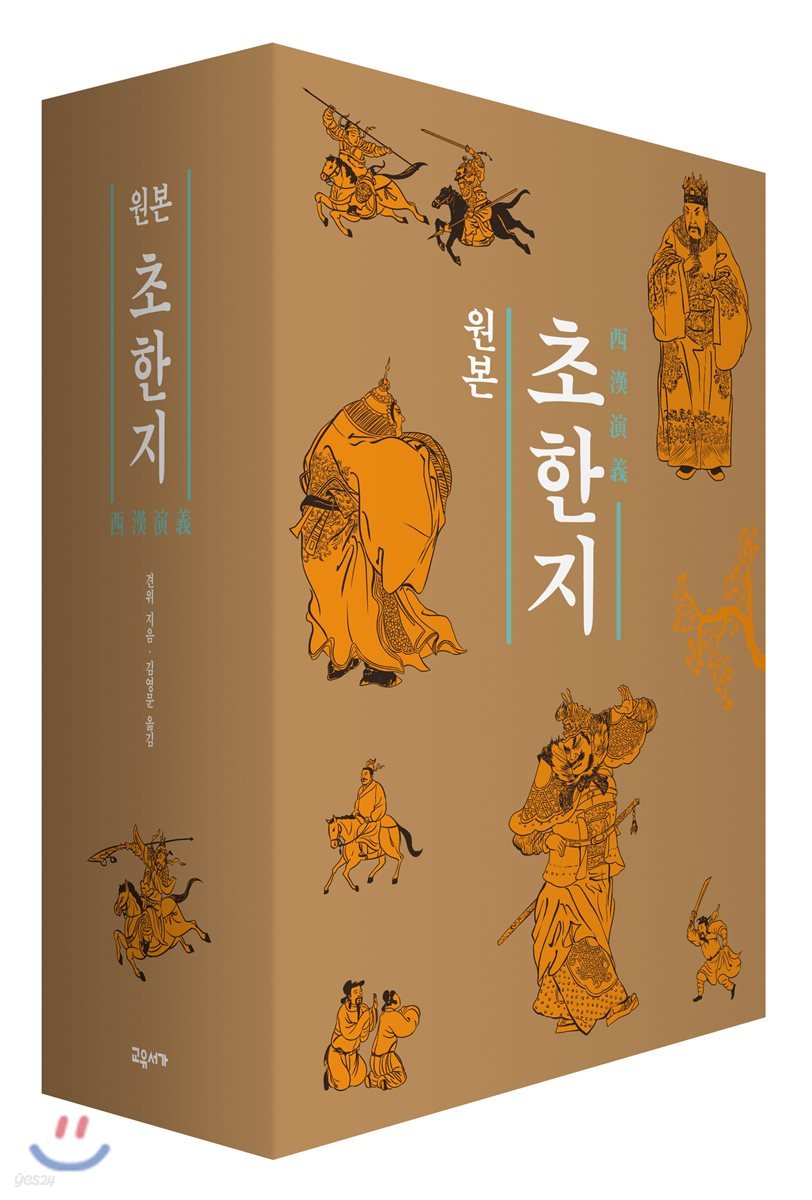
Original Chohanji set
 |
Description
Book Introduction
The original text of 『Chosun Chronicles』 and 『Unification of the World』
The first complete translation of the Romance of the Western Han Dynasty in 350 years
『Records of Chu and Han』, famous for its battles between Chu and Han, which are models for the chessboard, the confrontation between Xiang Yu and Liu Bang, and idioms such as ambush on ten sides and attack on four sides.
This book is a translation based on 『West Han Yanyi』 by Jian Wei, the original text of the Chu-Han Chronicles.
Although there have been many abridged and rewritten versions of the Chohanji in Korea, there has never been a complete translation of the original version of the Chohanji.
Among ancient Chinese historical novels, 『Romance of the Three Kingdoms』 is recognized as the original version by Luo Guanzhong, and 『Romance of the Three Kingdoms』 is recognized as the original version by Cai Yuanfang, and complete translations are being published continuously.
It is also true that diverse creative works based on this are constantly being published.
On the other hand, 『Chosun-Hanji』 deals with the Chu-Han conflict, a dramatic moment in Chinese history, and has been consistently published in various versions by scholars and writers in Korea. However, other than Sima Qian's 『Historical Records』, there have been few cases where the basis for which edition was used has been revealed.
This book is a translation based on 『Shin Gak Geomso Gak Bi Pyeong Dongseo Han Yeon Ui』, which can be considered the definitive edition of ‘Chosun Chronicles’, and 『Seohan Yeon Ui』.
This book includes translations of all the inserted poems that were previously omitted when introduced in Korea.
It plays a role in organizing the story and maximizing the emotions as a literary work.
Additionally, historical commentary has been added to the footnotes to aid understanding, and the translator has included footnotes to indicate whether the descriptions in the text are historical facts.
Additionally, illustrations from the original text are recreated and inserted into each episode to provide a variety of things to see.
The first complete translation of the Romance of the Western Han Dynasty in 350 years
『Records of Chu and Han』, famous for its battles between Chu and Han, which are models for the chessboard, the confrontation between Xiang Yu and Liu Bang, and idioms such as ambush on ten sides and attack on four sides.
This book is a translation based on 『West Han Yanyi』 by Jian Wei, the original text of the Chu-Han Chronicles.
Although there have been many abridged and rewritten versions of the Chohanji in Korea, there has never been a complete translation of the original version of the Chohanji.
Among ancient Chinese historical novels, 『Romance of the Three Kingdoms』 is recognized as the original version by Luo Guanzhong, and 『Romance of the Three Kingdoms』 is recognized as the original version by Cai Yuanfang, and complete translations are being published continuously.
It is also true that diverse creative works based on this are constantly being published.
On the other hand, 『Chosun-Hanji』 deals with the Chu-Han conflict, a dramatic moment in Chinese history, and has been consistently published in various versions by scholars and writers in Korea. However, other than Sima Qian's 『Historical Records』, there have been few cases where the basis for which edition was used has been revealed.
This book is a translation based on 『Shin Gak Geomso Gak Bi Pyeong Dongseo Han Yeon Ui』, which can be considered the definitive edition of ‘Chosun Chronicles’, and 『Seohan Yeon Ui』.
This book includes translations of all the inserted poems that were previously omitted when introduced in Korea.
It plays a role in organizing the story and maximizing the emotions as a literary work.
Additionally, historical commentary has been added to the footnotes to aid understanding, and the translator has included footnotes to indicate whether the descriptions in the text are historical facts.
Additionally, illustrations from the original text are recreated and inserted into each episode to provide a variety of things to see.
- You can preview some of the book's contents.
Preview
index
Volume 1
Translator's Preface | Introduction | Preface | Chronology
The first Jin prince to be taken hostage
The Second Choice of Yeobulwi
The Third Promise of Madame Hwayang
4th Beauty Leads the Way
Episode 5: The Escape of the Sleeping Dragon
The 6th suicide of Yeo Bu-wi
The 7th Book Burning and the Burying of Confucian Scholars
8th Shoe in the Mud
The 9th Suicide of the Ill-fated Prince
10th Cut the White Snake
Meet Woohee and Ochuma in Episode 11
The 12th Fan Zeng is born
13th Wait Between the Legs
Episode 14: Breaking the Pot and Sinking the Ship
Chasing the 15th Jangham
The 16th Jogo's Noose
Accepting the 17th Enemy
The 18th Mad Scholar
The 19th Last of the Traitors
Episode 20: Do you want to be a rich old man?
The 21st Panic of Defying the Mandate of Heaven
The 22nd Hangbaek Secret Leak
The 23rd Hongmun Sword Dance
The 24th Okdu Shattered
The 25th Xiang Yu ascends to the throne as the Overlord of Western Chu.
The 26th Qin Shi Huang Mausoleum Robbery
Liu Bang, the 27th King of Han
The 28th Burning Cannon
The 29th Hangbaekui Mankwonseoru
The 30th Crowned Monkey
Chapter 31: Zhang Liang Meets Han Xin
Episode 32: The Subject Kills the King
The 33rd Hanshin to China
Translator's Preface | Introduction | Preface | Chronology
The first Jin prince to be taken hostage
The Second Choice of Yeobulwi
The Third Promise of Madame Hwayang
4th Beauty Leads the Way
Episode 5: The Escape of the Sleeping Dragon
The 6th suicide of Yeo Bu-wi
The 7th Book Burning and the Burying of Confucian Scholars
8th Shoe in the Mud
The 9th Suicide of the Ill-fated Prince
10th Cut the White Snake
Meet Woohee and Ochuma in Episode 11
The 12th Fan Zeng is born
13th Wait Between the Legs
Episode 14: Breaking the Pot and Sinking the Ship
Chasing the 15th Jangham
The 16th Jogo's Noose
Accepting the 17th Enemy
The 18th Mad Scholar
The 19th Last of the Traitors
Episode 20: Do you want to be a rich old man?
The 21st Panic of Defying the Mandate of Heaven
The 22nd Hangbaek Secret Leak
The 23rd Hongmun Sword Dance
The 24th Okdu Shattered
The 25th Xiang Yu ascends to the throne as the Overlord of Western Chu.
The 26th Qin Shi Huang Mausoleum Robbery
Liu Bang, the 27th King of Han
The 28th Burning Cannon
The 29th Hangbaekui Mankwonseoru
The 30th Crowned Monkey
Chapter 31: Zhang Liang Meets Han Xin
Episode 32: The Subject Kills the King
The 33rd Hanshin to China
Volume 2
Episode 34: Killing the Woodcutter
The 35th Wisdom that Penetrates the Past and Present
Hanshin meets Soha for the 36th time
37th Big Power Small Place
38th Suspected Hanshin
39. Carry out the conquest by upholding the Mandate of Heaven.
Don't Be Overly Excited About Your 40th Achievement
The 41st Abstract Military Discipline
The 42nd Rough Journey Repair
Episode 43: Secretly Going Out to the Muddy Road
The 44th King of Han leaves Pojung
Breaking the 45th Daesan Hall
Attack the 46th closed gate
The 47th Dongye and Samahyeon Capture
The 48th Sixth Family That Never Returns
The 49th Western Wei Dynasty's Wei Biao surrenders
The 50th King of Hanam, Shin Yang, surrenders
The Joy of the 51st Reunion
The 52nd King Sima Ang of Yin surrenders
The 53rd Jinpyeong's Return
Dress up for the 54th Agenda
The 55th Han King is defeated at Susu
Yeongpo, who killed the 56th Chu envoy
The 57th Hanshin Recall
Defeating the Overlord in the 58th Chariot Battle
The 59th Betrayal of the Wei Pyo
The 60th suicide of the mother of the royal tomb
Occupying the 61st Daeju
62nd Camp with Backs to the River
The 63rd Death of Fan Zeng
The 64th King of Han dies on behalf of the King of Han.
65th I Will Not Serve Two Kings
Episode 66: The People Treat Rice as Heaven, Volume 2
Episode 34: Killing the Woodcutter
The 35th Wisdom that Penetrates the Past and Present
Hanshin meets Soha for the 36th time
37th Big Power Small Place
38th Suspected Hanshin
39. Carry out the conquest by upholding the Mandate of Heaven.
Don't Be Overly Excited About Your 40th Achievement
The 41st Abstract Military Discipline
The 42nd Rough Journey Repair
Episode 43: Secretly Going Out to the Muddy Road
The 44th King of Han leaves Pojung
Breaking the 45th Daesan Hall
Attack the 46th closed gate
The 47th Dongye and Samahyeon Capture
The 48th Sixth Family That Never Returns
The 49th Western Wei Dynasty's Wei Biao surrenders
The 50th King of Hanam, Shin Yang, surrenders
The Joy of the 51st Reunion
The 52nd King Sima Ang of Yin surrenders
The 53rd Jinpyeong's Return
Dress up for the 54th Agenda
The 55th Han King is defeated at Susu
Yeongpo, who killed the 56th Chu envoy
The 57th Hanshin Recall
Defeating the Overlord in the 58th Chariot Battle
The 59th Betrayal of the Wei Pyo
The 60th suicide of the mother of the royal tomb
Occupying the 61st Daeju
62nd Camp with Backs to the River
The 63rd Death of Fan Zeng
The 64th King of Han dies on behalf of the King of Han.
65th I Will Not Serve Two Kings
Episode 66: The People Treat Rice as Heaven
Episode 34: Killing the Woodcutter
The 35th Wisdom that Penetrates the Past and Present
Hanshin meets Soha for the 36th time
37th Big Power Small Place
38th Suspected Hanshin
39. Carry out the conquest by upholding the Mandate of Heaven.
Don't Be Overly Excited About Your 40th Achievement
The 41st Abstract Military Discipline
The 42nd Rough Journey Repair
Episode 43: Secretly Going Out to the Muddy Road
The 44th King of Han leaves Pojung
Breaking the 45th Daesan Hall
Attack the 46th closed gate
The 47th Dongye and Samahyeon Capture
The 48th Sixth Family That Never Returns
The 49th Western Wei Dynasty's Wei Biao surrenders
The 50th King of Hanam, Shin Yang, surrenders
The Joy of the 51st Reunion
The 52nd King Sima Ang of Yin surrenders
The 53rd Jinpyeong's Return
Dress up for the 54th Agenda
The 55th Han King is defeated at Susu
Yeongpo, who killed the 56th Chu envoy
The 57th Hanshin Recall
Defeating the Overlord in the 58th Chariot Battle
The 59th Betrayal of the Wei Pyo
The 60th suicide of the mother of the royal tomb
Occupying the 61st Daeju
62nd Camp with Backs to the River
The 63rd Death of Fan Zeng
The 64th King of Han dies on behalf of the King of Han.
65th I Will Not Serve Two Kings
Episode 66: The People Treat Rice as Heaven, Volume 2
Episode 34: Killing the Woodcutter
The 35th Wisdom that Penetrates the Past and Present
Hanshin meets Soha for the 36th time
37th Big Power Small Place
38th Suspected Hanshin
39. Carry out the conquest by upholding the Mandate of Heaven.
Don't Be Overly Excited About Your 40th Achievement
The 41st Abstract Military Discipline
The 42nd Rough Journey Repair
Episode 43: Secretly Going Out to the Muddy Road
The 44th King of Han leaves Pojung
Breaking the 45th Daesan Hall
Attack the 46th closed gate
The 47th Dongye and Samahyeon Capture
The 48th Sixth Family That Never Returns
The 49th Western Wei Dynasty's Wei Biao surrenders
The 50th King of Hanam, Shin Yang, surrenders
The Joy of the 51st Reunion
The 52nd King Sima Ang of Yin surrenders
The 53rd Jinpyeong's Return
Dress up for the 54th Agenda
The 55th Han King is defeated at Susu
Yeongpo, who killed the 56th Chu envoy
The 57th Hanshin Recall
Defeating the Overlord in the 58th Chariot Battle
The 59th Betrayal of the Wei Pyo
The 60th suicide of the mother of the royal tomb
Occupying the 61st Daeju
62nd Camp with Backs to the River
The 63rd Death of Fan Zeng
The 64th King of Han dies on behalf of the King of Han.
65th I Will Not Serve Two Kings
Episode 66: The People Treat Rice as Heaven
Volume 3
The 67th Children's Campaign
The 68th Station's performance
Episode 69: Boiling in an Oil Pot
The 70th Chu general Yongju dies in battle.
The 71st Iron Triangle
The 72nd King of Han was shot by an arrow
The 73rd Gwangmusan Festival
74th Share a Bowl of Rice
The 75th Violation of the King's Promise
76th Han Xin, Yeongpo, and Peng Yue remain motionless
The 77th Land Division and Summoning of Three Generals
The 78th Heavenly Battlefield
The 79th Breaking of the Duggi
The 80th Gurisan Ten-sided Ambush
The 81st Invincible Seocho King
Songs of the State of Chu Heard from All Directions, Episode 82
The 83rd Song of Farewell
The 84th Hero Commits Suicide
The 85th Merit Award Ceremony
The 86th Jeon Hoeng-gwa and the Martyrdom of the Five Hundred Doctors
Episode 87: Find the Hidden Tiger
The 88th Captured Hanshin
The 89th Beauty's Road: Breaking the Siege of the Xiongnu
Chapter 90: Zhang Liang's Obsession with the Art of Eternal Life
The 91st Jinhee's Rebellion
The 92nd Han Gojo's One Step Back
The 93rd Hanshin's Head is Cut Off
The 94th Goecheol Funerals Hanshin
The 95th Peng Yue's head is cut off
The 96th Yeongpo's head is cut off
Episode 97: Four Old Men Helping the Prince
The 98th Zhang Liang Retires
The 99th Han Gojo Passes Away
The 100th Hyeje ascends the throne
The 101st Hyeje's Era
[Guidebook]
Original cover of the original edition of "The Chronicles of the Three Kingdoms" | Figures of Key Figures | Map | Chronology | Idioms | Biographical Dictionary, Volume 3
The 67th Children's Campaign
The 68th Station's performance
Episode 69: Boiling in an Oil Pot
The 70th Chu general Yongju dies in battle.
The 71st Iron Triangle
The 72nd King of Han was shot by an arrow
The 73rd Gwangmusan Festival
74th Share a Bowl of Rice
The 75th Violation of the King's Promise
76th Han Xin, Yeongpo, and Peng Yue remain motionless
The 77th Land Division and Summoning of Three Generals
The 78th Heavenly Battlefield
The 79th Breaking of the Duggi
The 80th Gurisan Ten-sided Ambush
The 81st Invincible Seocho King
Songs of the State of Chu Heard from All Directions, Episode 82
The 83rd Song of Farewell
The 84th Hero Commits Suicide
The 85th Merit Award Ceremony
The 86th Jeon Hoeng-gwa and the Martyrdom of the Five Hundred Doctors
Episode 87: Find the Hidden Tiger
The 88th Captured Hanshin
The 89th Beauty's Road: Breaking the Siege of the Xiongnu
Chapter 90: Zhang Liang's Obsession with the Art of Eternal Life
The 91st Jinhee's Rebellion
The 92nd Han Gojo's One Step Back
The 93rd Hanshin's Head is Cut Off
The 94th Goecheol Funerals Hanshin
The 95th Peng Yue's head is cut off
The 96th Yeongpo's head is cut off
Episode 97: Four Old Men Helping the Prince
The 98th Zhang Liang Retires
The 99th Han Gojo Passes Away
The 100th Hyeje ascends the throne
The 101st Hyeje's Era
[Guidebook]
Original cover of the original edition of the Chronicles of the Three Kingdoms | Figures | Map | Chronology | Idioms | Biographical Dictionary
The 67th Children's Campaign
The 68th Station's performance
Episode 69: Boiling in an Oil Pot
The 70th Chu general Yongju dies in battle.
The 71st Iron Triangle
The 72nd King of Han was shot by an arrow
The 73rd Gwangmusan Festival
74th Share a Bowl of Rice
The 75th Violation of the King's Promise
76th Han Xin, Yeongpo, and Peng Yue remain motionless
The 77th Land Division and Summoning of Three Generals
The 78th Heavenly Battlefield
The 79th Breaking of the Duggi
The 80th Gurisan Ten-sided Ambush
The 81st Invincible Seocho King
Songs of the State of Chu Heard from All Directions, Episode 82
The 83rd Song of Farewell
The 84th Hero Commits Suicide
The 85th Merit Award Ceremony
The 86th Jeon Hoeng-gwa and the Martyrdom of the Five Hundred Doctors
Episode 87: Find the Hidden Tiger
The 88th Captured Hanshin
The 89th Beauty's Road: Breaking the Siege of the Xiongnu
Chapter 90: Zhang Liang's Obsession with the Art of Eternal Life
The 91st Jinhee's Rebellion
The 92nd Han Gojo's One Step Back
The 93rd Hanshin's Head is Cut Off
The 94th Goecheol Funerals Hanshin
The 95th Peng Yue's head is cut off
The 96th Yeongpo's head is cut off
Episode 97: Four Old Men Helping the Prince
The 98th Zhang Liang Retires
The 99th Han Gojo Passes Away
The 100th Hyeje ascends the throne
The 101st Hyeje's Era
[Guidebook]
Original cover of the original edition of "The Chronicles of the Three Kingdoms" | Figures of Key Figures | Map | Chronology | Idioms | Biographical Dictionary, Volume 3
The 67th Children's Campaign
The 68th Station's performance
Episode 69: Boiling in an Oil Pot
The 70th Chu general Yongju dies in battle.
The 71st Iron Triangle
The 72nd King of Han was shot by an arrow
The 73rd Gwangmusan Festival
74th Share a Bowl of Rice
The 75th Violation of the King's Promise
76th Han Xin, Yeongpo, and Peng Yue remain motionless
The 77th Land Division and Summoning of Three Generals
The 78th Heavenly Battlefield
The 79th Breaking of the Duggi
The 80th Gurisan Ten-sided Ambush
The 81st Invincible Seocho King
Songs of the State of Chu Heard from All Directions, Episode 82
The 83rd Song of Farewell
The 84th Hero Commits Suicide
The 85th Merit Award Ceremony
The 86th Jeon Hoeng-gwa and the Martyrdom of the Five Hundred Doctors
Episode 87: Find the Hidden Tiger
The 88th Captured Hanshin
The 89th Beauty's Road: Breaking the Siege of the Xiongnu
Chapter 90: Zhang Liang's Obsession with the Art of Eternal Life
The 91st Jinhee's Rebellion
The 92nd Han Gojo's One Step Back
The 93rd Hanshin's Head is Cut Off
The 94th Goecheol Funerals Hanshin
The 95th Peng Yue's head is cut off
The 96th Yeongpo's head is cut off
Episode 97: Four Old Men Helping the Prince
The 98th Zhang Liang Retires
The 99th Han Gojo Passes Away
The 100th Hyeje ascends the throne
The 101st Hyeje's Era
[Guidebook]
Original cover of the original edition of the Chronicles of the Three Kingdoms | Figures | Map | Chronology | Idioms | Biographical Dictionary
Into the book
Volume 1
It is regrettable that even though 『The Romance of the Three Kingdoms』 has become deeply ingrained in our literature and culture, there is currently not a single complete translation.
This includes a sense of self-loathing for not being able to treat the classic 『Romance of the Western Han Dynasty』 as a classic, but more fundamentally, it also includes a sense of desolation for blindly abandoning a soil that forms the foundation of our literature and culture.
(…) The ‘story of the Chu-Han conflict’ in ‘Romance of the Three Kingdoms’ is not simply an old story, but is a part of our lives that is still alive today, along with ‘Romance of the Three Kingdoms’ and ‘Romance of the Three Kingdoms.’
In order to more truly enjoy the parts of our lives embodied in flesh and blood, we need to examine and reflect on the current state of our lives and its source.
I hope that this complete translation of 『The Romance of the Three Kingdoms』 will treat this classic as a classic, breathe life into a desolate land that has been neglected for so long, and serve as an opportunity to examine and reflect on the very foundations of our lives.
---From "Release"
If, by any chance, the wealthy take my book and read it, they first enjoy it and find it fascinating, then follow the flow of history to find a cause, and finally broaden their understanding of things to their own ends, then they will find it a delightful reading material, and when compared to the popular novels of the time, I cannot say that this book is of little help.
If every single word had to be consistent with history, there would have been no need to write this book.
When the book was completed, scholars competed to copy it and pass it on to each other.
When it became inconvenient to read, my senior had a craftsman print the book and share it with the wealthy people of the area.
I was asked to write a short preface to be included at the beginning of this book, so I finally took up the pen and wrote this to let you know my original intentions when editing this book.
---From "'Seo"
“I am doing this to share wealth and honor with you, so you must not betray my heart.
Didn't the ancients say, 'If you want to accomplish something great, don't worry about small actions?' Even if you bow down for a moment, it is in fact a plan for eternity, so how could you not happily practice it? --- From "Putting Beauty First"
“There were many people in the Jin Dynasty who were good at playing Go, so I also learned the principles of Go from a young age.
Generally, you need to think a lot to win, and you can't win if you think little. How much more so if you don't think at all? Furthermore, you must stabilize the formation, properly control the life and death of the stones, and let your mind follow your hand, focusing your mind on capturing the first mover.
This is the way to play baduk, the wonderful method that the ancients realized in their hearts.” --- From “Escaped Sleeping Dragons”
“God is not afraid of death.
Whoever wants to live does not fear death, and whoever wants to survive does not fear destruction.
He who fears death cannot obtain life, and he who fears destruction cannot survive.
The logic of life and death was something that even the ancient sages were eager to hear.
If the Great Queen wants to hear that logic, I will do my best to speak to her, but if she does not want to hear it, then throw her into that pot.
“I am not afraid of anything, I just want to die in front of the Great Queen.” --- From “Yeobulwi commits suicide”
“A tiger that attacks a cow does not catch a louse or a flea.
Because the tiger's mind is on big things, not small things.
If Zhang Ham wins, the Jin army will become exhausted, and if we attack while they are exhausted, we will definitely win.
Even if Jangham doesn't win, if I lead my army and strike the west while beating the drum, I will definitely defeat them.
This is how we can win without making our troops suffer.
“I am inferior to Gong in fighting the enemy while wearing armor and holding a weapon, but Gong is inferior to me in sitting down and planning.” --- From “Breaking the Pot and Sinking the Ship”
“Unexpectedly, I got to see the sun in the sky again today!” --- From “Do you want to be a rich old man?”
“Those who cause harm in the light can be prevented, but those who promote harm in the dark are difficult to predict.
“Your Majesty, please think more deeply.” --- From “Shatter the Jade Head”
Someone right now,
The bells are shaking from beyond the wall.
I can only hear the sound,
I can't see the figure.
Even if you gain wealth and honor, if you don't go back to your hometown,
They say you're walking down the street at night wearing silk clothes.
It is regrettable that even though 『The Romance of the Three Kingdoms』 has become deeply ingrained in our literature and culture, there is currently not a single complete translation.
This includes a sense of self-loathing for not being able to treat the classic 『Romance of the Western Han Dynasty』 as a classic, but more fundamentally, it also includes a sense of desolation for blindly abandoning a soil that forms the foundation of our literature and culture.
(…) The ‘story of the Chu-Han conflict’ in ‘Romance of the Three Kingdoms’ is not simply an old story, but is a part of our lives that is still alive today, along with ‘Romance of the Three Kingdoms’ and ‘Romance of the Three Kingdoms.’
In order to more truly enjoy the parts of our lives embodied in flesh and blood, we need to examine and reflect on the current state of our lives and its source.
I hope that this complete translation of 『The Romance of the Three Kingdoms』 will treat this classic as a classic, breathe life into a desolate land that has been neglected for so long, and serve as an opportunity to examine and reflect on the very foundations of our lives.
---From "Release"
If, by any chance, the wealthy take my book and read it, they first enjoy it and find it fascinating, then follow the flow of history to find a cause, and finally broaden their understanding of things to their own ends, then they will find it a delightful reading material, and when compared to the popular novels of the time, I cannot say that this book is of little help.
If every single word had to be consistent with history, there would have been no need to write this book.
When the book was completed, scholars competed to copy it and pass it on to each other.
When it became inconvenient to read, my senior had a craftsman print the book and share it with the wealthy people of the area.
I was asked to write a short preface to be included at the beginning of this book, so I finally took up the pen and wrote this to let you know my original intentions when editing this book.
---From "'Seo"
“I am doing this to share wealth and honor with you, so you must not betray my heart.
Didn't the ancients say, 'If you want to accomplish something great, don't worry about small actions?' Even if you bow down for a moment, it is in fact a plan for eternity, so how could you not happily practice it? --- From "Putting Beauty First"
“There were many people in the Jin Dynasty who were good at playing Go, so I also learned the principles of Go from a young age.
Generally, you need to think a lot to win, and you can't win if you think little. How much more so if you don't think at all? Furthermore, you must stabilize the formation, properly control the life and death of the stones, and let your mind follow your hand, focusing your mind on capturing the first mover.
This is the way to play baduk, the wonderful method that the ancients realized in their hearts.” --- From “Escaped Sleeping Dragons”
“God is not afraid of death.
Whoever wants to live does not fear death, and whoever wants to survive does not fear destruction.
He who fears death cannot obtain life, and he who fears destruction cannot survive.
The logic of life and death was something that even the ancient sages were eager to hear.
If the Great Queen wants to hear that logic, I will do my best to speak to her, but if she does not want to hear it, then throw her into that pot.
“I am not afraid of anything, I just want to die in front of the Great Queen.” --- From “Yeobulwi commits suicide”
“A tiger that attacks a cow does not catch a louse or a flea.
Because the tiger's mind is on big things, not small things.
If Zhang Ham wins, the Jin army will become exhausted, and if we attack while they are exhausted, we will definitely win.
Even if Jangham doesn't win, if I lead my army and strike the west while beating the drum, I will definitely defeat them.
This is how we can win without making our troops suffer.
“I am inferior to Gong in fighting the enemy while wearing armor and holding a weapon, but Gong is inferior to me in sitting down and planning.” --- From “Breaking the Pot and Sinking the Ship”
“Unexpectedly, I got to see the sun in the sky again today!” --- From “Do you want to be a rich old man?”
“Those who cause harm in the light can be prevented, but those who promote harm in the dark are difficult to predict.
“Your Majesty, please think more deeply.” --- From “Shatter the Jade Head”
Someone right now,
The bells are shaking from beyond the wall.
I can only hear the sound,
I can't see the figure.
Even if you gain wealth and honor, if you don't go back to your hometown,
They say you're walking down the street at night wearing silk clothes.
---From "The Monkey Wearing a Crown"
Volume 2
“When enforcing the royal law, relatives are not given any special treatment.
This is the lesson taught by the ancients.
“Your Majesty, you should be working for the nation, why do you only think about the relations between relatives?” --- From “Military Discipline Like an Abstraction”
“There is a time in the world when things will definitely happen that way, and there is a trend that will definitely happen that way.
The time for that has not yet been set, and the trend has not yet been determined.
The tyrant only believes in his own brute strength and does not yet know the Mandate of Heaven.
Although I am seeking to conquer the world, I have not yet found the time.
“He did not establish his capital in Guanzhong, but in Pengcheng, and became the heir of the feudal lords, but he lost the hearts of the people, and has not yet achieved the general trend.” --- From “Wei Biao of Western Wei Surrenders”
“First, we must discuss the affairs of men, and then the ways of heaven.
“If you rashly believe the foolish words of a fortune teller and suddenly raise an army, you will end up ruined and disgraced.” --- From “The Betrayal of Wei Biao”
“This is also in the art of war.
The generals just didn't look closely.
Didn't they say in the Art of War, "You live only after you've fallen into a land of death, and you survive only after you've entered a land of destruction?" Besides, I've never been able to please many generals.
So, this situation is like spurring the people of the town to fight, and if they had set up camp in the land of the living, they would have all fled as soon as they met the enemy.
How can one employ such a strategy?” ---From “Setting Up a Camp with Your Back to the River”
After Hanshin led his army into Joseong,
He handled his military duties arrogantly and lazily.
Suddenly, the King of Han stripped the general of his title,
He defeated the hero and taught him caution.
Volume 2
“When enforcing the royal law, relatives are not given any special treatment.
This is the lesson taught by the ancients.
“Your Majesty, you should be working for the nation, why do you only think about the relations between relatives?” --- From “Abstract Military Discipline”
“There is a time in the world when things will definitely happen that way, and there is a trend that will definitely happen that way.
The time for that has not yet been set, and the trend has not yet been determined.
The tyrant only believes in his own brute strength and does not yet know the Mandate of Heaven.
Although I am seeking to conquer the world, I have not yet found the time.
“He did not establish his capital in Guanzhong, but in Pengcheng, and became the heir of the feudal lords, but he lost the hearts of the people, and has not yet achieved the general trend.” --- From “Wei Biao of Western Wei Surrenders”
“First, we must discuss the affairs of men, and then the ways of heaven.
“If you rashly believe the foolish words of a fortune teller and suddenly raise an army, you will end up ruined and disgraced.” --- From “The Betrayal of Wei Biao”
“This is also in the art of war.
The generals just didn't look closely.
Didn't they say in the Art of War, "You live only after you've fallen into a land of death, and you survive only after you've entered a land of destruction?" Besides, I've never been able to please many generals.
So, this situation is like spurring the people of the town to fight, and if they had set up camp in the land of the living, they would have all fled as soon as they met the enemy.
How can one employ such a strategy? --- From "Setting Up a Camp with Your Back to the River"
After Hanshin led his army into Joseong,
He handled his military duties arrogantly and lazily.
Suddenly, the King of Han stripped the general of his title,
He defeated the hero and taught him caution.
“When enforcing the royal law, relatives are not given any special treatment.
This is the lesson taught by the ancients.
“Your Majesty, you should be working for the nation, why do you only think about the relations between relatives?” --- From “Military Discipline Like an Abstraction”
“There is a time in the world when things will definitely happen that way, and there is a trend that will definitely happen that way.
The time for that has not yet been set, and the trend has not yet been determined.
The tyrant only believes in his own brute strength and does not yet know the Mandate of Heaven.
Although I am seeking to conquer the world, I have not yet found the time.
“He did not establish his capital in Guanzhong, but in Pengcheng, and became the heir of the feudal lords, but he lost the hearts of the people, and has not yet achieved the general trend.” --- From “Wei Biao of Western Wei Surrenders”
“First, we must discuss the affairs of men, and then the ways of heaven.
“If you rashly believe the foolish words of a fortune teller and suddenly raise an army, you will end up ruined and disgraced.” --- From “The Betrayal of Wei Biao”
“This is also in the art of war.
The generals just didn't look closely.
Didn't they say in the Art of War, "You live only after you've fallen into a land of death, and you survive only after you've entered a land of destruction?" Besides, I've never been able to please many generals.
So, this situation is like spurring the people of the town to fight, and if they had set up camp in the land of the living, they would have all fled as soon as they met the enemy.
How can one employ such a strategy?” ---From “Setting Up a Camp with Your Back to the River”
After Hanshin led his army into Joseong,
He handled his military duties arrogantly and lazily.
Suddenly, the King of Han stripped the general of his title,
He defeated the hero and taught him caution.
Volume 2
“When enforcing the royal law, relatives are not given any special treatment.
This is the lesson taught by the ancients.
“Your Majesty, you should be working for the nation, why do you only think about the relations between relatives?” --- From “Abstract Military Discipline”
“There is a time in the world when things will definitely happen that way, and there is a trend that will definitely happen that way.
The time for that has not yet been set, and the trend has not yet been determined.
The tyrant only believes in his own brute strength and does not yet know the Mandate of Heaven.
Although I am seeking to conquer the world, I have not yet found the time.
“He did not establish his capital in Guanzhong, but in Pengcheng, and became the heir of the feudal lords, but he lost the hearts of the people, and has not yet achieved the general trend.” --- From “Wei Biao of Western Wei Surrenders”
“First, we must discuss the affairs of men, and then the ways of heaven.
“If you rashly believe the foolish words of a fortune teller and suddenly raise an army, you will end up ruined and disgraced.” --- From “The Betrayal of Wei Biao”
“This is also in the art of war.
The generals just didn't look closely.
Didn't they say in the Art of War, "You live only after you've fallen into a land of death, and you survive only after you've entered a land of destruction?" Besides, I've never been able to please many generals.
So, this situation is like spurring the people of the town to fight, and if they had set up camp in the land of the living, they would have all fled as soon as they met the enemy.
How can one employ such a strategy? --- From "Setting Up a Camp with Your Back to the River"
After Hanshin led his army into Joseong,
He handled his military duties arrogantly and lazily.
Suddenly, the King of Han stripped the general of his title,
He defeated the hero and taught him caution.
---From "The people regard rice as heaven"
Volume 3
“Listening is essentially about understanding the signs of things, and planning is about laying the foundation for things.
Few people can enjoy long-term stability after failing to listen well and planning poorly.
For this reason, wisdom is the ability to make decisions, and doubt is a clue that hinders progress.
If you focus on small plans, you will miss out on the great fortune of the world.
If you truly know it with wisdom but fail to make a decision and act boldly, everything will end in disaster.
All achievements are difficult to achieve and easy to fail.
Time is hard to come by and easy to lose.
“Good times never come again!” ---From “The Three-Division Plan of the Iron Man”
I will deceive Sun Tzu by deciding on a strategy and operation plan.
The work of the Han Dynasty's Yu clan is better than that of Guan Zhong and Ogi.
By destroying the state of Chu with a strange ambush attack,
I will accomplish great things in the world of mountains and rivers.
---From "Gurisan Ten-sided Ambush"
“Victory in war depends not on courage but on wisdom.
So I will not compete with you for wisdom or strength.
"Wherever you go, aren't you only relying on your bloody courage and ultimately rushing to ruin? How can you call that strong?" --- From "The Invincible Seocho King"
“If Your Majesty had not had this man, how would we be here today?” --- From “Zhang Liang Retires”
“Your Majesty’s holiness and wisdom are not as great as that of Emperor Gao, and your divine talents are not as great as that of Xiaoha.
The laws enacted by the Emperor must be observed by His Majesty, and the good governance practiced by the Emperor must be upheld by the gods.
When the ruler and his subjects follow the old laws with one mind and do not err, the country is peaceful, the four directions are safe, the people are content with their livelihoods, and the world is at peace.
His Majesty sits on high, looking pure and harmonious, while the gods each comfortably guard their own positions and perform their duties.
Wouldn't this also be a good thing? Why bother changing the future and creating too much work?" Volume 3
“Listening is essentially about understanding the signs of things, and planning is about laying the foundation for things.
Few people can enjoy long-term stability after failing to listen well and planning poorly.
For this reason, wisdom is the ability to make decisions, and doubt is a clue that hinders progress.
If you focus on small plans, you will miss out on the great fortune of the world.
If you truly know it with wisdom but fail to make a decision and act boldly, everything will end in disaster.
All achievements are difficult to achieve and easy to fail.
Time is hard to come by and easy to lose.
“Good times never come again!” ---From “The Three-Division Plan of the Iron Man”
I will deceive Sun Tzu by deciding on a strategy and operation plan.
The work of the Han Dynasty's Yu clan is better than that of Guan Zhong and Ogi.
By destroying the state of Chu with a strange ambush attack,
I will accomplish great things in the world of mountains and rivers.
---From "Gurisan Ten-sided Ambush"
“Victory in war depends not on courage but on wisdom.
So I will not compete with you for wisdom or strength.
"Wherever you go, aren't you only relying on your bloody courage and ultimately rushing to ruin? How can you call that strong?" --- From "The Invincible Seocho King"
“If Your Majesty had not had this man, how would we be here today?” --- From “Zhang Liang Retires”
“Your Majesty’s holiness and wisdom are not as great as that of Emperor Gao, and your divine talents are not as great as that of Xiaoha.
The laws enacted by the Emperor must be observed by His Majesty, and the good governance practiced by the Emperor must be upheld by the gods.
When the ruler and his subjects follow the old laws with one mind and do not err, the country is peaceful, the four directions are safe, the people are content with their livelihoods, and the world is at peace.
His Majesty sits on high, looking pure and harmonious, while the gods each comfortably guard their own positions and perform their duties.
Wouldn't this be a good thing? Why bother changing the future and creating so much work?"
“Listening is essentially about understanding the signs of things, and planning is about laying the foundation for things.
Few people can enjoy long-term stability after failing to listen well and planning poorly.
For this reason, wisdom is the ability to make decisions, and doubt is a clue that hinders progress.
If you focus on small plans, you will miss out on the great fortune of the world.
If you truly know it with wisdom but fail to make a decision and act boldly, everything will end in disaster.
All achievements are difficult to achieve and easy to fail.
Time is hard to come by and easy to lose.
“Good times never come again!” ---From “The Three-Division Plan of the Iron Man”
I will deceive Sun Tzu by deciding on a strategy and operation plan.
The work of the Han Dynasty's Yu clan is better than that of Guan Zhong and Ogi.
By destroying the state of Chu with a strange ambush attack,
I will accomplish great things in the world of mountains and rivers.
---From "Gurisan Ten-sided Ambush"
“Victory in war depends not on courage but on wisdom.
So I will not compete with you for wisdom or strength.
"Wherever you go, aren't you only relying on your bloody courage and ultimately rushing to ruin? How can you call that strong?" --- From "The Invincible Seocho King"
“If Your Majesty had not had this man, how would we be here today?” --- From “Zhang Liang Retires”
“Your Majesty’s holiness and wisdom are not as great as that of Emperor Gao, and your divine talents are not as great as that of Xiaoha.
The laws enacted by the Emperor must be observed by His Majesty, and the good governance practiced by the Emperor must be upheld by the gods.
When the ruler and his subjects follow the old laws with one mind and do not err, the country is peaceful, the four directions are safe, the people are content with their livelihoods, and the world is at peace.
His Majesty sits on high, looking pure and harmonious, while the gods each comfortably guard their own positions and perform their duties.
Wouldn't this also be a good thing? Why bother changing the future and creating too much work?" Volume 3
“Listening is essentially about understanding the signs of things, and planning is about laying the foundation for things.
Few people can enjoy long-term stability after failing to listen well and planning poorly.
For this reason, wisdom is the ability to make decisions, and doubt is a clue that hinders progress.
If you focus on small plans, you will miss out on the great fortune of the world.
If you truly know it with wisdom but fail to make a decision and act boldly, everything will end in disaster.
All achievements are difficult to achieve and easy to fail.
Time is hard to come by and easy to lose.
“Good times never come again!” ---From “The Three-Division Plan of the Iron Man”
I will deceive Sun Tzu by deciding on a strategy and operation plan.
The work of the Han Dynasty's Yu clan is better than that of Guan Zhong and Ogi.
By destroying the state of Chu with a strange ambush attack,
I will accomplish great things in the world of mountains and rivers.
---From "Gurisan Ten-sided Ambush"
“Victory in war depends not on courage but on wisdom.
So I will not compete with you for wisdom or strength.
"Wherever you go, aren't you only relying on your bloody courage and ultimately rushing to ruin? How can you call that strong?" --- From "The Invincible Seocho King"
“If Your Majesty had not had this man, how would we be here today?” --- From “Zhang Liang Retires”
“Your Majesty’s holiness and wisdom are not as great as that of Emperor Gao, and your divine talents are not as great as that of Xiaoha.
The laws enacted by the Emperor must be observed by His Majesty, and the good governance practiced by the Emperor must be upheld by the gods.
When the ruler and his subjects follow the old laws with one mind and do not err, the country is peaceful, the four directions are safe, the people are content with their livelihoods, and the world is at peace.
His Majesty sits on high, looking pure and harmonious, while the gods each comfortably guard their own positions and perform their duties.
Wouldn't this be a good thing? Why bother changing the future and creating so much work?"
---From "The Age of Hyeje"
Publisher's Review
The battle for Chu and Han finally begins!
The embrace of Liu Bang, the strength of Xiang Yu, the integrity of Yu Xi, the perseverance of Han Xin, and the strategies of Zhang Liang.
- The translator was requested to clearly state the original text and take responsibility for the translation.
- The translation style was faithful to the original text to allow for comparison, while also striving to preserve the natural expressions of the Korean language.
- All the inserted poems and historical commentaries of the original text that were deleted from the Joseon Dynasty version were translated to create the first complete Korean translation of 『Yeonui』.
- In the parts where the description in 『Romance of the Western Han Dynasty』 differs from the official history, detailed footnotes were added to explain the differences.
- I tried to clarify errors in the original 『Romance of the Western Han』 as much as possible by adding footnotes.
- We tried to help reading by including character images, illustrations, maps, chronology, and idioms.
- As a Chinese literature major, I tried to preserve the vernacular tone of the original text.
The original Chohanji, not a translation, adaptation, abridgement, or creation.
『Records of Chu and Han』, famous for its battles between Chu and Han, which are models for the chessboard, the confrontation between Xiang Yu and Liu Bang, and idioms such as ambush on ten sides and attack on four sides.
This book is a translation based on 『West Han Yanyi』 by Jian Wei, the original text of the Chu-Han Chronicles.
Although there have been many abridged and rewritten versions of the Chohanji in Korea, there has never been a complete translation of the original version of the Chohanji.
Among ancient Chinese historical novels, 『Romance of the Three Kingdoms』 is recognized as the original version by Luo Guanzhong, and 『Romance of the Three Kingdoms』 is recognized as the original version by Cai Yuanfang, and complete translations are being published continuously.
It is also true that diverse creative works based on this are constantly being published.
On the other hand, 『Chosun-Hanji』 deals with the Chu-Han conflict, a dramatic moment in Chinese history, and has been consistently published in various versions by scholars and writers in Korea. However, other than Sima Qian's 『Historical Records』, there have been few cases where the basis for which edition was used has been revealed.
This book is a translation based on 『Shin Gak Geomso Gak Bi Pyeong Dongseo Han Yeon Ui』, which can be considered the definitive edition of ‘Chosun Chronicles’, and 『Seohan Yeon Ui』.
Looking at the history of 『Records of Chu and Han』, the original ‘Story of Chu and Han’ occurred in the late Qin Dynasty and early Han Dynasty, and was recorded in Sima Qian’s 『Records of the Grand Historian』 during the reign of Emperor Wu of Han. Afterwards, it was widely circulated among the people, performed, and passed down orally from the Three Kingdoms to the Yuan and Ming Dynasties.
The first text to be written in the form of folk entertainment was 『Sok Jeonhanshu』 (『Jeonhanshu』) from the Yuan Dynasty during the Jiji era (『Jeonhanshu』 has not yet been discovered), followed by 『Jeonhanjijeon』 by Ung Daemok in 1588, 『Yanghan Gukgukjungheungjijeon』 by an unknown author in 1605, and finally 『Seohanyeonuijeon』 by Jongsan Geosa Jianwi in 1612.
Later, in the late Ming Dynasty, Jian Zhao Jue combined Jian Wei's 『West Han Yanyi Zhuan』 and Xie Zhao's 『East Han Twelve Emperors Tongsok Yanyi』 to publish 『Jian Zhao Jue Biping Dongseo Han Tongsok Yanyi』. The 『Jian Zhao Jue Biping Seo Han Yanyi』 included in this became widely popular and became established as a representative novel dealing with the 'Story of Chu and Han'.
The history of the influx of Chohanji into Korea
The Chronicles of Chu and Han are still widely quoted today, including Han Xin's embrace, Xiang Yu's courage, Wu Mei's integrity, Han Xin's patience, and Zhang Zifang's strategy. Idioms that we use in our daily vocabulary, such as "Sa-myeon-cho-ga," "Bae Su-jin," "To-sa-gupeng," "Bun-seo-gang-yu," and "Nang-jung-ji-chu," all come from the Chronicles of Chu and Han.
Among the folk songs of Seodo, 『Chohanji』 also permeates folk songs of unknown origin, such as 『Chohan-ga』 and the Busan folk song 『Umi-in-ga』.
So when was 『Chosun Hanji』 first introduced into Korea?
Although it must have been a long time ago that a novel related to the 'Cho-Han story' was introduced into Korea, the first record of its appearance is in the Annals of the Joseon Dynasty, from the second year of King Seonjo's reign (1569).
At the evening royal banquet on the day of Imjin in June of that year, Gidae Seung said the following to King Seonjo:
“I am afraid that Your Majesty might approach this book without knowing its origins, so I dare to tell you.
“It is not only this book, but also other books like 『Chu-Han Yanyi』 and others that are not the only ones of this kind, and they are all severely damaging to righteousness.”
This also allows for the speculation that there may have been another version of the 『Romance of the Western Han Dynasty』 before the one known to date.
The fact that a novel corresponding to the 'Cho-Han story' before the text was transmitted to Joseon is confirmed by the record in Oh Hui-mun's 'Eulmi Ilrok' (1595) that he translated 'Han Cho-yeon-ui', which means that it was translated into Korean from early on.
Afterwards, related records remain in the writings of Heo Gyun, Park Tae-sun, Hong Jik-pil, and others.
“The interpreter has issued an order from the imperial envoy to find and bring in a copy of the Korean translation of 『Seohanyeonui』, so I dare to convey the meaning of the order.” _『Diary of the Royal Secretariat』, January 8, Year 13 of King Hyeonjong’s reign.
Jianwei's 『Seohanyeonui』 was brought into the country as soon as it was published, and was later translated into Korean and became widely known.
The National Library of Korea and the libraries of Korea University, Sungkyunkwan University, and Ewha Womans University house manuscript copies of the 『Seohanyeonui』.
If we look closely at the copy held by the National Library of Korea, we can see the following characteristics.
1.
Judging by the characteristics of the Korean alphabet, it was probably written around the mid-19th century.
2.
It appears to have been copied again from a previous version, and was copied jointly by several people.
3.
Most of the translations were literal, but some were paraphrased.
4.
Only the original text was translated, and the insertions, annotations, notes, and critiques were not translated.
Even during the Japanese colonial period, many abridged and translated versions were published in Korean under titles such as 『Chōhanjeon』, 『Hanwoojeon』, and 『Chōpaewang』. Even in modern times, since Kim Palbong began translating and serializing it in the Dong-A Ilbo under the title 『Tongilcheonha』 in 1954, it has been actively published to the point of reaching around 30 titles, including Yi Mun-yeol's 『Chōhanji』.
However, many of the stories of the Chu-Han conflict published so far follow the same storyline as the 'Guri Mountain Ten-sided Ambush' in the 'Romance of the Western Han Dynasty', but do not clearly reveal the original source.
Currently, if you search for 'Chohanji' on the Internet, most of the results say that the original text does not exist.
However, it is certain that the original story of the ‘Cho-Han’ conflict, which was transmitted to Korea and circulated among the people after the mid-Joseon period, is 『Romance of the Western Han Dynasty』.
Now, by completely translating the 『Seohanyeonui』, I would like to inform readers of the 『Original Chu-Hanji』 of the differences between the original and the re-created version, and to meticulously reflect on the soil that forms the foundation of our literature and culture.
Poetry and historical commentary, 101 illustrations, and footnotes to the official history
This book includes translations of all the inserted poems that were previously omitted when introduced in Korea.
It plays a role in organizing the story and maximizing the emotions as a literary work.
Additionally, historical commentary has been added to the footnotes to aid understanding, and the translator has included footnotes to indicate whether the descriptions in the text are historical facts.
Additionally, illustrations from the original text are recreated and inserted into each episode to provide a variety of things to see.
The embrace of Liu Bang, the strength of Xiang Yu, the integrity of Yu Xi, the perseverance of Han Xin, and the strategies of Zhang Liang.
- The translator was requested to clearly state the original text and take responsibility for the translation.
- The translation style was faithful to the original text to allow for comparison, while also striving to preserve the natural expressions of the Korean language.
- All the inserted poems and historical commentaries of the original text that were deleted from the Joseon Dynasty version were translated to create the first complete Korean translation of 『Yeonui』.
- In the parts where the description in 『Romance of the Western Han Dynasty』 differs from the official history, detailed footnotes were added to explain the differences.
- I tried to clarify errors in the original 『Romance of the Western Han』 as much as possible by adding footnotes.
- We tried to help reading by including character images, illustrations, maps, chronology, and idioms.
- As a Chinese literature major, I tried to preserve the vernacular tone of the original text.
The original Chohanji, not a translation, adaptation, abridgement, or creation.
『Records of Chu and Han』, famous for its battles between Chu and Han, which are models for the chessboard, the confrontation between Xiang Yu and Liu Bang, and idioms such as ambush on ten sides and attack on four sides.
This book is a translation based on 『West Han Yanyi』 by Jian Wei, the original text of the Chu-Han Chronicles.
Although there have been many abridged and rewritten versions of the Chohanji in Korea, there has never been a complete translation of the original version of the Chohanji.
Among ancient Chinese historical novels, 『Romance of the Three Kingdoms』 is recognized as the original version by Luo Guanzhong, and 『Romance of the Three Kingdoms』 is recognized as the original version by Cai Yuanfang, and complete translations are being published continuously.
It is also true that diverse creative works based on this are constantly being published.
On the other hand, 『Chosun-Hanji』 deals with the Chu-Han conflict, a dramatic moment in Chinese history, and has been consistently published in various versions by scholars and writers in Korea. However, other than Sima Qian's 『Historical Records』, there have been few cases where the basis for which edition was used has been revealed.
This book is a translation based on 『Shin Gak Geomso Gak Bi Pyeong Dongseo Han Yeon Ui』, which can be considered the definitive edition of ‘Chosun Chronicles’, and 『Seohan Yeon Ui』.
Looking at the history of 『Records of Chu and Han』, the original ‘Story of Chu and Han’ occurred in the late Qin Dynasty and early Han Dynasty, and was recorded in Sima Qian’s 『Records of the Grand Historian』 during the reign of Emperor Wu of Han. Afterwards, it was widely circulated among the people, performed, and passed down orally from the Three Kingdoms to the Yuan and Ming Dynasties.
The first text to be written in the form of folk entertainment was 『Sok Jeonhanshu』 (『Jeonhanshu』) from the Yuan Dynasty during the Jiji era (『Jeonhanshu』 has not yet been discovered), followed by 『Jeonhanjijeon』 by Ung Daemok in 1588, 『Yanghan Gukgukjungheungjijeon』 by an unknown author in 1605, and finally 『Seohanyeonuijeon』 by Jongsan Geosa Jianwi in 1612.
Later, in the late Ming Dynasty, Jian Zhao Jue combined Jian Wei's 『West Han Yanyi Zhuan』 and Xie Zhao's 『East Han Twelve Emperors Tongsok Yanyi』 to publish 『Jian Zhao Jue Biping Dongseo Han Tongsok Yanyi』. The 『Jian Zhao Jue Biping Seo Han Yanyi』 included in this became widely popular and became established as a representative novel dealing with the 'Story of Chu and Han'.
The history of the influx of Chohanji into Korea
The Chronicles of Chu and Han are still widely quoted today, including Han Xin's embrace, Xiang Yu's courage, Wu Mei's integrity, Han Xin's patience, and Zhang Zifang's strategy. Idioms that we use in our daily vocabulary, such as "Sa-myeon-cho-ga," "Bae Su-jin," "To-sa-gupeng," "Bun-seo-gang-yu," and "Nang-jung-ji-chu," all come from the Chronicles of Chu and Han.
Among the folk songs of Seodo, 『Chohanji』 also permeates folk songs of unknown origin, such as 『Chohan-ga』 and the Busan folk song 『Umi-in-ga』.
So when was 『Chosun Hanji』 first introduced into Korea?
Although it must have been a long time ago that a novel related to the 'Cho-Han story' was introduced into Korea, the first record of its appearance is in the Annals of the Joseon Dynasty, from the second year of King Seonjo's reign (1569).
At the evening royal banquet on the day of Imjin in June of that year, Gidae Seung said the following to King Seonjo:
“I am afraid that Your Majesty might approach this book without knowing its origins, so I dare to tell you.
“It is not only this book, but also other books like 『Chu-Han Yanyi』 and others that are not the only ones of this kind, and they are all severely damaging to righteousness.”
This also allows for the speculation that there may have been another version of the 『Romance of the Western Han Dynasty』 before the one known to date.
The fact that a novel corresponding to the 'Cho-Han story' before the text was transmitted to Joseon is confirmed by the record in Oh Hui-mun's 'Eulmi Ilrok' (1595) that he translated 'Han Cho-yeon-ui', which means that it was translated into Korean from early on.
Afterwards, related records remain in the writings of Heo Gyun, Park Tae-sun, Hong Jik-pil, and others.
“The interpreter has issued an order from the imperial envoy to find and bring in a copy of the Korean translation of 『Seohanyeonui』, so I dare to convey the meaning of the order.” _『Diary of the Royal Secretariat』, January 8, Year 13 of King Hyeonjong’s reign.
Jianwei's 『Seohanyeonui』 was brought into the country as soon as it was published, and was later translated into Korean and became widely known.
The National Library of Korea and the libraries of Korea University, Sungkyunkwan University, and Ewha Womans University house manuscript copies of the 『Seohanyeonui』.
If we look closely at the copy held by the National Library of Korea, we can see the following characteristics.
1.
Judging by the characteristics of the Korean alphabet, it was probably written around the mid-19th century.
2.
It appears to have been copied again from a previous version, and was copied jointly by several people.
3.
Most of the translations were literal, but some were paraphrased.
4.
Only the original text was translated, and the insertions, annotations, notes, and critiques were not translated.
Even during the Japanese colonial period, many abridged and translated versions were published in Korean under titles such as 『Chōhanjeon』, 『Hanwoojeon』, and 『Chōpaewang』. Even in modern times, since Kim Palbong began translating and serializing it in the Dong-A Ilbo under the title 『Tongilcheonha』 in 1954, it has been actively published to the point of reaching around 30 titles, including Yi Mun-yeol's 『Chōhanji』.
However, many of the stories of the Chu-Han conflict published so far follow the same storyline as the 'Guri Mountain Ten-sided Ambush' in the 'Romance of the Western Han Dynasty', but do not clearly reveal the original source.
Currently, if you search for 'Chohanji' on the Internet, most of the results say that the original text does not exist.
However, it is certain that the original story of the ‘Cho-Han’ conflict, which was transmitted to Korea and circulated among the people after the mid-Joseon period, is 『Romance of the Western Han Dynasty』.
Now, by completely translating the 『Seohanyeonui』, I would like to inform readers of the 『Original Chu-Hanji』 of the differences between the original and the re-created version, and to meticulously reflect on the soil that forms the foundation of our literature and culture.
Poetry and historical commentary, 101 illustrations, and footnotes to the official history
This book includes translations of all the inserted poems that were previously omitted when introduced in Korea.
It plays a role in organizing the story and maximizing the emotions as a literary work.
Additionally, historical commentary has been added to the footnotes to aid understanding, and the translator has included footnotes to indicate whether the descriptions in the text are historical facts.
Additionally, illustrations from the original text are recreated and inserted into each episode to provide a variety of things to see.
GOODS SPECIFICS
- Date of publication: February 18, 2019
- Page count, weight, size: 1,416 pages | 2,165g | 150*215*80mm
- ISBN13: 9788954654913
- ISBN10: 8954654916
You may also like
카테고리
korean


korean

![GQ KOREA Mark (Monthly): December [2025]](http://librairie.coreenne.fr/cdn/shop/files/8ef265dbbfbf186523ed75ba7319009d.jpg?v=1765340328&width=3840)


