

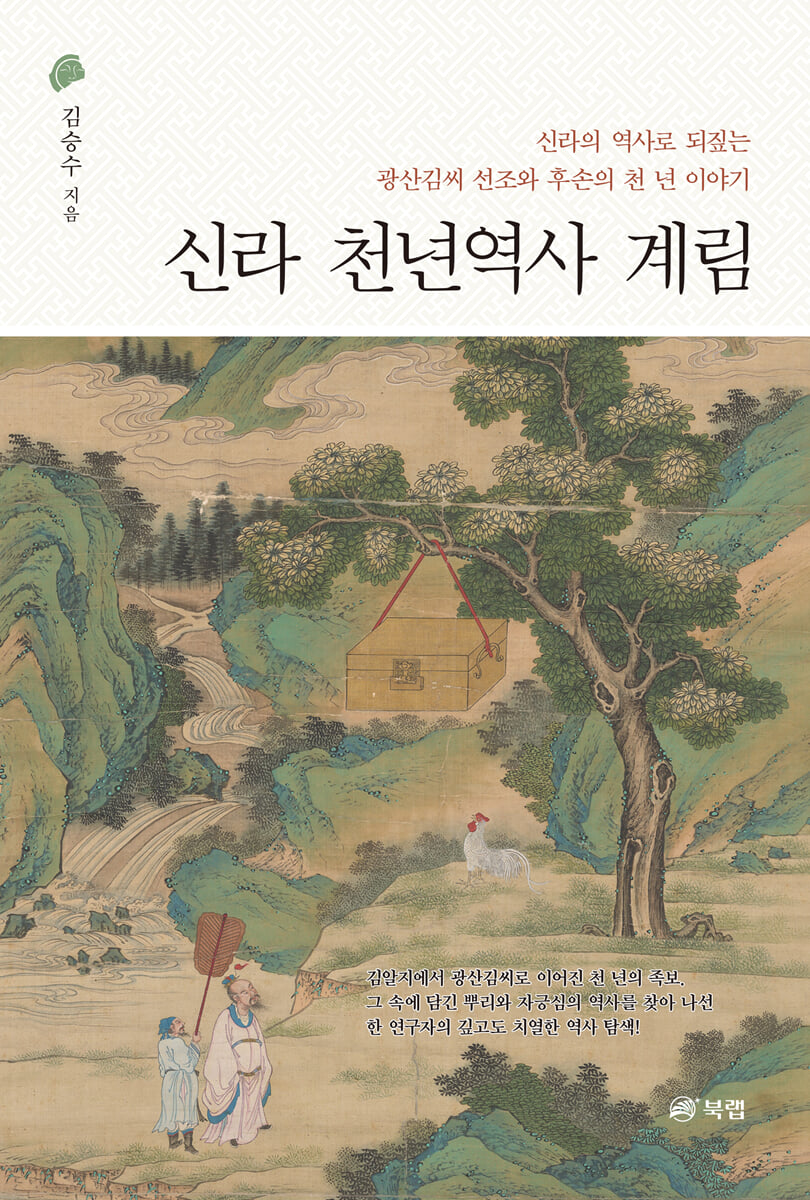
Gyerim, the thousand-year history of Silla
 |
Description
Book Introduction
A thousand-year-old genealogy from Kim Alji to the Gwangsan Kim clan.
A deep and intense historical exploration by a researcher who sets out to discover the roots and history of pride contained within!
Silla, which established the foundation of the Korean people with its shining culture and spirit for a thousand years
Knowing our roots and remembering our history is the way to know ourselves!
A humanities and history textbook in which descendants of the Gwangsan Kim clan, through extensive research and hard work, reconstructed a thousand-year-old genealogy line by line.
History plays a vital role in tracing the roots of our cultural heritage and establishing our community's identity.
Knowing history means understanding the experiences and perspectives of people who lived in different eras, and developing the ability to analyze the past to prepare for the future.
Knowing the history of Silla, which flourished a brilliant culture centered on the Korean Peninsula for approximately a thousand years and achieved the unification of the Three Kingdoms, is very important for understanding the history and culture of our people.
Silla's Hwarangdo and Buddhist culture, as well as Silla's language, customs, and art, became important archetypes of Korean culture.
This book is a work by the author, a descendant of the Gwangsan Kim clan, who tries to understand the history of his family along with the history of Silla, based on the 23-generation Gyeongju Kim clan genealogy.
Writings that record the lives of ancestors go beyond mere history; they are significant in that they allow family members to understand each other's roots, share common memories, and inform descendants about the history and traditions of their family.
The story of Silla's history starting with Park Hyeokgeose, coming to Kim Alji, who became the progenitor of the Gyeongju Kim clan, a descendant of the Silla royal family, and later, in the 23rd generation, the progenitor of the Gwangsan Kim clan, is very impressive.
And the stories of famous people descended from the Gwangsan Kim clan, including historical figures, figures from modern and contemporary history, and even broadcast entertainers, are very interesting.
It is admirable that the author has put in so much effort in researching such diverse topics.
I am confident that readers interested in Silla's history will find this book very interesting.
Especially if you are a member of the Gyeongju Kim or Gwangsan Kim clan, you will be drawn into this story even more.
A deep and intense historical exploration by a researcher who sets out to discover the roots and history of pride contained within!
Silla, which established the foundation of the Korean people with its shining culture and spirit for a thousand years
Knowing our roots and remembering our history is the way to know ourselves!
A humanities and history textbook in which descendants of the Gwangsan Kim clan, through extensive research and hard work, reconstructed a thousand-year-old genealogy line by line.
History plays a vital role in tracing the roots of our cultural heritage and establishing our community's identity.
Knowing history means understanding the experiences and perspectives of people who lived in different eras, and developing the ability to analyze the past to prepare for the future.
Knowing the history of Silla, which flourished a brilliant culture centered on the Korean Peninsula for approximately a thousand years and achieved the unification of the Three Kingdoms, is very important for understanding the history and culture of our people.
Silla's Hwarangdo and Buddhist culture, as well as Silla's language, customs, and art, became important archetypes of Korean culture.
This book is a work by the author, a descendant of the Gwangsan Kim clan, who tries to understand the history of his family along with the history of Silla, based on the 23-generation Gyeongju Kim clan genealogy.
Writings that record the lives of ancestors go beyond mere history; they are significant in that they allow family members to understand each other's roots, share common memories, and inform descendants about the history and traditions of their family.
The story of Silla's history starting with Park Hyeokgeose, coming to Kim Alji, who became the progenitor of the Gyeongju Kim clan, a descendant of the Silla royal family, and later, in the 23rd generation, the progenitor of the Gwangsan Kim clan, is very impressive.
And the stories of famous people descended from the Gwangsan Kim clan, including historical figures, figures from modern and contemporary history, and even broadcast entertainers, are very interesting.
It is admirable that the author has put in so much effort in researching such diverse topics.
I am confident that readers interested in Silla's history will find this book very interesting.
Especially if you are a member of the Gyeongju Kim or Gwangsan Kim clan, you will be drawn into this story even more.
- You can preview some of the book's contents.
Preview
index
preface
01 Kim Alji
02 Kim Se-han
03 Kim A-do
04 Kim Su-yu
05 Kim Wook-bo
06 Kim Gu-do
07 Kim Mal-gu
08 King Naemul
09 Kim Bok-ho
10 Kim Seop-bo
11 King Jijeung
12 Kim Jin-jong 金眞宗
13 Kim Heum-un
14 Kim Macha
15 Kim Beop-seon
16 Kim Ui-gwan
17 Kim Wi-mun
18 Kim Hyo-yang
19 King Wonseong
20 Kim Ye-young
21 Kim Gyun-jeong
22 King Shinmu
23 Kim Heung-gwang
Appendix: Descendants of Kim Heung-gwang
01 Kim Alji
02 Kim Se-han
03 Kim A-do
04 Kim Su-yu
05 Kim Wook-bo
06 Kim Gu-do
07 Kim Mal-gu
08 King Naemul
09 Kim Bok-ho
10 Kim Seop-bo
11 King Jijeung
12 Kim Jin-jong 金眞宗
13 Kim Heum-un
14 Kim Macha
15 Kim Beop-seon
16 Kim Ui-gwan
17 Kim Wi-mun
18 Kim Hyo-yang
19 King Wonseong
20 Kim Ye-young
21 Kim Gyun-jeong
22 King Shinmu
23 Kim Heung-gwang
Appendix: Descendants of Kim Heung-gwang
Into the book
Afterwards, Baekje invaded Silla in 167 and 170, inflicting great damage by occupying two castles on Silla's western border in 167 and taking over 1,000 residents as prisoners.
In response, King Adalla gave Heungseon 20,000 soldiers and launched a powerful counterattack by leading 8,000 cavalry and participating in the battle himself.
In the face of Silla's strong counterattack, Baekje eventually returned the residents it had plundered and requested peace, thus settling the conflict.
By suppressing the rebellion of local chiefs and nobles in 167, King Adalai laid the foundation for strengthening royal authority.
During the reign of King Adalla, there are notable records of exchanges with Wa.
In 158, the Japanese visited Silla, and in particular, in 173, Himiko, queen of Yamatai, a powerful political entity in ancient Wa, sent an envoy to Silla.
This suggests that diplomatic relations between Silla and Japan were formed relatively early.
The tale of Yeonorang and Seonyeo, which is said to have happened in 157 AD, is about a couple who went to Japan and became the king and queen there.
This tale is interpreted as an example showing that there was active human exchange between Silla and Japan at the time.
--- p.50
Kim Ui-gwan (金義寬) is the 16th generation descendant of the Gyeongju Kim clan (慶州金氏). His father is Kim Beop-seon (金法宣), and his son is Kim Wi-mun (金魏文).
The character 'Wei (魏)' in the name of his son Kim Wi-mun is 'the name of a country Wei (魏)', and is a character that refers to the Wei state (魏) in China.
In the process of transcribing this Chinese character into Korean, it was often incorrectly written as 'Wamun', but the correct transcription is 'Wimun (魏文)'.
Kim Ui-gwan was a member of the royal family of Silla and an important figure in the royal family of Silla who was later posthumously honored as King Sinyeong.
He is a direct descendant of King Naemul (Naemul Maripgan) and King Jijeung, and is also the ancestor of King Wonseong (元聖王), the 38th king of Silla.
Kim Ui-gwan held the high position of Ichan (伊湌) during his lifetime.
--- p.120
Kim Jip (金集) was a scholar and civil servant of the mid-Joseon Dynasty who was born in 1574 and died in 1656. His clan was Gwangsan Kim (光山金氏), his courtesy name was Sagang (士剛), and his pen name was Sindokjae (愼獨齋).
He was the son of Sagye Kim Jang-saeng, and he inherited his father's learning, deepened the study of rites, and greatly contributed to the development of Joseon Neo-Confucianism.
Kim Jip learned from his father, Kim Jang-saeng, from a young age, and was particularly knowledgeable about the study of rites.
He became a central figure of the Giho School, which continued the academic tradition of Yulgok Yi I and Ugye Seong Hon.
His scholarship went beyond simple theoretical inquiry and showed an attitude that valued practice.
The name Hoin Shin Dok-jae (愼獨齋) comes from the phrase “Be careful even when you are alone” in the Doctrine of the Mean, which shows his academic attitude and personality well.
In the succession and development of rites, Kim Jip inherited his father Kim Jang-saeng's rites and wrote "Sangnye Biyo (喪禮備要)".
In response, King Adalla gave Heungseon 20,000 soldiers and launched a powerful counterattack by leading 8,000 cavalry and participating in the battle himself.
In the face of Silla's strong counterattack, Baekje eventually returned the residents it had plundered and requested peace, thus settling the conflict.
By suppressing the rebellion of local chiefs and nobles in 167, King Adalai laid the foundation for strengthening royal authority.
During the reign of King Adalla, there are notable records of exchanges with Wa.
In 158, the Japanese visited Silla, and in particular, in 173, Himiko, queen of Yamatai, a powerful political entity in ancient Wa, sent an envoy to Silla.
This suggests that diplomatic relations between Silla and Japan were formed relatively early.
The tale of Yeonorang and Seonyeo, which is said to have happened in 157 AD, is about a couple who went to Japan and became the king and queen there.
This tale is interpreted as an example showing that there was active human exchange between Silla and Japan at the time.
--- p.50
Kim Ui-gwan (金義寬) is the 16th generation descendant of the Gyeongju Kim clan (慶州金氏). His father is Kim Beop-seon (金法宣), and his son is Kim Wi-mun (金魏文).
The character 'Wei (魏)' in the name of his son Kim Wi-mun is 'the name of a country Wei (魏)', and is a character that refers to the Wei state (魏) in China.
In the process of transcribing this Chinese character into Korean, it was often incorrectly written as 'Wamun', but the correct transcription is 'Wimun (魏文)'.
Kim Ui-gwan was a member of the royal family of Silla and an important figure in the royal family of Silla who was later posthumously honored as King Sinyeong.
He is a direct descendant of King Naemul (Naemul Maripgan) and King Jijeung, and is also the ancestor of King Wonseong (元聖王), the 38th king of Silla.
Kim Ui-gwan held the high position of Ichan (伊湌) during his lifetime.
--- p.120
Kim Jip (金集) was a scholar and civil servant of the mid-Joseon Dynasty who was born in 1574 and died in 1656. His clan was Gwangsan Kim (光山金氏), his courtesy name was Sagang (士剛), and his pen name was Sindokjae (愼獨齋).
He was the son of Sagye Kim Jang-saeng, and he inherited his father's learning, deepened the study of rites, and greatly contributed to the development of Joseon Neo-Confucianism.
Kim Jip learned from his father, Kim Jang-saeng, from a young age, and was particularly knowledgeable about the study of rites.
He became a central figure of the Giho School, which continued the academic tradition of Yulgok Yi I and Ugye Seong Hon.
His scholarship went beyond simple theoretical inquiry and showed an attitude that valued practice.
The name Hoin Shin Dok-jae (愼獨齋) comes from the phrase “Be careful even when you are alone” in the Doctrine of the Mean, which shows his academic attitude and personality well.
In the succession and development of rites, Kim Jip inherited his father Kim Jang-saeng's rites and wrote "Sangnye Biyo (喪禮備要)".
--- p.210
GOODS SPECIFICS
- Date of issue: December 25, 2025
- Page count, weight, size: 248 pages | 339g | 152*225*13mm
- ISBN13: 9791172249595
- ISBN10: 1172249598
You may also like
카테고리
korean


korean

![GQ KOREA Mark (Monthly): December [2025]](http://librairie.coreenne.fr/cdn/shop/files/8ef265dbbfbf186523ed75ba7319009d.jpg?v=1765340328&width=3840)


