

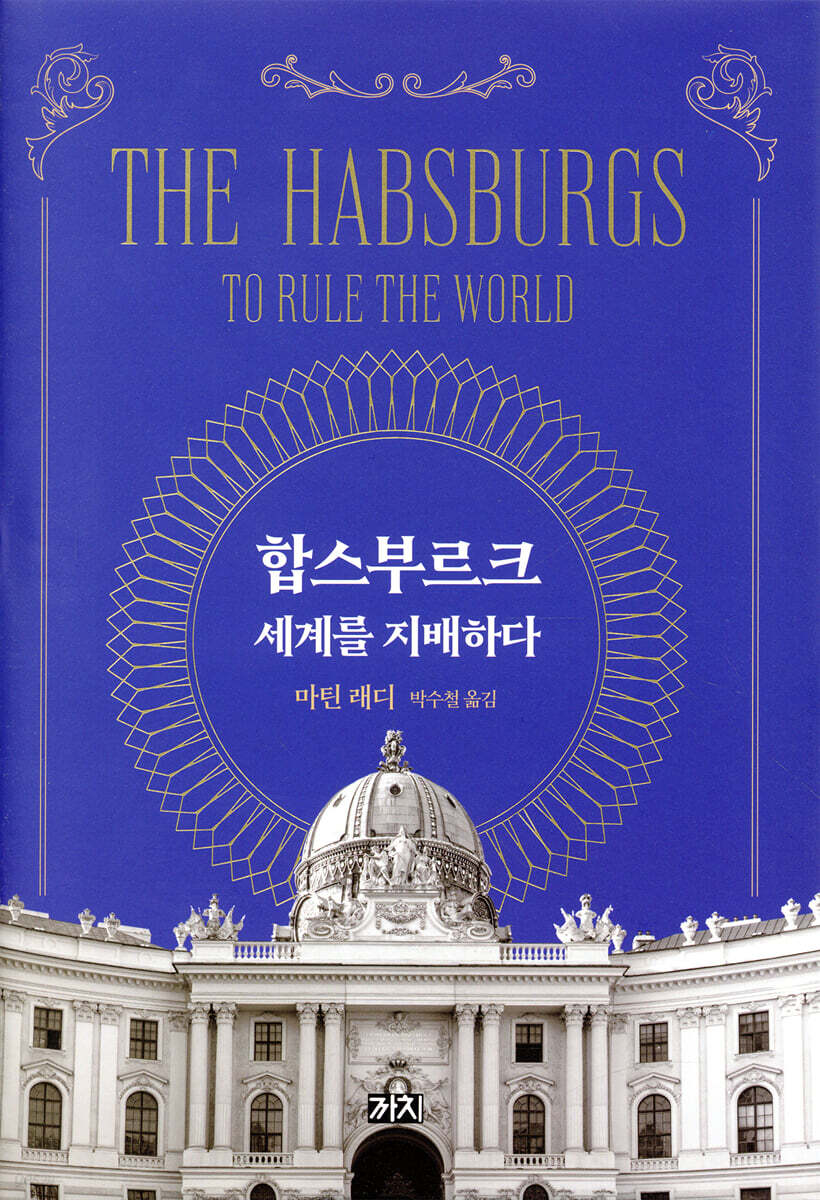
Habsburgs rule the world
 |
Description
Book Introduction
“The Habsburgs were the first empire on which the sun never set.”
The 1,000 Years of the Habsburgs, the Greatest Family That Made Europe the Center of World History
The Habsburgs were a family that ruled vast territories spanning Central Europe, the Americas, Africa, and the Far East as Holy Roman Emperors, Kings of the Austro-Hungarian Empire, and Kings of Spain and Portugal.
The Habsburgs, who held the most powerful thrones in Europe for centuries, played a key role in countless wars, were at the center of revolutions, and sometimes presented themselves as patrons of knowledge and learning, defenders of the Catholic faith, and guarantors of peace, making Europe the center of world history.
This book comprehensively examines the history of the Habsburgs, from the 10th century, the earliest period for which the history can be clearly identified, to the dynasty's decline in the 20th century, and examines the influence of the Habsburgs on politics, society, culture, and the arts.
This book, the first of its kind in Korea, will allow readers to vividly experience the rise and fall of the greatest family of its time, recreated with solid historical evidence and the author's exceptional wit.
The 1,000 Years of the Habsburgs, the Greatest Family That Made Europe the Center of World History
The Habsburgs were a family that ruled vast territories spanning Central Europe, the Americas, Africa, and the Far East as Holy Roman Emperors, Kings of the Austro-Hungarian Empire, and Kings of Spain and Portugal.
The Habsburgs, who held the most powerful thrones in Europe for centuries, played a key role in countless wars, were at the center of revolutions, and sometimes presented themselves as patrons of knowledge and learning, defenders of the Catholic faith, and guarantors of peace, making Europe the center of world history.
This book comprehensively examines the history of the Habsburgs, from the 10th century, the earliest period for which the history can be clearly identified, to the dynasty's decline in the 20th century, and examines the influence of the Habsburgs on politics, society, culture, and the arts.
This book, the first of its kind in Korea, will allow readers to vividly experience the rise and fall of the greatest family of its time, recreated with solid historical evidence and the author's exceptional wit.
- You can preview some of the book's contents.
Preview
index
Habsburg family tree
Introduction: The Emperor's Library
Chapter 1: The Habsburg Castle and the Fortinbras Effect
Chapter 2 The Holy Roman Empire and the Golden King
Chapter 3: Loss of Position and Falsification of the Past
Chapter 4: Frederick III | Saturn and Mars
Chapter 5: Maximilian and the Kings Classified by Color
Chapter 6: Charles V | Ruler of the World
Chapter 7: Hungary, Bohemia, and the Protestant Challenge
Chapter 8: Philip II | The New World, Religious Dissension, and Imperial Inbreeding
Chapter 9: Don Juan and the Galleys of Lepanto
Chapter 10: Rudolf II and the Alchemists of Prague
Chapter 11: The Triumph of the Heretics
Chapter 12 Ferdinand II, the Holy House, and Bohemia
Chapter 13: Thirty Years of "World War"
Chapter 14: The Abnormal Empire and the Battle of Vienna
Chapter 15: The Invisible Sovereignty of Spain and the Death of the Mad King
Chapter 16: Baroque Theatre
Chapter 17: Maria Theresa, Automatons, and Bureaucrats
Chapter 18: The Merchant, the Botanist, and the Freemason
Chapter 19: The Vampire Myth, the Enlightenment, and Revolution from Above
Chapter 20: The Archduchesses and the Habsburg Low Countries
Chapter 21: The Censor, the Jacobins, and The Magic Flute
Chapter 22: Metternich and the Map of Europe
Chapter 23: 1848 | Von Neumann's Diary and the Radetzky March
Chapter 24: Franz Joseph's Empire, Sisi, and Hungary
Chapter 25: Maximilian, Mexico, and the Death of the Royal Family
Chapter 26: The Politics of Discontent and the Celebrations of 1908
Chapter 27: Explorers, Jews, and Knowledge Around the World
Chapter 28: The Hunter and the Hunt | Franz Ferdinand and Bosnia
Chapter 29: World War and Dissolution
conclusion
Acknowledgements
Pictorial source
More books to read
main
Biographical Index
Introduction: The Emperor's Library
Chapter 1: The Habsburg Castle and the Fortinbras Effect
Chapter 2 The Holy Roman Empire and the Golden King
Chapter 3: Loss of Position and Falsification of the Past
Chapter 4: Frederick III | Saturn and Mars
Chapter 5: Maximilian and the Kings Classified by Color
Chapter 6: Charles V | Ruler of the World
Chapter 7: Hungary, Bohemia, and the Protestant Challenge
Chapter 8: Philip II | The New World, Religious Dissension, and Imperial Inbreeding
Chapter 9: Don Juan and the Galleys of Lepanto
Chapter 10: Rudolf II and the Alchemists of Prague
Chapter 11: The Triumph of the Heretics
Chapter 12 Ferdinand II, the Holy House, and Bohemia
Chapter 13: Thirty Years of "World War"
Chapter 14: The Abnormal Empire and the Battle of Vienna
Chapter 15: The Invisible Sovereignty of Spain and the Death of the Mad King
Chapter 16: Baroque Theatre
Chapter 17: Maria Theresa, Automatons, and Bureaucrats
Chapter 18: The Merchant, the Botanist, and the Freemason
Chapter 19: The Vampire Myth, the Enlightenment, and Revolution from Above
Chapter 20: The Archduchesses and the Habsburg Low Countries
Chapter 21: The Censor, the Jacobins, and The Magic Flute
Chapter 22: Metternich and the Map of Europe
Chapter 23: 1848 | Von Neumann's Diary and the Radetzky March
Chapter 24: Franz Joseph's Empire, Sisi, and Hungary
Chapter 25: Maximilian, Mexico, and the Death of the Royal Family
Chapter 26: The Politics of Discontent and the Celebrations of 1908
Chapter 27: Explorers, Jews, and Knowledge Around the World
Chapter 28: The Hunter and the Hunt | Franz Ferdinand and Bosnia
Chapter 29: World War and Dissolution
conclusion
Acknowledgements
Pictorial source
More books to read
main
Biographical Index
Detailed image

Publisher's Review
The first family to rule over various peoples and territories across the continent,
1,000 Years of Habsburg History Like Never Before
The book "Habsburgs Rule the World" has been published, covering the history of the Habsburgs, the greatest European family that discovered the New World as the first rulers of Central Europe and Spain, ushered in an era of colonial empires, and left a great legacy in politics, society, culture, and art.
Members of the Habsburg family have played a leading role in world history, spanning the Middle Ages and modern times in Europe. However, there has been no book in Korea that comprehensively covers their history from beginning to end.
This book delves into how the Habsburgs, once rural lords, became a world-dominating ruling family, what they desired as leaders, and what they actually achieved, unfolding a millennium of glory and shame.
This book, written with scholarly authority, wit, and humor by Martin Rady, and accompanied by 16 pages of illustrations, will allow readers to understand “everything about the Habsburgs.”
From Kancellin in the 10th century to the last emperor Charles I in the 20th century,
A royal family's ambitions, intrigues, love, and betrayal revisited as human beings.
The known history of the House of Habsburg begins with Kancelin in the 10th century.
Having amassed wealth based on their Catholic faith and monasticism, they later acquired the titles of Emperor and Elector of the Holy Roman Empire and expanded their territory through marriage.
By the time of Charles V, the Habsburgs had established colonies all over the world and reigned as the protectors of the Catholic world and rulers of the “empire on which the sun never sets.” By the 16th century, they had split into Central European and Spanish factions, spreading the Catholic faith and Baroque art throughout the world.
The Habsburg family, which ruled territories and peoples all over the world, faced religious freedom and nationalism in the modern era, and ended with World War I, leaving behind stories of hereditary diseases, successive deaths, betrayals, and love stories among royal family members.
"Habsburgs Rule the World" faithfully follows the footsteps of the Habsburg family over ten centuries, never missing a sharp yet affectionate look at key events and figures.
We also examine the stories of figures who have become the subjects of works of art, such as Philip II and Maria Theresa, who are widely known to domestic readers, as well as Marie Antoinette, Empress Sisi, Emperor Maximilian of Mexico, and Crown Prince Rudolf.
The stories of these individuals, sometimes oppressive monarchs and sometimes individuals caught up in history, at the center of battlefields and revolutionary squares, will reveal a new cross-section of macro-history.
Phenomena that were popular at the time, such as alchemists, vampires, and Freemasons,
Habsburg leaders as “guardians of knowledge”
When talking about the Habsburg leaders, it is impossible to leave out the fact that they called themselves “guardians of knowledge.”
The Habsburgs, who reigned as leaders of Europe for ten centuries, wanted to be seen as patrons of harmony, order, and learning rather than as warlords and conquerors.
Rudolf II, who was fascinated by alchemy, invited 200 alchemists to his palace in Prague and decorated the Wunderkammer (Cabinet of Curiosities) with a collection of curious objects.
Maria Theresa sought to eradicate unscientific practices, including vampire superstitions, lottery predictions, and the Catholic Church's "afterlife magic," and dispatched civil servants and doctors to dispel superstitions.
Meanwhile, Maria Theresa's husband, Holy Roman Emperor Franz Stephen, was a Freemason and laid the foundation for the Vienna Museum of Natural History.
Although no Habsburg leader was a Freemason after Franz Stephan, Freemasons exerted considerable influence over the Habsburgs through their officials.
Covering the glory and shame, love and war, friendship and betrayal of Habsburg history, this book takes readers through the local monastic reforms, the struggle for the Holy Roman Empire's throne during the Archbishopric, the Protestant Reformation, colonial expansion, and the revolutions of the 19th century.
Originating from a local monastery, the Habsburgs became a global "ideology", a center of politics, religion, knowledge, and the arts, based on the Austrian palace and the Spanish Armada.
Through this book, readers will get to know members of a family that was once one of the most powerful and whose legacy still influences us today.
1,000 Years of Habsburg History Like Never Before
The book "Habsburgs Rule the World" has been published, covering the history of the Habsburgs, the greatest European family that discovered the New World as the first rulers of Central Europe and Spain, ushered in an era of colonial empires, and left a great legacy in politics, society, culture, and art.
Members of the Habsburg family have played a leading role in world history, spanning the Middle Ages and modern times in Europe. However, there has been no book in Korea that comprehensively covers their history from beginning to end.
This book delves into how the Habsburgs, once rural lords, became a world-dominating ruling family, what they desired as leaders, and what they actually achieved, unfolding a millennium of glory and shame.
This book, written with scholarly authority, wit, and humor by Martin Rady, and accompanied by 16 pages of illustrations, will allow readers to understand “everything about the Habsburgs.”
From Kancellin in the 10th century to the last emperor Charles I in the 20th century,
A royal family's ambitions, intrigues, love, and betrayal revisited as human beings.
The known history of the House of Habsburg begins with Kancelin in the 10th century.
Having amassed wealth based on their Catholic faith and monasticism, they later acquired the titles of Emperor and Elector of the Holy Roman Empire and expanded their territory through marriage.
By the time of Charles V, the Habsburgs had established colonies all over the world and reigned as the protectors of the Catholic world and rulers of the “empire on which the sun never sets.” By the 16th century, they had split into Central European and Spanish factions, spreading the Catholic faith and Baroque art throughout the world.
The Habsburg family, which ruled territories and peoples all over the world, faced religious freedom and nationalism in the modern era, and ended with World War I, leaving behind stories of hereditary diseases, successive deaths, betrayals, and love stories among royal family members.
"Habsburgs Rule the World" faithfully follows the footsteps of the Habsburg family over ten centuries, never missing a sharp yet affectionate look at key events and figures.
We also examine the stories of figures who have become the subjects of works of art, such as Philip II and Maria Theresa, who are widely known to domestic readers, as well as Marie Antoinette, Empress Sisi, Emperor Maximilian of Mexico, and Crown Prince Rudolf.
The stories of these individuals, sometimes oppressive monarchs and sometimes individuals caught up in history, at the center of battlefields and revolutionary squares, will reveal a new cross-section of macro-history.
Phenomena that were popular at the time, such as alchemists, vampires, and Freemasons,
Habsburg leaders as “guardians of knowledge”
When talking about the Habsburg leaders, it is impossible to leave out the fact that they called themselves “guardians of knowledge.”
The Habsburgs, who reigned as leaders of Europe for ten centuries, wanted to be seen as patrons of harmony, order, and learning rather than as warlords and conquerors.
Rudolf II, who was fascinated by alchemy, invited 200 alchemists to his palace in Prague and decorated the Wunderkammer (Cabinet of Curiosities) with a collection of curious objects.
Maria Theresa sought to eradicate unscientific practices, including vampire superstitions, lottery predictions, and the Catholic Church's "afterlife magic," and dispatched civil servants and doctors to dispel superstitions.
Meanwhile, Maria Theresa's husband, Holy Roman Emperor Franz Stephen, was a Freemason and laid the foundation for the Vienna Museum of Natural History.
Although no Habsburg leader was a Freemason after Franz Stephan, Freemasons exerted considerable influence over the Habsburgs through their officials.
Covering the glory and shame, love and war, friendship and betrayal of Habsburg history, this book takes readers through the local monastic reforms, the struggle for the Holy Roman Empire's throne during the Archbishopric, the Protestant Reformation, colonial expansion, and the revolutions of the 19th century.
Originating from a local monastery, the Habsburgs became a global "ideology", a center of politics, religion, knowledge, and the arts, based on the Austrian palace and the Spanish Armada.
Through this book, readers will get to know members of a family that was once one of the most powerful and whose legacy still influences us today.
GOODS SPECIFICS
- Publication date: July 13, 2022
- Format: Hardcover book binding method guide
- Page count, weight, size: 580 pages | 812g | 154*218*35mm
- ISBN13: 9788972917748
- ISBN10: 8972917745
You may also like
카테고리
korean


korean

![ELLE 엘르 스페셜 에디션 A형 : 12월 [2025]](http://librairie.coreenne.fr/cdn/shop/files/b8e27a3de6c9538896439686c6b0e8fb.jpg?v=1766436872&width=3840)


