

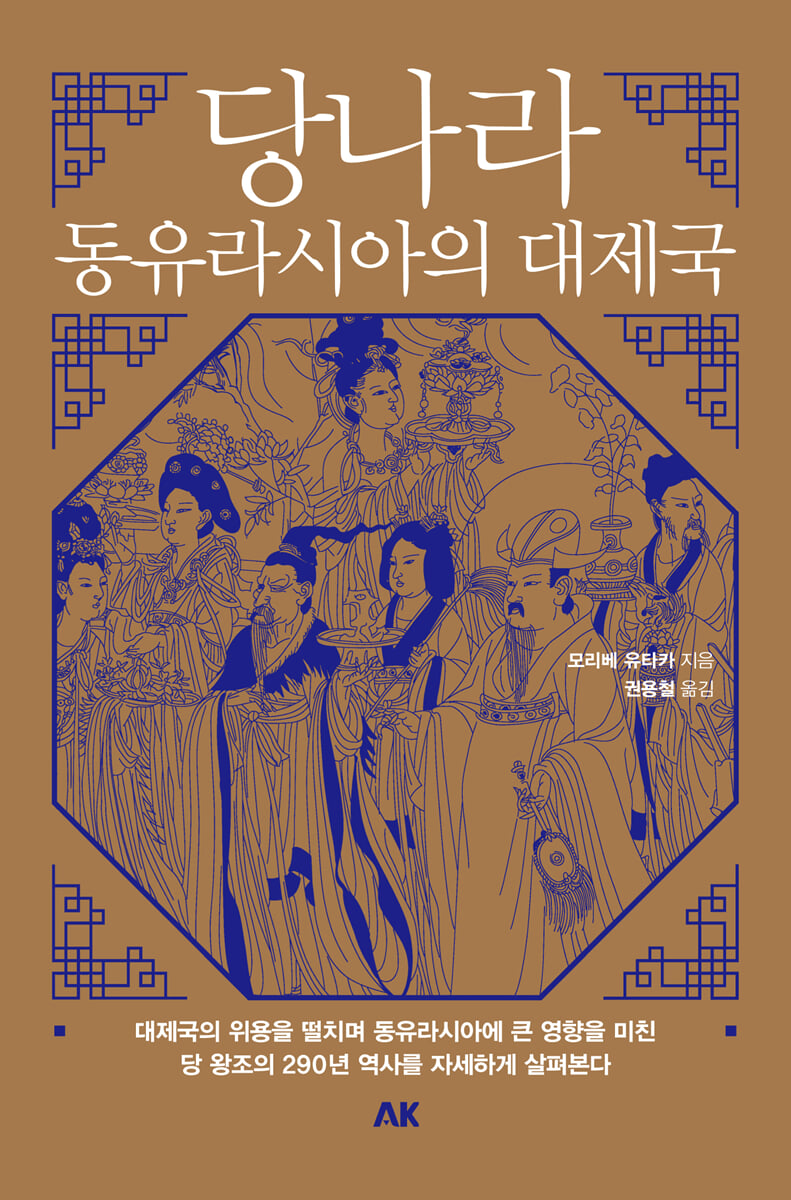
Tang Dynasty - Great Empire of East Eurasia
 |
Description
Book Introduction
It had a great influence on Eastern Eurasia while displaying the power of a great empire.
A detailed look at the 290-year history of the Tang Dynasty.
The Tang Dynasty of China was a great empire that existed in the eastern part of the Eurasian continent from 618 to 907, and was a culturally, ethnically, and linguistically complex and multi-ethnic dynasty.
The Tang Dynasty itself was associated with Xianbei bloodlines, and if we look at the history of the Tang Dynasty, we can see people of various origins active throughout the country, such as Turkic horse nomads, Iranian Sogdians, or people from the Korean Peninsula.
This book is an overview of the history of the Tang Dynasty. Based on the achievements of the Tang emperors, it examines foreign wars, the economy, social systems, and palace intrigues, and details the rise and fall of the East Eurasian empire over 290 years.
By viewing the Tang Empire from the broader perspective of Eastern Eurasia, we can gain a deeper understanding of Chinese history around this period.
A detailed look at the 290-year history of the Tang Dynasty.
The Tang Dynasty of China was a great empire that existed in the eastern part of the Eurasian continent from 618 to 907, and was a culturally, ethnically, and linguistically complex and multi-ethnic dynasty.
The Tang Dynasty itself was associated with Xianbei bloodlines, and if we look at the history of the Tang Dynasty, we can see people of various origins active throughout the country, such as Turkic horse nomads, Iranian Sogdians, or people from the Korean Peninsula.
This book is an overview of the history of the Tang Dynasty. Based on the achievements of the Tang emperors, it examines foreign wars, the economy, social systems, and palace intrigues, and details the rise and fall of the East Eurasian empire over 290 years.
By viewing the Tang Empire from the broader perspective of Eastern Eurasia, we can gain a deeper understanding of Chinese history around this period.
index
Genealogy of the Tang Dynasty Emperors
The Tang Dynasty - The Territory of the Prosperous Tang Dynasty
preface
How should we view the history of the Seojang Party?
1.
Space - What is 'China'?
The Scope of 'China' | The Party's Control Space
2.
Time-period division and period division
The epochal period of the Tang-Song Reform | The beginning and end of the debate over the division of eras |
What is Periodization? | The East Eurasian World of the Second Period | Characteristics of Periodization
3.
How to determine the visual-symbolic tone
The Tang Dynasty was an era of aristocracy | The 'Gwanlong Group' and the Mendicant State |
Viewing the Party from a Nomadic Perspective | The Party's Perspective
Chapter 1: The Emerging East Eurasian Empire - The 7th Century
1.
The founding of the party
The rebellion at the end of the Sui Dynasty | The origin of Yi Yeon | Yi Yeon, rising up | The Sui-Dang Revolution |
Background to the Revolution's Success | Sogdian Cooperation | Tang's Decree |
Restoration and Discovery of the Tang Decree | Tang Dynasty Officials
2.
Yi Se-min becomes Tengri Khagan
Lee Se-min's Growth | The 'Hyeonmumun Incident' and the Sogdians | The Background of the Hyeonmumun Incident |
The Reality of the 'Reign of the Kings' and the Ming Emperor Taizong | The First Turkic Empire | The Tang and the Eastern Turkic Kingdoms |
The Fall of the Eastern Turks | Tengri Khagan
3.
Taejong's domestic and foreign affairs
The Compilation of the "Clan Records" and the Creation of the "Eight Provinces" | Turkic Refugees | Management of the Western Regions |
The Birth of the East Eurasian Empire | Taizong and Xuanzang (玄?) | The Great Tang Western Regions Chronicle | Taizong's Death
Chapter 2: The Wuzhou Revolution - Late 7th century - Early 8th century
1.
Emperor Gojong and Empress Mu
The Third Emperor of the Tang Dynasty | The Legacy of the Zhenguan Era | Emperor Gaozong's Evaluation |
Wu Zetian Enters the Concubine's Palace | From Soyi to Empress | Seizing Power | A New Order |
Convergence Politics | The Death of Emperor Gojong
2.
The founding of the state
Poseok | Chang'an and Luoyang of the Tang Dynasty | Turmoil and Spying | The Taoist Monk Xue Huaiyi |
Preparing for Revolution | The Wuzhou Revolution | Wu Zetian and Fa Zang | The 'Good People' Who Supported Wu Zetian |
Brothers Zhang Yizhi and Zhang Changzong | Wu Zetian and Taoism | The End
3.
The party's shaky rule
The Emergence of the Sogdian Turks | The Second Turkic Empire | The Khitan Rebellion and the Birth of Balhae |
Attack and Defense in the West | Prelude to a Transition
Chapter 3: Transition Period - Early 8th Century to Mid-8th Century
1.
The disaster of Wuwei
King Jungjong's restoration | Musamsa and Empress Wei | Failed coup |
The Assassination of King Jungjong | Princess Taepyeong and King Yejong
2.
Opening of the dentist
The era of King Hyeonjong | Abe no Nakamaro and Seishinsei |
Political Reform | Peace in the World | The Land Grant System and Corruption in the Early Tang Dynasty |
Parenthetical Policy | Military System by Law | Birth of the Military Governor |
Reforms in the Maritime Transport System and the Rebellion | The Suppression of Buddhism
3.
The dazzling era of heavenly treasures
The Appearance of Lee Lim-bo | The Confrontation with Jang Gu-ryeong | The Secret Activities of Goryeo Master |
The Appointment of the "Banjang" (蕃將) | The Reorganization of National Defense | Yang Guifei and Yang Guozhong | Taoism
4.
calm before the storm
The Sogdian Turkic Rebellion | The Rise of the Uyghur Empire | The Conflict with the Abbasid Caliphate
Chapter 4: The Transformation of the Empire - Late 8th Century - Early 9th Century
1.
Ansa Rebellion
An Lushan | Grace and Rise | Background | An Lushan Riseth | The Tang Dynasty's Counterattack |
Battle with the Great Yan Empire
2.
Tang Dynasty confusion
Daejong and the Eunuchs | The Fall of Chang'an | The Rebellion of Bogo Hoe-in | The Rise of the Banjin |
The spread of the late Tang Dynasty | Horse and Horse Trade with the Uyghurs
3.
Towards a fiscal state
Salt Monopoly and Transport Reform | Two Tax Laws | Independence of the Hebei and Henan clans |
The Gyeongwon Rebellion | The End of Chaos | The Loss of the Western Regions | Lee Pil's Suggestions for Strategy |
Kukai and Saicho
Chapter 5: Transition to a Chinese-style dynasty - early to mid-9th century
1.
The Tang Dynasty's 'revival'
Sunjong's accession to the throne | Yeongjeong Reform | Heonjong's rise | Financial reform |
The pacification of the dynasty | The revival of the Yuan Dynasty and the assassination of King Heonjong
2.
lazy emperors
The Ascension of King Mokjong | The Surrender of Hasak Samjin and Ivan | The Triple Alliance of Tang, Tibet, and Uyghurs |
From Young Emperor to Boy Emperor | Intensifying Factional Battles | The Past of the Contemporary Era
| The factional strife of Wuyi | The assassination of Wang Xujing | The Gamno Incident
3.
A whirlwind of religious persecution
King Muzong's Ascension to the Throne | The Birth of the Reorganization of East Eurasia | So-ui's Independence |
Buddhist worship and anti-Buddhism | The suppression of Manichaeism | The abolition of Buddhism by Hoechang | The rise of anti-Buddhism
Chapter 6: The Continuing Era - Late 9th Century - Early 10th Century
1.
Soldiers and people rising up
The reign of King Sotaejong | Successive military rebellions | Exploitation of the Ganghoe clan |
Gu Bo (?甫) of Zhedong | The military governor of Wunyeong and his army |
The Coldly Treated Soldiers of Seoju | The Fate of Bang Hoon
2.
Bull's Rebellion
King Hee-jong and Jeon Ling-ja | King Seon-ji and Hwang So | Salt Merchant and Salt Thief |
Gangjeok (江賊) | Yoseo (流賊) | Hwangso, moving north | Entering Chang'an, a river of blood flows |
Satan Tribe | Lee Geuk-yong, Forgiveness | The End of the War
3.
The fall of the party
King Heejong Returns to the Capital | The Second Mongjin | The End of King Heejong's Era |
Sojong and the Tailor | The Conflict Between Yi Mu-jeong and Yi Geuk-yong | The Failure of the Reconstruction of the Imperial Army |
From Ju-on to Ju-jeon-chung | Ju-jeon-chung establishes his power | So-jong's confinement |
Sojong, as a Bongsang | Sojong's assassination | Ascension
The Tang-Song Reforms in World History
1.
Perspectives from the Five Dynasties and Ten Kingdoms Period
The World After the Tang | From Later Liang to Later Tang | The Sata Dynasty |
Historical Developments in Southern China | Nomadic Powers and Henan Powers
2.
Tang Dynasty in the East Eurasian World
How to Understand the Tang Dynasty Again | The Founding of the Khitan State |
A Central Eurasian state born from the Tang Dynasty
Additional remarks
Literature Guide
Photo credit
Party-related chronology
index
Translator's Note
The Tang Dynasty - The Territory of the Prosperous Tang Dynasty
preface
How should we view the history of the Seojang Party?
1.
Space - What is 'China'?
The Scope of 'China' | The Party's Control Space
2.
Time-period division and period division
The epochal period of the Tang-Song Reform | The beginning and end of the debate over the division of eras |
What is Periodization? | The East Eurasian World of the Second Period | Characteristics of Periodization
3.
How to determine the visual-symbolic tone
The Tang Dynasty was an era of aristocracy | The 'Gwanlong Group' and the Mendicant State |
Viewing the Party from a Nomadic Perspective | The Party's Perspective
Chapter 1: The Emerging East Eurasian Empire - The 7th Century
1.
The founding of the party
The rebellion at the end of the Sui Dynasty | The origin of Yi Yeon | Yi Yeon, rising up | The Sui-Dang Revolution |
Background to the Revolution's Success | Sogdian Cooperation | Tang's Decree |
Restoration and Discovery of the Tang Decree | Tang Dynasty Officials
2.
Yi Se-min becomes Tengri Khagan
Lee Se-min's Growth | The 'Hyeonmumun Incident' and the Sogdians | The Background of the Hyeonmumun Incident |
The Reality of the 'Reign of the Kings' and the Ming Emperor Taizong | The First Turkic Empire | The Tang and the Eastern Turkic Kingdoms |
The Fall of the Eastern Turks | Tengri Khagan
3.
Taejong's domestic and foreign affairs
The Compilation of the "Clan Records" and the Creation of the "Eight Provinces" | Turkic Refugees | Management of the Western Regions |
The Birth of the East Eurasian Empire | Taizong and Xuanzang (玄?) | The Great Tang Western Regions Chronicle | Taizong's Death
Chapter 2: The Wuzhou Revolution - Late 7th century - Early 8th century
1.
Emperor Gojong and Empress Mu
The Third Emperor of the Tang Dynasty | The Legacy of the Zhenguan Era | Emperor Gaozong's Evaluation |
Wu Zetian Enters the Concubine's Palace | From Soyi to Empress | Seizing Power | A New Order |
Convergence Politics | The Death of Emperor Gojong
2.
The founding of the state
Poseok | Chang'an and Luoyang of the Tang Dynasty | Turmoil and Spying | The Taoist Monk Xue Huaiyi |
Preparing for Revolution | The Wuzhou Revolution | Wu Zetian and Fa Zang | The 'Good People' Who Supported Wu Zetian |
Brothers Zhang Yizhi and Zhang Changzong | Wu Zetian and Taoism | The End
3.
The party's shaky rule
The Emergence of the Sogdian Turks | The Second Turkic Empire | The Khitan Rebellion and the Birth of Balhae |
Attack and Defense in the West | Prelude to a Transition
Chapter 3: Transition Period - Early 8th Century to Mid-8th Century
1.
The disaster of Wuwei
King Jungjong's restoration | Musamsa and Empress Wei | Failed coup |
The Assassination of King Jungjong | Princess Taepyeong and King Yejong
2.
Opening of the dentist
The era of King Hyeonjong | Abe no Nakamaro and Seishinsei |
Political Reform | Peace in the World | The Land Grant System and Corruption in the Early Tang Dynasty |
Parenthetical Policy | Military System by Law | Birth of the Military Governor |
Reforms in the Maritime Transport System and the Rebellion | The Suppression of Buddhism
3.
The dazzling era of heavenly treasures
The Appearance of Lee Lim-bo | The Confrontation with Jang Gu-ryeong | The Secret Activities of Goryeo Master |
The Appointment of the "Banjang" (蕃將) | The Reorganization of National Defense | Yang Guifei and Yang Guozhong | Taoism
4.
calm before the storm
The Sogdian Turkic Rebellion | The Rise of the Uyghur Empire | The Conflict with the Abbasid Caliphate
Chapter 4: The Transformation of the Empire - Late 8th Century - Early 9th Century
1.
Ansa Rebellion
An Lushan | Grace and Rise | Background | An Lushan Riseth | The Tang Dynasty's Counterattack |
Battle with the Great Yan Empire
2.
Tang Dynasty confusion
Daejong and the Eunuchs | The Fall of Chang'an | The Rebellion of Bogo Hoe-in | The Rise of the Banjin |
The spread of the late Tang Dynasty | Horse and Horse Trade with the Uyghurs
3.
Towards a fiscal state
Salt Monopoly and Transport Reform | Two Tax Laws | Independence of the Hebei and Henan clans |
The Gyeongwon Rebellion | The End of Chaos | The Loss of the Western Regions | Lee Pil's Suggestions for Strategy |
Kukai and Saicho
Chapter 5: Transition to a Chinese-style dynasty - early to mid-9th century
1.
The Tang Dynasty's 'revival'
Sunjong's accession to the throne | Yeongjeong Reform | Heonjong's rise | Financial reform |
The pacification of the dynasty | The revival of the Yuan Dynasty and the assassination of King Heonjong
2.
lazy emperors
The Ascension of King Mokjong | The Surrender of Hasak Samjin and Ivan | The Triple Alliance of Tang, Tibet, and Uyghurs |
From Young Emperor to Boy Emperor | Intensifying Factional Battles | The Past of the Contemporary Era
| The factional strife of Wuyi | The assassination of Wang Xujing | The Gamno Incident
3.
A whirlwind of religious persecution
King Muzong's Ascension to the Throne | The Birth of the Reorganization of East Eurasia | So-ui's Independence |
Buddhist worship and anti-Buddhism | The suppression of Manichaeism | The abolition of Buddhism by Hoechang | The rise of anti-Buddhism
Chapter 6: The Continuing Era - Late 9th Century - Early 10th Century
1.
Soldiers and people rising up
The reign of King Sotaejong | Successive military rebellions | Exploitation of the Ganghoe clan |
Gu Bo (?甫) of Zhedong | The military governor of Wunyeong and his army |
The Coldly Treated Soldiers of Seoju | The Fate of Bang Hoon
2.
Bull's Rebellion
King Hee-jong and Jeon Ling-ja | King Seon-ji and Hwang So | Salt Merchant and Salt Thief |
Gangjeok (江賊) | Yoseo (流賊) | Hwangso, moving north | Entering Chang'an, a river of blood flows |
Satan Tribe | Lee Geuk-yong, Forgiveness | The End of the War
3.
The fall of the party
King Heejong Returns to the Capital | The Second Mongjin | The End of King Heejong's Era |
Sojong and the Tailor | The Conflict Between Yi Mu-jeong and Yi Geuk-yong | The Failure of the Reconstruction of the Imperial Army |
From Ju-on to Ju-jeon-chung | Ju-jeon-chung establishes his power | So-jong's confinement |
Sojong, as a Bongsang | Sojong's assassination | Ascension
The Tang-Song Reforms in World History
1.
Perspectives from the Five Dynasties and Ten Kingdoms Period
The World After the Tang | From Later Liang to Later Tang | The Sata Dynasty |
Historical Developments in Southern China | Nomadic Powers and Henan Powers
2.
Tang Dynasty in the East Eurasian World
How to Understand the Tang Dynasty Again | The Founding of the Khitan State |
A Central Eurasian state born from the Tang Dynasty
Additional remarks
Literature Guide
Photo credit
Party-related chronology
index
Translator's Note
Publisher's Review
It had a great influence on Eastern Eurasia while displaying the power of a great empire.
A detailed look at the 290-year history of the Tang Dynasty.
The Tang Dynasty of China was a great empire that existed in the eastern part of the Eurasian continent from 618 to 907, and was a culturally, ethnically, and linguistically complex and multi-ethnic dynasty.
The Tang Dynasty itself was associated with Xianbei bloodlines, and if we look at the history of the Tang Dynasty, we can see people of various origins active throughout the country, such as Turkic horse nomads, Iranian Sogdians, or people from the Korean Peninsula.
This book is an overview of the history of the Tang Dynasty. Based on the achievements of the Tang emperors, it examines foreign wars, the economy, social systems, and palace intrigues, and details the rise and fall of the East Eurasian empire over 290 years.
From a broad perspective that is not buried in Chinese history
Looking at the history of the Tang Dynasty
The author used the term 'East Eurasia'.
This book can be seen as an introductory book that attempts to view the Tang Dynasty from a broader perspective, rather than simply within the scope of a Chinese dynasty.
In the early days of the Tang Dynasty, they destroyed both the Eastern and Western Turkic tribes in the north and conquered the steppe world, creating a unique ruling system called the "Gimi Rule."
This ruling system led to the Tang Empire's policy of recruiting talented people from various ethnicities and utilizing them in appropriate positions to control a wide area.
Through this, we will be able to see in detail the appearance of the Tang Dynasty as a ‘world empire.’
By viewing the Tang Empire from the broader perspective of Eastern Eurasia, we can gain a deeper understanding of Chinese history around this period.
A detailed look at the 290-year history of the Tang Dynasty.
The Tang Dynasty of China was a great empire that existed in the eastern part of the Eurasian continent from 618 to 907, and was a culturally, ethnically, and linguistically complex and multi-ethnic dynasty.
The Tang Dynasty itself was associated with Xianbei bloodlines, and if we look at the history of the Tang Dynasty, we can see people of various origins active throughout the country, such as Turkic horse nomads, Iranian Sogdians, or people from the Korean Peninsula.
This book is an overview of the history of the Tang Dynasty. Based on the achievements of the Tang emperors, it examines foreign wars, the economy, social systems, and palace intrigues, and details the rise and fall of the East Eurasian empire over 290 years.
From a broad perspective that is not buried in Chinese history
Looking at the history of the Tang Dynasty
The author used the term 'East Eurasia'.
This book can be seen as an introductory book that attempts to view the Tang Dynasty from a broader perspective, rather than simply within the scope of a Chinese dynasty.
In the early days of the Tang Dynasty, they destroyed both the Eastern and Western Turkic tribes in the north and conquered the steppe world, creating a unique ruling system called the "Gimi Rule."
This ruling system led to the Tang Empire's policy of recruiting talented people from various ethnicities and utilizing them in appropriate positions to control a wide area.
Through this, we will be able to see in detail the appearance of the Tang Dynasty as a ‘world empire.’
By viewing the Tang Empire from the broader perspective of Eastern Eurasia, we can gain a deeper understanding of Chinese history around this period.
GOODS SPECIFICS
- Date of issue: September 25, 2025
- Page count, weight, size: 528 pages | 128*188*35mm
- ISBN13: 9791127493981
- ISBN10: 1127493981
You may also like
카테고리
korean


korean

![ELLE 엘르 스페셜 에디션 A형 : 12월 [2025]](http://librairie.coreenne.fr/cdn/shop/files/b8e27a3de6c9538896439686c6b0e8fb.jpg?v=1766436872&width=3840)


