

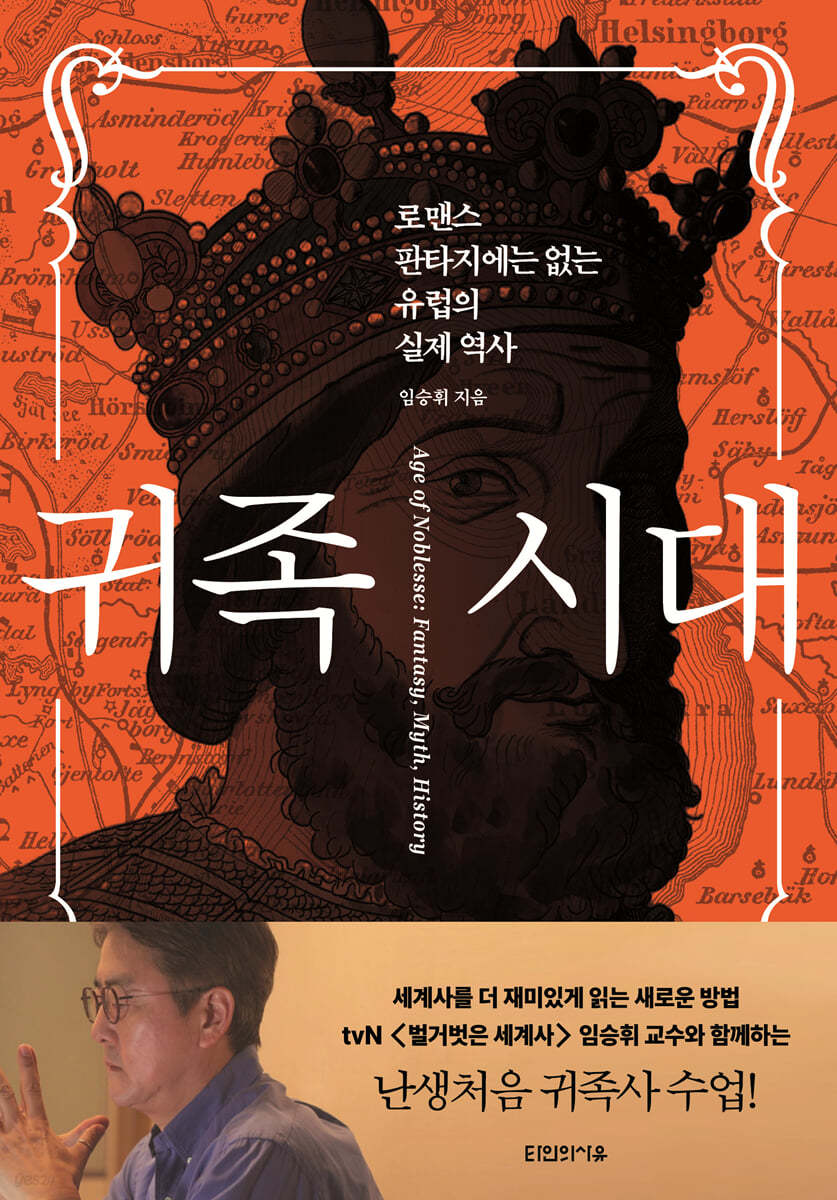
aristocratic era
 |
Description
Book Introduction
'Nobility', a glamorous but ambiguous entity
tvN [Naked World History] with Professor Seung-Hwi Lim
My first aristocratic history class
The word 'nobility' is not very unfamiliar to us.
It is a character that appears frequently in webtoons and web novels, so it feels familiar and sometimes friendly.
Although they are often mentioned in our daily lives, we do not know much about the actual history or lives of the nobility.
The history of the nobility spans a very long period of time.
Even if we limit the geographical scope to Europe, it covers over two thousand years, from the ancient Greek and Roman era to the 19th century.
For so long, have the nobility remained the same, like the stereotypical image in fantasy literature? Their lives have constantly and fiercely changed with the times.
In the flood of commercialism, there is not only 'high-class' culture that is easily consumed and quoted.
Through this book, we will reveal the true face of the nobility, something we have not known about until now.
tvN [Naked World History] with Professor Seung-Hwi Lim
My first aristocratic history class
The word 'nobility' is not very unfamiliar to us.
It is a character that appears frequently in webtoons and web novels, so it feels familiar and sometimes friendly.
Although they are often mentioned in our daily lives, we do not know much about the actual history or lives of the nobility.
The history of the nobility spans a very long period of time.
Even if we limit the geographical scope to Europe, it covers over two thousand years, from the ancient Greek and Roman era to the 19th century.
For so long, have the nobility remained the same, like the stereotypical image in fantasy literature? Their lives have constantly and fiercely changed with the times.
In the flood of commercialism, there is not only 'high-class' culture that is easily consumed and quoted.
Through this book, we will reveal the true face of the nobility, something we have not known about until now.
- You can preview some of the book's contents.
Preview
index
Prologue: A nobleman, a splendid but ambiguous name
Chapter 1: Reading Aristocratic Culture through Keywords
1.
Blue Blood
2.
duel
3.
chivalry
4.
noblesse oblige
5.
Balls and Afternoon Tea: From British High Society to New York Society
6.
Grand Tour
7.
Manners and Etiquette
8.
Fortresses and castles
9.
Crests symbolizing the family
Chapter 2: A Peek into the Noble's Daily Life
1.
Family is to a nobleman
2.
How did nobles get married?
3.
What kind of education did noble children receive?
4.
What did the nobles eat to survive?
5.
A Glimpse into British Aristocracy 1: Pride and Prejudice and Downton Abbey
6.
A Glimpse into the British Aristocracy 2: William Hogarth's Marriage Now series
Chapter 3: Nobles Who Left Their Names in History
1.
George Villiers, 1st Duke of Buckingham
2.
François de Lorraine and Henri de Lorraine, Dukes of Guise
3.
Borgia: Rodrigo, Cesare, Lucrezia
4.
Consuelo Vanderbilt
Chapter 4: The Strange and Curious World of the Nobles
1.
So what is nobility?
2.
Becoming a nobleman
3.
Noble titles and ranks
4.
The myth of a long-standing family and noble lineage
5.
What did the nobles do?
6.
Protection and protection
Epilogue: Change Everything to Lose Nothing
main
Source of the illustration
Recommendation
Chapter 1: Reading Aristocratic Culture through Keywords
1.
Blue Blood
2.
duel
3.
chivalry
4.
noblesse oblige
5.
Balls and Afternoon Tea: From British High Society to New York Society
6.
Grand Tour
7.
Manners and Etiquette
8.
Fortresses and castles
9.
Crests symbolizing the family
Chapter 2: A Peek into the Noble's Daily Life
1.
Family is to a nobleman
2.
How did nobles get married?
3.
What kind of education did noble children receive?
4.
What did the nobles eat to survive?
5.
A Glimpse into British Aristocracy 1: Pride and Prejudice and Downton Abbey
6.
A Glimpse into the British Aristocracy 2: William Hogarth's Marriage Now series
Chapter 3: Nobles Who Left Their Names in History
1.
George Villiers, 1st Duke of Buckingham
2.
François de Lorraine and Henri de Lorraine, Dukes of Guise
3.
Borgia: Rodrigo, Cesare, Lucrezia
4.
Consuelo Vanderbilt
Chapter 4: The Strange and Curious World of the Nobles
1.
So what is nobility?
2.
Becoming a nobleman
3.
Noble titles and ranks
4.
The myth of a long-standing family and noble lineage
5.
What did the nobles do?
6.
Protection and protection
Epilogue: Change Everything to Lose Nothing
main
Source of the illustration
Recommendation
Into the book
Why were the nobility in Europe referred to as "blue blood," a term that continues to be a frequent topic of conversation and captures the human imagination to this day? To cut to the chase, "blue blood" doesn't refer to blue blood, but to the blue veins that radiate from the skin.
Of course, the blood flowing through the veins is not actually blue.
However, because of the way light refracts when shining on the skin, it sometimes appears to have a blue tint.
This is because venous blood contains less oxygen than arterial blood.
Therefore, this is not a matter of history, but of science.
In conclusion, all the talk about blue blood is nothing more than a simple misunderstanding.
However, misunderstandings breed more misunderstandings, so when misunderstandings pile up, they can sometimes create a pretty solid story.
--- p.16
The image of noblesse oblige that prevails today is somewhat distant from the historical reality of Western European aristocracy.
This is especially true if we understand it as a virtue of charity or benevolence.
Noblesse oblige refers to the duty and sense of responsibility of a nobleman. Sometimes, it refers to duties and responsibilities that must be performed regardless of one's will, even if one lacks the ability, out of fear of the gaze of fellow nobles.
Fight bravely on the battlefield, fight even when you're afraid, and don't ignore the begging poor even when you're worried about feeding your family.
All of this was noblesse oblige.
The attitude that I have no choice but to follow suit because my colleagues do it is noblesse oblige.
Wearing expensive wigs and dressing in the latest fashions regardless of financial ability was also noblesse oblige.
--- p.47~48
Erasmus's "A Book of Etiquette for Children," first published in 1530, was a huge success and created the literary genre of etiquette books.
Of course, this etiquette book is not only for the nobility.
However, from the end of the 16th century, etiquette books began to appear that focused on maintaining the social status and distinction of the nobility.
It all began with the book The Courtier by Baldassare Castiglione, published in 1528.
This book argues that to be a perfect courtier, one must possess innate elegance and the respect of others for it.
If we follow Castiglione's argument, true nobility should flaunt their merits, but in the eyes of others, they should appear to be natural, not hard-won.
In short, it is a very difficult order to be elegant without being presumptuous.
--- p.82~83
For the aristocracy, who emphasized lineage and family, was the importance of family significantly different from that of other social classes? Yes and no.
In traditional society, the smallest unit of society was the family.
The concept of 'individual' had not yet emerged.
As the most basic building block, the family was an important foundation for both nobles and commoners.
Of course, the meaning and nuance of the word “important” is different today.
For example, it would be difficult to expect the ideal image of a loving couple, children who are the fruit of that love, and a harmonious family formed by them from the aristocracy of the past.
The myth of a loving, harmonious family emerged in the 19th century and is a concept that would not have been appropriate in pre-modern times.
--- p.110
William Hogarth (1697-1764) was an English painter and social satirist.
Between 1743 and 1745 he painted a series of six paintings called Marriage à la mode, which is now on display at the National Gallery in London.
This work debunks the myth of the aristocratic moral life and satirizes arranged marriages and subsequent married life with a cruel and horrifying intensity.
This elaborately planned series, in the order of [Marriage Agreement], [A Couple Sitting Side by Side], [Medical Examination], [Morning Dressing], [The Death of a Count], and [The Death of a Countess], shows the extreme drama of a political marriage for money and social advancement, from a spoiled nobleman's political marriage, to his messy married life stained by infidelity and gambling, to the husband's death due to infidelity and the wife's subsequent tragic suicide.
--- p.159~160
The nobility found in many societies in the East and the West can be defined as a status next to royalty that enjoys various privileges inherited through the patrilineal line, although its functions and appearance vary depending on the region and time period.
Here, status means a state in which social status is determined by birth.
It is a concept distinct from class, which is determined by an individual's ability and effort within economic production relations.
Before answering what a nobleman is, there is a prerequisite that must be remembered.
First is ‘society’.
For aristocracy to exist, there must be others, other members of society, who recognize it.
There is no society composed solely of aristocrats.
If all members equally enjoy the privileges of nobility, it becomes a right, not a privilege.
Secondly, nobility is a collective concept, not an individual one.
They exist as a relatively homogeneous group that enjoys certain privileges.
There is only one king.
Of course, the blood flowing through the veins is not actually blue.
However, because of the way light refracts when shining on the skin, it sometimes appears to have a blue tint.
This is because venous blood contains less oxygen than arterial blood.
Therefore, this is not a matter of history, but of science.
In conclusion, all the talk about blue blood is nothing more than a simple misunderstanding.
However, misunderstandings breed more misunderstandings, so when misunderstandings pile up, they can sometimes create a pretty solid story.
--- p.16
The image of noblesse oblige that prevails today is somewhat distant from the historical reality of Western European aristocracy.
This is especially true if we understand it as a virtue of charity or benevolence.
Noblesse oblige refers to the duty and sense of responsibility of a nobleman. Sometimes, it refers to duties and responsibilities that must be performed regardless of one's will, even if one lacks the ability, out of fear of the gaze of fellow nobles.
Fight bravely on the battlefield, fight even when you're afraid, and don't ignore the begging poor even when you're worried about feeding your family.
All of this was noblesse oblige.
The attitude that I have no choice but to follow suit because my colleagues do it is noblesse oblige.
Wearing expensive wigs and dressing in the latest fashions regardless of financial ability was also noblesse oblige.
--- p.47~48
Erasmus's "A Book of Etiquette for Children," first published in 1530, was a huge success and created the literary genre of etiquette books.
Of course, this etiquette book is not only for the nobility.
However, from the end of the 16th century, etiquette books began to appear that focused on maintaining the social status and distinction of the nobility.
It all began with the book The Courtier by Baldassare Castiglione, published in 1528.
This book argues that to be a perfect courtier, one must possess innate elegance and the respect of others for it.
If we follow Castiglione's argument, true nobility should flaunt their merits, but in the eyes of others, they should appear to be natural, not hard-won.
In short, it is a very difficult order to be elegant without being presumptuous.
--- p.82~83
For the aristocracy, who emphasized lineage and family, was the importance of family significantly different from that of other social classes? Yes and no.
In traditional society, the smallest unit of society was the family.
The concept of 'individual' had not yet emerged.
As the most basic building block, the family was an important foundation for both nobles and commoners.
Of course, the meaning and nuance of the word “important” is different today.
For example, it would be difficult to expect the ideal image of a loving couple, children who are the fruit of that love, and a harmonious family formed by them from the aristocracy of the past.
The myth of a loving, harmonious family emerged in the 19th century and is a concept that would not have been appropriate in pre-modern times.
--- p.110
William Hogarth (1697-1764) was an English painter and social satirist.
Between 1743 and 1745 he painted a series of six paintings called Marriage à la mode, which is now on display at the National Gallery in London.
This work debunks the myth of the aristocratic moral life and satirizes arranged marriages and subsequent married life with a cruel and horrifying intensity.
This elaborately planned series, in the order of [Marriage Agreement], [A Couple Sitting Side by Side], [Medical Examination], [Morning Dressing], [The Death of a Count], and [The Death of a Countess], shows the extreme drama of a political marriage for money and social advancement, from a spoiled nobleman's political marriage, to his messy married life stained by infidelity and gambling, to the husband's death due to infidelity and the wife's subsequent tragic suicide.
--- p.159~160
The nobility found in many societies in the East and the West can be defined as a status next to royalty that enjoys various privileges inherited through the patrilineal line, although its functions and appearance vary depending on the region and time period.
Here, status means a state in which social status is determined by birth.
It is a concept distinct from class, which is determined by an individual's ability and effort within economic production relations.
Before answering what a nobleman is, there is a prerequisite that must be remembered.
First is ‘society’.
For aristocracy to exist, there must be others, other members of society, who recognize it.
There is no society composed solely of aristocrats.
If all members equally enjoy the privileges of nobility, it becomes a right, not a privilege.
Secondly, nobility is a collective concept, not an individual one.
They exist as a relatively homogeneous group that enjoys certain privileges.
There is only one king.
--- p.226~227
Publisher's Review
“Are nobles really born with ‘blue blood’?”
From ancient Greek and Roman times to the 19th century,
It has been piled up layer by layer for over two thousand years
We'll unravel the myriad misconceptions and truths about the nobility!
How much do we know about "nobility"? Here's the dictionary definition:
“A class or people who have political and social privileges due to their family or status.” Professor Seung-Hwi Lim, the author, argues that this dictionary definition cannot fully describe the nobility.
While it may convey the most basic information about the nobility, it fails to adequately capture the mark they left on the history of Europe and the world over the past two thousand years, or the social culture and lifestyle they created while breathing with the times.
In this book, the author organizes and analyzes the 'nobility', which has been dealt with superficially so far, in a more systematic way.
Chapter 1 explains the world of the nobility using relatively familiar concepts that readers are likely to have encountered at least once, from the myth of bloodlines to duels, chivalry, noblesse oblige, etiquette, and the emblems of noble families.
Chapter 2 reconstructs the everyday lives of the nobles, including their families, marriage, children's education, and food, clothing, and shelter.
In 'Chapter 3', we select notable nobles who have left their mark on history and reflect on the lives of nobles through the events surrounding them.
The final chapter, 'Chapter 4', defines the historical concept of nobility, explains how to become a noble, explains the structure of titles, explains what nobles do, and explains the unique social relationships among nobles.
The author's systematic explanation of the nobility brings us one step closer to understanding the true nature of the nobility.
Blue Blood, Chivalry, Duels, Noblesse Oblige, Fortresses and Castles…
The history and culture of the nobility through various keywords
There are several keywords that come to mind when you think of 'nobility'.
Blue blood, chivalry, duels to the death, noblesse oblige, imposing fortified castles, and various emblems representing the family.
These keywords are sometimes considered to be the exclusive domain of the nobility.
In particular, the myth that 'nobles are born with blue blood' was accepted as 'truth' by the public for quite a long time.
The author explains that this 'blue blood' myth functions as a kind of symbol emphasizing the purity of a noble family that is not mixed with foreigners.
The 'blue blood' and pale skin of the nobility were also used as devices to distinguish social status, and in traditional society, dark skin was generally a characteristic of those engaged in outdoor labor such as farming or field work.
Therefore, pale skin was perceived as a social sign of the nobility, distinguishing them from peasants who had to work hard in the scorching sun and inevitably had tanned skin.
Through the myth of the blue blood, we can see how the nobility lived a life distinct from the common people and what social codes it implied.
One thing that cannot be left out when talking about 'nobility' is 'duel'.
Shakespeare's play Romeo and Juliet, which has been reborn as numerous films, plays, and operas, also features a famous duel scene.
It is a duel between the main character, Romeo, and Juliet's cousin, Tybalt.
Romeo and Tybalt's families are enemies, and their duel is a very serious matter that affects not only the parties involved but also their families' honor.
So why did nobles resort to "dueling" to resolve disputes? The author explains that dueling was a common method of judicial proceedings in the Middle Ages.
In other words, if a dispute arises and a compromise cannot be reached, a duel is fought based on the logic that whoever wins the fight is right.
Dueling, which seemed to be the exclusive domain of the nobles, continued to be practiced among non-nobles as well.
The biggest problem with resolving disputes by duel was that the winner of the fight was innocent and the loser was guilty.
In the 9th century, France implemented several measures to prevent the abuse of dueling, but they were not very effective. The situation changed somewhat in the 17th century, when the state's judicial and administrative institutions were strengthened under the absolute monarchy.
But the duels did not disappear easily.
For a king seeking to strengthen his power, a duel was a challenge to public authority.
For the aristocracy, on the other hand, it was an expression of their longing for the rights they were losing: the right and power to solve their own problems.
The author analyzes and explains the 'world of the nobility' using familiar keywords so that anyone can easily understand.
The nobility were not mythical beings distinct from the common people, but living, breathing entities in actual history.
The author argues that the nobility also constantly sought change and adapted to new environments in order to survive.
As a privileged class, they did not settle for the status quo, but rather sought dynamic change in line with the times.
This book will help you change your misconceptions and misconceptions about the nobility, and by understanding the values and goals they pursued in life, you will be able to reflect on how to live in this society.
From ancient Greek and Roman times to the 19th century,
It has been piled up layer by layer for over two thousand years
We'll unravel the myriad misconceptions and truths about the nobility!
How much do we know about "nobility"? Here's the dictionary definition:
“A class or people who have political and social privileges due to their family or status.” Professor Seung-Hwi Lim, the author, argues that this dictionary definition cannot fully describe the nobility.
While it may convey the most basic information about the nobility, it fails to adequately capture the mark they left on the history of Europe and the world over the past two thousand years, or the social culture and lifestyle they created while breathing with the times.
In this book, the author organizes and analyzes the 'nobility', which has been dealt with superficially so far, in a more systematic way.
Chapter 1 explains the world of the nobility using relatively familiar concepts that readers are likely to have encountered at least once, from the myth of bloodlines to duels, chivalry, noblesse oblige, etiquette, and the emblems of noble families.
Chapter 2 reconstructs the everyday lives of the nobles, including their families, marriage, children's education, and food, clothing, and shelter.
In 'Chapter 3', we select notable nobles who have left their mark on history and reflect on the lives of nobles through the events surrounding them.
The final chapter, 'Chapter 4', defines the historical concept of nobility, explains how to become a noble, explains the structure of titles, explains what nobles do, and explains the unique social relationships among nobles.
The author's systematic explanation of the nobility brings us one step closer to understanding the true nature of the nobility.
Blue Blood, Chivalry, Duels, Noblesse Oblige, Fortresses and Castles…
The history and culture of the nobility through various keywords
There are several keywords that come to mind when you think of 'nobility'.
Blue blood, chivalry, duels to the death, noblesse oblige, imposing fortified castles, and various emblems representing the family.
These keywords are sometimes considered to be the exclusive domain of the nobility.
In particular, the myth that 'nobles are born with blue blood' was accepted as 'truth' by the public for quite a long time.
The author explains that this 'blue blood' myth functions as a kind of symbol emphasizing the purity of a noble family that is not mixed with foreigners.
The 'blue blood' and pale skin of the nobility were also used as devices to distinguish social status, and in traditional society, dark skin was generally a characteristic of those engaged in outdoor labor such as farming or field work.
Therefore, pale skin was perceived as a social sign of the nobility, distinguishing them from peasants who had to work hard in the scorching sun and inevitably had tanned skin.
Through the myth of the blue blood, we can see how the nobility lived a life distinct from the common people and what social codes it implied.
One thing that cannot be left out when talking about 'nobility' is 'duel'.
Shakespeare's play Romeo and Juliet, which has been reborn as numerous films, plays, and operas, also features a famous duel scene.
It is a duel between the main character, Romeo, and Juliet's cousin, Tybalt.
Romeo and Tybalt's families are enemies, and their duel is a very serious matter that affects not only the parties involved but also their families' honor.
So why did nobles resort to "dueling" to resolve disputes? The author explains that dueling was a common method of judicial proceedings in the Middle Ages.
In other words, if a dispute arises and a compromise cannot be reached, a duel is fought based on the logic that whoever wins the fight is right.
Dueling, which seemed to be the exclusive domain of the nobles, continued to be practiced among non-nobles as well.
The biggest problem with resolving disputes by duel was that the winner of the fight was innocent and the loser was guilty.
In the 9th century, France implemented several measures to prevent the abuse of dueling, but they were not very effective. The situation changed somewhat in the 17th century, when the state's judicial and administrative institutions were strengthened under the absolute monarchy.
But the duels did not disappear easily.
For a king seeking to strengthen his power, a duel was a challenge to public authority.
For the aristocracy, on the other hand, it was an expression of their longing for the rights they were losing: the right and power to solve their own problems.
The author analyzes and explains the 'world of the nobility' using familiar keywords so that anyone can easily understand.
The nobility were not mythical beings distinct from the common people, but living, breathing entities in actual history.
The author argues that the nobility also constantly sought change and adapted to new environments in order to survive.
As a privileged class, they did not settle for the status quo, but rather sought dynamic change in line with the times.
This book will help you change your misconceptions and misconceptions about the nobility, and by understanding the values and goals they pursued in life, you will be able to reflect on how to live in this society.
GOODS SPECIFICS
- Date of issue: December 13, 2024
- Page count, weight, size: 296 pages | 150*215*20mm
- ISBN13: 9791142302084
- ISBN10: 1142302083
You may also like
카테고리
korean


korean

![ELLE 엘르 스페셜 에디션 A형 : 12월 [2025]](http://librairie.coreenne.fr/cdn/shop/files/b8e27a3de6c9538896439686c6b0e8fb.jpg?v=1766436872&width=3840)


