

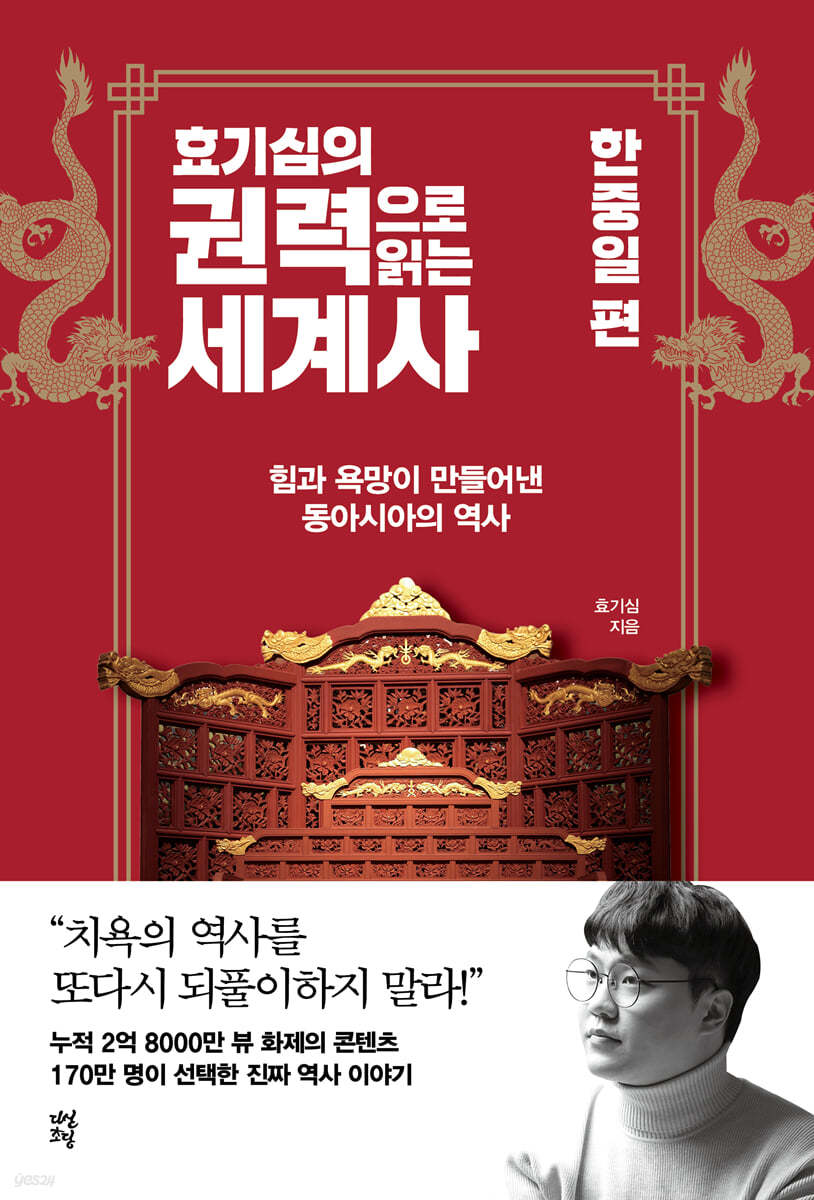
Reading World History Through the Power of Filial Piety - Korea, China, and Japan
 |
Description
Book Introduction
▶ More fun than YouTube and more in-depth than textbooks ◀
“Don’t repeat the shameful history!”
A hot topic with over 280 million cumulative views!
A true historical story chosen by 1.7 million people
When dealing with world history, the history that we are most sensitive to is undoubtedly the history of East Asia.
Historical conflicts between Korea and Japan persist due to the painful experience of the Japanese colonial period, and as China carries out its Northeast Project, historical issues between Korea and China have also emerged as a hot potato.
Since ancient times, China has exercised power over the Korean Peninsula through tributary relations, and Japan's Toyotomi Hideyoshi turned the Korean Peninsula into a battlefield due to his lust for power.
Furthermore, Joseon was caught between the Ming and Qing Dynasties and was unable to decide its position, leading to the humiliation of the Byeongja Horan. In the modern era, when the Japanese emperor and military seized power, there was the pain of our country's sovereignty being taken away.
This book explores why China and Japan invaded the Korean Peninsula and how the Korean nations responded, revealing the truth about the history of China, Korea, and Japan hidden behind the records of those in power.
“Don’t repeat the shameful history!”
A hot topic with over 280 million cumulative views!
A true historical story chosen by 1.7 million people
When dealing with world history, the history that we are most sensitive to is undoubtedly the history of East Asia.
Historical conflicts between Korea and Japan persist due to the painful experience of the Japanese colonial period, and as China carries out its Northeast Project, historical issues between Korea and China have also emerged as a hot potato.
Since ancient times, China has exercised power over the Korean Peninsula through tributary relations, and Japan's Toyotomi Hideyoshi turned the Korean Peninsula into a battlefield due to his lust for power.
Furthermore, Joseon was caught between the Ming and Qing Dynasties and was unable to decide its position, leading to the humiliation of the Byeongja Horan. In the modern era, when the Japanese emperor and military seized power, there was the pain of our country's sovereignty being taken away.
This book explores why China and Japan invaded the Korean Peninsula and how the Korean nations responded, revealing the truth about the history of China, Korea, and Japan hidden behind the records of those in power.
- You can preview some of the book's contents.
Preview
index
Introduction
Chapter 1: What on Earth is Sinocentrism?: The Beginning of Sinocentrism
Chapter 2: Goguryeo Also Paid Tribute: The Ancient Korean Peninsula and Continental China
Chapter 3: Half of Chinese History Was by Others: A Continuum of Division and Unification
Chapter 4: If You Want to Be King, Bow Your Head: Relations between the Ming Dynasty and Joseon
Chapter 5: Joseon's Backs Are Shattered by the Whale Fight: The Ming-Qing Transition Period
Chapter 6: The New Masters of Continental China: The Rise and Fall of the Qing Dynasty
Chapter 7: The Birth of the Chinese Nation: A Nation Created for the Nation
Chapter 8: The Birth of the Japanese Emperor: A Useful Puppet
Chapter 9: The Warring States Period and the Imjin War: A Turning Point in East Asia
Chapter 10: The Meiji Restoration and the Emperor: Struggles to Escape the Puppet
Concluding remarks
References
Chapter 1: What on Earth is Sinocentrism?: The Beginning of Sinocentrism
Chapter 2: Goguryeo Also Paid Tribute: The Ancient Korean Peninsula and Continental China
Chapter 3: Half of Chinese History Was by Others: A Continuum of Division and Unification
Chapter 4: If You Want to Be King, Bow Your Head: Relations between the Ming Dynasty and Joseon
Chapter 5: Joseon's Backs Are Shattered by the Whale Fight: The Ming-Qing Transition Period
Chapter 6: The New Masters of Continental China: The Rise and Fall of the Qing Dynasty
Chapter 7: The Birth of the Chinese Nation: A Nation Created for the Nation
Chapter 8: The Birth of the Japanese Emperor: A Useful Puppet
Chapter 9: The Warring States Period and the Imjin War: A Turning Point in East Asia
Chapter 10: The Meiji Restoration and the Emperor: Struggles to Escape the Puppet
Concluding remarks
References
Detailed image
.jpg)
Into the book
However, the king of Zhou claimed to be the ‘son of heaven’, that is, the ‘son of heaven’.
The reason the king of the Zhou Dynasty started to talk about the emperor was because of the Shang Dynasty that existed before the Zhou Dynasty.
As explained earlier, the Zhou Dynasty was a vassal state of the Shang Dynasty, but it staged a coup d'état in order to become the master of mainland China.
However, the king of the Shang Dynasty claimed that he was the ‘son of the god of heaven = emperor.’
From the perspective of the King of Zhou, attacking the Shang Dynasty would have been tantamount to attacking the Son of God.
So the king of Zhou said that he too was the son of the god of heaven.
… The Son of Heaven, the descendant of the Heavenly God, is a divine being who is truly connected to the Heavenly God by blood, and who rules over the humans of the earthly world under the command of the Heavenly God.
Then, when he dies, he ascends to heaven and goes to the side of the god of heaven, acting as a link between his son on earth and the god of heaven.
That is why it is important to offer sacrifices to heaven and ancestors in China.
In case the Heavenly God was angry and needed to be appeased, the emperor, who was directly connected to the Heavenly God, gaslighted the people by saying that he had to perform a sacrifice.
--- p.21~23, from “Chapter 1, “What on earth is Sinocentrism?: The Beginning of Sinocentrism”
Some Chinese historians claim that the Chinese have been superior and excellent since ancient times, and that neighboring countries even paid tribute to them, so the territories of the tributary countries were considered Chinese territory.
Moreover, in 2017, Chinese President Xi Jinping stirred up Korean society by making the remark that Korea was in fact a part of China.
In this situation, some Koreans felt insulted and even went so far as to claim, "Korea has always been an independent nation, and we chose to pay tribute because it actually benefited us."
Just as China distorts history, Korea also exaggerates and distorts the past history of the Korean Peninsula.
I think that filial piety should not be approached as a battle of pride over past history.
In the past, the Korean Peninsula nations actually paid tribute to and received investiture from mainland China, and this was also an act of humbling their pride.
But this is something that happens universally in the world of international politics, which is governed by the logic of power.
There is no need to deny it, nor is there any need to affirm it.
More importantly, shouldn't we be thinking about how to prevent the Korean Peninsula from bowing down to anyone again?
--- p.91~92, from “Chapter 2, “Goguryeo Also Paid Tribute: The Ancient Korean Peninsula and Continental China”
Joseon was caught between the Ming Dynasty and the Later Jin Dynasty, and was in a very difficult international political situation, not knowing what to do or not to do.
The problem is that one of the reasons Injo gave for bringing down King Gwanghaegun was that he 'kept his distance from the Ming Dynasty and became close to the barbarian Later Jin Dynasty.'
That is, even if Injo later came to think that it would be more advantageous to appease or be friendly with the Later Jin, the moment he tried to become close to the Later Jin, he would lose the legitimacy of his rise to power.
Above all, Injo had to listen to the Ming Dynasty's words in order to receive the investiture.
The Ming Dynasty also seemed to be well aware of King Injo's situation.
In fact, in 1623, they tried to pressure Joseon into attacking the Later Jin by using the investiture as a weapon.
“Hey, King of Joseon! You wanted to be crowned, right? I can’t give it to you right away, but there’s Mao Wenlong in Joseon right now, right? If you help him and work hard to defeat the Later Jin, I’ll give you the crown.”
Haha.” In fact, it was Joseon that was shedding blood instead of the Ming Dynasty.
It would have been very difficult for King Injo, who was completely vulnerable to the Ming Dynasty, to refuse.
From King Injo's perspective, who had to be close to the Ming Dynasty, he had to reject the Later Jin Dynasty.
This is the ‘pro-Ming, anti-Jin’ policy of King Injo that we learned about in history class.
--- p.211~212, from “Chapter 5, “Joseon’s Back Breaks in the Whale Fight: The Ming-Qing Transition Period”
Japan's growth was spectacular, but the story behind it was not so bright.
The Japanese people were suffering from inflation.
After World War I, the price of rice soared, leading to protests and riots throughout Japan from July to September 1918, demanding lower prices.
I don't know if Japan is doing well, but it was hard to make a living right away, so everyone rose up.
At the same time, Japanese citizens began a social movement demanding that labor rights and voting rights be guaranteed.
At that time, Japan granted voting rights only to men over 25 years of age who paid a certain amount of property tax.
In 1920, tens of thousands of people took to the streets in mass demonstrations demanding universal suffrage, and in 1925, the property tax requirement was abolished.
As the right to vote expanded, democracy took root in Japan and it seemed that the lives of Japanese people would improve once again, but the world was not so easy.
In September 1923, before universal suffrage was introduced, the Great Kanto Earthquake occurred, decimating major cities such as Tokyo and Yokohama, and in 1929, the Japanese economy also took a major hit due to the aftermath of the Great Depression.
Meanwhile, Japanese conglomerates and politicians were busy colluding with each other, and the lives of ordinary Japanese people only became more difficult.
At this time, the Japanese soldiers, perhaps unable to forget the days of the samurai regime and the shogunate, began to argue that they should seize power.
The reason the king of the Zhou Dynasty started to talk about the emperor was because of the Shang Dynasty that existed before the Zhou Dynasty.
As explained earlier, the Zhou Dynasty was a vassal state of the Shang Dynasty, but it staged a coup d'état in order to become the master of mainland China.
However, the king of the Shang Dynasty claimed that he was the ‘son of the god of heaven = emperor.’
From the perspective of the King of Zhou, attacking the Shang Dynasty would have been tantamount to attacking the Son of God.
So the king of Zhou said that he too was the son of the god of heaven.
… The Son of Heaven, the descendant of the Heavenly God, is a divine being who is truly connected to the Heavenly God by blood, and who rules over the humans of the earthly world under the command of the Heavenly God.
Then, when he dies, he ascends to heaven and goes to the side of the god of heaven, acting as a link between his son on earth and the god of heaven.
That is why it is important to offer sacrifices to heaven and ancestors in China.
In case the Heavenly God was angry and needed to be appeased, the emperor, who was directly connected to the Heavenly God, gaslighted the people by saying that he had to perform a sacrifice.
--- p.21~23, from “Chapter 1, “What on earth is Sinocentrism?: The Beginning of Sinocentrism”
Some Chinese historians claim that the Chinese have been superior and excellent since ancient times, and that neighboring countries even paid tribute to them, so the territories of the tributary countries were considered Chinese territory.
Moreover, in 2017, Chinese President Xi Jinping stirred up Korean society by making the remark that Korea was in fact a part of China.
In this situation, some Koreans felt insulted and even went so far as to claim, "Korea has always been an independent nation, and we chose to pay tribute because it actually benefited us."
Just as China distorts history, Korea also exaggerates and distorts the past history of the Korean Peninsula.
I think that filial piety should not be approached as a battle of pride over past history.
In the past, the Korean Peninsula nations actually paid tribute to and received investiture from mainland China, and this was also an act of humbling their pride.
But this is something that happens universally in the world of international politics, which is governed by the logic of power.
There is no need to deny it, nor is there any need to affirm it.
More importantly, shouldn't we be thinking about how to prevent the Korean Peninsula from bowing down to anyone again?
--- p.91~92, from “Chapter 2, “Goguryeo Also Paid Tribute: The Ancient Korean Peninsula and Continental China”
Joseon was caught between the Ming Dynasty and the Later Jin Dynasty, and was in a very difficult international political situation, not knowing what to do or not to do.
The problem is that one of the reasons Injo gave for bringing down King Gwanghaegun was that he 'kept his distance from the Ming Dynasty and became close to the barbarian Later Jin Dynasty.'
That is, even if Injo later came to think that it would be more advantageous to appease or be friendly with the Later Jin, the moment he tried to become close to the Later Jin, he would lose the legitimacy of his rise to power.
Above all, Injo had to listen to the Ming Dynasty's words in order to receive the investiture.
The Ming Dynasty also seemed to be well aware of King Injo's situation.
In fact, in 1623, they tried to pressure Joseon into attacking the Later Jin by using the investiture as a weapon.
“Hey, King of Joseon! You wanted to be crowned, right? I can’t give it to you right away, but there’s Mao Wenlong in Joseon right now, right? If you help him and work hard to defeat the Later Jin, I’ll give you the crown.”
Haha.” In fact, it was Joseon that was shedding blood instead of the Ming Dynasty.
It would have been very difficult for King Injo, who was completely vulnerable to the Ming Dynasty, to refuse.
From King Injo's perspective, who had to be close to the Ming Dynasty, he had to reject the Later Jin Dynasty.
This is the ‘pro-Ming, anti-Jin’ policy of King Injo that we learned about in history class.
--- p.211~212, from “Chapter 5, “Joseon’s Back Breaks in the Whale Fight: The Ming-Qing Transition Period”
Japan's growth was spectacular, but the story behind it was not so bright.
The Japanese people were suffering from inflation.
After World War I, the price of rice soared, leading to protests and riots throughout Japan from July to September 1918, demanding lower prices.
I don't know if Japan is doing well, but it was hard to make a living right away, so everyone rose up.
At the same time, Japanese citizens began a social movement demanding that labor rights and voting rights be guaranteed.
At that time, Japan granted voting rights only to men over 25 years of age who paid a certain amount of property tax.
In 1920, tens of thousands of people took to the streets in mass demonstrations demanding universal suffrage, and in 1925, the property tax requirement was abolished.
As the right to vote expanded, democracy took root in Japan and it seemed that the lives of Japanese people would improve once again, but the world was not so easy.
In September 1923, before universal suffrage was introduced, the Great Kanto Earthquake occurred, decimating major cities such as Tokyo and Yokohama, and in 1929, the Japanese economy also took a major hit due to the aftermath of the Great Depression.
Meanwhile, Japanese conglomerates and politicians were busy colluding with each other, and the lives of ordinary Japanese people only became more difficult.
At this time, the Japanese soldiers, perhaps unable to forget the days of the samurai regime and the shogunate, began to argue that they should seize power.
--- p.428~429, from “Chapter 10, “The Meiji Restoration and the Emperor: Struggles to Escape the Puppet”
Publisher's Review
The reason why Gwanggaeto the Great was crowned and paid tribute
Ancient China called itself the center of the world and called the barbarians in the east, west, south, and north the Dongyi, Xirong, Nanman, and Buji, respectively.
The Han Dynasty used a tributary strategy to rule over these barbarians.
The tributary relationship in ancient East Asia was simple.
According to the logic of power, weak countries had to bow to powerful countries to avoid suffering losses, and to show that they had bowed, they established a tributary relationship.
For example, even the Han Dynasty once paid tribute to the Xiongnu.
The countries of the Korean Peninsula also established tributary relations with China for various reasons.
King Gwanggaeto the Great, who led Goguryeo to its golden age, was granted a title by Later Yan for practical gain.
At that time, Goguryeo was in a situation where it was dealing with Later Yan and Baekje from above and below.
However, since it was unlikely that Later Yan would invade immediately due to Northern Wei, they decided to establish a vassal relationship with Later Yan and focus on the war with Baekje.
In fact, King Gwanggaeto the Great personally led the army south of the Han River and accepted Baekje's surrender.
He also paid tribute to Namyeon, sending gifts such as ten people, a horse, and a bear skin, along with an envoy.
In this passage, King Gwanggaeto the Great is analyzed as a person with a considerable sense of international politics, as he attempted to obtain information about the Chinese mainland through Namyeon while sending a small tribute.
How did Joseon's Confucianism begin?
When discussing the history of the Korean Peninsula, the Ming Dynasty and Joseon are important countries that cannot be left out.
The two appeared in history around the same time, replacing the Yuan Dynasty and Goryeo respectively.
Additionally, both countries adopted Confucianism as the basis of their rule.
However, in Joseon, servility toward the Ming Dynasty gradually began to take root.
Joseon's politics and diplomatic activities were so deeply ingrained with servility that there was even a debate over whether Joseon was a vassal state of the Ming Dynasty.
Joseon and the Ming Dynasty did not have a tributary relationship from the beginning.
In the early days of Joseon's founding, there was talk of conquering Liaodong due to pressure and interference from Zhu Yuanzhang of the Ming Dynasty, and it even came to the brink of war.
However, when Yi Bang-won instigated the Prince's Rebellion in Joseon, Jeong Do-jeon, who had promoted the conquest of Liaodong, was killed, and the story of the conquest of Liaodong disappeared.
At that time, the Yongle Emperor ascended to the throne in the Ming Dynasty, but both Yongle Emperor and King Taejong Yi Bang-won had issues with their legitimacy.
This is because Emperor Yeongrak deposed his nephew, Emperor Jianwen, and became emperor, while Yi Bang-won deposed his father and killed his younger brother, Yi Bang-seok, to become king.
When Emperor Yeongrak ascended to the throne, Yi Bang-won sent an envoy to congratulate him on his ascension to the throne.
Emperor Yongle, who gained power to ascend to the throne thanks to Joseon, sent back a huge amount of gifts to Joseon envoys when they returned.
Meanwhile, King Taejong Lee Bang-won was also able to resolve the issue of legitimacy thanks to the active support of the Ming emperor.
Emperor Yongle and Emperor Taizong consolidated their tributary relationship and maintained a stable grip on power.
In this kind of relationship between the two countries, Joseon increasingly came to view the Ming Dynasty as a country that it should serve with sincerity.
The decisive turning point was the Imjin War.
With the Ming army's participation in the war, the tide of the war was turned, and with the defeat of Japan, we witnessed the realization of the "order of China" that we had only heard of in words.
The Imjin War, a war that shook East Asia
The Imjin War was one of the events that had the greatest impact on the history of Korea, China, and Japan.
The Joseon envoys who were dispatched to investigate whether Japan would start a war expressed different opinions upon returning home.
Hwang Yun-gil, a member of the Western faction, reported that Japan was likely to start a war, while Kim Seong-il, a member of the Eastern faction, reported that war was unlikely and that Toyotomi Hideyoshi did not appear to be a threat.
There is a widely spread theory that the reason the two people's opinions differed was because of 'partisanship'.
However, Heo Seong, who had accompanied the Joseon Tongsinsa, was a member of the Dongin faction, but like Hwang Yun-gil, who was a member of the Seoin faction, he reported that Japan was likely to invade.
Also, because the power of the Dong-in faction was strong at the time, Kim Seong-il's argument was accepted, and there is a widely spread theory that Joseon suffered greatly at the hands of Japan because it did not prepare for war.
However, since the outbreak of the Eulmyo Incident (1555), Joseon had been preparing in its own way for fear that Japan would invade again soon.
In particular, it was only 1 year and 2 months before the outbreak of the Imjin War that Yi Sun-sin, who had been almost unknown, was promoted at lightning speed and placed in charge of protecting the seas of Jeolla Province.
According to the record of November 24th year of the Annals of King Seonjo, after the Joseon Dynasty received the report of the Tongsinsa, they repaired the castles in the Yeongnam region and selected soldiers to prepare for the Japanese invasion, but the people's resentment grew.
There were no winners in the Imjin War.
Joseon, Japan, and the Ming Dynasty all suffered enormous damage.
Because of this, East Asia experienced great changes after the Imjin War.
Joseon was unable to recover its national strength for a while due to the deaths of countless people and the devastation of its land.
They also shared the belief that they had overcome the crisis with the help of the Ming Dynasty, and became more diplomatically dependent on the Ming Dynasty.
The Ming Dynasty, whose national power was already weakening, suffered from numerous civil unrest as its national power rapidly declined after the Imjin War.
And eventually, not long after, it was destroyed by the Yijaseong and the Jurchen people (Qing Dynasty).
Beware of the 21st-century "Son of Heaven"
Those in power in East Asia have constantly provided plausible justifications for people to believe.
The Chinese have long considered themselves a great people ruled by the Emperor, the "Son of Heaven," and have believed that China is the center of the world, even leading the people of neighboring Joseon to believe the same.
Is it any different now? Even modern people living in the 21st century seem to live by believing what they want to believe.
In the political sphere, extreme voters worship their candidate almost like a religion, believing that if he or she is elected, all the problems in South Korea will be solved.
However, if we look at history, we see that those in power often only put forward flashy excuses, while acting for their own benefit behind the scenes.
We need to be cautious about whether those in power today are pushing forward a new "heavenly figure" who can win the hearts of 21st-century voters.
I recommend readers to read it.
Ancient China called itself the center of the world and called the barbarians in the east, west, south, and north the Dongyi, Xirong, Nanman, and Buji, respectively.
The Han Dynasty used a tributary strategy to rule over these barbarians.
The tributary relationship in ancient East Asia was simple.
According to the logic of power, weak countries had to bow to powerful countries to avoid suffering losses, and to show that they had bowed, they established a tributary relationship.
For example, even the Han Dynasty once paid tribute to the Xiongnu.
The countries of the Korean Peninsula also established tributary relations with China for various reasons.
King Gwanggaeto the Great, who led Goguryeo to its golden age, was granted a title by Later Yan for practical gain.
At that time, Goguryeo was in a situation where it was dealing with Later Yan and Baekje from above and below.
However, since it was unlikely that Later Yan would invade immediately due to Northern Wei, they decided to establish a vassal relationship with Later Yan and focus on the war with Baekje.
In fact, King Gwanggaeto the Great personally led the army south of the Han River and accepted Baekje's surrender.
He also paid tribute to Namyeon, sending gifts such as ten people, a horse, and a bear skin, along with an envoy.
In this passage, King Gwanggaeto the Great is analyzed as a person with a considerable sense of international politics, as he attempted to obtain information about the Chinese mainland through Namyeon while sending a small tribute.
How did Joseon's Confucianism begin?
When discussing the history of the Korean Peninsula, the Ming Dynasty and Joseon are important countries that cannot be left out.
The two appeared in history around the same time, replacing the Yuan Dynasty and Goryeo respectively.
Additionally, both countries adopted Confucianism as the basis of their rule.
However, in Joseon, servility toward the Ming Dynasty gradually began to take root.
Joseon's politics and diplomatic activities were so deeply ingrained with servility that there was even a debate over whether Joseon was a vassal state of the Ming Dynasty.
Joseon and the Ming Dynasty did not have a tributary relationship from the beginning.
In the early days of Joseon's founding, there was talk of conquering Liaodong due to pressure and interference from Zhu Yuanzhang of the Ming Dynasty, and it even came to the brink of war.
However, when Yi Bang-won instigated the Prince's Rebellion in Joseon, Jeong Do-jeon, who had promoted the conquest of Liaodong, was killed, and the story of the conquest of Liaodong disappeared.
At that time, the Yongle Emperor ascended to the throne in the Ming Dynasty, but both Yongle Emperor and King Taejong Yi Bang-won had issues with their legitimacy.
This is because Emperor Yeongrak deposed his nephew, Emperor Jianwen, and became emperor, while Yi Bang-won deposed his father and killed his younger brother, Yi Bang-seok, to become king.
When Emperor Yeongrak ascended to the throne, Yi Bang-won sent an envoy to congratulate him on his ascension to the throne.
Emperor Yongle, who gained power to ascend to the throne thanks to Joseon, sent back a huge amount of gifts to Joseon envoys when they returned.
Meanwhile, King Taejong Lee Bang-won was also able to resolve the issue of legitimacy thanks to the active support of the Ming emperor.
Emperor Yongle and Emperor Taizong consolidated their tributary relationship and maintained a stable grip on power.
In this kind of relationship between the two countries, Joseon increasingly came to view the Ming Dynasty as a country that it should serve with sincerity.
The decisive turning point was the Imjin War.
With the Ming army's participation in the war, the tide of the war was turned, and with the defeat of Japan, we witnessed the realization of the "order of China" that we had only heard of in words.
The Imjin War, a war that shook East Asia
The Imjin War was one of the events that had the greatest impact on the history of Korea, China, and Japan.
The Joseon envoys who were dispatched to investigate whether Japan would start a war expressed different opinions upon returning home.
Hwang Yun-gil, a member of the Western faction, reported that Japan was likely to start a war, while Kim Seong-il, a member of the Eastern faction, reported that war was unlikely and that Toyotomi Hideyoshi did not appear to be a threat.
There is a widely spread theory that the reason the two people's opinions differed was because of 'partisanship'.
However, Heo Seong, who had accompanied the Joseon Tongsinsa, was a member of the Dongin faction, but like Hwang Yun-gil, who was a member of the Seoin faction, he reported that Japan was likely to invade.
Also, because the power of the Dong-in faction was strong at the time, Kim Seong-il's argument was accepted, and there is a widely spread theory that Joseon suffered greatly at the hands of Japan because it did not prepare for war.
However, since the outbreak of the Eulmyo Incident (1555), Joseon had been preparing in its own way for fear that Japan would invade again soon.
In particular, it was only 1 year and 2 months before the outbreak of the Imjin War that Yi Sun-sin, who had been almost unknown, was promoted at lightning speed and placed in charge of protecting the seas of Jeolla Province.
According to the record of November 24th year of the Annals of King Seonjo, after the Joseon Dynasty received the report of the Tongsinsa, they repaired the castles in the Yeongnam region and selected soldiers to prepare for the Japanese invasion, but the people's resentment grew.
There were no winners in the Imjin War.
Joseon, Japan, and the Ming Dynasty all suffered enormous damage.
Because of this, East Asia experienced great changes after the Imjin War.
Joseon was unable to recover its national strength for a while due to the deaths of countless people and the devastation of its land.
They also shared the belief that they had overcome the crisis with the help of the Ming Dynasty, and became more diplomatically dependent on the Ming Dynasty.
The Ming Dynasty, whose national power was already weakening, suffered from numerous civil unrest as its national power rapidly declined after the Imjin War.
And eventually, not long after, it was destroyed by the Yijaseong and the Jurchen people (Qing Dynasty).
Beware of the 21st-century "Son of Heaven"
Those in power in East Asia have constantly provided plausible justifications for people to believe.
The Chinese have long considered themselves a great people ruled by the Emperor, the "Son of Heaven," and have believed that China is the center of the world, even leading the people of neighboring Joseon to believe the same.
Is it any different now? Even modern people living in the 21st century seem to live by believing what they want to believe.
In the political sphere, extreme voters worship their candidate almost like a religion, believing that if he or she is elected, all the problems in South Korea will be solved.
However, if we look at history, we see that those in power often only put forward flashy excuses, while acting for their own benefit behind the scenes.
We need to be cautious about whether those in power today are pushing forward a new "heavenly figure" who can win the hearts of 21st-century voters.
I recommend readers to read it.
GOODS SPECIFICS
- Date of issue: December 4, 2023
- Page count, weight, size: 464 pages | 814g | 153*225*28mm
- ISBN13: 9791130649252
- ISBN10: 1130649253
You may also like
카테고리
korean


korean

![GQ KOREA Mark (Monthly): December [2025]](http://librairie.coreenne.fr/cdn/shop/files/8ef265dbbfbf186523ed75ba7319009d.jpg?v=1765340328&width=3840)


