

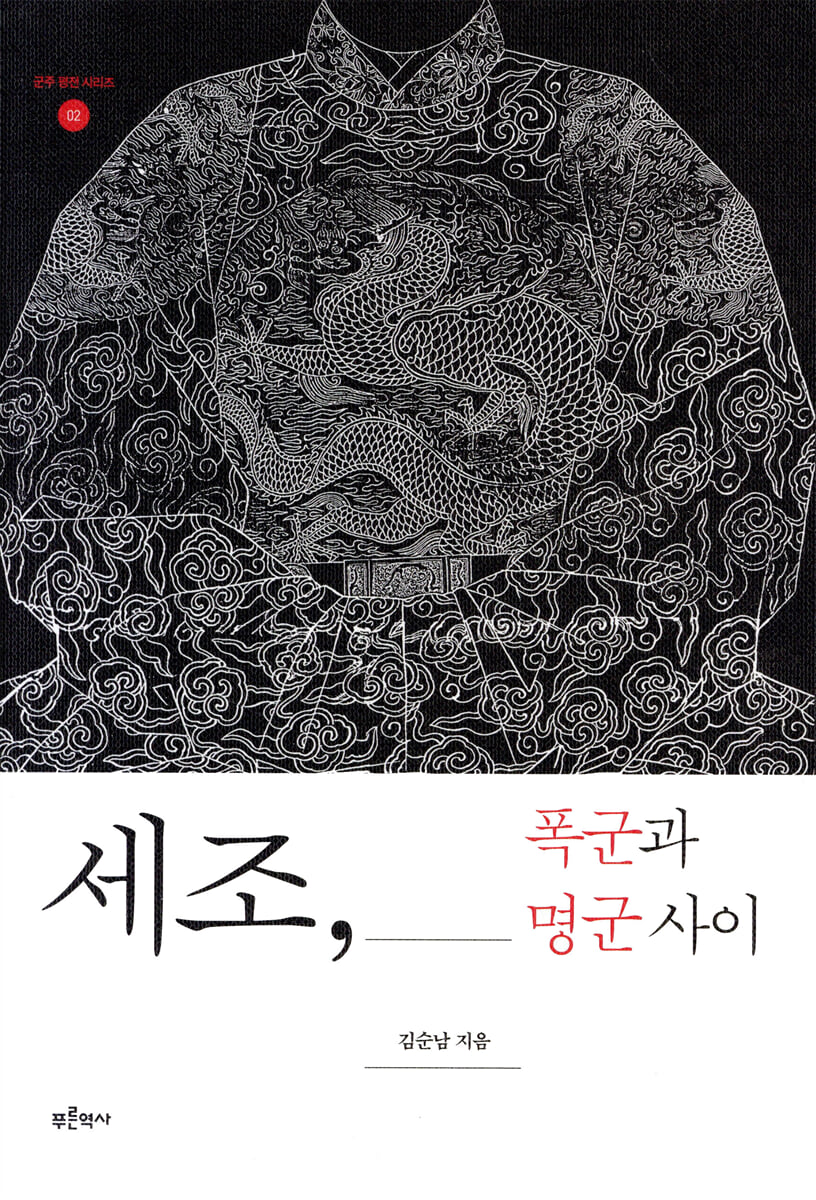
Sejo, between a tyrant and a wise ruler
 |
Description
Book Introduction
Overcoming the original sin of 'usurpation' and achieving a wealthy and powerful nation
A Look at the Problematic Monarch, Sejo Lee
In our history, there are few monarchs whose evaluations are as mixed as those of King Sejo, the seventh king of Joseon.
The contrast between his ascension to the throne by usurping the throne from his nephew and his abilities as a king is stark.
Therefore, various studies have been conducted focusing on topics that may be different in color, such as the process of ascending to the throne, the exercise of power centered on meritorious subjects and close relatives, and the policy of strengthening the country and its military and its results.
This book, written by an author who majored in early Joseon political history, is a little different.
Based on the Annals of King Sejo, it fully portrays the ‘political life’ of King Sejo, leaving aside criticism.
Following the author's pen, who saw King Sejo, who came to power through the Gye-Yu Jeongnan, which mobilized private physical force to neutralize the public system, as a politician who dreamed of becoming a "transcendent absolute monarch," we come to see King Sejo's "politics" in a new light.
A Look at the Problematic Monarch, Sejo Lee
In our history, there are few monarchs whose evaluations are as mixed as those of King Sejo, the seventh king of Joseon.
The contrast between his ascension to the throne by usurping the throne from his nephew and his abilities as a king is stark.
Therefore, various studies have been conducted focusing on topics that may be different in color, such as the process of ascending to the throne, the exercise of power centered on meritorious subjects and close relatives, and the policy of strengthening the country and its military and its results.
This book, written by an author who majored in early Joseon political history, is a little different.
Based on the Annals of King Sejo, it fully portrays the ‘political life’ of King Sejo, leaving aside criticism.
Following the author's pen, who saw King Sejo, who came to power through the Gye-Yu Jeongnan, which mobilized private physical force to neutralize the public system, as a politician who dreamed of becoming a "transcendent absolute monarch," we come to see King Sejo's "politics" in a new light.
- You can preview some of the book's contents.
Preview
index
preface
prolog
Sejo Chronology
1.
usurp power
Chapter 1 Sejong's Son
1.
Birth and growth of Lee Yu ● Father: Prince Chungnyeong | Father: King Sejong | One of Sejong's many sons | Incarnation of Taejo
2.
Grand Prince, and More ● Prince Lee Yu's Participation in State Affairs | The Rise of Grand Prince Suyang
Chapter 2 King Munjong's younger brother, King Danjong's uncle
1.
Symbiosis between older and younger brothers ● Cooperation or check and balance|King Munjong's early death
2.
Suyang's Isolation ● King Danjong's Ascension to the Throne | The People of Uijeongbu | Personnel Tyranny: Hwangpyojeongsa | Conflict with Anpyeong | The Mission of Gomyong
Chapter 3: The Gye-Yu Rebellion, a Bloody Epic
1.
People of Suyang ● Han Myeong-hoe, Kwon Ram | Shin Suk-ju | Hong Yun-seong | Yang Jeong, Hong Dal-son
2.
Suyang, stepping out in the short term ● Signs of a coup | Splitting the right side of the tiger's back | That day in the year of Gye-yu
Chapter 4: Cultivating the World
1.
Results of the Jeongnan ● Suyang, the Prime Minister and Minister of State, and the Minister of State for Civil Affairs | Appointment of Jeongnan Meritorious Subjects
2.
The outbreak and suppression of the Lee Jing-ok Rebellion ● The rebellion of Kim Jong-seo's man Lee Jing-ok|Suyang, the commander of the Central and Foreign Military Command, seizes military power
3.
Sejo's Ascension to the Throne ● Danjong's Abdication: Sejo's Ascension to the Throne | Establishment of the Royal Family | Appointment of Left-Wing Meritorious Subjects
2.
Force with power
Chapter 5: Restructuring the Power Structure
1.
The revival of the direct lineage system
2.
Conflict with the subordinates ● Opposition of the subordinates | Humiliation of the second battle
Chapter 6: Suppression of the plot to restore the former king to the throne
1.
Origin ● Kim Jil's confession | Confrontation with Seong Sam-mun | Implications of Ha Wi-ji, Lee Gae, and Park Pang-nyeon
2.
Development ● Treason | Destruction of Jiphyeonjeon | Involvement of King Danjong
3.
Results ● Hyo-su|Sa-yuk-shin
4.
Prince Nosan of Yeongwol ● Prince Geumseong's treason | King Danjong demotes him to Prince Nosan | Prince Nosan's death
Chapter 7: The Prevalence and Punishment of Absurd Language
1.
Remarks that deny the regime
2.
The Truth About the Royal Curse | The Plot of Disobedience
3.
Political Repercussions of the Speech ● The Involvement of the King Sejo's Royal Family|The Injustice of a Meritorious Subject
Chapter 8: National Administration Centered on the Pro-Trust
1.
Formation of the Hun-chuk clan ● Han Hak, father of Lady Subin Han | Han Myeong-hoe, father of Queen Jangsun | Jeong In-ji, father-in-law of Princess Uisuk
2.
The operation of the Inspectorate ● Exercising full authority over personnel affairs|State administration centered on relatives|The case of Yun Ja-un
Chapter 9: The Enrichment of the Territory: The People
1.
Exploration of the Northern Territories ● The Four Armies, the Six Garrisons, and the Planets | The Four People of the Sejong Era
2.
The Struggle for Sobok Policy ● Abolition of the Four Military Commands | The Northern Migration of the People of the Three Provinces
Chapter 10: The Ideal of the Self-Governing System: Establishment of the Jin-Gwan System
1.
Establishment of the Jin-gwan System ● Ikgun and Gun-ikdo|Expansion of the Gun-ikdo System Nationwide|Establishment of the Jin-gwan System
2.
Securing military rule ● Military service | Hopae law | Crackdown on military rule | Implementation of law enforcement
Chapter 11: Conquest of the Jurchen: Emphasis on the Above
1.
Gyeongjinbukjeong ● Wilderness Policy | The Necessity of Gyeongjong | Conquest of the Molian Guard
2.
Jeong Hae-seo ● Geonjuwi | Geonjuwi Chief Lee Man-ju Assassinated
3.
entrust authority
Chapter 12 The Emperor's Personal Conduct
1.
The Wondanje system before Sejo ● The Giu and Gigokje systems of the Wondanje system during the reigns of Taejo and Taejong|Controversy over the Wondanje system during the reign of Sejong|
2.
Preparation for the visit of Emperor Huanqiu to the Emperor's family |
Chapter 13: Politics of the Curb
1.
The operation of the competition and the martial arts ● Emphasis on the dignity of the monarch | The rudeness of the meritorious retainer and King Sejo's warning
2.
The Politics of Drinking ● A Place for State Administration|Rampant of Disrespect and Rudeness
Chapter 14: Tour of the Provinces
1.
Purpose and preparation of the tour ● Understanding civil affairs and inspecting military affairs|Preparation
2.
The actual tour of Hwanghae-do and Pyeongan-do ● Preliminary measures|Itinerary
3.
The Effectiveness of the Tour ● Supervision of Local Government|Securing the Prince's Power|Display of the Righteousness
Chapter 15: Buddhist Gods and the Book of Changes
1.
The Immortal Protagonist ● The Monarch of Love and Buddha|The Translation and Compilation of Buddhist Scriptures and Shinmi|The Establishment of Won-gak-sa Temple
2.
Sarira Bunka and Seogi ● The Appearance of Avalokitesvara Bodhisattva|Seogi|The Appearance of Living Buddha
Chapter 16: Compilation Projects and Standardization of National Finances
1.
The Search for a Battlefield System Beyond the Law: Compiling the Manse Seongbeop
● The history of the compilation of the Gyeongguk Daejeon | Compilation of the Gyeongguk Daejeon
2.
Concluding the Legitimacy of Joseon's Founding: Compilation of the Dongguk Tonggam
● Jeong Do-jeon's 『History of Goryeo』|The twists and turns of King Sejong's compilation of 『History of Goryeo』|The compilation of 『Dongguk Tonggam』
3.
Standardization of Revenue and Expenditure ● Public Security and Horizontal and Horizontal Regulations
4.
Power and authority clash
Chapter 17: The Scale of Rebellion
1.
Advice on abdication ● Dismissal of Jeong Chang-son | Jeong In-ji's tomb and Buddhist scriptures
2.
The treason of a public official ● The treason of Bong Seok-ju | The assassination of Yang Jeong
3.
Crown Prince's Representative ● Balyeongsi·Deungjunsi|Tamju|Implementation of Wonsangje
Chapter 18: The Warning of the Supreme Being: Between Disrespect and Trust
1.
Yi Si-ae's Rebellion ● Trends in Hamgyong Province | Yi Si-ae's Rebellion | Organization and Expedition of the Jeongto Army | Attacks and Defenses | Battle of Geosan, Bukcheong | Suppression
2.
The Crisis of Han Myeong-hoe and Shin Suk-ju ● The Fever of Nam Yong-shin|The Warning of the Military and the Military
Chapter 19: Conflict between the public officials
1.
The Rise of the Red-Hero Meritorious Subjects ● The Emergence of a New Loyal Subject | Appointment of the Red-Hero Meritorious Subjects
2.
Competition between the old and new officials
Chapter 20: The Reversal of Power between the King and His Subjects
1.
The death of King Sejo ● Abdication|Death
2.
The fall of Nam-i Oksa and Yu Ja-gwang's confession | Nam-i's treason | The fall of the enemy conspiracy
3.
The Beginning of the Age of Meritorious Subjects ● Appointment of Ikdae Meritorious Subjects|Saok
Epilogue
References
Search
prolog
Sejo Chronology
1.
usurp power
Chapter 1 Sejong's Son
1.
Birth and growth of Lee Yu ● Father: Prince Chungnyeong | Father: King Sejong | One of Sejong's many sons | Incarnation of Taejo
2.
Grand Prince, and More ● Prince Lee Yu's Participation in State Affairs | The Rise of Grand Prince Suyang
Chapter 2 King Munjong's younger brother, King Danjong's uncle
1.
Symbiosis between older and younger brothers ● Cooperation or check and balance|King Munjong's early death
2.
Suyang's Isolation ● King Danjong's Ascension to the Throne | The People of Uijeongbu | Personnel Tyranny: Hwangpyojeongsa | Conflict with Anpyeong | The Mission of Gomyong
Chapter 3: The Gye-Yu Rebellion, a Bloody Epic
1.
People of Suyang ● Han Myeong-hoe, Kwon Ram | Shin Suk-ju | Hong Yun-seong | Yang Jeong, Hong Dal-son
2.
Suyang, stepping out in the short term ● Signs of a coup | Splitting the right side of the tiger's back | That day in the year of Gye-yu
Chapter 4: Cultivating the World
1.
Results of the Jeongnan ● Suyang, the Prime Minister and Minister of State, and the Minister of State for Civil Affairs | Appointment of Jeongnan Meritorious Subjects
2.
The outbreak and suppression of the Lee Jing-ok Rebellion ● The rebellion of Kim Jong-seo's man Lee Jing-ok|Suyang, the commander of the Central and Foreign Military Command, seizes military power
3.
Sejo's Ascension to the Throne ● Danjong's Abdication: Sejo's Ascension to the Throne | Establishment of the Royal Family | Appointment of Left-Wing Meritorious Subjects
2.
Force with power
Chapter 5: Restructuring the Power Structure
1.
The revival of the direct lineage system
2.
Conflict with the subordinates ● Opposition of the subordinates | Humiliation of the second battle
Chapter 6: Suppression of the plot to restore the former king to the throne
1.
Origin ● Kim Jil's confession | Confrontation with Seong Sam-mun | Implications of Ha Wi-ji, Lee Gae, and Park Pang-nyeon
2.
Development ● Treason | Destruction of Jiphyeonjeon | Involvement of King Danjong
3.
Results ● Hyo-su|Sa-yuk-shin
4.
Prince Nosan of Yeongwol ● Prince Geumseong's treason | King Danjong demotes him to Prince Nosan | Prince Nosan's death
Chapter 7: The Prevalence and Punishment of Absurd Language
1.
Remarks that deny the regime
2.
The Truth About the Royal Curse | The Plot of Disobedience
3.
Political Repercussions of the Speech ● The Involvement of the King Sejo's Royal Family|The Injustice of a Meritorious Subject
Chapter 8: National Administration Centered on the Pro-Trust
1.
Formation of the Hun-chuk clan ● Han Hak, father of Lady Subin Han | Han Myeong-hoe, father of Queen Jangsun | Jeong In-ji, father-in-law of Princess Uisuk
2.
The operation of the Inspectorate ● Exercising full authority over personnel affairs|State administration centered on relatives|The case of Yun Ja-un
Chapter 9: The Enrichment of the Territory: The People
1.
Exploration of the Northern Territories ● The Four Armies, the Six Garrisons, and the Planets | The Four People of the Sejong Era
2.
The Struggle for Sobok Policy ● Abolition of the Four Military Commands | The Northern Migration of the People of the Three Provinces
Chapter 10: The Ideal of the Self-Governing System: Establishment of the Jin-Gwan System
1.
Establishment of the Jin-gwan System ● Ikgun and Gun-ikdo|Expansion of the Gun-ikdo System Nationwide|Establishment of the Jin-gwan System
2.
Securing military rule ● Military service | Hopae law | Crackdown on military rule | Implementation of law enforcement
Chapter 11: Conquest of the Jurchen: Emphasis on the Above
1.
Gyeongjinbukjeong ● Wilderness Policy | The Necessity of Gyeongjong | Conquest of the Molian Guard
2.
Jeong Hae-seo ● Geonjuwi | Geonjuwi Chief Lee Man-ju Assassinated
3.
entrust authority
Chapter 12 The Emperor's Personal Conduct
1.
The Wondanje system before Sejo ● The Giu and Gigokje systems of the Wondanje system during the reigns of Taejo and Taejong|Controversy over the Wondanje system during the reign of Sejong|
2.
Preparation for the visit of Emperor Huanqiu to the Emperor's family |
Chapter 13: Politics of the Curb
1.
The operation of the competition and the martial arts ● Emphasis on the dignity of the monarch | The rudeness of the meritorious retainer and King Sejo's warning
2.
The Politics of Drinking ● A Place for State Administration|Rampant of Disrespect and Rudeness
Chapter 14: Tour of the Provinces
1.
Purpose and preparation of the tour ● Understanding civil affairs and inspecting military affairs|Preparation
2.
The actual tour of Hwanghae-do and Pyeongan-do ● Preliminary measures|Itinerary
3.
The Effectiveness of the Tour ● Supervision of Local Government|Securing the Prince's Power|Display of the Righteousness
Chapter 15: Buddhist Gods and the Book of Changes
1.
The Immortal Protagonist ● The Monarch of Love and Buddha|The Translation and Compilation of Buddhist Scriptures and Shinmi|The Establishment of Won-gak-sa Temple
2.
Sarira Bunka and Seogi ● The Appearance of Avalokitesvara Bodhisattva|Seogi|The Appearance of Living Buddha
Chapter 16: Compilation Projects and Standardization of National Finances
1.
The Search for a Battlefield System Beyond the Law: Compiling the Manse Seongbeop
● The history of the compilation of the Gyeongguk Daejeon | Compilation of the Gyeongguk Daejeon
2.
Concluding the Legitimacy of Joseon's Founding: Compilation of the Dongguk Tonggam
● Jeong Do-jeon's 『History of Goryeo』|The twists and turns of King Sejong's compilation of 『History of Goryeo』|The compilation of 『Dongguk Tonggam』
3.
Standardization of Revenue and Expenditure ● Public Security and Horizontal and Horizontal Regulations
4.
Power and authority clash
Chapter 17: The Scale of Rebellion
1.
Advice on abdication ● Dismissal of Jeong Chang-son | Jeong In-ji's tomb and Buddhist scriptures
2.
The treason of a public official ● The treason of Bong Seok-ju | The assassination of Yang Jeong
3.
Crown Prince's Representative ● Balyeongsi·Deungjunsi|Tamju|Implementation of Wonsangje
Chapter 18: The Warning of the Supreme Being: Between Disrespect and Trust
1.
Yi Si-ae's Rebellion ● Trends in Hamgyong Province | Yi Si-ae's Rebellion | Organization and Expedition of the Jeongto Army | Attacks and Defenses | Battle of Geosan, Bukcheong | Suppression
2.
The Crisis of Han Myeong-hoe and Shin Suk-ju ● The Fever of Nam Yong-shin|The Warning of the Military and the Military
Chapter 19: Conflict between the public officials
1.
The Rise of the Red-Hero Meritorious Subjects ● The Emergence of a New Loyal Subject | Appointment of the Red-Hero Meritorious Subjects
2.
Competition between the old and new officials
Chapter 20: The Reversal of Power between the King and His Subjects
1.
The death of King Sejo ● Abdication|Death
2.
The fall of Nam-i Oksa and Yu Ja-gwang's confession | Nam-i's treason | The fall of the enemy conspiracy
3.
The Beginning of the Age of Meritorious Subjects ● Appointment of Ikdae Meritorious Subjects|Saok
Epilogue
References
Search
Into the book
If it weren't for my brother, I would have been in my 80s and wouldn't even be able to breathe.
On the other hand, the world of Uijeongbu was wide open.
As King Munjong's health deteriorated, the State Council had been handling state affairs without even reporting to the king.
The government took control of the palace, using the crown prince as a hostage.
No one could have predicted what the government would do.
--- p.45
After ascending to the throne, King Danjong declared through a royal decree that he would leave all matters to the State Council.
A world in which the government is the master has arrived.
In this political situation, Suyang and Anpyeong protested against their inclusion in the category of subjects prohibited from participating in the competition in Danjong's encyclical.
--- p.53
On October 11, 1453 (the first year of King Danjong's reign), the day after the bloody storm, a major personnel reshuffle took place.
Suyang became the Chief State Councillor, the Chief State Councillor, and the Chief of the Royal Secretariat.
In the royal court, the Prime Minister was the highest authority among the subjects.
If King Danjong was a king in name only, the real power holder was Prime Minister Suyang.
Moreover, although the chief judge of each department was the highest official, he also held the position of judge, which was higher than that, and controlled the Ministry of Personnel and the Ministry of War.
--- p.97
Suyang ascended to the throne as the 7th king of Joseon at Gyeongbokgung Palace on June 11, 1455 (the first year of King Sejo's reign).
It was two years after he seized power through the Gye-Yu Rebellion and suppressed the Yi Jing-ok Rebellion.
--- p.111
There were a total of 44 left-wing public officials.
One-third of those named, including Kwon Ram, Han Myeong-hoe, and Shin Suk-ju, who played a key role in King Sejo's rise to power, were appointed as Jeongnan Gongsin (contributors to the uprising).
The number of people with royal family or relatives was greater than that of Jeongnan Gongsin.
There were also quite a few people who were blood-related to the meritorious subjects, such as Han Myeong-hoe and Han Kye-mi, and Kwon Ram and Kwon Ji.
--- p.116
Throughout his 14-year reign, Sejo suffered from constant slanderous remarks that directly targeted the legitimacy of his regime.
This went beyond mere rumors and led to negative consequences, such as actual treason, being used as a means to falsely accuse others, or disrupting the command structure of local leaders.
The stability of the regime depended on the control of the verbal abuse.
--- p.158
During Sejo's reign, meritorious retainers, including Han Myeong-hoe and Shin Suk-ju, executed important national affairs on the spot.
Sejo sent them to the provinces to enforce his ruling will.
They monitored and monitored the activities of each region, and took the lead in promoting major national affairs that had to be handled locally, such as the construction of fortresses, the construction of garrisons, the compilation of military registers, and the inventory of civilians and military supplies.
Their area of activity spanned eight provinces across the country.
--- p.171
King Sejo, who wanted to solve the problem of 'few people but vast land' in Pyeongan Province through a private citizen system, first recruited people to enter Pyeongan Province from the lower three provinces.
To this end, in December 1459 (the 5th year of King Sejo's reign), Hwang Su-sin, the Left State Councillor, was appointed as the Inspector General of Gyeongsang Province, Sim Hoe, the Chief State Councillor of Jeolla Province, and Seong Bong-jo, the Left State Councillor, was appointed as the Inspector General of Chungcheong Province, and each was given a ministry.
--- p.183
By defining the military wing as a military province, the complexity of confusion between administrative provinces and military provinces can be avoided.
… … almost made Jejin belong to the Jin clan.
This was the Jin-gwan system.
By organizing it into a Jin-gwan system, each county became a military unit.
Several Jejins were grouped together and formed into a garrison.
Sejo achieved this difficult task of harmonizing administrative and military organizations during his own time.
--- p.191
Sejo established the Jin-gwan system, aligning the eight-province local administrative system based on the governor and magistrate with the military system of Ju-jin, Geo-jin, and Je-jin.
By making each county an independent military unit called a jin and organizing it into jin-gwans, the ideal of a tight-knit defense system that could fight and defend itself was realized in Joseon.
Sejo made the dream of a strong national defense system in Joseon, something even his father, Sejong, could not achieve, a reality.
--- p.193
On February 1, 1459 (the 5th year of King Sejo's reign), King Sejo finally implemented the Ho-Pae Law again.
Then, he immediately asked them to describe in detail the method of clarifying the household register and military register.
King Sejo, who had implemented the Ho-Pae Law for two years, announced in July 1461 (the 7th year of King Sejo's reign) his intention to revise the family register and military register based on his policy experience during that period.
--- p.197
In March 1460 (the 6th year of King Sejo's reign), King Sejo finally decided to mobilize the military on a large scale to subdue the Moryeonwi barbarians.
… … Soon, the new host was appointed as the inspector general.
Shin Suk-ju conquered the barbarians of Moryeonwi from August 27 to August 30.
… … This is the so-called ‘Gyeongjinbukjeong’ of August 1460 (6th year of King Sejo’s reign)
--- p.207
The Gyeongjinbukjeong was a campaign to subdue the barbarians that King Sejo decided on his own without prior notice to the Ming Dynasty.
With this conquest, Sejo was able to demonstrate his power as the king of Joseon and externally send a warning message to the barbarians who had collaborated during the Yi Jing-ok Rebellion.
At the same time, internally, he was able to show off his authority as a king.
--- p.208
In September 1467 (13th year of King Sejo's reign), Joseon mobilized its military to subdue Jianzhouwei at the request of the Ming Dynasty.
The 10,000 soldiers mobilized at this time were the Jeongto Army that suppressed Yi Si-ae's rebellion.
This expedition was carried out at the request of the Ming Dynasty, but was carried out solely by Joseon.
--- p.211
Sejo personally performed a ritual to heaven from the third year of his reign to the tenth year, something that neither his grandfather Taejong nor his father Sejong had done.
It was not a special event to pray for, such as a rain shower or a tithe, but rather a regular event held at the beginning of each new year.
In the Hwanghudan, being a kinsman was an act of acknowledging oneself as a son of heaven.
--- p.223
While Sejo emphasized his dignity as a king through royal performances and martial arts, he also showed respect and trust for his meritorious subjects.
At the same time, officials who were deferential to the powerful officials were punished for disrespect.
Meanwhile, their rudeness, disrespect, and laziness continued to be deviant behaviors.
However, Sejo could not punish him immediately.
It was just a warning.
There was a reason for this.
The relationship between the two parties began not as ruler and subject, but as they agreed to 'usurp power' and shared the 'original sin' of the Gye-Yu Rebellion.
Sejo appointed them as meritorious retainers and formed a community of shared destiny.
--- p.234
Before touring Chungcheong Province in January 1464 (the 10th year of King Sejo's reign), King Sejo warned the governors, military commissioners, and magistrates of the region not to show off for the sake of flattery.
… … All activities such as piling firewood and gathering torches in roadside valleys and repairing roads are prohibited. Anyone who disobeys the order and flatters the king will be severely punished by the governor or lower.
--- p.250
Sejo began compiling the Gyeongguk Daejeon.
The Gyeongguk Daejeon, commonly called the Joseon Dynasty's eternal law, is classified as the achievement of King Seongjong, the grandson of King Sejo, but it was King Sejo who actually laid the foundation for the Gyeongguk Daejeon and completed the draft.
--- p.279
In June 1467 (the 13th year of King Sejo's reign), King Sejo received the newly established 『Daejeon』 from each of the Sangjeongso ministers and discussed them one by one.
Next month, the draft of the newly created 『Gyeongguk Daejeon』 was finally submitted.
At that time, King Sejo had various royal relatives and ministers present their opinions on each item and logically point out any errors.
--- p.281
King Sejo, who began compiling the Dongguk Tonggam as a general, worked hard to see results in the latter half of his reign.
But it was not achieved in that time.
This is because a local rebellion occurred in May 1467 (the 13th year of King Sejo's reign) and he returned in September of the following year.
Dongguk Tonggam was completed during the reign of his grandson, King Seongjong.
The characteristic of this Dongguk Tonggam system was that it traced the beginning of our history back to Dangun.
--- p.286
Thanks to King Sejo's driving force, a trial version of the book was printed in various fields on November 12, 1467 (the 13th year of King Sejo's reign).
Sejo promulgated this and sent it down to the relevant government offices.
With this, regulations on expenditures were established in addition to revenues.
National finances could be standardized.
--- p.290
These remarks by the royal advisors ultimately meant Sejo's abdication.
It was an act of disrespect toward King Sejo himself.
It could be interpreted that Jeong In-ji's previous drunken remark was possible because of their close relationship based on trust.
However, the remarks about "Tae Sang" in the latter half of his reign were made because Sejo was considered a king who had abdicated from the throne.
--- p.300
On June 25, 1466 (the 12th year of King Sejo's reign), King Sejo sent his envoys and officials outside Gwanghwamun.
There, they took turns hearing about the benefits and losses of the people, and the good and bad points of the city administration, which the people could not express for themselves.
At this time, anyone who wanted to express their grievance had to draw lots.
The secretary and the officer listened to the words of the chosen person, recorded them, and reported them.
Then, Sejo received their report, personally questioned them, and took action.
As for the military, the Commander-in-Chief of the Military Command was in charge of this role.
--- p.308
Sejo used Yi Si-ae's rebellion for political purposes.
At this time, the rebellion was a tool to target and punish those who had been deified.
… … He kept in check those who were his benefactors and comrades, but also a burden.
The Yi Si-ae Rebellion in May 1467 (the 13th year of King Sejo's reign) became the trigger for political restraint against them to reach its peak.
On June 5, King Sejo declared the crimes of Han Myeong-hoe and Shin Suk-ju to be "exclusive punishment."
--- p.331
After the Yi Si-ae Rebellion and the appointment of Jeokgae Gongsin, King Sejo seems to have tried to induce a competition of loyalty between the new and old meritorious retainers through unconventional personnel appointments.
In other words, he attempted to elicit loyalty to himself by creating a confrontational structure by placing powerful candidates for the enemy contributors at the core of the State Council and the six ministries, and by placing Han Myeong-hoe and Shin Suk-ju, who were the contributors to the Jeongnan and left-wing contributors, in the Seungjeongwon.
Therefore, although the greetings of Lee Jun, Nam I, and Heo Jong were unconventional, they were desirable to Sejo.
--- p.346
On September 8, 1468 (14th year of King Sejo's reign), the day after he handed over the throne to his son, he left behind a will asking that a stone chamber not be built for his tomb and ended his life in the main room of Suganggung Palace.
He was 52 years old and in his 14th year of reign.
--- p.352
The Nam-i affair, which began with Yu Ja-gwang's report in the year of King Yeongjong's accession to the throne, also involved Kang Sun.
This incident put the leading figures of the enemy faction in a political crisis, accused of treason.
The competition for loyalty among the meritorious retainers during the late reign of King Sejo led to a power struggle during the reign of King Yejong, which ultimately ended in a decisive victory for the old meritorious retainers.
The power structure was reorganized again.
On the other hand, the world of Uijeongbu was wide open.
As King Munjong's health deteriorated, the State Council had been handling state affairs without even reporting to the king.
The government took control of the palace, using the crown prince as a hostage.
No one could have predicted what the government would do.
--- p.45
After ascending to the throne, King Danjong declared through a royal decree that he would leave all matters to the State Council.
A world in which the government is the master has arrived.
In this political situation, Suyang and Anpyeong protested against their inclusion in the category of subjects prohibited from participating in the competition in Danjong's encyclical.
--- p.53
On October 11, 1453 (the first year of King Danjong's reign), the day after the bloody storm, a major personnel reshuffle took place.
Suyang became the Chief State Councillor, the Chief State Councillor, and the Chief of the Royal Secretariat.
In the royal court, the Prime Minister was the highest authority among the subjects.
If King Danjong was a king in name only, the real power holder was Prime Minister Suyang.
Moreover, although the chief judge of each department was the highest official, he also held the position of judge, which was higher than that, and controlled the Ministry of Personnel and the Ministry of War.
--- p.97
Suyang ascended to the throne as the 7th king of Joseon at Gyeongbokgung Palace on June 11, 1455 (the first year of King Sejo's reign).
It was two years after he seized power through the Gye-Yu Rebellion and suppressed the Yi Jing-ok Rebellion.
--- p.111
There were a total of 44 left-wing public officials.
One-third of those named, including Kwon Ram, Han Myeong-hoe, and Shin Suk-ju, who played a key role in King Sejo's rise to power, were appointed as Jeongnan Gongsin (contributors to the uprising).
The number of people with royal family or relatives was greater than that of Jeongnan Gongsin.
There were also quite a few people who were blood-related to the meritorious subjects, such as Han Myeong-hoe and Han Kye-mi, and Kwon Ram and Kwon Ji.
--- p.116
Throughout his 14-year reign, Sejo suffered from constant slanderous remarks that directly targeted the legitimacy of his regime.
This went beyond mere rumors and led to negative consequences, such as actual treason, being used as a means to falsely accuse others, or disrupting the command structure of local leaders.
The stability of the regime depended on the control of the verbal abuse.
--- p.158
During Sejo's reign, meritorious retainers, including Han Myeong-hoe and Shin Suk-ju, executed important national affairs on the spot.
Sejo sent them to the provinces to enforce his ruling will.
They monitored and monitored the activities of each region, and took the lead in promoting major national affairs that had to be handled locally, such as the construction of fortresses, the construction of garrisons, the compilation of military registers, and the inventory of civilians and military supplies.
Their area of activity spanned eight provinces across the country.
--- p.171
King Sejo, who wanted to solve the problem of 'few people but vast land' in Pyeongan Province through a private citizen system, first recruited people to enter Pyeongan Province from the lower three provinces.
To this end, in December 1459 (the 5th year of King Sejo's reign), Hwang Su-sin, the Left State Councillor, was appointed as the Inspector General of Gyeongsang Province, Sim Hoe, the Chief State Councillor of Jeolla Province, and Seong Bong-jo, the Left State Councillor, was appointed as the Inspector General of Chungcheong Province, and each was given a ministry.
--- p.183
By defining the military wing as a military province, the complexity of confusion between administrative provinces and military provinces can be avoided.
… … almost made Jejin belong to the Jin clan.
This was the Jin-gwan system.
By organizing it into a Jin-gwan system, each county became a military unit.
Several Jejins were grouped together and formed into a garrison.
Sejo achieved this difficult task of harmonizing administrative and military organizations during his own time.
--- p.191
Sejo established the Jin-gwan system, aligning the eight-province local administrative system based on the governor and magistrate with the military system of Ju-jin, Geo-jin, and Je-jin.
By making each county an independent military unit called a jin and organizing it into jin-gwans, the ideal of a tight-knit defense system that could fight and defend itself was realized in Joseon.
Sejo made the dream of a strong national defense system in Joseon, something even his father, Sejong, could not achieve, a reality.
--- p.193
On February 1, 1459 (the 5th year of King Sejo's reign), King Sejo finally implemented the Ho-Pae Law again.
Then, he immediately asked them to describe in detail the method of clarifying the household register and military register.
King Sejo, who had implemented the Ho-Pae Law for two years, announced in July 1461 (the 7th year of King Sejo's reign) his intention to revise the family register and military register based on his policy experience during that period.
--- p.197
In March 1460 (the 6th year of King Sejo's reign), King Sejo finally decided to mobilize the military on a large scale to subdue the Moryeonwi barbarians.
… … Soon, the new host was appointed as the inspector general.
Shin Suk-ju conquered the barbarians of Moryeonwi from August 27 to August 30.
… … This is the so-called ‘Gyeongjinbukjeong’ of August 1460 (6th year of King Sejo’s reign)
--- p.207
The Gyeongjinbukjeong was a campaign to subdue the barbarians that King Sejo decided on his own without prior notice to the Ming Dynasty.
With this conquest, Sejo was able to demonstrate his power as the king of Joseon and externally send a warning message to the barbarians who had collaborated during the Yi Jing-ok Rebellion.
At the same time, internally, he was able to show off his authority as a king.
--- p.208
In September 1467 (13th year of King Sejo's reign), Joseon mobilized its military to subdue Jianzhouwei at the request of the Ming Dynasty.
The 10,000 soldiers mobilized at this time were the Jeongto Army that suppressed Yi Si-ae's rebellion.
This expedition was carried out at the request of the Ming Dynasty, but was carried out solely by Joseon.
--- p.211
Sejo personally performed a ritual to heaven from the third year of his reign to the tenth year, something that neither his grandfather Taejong nor his father Sejong had done.
It was not a special event to pray for, such as a rain shower or a tithe, but rather a regular event held at the beginning of each new year.
In the Hwanghudan, being a kinsman was an act of acknowledging oneself as a son of heaven.
--- p.223
While Sejo emphasized his dignity as a king through royal performances and martial arts, he also showed respect and trust for his meritorious subjects.
At the same time, officials who were deferential to the powerful officials were punished for disrespect.
Meanwhile, their rudeness, disrespect, and laziness continued to be deviant behaviors.
However, Sejo could not punish him immediately.
It was just a warning.
There was a reason for this.
The relationship between the two parties began not as ruler and subject, but as they agreed to 'usurp power' and shared the 'original sin' of the Gye-Yu Rebellion.
Sejo appointed them as meritorious retainers and formed a community of shared destiny.
--- p.234
Before touring Chungcheong Province in January 1464 (the 10th year of King Sejo's reign), King Sejo warned the governors, military commissioners, and magistrates of the region not to show off for the sake of flattery.
… … All activities such as piling firewood and gathering torches in roadside valleys and repairing roads are prohibited. Anyone who disobeys the order and flatters the king will be severely punished by the governor or lower.
--- p.250
Sejo began compiling the Gyeongguk Daejeon.
The Gyeongguk Daejeon, commonly called the Joseon Dynasty's eternal law, is classified as the achievement of King Seongjong, the grandson of King Sejo, but it was King Sejo who actually laid the foundation for the Gyeongguk Daejeon and completed the draft.
--- p.279
In June 1467 (the 13th year of King Sejo's reign), King Sejo received the newly established 『Daejeon』 from each of the Sangjeongso ministers and discussed them one by one.
Next month, the draft of the newly created 『Gyeongguk Daejeon』 was finally submitted.
At that time, King Sejo had various royal relatives and ministers present their opinions on each item and logically point out any errors.
--- p.281
King Sejo, who began compiling the Dongguk Tonggam as a general, worked hard to see results in the latter half of his reign.
But it was not achieved in that time.
This is because a local rebellion occurred in May 1467 (the 13th year of King Sejo's reign) and he returned in September of the following year.
Dongguk Tonggam was completed during the reign of his grandson, King Seongjong.
The characteristic of this Dongguk Tonggam system was that it traced the beginning of our history back to Dangun.
--- p.286
Thanks to King Sejo's driving force, a trial version of the book was printed in various fields on November 12, 1467 (the 13th year of King Sejo's reign).
Sejo promulgated this and sent it down to the relevant government offices.
With this, regulations on expenditures were established in addition to revenues.
National finances could be standardized.
--- p.290
These remarks by the royal advisors ultimately meant Sejo's abdication.
It was an act of disrespect toward King Sejo himself.
It could be interpreted that Jeong In-ji's previous drunken remark was possible because of their close relationship based on trust.
However, the remarks about "Tae Sang" in the latter half of his reign were made because Sejo was considered a king who had abdicated from the throne.
--- p.300
On June 25, 1466 (the 12th year of King Sejo's reign), King Sejo sent his envoys and officials outside Gwanghwamun.
There, they took turns hearing about the benefits and losses of the people, and the good and bad points of the city administration, which the people could not express for themselves.
At this time, anyone who wanted to express their grievance had to draw lots.
The secretary and the officer listened to the words of the chosen person, recorded them, and reported them.
Then, Sejo received their report, personally questioned them, and took action.
As for the military, the Commander-in-Chief of the Military Command was in charge of this role.
--- p.308
Sejo used Yi Si-ae's rebellion for political purposes.
At this time, the rebellion was a tool to target and punish those who had been deified.
… … He kept in check those who were his benefactors and comrades, but also a burden.
The Yi Si-ae Rebellion in May 1467 (the 13th year of King Sejo's reign) became the trigger for political restraint against them to reach its peak.
On June 5, King Sejo declared the crimes of Han Myeong-hoe and Shin Suk-ju to be "exclusive punishment."
--- p.331
After the Yi Si-ae Rebellion and the appointment of Jeokgae Gongsin, King Sejo seems to have tried to induce a competition of loyalty between the new and old meritorious retainers through unconventional personnel appointments.
In other words, he attempted to elicit loyalty to himself by creating a confrontational structure by placing powerful candidates for the enemy contributors at the core of the State Council and the six ministries, and by placing Han Myeong-hoe and Shin Suk-ju, who were the contributors to the Jeongnan and left-wing contributors, in the Seungjeongwon.
Therefore, although the greetings of Lee Jun, Nam I, and Heo Jong were unconventional, they were desirable to Sejo.
--- p.346
On September 8, 1468 (14th year of King Sejo's reign), the day after he handed over the throne to his son, he left behind a will asking that a stone chamber not be built for his tomb and ended his life in the main room of Suganggung Palace.
He was 52 years old and in his 14th year of reign.
--- p.352
The Nam-i affair, which began with Yu Ja-gwang's report in the year of King Yeongjong's accession to the throne, also involved Kang Sun.
This incident put the leading figures of the enemy faction in a political crisis, accused of treason.
The competition for loyalty among the meritorious retainers during the late reign of King Sejo led to a power struggle during the reign of King Yejong, which ultimately ended in a decisive victory for the old meritorious retainers.
The power structure was reorganized again.
--- p.356
Publisher's Review
A dramatic, blood-stained coronation
The reason was because he was capable.
He was so skilled in martial arts that he was called a “big tiger” among naturalized barbarians, and he was also skilled in state affairs, participating in the enactment of public laws and the creation of the Korean alphabet.
Accordingly, after the death of his father, King Danjong, he would have been impeached and beaten with a stick if it had not been for the protection of his older brother, King Munjong. It was perhaps natural that he drew his sword against the tyranny and checks of powerful officials such as Kim Jong-seo, who were “single-handedly wielding power” and urging his younger brother, Anpyeong, to rebel.
The background and process of the Gye-Yu Rebellion of 1453, described mainly in the Annals of the Joseon Dynasty, are more dramatic than any TV drama. For example, here is a passage like this:
“Kim Jong-seo stepped back and looked at the letter he had received against the moon.
At that very moment, Suyang winked at Eoulun.
Eoulwoon struck Kim Jongseo with a sledgehammer.
Kim Jong-seo fell to the ground.
His son, Seung-gyu Kim, was surprised and fell down on top of him.
“Yang Jeong came in, drew his sword, and cut down Kim Seung-gyu.” (Page 89)
A dazzling achievement that dismissed the controversy over legitimacy
The reason he ascended to the throne was because he was both decisive and competent.
He had two younger brothers killed, his nephew hanged himself, and he did not hesitate to condemn those who denied his legitimacy, such as Seong Sam-mun.
Meanwhile, the foundation for the 500-year Joseon Dynasty was solidified through the establishment of the Jin-gwan system, in which each region fought and defended itself (自戰自守), the compilation of the Gyeongguk Daejeon, the universal law of state administration, and the Dongguk Tonggam (page 286), which established the orthodoxy of Korean history starting with Dangun, and the enactment of the Hoenggan, which promoted the standardization of national expenditures under the banner of frugality.
In addition, the operation of the Chechalsa system, which dispatched meritorious subjects such as Han Myeong-hoe to the provinces, the reorganization of the Ho-pae law and the military service system, and the implementation of the 'Tamju' system, which allowed Baekjeong who drew lots to directly report injustice, are also noteworthy achievements of Sejo.
He also showed off Joseon's righteousness by independently carrying out conquests of the Jurchen and regularly performing celestial rites at Hwanghudan.
The master of the art of soothing and comforting 'my side'
Sejo Lee was also a master of the art of medicine.
He solely focused on personnel matters, such as appointing Yu Ja-gwang, a bastard, to the position of a minister with the power to appoint personnel, and shared the 'fruits' with a small number of 'my side' - 'nuclear officials' in today's terms - who had participated in the Gye-yu Jeongan.
They often had banquets where they sang and danced with them, sharing the sweetness of power. The author called this ‘banquet politics’ (p. 237).
However, in this situation, Jeong In-ji frequently acted rudely, disrespectfully, and indolently, such as calling Sejo “you,” which was unprecedented in Joseon history. At the same time, he controlled the powerful by swinging the whip appropriately, such as by expelling Han Myeong-hoe and Shin Suk-ju, who were rumored to be involved in Yi Si-ae’s rebellion, as if they were “all about the bullying,” and by beheading Yang Jeong, a meritorious subject who said, “Don’t live a hard life, step down.”
A negative example for 21st-century Korean politics
This book is the second in the 'Monarchs' series, which covers the reigns of King Taejong and King Seongjong.
The fact that it is written based thoroughly on historical records can be both an advantage and a disadvantage, but thanks to the author's skill and writing skills, it is a particularly enjoyable read, and it has many implications for our political reality.
To borrow the author's words, it is meaningful to meet the politician Sejo, who desperately struggled to realize his desire to become an absolute monarch who surpassed his father, Sejong's 'Yechi', from the son of a king, in the wake of the Gye-yu Jeongan.
The reason was because he was capable.
He was so skilled in martial arts that he was called a “big tiger” among naturalized barbarians, and he was also skilled in state affairs, participating in the enactment of public laws and the creation of the Korean alphabet.
Accordingly, after the death of his father, King Danjong, he would have been impeached and beaten with a stick if it had not been for the protection of his older brother, King Munjong. It was perhaps natural that he drew his sword against the tyranny and checks of powerful officials such as Kim Jong-seo, who were “single-handedly wielding power” and urging his younger brother, Anpyeong, to rebel.
The background and process of the Gye-Yu Rebellion of 1453, described mainly in the Annals of the Joseon Dynasty, are more dramatic than any TV drama. For example, here is a passage like this:
“Kim Jong-seo stepped back and looked at the letter he had received against the moon.
At that very moment, Suyang winked at Eoulun.
Eoulwoon struck Kim Jongseo with a sledgehammer.
Kim Jong-seo fell to the ground.
His son, Seung-gyu Kim, was surprised and fell down on top of him.
“Yang Jeong came in, drew his sword, and cut down Kim Seung-gyu.” (Page 89)
A dazzling achievement that dismissed the controversy over legitimacy
The reason he ascended to the throne was because he was both decisive and competent.
He had two younger brothers killed, his nephew hanged himself, and he did not hesitate to condemn those who denied his legitimacy, such as Seong Sam-mun.
Meanwhile, the foundation for the 500-year Joseon Dynasty was solidified through the establishment of the Jin-gwan system, in which each region fought and defended itself (自戰自守), the compilation of the Gyeongguk Daejeon, the universal law of state administration, and the Dongguk Tonggam (page 286), which established the orthodoxy of Korean history starting with Dangun, and the enactment of the Hoenggan, which promoted the standardization of national expenditures under the banner of frugality.
In addition, the operation of the Chechalsa system, which dispatched meritorious subjects such as Han Myeong-hoe to the provinces, the reorganization of the Ho-pae law and the military service system, and the implementation of the 'Tamju' system, which allowed Baekjeong who drew lots to directly report injustice, are also noteworthy achievements of Sejo.
He also showed off Joseon's righteousness by independently carrying out conquests of the Jurchen and regularly performing celestial rites at Hwanghudan.
The master of the art of soothing and comforting 'my side'
Sejo Lee was also a master of the art of medicine.
He solely focused on personnel matters, such as appointing Yu Ja-gwang, a bastard, to the position of a minister with the power to appoint personnel, and shared the 'fruits' with a small number of 'my side' - 'nuclear officials' in today's terms - who had participated in the Gye-yu Jeongan.
They often had banquets where they sang and danced with them, sharing the sweetness of power. The author called this ‘banquet politics’ (p. 237).
However, in this situation, Jeong In-ji frequently acted rudely, disrespectfully, and indolently, such as calling Sejo “you,” which was unprecedented in Joseon history. At the same time, he controlled the powerful by swinging the whip appropriately, such as by expelling Han Myeong-hoe and Shin Suk-ju, who were rumored to be involved in Yi Si-ae’s rebellion, as if they were “all about the bullying,” and by beheading Yang Jeong, a meritorious subject who said, “Don’t live a hard life, step down.”
A negative example for 21st-century Korean politics
This book is the second in the 'Monarchs' series, which covers the reigns of King Taejong and King Seongjong.
The fact that it is written based thoroughly on historical records can be both an advantage and a disadvantage, but thanks to the author's skill and writing skills, it is a particularly enjoyable read, and it has many implications for our political reality.
To borrow the author's words, it is meaningful to meet the politician Sejo, who desperately struggled to realize his desire to become an absolute monarch who surpassed his father, Sejong's 'Yechi', from the son of a king, in the wake of the Gye-yu Jeongan.
GOODS SPECIFICS
- Date of issue: August 31, 2022
- Page count, weight, size: 376 pages | 580g | 153*224*19mm
- ISBN13: 9791156122289
- ISBN10: 1156122287
You may also like
카테고리
korean


korean

![GQ KOREA Mark (Monthly): December [2025]](http://librairie.coreenne.fr/cdn/shop/files/8ef265dbbfbf186523ed75ba7319009d.jpg?v=1765340328&width=3840)


