

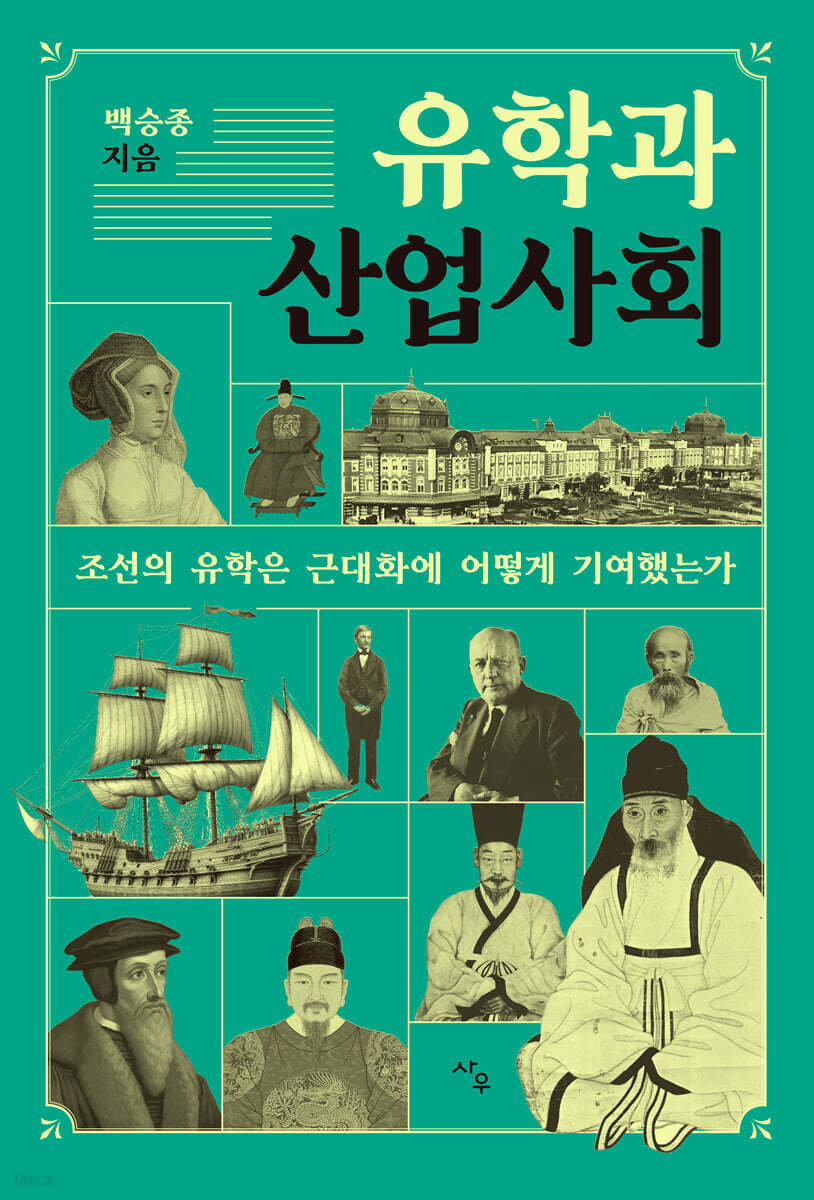
Confucianism and industrial society
 |
Description
Book Introduction
Tradition was not a stumbling block to modernity, but its driving force!
A book that structurally reveals the process by which Joseon philosophy led to Korea's industrialization.
We have regarded Confucianism as an outdated tradition and an obstacle to modernization.
However, 『Confucianism and Industrial Society』 directly overturns such common sense.
The author argues from two ideological and historical perspectives that Joseon's Confucianism was the spiritual foundation of Korean industrialization.
Neo-Confucianism, the national doctrine of Joseon, was not limited to moral standards, but was a philosophy of life that reorganized Korean society.
Values and norms such as diligence, moderation, responsibility, and cooperation took root throughout society, which was no different from the ethical foundation required by industrial society.
The explanation is that while Western society established its own modernity based on the Calvinist work ethic, Korea transitioned to an industrial society based on Confucian social ethics.
Indeed, didn't the core proposition of Confucianism, the philosophy of 'cultivating oneself and governing the world', cultivate a type of human being suitable for industrial society?
As the author emphasizes, Koreans' sincerity and community-oriented culture can be seen as Confucian values that still sustain our society.
『Confucianism and Industrial Society』 transcended the dichotomy that perceived tradition and modernity as separate and opposing.
This book explores the historical facts of how Confucianism hybridized with modern Western civilization in various ways.
The most significant feature of this book is that it three-dimensionally shows that Joseon's Neo-Confucianism and traditional thought were the driving force behind the creation of Korea's industrial society.
A book that structurally reveals the process by which Joseon philosophy led to Korea's industrialization.
We have regarded Confucianism as an outdated tradition and an obstacle to modernization.
However, 『Confucianism and Industrial Society』 directly overturns such common sense.
The author argues from two ideological and historical perspectives that Joseon's Confucianism was the spiritual foundation of Korean industrialization.
Neo-Confucianism, the national doctrine of Joseon, was not limited to moral standards, but was a philosophy of life that reorganized Korean society.
Values and norms such as diligence, moderation, responsibility, and cooperation took root throughout society, which was no different from the ethical foundation required by industrial society.
The explanation is that while Western society established its own modernity based on the Calvinist work ethic, Korea transitioned to an industrial society based on Confucian social ethics.
Indeed, didn't the core proposition of Confucianism, the philosophy of 'cultivating oneself and governing the world', cultivate a type of human being suitable for industrial society?
As the author emphasizes, Koreans' sincerity and community-oriented culture can be seen as Confucian values that still sustain our society.
『Confucianism and Industrial Society』 transcended the dichotomy that perceived tradition and modernity as separate and opposing.
This book explores the historical facts of how Confucianism hybridized with modern Western civilization in various ways.
The most significant feature of this book is that it three-dimensionally shows that Joseon's Neo-Confucianism and traditional thought were the driving force behind the creation of Korea's industrial society.
- You can preview some of the book's contents.
Preview
index
preface
Chapter 1: Protestantism and Modern Industrial Society
Modern industrial society sprouted from Calvin's reformism
American democracy and industrialization flourished on the foundation of Protestantism.
Chapter 2: Characteristics of Joseon, the Land of Confucianism
Study abroad orientation
Political and social characteristics
A special ruling tool called 'Silok'
The social impact of studying abroad
Chapter 3: Socio-Economic Problems in Joseon
The Relationship Between Economic Power and National Power - Differences in Thought
Limitations of Agricultural Society - Productivity Problems
Lack of understanding of the added value of commerce and industry
weak national defense
Chapter 4: Hybrids of Tradition and Modernity
The Blessings of a Multi-Religious Society
Hangul, the software for Korean identity and cultural development
Conscription - Modern Citizen Training
Saemaul Movement
Studying Abroad: The Secret Code of the Korean Wave
Chapter 5: Confucian Industrial Society
Chaebol Society and Its Future
The Future of the Middle Class
The Modern Scholar - The Future of Intellectuals
Is it really necessary to study abroad? - Law and Innovation
Chapter 1: Protestantism and Modern Industrial Society
Modern industrial society sprouted from Calvin's reformism
American democracy and industrialization flourished on the foundation of Protestantism.
Chapter 2: Characteristics of Joseon, the Land of Confucianism
Study abroad orientation
Political and social characteristics
A special ruling tool called 'Silok'
The social impact of studying abroad
Chapter 3: Socio-Economic Problems in Joseon
The Relationship Between Economic Power and National Power - Differences in Thought
Limitations of Agricultural Society - Productivity Problems
Lack of understanding of the added value of commerce and industry
weak national defense
Chapter 4: Hybrids of Tradition and Modernity
The Blessings of a Multi-Religious Society
Hangul, the software for Korean identity and cultural development
Conscription - Modern Citizen Training
Saemaul Movement
Studying Abroad: The Secret Code of the Korean Wave
Chapter 5: Confucian Industrial Society
Chaebol Society and Its Future
The Future of the Middle Class
The Modern Scholar - The Future of Intellectuals
Is it really necessary to study abroad? - Law and Innovation
Into the book
Despite decades of counterarguments, the claim that Protestant ethics are the very source of the spirit of capitalism remains alive and well.
French historian Fernand Braudel criticized Weber's Protestant ethic as a "weak theory," but frankly admitted that he had not completely defeated Weber's arguments.
--- p.32
From the late 18th century, industrial societies began to develop in many Western countries, including Britain, and in the late 19th century, the United States, across the Atlantic, led this historical change.
As a result, it would not be an exaggeration to call the 20th century the American century.
Today, there are many diagnoses that America's golden age is over and the signs of decline are growing stronger by the day.
But even today, the United States exerts overwhelming power in all areas: politics, economy, society, military, diplomacy, and culture.
It is true that there are various theories about the prosperity of 19th century America, but we cannot overlook the fact that Protestant virtues were at its foundation.
--- p.19
It was Calvin who strongly emphasized Protestant ethics in the 16th century.
He always emphasized the virtues of diligence and frugality.
He admonished the believers to do their best in their respective professions and never waste the profits they earn.
He also advised people to save as much as possible from their jobs and increase their wealth day by day.
These teachings of Calvin are directly connected to the basic principles of capitalism: increasing productivity and enhancing efficiency.
--- p.37
In the 1830s, the 'western expansion' movement was active in the United States.
It was at that time that “frontier individualism” blossomed.
Individualism originally aimed at self-realization as its highest goal, but at the time, American individualism was focused on economic achievement.
The desire to achieve economic independence and, furthermore, to seize unlimited socio-economic opportunities was exploding.
It could almost be called the spirit of the times of expansion.
--- p.64
Since the 16th century, Protestantism has exerted great social and cultural influence in many Western countries, including the United States and the United Kingdom.
At that time, Confucianism was the national ideology in Joseon.
As you know, the Joseon Dynasty made Confucianism the foundation of national governance for over 500 years.
In particular, King Sejong, the fourth king, set Confucian civilization as his goal and achieved great results by establishing creative policies in various fields.
Later kings also faithfully followed Sejong's path.
As time passed, Joseon became more and more Confucian.
It is impossible to discuss the nature or essence of Joseon society without going beyond “studying abroad.”
--- p.92
Everyone knows that the ideal world that Confucian scholars yearn for is in Daedong.
In the world of Daedong, there are no robbers, thieves, or traitors, so there is no need to keep your doors locked day or night.
A world of utmost peace and blessing is the Great Unity Society.
Joseon scholars wanted to create this kind of world in reality.
--- p.106
As a nation that revered Confucianism, the Joseon Dynasty placed great importance on record-keeping.
Since reflection is impossible without recording, even daily, repetitive events, whether personal or national, were carefully recorded and faithfully preserved.
And whenever I needed to refer to it, I would take out those records and read them.
It was no coincidence that the Annals of the Joseon Dynasty and the Diaries of the Royal Secretariat were designated as UNESCO World Heritage.
Among the many records, the most brilliant is the Annals of the Joseon Dynasty.
Although the history of the Annals of the Joseon Dynasty began in China, the Annals of the Joseon Dynasty are recognized by all as the greatest masterpiece in terms of both quantity and quality.
Joseon guaranteed the independence of its historians to the greatest extent possible, in accordance with the teachings of Confucianism.
And the carefully compiled Annals of the Joseon Dynasty were used as a guideline for running the country.
During the Joseon Dynasty, no one dared to privatize precious historical records such as the Annals of the Joseon Dynasty, and this was institutionally blocked.
--- pp.132-133
The Confucian view was that the right economic activity was to abandon private interests and pursue the public interest as much as possible.
I am convinced that ethics and economics are inseparable.
Therefore, pursuing private gain without regard to means and methods was a barbaric and immoral act.
--- p.178
Joseon, a Confucian state, was relatively negligent in international trade, and, with the exception of the capital city of Seoul, there were no major cities that could be called large, so the development of the market economy was very slow.
Some claim that remarkable economic development occurred in the late Joseon Dynasty, but this claim is far from the truth.
The truth of history was different.
Because commerce, industry, and trade were not active, Joseon's national power was weak, and so it succumbed to external invasion and ended up becoming a colony.
--- p.184
In the late Joseon Dynasty, a reform movement arose within Confucianism.
The Silhak scholars were like that, and the Bukhak school in particular was even more enterprising.
However, the privileged class at the time rejected all innovation and focused only on maintaining the existing system.
They carried out a merciless and comprehensive suppression of Western learning, and later fought against Donghak, the leading figure in the new reform movement, with armed struggle.
For this reason, some criticize Confucianism as a historical sinner and extreme reactionary force that hindered the growth of science and technology during the 500 years of Joseon Dynasty and resolutely resisted the acceptance of Western civilization.
If you think about it logically, it makes sense.
--- pp.242-243
Modern Korea's success can best be explained by the concept of "hybrid."
The term refers to the fusion of two or more elements to achieve a specific goal.
Looking back, over the past century, Korea has fused traditional and modern cultures in various ways.
Right there, a wonderful result that no one could have imagined was produced.
--- p.248
The remarkable achievements in many areas over the past 100 years have stemmed from the strength of traditional culture.
They played complementary roles and each played its own role.
For example, Confucianism provided the basic values of this society, Buddhism contributed to social stability and harmony, and Christianity took the lead in transplanting Western modern values.
--- p.260
Hangul achieved its original purpose hundreds of years after its creation.
King Sejong created Hangul in order to make Joseon a Confucian civilized nation, and his intention was finally achieved.
It was thanks to this very script that Koreans were able to quickly and accurately accept Western modern civilization.
The role of Hangul in the transformation of civilization cannot be overemphasized.
What would have happened if there was no Hangul?
We could not have lived as well as this, nor could we have enjoyed this much political freedom.
--- p.267
It is important that citizens of not only Asian countries such as Vietnam, Indonesia, and Malaysia, but also Europeans, Americans, and Africans, sympathize with Korea's traditional culture, which is steeped in the spirit of Confucianism.
Because the value of studying abroad is a universal value for humanity.
Korean art and lifestyle, deeply imbued with Confucian values, are receiving acclaim from people around the world.
French historian Fernand Braudel criticized Weber's Protestant ethic as a "weak theory," but frankly admitted that he had not completely defeated Weber's arguments.
--- p.32
From the late 18th century, industrial societies began to develop in many Western countries, including Britain, and in the late 19th century, the United States, across the Atlantic, led this historical change.
As a result, it would not be an exaggeration to call the 20th century the American century.
Today, there are many diagnoses that America's golden age is over and the signs of decline are growing stronger by the day.
But even today, the United States exerts overwhelming power in all areas: politics, economy, society, military, diplomacy, and culture.
It is true that there are various theories about the prosperity of 19th century America, but we cannot overlook the fact that Protestant virtues were at its foundation.
--- p.19
It was Calvin who strongly emphasized Protestant ethics in the 16th century.
He always emphasized the virtues of diligence and frugality.
He admonished the believers to do their best in their respective professions and never waste the profits they earn.
He also advised people to save as much as possible from their jobs and increase their wealth day by day.
These teachings of Calvin are directly connected to the basic principles of capitalism: increasing productivity and enhancing efficiency.
--- p.37
In the 1830s, the 'western expansion' movement was active in the United States.
It was at that time that “frontier individualism” blossomed.
Individualism originally aimed at self-realization as its highest goal, but at the time, American individualism was focused on economic achievement.
The desire to achieve economic independence and, furthermore, to seize unlimited socio-economic opportunities was exploding.
It could almost be called the spirit of the times of expansion.
--- p.64
Since the 16th century, Protestantism has exerted great social and cultural influence in many Western countries, including the United States and the United Kingdom.
At that time, Confucianism was the national ideology in Joseon.
As you know, the Joseon Dynasty made Confucianism the foundation of national governance for over 500 years.
In particular, King Sejong, the fourth king, set Confucian civilization as his goal and achieved great results by establishing creative policies in various fields.
Later kings also faithfully followed Sejong's path.
As time passed, Joseon became more and more Confucian.
It is impossible to discuss the nature or essence of Joseon society without going beyond “studying abroad.”
--- p.92
Everyone knows that the ideal world that Confucian scholars yearn for is in Daedong.
In the world of Daedong, there are no robbers, thieves, or traitors, so there is no need to keep your doors locked day or night.
A world of utmost peace and blessing is the Great Unity Society.
Joseon scholars wanted to create this kind of world in reality.
--- p.106
As a nation that revered Confucianism, the Joseon Dynasty placed great importance on record-keeping.
Since reflection is impossible without recording, even daily, repetitive events, whether personal or national, were carefully recorded and faithfully preserved.
And whenever I needed to refer to it, I would take out those records and read them.
It was no coincidence that the Annals of the Joseon Dynasty and the Diaries of the Royal Secretariat were designated as UNESCO World Heritage.
Among the many records, the most brilliant is the Annals of the Joseon Dynasty.
Although the history of the Annals of the Joseon Dynasty began in China, the Annals of the Joseon Dynasty are recognized by all as the greatest masterpiece in terms of both quantity and quality.
Joseon guaranteed the independence of its historians to the greatest extent possible, in accordance with the teachings of Confucianism.
And the carefully compiled Annals of the Joseon Dynasty were used as a guideline for running the country.
During the Joseon Dynasty, no one dared to privatize precious historical records such as the Annals of the Joseon Dynasty, and this was institutionally blocked.
--- pp.132-133
The Confucian view was that the right economic activity was to abandon private interests and pursue the public interest as much as possible.
I am convinced that ethics and economics are inseparable.
Therefore, pursuing private gain without regard to means and methods was a barbaric and immoral act.
--- p.178
Joseon, a Confucian state, was relatively negligent in international trade, and, with the exception of the capital city of Seoul, there were no major cities that could be called large, so the development of the market economy was very slow.
Some claim that remarkable economic development occurred in the late Joseon Dynasty, but this claim is far from the truth.
The truth of history was different.
Because commerce, industry, and trade were not active, Joseon's national power was weak, and so it succumbed to external invasion and ended up becoming a colony.
--- p.184
In the late Joseon Dynasty, a reform movement arose within Confucianism.
The Silhak scholars were like that, and the Bukhak school in particular was even more enterprising.
However, the privileged class at the time rejected all innovation and focused only on maintaining the existing system.
They carried out a merciless and comprehensive suppression of Western learning, and later fought against Donghak, the leading figure in the new reform movement, with armed struggle.
For this reason, some criticize Confucianism as a historical sinner and extreme reactionary force that hindered the growth of science and technology during the 500 years of Joseon Dynasty and resolutely resisted the acceptance of Western civilization.
If you think about it logically, it makes sense.
--- pp.242-243
Modern Korea's success can best be explained by the concept of "hybrid."
The term refers to the fusion of two or more elements to achieve a specific goal.
Looking back, over the past century, Korea has fused traditional and modern cultures in various ways.
Right there, a wonderful result that no one could have imagined was produced.
--- p.248
The remarkable achievements in many areas over the past 100 years have stemmed from the strength of traditional culture.
They played complementary roles and each played its own role.
For example, Confucianism provided the basic values of this society, Buddhism contributed to social stability and harmony, and Christianity took the lead in transplanting Western modern values.
--- p.260
Hangul achieved its original purpose hundreds of years after its creation.
King Sejong created Hangul in order to make Joseon a Confucian civilized nation, and his intention was finally achieved.
It was thanks to this very script that Koreans were able to quickly and accurately accept Western modern civilization.
The role of Hangul in the transformation of civilization cannot be overemphasized.
What would have happened if there was no Hangul?
We could not have lived as well as this, nor could we have enjoyed this much political freedom.
--- p.267
It is important that citizens of not only Asian countries such as Vietnam, Indonesia, and Malaysia, but also Europeans, Americans, and Africans, sympathize with Korea's traditional culture, which is steeped in the spirit of Confucianism.
Because the value of studying abroad is a universal value for humanity.
Korean art and lifestyle, deeply imbued with Confucian values, are receiving acclaim from people around the world.
--- p.295
Publisher's Review
“I woke up and realized I was a citizen of a developed country!”
What drove Korea's rapid growth after liberation?
Starting out as a devastated colony 80 years ago, Korea has now grown into a politically, economically, and culturally advanced nation that is attracting global attention.
Per capita national income grew more than 400-fold, from $79 in 1960 to approximately $35,000 in 2024.
Its economy ranks among the top 10 in the world, and it is recognized by the international community as a country with a well-established democratic system.
In addition, Korean Wave content such as K-pop, movies, and webtoons are welcomed in over 190 countries, making Korea a leading 'cultural powerhouse.'
“I woke up and realized I was a developed nation!” they say, but we have developed so rapidly that we can’t even believe it.
What is the driving force behind this remarkable transformation? Various theories abound, with some citing strong government-led initiatives as a key factor in growth.
Others argue that this is thanks to the active exploitation of the 'gap of dependence' within the global capitalist system.
Or, some analyze that it is the result of successful high growth taking advantage of the neoliberal trend since the 1990s.
Historian Baek Seung-jong's explanation is different.
In this book, he argues that “Confucianism” played a decisive role in Korean industrialization.
Until now, we have usually regarded Confucianism as an outdated tradition, a negative legacy that hindered industrialization and modernization.
But the author completely overturns that common sense.
"Was Joseon's philosophy truly an obstacle to modernization? Or was it the spiritual foundation of industrial society?" "Confucianism and Industrial Society" offers a multifaceted and in-depth answer to this question.
Calvinism, which led Western modernization, vs. Confucianism, which created Korean industrialization.
Although there are many counterarguments these days, the modern West was a product of the Calvinist work ethic.
The author argues that in the same historical-philosophical context, Korea's industrialization was also based on Confucian social ethics.
Confucianism was a negative legacy that caused historical delays, but ultimately it was also fertile soil that fostered Korea's modernization and industrialization.
It is explained that Joseon's Confucian tradition, which strengthened community awareness and gave ethics to human relationships, greatly contributed to the transition to an industrial society.
In the introduction, the author examines very carefully the relationship between Western industrial society and Protestantism.
Thus, it is confirmed that Protestantism is intertwined with Western modernization and industrialization in multiple ways.
In particular, the book is impressive in its detailed yet engaging explanation of the practical impact of Calvin's reformism on the industrialization of Europe and the United States.
Next, it explains in multiple layers how Confucianism changed Joseon.
Joseon Confucianism emphasized the harmony between humans and nature, and thus pursued the ideal of a "great society" in which everyone lived in harmony.
Against this philosophical backdrop, the Joseon kings and their subjects developed the philosophy of 'gongchi (ruling together),' produced professional bureaucrats, and prevented anyone from privatizing power.
As a country of Confucianism, Joseon placed great importance on education and emerged as a civilized nation that took knowledge revolution and standardization for granted.
It is said that this became an important asset when Korea later transitioned to an industrial society.
The author also argues that the Confucian ideal of “cultivating oneself and governing others” has produced a type of human being that is beneficial to industrial society.
This is because the proposition of ‘polishing oneself to rule the world’ is directly connected to the pursuit of modern expertise and ethical awareness, and the civic spirit that prioritizes public interest.
The Korean people's sincerity, communal solidarity, respect for authority and order, pursuit of education and specialized knowledge, and stable family-centered social order, which are widely admired by the international community today, are said to be the result of inheriting Confucian values.
In short, this is an interpretation that the customs and morals of Joseon society were fused with the capitalist system, which was the foundation of industrial society, to create a unique society called a “Confucian industrial society.”
A remarkable achievement of a hybrid of tradition and modernity
The author also delves into the negative impact that studying abroad has had on our society.
Confucian scholars only focused on agriculture and arbitrarily ignored commerce and industry.
They dreamed of self-sufficiency and did not seek to increase productivity or increase national wealth through international trade.
Accumulating wealth through means other than agriculture was considered sinful.
These Confucian economic concepts even blocked the development of commerce and industry or the emergence of modern economic concepts.
As a result, Joseon was forced to endure the misfortune of the Japanese colonial period.
After experiencing the suffering of the Japanese colonial period and the tragic events of the Korean War, Korea finally embarked on the path of industrialization.
Today, 70 years later, Korea is ranked as the world's sixth most powerful country (Source: Forbes).
What is the power of such amazing growth?
The author finds the answer in the “hybrid” of civilization.
The author focuses on the process by which Korean traditional culture, based on Confucianism, is fused with Western modern civilization.
The author dissects, step by step, how Confucian ethics and social customs, the main cultural characteristics of Korean society, were combined with Western rationality, industrialism, and democracy.
It also persuasively explains the ethics of a multi-religious society that included Christianity, and how Hangul, which King Sejong created to promote Confucianism, contributed to the establishment of modern education and national consciousness and the formation of identity.
In addition, we analyze how the conscription system and the Saemaul Movement, which both have their pros and cons, were integrated with traditional cultural heritage.
The author argues that the intrinsic value of studying abroad is also behind the growth of the Korean Wave, or K-culture.
In this book, we can encounter the historical fact that Confucianism, once a “stumbling block” to modernization, became a “stepping stone” leading to the “transition” to an industrial society.
In short, Korea's industrial society is not simply the result of "hurry hurry" or imitation of Western civilization, but rather the beautiful result of the fusion of Joseon's philosophical thinking and historical experience with Western civilization.
In the final part of this book, the author examines where the cultural legacy of Confucianism will lead future civilizations.
Confucianism emphasizes trust and harmony among members, so it is believed that it can have a positive impact on management culture.
Additionally, it is said that the ideal of a united society pursued by Confucian scholars can be an alternative value that can create a sustainable society.
In addition, it is predicted that the spirit of the scholar, which was the mainstay of Confucian civilization, is still alive and will lead future society.
The author also diagnoses that not only Confucian civilization but also Islamic and Buddhist cultures have the potential to create an independent industrial society when traditional cultures are appropriately integrated.
Over the past 100 years, we have experienced unprecedented cultural shocks and changes.
In the process, we failed to properly reflect on the impact our cultural traditions have had on modern society.
This book deeply recognizes such weaknesses and re-examines the roots of Korean society.
“What is the spirit that made modern Korea possible?”
This book is an intellectual exploration that tenaciously traces the ways in which past ideas and historical experiences have led to present-day social realities.
By reflecting on the profound Confucian thought of Joseon that gave birth to modern industrial society in the mirror of history, we examine the unique historical path pioneered by Korean civilization.
In that sense, rereading Confucianism is both an exercise in examining the fundamentals of modern Korean society and preparing for a better future.
What drove Korea's rapid growth after liberation?
Starting out as a devastated colony 80 years ago, Korea has now grown into a politically, economically, and culturally advanced nation that is attracting global attention.
Per capita national income grew more than 400-fold, from $79 in 1960 to approximately $35,000 in 2024.
Its economy ranks among the top 10 in the world, and it is recognized by the international community as a country with a well-established democratic system.
In addition, Korean Wave content such as K-pop, movies, and webtoons are welcomed in over 190 countries, making Korea a leading 'cultural powerhouse.'
“I woke up and realized I was a developed nation!” they say, but we have developed so rapidly that we can’t even believe it.
What is the driving force behind this remarkable transformation? Various theories abound, with some citing strong government-led initiatives as a key factor in growth.
Others argue that this is thanks to the active exploitation of the 'gap of dependence' within the global capitalist system.
Or, some analyze that it is the result of successful high growth taking advantage of the neoliberal trend since the 1990s.
Historian Baek Seung-jong's explanation is different.
In this book, he argues that “Confucianism” played a decisive role in Korean industrialization.
Until now, we have usually regarded Confucianism as an outdated tradition, a negative legacy that hindered industrialization and modernization.
But the author completely overturns that common sense.
"Was Joseon's philosophy truly an obstacle to modernization? Or was it the spiritual foundation of industrial society?" "Confucianism and Industrial Society" offers a multifaceted and in-depth answer to this question.
Calvinism, which led Western modernization, vs. Confucianism, which created Korean industrialization.
Although there are many counterarguments these days, the modern West was a product of the Calvinist work ethic.
The author argues that in the same historical-philosophical context, Korea's industrialization was also based on Confucian social ethics.
Confucianism was a negative legacy that caused historical delays, but ultimately it was also fertile soil that fostered Korea's modernization and industrialization.
It is explained that Joseon's Confucian tradition, which strengthened community awareness and gave ethics to human relationships, greatly contributed to the transition to an industrial society.
In the introduction, the author examines very carefully the relationship between Western industrial society and Protestantism.
Thus, it is confirmed that Protestantism is intertwined with Western modernization and industrialization in multiple ways.
In particular, the book is impressive in its detailed yet engaging explanation of the practical impact of Calvin's reformism on the industrialization of Europe and the United States.
Next, it explains in multiple layers how Confucianism changed Joseon.
Joseon Confucianism emphasized the harmony between humans and nature, and thus pursued the ideal of a "great society" in which everyone lived in harmony.
Against this philosophical backdrop, the Joseon kings and their subjects developed the philosophy of 'gongchi (ruling together),' produced professional bureaucrats, and prevented anyone from privatizing power.
As a country of Confucianism, Joseon placed great importance on education and emerged as a civilized nation that took knowledge revolution and standardization for granted.
It is said that this became an important asset when Korea later transitioned to an industrial society.
The author also argues that the Confucian ideal of “cultivating oneself and governing others” has produced a type of human being that is beneficial to industrial society.
This is because the proposition of ‘polishing oneself to rule the world’ is directly connected to the pursuit of modern expertise and ethical awareness, and the civic spirit that prioritizes public interest.
The Korean people's sincerity, communal solidarity, respect for authority and order, pursuit of education and specialized knowledge, and stable family-centered social order, which are widely admired by the international community today, are said to be the result of inheriting Confucian values.
In short, this is an interpretation that the customs and morals of Joseon society were fused with the capitalist system, which was the foundation of industrial society, to create a unique society called a “Confucian industrial society.”
A remarkable achievement of a hybrid of tradition and modernity
The author also delves into the negative impact that studying abroad has had on our society.
Confucian scholars only focused on agriculture and arbitrarily ignored commerce and industry.
They dreamed of self-sufficiency and did not seek to increase productivity or increase national wealth through international trade.
Accumulating wealth through means other than agriculture was considered sinful.
These Confucian economic concepts even blocked the development of commerce and industry or the emergence of modern economic concepts.
As a result, Joseon was forced to endure the misfortune of the Japanese colonial period.
After experiencing the suffering of the Japanese colonial period and the tragic events of the Korean War, Korea finally embarked on the path of industrialization.
Today, 70 years later, Korea is ranked as the world's sixth most powerful country (Source: Forbes).
What is the power of such amazing growth?
The author finds the answer in the “hybrid” of civilization.
The author focuses on the process by which Korean traditional culture, based on Confucianism, is fused with Western modern civilization.
The author dissects, step by step, how Confucian ethics and social customs, the main cultural characteristics of Korean society, were combined with Western rationality, industrialism, and democracy.
It also persuasively explains the ethics of a multi-religious society that included Christianity, and how Hangul, which King Sejong created to promote Confucianism, contributed to the establishment of modern education and national consciousness and the formation of identity.
In addition, we analyze how the conscription system and the Saemaul Movement, which both have their pros and cons, were integrated with traditional cultural heritage.
The author argues that the intrinsic value of studying abroad is also behind the growth of the Korean Wave, or K-culture.
In this book, we can encounter the historical fact that Confucianism, once a “stumbling block” to modernization, became a “stepping stone” leading to the “transition” to an industrial society.
In short, Korea's industrial society is not simply the result of "hurry hurry" or imitation of Western civilization, but rather the beautiful result of the fusion of Joseon's philosophical thinking and historical experience with Western civilization.
In the final part of this book, the author examines where the cultural legacy of Confucianism will lead future civilizations.
Confucianism emphasizes trust and harmony among members, so it is believed that it can have a positive impact on management culture.
Additionally, it is said that the ideal of a united society pursued by Confucian scholars can be an alternative value that can create a sustainable society.
In addition, it is predicted that the spirit of the scholar, which was the mainstay of Confucian civilization, is still alive and will lead future society.
The author also diagnoses that not only Confucian civilization but also Islamic and Buddhist cultures have the potential to create an independent industrial society when traditional cultures are appropriately integrated.
Over the past 100 years, we have experienced unprecedented cultural shocks and changes.
In the process, we failed to properly reflect on the impact our cultural traditions have had on modern society.
This book deeply recognizes such weaknesses and re-examines the roots of Korean society.
“What is the spirit that made modern Korea possible?”
This book is an intellectual exploration that tenaciously traces the ways in which past ideas and historical experiences have led to present-day social realities.
By reflecting on the profound Confucian thought of Joseon that gave birth to modern industrial society in the mirror of history, we examine the unique historical path pioneered by Korean civilization.
In that sense, rereading Confucianism is both an exercise in examining the fundamentals of modern Korean society and preparing for a better future.
GOODS SPECIFICS
- Date of issue: December 5, 2025
- Page count, weight, size: 368 pages | 152*225*30mm
- ISBN13: 9791194126102
- ISBN10: 1194126103
You may also like
카테고리
korean


korean

![GQ KOREA Mark (Monthly): December [2025]](http://librairie.coreenne.fr/cdn/shop/files/8ef265dbbfbf186523ed75ba7319009d.jpg?v=1765340328&width=3840)


