

The created West
 |
Description
Book Introduction
- A word from MD
-
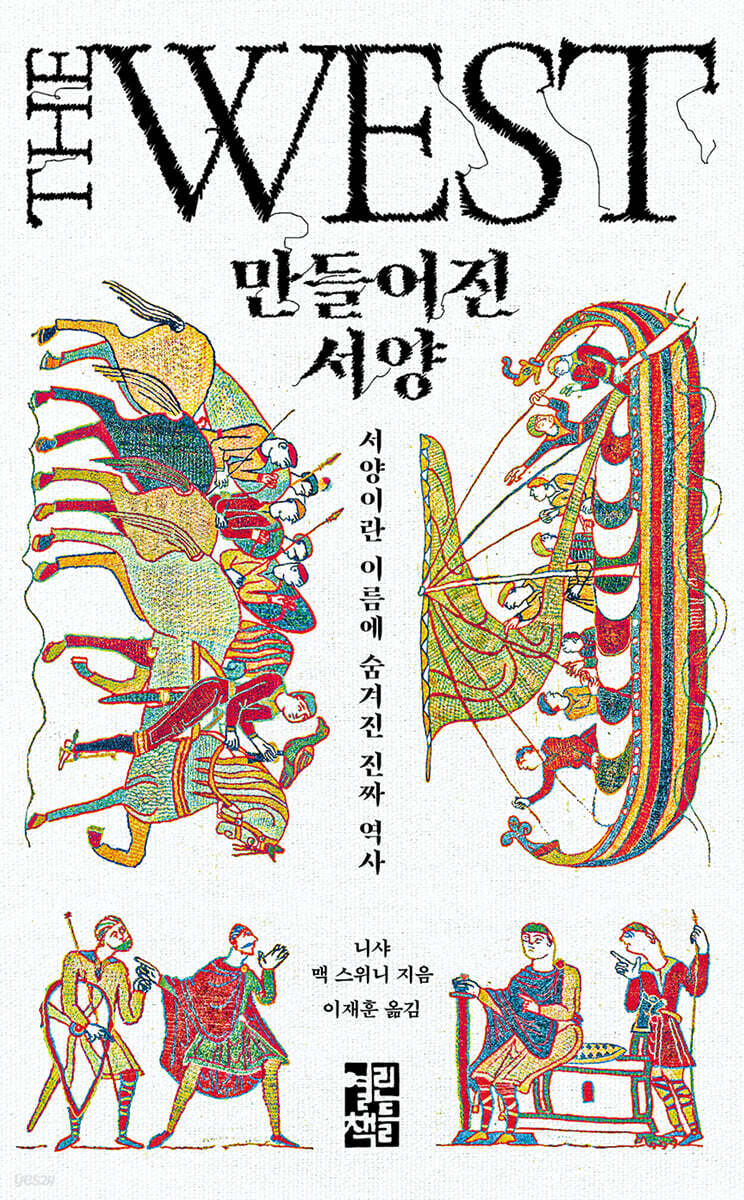
The West, constructed by interpretation and powerFrom ancient Greece to Europe and America, when did the West truly become the West? This book reveals the true history of Western culture, as we know it, through the lives of 14 people who lived on the borders of civilization.
Their stories, which clear up distortions and misunderstandings, offer a new perspective on the world.
July 11, 2025. History PD Ahn Hyun-jae
Designated geography, edited memories, chosen race
Tracing and revealing the process by which the West was created,
The true history of Western civilization that has been hidden for so long!
The West has often been perceived as a consistent lineage of civilization stretching from ancient Greece to modern Europe and America.
But how can the countless nations and groups, cultures and ideologies, religions and laws that have emerged over a long period of time, be unified into a single thread? This book asks.
When, by whom, and for what purpose was the history of the West defined as it is today?
Classical archaeologist and historian Nisha Mac Sweeney traces the birth and spread of the concept of the West through the lives of fourteen people who deserve renewed attention.
They were often pushed out of the centers of civilization, sometimes outside the boundaries of the West.
However, their very existence and evaluation demonstrate that the concept of the West is not a fixed entity, but rather a result of its construction and interpretation throughout history.
Through this book, readers will embark on an intellectual journey that will reveal, in detail, the history of choices hidden behind the name "civilization," the narrative of power, and the framework of thought that has dominated our time.
Tracing and revealing the process by which the West was created,
The true history of Western civilization that has been hidden for so long!
The West has often been perceived as a consistent lineage of civilization stretching from ancient Greece to modern Europe and America.
But how can the countless nations and groups, cultures and ideologies, religions and laws that have emerged over a long period of time, be unified into a single thread? This book asks.
When, by whom, and for what purpose was the history of the West defined as it is today?
Classical archaeologist and historian Nisha Mac Sweeney traces the birth and spread of the concept of the West through the lives of fourteen people who deserve renewed attention.
They were often pushed out of the centers of civilization, sometimes outside the boundaries of the West.
However, their very existence and evaluation demonstrate that the concept of the West is not a fixed entity, but rather a result of its construction and interpretation throughout history.
Through this book, readers will embark on an intellectual journey that will reveal, in detail, the history of choices hidden behind the name "civilization," the narrative of power, and the framework of thought that has dominated our time.
- You can preview some of the book's contents.
Preview
index
Before entering
Prologue: The Importance of Origins
Chapter 1: Rejecting Purity: Herodotus
Chapter 2: Asian Europeans: Livilla
Chapter 3: The International Successor of the Ancient World: Al-Kindi
Chapter 4: The Reappearance of Asian Europeans: Goffredo of Viterbo
Chapter 5: The Illusion of a Christian World: Theodoros Laskaris
Chapter 6: Reimagining Antiquity: Tullia d'Aragona
Chapter 7: The Untrodden Path: Safiye Sultan
Chapter 8: The West and Knowledge: Francis Bacon
Chapter 9: The West and Imperialism: Nzinga in Angola
Chapter 10: The West and Politics: Joseph Warren
Chapter 11: The West and Race: Phillis Wheatley
Chapter 12: The West and Modernity: William Gladstone
Chapter 13: The West and Its Critics: Edward Said
Chapter 14: The West and Its Enemies: Carrie Lam
Conclusion Making History
Acknowledgements
main
References
Recommended Book List
List of illustrations
Translator's Note
Search
Prologue: The Importance of Origins
Chapter 1: Rejecting Purity: Herodotus
Chapter 2: Asian Europeans: Livilla
Chapter 3: The International Successor of the Ancient World: Al-Kindi
Chapter 4: The Reappearance of Asian Europeans: Goffredo of Viterbo
Chapter 5: The Illusion of a Christian World: Theodoros Laskaris
Chapter 6: Reimagining Antiquity: Tullia d'Aragona
Chapter 7: The Untrodden Path: Safiye Sultan
Chapter 8: The West and Knowledge: Francis Bacon
Chapter 9: The West and Imperialism: Nzinga in Angola
Chapter 10: The West and Politics: Joseph Warren
Chapter 11: The West and Race: Phillis Wheatley
Chapter 12: The West and Modernity: William Gladstone
Chapter 13: The West and Its Critics: Edward Said
Chapter 14: The West and Its Enemies: Carrie Lam
Conclusion Making History
Acknowledgements
main
References
Recommended Book List
List of illustrations
Translator's Note
Search
Detailed image

Into the book
Origins are important.
For example, the question “Where are you from?” is often asked “Who are you?”
The same can be said of individuals, families, and entire nations.
This is also true of the West, which is a complex, a whole, and a single entity.
--- From the first sentence
The first half of this book is a grand narrative that will strip away the illusion of a culturally pure and complete linear genealogy by examining the origins of the West to point out the historical errors of Western civilization.
The first two figures come from the classical world, often considered the birthplace of the West, and will reveal that neither the ancient Greeks nor the Romans possessed an exclusively Western or European identity (Chapters 1 and 2).
The following three figures, from the so-called "Dark Ages" of the Middle Ages, will serve as examples of how Islam, Central Europe, and Byzantium embraced, rejected, and reimagined the Greek and Roman heritage in their respective contexts (Chapters 3, 4, and 5).
The last two characters represent the Renaissance and the Modern Age.
During this period, the European continent and the greater Christian world were divided to the point where the very notion of a coherent West became meaningless, leading to the development of diverse and conflicting genealogies of civilization (Chapters 6 and 7).
--- From "Prologue: The Importance of Origins"
The grand narrative of Western civilization considers the ancient Greek world as the origin of the West, but the ancient Greek world depicted by Herodotus, Homer, and Thucydides was a different, more dynamic and colorful world.
The worldview promoted by Athenian politicians like Pericles, as a means of justifying imperialist expansion, held that the world was divided by great differences between “us” and “them.”
Those who are generally considered to be descendants of the Greeks and to have inherited the lineage of Western civilization from them did not agree with this view.
They are the ones who will be the subject of the next chapter.
--- From "Chapter 1: Rejecting Purity: Herodotus"
The Middle Ages were not a dark age in which the dying torch of ancient Greco-Roman history was carefully preserved in Europe, waiting for later generations to rekindle it.
Ancient Greece and Rome were thought of as separate entities, with different peoples claiming different heritages.
The narrative of Western civilization assumes that Central and Western Europe, the regions we consider closely associated with the West, were the primary inheritors of classical culture.
But while continuity with ancient Rome was maintained there (as will be discussed in detail in Chapter 4), there was little interest in or contact with ancient Greece.
Conversely, within the Byzantine Empire, Roman political, cultural, and lineage inheritance was clearly asserted, and intellectual contacts with ancient Greece also persisted.
In the Islamic world, often omitted from the narrative of Western civilization, people claimed, in their own way, a legacy from ancient Greece, basing their claims not only on intellectual tradition and cultural continuity but also on mythological genealogy.
If we were to draw a family tree starting from ancient Greece and Rome, the Islamic world of the Middle Ages would be the thickest and most lush branch.
--- From "Chapter 3: International Successors of the Ancient World: Al-Kindi"
If the grand narrative was conceived in the 16th century and born in the 17th, it had to wait until the late 18th century to mature.
It was around this time that the narrative of Western civilization gained popularity and entered the mainstream political rhetoric of the new nation-state.
Partly because it had political utility.
For example, the new United States could claim independence from Britain on the basis of the movement of civilizations (Chapter 10).
The latter half of the 18th century was also a time when Western civilization was racialized.
The oppression of non-Western populations was justified not only by categorization according to natural and biological classifications, but also by their inability to fully participate in the cultural heritage of Western civilization.
The current racial classification was formed by following the map of the cultural genealogy of the past.
--- From "Chapter 11 The West and Race: Phillis Wheatley"
Transmissibility and fluidity lie at the heart of every grand narrative that speaks of the continuation of civilization, in some way connected to the concept of the West.
In all these grand narratives, civilization moves.
Because civilization flows between people, no single population group can claim a monopoly on it.
Civilization does not belong exclusively to any single place, as it moves between places.
Indeed, if we think of Western civilization as a "golden nugget" (see the introduction to this book), then that gold nugget would be the principle of cultural transmissibility and fluidity.
Based on this core principle, a new vision of Western identity must emerge and a new grand narrative of Western history must be written.
For example, the question “Where are you from?” is often asked “Who are you?”
The same can be said of individuals, families, and entire nations.
This is also true of the West, which is a complex, a whole, and a single entity.
--- From the first sentence
The first half of this book is a grand narrative that will strip away the illusion of a culturally pure and complete linear genealogy by examining the origins of the West to point out the historical errors of Western civilization.
The first two figures come from the classical world, often considered the birthplace of the West, and will reveal that neither the ancient Greeks nor the Romans possessed an exclusively Western or European identity (Chapters 1 and 2).
The following three figures, from the so-called "Dark Ages" of the Middle Ages, will serve as examples of how Islam, Central Europe, and Byzantium embraced, rejected, and reimagined the Greek and Roman heritage in their respective contexts (Chapters 3, 4, and 5).
The last two characters represent the Renaissance and the Modern Age.
During this period, the European continent and the greater Christian world were divided to the point where the very notion of a coherent West became meaningless, leading to the development of diverse and conflicting genealogies of civilization (Chapters 6 and 7).
--- From "Prologue: The Importance of Origins"
The grand narrative of Western civilization considers the ancient Greek world as the origin of the West, but the ancient Greek world depicted by Herodotus, Homer, and Thucydides was a different, more dynamic and colorful world.
The worldview promoted by Athenian politicians like Pericles, as a means of justifying imperialist expansion, held that the world was divided by great differences between “us” and “them.”
Those who are generally considered to be descendants of the Greeks and to have inherited the lineage of Western civilization from them did not agree with this view.
They are the ones who will be the subject of the next chapter.
--- From "Chapter 1: Rejecting Purity: Herodotus"
The Middle Ages were not a dark age in which the dying torch of ancient Greco-Roman history was carefully preserved in Europe, waiting for later generations to rekindle it.
Ancient Greece and Rome were thought of as separate entities, with different peoples claiming different heritages.
The narrative of Western civilization assumes that Central and Western Europe, the regions we consider closely associated with the West, were the primary inheritors of classical culture.
But while continuity with ancient Rome was maintained there (as will be discussed in detail in Chapter 4), there was little interest in or contact with ancient Greece.
Conversely, within the Byzantine Empire, Roman political, cultural, and lineage inheritance was clearly asserted, and intellectual contacts with ancient Greece also persisted.
In the Islamic world, often omitted from the narrative of Western civilization, people claimed, in their own way, a legacy from ancient Greece, basing their claims not only on intellectual tradition and cultural continuity but also on mythological genealogy.
If we were to draw a family tree starting from ancient Greece and Rome, the Islamic world of the Middle Ages would be the thickest and most lush branch.
--- From "Chapter 3: International Successors of the Ancient World: Al-Kindi"
If the grand narrative was conceived in the 16th century and born in the 17th, it had to wait until the late 18th century to mature.
It was around this time that the narrative of Western civilization gained popularity and entered the mainstream political rhetoric of the new nation-state.
Partly because it had political utility.
For example, the new United States could claim independence from Britain on the basis of the movement of civilizations (Chapter 10).
The latter half of the 18th century was also a time when Western civilization was racialized.
The oppression of non-Western populations was justified not only by categorization according to natural and biological classifications, but also by their inability to fully participate in the cultural heritage of Western civilization.
The current racial classification was formed by following the map of the cultural genealogy of the past.
--- From "Chapter 11 The West and Race: Phillis Wheatley"
Transmissibility and fluidity lie at the heart of every grand narrative that speaks of the continuation of civilization, in some way connected to the concept of the West.
In all these grand narratives, civilization moves.
Because civilization flows between people, no single population group can claim a monopoly on it.
Civilization does not belong exclusively to any single place, as it moves between places.
Indeed, if we think of Western civilization as a "golden nugget" (see the introduction to this book), then that gold nugget would be the principle of cultural transmissibility and fluidity.
Based on this core principle, a new vision of Western identity must emerge and a new grand narrative of Western history must be written.
--- From "Chapter 14 The West and Its Enemies: Carrie Lam"
Publisher's Review
★ Recommended by the Wall Street Journal and Washington Post
★ Books selected by the Guardian and BBC Radio
Rewritten from the Western borders, away from the mainstream gaze
Insightful History of Civilization
Dissecting the West and reconstructing it as true history
For us, Western history has always been a single, linear story.
A lineage that runs from ancient Greece to Rome, the Renaissance, the Enlightenment, the Industrial Revolution, and democracy.
This chronology soon became the standard for civilization, and the name "West" came to symbolize progress, rationality, and universal values.
We did not doubt this story, and so the history of Western civilization became, without any criticism, our or everyone's main common sense.
Archaeologist and historian Nisha Mac Sweeney was skeptical about this chain of events.
Although she was a member of the Western world, she was a woman and of mixed race, and had a different perspective that was outside the mainstream.
He doggedly pursued the concept of the “West” through this lens, and as a result, he was able to reach a truth that shattered conventional wisdom.
The structure of “us and them” (the West and the non-West), which began in the late 16th century, became established in the 18th century, and in the process, the name “the West” gradually became established as a single authority.
But to get to that point, it was reconstructed, interpreted, and repeatedly explained according to the times and political needs.
In other words, what we take for granted as Western was created by someone else.
This book explores the process of this composition.
The narrative of Western civilization was actually created by selectively excluding and incorporating various traditions and cultures.
The history of exclusion, the history of power, and the history of interpretation is the “real history of the West.”
"The Made West" strips away the familiar facade of Western history we know and reveals the true face of history hidden within.
This book is not just about the West; it is a book that questions from the beginning the structure that has been accepted without question as the history of civilization.
This book dissects and rebuilds the very concept of the West.
14 Characters Redrawing the Boundaries of Civilization
The Made West rejects the traditional chronological narrative that follows the flow of time.
Instead, it illuminates how the concept of the West was constructed through the lives of 14 people.
These people were not famous or in positions of power.
Quite the opposite.
Most of them were people who were on the periphery of Western civilization, that is, not at the center.
Beginning with the Greek historian Herodotus, who observed ancient Persia, to the Islamic philosopher Al-Kindi, to the high-class courtesan and writer Tullia d'Aragona, to the exiled emperor Theodore Laskaris, to the black slave and poet Phillis Wheatley, and to the colonial intellectual Edward Said, the 14 people introduced in this book are all figures who, although they belong to the non-mainstream, were at the historical intersection where the concept of the West was created and strengthened.
They are too diverse and complex to define a single civilization.
But through its diversity and complexity, it reveals the fiction of Western history as we know it.
Mac Sweeney follows their lives to reveal that modern Europe has not fully embraced the legacy of ancient Greco-Roman civilization, that whiteness has been chosen as the European race, that non-Christians and Muslims have been labeled enemies and hatred has been fostered, and, crucially, that the West is not unified but has suffered from countless divisions and conflicts.
Paradoxically, the essence of the West is revealed through these non-mainstream elements.
Through this book, we will erase the Western civilization we have known so far and draw new boundaries of civilization.
Why Should We Read This Book Now?
"The Made West" is not just a book about Western history.
The questions this book poses are much deeper and broader.
Why do we consider Western history and civilization to be the center of humanity? Is this perception truly true? These questions form the foundation of our understanding.
We have taken the West as our standard for philosophy, politics, art, science, institutions, and even modernity.
But if that standard is created for someone's power and profit, we will be forced to view the world through a flawed yardstick and define ourselves from a secondary position as non-Western.
The world is now in the midst of a period of transition.
At a time when the American-centric world is shaking, when hegemony is becoming more important than truth in this chaos, and when the standards of civilization are becoming more multipolar, we must ask ourselves again.
What is the West? How have we learned it, and how should we understand it? "The Made West" offers a profound reflection on these questions.
When we understand the true history hidden beneath the universal values we have been taught, we can think critically about the West, rather than simply admiring or rejecting it.
And through this, we will be able to read and move forward in the world with the right perspective.
It is precisely for this reason that this book has come to us now.
★ Books selected by the Guardian and BBC Radio
Rewritten from the Western borders, away from the mainstream gaze
Insightful History of Civilization
Dissecting the West and reconstructing it as true history
For us, Western history has always been a single, linear story.
A lineage that runs from ancient Greece to Rome, the Renaissance, the Enlightenment, the Industrial Revolution, and democracy.
This chronology soon became the standard for civilization, and the name "West" came to symbolize progress, rationality, and universal values.
We did not doubt this story, and so the history of Western civilization became, without any criticism, our or everyone's main common sense.
Archaeologist and historian Nisha Mac Sweeney was skeptical about this chain of events.
Although she was a member of the Western world, she was a woman and of mixed race, and had a different perspective that was outside the mainstream.
He doggedly pursued the concept of the “West” through this lens, and as a result, he was able to reach a truth that shattered conventional wisdom.
The structure of “us and them” (the West and the non-West), which began in the late 16th century, became established in the 18th century, and in the process, the name “the West” gradually became established as a single authority.
But to get to that point, it was reconstructed, interpreted, and repeatedly explained according to the times and political needs.
In other words, what we take for granted as Western was created by someone else.
This book explores the process of this composition.
The narrative of Western civilization was actually created by selectively excluding and incorporating various traditions and cultures.
The history of exclusion, the history of power, and the history of interpretation is the “real history of the West.”
"The Made West" strips away the familiar facade of Western history we know and reveals the true face of history hidden within.
This book is not just about the West; it is a book that questions from the beginning the structure that has been accepted without question as the history of civilization.
This book dissects and rebuilds the very concept of the West.
14 Characters Redrawing the Boundaries of Civilization
The Made West rejects the traditional chronological narrative that follows the flow of time.
Instead, it illuminates how the concept of the West was constructed through the lives of 14 people.
These people were not famous or in positions of power.
Quite the opposite.
Most of them were people who were on the periphery of Western civilization, that is, not at the center.
Beginning with the Greek historian Herodotus, who observed ancient Persia, to the Islamic philosopher Al-Kindi, to the high-class courtesan and writer Tullia d'Aragona, to the exiled emperor Theodore Laskaris, to the black slave and poet Phillis Wheatley, and to the colonial intellectual Edward Said, the 14 people introduced in this book are all figures who, although they belong to the non-mainstream, were at the historical intersection where the concept of the West was created and strengthened.
They are too diverse and complex to define a single civilization.
But through its diversity and complexity, it reveals the fiction of Western history as we know it.
Mac Sweeney follows their lives to reveal that modern Europe has not fully embraced the legacy of ancient Greco-Roman civilization, that whiteness has been chosen as the European race, that non-Christians and Muslims have been labeled enemies and hatred has been fostered, and, crucially, that the West is not unified but has suffered from countless divisions and conflicts.
Paradoxically, the essence of the West is revealed through these non-mainstream elements.
Through this book, we will erase the Western civilization we have known so far and draw new boundaries of civilization.
Why Should We Read This Book Now?
"The Made West" is not just a book about Western history.
The questions this book poses are much deeper and broader.
Why do we consider Western history and civilization to be the center of humanity? Is this perception truly true? These questions form the foundation of our understanding.
We have taken the West as our standard for philosophy, politics, art, science, institutions, and even modernity.
But if that standard is created for someone's power and profit, we will be forced to view the world through a flawed yardstick and define ourselves from a secondary position as non-Western.
The world is now in the midst of a period of transition.
At a time when the American-centric world is shaking, when hegemony is becoming more important than truth in this chaos, and when the standards of civilization are becoming more multipolar, we must ask ourselves again.
What is the West? How have we learned it, and how should we understand it? "The Made West" offers a profound reflection on these questions.
When we understand the true history hidden beneath the universal values we have been taught, we can think critically about the West, rather than simply admiring or rejecting it.
And through this, we will be able to read and move forward in the world with the right perspective.
It is precisely for this reason that this book has come to us now.
GOODS SPECIFICS
- Date of issue: June 25, 2025
- Format: Hardcover book binding method guide
- Page count, weight, size: 587 pages | 884g | 150*221*37mm
- ISBN13: 9788932925264
- ISBN10: 8932925267
You may also like
카테고리
korean


korean

![GQ KOREA Mark (Monthly): December [2025]](http://librairie.coreenne.fr/cdn/shop/files/8ef265dbbfbf186523ed75ba7319009d.jpg?v=1765340328&width=3840)


