

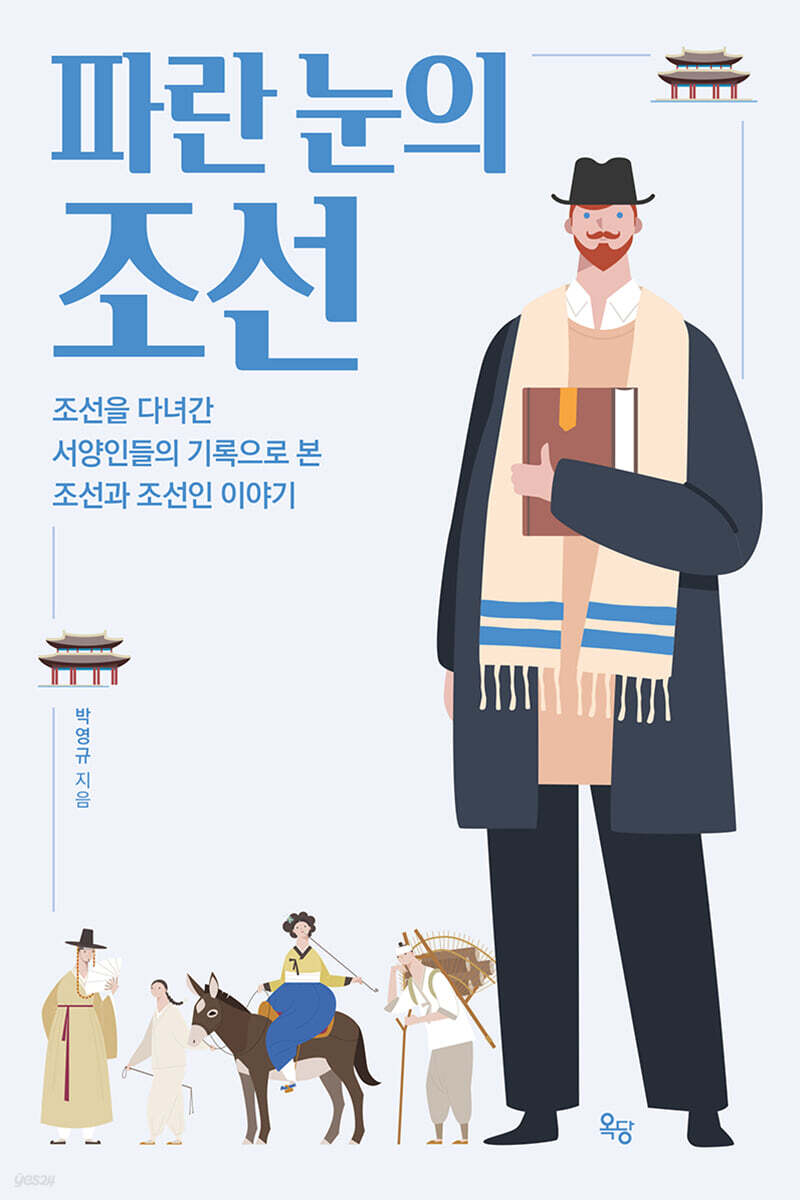
Blue-eyed Joseon
 |
Description
Book Introduction
How much did we know about Joseon?
The person who recorded Joseon most accurately was not a Joseon person.
The landscape and people of Joseon as seen through the eyes of Westerners who visited Joseon from the 17th to the 19th centuries.
The records they left behind are full of Joseon's culture, life, values, and the pride we have been missing.
"Blue-Eyed Joseon" is a historical textbook that uncovers another side of Joseon based on vivid accounts of Westerners who visited Joseon at the time, from the Dutchman Hamel to priests, painters, and doctors from France, Britain, the United States, and Russia.
Things that we have become so accustomed to that we have failed to appreciate their true value are finally illuminated in a new light through the unfamiliar eyes of a foreigner.
This book, which allows us to see the familiar as strange and discover a new Joseon in the unfamiliar, is a special history book that revives the hidden charm of Joseon that was missed in traditional historical materials.
The person who recorded Joseon most accurately was not a Joseon person.
The landscape and people of Joseon as seen through the eyes of Westerners who visited Joseon from the 17th to the 19th centuries.
The records they left behind are full of Joseon's culture, life, values, and the pride we have been missing.
"Blue-Eyed Joseon" is a historical textbook that uncovers another side of Joseon based on vivid accounts of Westerners who visited Joseon at the time, from the Dutchman Hamel to priests, painters, and doctors from France, Britain, the United States, and Russia.
Things that we have become so accustomed to that we have failed to appreciate their true value are finally illuminated in a new light through the unfamiliar eyes of a foreigner.
This book, which allows us to see the familiar as strange and discover a new Joseon in the unfamiliar, is a special history book that revives the hidden charm of Joseon that was missed in traditional historical materials.
- You can preview some of the book's contents.
Preview
index
Introduction_Discovering a new Joseon that was hidden by familiarity
Chapter 1 Joseon as Seen by the Dutch
Find the Golden Country, Korea
36 Dutch nationals stranded on Jeju Island
A fateful encounter with Beltevre
15 people returned to their homeland after enduring hardships.
Joseon customs seen through Hamel's eyes
Chapter 2 Joseon as Seen by the French
French priest writes comprehensive commentary on the Joseon Dynasty.
The nature and living environment of Joseon recorded by Charles Dallet
French priests' love of Korean
Records left by painters and doctors who participated in the Korean War of Invasion
The first expedition went up the Han River around Ganghwa Island.
French troops occupy Ganghwa Island
Joseon as seen through the eyes of war painter Jubert
The French army retreats, and Joseon's isolationist policy strengthens.
France becomes a laughing stock in Beijing's diplomatic circles
Chapter 3: Joseon as Seen by Americans
American merchant ships that recklessly entered Joseon territory
The United States, which started a war of retaliation
The conclusion of the Treaty of Amity and Commerce between the United States and the Republic of Korea and the free movement of Americans
Allen, the first Protestant missionary to come to Joseon
Jejungwon, Korea's first Western-style national hospital
Allen's Joseon, Joseon people
Joseon as seen by female doctor Lilias
Chapter 4 Joseon as Seen by the British
Basil Hall, the first British person to set foot on Korean soil
Conclusion of the Treaty of Amity, Commerce and Cooperation between Joseon and Britain
William Carls's Travels in Joseon
Illegal Occupation of Geomundo Island
Joseon landscapes painted by artist Savage Landauer
Chapter 5 Joseon as Seen by Russians
The First Contact Between Koreans and Russians: The Conquest of Nason
Russian writer Goncharov's visit to Joseon
The conclusion of the Treaty of Amity, Commerce, and Commerce between Korea and Russia and its background
Russian Joseon Exploration Team
Chapter 1 Joseon as Seen by the Dutch
Find the Golden Country, Korea
36 Dutch nationals stranded on Jeju Island
A fateful encounter with Beltevre
15 people returned to their homeland after enduring hardships.
Joseon customs seen through Hamel's eyes
Chapter 2 Joseon as Seen by the French
French priest writes comprehensive commentary on the Joseon Dynasty.
The nature and living environment of Joseon recorded by Charles Dallet
French priests' love of Korean
Records left by painters and doctors who participated in the Korean War of Invasion
The first expedition went up the Han River around Ganghwa Island.
French troops occupy Ganghwa Island
Joseon as seen through the eyes of war painter Jubert
The French army retreats, and Joseon's isolationist policy strengthens.
France becomes a laughing stock in Beijing's diplomatic circles
Chapter 3: Joseon as Seen by Americans
American merchant ships that recklessly entered Joseon territory
The United States, which started a war of retaliation
The conclusion of the Treaty of Amity and Commerce between the United States and the Republic of Korea and the free movement of Americans
Allen, the first Protestant missionary to come to Joseon
Jejungwon, Korea's first Western-style national hospital
Allen's Joseon, Joseon people
Joseon as seen by female doctor Lilias
Chapter 4 Joseon as Seen by the British
Basil Hall, the first British person to set foot on Korean soil
Conclusion of the Treaty of Amity, Commerce and Cooperation between Joseon and Britain
William Carls's Travels in Joseon
Illegal Occupation of Geomundo Island
Joseon landscapes painted by artist Savage Landauer
Chapter 5 Joseon as Seen by Russians
The First Contact Between Koreans and Russians: The Conquest of Nason
Russian writer Goncharov's visit to Joseon
The conclusion of the Treaty of Amity, Commerce, and Commerce between Korea and Russia and its background
Russian Joseon Exploration Team
Detailed image

Publisher's Review
Joseon's culture and people, illuminated through Western eyes
From a legendary island to a real country, another familiar face of Joseon discovered through unfamiliar eyes.
Historical writer Park Young-gyu has published a new book, “Blue-Eyed Joseon,” which captures the true face of Joseon as seen through Western records.
This book is a historical textbook that reconstructs Joseon's landscape, culture, and people in a three-dimensional way based on the records left by various "blue-eyed" Westerners who visited Joseon, from Hamel in the 17th century to the Russians, Americans, and French in the 19th century.
Europeans set out in search of the golden island of Korea
In the 16th century, European powers set sail around the world in search of gold.
On their map was the legendary island of 'Korea', overflowing with gold.
On world maps created by the Portuguese, the Korean Peninsula was marked as the 'Corea Islands' or 'Corea Island', and there was even a story going around that 'even livestock wear gold necklaces'.
The background of this legend is the fact that Arabs recorded Silla as the 'Golden Land', and this long record ignited the imagination of Europeans.
The country that most actively sought to find 'Korea' was the Netherlands.
The Netherlands, which had already advanced into East Asia through trade with Japan, attempted to trade with Joseon, but failed every time due to opposition from the Japanese government.
Then, an unexpected person appeared.
Hendrik Hamel was stranded in Joseon and imprisoned for 13 years before returning to Europe.
His 『Logbook of the Unfortunate Voyage of the Sperwer from Batavia to Japan in 1653』, also known as 『Hamel's Journal』, was the first record to specifically introduce the existence of Joseon to European society, and Europe was once again swept up in a 'Korea' craze.
But the Korea they imagined did not exist.
From the late 17th century onwards, Korea gradually came to resemble a myth to Europeans, and in the 19th century, the true nature of the country called Joseon began to be revealed.
Joseon, from a land of legend to a poor nation
In the 19th century, when Westerners who had advanced into East Asia through the Qing Dynasty visited Joseon, Joseon was no longer an 'island' on the map.
They confirmed that Joseon was a small country located on a peninsula, and that it was not a wealthy land of gold, but a closed society that adopted Confucianism as its state religion and refused to accept foreign cultures.
In particular, the persecution of Christianity in Joseon was shocking to Westerners.
The fact that even French priests who entered Joseon for missionary work were mercilessly executed became an opportunity to view Joseon as uncivilized or barbaric.
However, Joseon did not remain simply a 'closed country'.
Westerners who experienced Joseon firsthand discovered within it remarkable cultural excellence and human dignity.
Author Park Young-gyu explains the background of writing this book, saying, “They discovered the excellence of Joseon culture before Joseon people, and recorded Joseon in more detail than Joseon people.”
Ondol and Hangeul, Joseon's assets first seen by foreigners
The most praised Joseon culture is undoubtedly 'Ondol'.
Hamel described Joseon's winter as a "room like an oven," and most Westerners were impressed by the unique structure of lighting a fire on the floor.
Although some people satirized it as “feeling like being in a coffin,” there was no disagreement that there was nothing like an ondol to warm the body on a cold winter day.
Even today, Ondol is considered a representative asset of Korean residential culture.
The awareness of Hangul was also very surprising.
Hamel praised Hangul as “a writing system that is easy to learn and can express everything accurately,” and French priests risked their lives to evangelize while organizing Hangul’s grammar system and compiling a dictionary.
They created a Korean-French dictionary containing over 100,000 words, and even wrote a dictionary between Korean and Latin.
The author said, “I was deeply moved by the fact that foreigners recorded in detail the Korean grammar that Koreans had not been able to organize.”
A house with books, a nation that values education
Another cultural asset was ‘education.’
French painter Jubert, who participated in the Byeong-in Yangyo, was deeply shocked when he discovered a book in a thatched-roof house in Joseon.
He said, “In the Far East, those who cannot read are looked down upon.
“If we apply these standards to France, too many people will be despised,” he wrote.
He was even in awe of the fact that Joseon's literacy rate was higher than that of France.
Hamel also wrote, “The nobles are enthusiastic about their children’s education, and they teach them with a very polite and gentle attitude.”
This culture is also connected to Korea's high level of enthusiasm for education today.
Joseon was not simply an exclusive nation, but a society that recognized and practiced the value of education and knowledge.
The Carriageman and the Coachman: A History of Joseon Rewritten by Foreigners
What makes "Blue-Eyed Joseon" special is that it sheds new light on the people of Joseon, whom we had overlooked, through the eyes of a Westerner.
In particular, carriage drivers and coachmen are described as simple servants in Joseon records, but to foreigners, they appear as storytellers, travel companions, and sometimes guides and bodyguards.
They were the hidden face of Joseon, guarding against thieves as they passed through the mountain paths and appeasing guests with lively songs.
The author says, “There were moments when people who had never been properly highlighted in historical dramas or history books came to light through the records of foreigners,” and “Reading those records made me realize how much we had been missing.”
A book that makes familiarity strange and looks deeply into strangeness.
“Blue-Eyed Joseon” is not simply a compilation of foreigners’ travelogues.
This book is a 'mirror' that allows us to look back on Joseon, a country we have become so accustomed to that we have failed to see, through the unfamiliar eyes of a foreigner.
The Joseon in that mirror was a weak and closed nation, but at the same time, it was a nation of people who valued education, willingly sacrificed to preserve their culture, and offered warm ondol rooms to foreigners.
This book is a complex documentary that blends history, culture, people, and customs, as well as a memoir that restores the forgotten face of Joseon.
This is a must-read for today's Koreans to understand themselves more deeply and to look at the past called 'Joseon' in a new way.
From a legendary island to a real country, another familiar face of Joseon discovered through unfamiliar eyes.
Historical writer Park Young-gyu has published a new book, “Blue-Eyed Joseon,” which captures the true face of Joseon as seen through Western records.
This book is a historical textbook that reconstructs Joseon's landscape, culture, and people in a three-dimensional way based on the records left by various "blue-eyed" Westerners who visited Joseon, from Hamel in the 17th century to the Russians, Americans, and French in the 19th century.
Europeans set out in search of the golden island of Korea
In the 16th century, European powers set sail around the world in search of gold.
On their map was the legendary island of 'Korea', overflowing with gold.
On world maps created by the Portuguese, the Korean Peninsula was marked as the 'Corea Islands' or 'Corea Island', and there was even a story going around that 'even livestock wear gold necklaces'.
The background of this legend is the fact that Arabs recorded Silla as the 'Golden Land', and this long record ignited the imagination of Europeans.
The country that most actively sought to find 'Korea' was the Netherlands.
The Netherlands, which had already advanced into East Asia through trade with Japan, attempted to trade with Joseon, but failed every time due to opposition from the Japanese government.
Then, an unexpected person appeared.
Hendrik Hamel was stranded in Joseon and imprisoned for 13 years before returning to Europe.
His 『Logbook of the Unfortunate Voyage of the Sperwer from Batavia to Japan in 1653』, also known as 『Hamel's Journal』, was the first record to specifically introduce the existence of Joseon to European society, and Europe was once again swept up in a 'Korea' craze.
But the Korea they imagined did not exist.
From the late 17th century onwards, Korea gradually came to resemble a myth to Europeans, and in the 19th century, the true nature of the country called Joseon began to be revealed.
Joseon, from a land of legend to a poor nation
In the 19th century, when Westerners who had advanced into East Asia through the Qing Dynasty visited Joseon, Joseon was no longer an 'island' on the map.
They confirmed that Joseon was a small country located on a peninsula, and that it was not a wealthy land of gold, but a closed society that adopted Confucianism as its state religion and refused to accept foreign cultures.
In particular, the persecution of Christianity in Joseon was shocking to Westerners.
The fact that even French priests who entered Joseon for missionary work were mercilessly executed became an opportunity to view Joseon as uncivilized or barbaric.
However, Joseon did not remain simply a 'closed country'.
Westerners who experienced Joseon firsthand discovered within it remarkable cultural excellence and human dignity.
Author Park Young-gyu explains the background of writing this book, saying, “They discovered the excellence of Joseon culture before Joseon people, and recorded Joseon in more detail than Joseon people.”
Ondol and Hangeul, Joseon's assets first seen by foreigners
The most praised Joseon culture is undoubtedly 'Ondol'.
Hamel described Joseon's winter as a "room like an oven," and most Westerners were impressed by the unique structure of lighting a fire on the floor.
Although some people satirized it as “feeling like being in a coffin,” there was no disagreement that there was nothing like an ondol to warm the body on a cold winter day.
Even today, Ondol is considered a representative asset of Korean residential culture.
The awareness of Hangul was also very surprising.
Hamel praised Hangul as “a writing system that is easy to learn and can express everything accurately,” and French priests risked their lives to evangelize while organizing Hangul’s grammar system and compiling a dictionary.
They created a Korean-French dictionary containing over 100,000 words, and even wrote a dictionary between Korean and Latin.
The author said, “I was deeply moved by the fact that foreigners recorded in detail the Korean grammar that Koreans had not been able to organize.”
A house with books, a nation that values education
Another cultural asset was ‘education.’
French painter Jubert, who participated in the Byeong-in Yangyo, was deeply shocked when he discovered a book in a thatched-roof house in Joseon.
He said, “In the Far East, those who cannot read are looked down upon.
“If we apply these standards to France, too many people will be despised,” he wrote.
He was even in awe of the fact that Joseon's literacy rate was higher than that of France.
Hamel also wrote, “The nobles are enthusiastic about their children’s education, and they teach them with a very polite and gentle attitude.”
This culture is also connected to Korea's high level of enthusiasm for education today.
Joseon was not simply an exclusive nation, but a society that recognized and practiced the value of education and knowledge.
The Carriageman and the Coachman: A History of Joseon Rewritten by Foreigners
What makes "Blue-Eyed Joseon" special is that it sheds new light on the people of Joseon, whom we had overlooked, through the eyes of a Westerner.
In particular, carriage drivers and coachmen are described as simple servants in Joseon records, but to foreigners, they appear as storytellers, travel companions, and sometimes guides and bodyguards.
They were the hidden face of Joseon, guarding against thieves as they passed through the mountain paths and appeasing guests with lively songs.
The author says, “There were moments when people who had never been properly highlighted in historical dramas or history books came to light through the records of foreigners,” and “Reading those records made me realize how much we had been missing.”
A book that makes familiarity strange and looks deeply into strangeness.
“Blue-Eyed Joseon” is not simply a compilation of foreigners’ travelogues.
This book is a 'mirror' that allows us to look back on Joseon, a country we have become so accustomed to that we have failed to see, through the unfamiliar eyes of a foreigner.
The Joseon in that mirror was a weak and closed nation, but at the same time, it was a nation of people who valued education, willingly sacrificed to preserve their culture, and offered warm ondol rooms to foreigners.
This book is a complex documentary that blends history, culture, people, and customs, as well as a memoir that restores the forgotten face of Joseon.
This is a must-read for today's Koreans to understand themselves more deeply and to look at the past called 'Joseon' in a new way.
GOODS SPECIFICS
- Date of issue: June 30, 2025
- Page count, weight, size: 319 pages | 418g | 141*210*16mm
- ISBN13: 9791189936556
- ISBN10: 1189936550
You may also like
카테고리
korean


korean

![ELLE 엘르 스페셜 에디션 A형 : 12월 [2025]](http://librairie.coreenne.fr/cdn/shop/files/b8e27a3de6c9538896439686c6b0e8fb.jpg?v=1766436872&width=3840)


