

Cambridge History of Spain
 |
Description
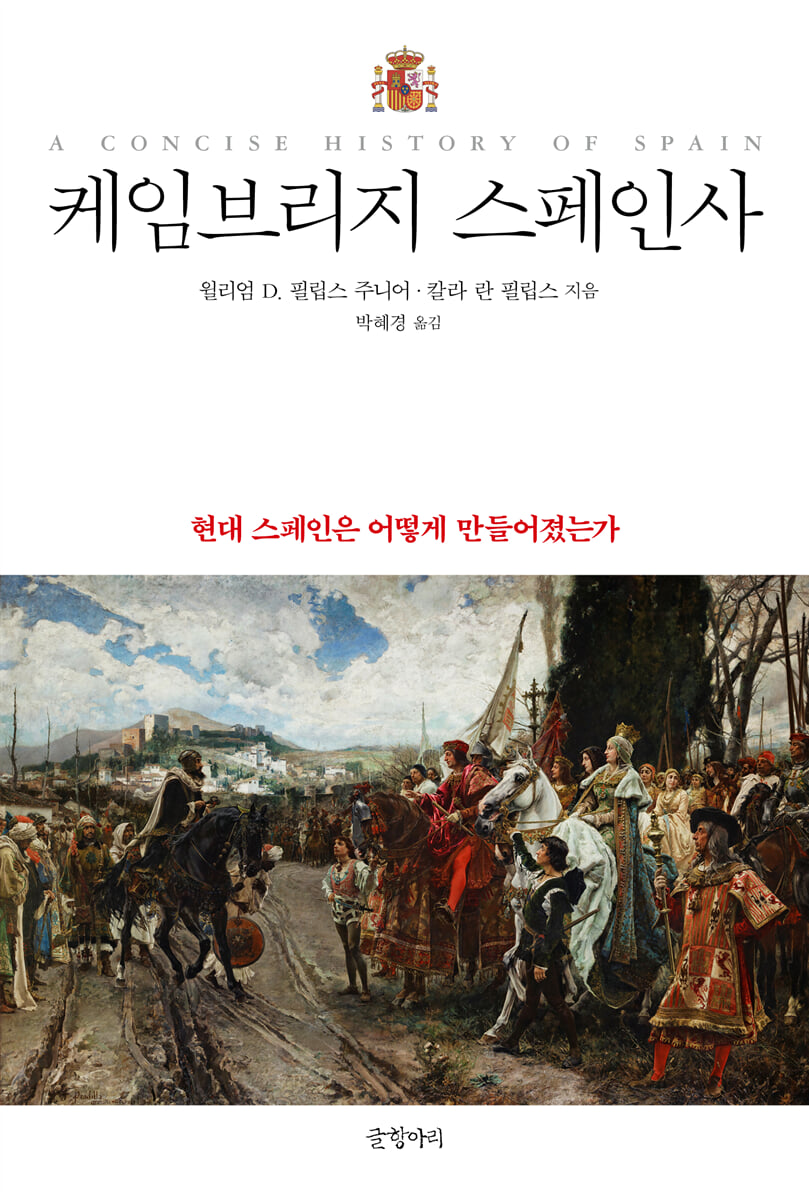
Book Introduction
Cambridge University's Introduction to History for the Public
From ancient times to the present,
Compiling Spanish history into one volume
Part of Cambridge University Press's Abridged History series, this book is written with clarity and clarity, drawing on the expertise of a lifelong Spanish scholar, and covers a wide range of topics with meticulous attention to detail.
It also serves as a guide to Spanish history, providing readers with illustrations and maps to aid their understanding and providing a wealth of reading material.
Through this book, readers will be able to grasp the outlines of dynamic Spanish history.
Spain's history is marked by rich diversity and the resulting conflicts and harmonies.
After the Roman period of 'Hispania', the Visigoths came from the other side of Europe and established a kingdom, and the Muslims who drove out the Visigoths ruled the peninsula for several centuries.
After two prominent Catholic kings completed the Reconquista and reclaimed the peninsula, the Spanish Empire was established, expanding its influence to the New World and Southeast Asia. In the early modern period, it fell to being a second-rate European nation, experiencing civil war and a long period of dictatorship before establishing a modern democratic constitutional monarchy.
Explaining this complex history requires addressing numerous issues: the ever-changing climate, the geography of the peninsula, the diversity of its peoples, its constant exchanges with the outside world, its geopolitical importance as a bridge between two continents and two oceans, and the interplay between Catholicism and Islam.
From ancient times to the present,
Compiling Spanish history into one volume
Part of Cambridge University Press's Abridged History series, this book is written with clarity and clarity, drawing on the expertise of a lifelong Spanish scholar, and covers a wide range of topics with meticulous attention to detail.
It also serves as a guide to Spanish history, providing readers with illustrations and maps to aid their understanding and providing a wealth of reading material.
Through this book, readers will be able to grasp the outlines of dynamic Spanish history.
Spain's history is marked by rich diversity and the resulting conflicts and harmonies.
After the Roman period of 'Hispania', the Visigoths came from the other side of Europe and established a kingdom, and the Muslims who drove out the Visigoths ruled the peninsula for several centuries.
After two prominent Catholic kings completed the Reconquista and reclaimed the peninsula, the Spanish Empire was established, expanding its influence to the New World and Southeast Asia. In the early modern period, it fell to being a second-rate European nation, experiencing civil war and a long period of dictatorship before establishing a modern democratic constitutional monarchy.
Explaining this complex history requires addressing numerous issues: the ever-changing climate, the geography of the peninsula, the diversity of its peoples, its constant exchanges with the outside world, its geopolitical importance as a bridge between two continents and two oceans, and the interplay between Catholicism and Islam.
- You can preview some of the book's contents.
Preview
index
introduction
CHAPTER 1 Territory and Former Inhabitants
CHAPTER 2 Ancient Legacy
CHAPTER 3 The Diversity of Medieval Spain
CHAPTER 4: The Rise of an International Power
CHAPTER 5 The First World Empire
CHAPTER 6 Towards Modernity: From Napoleon's Invasion to Alfonso XIII
CHAPTER 7 The Struggle for the Spirit of Spain: Republic, Civil War, and Dictatorship
CHAPTER 8 New Spain, New Spaniards: Europeans, Democracy, and Multiculturalism
Timeline and Rulers
Learn more
CHAPTER 1 Territory and Former Inhabitants
CHAPTER 2 Ancient Legacy
CHAPTER 3 The Diversity of Medieval Spain
CHAPTER 4: The Rise of an International Power
CHAPTER 5 The First World Empire
CHAPTER 6 Towards Modernity: From Napoleon's Invasion to Alfonso XIII
CHAPTER 7 The Struggle for the Spirit of Spain: Republic, Civil War, and Dictatorship
CHAPTER 8 New Spain, New Spaniards: Europeans, Democracy, and Multiculturalism
Timeline and Rulers
Learn more
Into the book
All the geographical terms here have complex histories.
The Greeks called this peninsula Iberia, and the Romans called it Hispania.
The term Spain, used from the end of the Roman Empire until the 8th century, was a term of convenience rather than political reality.
Other terms describing the territory and peoples of this place appeared and disappeared briefly.
During the Muslim period of Spanish rule, the area they conquered on the peninsula was called al-Andalus, and the geographical scope of this word expanded under Islamic rule and eventually contracted.
Medieval Jews called this place Sephardic.
--- p.13
A Berber army of 7,000 to 12,000 men, led by Tariq ibn Ziyad, the governor of Tangier, crossed the strait and set up camp at the foot of Mount Calpe, now known as Tariq's Hill, or Gibraltar.
Rodericus hurried his army from the north to confront the invaders, but it was too late.
He was defeated in battle and lost his life, and his practical resistance against the Islamic invasion was a failure.
Thus, the ancient history of the Iberian Peninsula came to an abrupt end with the Visigothic Kingdom.
--- p.72
In 778, Charlemagne led an army across the mountains into Spain via the western pass of Roncesvalles to help the Muslim governor recapture Zaragoza.
(…) In Roncesvalles, the inhabitants ambushed Charlemagne's rearguard, resulting in the deaths of many, including the heroes Hrodiland (Roland) and Anselm.
This incident caused Charlemagne to abandon his raids on Spain for several years.
Centuries later, beginning in the late 11th century, the story became legend, eventually giving rise to the great French medieval epic, La Chanson de Roland.
--- p.92
No one knows the details of what Columbus proposed to the Catholic co-kings.
Either he had envisioned the world before he spoke to his co-kings in the mid-1480s and had plotted his entire route to Asia, or he had revised and refined his projections after his first two voyages across the Atlantic.
However, he appears to have believed that the Earth's circumference was about 25 percent shorter than it actually was and that Japan was about 2,400 kilometers from the coast of China.
--- p.173
During the same period, Goya painted what is perhaps his finest work, the immensely impressive portrait "La familia de Carlos IV", depicting Charles IV, his queen, his children, and several relatives.
(...) In his portraits of Charles IV and his family, even the ostentatious elements of royal power could not hide Goya's contempt for them.
King Carlos IV, Queen Maria Luisa, and their eldest son Ferdinand stare blankly into space, and most of the other family members look similarly bland.
The king's former majesty has disappeared, replaced by a confused dullness.
The queen, whom Goya once portrayed as pretty and cheerful, is now rough and vulgar.
--- p.273
Like civil wars elsewhere, the Spanish Civil War shattered families and communities.
Neighbors attacked one another out of strong conviction, fear, personal resentment, ambition, cowardice, or a host of other motives.
The civil war brought back memories of the horrors alongside suppressed anger and past hatreds.
--- p.341
Some historians argue that Franco was a fascist on a par with Mussolini and Hitler, but he clearly lacked the charisma to create a cult of personality around himself.
I wish that were the case.
Above all, he was a military officer, an anti-communist, and, as he later claimed, a supporter of the monarchy.
He often described his regime in traditional terms as an 'organic democracy', but he stripped that term of its traditional meaning.
(…) In 1964, political scientist Juan Linz defined a new category to characterize Spain: authoritarian regimes.
--- p.353
The weekend drama, titled "Tell Me What Happened," tells the story of the fictional Alcantara family over several generations.
The story follows them from 1968, the end of the Franco regime, to the present.
Since the series began airing, every Thursday at 10 p.m., the Spanish dinner hour, millions of Spaniards have been glued to their television sets as stories about their lives and the recent history of their country unfold.
A seasoned team of writers, producers, and actors, this series, which balances a complex history with humanity, has become an overwhelming success and a social and cultural phenomenon in its own right.
The Greeks called this peninsula Iberia, and the Romans called it Hispania.
The term Spain, used from the end of the Roman Empire until the 8th century, was a term of convenience rather than political reality.
Other terms describing the territory and peoples of this place appeared and disappeared briefly.
During the Muslim period of Spanish rule, the area they conquered on the peninsula was called al-Andalus, and the geographical scope of this word expanded under Islamic rule and eventually contracted.
Medieval Jews called this place Sephardic.
--- p.13
A Berber army of 7,000 to 12,000 men, led by Tariq ibn Ziyad, the governor of Tangier, crossed the strait and set up camp at the foot of Mount Calpe, now known as Tariq's Hill, or Gibraltar.
Rodericus hurried his army from the north to confront the invaders, but it was too late.
He was defeated in battle and lost his life, and his practical resistance against the Islamic invasion was a failure.
Thus, the ancient history of the Iberian Peninsula came to an abrupt end with the Visigothic Kingdom.
--- p.72
In 778, Charlemagne led an army across the mountains into Spain via the western pass of Roncesvalles to help the Muslim governor recapture Zaragoza.
(…) In Roncesvalles, the inhabitants ambushed Charlemagne's rearguard, resulting in the deaths of many, including the heroes Hrodiland (Roland) and Anselm.
This incident caused Charlemagne to abandon his raids on Spain for several years.
Centuries later, beginning in the late 11th century, the story became legend, eventually giving rise to the great French medieval epic, La Chanson de Roland.
--- p.92
No one knows the details of what Columbus proposed to the Catholic co-kings.
Either he had envisioned the world before he spoke to his co-kings in the mid-1480s and had plotted his entire route to Asia, or he had revised and refined his projections after his first two voyages across the Atlantic.
However, he appears to have believed that the Earth's circumference was about 25 percent shorter than it actually was and that Japan was about 2,400 kilometers from the coast of China.
--- p.173
During the same period, Goya painted what is perhaps his finest work, the immensely impressive portrait "La familia de Carlos IV", depicting Charles IV, his queen, his children, and several relatives.
(...) In his portraits of Charles IV and his family, even the ostentatious elements of royal power could not hide Goya's contempt for them.
King Carlos IV, Queen Maria Luisa, and their eldest son Ferdinand stare blankly into space, and most of the other family members look similarly bland.
The king's former majesty has disappeared, replaced by a confused dullness.
The queen, whom Goya once portrayed as pretty and cheerful, is now rough and vulgar.
--- p.273
Like civil wars elsewhere, the Spanish Civil War shattered families and communities.
Neighbors attacked one another out of strong conviction, fear, personal resentment, ambition, cowardice, or a host of other motives.
The civil war brought back memories of the horrors alongside suppressed anger and past hatreds.
--- p.341
Some historians argue that Franco was a fascist on a par with Mussolini and Hitler, but he clearly lacked the charisma to create a cult of personality around himself.
I wish that were the case.
Above all, he was a military officer, an anti-communist, and, as he later claimed, a supporter of the monarchy.
He often described his regime in traditional terms as an 'organic democracy', but he stripped that term of its traditional meaning.
(…) In 1964, political scientist Juan Linz defined a new category to characterize Spain: authoritarian regimes.
--- p.353
The weekend drama, titled "Tell Me What Happened," tells the story of the fictional Alcantara family over several generations.
The story follows them from 1968, the end of the Franco regime, to the present.
Since the series began airing, every Thursday at 10 p.m., the Spanish dinner hour, millions of Spaniards have been glued to their television sets as stories about their lives and the recent history of their country unfold.
A seasoned team of writers, producers, and actors, this series, which balances a complex history with humanity, has become an overwhelming success and a social and cultural phenomenon in its own right.
--- p.393
Publisher's Review
The various peoples who wrote Spain's ancient history
The Iberian Peninsula is located between Europe and Africa and has served as a passage for population movement since ancient times.
In particular, early European fossils from the Sierra de Atapuerca are at least 780,000 years old, suggesting that human ancestors may have inhabited the Iberian Peninsula for as long as one million years.
Before the Phoenicians and Greeks of the Mediterranean cultural sphere took an interest in Spain, the Celts from the north and the Iberians from North Africa mixed with the indigenous people and developed their own agricultural and commercial culture.
Because it had a favorable location for trade, the Phoenicians, Greeks, and Carthaginians began to advance into the peninsula around 800 BC and established settlements.
When Hamilcar Barca, the father of the famous Carthaginian general Hannibal, began to advance into the Iberian Peninsula in earnest, this became the site of conflict between Carthage and Rome.
In the Second Punic War, Rome completely drove Carthage out of Spain, and Rome finally began the first decisive period in Spanish history.
Interestingly, it was the Visigoths, who appeared from the opposite side of Europe, in the northeast, who established the first kingdom in what had been a Roman colony, Spain.
The Visigoths were incorporated into the Roman federation, but grew into a force that threatened the unity of the empire, eventually capturing and sacking Rome in 410.
However, the Visigoths, who had once again sided with Rome in order to settle and survive as a tribe, were given the role of driving out other Germanic tribes from Iberia.
The Visigoths, who migrated from the east to the west of Europe and successfully reconquered the Iberian Peninsula, were recognized as having sovereignty over southern Gaul and returned Iberia to Rome, but from 456 onwards they unilaterally took control of the Iberian Peninsula and established the Visigothic Kingdom.
However, in the 8th century, a Berber army led by Tariq ibn Ziyad crossed the Strait of Gibraltar, and the Visigothic kingdom fell helplessly to the Islamic invasion.
The glorious yet turbulent golden age of the Spanish Empire
From 711 to 1492, Muslims ruled most of Iberia, and their long existence had a profound influence on Spanish culture.
While Islam dominated the southern Al-Andalus, several Christian kingdoms emerged in the north, including Castile, Aragon, León, and Navarre.
The Islamic and Christian forces were not simply at odds with each other, but rather joined hands and repeatedly fought each other according to their own interests.
Then, the outstanding 'Catholic Kings' Isabella I of Castile and Ferdinand II of Aragon appeared, established the United Kingdom of Castile and Aragon, and drove out the last Muslim king from Granada.
The two kings worked to stabilize the Iberian Peninsula and solidify Spain's position in the international community.
With Columbus at the forefront, the first chapter of the Spanish American Empire was opened, the right to conduct religious trials was obtained from the Vatican, and various parliaments were established or strengthened. By the time of the United Kingdom of Castile and Aragon, the image of a modern nation called 'Spain' was established.
In particular, he pursued an ambitious diplomatic strategy of forming marriage alliances with European allies to gain recognition of his territorial sovereignty, and as part of this, the Habsburg dynasty joined the Spanish monarchy.
Spain entered the imperial era when Charles of Habsburg succeeded Isabella and Ferdinand as Holy Roman Emperor Charles V and Charles I of Castile and Aragon.
Afterwards, Spain enjoyed a golden age as a great empire, but it also became embroiled in the complex diplomatic situation in Europe.
This is because the Habsburg dynasty that ruled Spain had close ties with many rulers in Europe.
Amidst numerous wars, including the religious revolution that swept across Europe, the war to protect European Christianity from the Ottoman Empire, the War of Succession to check the emergence of the great power of the Spanish-French Empire during the transition to the Bourbon Dynasty, and the struggle for maritime supremacy with England, Spain lost its brief golden age symbolized by the 'Golden Fleet'.
Eventually, Spain's glorious Middle Ages came to an end as it was swept up in the flames of the democratic revolution in Europe and handed over the country to Napoleon's France.
The Spanish Civil War, Dictatorship, and Democracy
Although Napoleon was driven out through the War of Independence and Ferdinand VII returned to Spain, the monarchy was no longer able to function properly in modern society.
Ferdinand's incompetent rule and the subsequent independence of Spanish America, military coups, parliamentary turmoil, and even three more Wars of Succession followed.
Republicans, supporters of the constitutional monarchy, and royalists failed to reach an agreement and pursued power, while Catalans, federalists, and anarchists engaged in civil war and terrorism.
The military, the king, the parliament, and a few dictators took turns seizing power and struggling to survive World War I, but the country remained unstable, and eventually the Spanish Civil War broke out in 1936, defining modern Spain.
With all the anger, frustration, and class animosity mixing together and the various factions that had been eating away at Spain being drawn into the conflict, the Spanish Civil War became the worst civil war in European history.
Most citizens did not have the right to choose which side they supported and had to adapt to the faction that dominated their area.
In the process, families and communities were torn apart, and neighbors repeatedly killed each other.
After three years of war between the Nationalist and Republican armies, the Nationalist forces led by Francisco Franco achieved victory, and Spain was shadowed by a long period of dictatorship until his death in 1975.
In 1975, after Franco's death, Juan Carlos I ascended to the throne, restoring the Bourbon constitutional monarchy.
A new government was formed with Adolfo Suárez as prime minister, and political parties that had been operating secretly under the shadow of the dictatorship entered parliament.
A coup d'état took place in just one month, but it failed, and Spain finally entered the path to true democracy.
However, the long-standing turmoil still remains in Spain, with the Basque Country and Catalonia failing to unite emotionally and continuing separatist movements.
How to evaluate and liquidate the Franco dictatorship is another unresolved issue.
Nevertheless, the author concludes the book by assessing that the Spanish people have become global citizens who no longer fear the future or the past.
The Iberian Peninsula is located between Europe and Africa and has served as a passage for population movement since ancient times.
In particular, early European fossils from the Sierra de Atapuerca are at least 780,000 years old, suggesting that human ancestors may have inhabited the Iberian Peninsula for as long as one million years.
Before the Phoenicians and Greeks of the Mediterranean cultural sphere took an interest in Spain, the Celts from the north and the Iberians from North Africa mixed with the indigenous people and developed their own agricultural and commercial culture.
Because it had a favorable location for trade, the Phoenicians, Greeks, and Carthaginians began to advance into the peninsula around 800 BC and established settlements.
When Hamilcar Barca, the father of the famous Carthaginian general Hannibal, began to advance into the Iberian Peninsula in earnest, this became the site of conflict between Carthage and Rome.
In the Second Punic War, Rome completely drove Carthage out of Spain, and Rome finally began the first decisive period in Spanish history.
Interestingly, it was the Visigoths, who appeared from the opposite side of Europe, in the northeast, who established the first kingdom in what had been a Roman colony, Spain.
The Visigoths were incorporated into the Roman federation, but grew into a force that threatened the unity of the empire, eventually capturing and sacking Rome in 410.
However, the Visigoths, who had once again sided with Rome in order to settle and survive as a tribe, were given the role of driving out other Germanic tribes from Iberia.
The Visigoths, who migrated from the east to the west of Europe and successfully reconquered the Iberian Peninsula, were recognized as having sovereignty over southern Gaul and returned Iberia to Rome, but from 456 onwards they unilaterally took control of the Iberian Peninsula and established the Visigothic Kingdom.
However, in the 8th century, a Berber army led by Tariq ibn Ziyad crossed the Strait of Gibraltar, and the Visigothic kingdom fell helplessly to the Islamic invasion.
The glorious yet turbulent golden age of the Spanish Empire
From 711 to 1492, Muslims ruled most of Iberia, and their long existence had a profound influence on Spanish culture.
While Islam dominated the southern Al-Andalus, several Christian kingdoms emerged in the north, including Castile, Aragon, León, and Navarre.
The Islamic and Christian forces were not simply at odds with each other, but rather joined hands and repeatedly fought each other according to their own interests.
Then, the outstanding 'Catholic Kings' Isabella I of Castile and Ferdinand II of Aragon appeared, established the United Kingdom of Castile and Aragon, and drove out the last Muslim king from Granada.
The two kings worked to stabilize the Iberian Peninsula and solidify Spain's position in the international community.
With Columbus at the forefront, the first chapter of the Spanish American Empire was opened, the right to conduct religious trials was obtained from the Vatican, and various parliaments were established or strengthened. By the time of the United Kingdom of Castile and Aragon, the image of a modern nation called 'Spain' was established.
In particular, he pursued an ambitious diplomatic strategy of forming marriage alliances with European allies to gain recognition of his territorial sovereignty, and as part of this, the Habsburg dynasty joined the Spanish monarchy.
Spain entered the imperial era when Charles of Habsburg succeeded Isabella and Ferdinand as Holy Roman Emperor Charles V and Charles I of Castile and Aragon.
Afterwards, Spain enjoyed a golden age as a great empire, but it also became embroiled in the complex diplomatic situation in Europe.
This is because the Habsburg dynasty that ruled Spain had close ties with many rulers in Europe.
Amidst numerous wars, including the religious revolution that swept across Europe, the war to protect European Christianity from the Ottoman Empire, the War of Succession to check the emergence of the great power of the Spanish-French Empire during the transition to the Bourbon Dynasty, and the struggle for maritime supremacy with England, Spain lost its brief golden age symbolized by the 'Golden Fleet'.
Eventually, Spain's glorious Middle Ages came to an end as it was swept up in the flames of the democratic revolution in Europe and handed over the country to Napoleon's France.
The Spanish Civil War, Dictatorship, and Democracy
Although Napoleon was driven out through the War of Independence and Ferdinand VII returned to Spain, the monarchy was no longer able to function properly in modern society.
Ferdinand's incompetent rule and the subsequent independence of Spanish America, military coups, parliamentary turmoil, and even three more Wars of Succession followed.
Republicans, supporters of the constitutional monarchy, and royalists failed to reach an agreement and pursued power, while Catalans, federalists, and anarchists engaged in civil war and terrorism.
The military, the king, the parliament, and a few dictators took turns seizing power and struggling to survive World War I, but the country remained unstable, and eventually the Spanish Civil War broke out in 1936, defining modern Spain.
With all the anger, frustration, and class animosity mixing together and the various factions that had been eating away at Spain being drawn into the conflict, the Spanish Civil War became the worst civil war in European history.
Most citizens did not have the right to choose which side they supported and had to adapt to the faction that dominated their area.
In the process, families and communities were torn apart, and neighbors repeatedly killed each other.
After three years of war between the Nationalist and Republican armies, the Nationalist forces led by Francisco Franco achieved victory, and Spain was shadowed by a long period of dictatorship until his death in 1975.
In 1975, after Franco's death, Juan Carlos I ascended to the throne, restoring the Bourbon constitutional monarchy.
A new government was formed with Adolfo Suárez as prime minister, and political parties that had been operating secretly under the shadow of the dictatorship entered parliament.
A coup d'état took place in just one month, but it failed, and Spain finally entered the path to true democracy.
However, the long-standing turmoil still remains in Spain, with the Basque Country and Catalonia failing to unite emotionally and continuing separatist movements.
How to evaluate and liquidate the Franco dictatorship is another unresolved issue.
Nevertheless, the author concludes the book by assessing that the Spanish people have become global citizens who no longer fear the future or the past.
GOODS SPECIFICS
- Date of issue: September 12, 2024
- Page count, weight, size: 428 pages | 145*215*25mm
- ISBN13: 9791169092982
You may also like
카테고리
korean


korean

![ELLE 엘르 스페셜 에디션 A형 : 12월 [2025]](http://librairie.coreenne.fr/cdn/shop/files/b8e27a3de6c9538896439686c6b0e8fb.jpg?v=1766436872&width=3840)


