

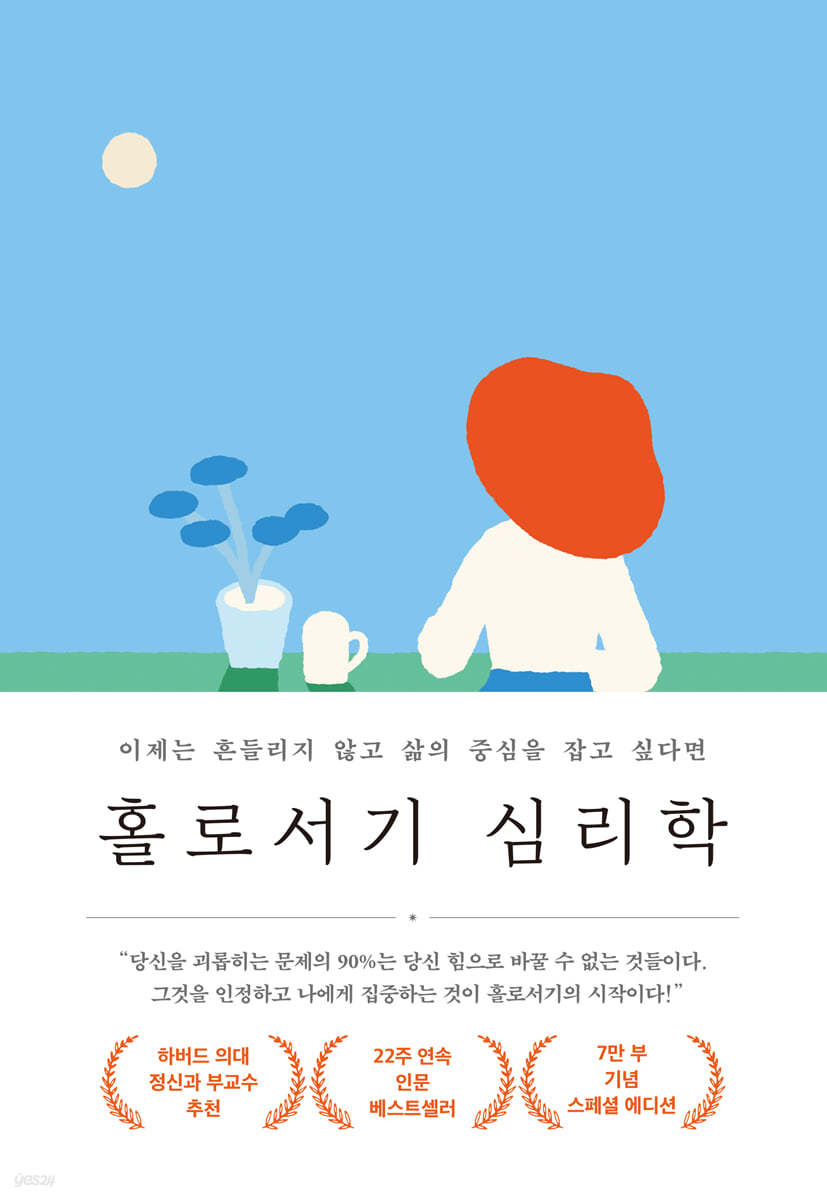
The Psychology of Standing Alone (70,000-Copy Special Edition)
 |
Description
Book Introduction
“90% of the problems that plague you are beyond your control. Acknowledging that and focusing on myself is the beginning of standing on my own two feet!” 46 Psychological Lessons to Stop Worrying, Live Your Life with Confidence, and Be Unswayed by Anything “Why can’t I break free from bad psychological habits no matter how hard I try?” The book “The Psychology of Standing Alone” teaches people who are shaken every day by excessive emotional ups and downs, excessive self-criticism, old emotional wounds, and habitual loneliness how to find their center and take charge of their lives. The author speaks to those who are easily hurt by excessive dependence and sensitivity, and to those who waste their days blaming the world and others for not doing what they want. “The only reason you keep repeating your misfortunes is because you haven’t yet stood on your own two feet.” As a clinical psychologist and counselor who has counseled a wide range of people with various psychological problems for 15 years, the author has discovered one thing in common among his clients. Even though the outward appearances may be different, if you look inside, you will see that they are all connected to the problem of standing alone. People who cannot stand alone perceive themselves as lacking and deficient, and believe that others or the world can fill that deficiency. So, we try too hard to be recognized, get caught up in work, and drive ourselves crazy. But as long as we continue to believe that the power to make us happy is outside of us and rely on it, life will continue to be swayed. This is because things that happen outside of my mind, such as other people's feelings or reputations, worldly affairs, and crises that suddenly arise, are not things that I can control with my own strength, no matter how hard I try. Therefore, those who do not want to be shaken any longer must learn to stand alone. Standing alone is an effort to take back control of your life by distinguishing between what you can and cannot solve on your own, without relying on others, emotions, or bad habits. People who can stand on their own two feet can let go of their obsession with things they can't control, and instead focus on the emotions and thoughts they can change, taking initiative and choosing their actions. They have a high level of confidence that they can take control of their lives in any situation. Therefore, they are less sensitive to the evaluations of others, less prone to self-criticism, have fewer emotional ups and downs, and are less prone to being self-deprecating. Maintain an objective perspective and sense of balance toward yourself, others, and the world. Naturally, your relationships will improve and your life will become smoother. If you find yourself constantly feeling hurt and worn down by your volatile emotions, hurtful others, and bad habits that put you down, it's time to examine your ability to stand on your own two feet. If I can understand and manage my own mind without relying on anything, even if the world around me remains the same, my attitude toward the world will change, and my life will change. That is why life changes completely when you stand alone. And the author says: Only when we can stand alone can we become decent adults. |
- You can preview some of the book's contents.
Preview
index
Prologue: The Secrets of People with a Strong Center in Their Lives: Discovered Through 15 Years of Counseling
Part 1: Why am I easily swayed by trivial matters?: The Self
Chapter 1 Why I Encourage People to Stand Alone
- What makes you feel difficult?
- 3 Meanings of Standing Alone That People Surprisingly Don't Know
- Why your whole life changes only when you stand alone
- What you need now if you want to lean on anything
Chapter 2 Why can't I trust myself and am swayed by the little things other people say?
- Two conflicting desires live in our hearts.
- The desire to be free vs.
The desire to be recognized
- The psychology of people who are not easily swayed by others' words
- We are all moderately inadequate and moderately good people.
Chapter 3: The Moment You Feel Unsteady: Why You Should Examine Your Emotions First
- The one truth about life is that it never goes as planned.
- So it's natural to feel uncomfortable.
- Having bad feelings doesn't mean you're a bad person.
- How to be at peace with the anger within you
Chapter 4: Is he being rude? Am I being sensitive?
- Issues to consider before assuming he is rude
- A very old wound could be the problem.
- People who get angry because they are in so much pain
- No more fearing or ignoring the hurt
Chapter 5 My Most Powerful Enemy: Negative Thinking Habits
- What happens when I become the 'judge' who judges myself
- But what should I do about the way I look that I don't like?
- Blaming your parents is the most vain thing in the world.
- The first thing you need to do to break the negative thinking habit
Part 2: How to avoid being swayed by moods that change several times a day: Emotions
Chapter 6: Knowing Your Emotional Patterns Comes First
- There are patterns to emotions too.
- Understand the emotional patterns that operate without you knowing: 5 elements for reading emotional patterns
- Don't mistake your feelings and thoughts for facts.
- Distinguish between what you can control and what you cannot.
Chapter 7 The three emotions that need the most care: helplessness, depression, and anxiety
- What people fear more than electric shock
- Apathy: I don't know what I really want to do.
- Depression: I'm sure I'll fail
- Anxiety: I'm worried that I won't be able to do everything well.
Chapter 8: How to Escape the Emotional Swings That Only Leave Regret and Misunderstanding
Why you should never put the saying "follow your heart" into practice
- Characteristics of people who are good at controlling their emotions
- Let go of the dangerous 'all or nothing' mindset.
7 Behavioral Therapies to Beat Mood Swings
Part 3: Only When We Can Stand Alone Do We Become Good Adults: Relationships
Chapter 9: Only when we can stand alone do we become decent adults.
- What you need to learn to become a person with strong roots
- Become the master of your life based on self-confidence
- Standing Alone Training 1: How to Accept Your Emotions
- Standing Alone Training 2: How to Check Your Thoughts
- Standing Alone Training 3: How to Support My Actions
Chapter 10 The Secret of People Everyone Likes Without Trying or Trying to Dress Up
: Standing alone in human relationships
- The biggest mistake made by people who think asking for favors is a nuisance
- The true meaning of standing alone in a relationship
- Why being honest and natural is so important
- How to get what you want without hurting others
Chapter 11 How to Become a Person Who Loves and Be Loved Without Regret
: Standing Alone in Love
No matter how much you love, loneliness never goes away.
- The more you love someone, the more you need to keep your distance.
- True love is the willingness to let the other person be freer.
- Things you must keep in mind to stay with that person for a long time
Part 4: Becoming more generous to yourself, more gentle to others, and more comfortable in life: The Psychology of Standing Alone: World Edition
Chapter 12: 12 Psychological Lessons to Cherish and Care for Yourself, the Most Precious Person in the World
Chapter 13: Standing Alone Training (Practical Edition) - The Practice of Taking Care of Myself Continues
Part 1: Why am I easily swayed by trivial matters?: The Self
Chapter 1 Why I Encourage People to Stand Alone
- What makes you feel difficult?
- 3 Meanings of Standing Alone That People Surprisingly Don't Know
- Why your whole life changes only when you stand alone
- What you need now if you want to lean on anything
Chapter 2 Why can't I trust myself and am swayed by the little things other people say?
- Two conflicting desires live in our hearts.
- The desire to be free vs.
The desire to be recognized
- The psychology of people who are not easily swayed by others' words
- We are all moderately inadequate and moderately good people.
Chapter 3: The Moment You Feel Unsteady: Why You Should Examine Your Emotions First
- The one truth about life is that it never goes as planned.
- So it's natural to feel uncomfortable.
- Having bad feelings doesn't mean you're a bad person.
- How to be at peace with the anger within you
Chapter 4: Is he being rude? Am I being sensitive?
- Issues to consider before assuming he is rude
- A very old wound could be the problem.
- People who get angry because they are in so much pain
- No more fearing or ignoring the hurt
Chapter 5 My Most Powerful Enemy: Negative Thinking Habits
- What happens when I become the 'judge' who judges myself
- But what should I do about the way I look that I don't like?
- Blaming your parents is the most vain thing in the world.
- The first thing you need to do to break the negative thinking habit
Part 2: How to avoid being swayed by moods that change several times a day: Emotions
Chapter 6: Knowing Your Emotional Patterns Comes First
- There are patterns to emotions too.
- Understand the emotional patterns that operate without you knowing: 5 elements for reading emotional patterns
- Don't mistake your feelings and thoughts for facts.
- Distinguish between what you can control and what you cannot.
Chapter 7 The three emotions that need the most care: helplessness, depression, and anxiety
- What people fear more than electric shock
- Apathy: I don't know what I really want to do.
- Depression: I'm sure I'll fail
- Anxiety: I'm worried that I won't be able to do everything well.
Chapter 8: How to Escape the Emotional Swings That Only Leave Regret and Misunderstanding
Why you should never put the saying "follow your heart" into practice
- Characteristics of people who are good at controlling their emotions
- Let go of the dangerous 'all or nothing' mindset.
7 Behavioral Therapies to Beat Mood Swings
Part 3: Only When We Can Stand Alone Do We Become Good Adults: Relationships
Chapter 9: Only when we can stand alone do we become decent adults.
- What you need to learn to become a person with strong roots
- Become the master of your life based on self-confidence
- Standing Alone Training 1: How to Accept Your Emotions
- Standing Alone Training 2: How to Check Your Thoughts
- Standing Alone Training 3: How to Support My Actions
Chapter 10 The Secret of People Everyone Likes Without Trying or Trying to Dress Up
: Standing alone in human relationships
- The biggest mistake made by people who think asking for favors is a nuisance
- The true meaning of standing alone in a relationship
- Why being honest and natural is so important
- How to get what you want without hurting others
Chapter 11 How to Become a Person Who Loves and Be Loved Without Regret
: Standing Alone in Love
No matter how much you love, loneliness never goes away.
- The more you love someone, the more you need to keep your distance.
- True love is the willingness to let the other person be freer.
- Things you must keep in mind to stay with that person for a long time
Part 4: Becoming more generous to yourself, more gentle to others, and more comfortable in life: The Psychology of Standing Alone: World Edition
Chapter 12: 12 Psychological Lessons to Cherish and Care for Yourself, the Most Precious Person in the World
Chapter 13: Standing Alone Training (Practical Edition) - The Practice of Taking Care of Myself Continues
Detailed image
.jpg)
Into the book
The 'me' that others see is nothing special.
Just because they think that way, doesn't mean I'm really like that.
I don't have to meet their gaze, and I don't have to fix their gaze.
No matter how much I shout, “That’s not my real self,” they just imagine another version of me and create it.
It just adds one more gaze.
So, don't be too swayed by how other people see you.
It would be wise to use the effort you put into caring about what others think to take care of yourself.
--- From "Becoming the Master of Your Life Based on Self-Confidence"
Don't read too much into your emotions.
Emotions are temporary phenomena.
The same goes for emotions that come out violently.
If you just leave it alone, it will subside on its own.
On the contrary, the more we think about it, give it meaning, and judge it, the more our emotions become active as if they have wings.
Thoughts like, "I'm so weak, I'm getting angry over something like this," or "Is that person ignoring me for acting like that?" are the thoughts that fuel our emotions.
--- From "The Moment You Feel Shaky, Why You Should Examine Your Emotions First"
If you find yourself ruining your relationship with a similar pattern, only the situations that make you angry and the targets of your blame change, you should consider that the cause lies with you.
I have to decide that it's not that he's being rude, but that he's being sensitive to me.
Only then can true change be possible.
If we start looking for the cause of our problems in the person in front of us, we may lose a lot.
By punishing a harsh person, you not only lose the opportunity to get along with him, you also don't get what you want, and you don't heal old wounds.
--- From "Is he rude? Am I being sensitive?"
It's best to avoid major trauma in life, but if you do, it's best to be prepared for the scars to stay with you for the rest of your life.
But don't be too sad.
A well-healed wound does not continue to hurt.
When you understand the source of your hurt and recognize the habitual behavior patterns it has created, the hurt becomes less powerful.
--- From "No More Fear of Hurt or Pretend Not to Know"
Behind the 'me' that is sensitive to other people's reactions, there exists a 'me' that is determined to live according to my own will, no matter what others say.
Because there are many different 'me's', even if one of them is bad, lacking, or unsatisfactory, the 'me' as a whole can be okay.
It is important to have an attitude of not selling off a part of myself as the whole of me.
That way, you won't be too hurt by other people's passing comments.
Other people's evaluations, no matter how valid or painful, are only about a part of me, not about my whole being.
--- From "Why can't I trust myself and am swayed by the trivial words of others?"
Blaming others and venting your anger on them may feel better at the time.
But this is only for a very short time.
As long as the blame for the arrow is placed on a specific person, the flames of anger will never subside.
Every time a bump in the road comes up in life, you'll repeat the repertoire, "It's because of you that I'm like this."
What's worse is that my bad habits and pain will remain until he admits his mistakes and asks for forgiveness.
Of course, we'd like him to sincerely repent as you wish, but how can we guarantee that? While we wait for his repentance, what's truly being sacrificed is our precious lives.
--- From "The Most Powerful Enemy That Ruins Me: Negative Thinking Habits"
It is very important to choose for yourself.
Because choice is directly related to self-esteem.
Choice carries authority.
When we need advice on important choices, we seek out those with experience or insight in that area.
Because I trust and acknowledge his judgment and authority.
Likewise, choosing for myself means that I believe in myself.
It is believing that I know myself well, and furthermore, that I care for and love myself.
So, people with high self-esteem find it easy to make choices, whereas people with low self-esteem tend to hesitate to make choices and delegate authority to others.
--- From "The 3 Emotions That Must Be Handled Most Carefully: Apathy, Depression, and Anxiety"
Modern people believe that the busier they are, the more capable and successful they are in life.
But don't mistake being busy for living a good life.
Rather, his busyness may be evidence of his uneasy mind.
Because doing something gives me a sense of security.
Likewise, the more unclear your standards are about what to do and how to do it, the more busy you will become, trying to do everything.
--- From "Anxiety: I'm worried I won't be able to do everything well"
People who are good at regulating their emotions have an excellent ability to recognize their emotions.
When anger, depression, anxiety, or irritation comes over you, your heart starts pounding, your breathing gets short, and your back feels tight.
Then they press the 'pause' button.
'Oh, something is happening in my chest.
Let's get out of here for a moment.' They go to any place they can find to rest, take a breath, stretch, and enjoy the view.
If that doesn't work, I'll go to the bathroom and fix my clothes.
It's about trying to escape from emotions by not thinking about anything.
--- From "Characteristics of People Who Manage Their Emotions Well"
People with mood swings tend to have an 'all or nothing' attitude when it comes to their behavior.
When I'm in a good mood, I'm endlessly positive.
We set high goals and make grand plans, feeling like we can accomplish anything.
However, things do not go as planned due to the lack of realism.
If you feel bad at times like this, the downward curve will accelerate.
Suddenly, I feel unmotivated and don't want to do anything.
The future looks bleak and things don't seem to be going well.
But at first glance, it feels familiar.
I've had similar experiences before.
There are several things I started with high expectations, but gave up on before I could even do them properly.
Then, all of a sudden, like a deflated balloon, all expectations disappear.
'That's always the case with what I do.
How could it possibly work out?'
--- From "Letting Go of the Dangerous 'All or Nothing' Thinking"
Some people say this when they are sad after breaking up with their lover.
“I can’t live without ○○ anymore.
“I love him very much.” But this is dependence, not love.
It's like parasitizing on the other person for survival.
Love is something that can live well alone, but it is something that makes you happier when you are with someone.
It is an effort to become a better person and an active action to do something for the happiness of others.
Just because they think that way, doesn't mean I'm really like that.
I don't have to meet their gaze, and I don't have to fix their gaze.
No matter how much I shout, “That’s not my real self,” they just imagine another version of me and create it.
It just adds one more gaze.
So, don't be too swayed by how other people see you.
It would be wise to use the effort you put into caring about what others think to take care of yourself.
--- From "Becoming the Master of Your Life Based on Self-Confidence"
Don't read too much into your emotions.
Emotions are temporary phenomena.
The same goes for emotions that come out violently.
If you just leave it alone, it will subside on its own.
On the contrary, the more we think about it, give it meaning, and judge it, the more our emotions become active as if they have wings.
Thoughts like, "I'm so weak, I'm getting angry over something like this," or "Is that person ignoring me for acting like that?" are the thoughts that fuel our emotions.
--- From "The Moment You Feel Shaky, Why You Should Examine Your Emotions First"
If you find yourself ruining your relationship with a similar pattern, only the situations that make you angry and the targets of your blame change, you should consider that the cause lies with you.
I have to decide that it's not that he's being rude, but that he's being sensitive to me.
Only then can true change be possible.
If we start looking for the cause of our problems in the person in front of us, we may lose a lot.
By punishing a harsh person, you not only lose the opportunity to get along with him, you also don't get what you want, and you don't heal old wounds.
--- From "Is he rude? Am I being sensitive?"
It's best to avoid major trauma in life, but if you do, it's best to be prepared for the scars to stay with you for the rest of your life.
But don't be too sad.
A well-healed wound does not continue to hurt.
When you understand the source of your hurt and recognize the habitual behavior patterns it has created, the hurt becomes less powerful.
--- From "No More Fear of Hurt or Pretend Not to Know"
Behind the 'me' that is sensitive to other people's reactions, there exists a 'me' that is determined to live according to my own will, no matter what others say.
Because there are many different 'me's', even if one of them is bad, lacking, or unsatisfactory, the 'me' as a whole can be okay.
It is important to have an attitude of not selling off a part of myself as the whole of me.
That way, you won't be too hurt by other people's passing comments.
Other people's evaluations, no matter how valid or painful, are only about a part of me, not about my whole being.
--- From "Why can't I trust myself and am swayed by the trivial words of others?"
Blaming others and venting your anger on them may feel better at the time.
But this is only for a very short time.
As long as the blame for the arrow is placed on a specific person, the flames of anger will never subside.
Every time a bump in the road comes up in life, you'll repeat the repertoire, "It's because of you that I'm like this."
What's worse is that my bad habits and pain will remain until he admits his mistakes and asks for forgiveness.
Of course, we'd like him to sincerely repent as you wish, but how can we guarantee that? While we wait for his repentance, what's truly being sacrificed is our precious lives.
--- From "The Most Powerful Enemy That Ruins Me: Negative Thinking Habits"
It is very important to choose for yourself.
Because choice is directly related to self-esteem.
Choice carries authority.
When we need advice on important choices, we seek out those with experience or insight in that area.
Because I trust and acknowledge his judgment and authority.
Likewise, choosing for myself means that I believe in myself.
It is believing that I know myself well, and furthermore, that I care for and love myself.
So, people with high self-esteem find it easy to make choices, whereas people with low self-esteem tend to hesitate to make choices and delegate authority to others.
--- From "The 3 Emotions That Must Be Handled Most Carefully: Apathy, Depression, and Anxiety"
Modern people believe that the busier they are, the more capable and successful they are in life.
But don't mistake being busy for living a good life.
Rather, his busyness may be evidence of his uneasy mind.
Because doing something gives me a sense of security.
Likewise, the more unclear your standards are about what to do and how to do it, the more busy you will become, trying to do everything.
--- From "Anxiety: I'm worried I won't be able to do everything well"
People who are good at regulating their emotions have an excellent ability to recognize their emotions.
When anger, depression, anxiety, or irritation comes over you, your heart starts pounding, your breathing gets short, and your back feels tight.
Then they press the 'pause' button.
'Oh, something is happening in my chest.
Let's get out of here for a moment.' They go to any place they can find to rest, take a breath, stretch, and enjoy the view.
If that doesn't work, I'll go to the bathroom and fix my clothes.
It's about trying to escape from emotions by not thinking about anything.
--- From "Characteristics of People Who Manage Their Emotions Well"
People with mood swings tend to have an 'all or nothing' attitude when it comes to their behavior.
When I'm in a good mood, I'm endlessly positive.
We set high goals and make grand plans, feeling like we can accomplish anything.
However, things do not go as planned due to the lack of realism.
If you feel bad at times like this, the downward curve will accelerate.
Suddenly, I feel unmotivated and don't want to do anything.
The future looks bleak and things don't seem to be going well.
But at first glance, it feels familiar.
I've had similar experiences before.
There are several things I started with high expectations, but gave up on before I could even do them properly.
Then, all of a sudden, like a deflated balloon, all expectations disappear.
'That's always the case with what I do.
How could it possibly work out?'
--- From "Letting Go of the Dangerous 'All or Nothing' Thinking"
Some people say this when they are sad after breaking up with their lover.
“I can’t live without ○○ anymore.
“I love him very much.” But this is dependence, not love.
It's like parasitizing on the other person for survival.
Love is something that can live well alone, but it is something that makes you happier when you are with someone.
It is an effort to become a better person and an active action to do something for the happiness of others.
--- From "True love is the will to make the other person more free"
Publisher's Review
Excessive mood swings, excessive self-criticism, old emotional wounds, habitual loneliness…
“Why can’t I break free from bad psychological habits no matter how hard I try?”
“I keep getting on edge with every word my friend says”, “I’m unhappy because my boyfriend hasn’t changed at all”, “I get angry because my child doesn’t listen to me”, “I feel so lonely because he doesn’t accept me completely”, “I’m afraid of failing before I even try anything”, “I’m afraid people will be disappointed in me someday”…
The author, who has been a clinical psychologist and counselor for 15 years and has counseled a variety of people with various psychological problems, has discovered one commonality among his clients.
Even though the outward appearances may be different, if you look inside, you will see that they are all connected to the problem of standing alone.
People who came to the counseling room with emotional pain were unable to stand alone and were always leaning on something.
Some people were overly sensitive to the opinions of others, some were unhappy because people didn't do what they wanted, and some people constantly tormented themselves by holding themselves to perfectionistic expectations.
They believed that they were lacking and deficient in something, and that others or the world would fill that void.
In other words, they believed that the power to make them happy existed outside of themselves.
But as long as you place your standards for life on external factors, you will continue to be swayed by them.
Because we are easily hurt by people and the world that do not go our way, and we have to constantly worry about losing our reputation and being on edge in the face of a crisis that could strike at any time.
The author speaks to those who rely on something with a wavering heart and who suffer repeatedly because of that dependence.
Distinguishing between what you can control and what you cannot is the key to becoming a psychological adult.
Other people, the world, and the past are things that are beyond our control.
On the other hand, it is up to me to decide how to accept the world and act.
Knowing how to read and control that mind is all we can do, and it is the only way to lead our lives the way we want.
“The reason you repeat misfortune is because you haven’t yet stood on your own two feet.”
If you really want to change now, you should start by examining your ability to stand on your own two feet.
So, those who want to hold on to the center of their lives without being shaken any longer, and those who want to maintain a constant mood and attitude in their daily lives, must learn to stand alone.
Standing alone is an effort to take back control of one's happiness without relying on others, emotions, or bad habits.
Let's take a closer look at the meaning of standing alone, which people surprisingly don't know much about.
First, it is the ability to distinguish between controllable and uncontrollable things.
As I said before, other people's feelings, the past that has already passed, and unexpected events like unemployment or illness are things that are beyond my control.
Although it is regrettable, it is better to let go of your obsession.
On the other hand, I can control my mind.
Therefore, standing alone is putting finite time and energy into a controllable mind.
Second, standing alone is having the ability to know and manage your own mind well.
We all look at the world through our own glasses.
The belief that 'if you are accepted, loved, and successful, you will be happy' is just a story about the world seen through the glasses I wear.
But the moment he mistakes that for the truth, without realizing that he is wearing glasses, he is overcome with all kinds of suffering.
Conversely, the attitude of knowing that one is wearing glasses and trying to observe them is standing alone.
So, people who are good at standing on their own two feet are not easily swayed by emotions and thoughts.
Rather, I want to observe it from a distance and choose for myself how to act.
It means taking the initiative and leading actions rather than responding to each and every situation in the world.
Third, when you learn to manage your mind well, you gain control over your life and your confidence in life increases.
We usually react and act according to what we see and hear, forgetting that we are wearing glasses.
When someone says something they don't want to hear, they automatically get irritated and raise their voice, without even realizing that what they're saying sounds like nagging because of the glasses they're wearing.
But once I become aware of the glasses in my eyes and begin to observe them, I can choose how to respond.
Instead of getting angry and regretting it, you can decide whether to pretend not to hear or give advice without making them feel bad.
The more choices you have, the more control you have over your life, which in turn leads to confidence.
“Only when we can stand alone do we become decent adults.”
An American clinical psychologist who has been counseling people with independence and dependence issues for over 15 years tells us:
Everything about emotions, self, and relationships for a confident life
People who can stand on their own two feet are less likely to be swayed by their surroundings because they have the confidence that they can handle any situation that comes their way.
Because you know yourself well and have confidence in your own judgment and actions, you become less dependent on external sources.
They maintain an objective perspective and a sense of balance about themselves, others, and the world.
They are not sensitive to the opinions of others, do not easily fall into self-criticism, and are willing to seek help rather than trying to hide their shortcomings.
They have less emotional ups and downs, are less prone to being irritable, and respond flexibly to situations.
As a result, human relationships naturally improve and life becomes smoother.
This is the tremendous change that occurs when you stand alone without relying on anything.
The world and other people remain the same, but the world I see, hear, and interact with is completely different.
In this book, the author explains how standing alone should be applied not only to personal aspects such as emotions, thoughts, and actions, but also to all aspects of life, including work, love, and interpersonal relationships.
We'll examine each reason we rely on others' opinions, our emotional ups and downs, our past hurts, our habitual self-blame, and how to deal with it and stand on our own two feet.
In particular, it focuses on the emotional ups and downs that modern people find most difficult, and provides specific suggestions on how to identify one's emotional patterns, seven behavioral therapies to overcome emotional ups and downs, and how to deal with apathy, depression, and anxiety, which are the emotions that require the most caution.
Furthermore, we will look at how to stand alone in terms of interpersonal relationships and how to be alone and together in a loving relationship.
I hope that those who repeatedly repeat bad psychological habits, those who are shaken by excessive dependence and sensitivity, and those who waste each day blaming the world and others who do not go their way will read this book and firmly center their minds, thereby regaining control and confidence in their lives and moving forward boldly into the future.
A rare book that addresses the issues of dependence and independence, a key topic in psychology, in the vivid language of the millennial generation.
- [Publisher's Weekly]
Dr. Fielding gives us the most powerful weapon to navigate these uncertain times.
The weapon of self-confidence and faith, that is, standing alone.
- [Forbes]
“Why can’t I break free from bad psychological habits no matter how hard I try?”
“I keep getting on edge with every word my friend says”, “I’m unhappy because my boyfriend hasn’t changed at all”, “I get angry because my child doesn’t listen to me”, “I feel so lonely because he doesn’t accept me completely”, “I’m afraid of failing before I even try anything”, “I’m afraid people will be disappointed in me someday”…
The author, who has been a clinical psychologist and counselor for 15 years and has counseled a variety of people with various psychological problems, has discovered one commonality among his clients.
Even though the outward appearances may be different, if you look inside, you will see that they are all connected to the problem of standing alone.
People who came to the counseling room with emotional pain were unable to stand alone and were always leaning on something.
Some people were overly sensitive to the opinions of others, some were unhappy because people didn't do what they wanted, and some people constantly tormented themselves by holding themselves to perfectionistic expectations.
They believed that they were lacking and deficient in something, and that others or the world would fill that void.
In other words, they believed that the power to make them happy existed outside of themselves.
But as long as you place your standards for life on external factors, you will continue to be swayed by them.
Because we are easily hurt by people and the world that do not go our way, and we have to constantly worry about losing our reputation and being on edge in the face of a crisis that could strike at any time.
The author speaks to those who rely on something with a wavering heart and who suffer repeatedly because of that dependence.
Distinguishing between what you can control and what you cannot is the key to becoming a psychological adult.
Other people, the world, and the past are things that are beyond our control.
On the other hand, it is up to me to decide how to accept the world and act.
Knowing how to read and control that mind is all we can do, and it is the only way to lead our lives the way we want.
“The reason you repeat misfortune is because you haven’t yet stood on your own two feet.”
If you really want to change now, you should start by examining your ability to stand on your own two feet.
So, those who want to hold on to the center of their lives without being shaken any longer, and those who want to maintain a constant mood and attitude in their daily lives, must learn to stand alone.
Standing alone is an effort to take back control of one's happiness without relying on others, emotions, or bad habits.
Let's take a closer look at the meaning of standing alone, which people surprisingly don't know much about.
First, it is the ability to distinguish between controllable and uncontrollable things.
As I said before, other people's feelings, the past that has already passed, and unexpected events like unemployment or illness are things that are beyond my control.
Although it is regrettable, it is better to let go of your obsession.
On the other hand, I can control my mind.
Therefore, standing alone is putting finite time and energy into a controllable mind.
Second, standing alone is having the ability to know and manage your own mind well.
We all look at the world through our own glasses.
The belief that 'if you are accepted, loved, and successful, you will be happy' is just a story about the world seen through the glasses I wear.
But the moment he mistakes that for the truth, without realizing that he is wearing glasses, he is overcome with all kinds of suffering.
Conversely, the attitude of knowing that one is wearing glasses and trying to observe them is standing alone.
So, people who are good at standing on their own two feet are not easily swayed by emotions and thoughts.
Rather, I want to observe it from a distance and choose for myself how to act.
It means taking the initiative and leading actions rather than responding to each and every situation in the world.
Third, when you learn to manage your mind well, you gain control over your life and your confidence in life increases.
We usually react and act according to what we see and hear, forgetting that we are wearing glasses.
When someone says something they don't want to hear, they automatically get irritated and raise their voice, without even realizing that what they're saying sounds like nagging because of the glasses they're wearing.
But once I become aware of the glasses in my eyes and begin to observe them, I can choose how to respond.
Instead of getting angry and regretting it, you can decide whether to pretend not to hear or give advice without making them feel bad.
The more choices you have, the more control you have over your life, which in turn leads to confidence.
“Only when we can stand alone do we become decent adults.”
An American clinical psychologist who has been counseling people with independence and dependence issues for over 15 years tells us:
Everything about emotions, self, and relationships for a confident life
People who can stand on their own two feet are less likely to be swayed by their surroundings because they have the confidence that they can handle any situation that comes their way.
Because you know yourself well and have confidence in your own judgment and actions, you become less dependent on external sources.
They maintain an objective perspective and a sense of balance about themselves, others, and the world.
They are not sensitive to the opinions of others, do not easily fall into self-criticism, and are willing to seek help rather than trying to hide their shortcomings.
They have less emotional ups and downs, are less prone to being irritable, and respond flexibly to situations.
As a result, human relationships naturally improve and life becomes smoother.
This is the tremendous change that occurs when you stand alone without relying on anything.
The world and other people remain the same, but the world I see, hear, and interact with is completely different.
In this book, the author explains how standing alone should be applied not only to personal aspects such as emotions, thoughts, and actions, but also to all aspects of life, including work, love, and interpersonal relationships.
We'll examine each reason we rely on others' opinions, our emotional ups and downs, our past hurts, our habitual self-blame, and how to deal with it and stand on our own two feet.
In particular, it focuses on the emotional ups and downs that modern people find most difficult, and provides specific suggestions on how to identify one's emotional patterns, seven behavioral therapies to overcome emotional ups and downs, and how to deal with apathy, depression, and anxiety, which are the emotions that require the most caution.
Furthermore, we will look at how to stand alone in terms of interpersonal relationships and how to be alone and together in a loving relationship.
I hope that those who repeatedly repeat bad psychological habits, those who are shaken by excessive dependence and sensitivity, and those who waste each day blaming the world and others who do not go their way will read this book and firmly center their minds, thereby regaining control and confidence in their lives and moving forward boldly into the future.
A rare book that addresses the issues of dependence and independence, a key topic in psychology, in the vivid language of the millennial generation.
- [Publisher's Weekly]
Dr. Fielding gives us the most powerful weapon to navigate these uncertain times.
The weapon of self-confidence and faith, that is, standing alone.
- [Forbes]
GOODS SPECIFICS
- Publication date: November 9, 2020
- Page count, weight, size: 288 pages | 364g | 142*202*20mm
- ISBN13: 9791190538206
- ISBN10: 1190538202
You may also like
카테고리
korean


korean

![GQ KOREA Mark (Monthly): December [2025]](http://librairie.coreenne.fr/cdn/shop/files/8ef265dbbfbf186523ed75ba7319009d.jpg?v=1765340328&width=3840)


