

Byeongja Horan
 |
Description
Book Introduction
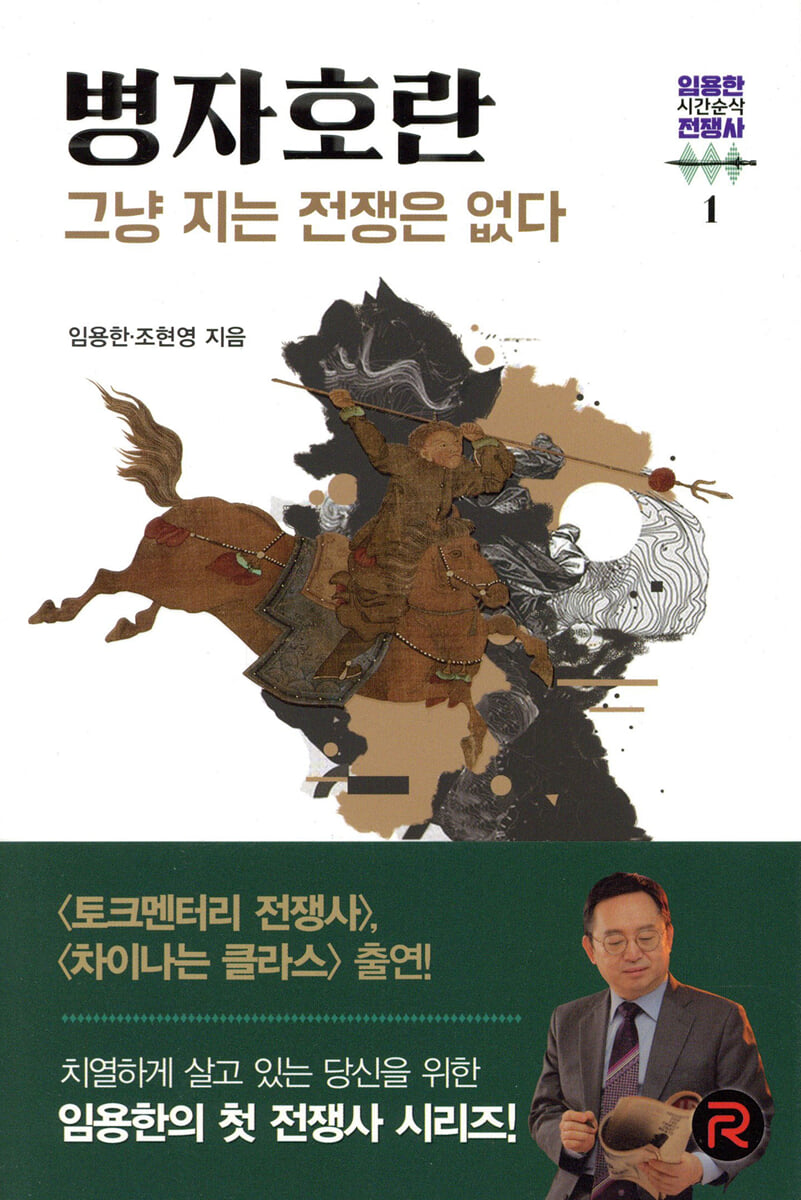
For you who live fiercely The beginning of the 'Time-Switching War History Series', easily explained by Dr. Im Yong-han! 'Im Yong-han's Time-Swept War History' is a war history series written by Dr. Im Yong-han, who received much love for 'Talkumentary War History', and writer Jo Hyeon-yeong, who wrote the script. We've written it in an easy-to-understand way and introduced infographics so that you can understand the entire history of war by reading just one volume. Anyone who is a war historian, military nerd, or history reader, as well as someone who lives each day as if it were a fierce battle, can learn life insights. The first volume in the series, 『Byeongjahoran: No War is Just Lost』, deals with the Byeongjahoran, a lost war. The background is the growth of the Later Jin Dynasty, and the detailed progress and outcome of the Byeongja Horan, all wrapped up with Dr. Im Yong-han's unique insight. Reading this book will not only help you understand the Byeongja Horan, but also, paradoxically, through the process that led to Joseon's defeat, you will learn how to overcome the current crisis. |
- You can preview some of the book's contents.
Preview
index
Author's Note
Part 1: The Beginning of the War That Shook Northeast Asia
01 The Rise of Nurhachi - There Was Someone in Manchuria Who Was Targeting the Central Plains
02 The Imjin War and the Rise of the Jurchens - How to Resist Nurhachi?
03 A Meaningful Letter - Understand Nurhachi's True Intentions
04 Nurhachi's Territorial Expansion - He Now Aims for the Central Plains
05 Fall of Musun - Attack disguised as a merchant.
06 Battle of Sarhu - The Roar of the Tiger at Salihosan
07 The Shaker of the Board, Mo Wenlong - A Great Imposter or a Hero of Troubled Times?
08 The Shaky Balance of Power Between Joseon, Mao Wenlong, and the Ming Dynasty - Their Love Triangle
09 The Death of Nurhaci - The Unstoppable Racehorse, the Khan's End
10. The Byeongjahoran - The enemy advances like a hot knife through butter
11 Joseon's Defense Line - The Enemy Will Come Again
12 The Death of Mo Wenlong and Yuan Chonghuan - A Precarious Defense Line
13 Letters of Anger - Letters should not be delivered
14 War Crisis of 1633 - King Injo Calls for a Personal Expedition
15. The Surrender of the Remnants of the Momunryong Clan - Heaven Helps the Khan
16 From Uiju to Baekmasanseong - Are you telling me to fight with empty guns?
17. Im Gyeong-eop's Reconstruction of Uiju - War Requires Wealth
18 Joseon's War Preparations - A Dead End
19. Reality of Adjustment - The Diverging Dreams of Border and Changgyeong-gu
20 The Beginning of the Invasion - They Crossed the Yalu River
INFOGRAPHY
Part 2: The Waves of War That Hit Sanseong
01 Adjustment Response - Fishing boats going to the mountain
02 The Beginning of Namhansanseong Fortress - The Fortress of Biyeon
03 Joseon Army Strategy and Tactics - Draw a Blueprint for the Battle of Susong
04 Attempt at peace with the Qing - Sanseong's secret agreement
05 The Tough Soldiers and People of Sanseong - Wildflowers Blooming in the Bitter Cold
06 Mountain Climb Meeting - Zhuge Liang and his men at the mountain fortress
07 The whereabouts of the Salvation Army - You are far away
08 Paldogun running towards the acid - Only towards you
09 Civilian messengers crossing the wall - Sanseong's special forces
10. The concept of a belated long-term plan
11 Battle of Sanseong - Joseon troops leave the fortress
The Destruction of the 12th Salvation Squadron - The Flying Moths
13 Battle of the Twin Spirits - A Fierce Battle of Ill-fated Battles
14 Battle of Gwanggyosan - A Faded Victory
15 An ominous aura hanging over the mountain - a black eclipse
16. The stubbornness of the Cheokhwapa - All this is because of peace.
17 The Final Showdown - A Sheep in Tiger Skin vs. a Wolf Baring Its Teeth
18. Fall of Ganghwa Island - My Love, Don't Cross That Sea
19 Surrender of Samjeondo - The Return of the King in Regret
20 Epilogue - The Second Manchu Invasion of Korea and Aftermath
INFOGRAPHY
References and Illustration Sources
Part 1: The Beginning of the War That Shook Northeast Asia
01 The Rise of Nurhachi - There Was Someone in Manchuria Who Was Targeting the Central Plains
02 The Imjin War and the Rise of the Jurchens - How to Resist Nurhachi?
03 A Meaningful Letter - Understand Nurhachi's True Intentions
04 Nurhachi's Territorial Expansion - He Now Aims for the Central Plains
05 Fall of Musun - Attack disguised as a merchant.
06 Battle of Sarhu - The Roar of the Tiger at Salihosan
07 The Shaker of the Board, Mo Wenlong - A Great Imposter or a Hero of Troubled Times?
08 The Shaky Balance of Power Between Joseon, Mao Wenlong, and the Ming Dynasty - Their Love Triangle
09 The Death of Nurhaci - The Unstoppable Racehorse, the Khan's End
10. The Byeongjahoran - The enemy advances like a hot knife through butter
11 Joseon's Defense Line - The Enemy Will Come Again
12 The Death of Mo Wenlong and Yuan Chonghuan - A Precarious Defense Line
13 Letters of Anger - Letters should not be delivered
14 War Crisis of 1633 - King Injo Calls for a Personal Expedition
15. The Surrender of the Remnants of the Momunryong Clan - Heaven Helps the Khan
16 From Uiju to Baekmasanseong - Are you telling me to fight with empty guns?
17. Im Gyeong-eop's Reconstruction of Uiju - War Requires Wealth
18 Joseon's War Preparations - A Dead End
19. Reality of Adjustment - The Diverging Dreams of Border and Changgyeong-gu
20 The Beginning of the Invasion - They Crossed the Yalu River
INFOGRAPHY
Part 2: The Waves of War That Hit Sanseong
01 Adjustment Response - Fishing boats going to the mountain
02 The Beginning of Namhansanseong Fortress - The Fortress of Biyeon
03 Joseon Army Strategy and Tactics - Draw a Blueprint for the Battle of Susong
04 Attempt at peace with the Qing - Sanseong's secret agreement
05 The Tough Soldiers and People of Sanseong - Wildflowers Blooming in the Bitter Cold
06 Mountain Climb Meeting - Zhuge Liang and his men at the mountain fortress
07 The whereabouts of the Salvation Army - You are far away
08 Paldogun running towards the acid - Only towards you
09 Civilian messengers crossing the wall - Sanseong's special forces
10. The concept of a belated long-term plan
11 Battle of Sanseong - Joseon troops leave the fortress
The Destruction of the 12th Salvation Squadron - The Flying Moths
13 Battle of the Twin Spirits - A Fierce Battle of Ill-fated Battles
14 Battle of Gwanggyosan - A Faded Victory
15 An ominous aura hanging over the mountain - a black eclipse
16. The stubbornness of the Cheokhwapa - All this is because of peace.
17 The Final Showdown - A Sheep in Tiger Skin vs. a Wolf Baring Its Teeth
18. Fall of Ganghwa Island - My Love, Don't Cross That Sea
19 Surrender of Samjeondo - The Return of the King in Regret
20 Epilogue - The Second Manchu Invasion of Korea and Aftermath
INFOGRAPHY
References and Illustration Sources
Detailed image

Into the book
The Byeongja Horan is a history of shame and is full of stories that are annoying to anyone who sees it.
But it is also one of the most instructive cases in our history.
If we cannot break free from the culture of nationalism, subjective patriotism, spiritual triumph, and witch-hunting that has strangled our intellect for the past 300 years, we have no future.
---From the author's note
When Nurhachi broke free from the Ming Dynasty's probation, the remaining Jurchen people surrendered to him one after another.
In September 1588, Nurhaci conquered the present-day Harbin basin.
What does this mean? It is the return of the legendary Jurchen chieftain Agolta (Akuta), who founded the Jin Dynasty in 1115.
It even surpassed Agolta.
Agolta gathered his strength and established a nation in the deep eastern lands of Manchuria, outside the sphere of influence of the Khitans, but Nurhachi conquered Manchuria and Gando right under the eyes and teeth of the Ming Dynasty.
---「Part 1 | 01 The Appearance of Nurhachi - There Was Someone in Manchuria Who Aimed at the Central Plains」
Joseon remained indifferent to Hong Taiji's almost blatant revelations of the Ming's downfall and the opinion that the Mandate of Heaven had left the Ming and gone to the Later Jin.
Although it was not explicitly stated in the letter, the logic of the Cheokhwapa was consistent.
Even if your parents are criminals and drunkards, they are still your parents.
A child just does his duty as a child.
There is no record of whether Hong Taiji, upon seeing the Joseon Dynasty's national letter, jumped up and shouted, pounded the table with his fist, or smiled coldly.
Whatever the reaction, he decided to make one last attempt.
Hong Taiji looked around at his attendants and said.
“It’s war again! Call in the Yonggoldae (Ingwoldai) and the Mabudae!”
---From "Part 1 | 18 Joseon's War Preparations - Dead End"
Sobok learned new things by hanging out with them.
Although he was a paper man, he was a Seoul native.
But when he came to Sanseong and lived with the country farmers, country servants, laborers, hired hands, and woodcutters, he realized that the work he was doing was not even work.
These people were really tough.
He would get excited and feel wronged easily, and would spit out all sorts of blasphemous words as if he were about to commit an act of violence at any moment, but the next day, if he received an order from the authorities, he would do everything he was told, his body in shambles.
Even though he was cursing the nobles, when a nobleman stumbled and fell on the mountain path, he picked him up without a word and climbed up the steep mountain path of the fortress, sweating profusely.
---From "Part 2 | 05 The Strong Soldiers and People of Sanseong - Wildflowers Blooming in the Bitter Cold"
The king and his ministers returned to Hanseong alive, but those who remained in the mountain fortress became prey.
The villagers captured by the Qing army cried out.
“Your Majesty, are you abandoning us?”
---From "Part 2 | 19 Surrender of Samjeondo - The Regretful Procession to the Capital"
Unlike us today, military commanders of the time, who had to be extremely cautious politically, would have been able to read clear political signals from the unfolding situation and the content of orders.
The evidence is the record in Kim Jun-ryong's epitaph, "The king comes before saving the allies of Juksan."
This is the tragic story of the three southern royalist armies, who had to rush into the awaiting Qing army one by one like moths to a flame.
But it is also one of the most instructive cases in our history.
If we cannot break free from the culture of nationalism, subjective patriotism, spiritual triumph, and witch-hunting that has strangled our intellect for the past 300 years, we have no future.
---From the author's note
When Nurhachi broke free from the Ming Dynasty's probation, the remaining Jurchen people surrendered to him one after another.
In September 1588, Nurhaci conquered the present-day Harbin basin.
What does this mean? It is the return of the legendary Jurchen chieftain Agolta (Akuta), who founded the Jin Dynasty in 1115.
It even surpassed Agolta.
Agolta gathered his strength and established a nation in the deep eastern lands of Manchuria, outside the sphere of influence of the Khitans, but Nurhachi conquered Manchuria and Gando right under the eyes and teeth of the Ming Dynasty.
---「Part 1 | 01 The Appearance of Nurhachi - There Was Someone in Manchuria Who Aimed at the Central Plains」
Joseon remained indifferent to Hong Taiji's almost blatant revelations of the Ming's downfall and the opinion that the Mandate of Heaven had left the Ming and gone to the Later Jin.
Although it was not explicitly stated in the letter, the logic of the Cheokhwapa was consistent.
Even if your parents are criminals and drunkards, they are still your parents.
A child just does his duty as a child.
There is no record of whether Hong Taiji, upon seeing the Joseon Dynasty's national letter, jumped up and shouted, pounded the table with his fist, or smiled coldly.
Whatever the reaction, he decided to make one last attempt.
Hong Taiji looked around at his attendants and said.
“It’s war again! Call in the Yonggoldae (Ingwoldai) and the Mabudae!”
---From "Part 1 | 18 Joseon's War Preparations - Dead End"
Sobok learned new things by hanging out with them.
Although he was a paper man, he was a Seoul native.
But when he came to Sanseong and lived with the country farmers, country servants, laborers, hired hands, and woodcutters, he realized that the work he was doing was not even work.
These people were really tough.
He would get excited and feel wronged easily, and would spit out all sorts of blasphemous words as if he were about to commit an act of violence at any moment, but the next day, if he received an order from the authorities, he would do everything he was told, his body in shambles.
Even though he was cursing the nobles, when a nobleman stumbled and fell on the mountain path, he picked him up without a word and climbed up the steep mountain path of the fortress, sweating profusely.
---From "Part 2 | 05 The Strong Soldiers and People of Sanseong - Wildflowers Blooming in the Bitter Cold"
The king and his ministers returned to Hanseong alive, but those who remained in the mountain fortress became prey.
The villagers captured by the Qing army cried out.
“Your Majesty, are you abandoning us?”
---From "Part 2 | 19 Surrender of Samjeondo - The Regretful Procession to the Capital"
Unlike us today, military commanders of the time, who had to be extremely cautious politically, would have been able to read clear political signals from the unfolding situation and the content of orders.
The evidence is the record in Kim Jun-ryong's epitaph, "The king comes before saving the allies of Juksan."
This is the tragic story of the three southern royalist armies, who had to rush into the awaiting Qing army one by one like moths to a flame.
---From "Part 2 | Epilogue 20? The Second Manchu Invasion, and Aftermath"
Publisher's Review
The "Im Yong-han's Time-Swept War History" series, which simultaneously captures knowledge, fun, and insight in one volume.
Continuing the fun of "Talkumentary War History," which has captivated 80 million people!
“I’m excited even before I see it!”
“If you hire him, you can trust him!”
“There are so many things that give me new insights every now and then!”
“The fierce survive!”
Make history your ally in this war-like everyday life.
Why should we study the history of war? It's true that the likelihood of war occurring in the traditional sense is slim.
But war continues to rage globally and in our daily lives, in different forms.
The global situation has become chaotic again with the coronavirus crisis, the US and China engaged in a power struggle for hegemony, and the Russia-Ukraine war crisis overlapping.
This kind of macro war naturally affects our daily lives, including stock investments, politics, and prices.
Also, our daily life is already a war.
The COVID-19 crisis has exacerbated social polarization, and rapid digitalization is reducing the number of quality jobs.
As a result, numerous 'internal wars' are occurring, such as generational conflict, conflict between the rich and poor, and conflict between men and women.
This is an obvious phenomenon and it is essential to work hard to survive here.
Although the Byeongja Horan is a history of failure, paradoxically, it teaches us 'how to avoid defeat' in war.
In these harsh times, to survive, you must make history work for you.
Traditional blue chip stocks, Myung, are trending sideways, while emerging growth stocks, Hougim, are hitting their daily highs.
Was Joseon the 'Heart of the Beast'?
If the Ming and Qing dynasties were the mainstays, what should Joseon have chosen? The Cheokhwapa might seem like investors with a "beastly heart" who invested without rational analysis. However, at the time, they were actually closer to staunch "value investors."
The Ming Dynasty was a traditionally powerful country, so it was a reliable stock at the time, although it only hesitated for a moment.
From the perspective of the pro-North Korea faction, the pro-North Korea faction, although making judgments based on realistic information, would have appeared to be timid speculators fixated on a small decline rate.
What was Injo's position? The pro-peace faction argued that the Ming could not possibly fall, while the peace faction argued that the immediate losses were too great and that the Ming should be reorganized.
If we apply modern economic psychology, it is likely that Injo also had a 'loss aversion bias' like we do today.
Injo gave more strength to the argument of the pro-Japanese faction that they should wait and not sell for the time being.
The results weren't good, but I can understand why they made that decision.
The coming 'moment of choice'
What qualities of a leader does the Byeongja Horan reveal?
The most famous leaders associated with the Byeongja Horan were Gwanghaegun and Injo, both failed monarchs.
This tells you what kind of leader you should never choose.
King Gwanghaegun is known as an unfortunate king who pursued a neutral foreign policy, but was dethroned after being swayed by fake news.
But paradoxically, this means that the support base was weak enough to be shaken even by fake news.
This means that he was a leader with a broad diplomatic vision but weak internal support and no leadership.
Meanwhile, Injo was a leader who had high internal support but neglected his responsibilities and duties at crucial moments.
At the moment when he had to decide whether to fight or make peace, he looked around and left the decision to his subjects.
A leader who lacks a sense of balance or responsibility can face great danger in a crisis.
Among the many battles that took place during the Second Manchu Invasion of Korea, the most representative ones are the Battle of Ssangnyeong, where the Qing army was defeated by a much smaller number of Qing troops, and the Battle of Gwanggyosan, where the Qing army was victorious after killing an important enemy general.
In both battles, the decisive factor in victory or defeat was fighting according to a clear plan and responding to unexpected situations.
Here, we can again recall that meticulous planning and execution, as well as crisis response skills, are essential conditions that distinguish good leaders from bad ones.
In this way, the Byeongja Horan provides readers with an excellent standard for judging leaders as the 'moment of choice' approaches.
Continuing the fun of "Talkumentary War History," which has captivated 80 million people!
“I’m excited even before I see it!”
“If you hire him, you can trust him!”
“There are so many things that give me new insights every now and then!”
“The fierce survive!”
Make history your ally in this war-like everyday life.
Why should we study the history of war? It's true that the likelihood of war occurring in the traditional sense is slim.
But war continues to rage globally and in our daily lives, in different forms.
The global situation has become chaotic again with the coronavirus crisis, the US and China engaged in a power struggle for hegemony, and the Russia-Ukraine war crisis overlapping.
This kind of macro war naturally affects our daily lives, including stock investments, politics, and prices.
Also, our daily life is already a war.
The COVID-19 crisis has exacerbated social polarization, and rapid digitalization is reducing the number of quality jobs.
As a result, numerous 'internal wars' are occurring, such as generational conflict, conflict between the rich and poor, and conflict between men and women.
This is an obvious phenomenon and it is essential to work hard to survive here.
Although the Byeongja Horan is a history of failure, paradoxically, it teaches us 'how to avoid defeat' in war.
In these harsh times, to survive, you must make history work for you.
Traditional blue chip stocks, Myung, are trending sideways, while emerging growth stocks, Hougim, are hitting their daily highs.
Was Joseon the 'Heart of the Beast'?
If the Ming and Qing dynasties were the mainstays, what should Joseon have chosen? The Cheokhwapa might seem like investors with a "beastly heart" who invested without rational analysis. However, at the time, they were actually closer to staunch "value investors."
The Ming Dynasty was a traditionally powerful country, so it was a reliable stock at the time, although it only hesitated for a moment.
From the perspective of the pro-North Korea faction, the pro-North Korea faction, although making judgments based on realistic information, would have appeared to be timid speculators fixated on a small decline rate.
What was Injo's position? The pro-peace faction argued that the Ming could not possibly fall, while the peace faction argued that the immediate losses were too great and that the Ming should be reorganized.
If we apply modern economic psychology, it is likely that Injo also had a 'loss aversion bias' like we do today.
Injo gave more strength to the argument of the pro-Japanese faction that they should wait and not sell for the time being.
The results weren't good, but I can understand why they made that decision.
The coming 'moment of choice'
What qualities of a leader does the Byeongja Horan reveal?
The most famous leaders associated with the Byeongja Horan were Gwanghaegun and Injo, both failed monarchs.
This tells you what kind of leader you should never choose.
King Gwanghaegun is known as an unfortunate king who pursued a neutral foreign policy, but was dethroned after being swayed by fake news.
But paradoxically, this means that the support base was weak enough to be shaken even by fake news.
This means that he was a leader with a broad diplomatic vision but weak internal support and no leadership.
Meanwhile, Injo was a leader who had high internal support but neglected his responsibilities and duties at crucial moments.
At the moment when he had to decide whether to fight or make peace, he looked around and left the decision to his subjects.
A leader who lacks a sense of balance or responsibility can face great danger in a crisis.
Among the many battles that took place during the Second Manchu Invasion of Korea, the most representative ones are the Battle of Ssangnyeong, where the Qing army was defeated by a much smaller number of Qing troops, and the Battle of Gwanggyosan, where the Qing army was victorious after killing an important enemy general.
In both battles, the decisive factor in victory or defeat was fighting according to a clear plan and responding to unexpected situations.
Here, we can again recall that meticulous planning and execution, as well as crisis response skills, are essential conditions that distinguish good leaders from bad ones.
In this way, the Byeongja Horan provides readers with an excellent standard for judging leaders as the 'moment of choice' approaches.
GOODS SPECIFICS
- Publication date: February 23, 2022
- Page count, weight, size: 388 pages | 386g | 125*188*30mm
- ISBN13: 9788950998936
- ISBN10: 8950998939
You may also like
카테고리
korean


korean

![GQ KOREA Mark (Monthly): December [2025]](http://librairie.coreenne.fr/cdn/shop/files/8ef265dbbfbf186523ed75ba7319009d.jpg?v=1765340328&width=3840)


