

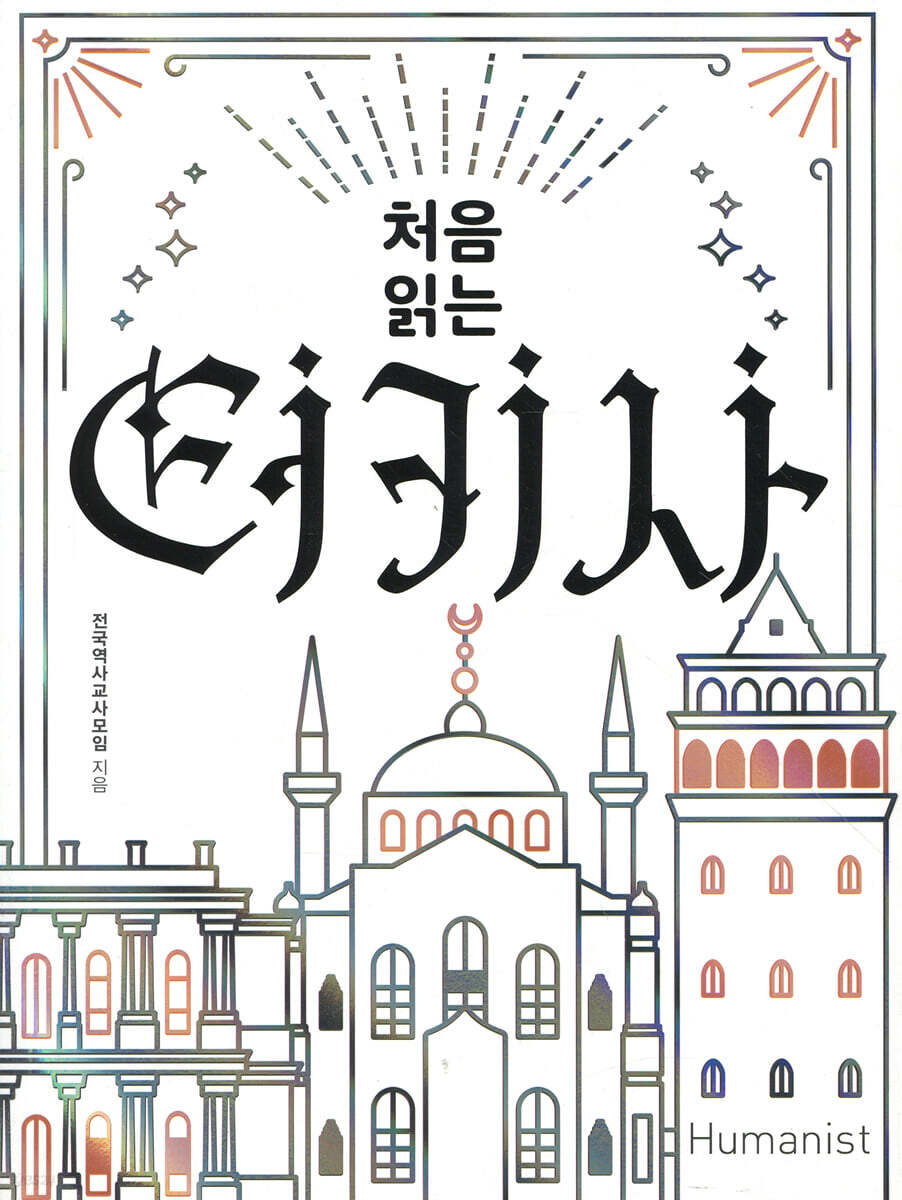
Reading Turkish History for the First Time
 |
Description
Book Introduction
Türkiye, a country with Hittite, Greek, Roman, Byzantine, and Islamic history
Türkiye's history can be said to be a compressed world history.
In this one volume, you can properly understand the history of Byzantium and the Ottoman Empire, which occupy a large portion of world history classes, and understand it as a single historical flow rather than in detail.
Furthermore, through Turkey, where Eastern and Western history, religion, culture, and lineage intersect and blend, we can confirm the main thread of understanding world history.
Turkey has a culture that is both familiar and unfamiliar to both Asians and Europeans.
Europeans visiting Turkey to witness Greco-Roman culture will find their roots confirmed by the city's ruins, while Muslims, who make up 20 to 25 percent of the world's population, will remember Turkey as the country that represented Islam for over 500 years.
The fusion of diverse cultures hidden throughout Türkiye offers modern people living in an age of conflict the wisdom of coexistence.
Türkiye's history can be said to be a compressed world history.
In this one volume, you can properly understand the history of Byzantium and the Ottoman Empire, which occupy a large portion of world history classes, and understand it as a single historical flow rather than in detail.
Furthermore, through Turkey, where Eastern and Western history, religion, culture, and lineage intersect and blend, we can confirm the main thread of understanding world history.
Turkey has a culture that is both familiar and unfamiliar to both Asians and Europeans.
Europeans visiting Turkey to witness Greco-Roman culture will find their roots confirmed by the city's ruins, while Muslims, who make up 20 to 25 percent of the world's population, will remember Turkey as the country that represented Islam for over 500 years.
The fusion of diverse cultures hidden throughout Türkiye offers modern people living in an age of conflict the wisdom of coexistence.
- You can preview some of the book's contents.
Preview
index
Publishing the first world history series
Prologue - Learning the Wisdom of Coexistence in Turkey, the Crossroads of Civilizations
Türkiye missionary work
Chapter 1: European Culture Blossomed in Turkey
1.
People begin to live on Turkish soil
- Trojan civilization
2.
The Iron Empire of the Hittites flourishes
3.
The development of Greek and Roman culture
4.
The early Christian church takes root
5.
Constantinople becomes the center of the Byzantine Empire
Hagia Sophia, the flower of Byzantine culture
Chapter 2: The Ancestors of Türkiye, the Turks
1.
Meet the Turkish Ancestors
- The Xiongnu, the Huns, and the Turks
2.
Turks establish a state
3.
Western Turks advance into Central Asia
4.
Turks confront the party
· Finding traces of nomadic peoples in modern Türkiye
Chapter 3: The Seljuk Turks who established a nation on Turkish soil
1.
The Seljuk Turks advance into Anatolia
2.
Turks believe in Islam
3.
The Seljuk Turks and Europe clash in the Crusades.
4.
Rum Seljuk, the first Turkic state established in Anatolia
- Konya
· A day in the life of Muhammad Kemal, a Muslim
Chapter 4: The Ottoman Empire that overthrew the Byzantine Empire
1.
The Ottoman Empire is founded
2.
Mehmet II overthrows the Byzantine Empire
3.
Change Constantinople to Istanbul
- Topkapi Palace
4.
Coexistence of diverse races and ethnicities
- Dracula of Romania who fought against the Ottoman Empire
· The Grand Bazaar, the final destination of the Silk Road, has everything you need.
Chapter 5: The Ottoman Empire That Trembled Europe
1.
Suleiman I Completes the Empire
2.
Make laws to govern the empire
3.
The Golden Age of the Empire Begins
- Political intervention by Roxelan and the Harem
4.
The change begins
· The conflict between East and West, Islamic miniature painting and Venetian painting style
Chapter 6: The Ottoman Empire at a Crossroads of Reform
1.
The Tulip Age: Stop the Empire's Stagnation
2.
Invaded by Europe
3.
The Sultan's initiative to promote Tanzimat
- Dolmabahçe Palace
4.
The First Constitutional Revolution Fails
The Orient Express runs through the Ottoman Empire.
Chapter 7 From the Ottoman Empire to the Turkish Republic
1.
Success in the Second Constitutional Revolution
2.
The United Progressive Committee Leads Reform
3.
Defeat in World War I
- Türkiye's history that needs to be reflected on: the Armenian Genocide
4.
Establishment of the Republic of Türkiye
Ankara, the capital of Türkiye
· Mustafa Kemal Atatürk, the hero of the Turkish Republic
Chapter 8 Modern Turkey
1.
A new Turkey is born
2.
Joining the Western Bloc during the Cold War
3.
Democracy advances through peaceful transfer of power.
4.
Turkey's homework
- The unification of Cyprus and the Kurdish independence movement
· Turkish cuisine and football
Türkiye and Korea in History
Epilogue - Walking through Istanbul, a museum of Eastern and Western civilizations
Chronology
Ottoman Sultanate Succession
Search
Prologue - Learning the Wisdom of Coexistence in Turkey, the Crossroads of Civilizations
Türkiye missionary work
Chapter 1: European Culture Blossomed in Turkey
1.
People begin to live on Turkish soil
- Trojan civilization
2.
The Iron Empire of the Hittites flourishes
3.
The development of Greek and Roman culture
4.
The early Christian church takes root
5.
Constantinople becomes the center of the Byzantine Empire
Hagia Sophia, the flower of Byzantine culture
Chapter 2: The Ancestors of Türkiye, the Turks
1.
Meet the Turkish Ancestors
- The Xiongnu, the Huns, and the Turks
2.
Turks establish a state
3.
Western Turks advance into Central Asia
4.
Turks confront the party
· Finding traces of nomadic peoples in modern Türkiye
Chapter 3: The Seljuk Turks who established a nation on Turkish soil
1.
The Seljuk Turks advance into Anatolia
2.
Turks believe in Islam
3.
The Seljuk Turks and Europe clash in the Crusades.
4.
Rum Seljuk, the first Turkic state established in Anatolia
- Konya
· A day in the life of Muhammad Kemal, a Muslim
Chapter 4: The Ottoman Empire that overthrew the Byzantine Empire
1.
The Ottoman Empire is founded
2.
Mehmet II overthrows the Byzantine Empire
3.
Change Constantinople to Istanbul
- Topkapi Palace
4.
Coexistence of diverse races and ethnicities
- Dracula of Romania who fought against the Ottoman Empire
· The Grand Bazaar, the final destination of the Silk Road, has everything you need.
Chapter 5: The Ottoman Empire That Trembled Europe
1.
Suleiman I Completes the Empire
2.
Make laws to govern the empire
3.
The Golden Age of the Empire Begins
- Political intervention by Roxelan and the Harem
4.
The change begins
· The conflict between East and West, Islamic miniature painting and Venetian painting style
Chapter 6: The Ottoman Empire at a Crossroads of Reform
1.
The Tulip Age: Stop the Empire's Stagnation
2.
Invaded by Europe
3.
The Sultan's initiative to promote Tanzimat
- Dolmabahçe Palace
4.
The First Constitutional Revolution Fails
The Orient Express runs through the Ottoman Empire.
Chapter 7 From the Ottoman Empire to the Turkish Republic
1.
Success in the Second Constitutional Revolution
2.
The United Progressive Committee Leads Reform
3.
Defeat in World War I
- Türkiye's history that needs to be reflected on: the Armenian Genocide
4.
Establishment of the Republic of Türkiye
Ankara, the capital of Türkiye
· Mustafa Kemal Atatürk, the hero of the Turkish Republic
Chapter 8 Modern Turkey
1.
A new Turkey is born
2.
Joining the Western Bloc during the Cold War
3.
Democracy advances through peaceful transfer of power.
4.
Turkey's homework
- The unification of Cyprus and the Kurdish independence movement
· Turkish cuisine and football
Türkiye and Korea in History
Epilogue - Walking through Istanbul, a museum of Eastern and Western civilizations
Chronology
Ottoman Sultanate Succession
Search
Detailed image

Publisher's Review
Türkiye, a country like a world history museum
The oldest settlement, Çatalhöyük, tells the story of Turkey's Neolithic period, followed by the Iron Empire of the Hittites and the Golden Kingdom of Phrygia, known for King Midas.
Cities of the ancient Greek and Roman Empires were built one after another along the Aegean coast, including Troy, Smyrna (Izmir), Pergamon (Bergama), Byzantium, and Hierapolis, and developed into polises that were active and developed, and the cultural heritage of the Greek and Roman Empires still remains in various places in Turkey today.
Afterwards, the seven early churches recorded in the Book of Revelation were established in Turkey, and the Byzantine Empire, the center of Western Christian civilization, moved its capital to Byzantium (Constantinople, Istanbul) in 330.
For over 1,100 years, Byzantine civilization flourished on Turkish soil, and Hagia Sophia, the spiritual center of the Greek Orthodox Church and a representative example of Byzantine architecture, was born.
Hagia Sophia is a symbol of Turkish history, and its transformation from a Christian cathedral to an Islamic mosque represents Turkey's history as a crossroads between Eastern and Western civilizations.
While the Byzantine Empire was flourishing in Turkey, the Turks, the ancestors of modern Turks, lived a nomadic life on the Mongolian steppe and developed into the Eastern Turkic Empire centered on the Mongolian steppe and the Western Turkic Empire centered on Central Asia.
The Western Turkic Empire, which traded with the Byzantine Empire and was centered on the Silk Road, adopted Islam and gradually moved westward, becoming the ancestors of today's Turks.
The history of the Seljuk Turkic Empire, which was established in this way, and the history of the Ottoman Empire, which emerged as an Islamic empire after overthrowing the Byzantine Empire, which was the spiritual pillar of the Christian world with a history of over 1,000 years, are the history of present-day Türkiye.
Turkey, a country that embraces the Hittite civilization, the Greco-Roman Empire, the Byzantine Empire, and the history of the Ottoman Empire, has a history that was created through the meeting and intertwining of Eastern and Western civilizations.
Turkish history vividly demonstrates how disparate civilizations embrace and coexist with one another.
Moreover, this book provides a detailed account of the process of transformation from the Ottoman Empire to the Republic of Turkey in 1923 and the aftermath of the establishment of the Republic of Turkey, thereby increasing the importance of modern history and helping to understand modern Turkey and the modern world.
A warm look at unfamiliar history and a friendly narrative
Public interest in Türkiye increased dramatically following the 2002 World Cup.
Since then, interest in their unique and fascinating history and culture has gradually spread, and a tourism boom has begun in Türkiye.
Thanks to this, there have been many books introducing Turkey, but most of them are travel guides or, more specifically, books that look at Istanbul, which can be said to be the historical capital of Turkey.
Accordingly, this book was planned as a full-fledged history book on Türkiye, and was written with a focus on readers who are new to Turkish history.
To introduce the history of other countries, which are comprised of unfamiliar spaces and unfamiliar events, to readers in an easy and friendly manner, we started by allowing readers to sufficiently visualize the country's natural environment, and we enhanced their understanding of the space through historical maps that appear appropriately wherever necessary.
Additionally, a narrative structure was introduced to bring historical figures and major events to life based on historical materials, enabling the depiction of unfamiliar events.
This book's greatest strength as an introductory book to the history of each country is that, rather than mechanically listing the complex histories of other countries, it carefully selects only the historically significant scenes from Turkish history using the expertise of history teachers, and based on this, vividly portrays the culture and history of each country.
I also thought that this book could be a first impression of the country, so I tried not to miss the warm perspective on the lives and culture of the people who have shaped this country from ancient times to the present.
However, while enhancing world historical understanding based on reflection on the history of civilization, we did not neglect cool-headed historical reflection.
Turkish History for Koreans
This book is written from the perspective of a foreign history read by a Korean.
We have selected historical facts at a level that we absolutely need to know, and organized them so that we can read them together with the world.
It divides Turkish history into eight periods and presents it. At the beginning of each chapter, there is a timeline that allows you to view Turkish history, Korean history, and world history at the same time, allowing you to understand the historical awareness of Turkish history, our history, and world history at the same time.
It also shows the relationship between Korea and Turkey in history by introducing the relationship between Goguryeo and the Turkic Empire, the life of the Turkic people in Gaegyeong during the Goryeo Dynasty, the Turkish Tatars who lived in Korea during the Japanese colonial period, and the Turkish soldiers who participated in the Korean War.
The National History Teachers Association's "World History for Beginners" series has been newly revised.
The 'First Reading of World History' series was planned with the aim of looking at world history through the 'eyes of Koreans', beyond the world history of 'Europe as the lead and China as a supporting role.'
Teachers from the National History Teachers Association selected five countries and began organizing their histories based on their field experience.
The books in this series cover each country's unique history, but they are written so that each country's history can be understood within the context of world history.
To help readers learn about major events, figures, and the historical significance of civilizations in world history, we've used timelines and maps to clearly connect the dots between the books in the series.
Another unique characteristic of this series is that it does not mechanically list political events in a chronological order, but vividly portrays the culture and history of the country.
Looking at the many reader reviews that poured in after the series was published in 2010, many praised the books, saying they chose them before traveling to Turkey, before going on a business trip to India, and before living in Japan to learn more about the country, and that the easy-to-read and three-dimensional descriptions led them to seek out and read books from other countries.
I hope that this series will continue to serve as a vivid introduction to the history of countries that cannot be fully understood through textbooks alone, or as an excellent guidebook for those planning a trip to those countries.
The oldest settlement, Çatalhöyük, tells the story of Turkey's Neolithic period, followed by the Iron Empire of the Hittites and the Golden Kingdom of Phrygia, known for King Midas.
Cities of the ancient Greek and Roman Empires were built one after another along the Aegean coast, including Troy, Smyrna (Izmir), Pergamon (Bergama), Byzantium, and Hierapolis, and developed into polises that were active and developed, and the cultural heritage of the Greek and Roman Empires still remains in various places in Turkey today.
Afterwards, the seven early churches recorded in the Book of Revelation were established in Turkey, and the Byzantine Empire, the center of Western Christian civilization, moved its capital to Byzantium (Constantinople, Istanbul) in 330.
For over 1,100 years, Byzantine civilization flourished on Turkish soil, and Hagia Sophia, the spiritual center of the Greek Orthodox Church and a representative example of Byzantine architecture, was born.
Hagia Sophia is a symbol of Turkish history, and its transformation from a Christian cathedral to an Islamic mosque represents Turkey's history as a crossroads between Eastern and Western civilizations.
While the Byzantine Empire was flourishing in Turkey, the Turks, the ancestors of modern Turks, lived a nomadic life on the Mongolian steppe and developed into the Eastern Turkic Empire centered on the Mongolian steppe and the Western Turkic Empire centered on Central Asia.
The Western Turkic Empire, which traded with the Byzantine Empire and was centered on the Silk Road, adopted Islam and gradually moved westward, becoming the ancestors of today's Turks.
The history of the Seljuk Turkic Empire, which was established in this way, and the history of the Ottoman Empire, which emerged as an Islamic empire after overthrowing the Byzantine Empire, which was the spiritual pillar of the Christian world with a history of over 1,000 years, are the history of present-day Türkiye.
Turkey, a country that embraces the Hittite civilization, the Greco-Roman Empire, the Byzantine Empire, and the history of the Ottoman Empire, has a history that was created through the meeting and intertwining of Eastern and Western civilizations.
Turkish history vividly demonstrates how disparate civilizations embrace and coexist with one another.
Moreover, this book provides a detailed account of the process of transformation from the Ottoman Empire to the Republic of Turkey in 1923 and the aftermath of the establishment of the Republic of Turkey, thereby increasing the importance of modern history and helping to understand modern Turkey and the modern world.
A warm look at unfamiliar history and a friendly narrative
Public interest in Türkiye increased dramatically following the 2002 World Cup.
Since then, interest in their unique and fascinating history and culture has gradually spread, and a tourism boom has begun in Türkiye.
Thanks to this, there have been many books introducing Turkey, but most of them are travel guides or, more specifically, books that look at Istanbul, which can be said to be the historical capital of Turkey.
Accordingly, this book was planned as a full-fledged history book on Türkiye, and was written with a focus on readers who are new to Turkish history.
To introduce the history of other countries, which are comprised of unfamiliar spaces and unfamiliar events, to readers in an easy and friendly manner, we started by allowing readers to sufficiently visualize the country's natural environment, and we enhanced their understanding of the space through historical maps that appear appropriately wherever necessary.
Additionally, a narrative structure was introduced to bring historical figures and major events to life based on historical materials, enabling the depiction of unfamiliar events.
This book's greatest strength as an introductory book to the history of each country is that, rather than mechanically listing the complex histories of other countries, it carefully selects only the historically significant scenes from Turkish history using the expertise of history teachers, and based on this, vividly portrays the culture and history of each country.
I also thought that this book could be a first impression of the country, so I tried not to miss the warm perspective on the lives and culture of the people who have shaped this country from ancient times to the present.
However, while enhancing world historical understanding based on reflection on the history of civilization, we did not neglect cool-headed historical reflection.
Turkish History for Koreans
This book is written from the perspective of a foreign history read by a Korean.
We have selected historical facts at a level that we absolutely need to know, and organized them so that we can read them together with the world.
It divides Turkish history into eight periods and presents it. At the beginning of each chapter, there is a timeline that allows you to view Turkish history, Korean history, and world history at the same time, allowing you to understand the historical awareness of Turkish history, our history, and world history at the same time.
It also shows the relationship between Korea and Turkey in history by introducing the relationship between Goguryeo and the Turkic Empire, the life of the Turkic people in Gaegyeong during the Goryeo Dynasty, the Turkish Tatars who lived in Korea during the Japanese colonial period, and the Turkish soldiers who participated in the Korean War.
The National History Teachers Association's "World History for Beginners" series has been newly revised.
The 'First Reading of World History' series was planned with the aim of looking at world history through the 'eyes of Koreans', beyond the world history of 'Europe as the lead and China as a supporting role.'
Teachers from the National History Teachers Association selected five countries and began organizing their histories based on their field experience.
The books in this series cover each country's unique history, but they are written so that each country's history can be understood within the context of world history.
To help readers learn about major events, figures, and the historical significance of civilizations in world history, we've used timelines and maps to clearly connect the dots between the books in the series.
Another unique characteristic of this series is that it does not mechanically list political events in a chronological order, but vividly portrays the culture and history of the country.
Looking at the many reader reviews that poured in after the series was published in 2010, many praised the books, saying they chose them before traveling to Turkey, before going on a business trip to India, and before living in Japan to learn more about the country, and that the easy-to-read and three-dimensional descriptions led them to seek out and read books from other countries.
I hope that this series will continue to serve as a vivid introduction to the history of countries that cannot be fully understood through textbooks alone, or as an excellent guidebook for those planning a trip to those countries.
GOODS SPECIFICS
- Date of publication: December 18, 2018
- Page count, weight, size: 304 pages | 596g | 165*220*30mm
- ISBN13: 9791160801842
- ISBN10: 1160801843
You may also like
카테고리
korean


korean

![GQ KOREA Mark (Monthly): December [2025]](http://librairie.coreenne.fr/cdn/shop/files/8ef265dbbfbf186523ed75ba7319009d.jpg?v=1765340328&width=3840)


