

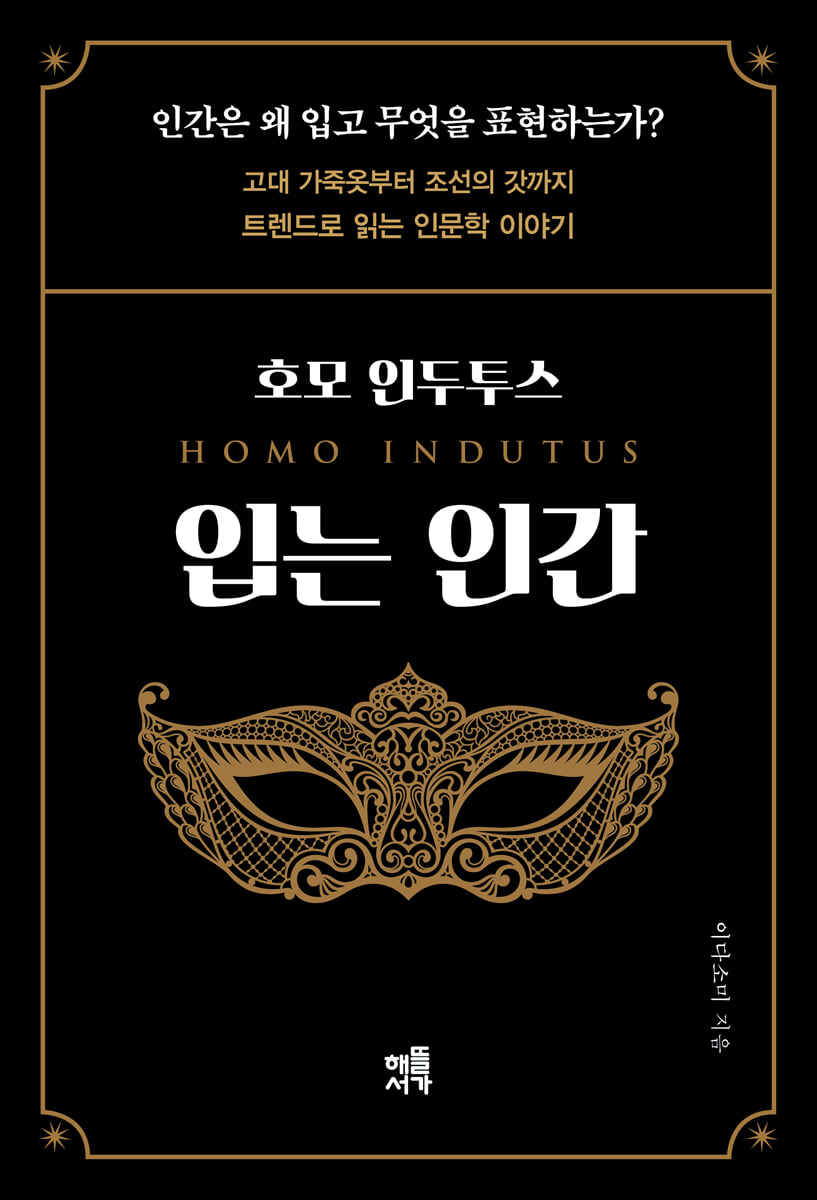
Wearing human
 |
Description
Book Introduction
Why do humans wear clothes and what do they express?
The trousers invented by nomads, the pouch of a crusader soldier, the codpiece of Henry VIII,
From scarlett and corsets, to Andre Kim's white dress, to the Joseon hat that captivated the 21st century.
A humanities story unfolds through 26 trends!
Why did humans start wearing clothes?
The author opens the book with this question.
Through the story of good and evil in the Book of Genesis, the shame of the naked body and protection from the external environment are summarized as the reasons why humans began to wear clothes.
The clothes created in this way develop beyond necessity into beings that represent human desires.
For the common people, clothes were a tool for survival, but for those who had wealth and power, they were a symbol of social status and authority.
Although the shape of clothes changes in various ways according to time and trends, the essence remains simple.
Clothing is a culmination of human needs and desires, and a cultural symbol representing individuals and the times.
To convey this meaning, the author created the concept of 'Homo Indutus', a human being who wears clothes.
So this book is not just a story about clothes, but a story about people living in a certain era.
This book contains '26 trend stories that mankind has worn and expressed' throughout the long history, from the story of good and evil in the Book of Genesis in the Bible, to the trousers of nomadic peoples, Egyptian loincloth, the pouch of a crusader soldier, the codpiece of Henry VIII, the stockings of Louis XIV, the dresses of the empresses of Eugenie and Sissi, Frida Kahlo's Tehuana style, André Kim's white clothes, and the hat of the Joseon Dynasty that people around the world are crazy about.
The croquis drawings drawn by the author himself added to the fun of viewing.
As we explore and follow the insights into what humanity has worn and expressed across history hundreds and thousands of years ago, we realize that the K-culture that has captivated the world today is no accident.
I recommend this book to anyone who wants to learn about major events in human history in one volume, or to anyone who thirsts for a humanities book that they can read without feeling burdened.
The trousers invented by nomads, the pouch of a crusader soldier, the codpiece of Henry VIII,
From scarlett and corsets, to Andre Kim's white dress, to the Joseon hat that captivated the 21st century.
A humanities story unfolds through 26 trends!
Why did humans start wearing clothes?
The author opens the book with this question.
Through the story of good and evil in the Book of Genesis, the shame of the naked body and protection from the external environment are summarized as the reasons why humans began to wear clothes.
The clothes created in this way develop beyond necessity into beings that represent human desires.
For the common people, clothes were a tool for survival, but for those who had wealth and power, they were a symbol of social status and authority.
Although the shape of clothes changes in various ways according to time and trends, the essence remains simple.
Clothing is a culmination of human needs and desires, and a cultural symbol representing individuals and the times.
To convey this meaning, the author created the concept of 'Homo Indutus', a human being who wears clothes.
So this book is not just a story about clothes, but a story about people living in a certain era.
This book contains '26 trend stories that mankind has worn and expressed' throughout the long history, from the story of good and evil in the Book of Genesis in the Bible, to the trousers of nomadic peoples, Egyptian loincloth, the pouch of a crusader soldier, the codpiece of Henry VIII, the stockings of Louis XIV, the dresses of the empresses of Eugenie and Sissi, Frida Kahlo's Tehuana style, André Kim's white clothes, and the hat of the Joseon Dynasty that people around the world are crazy about.
The croquis drawings drawn by the author himself added to the fun of viewing.
As we explore and follow the insights into what humanity has worn and expressed across history hundreds and thousands of years ago, we realize that the K-culture that has captivated the world today is no accident.
I recommend this book to anyone who wants to learn about major events in human history in one volume, or to anyone who thirsts for a humanities book that they can read without feeling burdened.
- You can preview some of the book's contents.
Preview
index
prolog
01 The world's first designer
02 The Scythian queen's conical hat, the Roman general's red feather helmet
03 Nomadic peoples invent trousers
04 Maximum Practicality & Minimum Protection: Egyptian Workers' Loincloth
05 Draping, the aesthetics of luxury that began in Greece
06 Seo Hyeon-su of the Northern Qi Dynasty, a witness to the exchange of Eastern and Western civilizations
07 Fur (1): Beyond survival, as a symbol of social status
08 Fur (2): Power, Wealth, and Modern Desire
09 Silk Road and Fur Road
10 What did the Crusaders carry in their pouches?
11 Leonardo and Botticelli, the legacy of two masters
12 Henry VIII, the absolute ruler who enjoyed exaggerated fashion
13 Mary and Elizabeth, fashion styles as contrasting as their personalities
14 The Correlation Between Louis XIV's Stockings and Absolute Monarchy
15 Why Marie Antoinette Appeared at the Olympics with Her Severed Head
16 Eugenie and Sissi, the Empress of Romanticism's Dress
17 Why did Scarlett tighten her waist?
Hermes, a legend in the world of luxury goods that began with a saddle
19 The trench coat that protected the British army during World War I
20 Revolution Wears Red Frida
21 Chanel and Schiaparelli: The Fashion Showdown of the Century
22 Things to Remember Before the Prada Craze: The Shadow of the Chemical Fiber Revolution
23 The Women in Miniskirts, Mary Quant and Yoon Bok-hee
24 The White Clothes of the Korean People and Andre Kim
25 The Star of Bad Boy Gaultier, Madonna's Cone-Shaped Bra
26 Joseon's Hat Captivates the 21st Century
Epilogue
01 The world's first designer
02 The Scythian queen's conical hat, the Roman general's red feather helmet
03 Nomadic peoples invent trousers
04 Maximum Practicality & Minimum Protection: Egyptian Workers' Loincloth
05 Draping, the aesthetics of luxury that began in Greece
06 Seo Hyeon-su of the Northern Qi Dynasty, a witness to the exchange of Eastern and Western civilizations
07 Fur (1): Beyond survival, as a symbol of social status
08 Fur (2): Power, Wealth, and Modern Desire
09 Silk Road and Fur Road
10 What did the Crusaders carry in their pouches?
11 Leonardo and Botticelli, the legacy of two masters
12 Henry VIII, the absolute ruler who enjoyed exaggerated fashion
13 Mary and Elizabeth, fashion styles as contrasting as their personalities
14 The Correlation Between Louis XIV's Stockings and Absolute Monarchy
15 Why Marie Antoinette Appeared at the Olympics with Her Severed Head
16 Eugenie and Sissi, the Empress of Romanticism's Dress
17 Why did Scarlett tighten her waist?
Hermes, a legend in the world of luxury goods that began with a saddle
19 The trench coat that protected the British army during World War I
20 Revolution Wears Red Frida
21 Chanel and Schiaparelli: The Fashion Showdown of the Century
22 Things to Remember Before the Prada Craze: The Shadow of the Chemical Fiber Revolution
23 The Women in Miniskirts, Mary Quant and Yoon Bok-hee
24 The White Clothes of the Korean People and Andre Kim
25 The Star of Bad Boy Gaultier, Madonna's Cone-Shaped Bra
26 Joseon's Hat Captivates the 21st Century
Epilogue
Detailed image

Into the book
Rather than trembling with betrayal and resentment towards those who did not follow his words, he made clothes for them.
That too, directly.
Indeed, leather clothing is incomparably stronger than a skirt made of fig leaves.
Therefore, the first designer of mankind was God.
--- p.14~15
Fur was the most practical and meaningful result of mankind's struggle with nature.
Successfully hunting and obtaining an animal means securing both food and clothing.
Only by hunting animals to eat and taking their skins to protect ourselves could mankind flourish.
--- p.65~66
The religious cause of 'recapturing the Holy Land, Jerusalem' became the impetus for knights, soldiers, merchants, and pilgrims to travel to the East in large numbers.
They wore crosses on their bodies to express their faith, and painted them on their clothes or shields.
That's why they were called the Crusades.
As they were going on a long journey, the soldiers carried bags containing the necessary belongings on their person.
--- p.94
The reason why Louis XIV's hose are particularly eye-catching is because of his slender and long legs.
He had a smooth, feminine line, rather than a muscular figure like Henry VIII.
Thanks to having practiced ballet for a long time, she had perfect lines and posture like a ballerina.
Maybe that's why.
He is considered a king who particularly loved horses.
--- p.129~130
Many women of that era would have worn corsets to maximize their beauty and to be chosen by men.
But Scarlett O'Hara wasn't like that.
For her, the corset was not a bondage, but rather an armor that protected her from the harsh reality.
--- p.159
Frida had a great sense of color.
The clothes Frida wore and the colors she used in her work were a means of expressing her life, a life filled with countless intersections of love and pain.
This can be inferred from the fact that the colors of her works and clothes became more intense after she married Diego.
--- p.180
In fact, short skirts first appeared in the 1920s.
However, it was Quant who coined the term 'miniskirt' and made it popular worldwide.
Mary Quant viewed the miniskirt not simply as clothing, but as a means of bringing out the free spirit of women in an oppressed social atmosphere.
--- p.207
The hat was a cultural symbol that well represented the Joseon Dynasty.
There are many proverbs related to gat, such as, “I went to buy a hat but ended up buying a manggeon” and “Why would you wear a hat and poop when you’re in a hurry?” and the satire related to gat is recorded in pansori and novels, showing that gat was an inseparable part of our people’s daily lives.
That too, directly.
Indeed, leather clothing is incomparably stronger than a skirt made of fig leaves.
Therefore, the first designer of mankind was God.
--- p.14~15
Fur was the most practical and meaningful result of mankind's struggle with nature.
Successfully hunting and obtaining an animal means securing both food and clothing.
Only by hunting animals to eat and taking their skins to protect ourselves could mankind flourish.
--- p.65~66
The religious cause of 'recapturing the Holy Land, Jerusalem' became the impetus for knights, soldiers, merchants, and pilgrims to travel to the East in large numbers.
They wore crosses on their bodies to express their faith, and painted them on their clothes or shields.
That's why they were called the Crusades.
As they were going on a long journey, the soldiers carried bags containing the necessary belongings on their person.
--- p.94
The reason why Louis XIV's hose are particularly eye-catching is because of his slender and long legs.
He had a smooth, feminine line, rather than a muscular figure like Henry VIII.
Thanks to having practiced ballet for a long time, she had perfect lines and posture like a ballerina.
Maybe that's why.
He is considered a king who particularly loved horses.
--- p.129~130
Many women of that era would have worn corsets to maximize their beauty and to be chosen by men.
But Scarlett O'Hara wasn't like that.
For her, the corset was not a bondage, but rather an armor that protected her from the harsh reality.
--- p.159
Frida had a great sense of color.
The clothes Frida wore and the colors she used in her work were a means of expressing her life, a life filled with countless intersections of love and pain.
This can be inferred from the fact that the colors of her works and clothes became more intense after she married Diego.
--- p.180
In fact, short skirts first appeared in the 1920s.
However, it was Quant who coined the term 'miniskirt' and made it popular worldwide.
Mary Quant viewed the miniskirt not simply as clothing, but as a means of bringing out the free spirit of women in an oppressed social atmosphere.
--- p.207
The hat was a cultural symbol that well represented the Joseon Dynasty.
There are many proverbs related to gat, such as, “I went to buy a hat but ended up buying a manggeon” and “Why would you wear a hat and poop when you’re in a hurry?” and the satire related to gat is recorded in pansori and novels, showing that gat was an inseparable part of our people’s daily lives.
--- p.235
GOODS SPECIFICS
- Date of issue: December 1, 2025
- Page count, weight, size: 244 pages | 128*188*20mm
- ISBN13: 9791198528384
- ISBN10: 1198528389
You may also like
카테고리
korean


korean

![GQ KOREA Mark (Monthly): December [2025]](http://librairie.coreenne.fr/cdn/shop/files/8ef265dbbfbf186523ed75ba7319009d.jpg?v=1765340328&width=3840)


