

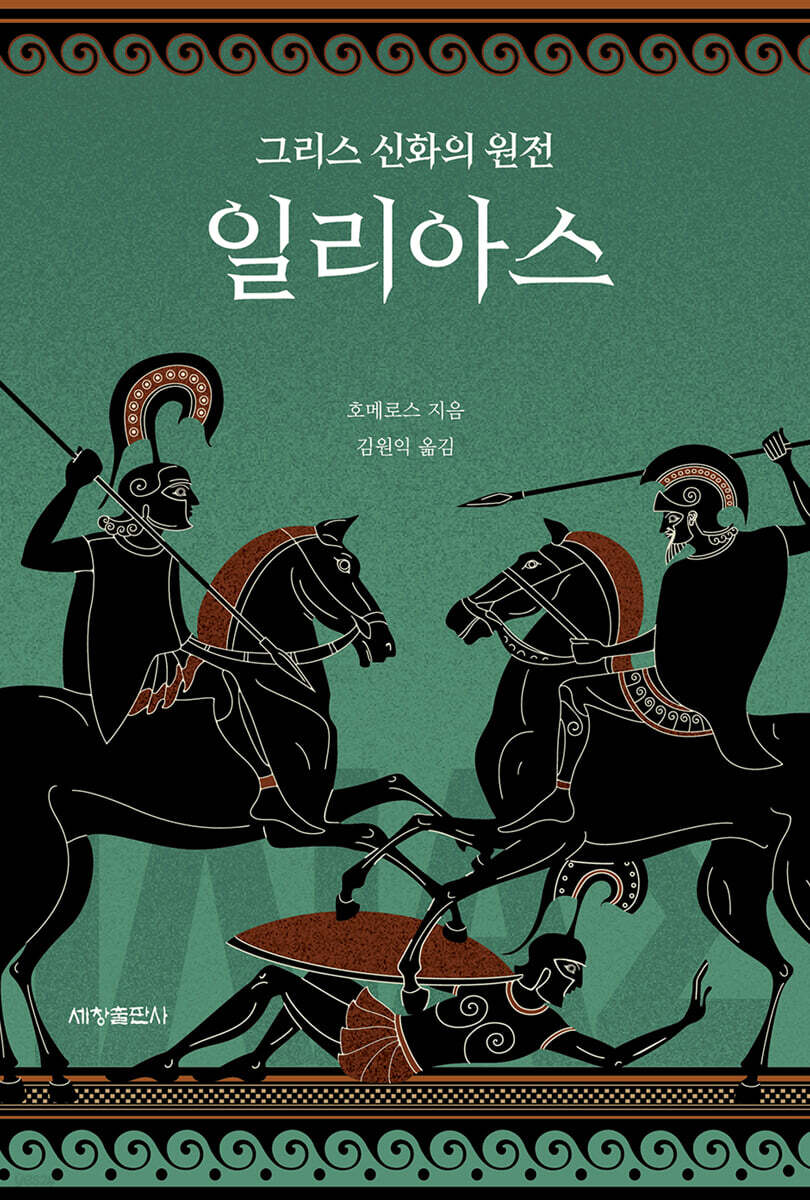
The Iliad: The Original Greek Myth
 |
Description
Book Introduction
The Iliad, the source of ancient Greek civilization, is the starting point of Greek mythology and epic literature and a fundamental text that forms the spirit of Western literature.
The wrath of Achilles, the nobility of Hector, the cunning of the gods, and the fate of man, which resonated on the battlefield thousands of years ago, still leave an overwhelming impression on today's readers.
But the nuclear power plant often felt difficult and distant.
"The Iliad: The Original Source of Greek Mythology" is a book that fills that gap.
Professor Wonik Kim, a researcher of mythology, has revived the Iliad in a 'translation' that is accessible to everyone, faithfully preserving the core and metaphors of the original text while smoothly translating them into modern Korean.
The most notable feature of this translation is that it meticulously addresses the difficulties that hindered the flow of reading without compromising the original text's flavor.
The relationships between characters, mythical episodes that were only mentioned in fragments, and narrative gaps were naturally filled in, allowing readers to view the narrative at a glance.
By first summarizing the contents of each volume and then reading the text that follows, you can follow the flow of the Trojan War more clearly.
The rich commentary and visual materials, including a prologue, epilogue, reception history, family tree, and map, greatly expand understanding of the work's background, era, mythology, and characters.
German poet Heinrich Voss (J.
Based on the German translation by H. Voss, the depth of the original translation is preserved, and the sensuous description vividly revives the narrative power of the original.
For readers who want to properly understand the source of Greek mythology, this book will be a reliable guide.
The wrath of Achilles, the nobility of Hector, the cunning of the gods, and the fate of man, which resonated on the battlefield thousands of years ago, still leave an overwhelming impression on today's readers.
But the nuclear power plant often felt difficult and distant.
"The Iliad: The Original Source of Greek Mythology" is a book that fills that gap.
Professor Wonik Kim, a researcher of mythology, has revived the Iliad in a 'translation' that is accessible to everyone, faithfully preserving the core and metaphors of the original text while smoothly translating them into modern Korean.
The most notable feature of this translation is that it meticulously addresses the difficulties that hindered the flow of reading without compromising the original text's flavor.
The relationships between characters, mythical episodes that were only mentioned in fragments, and narrative gaps were naturally filled in, allowing readers to view the narrative at a glance.
By first summarizing the contents of each volume and then reading the text that follows, you can follow the flow of the Trojan War more clearly.
The rich commentary and visual materials, including a prologue, epilogue, reception history, family tree, and map, greatly expand understanding of the work's background, era, mythology, and characters.
German poet Heinrich Voss (J.
Based on the German translation by H. Voss, the depth of the original translation is preserved, and the sensuous description vividly revives the narrative power of the original.
For readers who want to properly understand the source of Greek mythology, this book will be a reliable guide.
- You can preview some of the book's contents.
Preview
index
To the readers of the book
prolog
Book 1: The Wrath of Achilles, the feud between Achilles and Agamemnon
Book 2: Agamemnon's false proposal for withdrawal, and the list of Greek and Trojan generals.
Book 3: The duel between Paris and Menelaus over Helen
Book IV: The Trojans Break Their Oath, and the First Battle Between the Greeks and the Trojans
Book 5: Aphrodite and Ares are wounded by Diomedes' attack.
Book 6: Hector rebukes Paris for his weakness, and Hector and Andromache part ways.
Book 7: The single duel between Ajax and Hector, and the construction of the Greek wall and moat.
Book 8: Hector pushes the Greeks back to the wall, while Hera and Athena fret.
Book 9: Achilles rejects Agamemnon's request for reconciliation sent by the embassy.
Book 10: The Deeds of Odysseus and Diomedes, Who Volunteered to Scout the Trojan Army
Book 11: The Rise of the Greek Generals, Including Agamemnon, Diomedes, and Odysseus
Book 12 Hector finally breaks through the wall and drives the Greeks towards the ships.
Book 13: Ajax and Hector engage in a fierce battle between the walls and ships.
Book 14: Hera puts Zeus to sleep on Mount Ida with Aphrodite's girdle
Book 15: Hector and Ajax engage in a fierce battle over the ships of Protesilaus.
Book 16: Patroclus, wearing Achilles' armor, pursues the Trojans and dies.
Book 17: Menelaus carrying Patroclus' body on his shoulders
Book 18: Achilles vows revenge, and Hephaestus forges Achilles' armor.
Book 19: Achilles vents his anger on Agamemnon and sets out to punish Hector.
Book 20: Poseidon and Apollo Save the Lives of Aeneas and Hector
Book 21: Xanthus attacks Achilles, and the gods are divided into two groups.
Book 22: The one-on-one duel between Achilles and Hector, with Hector's body being dragged by Achilles' chariot.
Book 23: The Funeral of Patroclus and the Funeral Games Held in His Honor
Book 24: Priam begs for the return of Hector's body, and Hector's funeral.
Epilogue
receptionist
Genealogy of the gods according to Hesiod's Theogony
Primordial gods, Titans, Olympians
Comparison of Roman and English Names of Greek Gods
prolog
Book 1: The Wrath of Achilles, the feud between Achilles and Agamemnon
Book 2: Agamemnon's false proposal for withdrawal, and the list of Greek and Trojan generals.
Book 3: The duel between Paris and Menelaus over Helen
Book IV: The Trojans Break Their Oath, and the First Battle Between the Greeks and the Trojans
Book 5: Aphrodite and Ares are wounded by Diomedes' attack.
Book 6: Hector rebukes Paris for his weakness, and Hector and Andromache part ways.
Book 7: The single duel between Ajax and Hector, and the construction of the Greek wall and moat.
Book 8: Hector pushes the Greeks back to the wall, while Hera and Athena fret.
Book 9: Achilles rejects Agamemnon's request for reconciliation sent by the embassy.
Book 10: The Deeds of Odysseus and Diomedes, Who Volunteered to Scout the Trojan Army
Book 11: The Rise of the Greek Generals, Including Agamemnon, Diomedes, and Odysseus
Book 12 Hector finally breaks through the wall and drives the Greeks towards the ships.
Book 13: Ajax and Hector engage in a fierce battle between the walls and ships.
Book 14: Hera puts Zeus to sleep on Mount Ida with Aphrodite's girdle
Book 15: Hector and Ajax engage in a fierce battle over the ships of Protesilaus.
Book 16: Patroclus, wearing Achilles' armor, pursues the Trojans and dies.
Book 17: Menelaus carrying Patroclus' body on his shoulders
Book 18: Achilles vows revenge, and Hephaestus forges Achilles' armor.
Book 19: Achilles vents his anger on Agamemnon and sets out to punish Hector.
Book 20: Poseidon and Apollo Save the Lives of Aeneas and Hector
Book 21: Xanthus attacks Achilles, and the gods are divided into two groups.
Book 22: The one-on-one duel between Achilles and Hector, with Hector's body being dragged by Achilles' chariot.
Book 23: The Funeral of Patroclus and the Funeral Games Held in His Honor
Book 24: Priam begs for the return of Hector's body, and Hector's funeral.
Epilogue
receptionist
Genealogy of the gods according to Hesiod's Theogony
Primordial gods, Titans, Olympians
Comparison of Roman and English Names of Greek Gods
Into the book
One of the questions I often get from readers is what the original Greek mythology is.
That's BC
The Iliad and the Odyssey were written by the Greek poet Homer around the 8th century.
In other words, the original texts of all books on Greek mythology around the world, including the numerous works of the three great tragedians of ancient Greece, the Roman poet Ovid's Metamorphoses, Bulfinch's Greek and Roman Mythology in the 19th century English-speaking world, Schwab's Greek and Roman Mythology in the German-speaking world, Lee Yun-gi's Greek and Roman Mythology, and Kim Won-ik's Greek Mythology 1, 2, are the Iliad and the Odyssey.
That is why it is essential to properly understand these two works in order to properly understand Greek mythology.
--- p.4
Homer's Iliad begins with Achilles' anger, which arises from a feud between Achilles, the greatest general of the Greek army, and Agamemnon, the commander-in-chief, over the spoils of war, and ends with the death of Hector, the mighty general of Troy.
Because Hector's death was ultimately a product of Achilles' anger, scholars call the Iliad the "Book of Wrath."
The Trojan War originally lasted ten years.
But Homer does not begin his story until the tenth year, nine years later.
That doesn't mean the story takes place throughout this last year.
Excluding the days when there was no war, it covers only about 50 days out of that year.
--- p.45
The bravest of the Greek generals was undoubtedly Achilles.
But while Achilles, enraged by Agamemnon's actions, withdrew from the war and shut himself up in his tent, Telamon's son, the elder Ajax, was in a unique position.
Achilles was not the only one left out of this general offensive.
Protesilaus was the first to jump onto the Trojan beach during the landing and was killed by the Trojan general Aeneas.
Philoctetes also had to disembark on the island of Lemnos when the Greek ships stopped briefly at the island of Chryse on their way to Troy because his feet stank from a snake bite.
So Protesilaus's army was commanded by his brother Podarces, and Philoctetes' army was commanded by Medon, son of Oileus.
--- p.76
As Hector was about to leave the Skye Gate, his brother Paris came running from behind him.
Paris apologized to his brother for making him wait so long.
Hector felt it necessary to comfort Paris' heart.
So I told Paris that although he knew he was fighting bravely, it really hurt when he heard his allies criticizing him behind his back.
Then he patted his shoulder and said that they should fight hard together to drive the Greeks out of Troy and clear up the misunderstanding among our allies. Then he led the way out of the city gate.
--- p.142
“Oh, Nestor, glory of our Achaean army, Athena, if she had chosen, would have easily given you better words than these.
Because He is omnipotent.
But these horses, Nestor, of which you are curious, are the horses of Thrace, which the brave Diomedes took from his master, King Rhesus, after he had killed him.
He also killed 12 of the king's men.
We also killed another Trojan soldier on our way to the Trojan camp, a scout named Dolon, whom Hector had sent to our camp.”
That's BC
The Iliad and the Odyssey were written by the Greek poet Homer around the 8th century.
In other words, the original texts of all books on Greek mythology around the world, including the numerous works of the three great tragedians of ancient Greece, the Roman poet Ovid's Metamorphoses, Bulfinch's Greek and Roman Mythology in the 19th century English-speaking world, Schwab's Greek and Roman Mythology in the German-speaking world, Lee Yun-gi's Greek and Roman Mythology, and Kim Won-ik's Greek Mythology 1, 2, are the Iliad and the Odyssey.
That is why it is essential to properly understand these two works in order to properly understand Greek mythology.
--- p.4
Homer's Iliad begins with Achilles' anger, which arises from a feud between Achilles, the greatest general of the Greek army, and Agamemnon, the commander-in-chief, over the spoils of war, and ends with the death of Hector, the mighty general of Troy.
Because Hector's death was ultimately a product of Achilles' anger, scholars call the Iliad the "Book of Wrath."
The Trojan War originally lasted ten years.
But Homer does not begin his story until the tenth year, nine years later.
That doesn't mean the story takes place throughout this last year.
Excluding the days when there was no war, it covers only about 50 days out of that year.
--- p.45
The bravest of the Greek generals was undoubtedly Achilles.
But while Achilles, enraged by Agamemnon's actions, withdrew from the war and shut himself up in his tent, Telamon's son, the elder Ajax, was in a unique position.
Achilles was not the only one left out of this general offensive.
Protesilaus was the first to jump onto the Trojan beach during the landing and was killed by the Trojan general Aeneas.
Philoctetes also had to disembark on the island of Lemnos when the Greek ships stopped briefly at the island of Chryse on their way to Troy because his feet stank from a snake bite.
So Protesilaus's army was commanded by his brother Podarces, and Philoctetes' army was commanded by Medon, son of Oileus.
--- p.76
As Hector was about to leave the Skye Gate, his brother Paris came running from behind him.
Paris apologized to his brother for making him wait so long.
Hector felt it necessary to comfort Paris' heart.
So I told Paris that although he knew he was fighting bravely, it really hurt when he heard his allies criticizing him behind his back.
Then he patted his shoulder and said that they should fight hard together to drive the Greeks out of Troy and clear up the misunderstanding among our allies. Then he led the way out of the city gate.
--- p.142
“Oh, Nestor, glory of our Achaean army, Athena, if she had chosen, would have easily given you better words than these.
Because He is omnipotent.
But these horses, Nestor, of which you are curious, are the horses of Thrace, which the brave Diomedes took from his master, King Rhesus, after he had killed him.
He also killed 12 of the king's men.
We also killed another Trojan soldier on our way to the Trojan camp, a scout named Dolon, whom Hector had sent to our camp.”
--- p.196
Publisher's Review
Preserving the essence of the original text while removing its complexity.
The Iliad Revived in an Easy-to-Read Translation
The Iliad, the source of ancient Greek civilization, is the starting point of Greek mythology and epic literature and a fundamental text that forms the spirit of Western literature.
The wrath of Achilles, the nobility of Hector, the cunning of the gods, and the fate of man, which resonated on the battlefield thousands of years ago, still leave an overwhelming impression on today's readers.
But nuclear power often feels difficult and distant.
"The Iliad: The Original Source of Greek Mythology" is a book that fills that gap.
Professor Wonik Kim, a researcher of mythology, has revived the Iliad in a 'translation' that is accessible to everyone, faithfully preserving the core and metaphors of the original text while smoothly translating them into modern Korean.
The most notable feature of this translation is that it meticulously addresses the difficulties that hindered the flow of reading without compromising the original text's flavor.
The relationships between characters, mythical episodes that were only mentioned in fragments, and narrative gaps were naturally filled in, allowing readers to view the narrative at a glance.
By first summarizing the contents of each volume and then reading the text that follows, you can follow the flow of the Trojan War more clearly.
The rich commentary and visual materials, including a prologue, epilogue, reception history, family tree, and map, greatly expand understanding of the work's background, era, mythology, and characters.
German poet Heinrich Voss (J.
Based on the German translation by H. Voss, the depth of the original translation is preserved, and the sensuous description vividly revives the narrative power of the original.
For readers who want to properly understand the source of Greek mythology, this book will be a reliable guide.
With genealogies, maps, and paintings of Greek gods
Reading the 'Three-Dimensional Iliad' as a Narrative
This book helps readers immerse themselves with rich commentary and visual materials, including a prologue, epilogue, a history of acceptance, a family tree of gods and heroes, maps, and related famous paintings.
The world of BC is vividly revived across time and space.
The story is organized in detail, from the context before the Trojan War, to the judgment of Paris, the secret of Achilles' birth, and the conflict between Hera, Athena, and Aphrodite, so that even readers new to the original text can easily follow along.
The composition that three-dimensionally connects mythology, history, and culture persuasively demonstrates why the Iliad is called the “root of all stories.”
As readers read this book, they encounter the ethics and emotions of an ancient world where war, honor, divine intervention, and human choice are constantly intertwined.
The Iliad is not just an ancient text; it asks fundamental questions about what humans have loved, lost, and lived for.
The Iliad Revived in an Easy-to-Read Translation
The Iliad, the source of ancient Greek civilization, is the starting point of Greek mythology and epic literature and a fundamental text that forms the spirit of Western literature.
The wrath of Achilles, the nobility of Hector, the cunning of the gods, and the fate of man, which resonated on the battlefield thousands of years ago, still leave an overwhelming impression on today's readers.
But nuclear power often feels difficult and distant.
"The Iliad: The Original Source of Greek Mythology" is a book that fills that gap.
Professor Wonik Kim, a researcher of mythology, has revived the Iliad in a 'translation' that is accessible to everyone, faithfully preserving the core and metaphors of the original text while smoothly translating them into modern Korean.
The most notable feature of this translation is that it meticulously addresses the difficulties that hindered the flow of reading without compromising the original text's flavor.
The relationships between characters, mythical episodes that were only mentioned in fragments, and narrative gaps were naturally filled in, allowing readers to view the narrative at a glance.
By first summarizing the contents of each volume and then reading the text that follows, you can follow the flow of the Trojan War more clearly.
The rich commentary and visual materials, including a prologue, epilogue, reception history, family tree, and map, greatly expand understanding of the work's background, era, mythology, and characters.
German poet Heinrich Voss (J.
Based on the German translation by H. Voss, the depth of the original translation is preserved, and the sensuous description vividly revives the narrative power of the original.
For readers who want to properly understand the source of Greek mythology, this book will be a reliable guide.
With genealogies, maps, and paintings of Greek gods
Reading the 'Three-Dimensional Iliad' as a Narrative
This book helps readers immerse themselves with rich commentary and visual materials, including a prologue, epilogue, a history of acceptance, a family tree of gods and heroes, maps, and related famous paintings.
The world of BC is vividly revived across time and space.
The story is organized in detail, from the context before the Trojan War, to the judgment of Paris, the secret of Achilles' birth, and the conflict between Hera, Athena, and Aphrodite, so that even readers new to the original text can easily follow along.
The composition that three-dimensionally connects mythology, history, and culture persuasively demonstrates why the Iliad is called the “root of all stories.”
As readers read this book, they encounter the ethics and emotions of an ancient world where war, honor, divine intervention, and human choice are constantly intertwined.
The Iliad is not just an ancient text; it asks fundamental questions about what humans have loved, lost, and lived for.
GOODS SPECIFICS
- Date of issue: November 14, 2025
- Page count, weight, size: 460 pages | 152*225*30mm
- ISBN13: 9791166844591
- ISBN10: 1166844595
You may also like
카테고리
korean


korean

![GQ KOREA Mark (Monthly): December [2025]](http://librairie.coreenne.fr/cdn/shop/files/8ef265dbbfbf186523ed75ba7319009d.jpg?v=1765340328&width=3840)


