

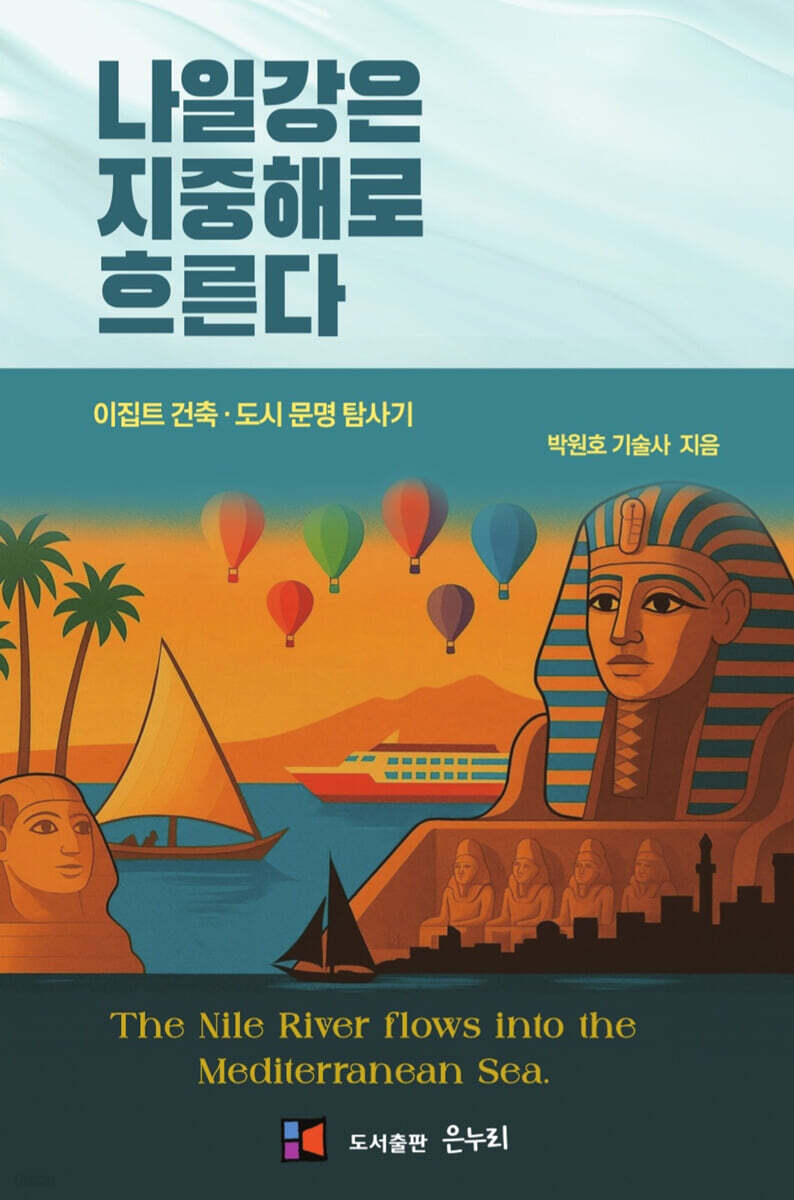
The Nile River flows into the Mediterranean Sea
 |
Description
Book Introduction
The Nile River flows through the hot desert wind, and on it flows the soul of a craftsman who is stronger than the pyramids.
We revisit the work of ancient craftsmen who built the world's oldest golden pagoda with hammers, chisels, and drops of sweat, through the eyes of today's engineers.
The temple was an ancient, cutting-edge construction site, and the obelisk was a super-tall structure representing its time.
“If there were no Nile, there would be no pyramids and no pyramid tourism!”
The author, an architect, civil engineer, and poet, humorously connects the ancient and modern world.
This book offers a depth you can never expect from other guide books or YouTube.
This is a book of exploration and exploration into the mysteries of civilization from the perspective of a construction engineer and a poet, and a commentary on civilization mixed with the poet's esprit.
Like the flood of the Nile, laughter and insight overflow together.
We revisit the work of ancient craftsmen who built the world's oldest golden pagoda with hammers, chisels, and drops of sweat, through the eyes of today's engineers.
The temple was an ancient, cutting-edge construction site, and the obelisk was a super-tall structure representing its time.
“If there were no Nile, there would be no pyramids and no pyramid tourism!”
The author, an architect, civil engineer, and poet, humorously connects the ancient and modern world.
This book offers a depth you can never expect from other guide books or YouTube.
This is a book of exploration and exploration into the mysteries of civilization from the perspective of a construction engineer and a poet, and a commentary on civilization mixed with the poet's esprit.
Like the flood of the Nile, laughter and insight overflow together.
index
prolog
Nile and Mediterranean Trade (Cartoon)
Egyptian civilization fostered by the Nile River
Part 1 - From Aswan to Abu Simbel
Cairo's Transformation
Unraveling the Mysteries of the Nile Civilization
Eye of Horus #1.
Are 99% of the relics sleeping under the desert?
Nile City, at a restaurant on the Nile River
Couple statues at the Cairo National Museum
The Nile Flood: The Light and Shadow of Egyptian Civilization
Eye of Horus #2 Why did Herodotus explore the Nile?
Aswan Quarries, Broken Obelisks Lying Down
Eye of Horus #3.
Is the Stonemason's fairy tale the first 'gaslighting'?
The stonemason who carved the face of the Pharaoh
Eye of Horus #4.
Are there more obelisks standing in Rome?
Abu Simbel Temple: A New Myth
Ramses' Night Sales
Part 2 - Nile Cruise and Luxor Temple
The Light and Dark Side of a Nile River Cruise
Eye of Horus #5.
Exchange between Mediterranean and Nile civilizations
Luxor Temple, standing at the heart of the city of the gods
Between Karnak Temple and Luxor Temple
Eye of Horus #6.
Egyptian Masons, the Progenitors of Freemasonry?
The Colossus of Memnon, a Transformer robot?
Nubian Village, a colorful village on the banks of the Nile
It's showtime for Nubians today too!
Into the Valley of the Kings
Stone masons' stone finishing work
Eye of Horus #7.
How long did the mummy method last?
An immortal masterpiece! Hatshepsut's mortuary temple
The Story of Hatshepsut, Queen and Pharaoh
The Secret of Tutankhamun, the King Hidden in the Sand
Nilometer and Harvest Forecasting
Why do Nile cruises only go to Luxor?
Luxor Hot Air Balloon Experience
The world seen from a hot air balloon (satirical poem)
Eye of Horus #8.
Are cruise ships and carriages symbiotic?
Part 3 - Hurghada, Giza, and Cairo: The Red Sea's Star Wars
Hurghada, a paradise on the Red Sea
Hurghada Seawater Desalination Plant
Eye of Horus #9.
Memories of Shuaiba Beach
Dancing Soul, A Story of Sufist Dance (Satire)
[Pyramid Edition]
Memphis Museum, Is This Ramses II's Private Bedroom?
Step Pyramid of Djoser
How and to what extent did the pyramids change?
How Were the Pyramids Built? (7 Questions, 7 Answers)
Eye of Horus #10.
Imhotep, the immortal architect!
The Giza Pyramids, a product of division of labor in 2500 BC
The Table of the Pharaoh's Descendants
[Cairo]
Cairo, the strange charm amidst chaos
If you're tired of life, go to the traditional market.
Cairo's Tahrir Square, the center of Egypt's transformation
New Cairo, the new administrative capital: expectations and concerns
Eye of Horus #11.
Regarding the Nile River water dispute
The Qatarra Depression Project: A 21st-Century Pharaoh's Dream
The 21st Century Pharaoh's Dream
Korea in Egypt: A Future Opened Through Construction
Epilogue
Unraveling the Mysteries of the Nile Civilization
References
Ⅰ.
Reference books
Ⅱ.
Films and documentaries set in Egypt
Nile and Mediterranean Trade (Cartoon)
Egyptian civilization fostered by the Nile River
Part 1 - From Aswan to Abu Simbel
Cairo's Transformation
Unraveling the Mysteries of the Nile Civilization
Eye of Horus #1.
Are 99% of the relics sleeping under the desert?
Nile City, at a restaurant on the Nile River
Couple statues at the Cairo National Museum
The Nile Flood: The Light and Shadow of Egyptian Civilization
Eye of Horus #2 Why did Herodotus explore the Nile?
Aswan Quarries, Broken Obelisks Lying Down
Eye of Horus #3.
Is the Stonemason's fairy tale the first 'gaslighting'?
The stonemason who carved the face of the Pharaoh
Eye of Horus #4.
Are there more obelisks standing in Rome?
Abu Simbel Temple: A New Myth
Ramses' Night Sales
Part 2 - Nile Cruise and Luxor Temple
The Light and Dark Side of a Nile River Cruise
Eye of Horus #5.
Exchange between Mediterranean and Nile civilizations
Luxor Temple, standing at the heart of the city of the gods
Between Karnak Temple and Luxor Temple
Eye of Horus #6.
Egyptian Masons, the Progenitors of Freemasonry?
The Colossus of Memnon, a Transformer robot?
Nubian Village, a colorful village on the banks of the Nile
It's showtime for Nubians today too!
Into the Valley of the Kings
Stone masons' stone finishing work
Eye of Horus #7.
How long did the mummy method last?
An immortal masterpiece! Hatshepsut's mortuary temple
The Story of Hatshepsut, Queen and Pharaoh
The Secret of Tutankhamun, the King Hidden in the Sand
Nilometer and Harvest Forecasting
Why do Nile cruises only go to Luxor?
Luxor Hot Air Balloon Experience
The world seen from a hot air balloon (satirical poem)
Eye of Horus #8.
Are cruise ships and carriages symbiotic?
Part 3 - Hurghada, Giza, and Cairo: The Red Sea's Star Wars
Hurghada, a paradise on the Red Sea
Hurghada Seawater Desalination Plant
Eye of Horus #9.
Memories of Shuaiba Beach
Dancing Soul, A Story of Sufist Dance (Satire)
[Pyramid Edition]
Memphis Museum, Is This Ramses II's Private Bedroom?
Step Pyramid of Djoser
How and to what extent did the pyramids change?
How Were the Pyramids Built? (7 Questions, 7 Answers)
Eye of Horus #10.
Imhotep, the immortal architect!
The Giza Pyramids, a product of division of labor in 2500 BC
The Table of the Pharaoh's Descendants
[Cairo]
Cairo, the strange charm amidst chaos
If you're tired of life, go to the traditional market.
Cairo's Tahrir Square, the center of Egypt's transformation
New Cairo, the new administrative capital: expectations and concerns
Eye of Horus #11.
Regarding the Nile River water dispute
The Qatarra Depression Project: A 21st-Century Pharaoh's Dream
The 21st Century Pharaoh's Dream
Korea in Egypt: A Future Opened Through Construction
Epilogue
Unraveling the Mysteries of the Nile Civilization
References
Ⅰ.
Reference books
Ⅱ.
Films and documentaries set in Egypt
Into the book
Freemason, it's a name everyone has probably heard at least once.
It is often associated with conspiracy theories and portrayed as a secret organization that runs the world.
But the original starting point was simple.
It originated from the stonemason guilds, or associations of craftsmen who built cathedrals and churches in medieval Europe.
They were skilled in geometry and surveying, and created their own rules and symbols.
Over time, it evolved beyond a simple professional group into a secret society, and today it has become a fixture in various legends and imaginations.
So, might we not ask the question: "Could it be that Freemasonry traces its roots back to the ancient Egyptian stonemasons?" After all, the craftsmen who built the pyramids were the first known group of stonemasons.
Let's examine this possibility from five perspectives.
The first is the technical aspect.
The skills of ancient Egyptian stonemasons were among the best in the world.
They built pyramids and temples by precisely processing and stacking huge stones weighing thousands of tons.
However, no evidence has been found that this technology was directly transferred to medieval Europe.
There is no record to prove a direct connection, as if the delivery invoice was cut off midway.
The second is the symbolic system.
Among the symbols of Freemasonry are the eye, the triangle, and the compass.
At first glance, this may be reminiscent of the ancient Egyptian 'Eye of Horus' or the pyramids.
However, rather than being a direct succession, it is more likely that Europeans borrowed it during the Renaissance out of admiration for the ancient Egyptian civilization.
in other words.
It is a recycling of ancient Egyptian designs. (omitted) - 'Were ancient Egyptian stonemasons the originators of Freemasonry?'
It is often associated with conspiracy theories and portrayed as a secret organization that runs the world.
But the original starting point was simple.
It originated from the stonemason guilds, or associations of craftsmen who built cathedrals and churches in medieval Europe.
They were skilled in geometry and surveying, and created their own rules and symbols.
Over time, it evolved beyond a simple professional group into a secret society, and today it has become a fixture in various legends and imaginations.
So, might we not ask the question: "Could it be that Freemasonry traces its roots back to the ancient Egyptian stonemasons?" After all, the craftsmen who built the pyramids were the first known group of stonemasons.
Let's examine this possibility from five perspectives.
The first is the technical aspect.
The skills of ancient Egyptian stonemasons were among the best in the world.
They built pyramids and temples by precisely processing and stacking huge stones weighing thousands of tons.
However, no evidence has been found that this technology was directly transferred to medieval Europe.
There is no record to prove a direct connection, as if the delivery invoice was cut off midway.
The second is the symbolic system.
Among the symbols of Freemasonry are the eye, the triangle, and the compass.
At first glance, this may be reminiscent of the ancient Egyptian 'Eye of Horus' or the pyramids.
However, rather than being a direct succession, it is more likely that Europeans borrowed it during the Renaissance out of admiration for the ancient Egyptian civilization.
in other words.
It is a recycling of ancient Egyptian designs. (omitted) - 'Were ancient Egyptian stonemasons the originators of Freemasonry?'
--- From the text
GOODS SPECIFICS
- Date of issue: November 5, 2025
- Page count, weight, size: Checking page count | 253g | 125*200*15mm
- ISBN13: 9791194718253
- ISBN10: 1194718256
You may also like
카테고리
korean


korean

![ELLE 엘르 스페셜 에디션 A형 : 12월 [2025]](http://librairie.coreenne.fr/cdn/shop/files/b8e27a3de6c9538896439686c6b0e8fb.jpg?v=1766436872&width=3840)


