

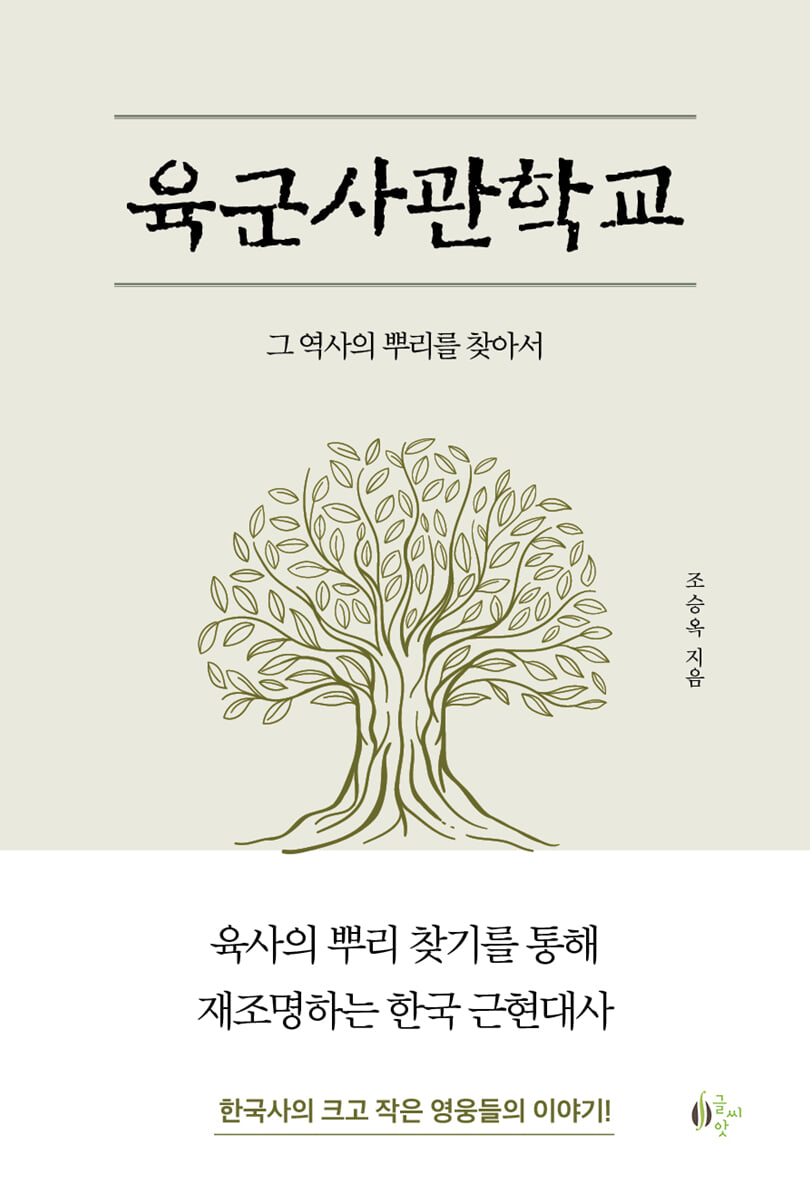
Korea Military Academy, In Search of Its Historical Roots
 |
Description
Book Introduction
"The Korea Military Academy, In Search of Its Historical Roots" is a masterpiece written over the past seven years by Seung-ok Cho, who served as a philosophy professor at the Korea Military Academy for over 30 years, based on empirical data and various testimonies.
So why did he embark on a quest to discover the roots of the Korea Military Academy? He explains his motivations in detail in the introduction to this book.
The era of military rule, during which three presidents who graduated from the Korea Military Academy were in power for over 30 years, ended and a civilian government was launched, leading to the Korea Military Academy experiencing an identity crisis. The author sought to find a solution to this crisis through the history of the Korea Military Academy.
As the writing was coming to a close, the issue of relocating the bust of General Hong Beom-do, which had been installed at the Military Academy, and the film 'Spring in Seoul' brought back the controversy surrounding the identity of the Military Academy.
Accordingly, the author suggested a path to a correct evaluation of General Hong Beom-do and added the task of organizing controversies regarding the roots and traditions of the Military Academy.
This book is woven with stories about the founding backgrounds and subjects, systems and education, and educators and graduates of military academies that appeared in modern and contemporary Korean history, starting with Yeonmu Park, the first military academy in Korea, in 1888, and continuing to the Republic of Korea Military Academy, which was re-established 37 years after the Korean Empire's Military Academy was forcibly closed by Japan in 1909.
Through this, the author concluded that the Republic of Korea Military Academy, with Yeonmu Park as its origin, inherits the human and spiritual context of the Korean Empire Military Academy, Shinheung Military Academy, the Republic of Korea and Provisional Government Military Academy, the Independence Army, and the Korean Liberation Army.
This book contains stories about the great and small heroes among the educators and graduates of military academies that appeared in modern and contemporary history.
They fought to protect their country's independence and to regain independence that had been taken away, and after regaining their country, they fought to protect the Republic of Korea.
Through a journey to discover the roots of the military academy, the author sheds new light on the turbulent modern and contemporary history of Korea and hints at what lessons we can learn today.
Based on the results of an examination of how the Korean military has performed and fought throughout modern and contemporary Korean history, the author presents empirical and theoretical evidence that the Republic of Korea Armed Forces is the successor to the Korean Empire Armed Forces, the Independence Army, and the Korean Liberation Army.
Lastly, the author's groundbreaking proposal to restore the Japanese name of 'Military Academy' to our own 'Military Academy' is also worth considering.
So why did he embark on a quest to discover the roots of the Korea Military Academy? He explains his motivations in detail in the introduction to this book.
The era of military rule, during which three presidents who graduated from the Korea Military Academy were in power for over 30 years, ended and a civilian government was launched, leading to the Korea Military Academy experiencing an identity crisis. The author sought to find a solution to this crisis through the history of the Korea Military Academy.
As the writing was coming to a close, the issue of relocating the bust of General Hong Beom-do, which had been installed at the Military Academy, and the film 'Spring in Seoul' brought back the controversy surrounding the identity of the Military Academy.
Accordingly, the author suggested a path to a correct evaluation of General Hong Beom-do and added the task of organizing controversies regarding the roots and traditions of the Military Academy.
This book is woven with stories about the founding backgrounds and subjects, systems and education, and educators and graduates of military academies that appeared in modern and contemporary Korean history, starting with Yeonmu Park, the first military academy in Korea, in 1888, and continuing to the Republic of Korea Military Academy, which was re-established 37 years after the Korean Empire's Military Academy was forcibly closed by Japan in 1909.
Through this, the author concluded that the Republic of Korea Military Academy, with Yeonmu Park as its origin, inherits the human and spiritual context of the Korean Empire Military Academy, Shinheung Military Academy, the Republic of Korea and Provisional Government Military Academy, the Independence Army, and the Korean Liberation Army.
This book contains stories about the great and small heroes among the educators and graduates of military academies that appeared in modern and contemporary history.
They fought to protect their country's independence and to regain independence that had been taken away, and after regaining their country, they fought to protect the Republic of Korea.
Through a journey to discover the roots of the military academy, the author sheds new light on the turbulent modern and contemporary history of Korea and hints at what lessons we can learn today.
Based on the results of an examination of how the Korean military has performed and fought throughout modern and contemporary Korean history, the author presents empirical and theoretical evidence that the Republic of Korea Armed Forces is the successor to the Korean Empire Armed Forces, the Independence Army, and the Korean Liberation Army.
Lastly, the author's groundbreaking proposal to restore the Japanese name of 'Military Academy' to our own 'Military Academy' is also worth considering.
- You can preview some of the book's contents.
Preview
index
Part 1 Yeonmu Park (1888-1894)
The first military academy in our country
1.
The emergence of modern military academies
The Aristocrats' and Technical Officers' Academy / The Abandonment of Aristocrats' Officers and the Emergence of Professional Officers / The Introduction of Military Academies in Korea, China, and Japan
2.
Yeonmu Park, Korea's first military academy
The opening of the country and the strengthening of military power / The establishment of the Byeolgi Army and the Im-o Incident: Attempts and frustrations of a modern army / The Gapsin Coup and the Treaty of Tianjin / Invitation of American military instructors / The opening of Yeonmu Park / A new path to becoming a military officer / Management difficulties and the closure of the school / Graduates of Yeonmu Park / Lee Hak-gyun, the 'father of the Korean Empire's Military Academy' / General Dai, a graduate of the US Military Academy
3.
Training Embassy Training Center and Geonyang Military Academy
The Gabo Reform and the introduction of a modern military system / The Central Army divided into training units and demonstration units / The Training and Embassy Training Institute / The dispatch of students to the Japanese Military Academy / The emergence of a new power, Russia, and the Eulmi Incident / The Konyang Military Academy
Part 2: Korean Empire Military Academy (1898-1909)
Producing independence movement leaders
1.
Establishment of the Korean Empire Military Academy
The birth of the Korean Empire / The National Military Academy desired by the Independence Association / Enactment and revision of the establishment law / 1,700 applicants for 200 positions / Instructors at the Korean Empire Military Academy / Educational goals and methods / Curriculum, departments, arts, and technology / Prohibition on discussion of political issues and formation of factions / Daily life and daily life / The first graduation ceremony personally attended by the Emperor / The second Military Academy graduates are commissioned and graduate
2.
Gwangmu Defense Reform
Seoul in 1900 / The strongest military force in the era of port opening / Establishment of the Marshal's Office / Creation of the Military Police, Army Court, and Military Band / Establishment of Korean-language chants / Korean-style rank titles / Uniforms and medal system
3.
Disbandment of the military and anti-Japanese armed struggle
Japan's decisive move, the provocation of the Russo-Japanese War / Japan's victory and the fate of the Korean Empire / Military reform, deception for military reduction / Disbandment of the army, start of the anti-Japanese armed struggle / Jinwidae uprising and conversion to volunteer army / Second disbandment of the army, mass dismissal of officers / Graduates of the Japanese Military Academy / No Baek-rin, from military cadet idol to Provisional Government's Military Affairs Chief / Lee Gap, pioneer of the independence movement / Yu Dong-yeol, Provisional Government's Chief of Staff
4.
Graduates of the Military Academy who dedicated themselves to the independence movement
Closure of the Korean Empire Military Academy / Graduates of the Korean Empire Military Academy and Independence Movement Leaders / Kim Hyuk, Leader of the New People's Party / Hwang Hak-su, From the Korean Empire National Army to the Korean Liberation Army / Shin Gyu-sik, Obtaining Approval of the Provisional Government from Sun Yat-sen.
/Jo Seong-hwan, Director of the Military Affairs Department of the Provisional Government /Shin Pal-gyun, Commander of the Tonguibu Volunteer Army /Lee Jang-nyeong, Chief of Staff of the Northern Military Government
5.
The Last Unarmed Cadets
Graduated from the Japanese Military Academy, commissioned as an officer in the Japanese Army / Ji Cheong-cheon, Commander-in-Chief of the Independence Army and the Korean Liberation Army / Jo Cheol-ho, Pioneer of the Korean Boy Scouts / Lee Jong-hyeok, Chairman of the Military Affairs Committee of the Council of State / Ma Chang-deok / Lee Eung-jun, First Chief of Staff of the Army of the Republic of Korea / Kim Seok-won, Japanese War Hero Turned into 'Old Soldier's Sorrow'
Part 3: Shinheung Military Academy (1911-1920)
Independence Army Talent Training Center
1.
Military academy founded by exiles
Promoting the establishment of an exile military academy / Samwonpo Shinheung Academy / Haniha Shinheung Military Academy / Trials and tribulations / With a single-minded determination to find the nation / Shinheung Scholars and the Shinheung Scholars' Journal / Sobaecha Baekseo Farm
2.
Training 3,500 independence fighters
Gosanja Shinheung Military Academy / Chinese oppression and internal turmoil / Kim Won-bong and his fellow Shinheung Military Academy students found the Uiyoldan / Heading for Mt. Baekdu / Shinheung Military Academy instructors / Kim Chang-hwan, the founding father of Shinheung Military Academy / Kim Gyeong-cheon, a man of great courage who dreamed of becoming Napoleon
3.
The Battle of Cheongsanri and graduates of the Shinheung Military Academy
Instructors and graduates of the Shinheung Military Academy who went to the Northern Military Government / Battle of Cheongsanri / Heroes of the Battle of Cheongsanri / Participation of Shinheung Military Academy's training unit in the Battle of Cheongsanri
4.
The Jayu City Massacre and the Manchurian Independence Army
The Manchurian Independence Army's movement to Jayu City / The Jayu City Massacre / The formation and disbandment of the Goryeo Revolutionary Army / Hong Beom-do, the 'General of the Joseon Army' / The 'Anti-Japanese Fighter Who Left an Invincible Legend' / Ji Cheong-cheon, the director of the Goryeo Revolutionary Army Military Academy, and his instructors
5.
The reorganization of the Manchurian Independence Army and graduates of the Shinheung Military Academy
The Chamuibu organized by Chae Chan, a graduate of the Shinheung Military Academy; the Justice Department and graduates of the Shinheung Military Academy; the Shinminbu and graduates of the Military Academy; and the Korean Independence Army's Battle of Daejeon Jaryeong.
6.
New members of the Provisional Government of the Republic of Korea and the Korean Liberation Army
New members of the Provisional Government of the Republic of Korea / New members of the Korean Liberation Army
7.
Stories Left Behind
The Patriot's Path of Suffering and Sacrifice / The Aftermath of the Six Lee Hoe-young Brothers / The Suffering of the Survivors / Kim San: From Nationalism to Anarchism, and Back to Communism
Part 4 Provisional Government of the Republic of Korea
Korea Military Academy (1920) and the Korean Liberation Army (1940-1946)
1.
Republic of Korea Provisional Government Army Military Academy
From Diplomacy to the War of Independence / The Provisional Government's Military Academy / The Second Graduation Ceremony / Training Military Talent through the Chinese Military Academy / Graduates of the Huangpu Military Academy / Korean Revolutionary Cadre School, Luoyang Military Academy Korean Special Class, Central Military Academy Seongja Branch
2.
Korean Liberation Army, Republic of Korea Provisional Government Armed Forces
Establishment of the Military Committee and dispatch of a special military delegation / Negotiations for the establishment of the Korean Liberation Army / Establishment of the Korean Liberation Army, successor to the Korean Empire's armed forces / Establishment of a command system and establishment of the Xi'an General Headquarters / Organization of districts and launch of recruitment activities / Incorporation of the Korean Volunteer Corps into the Korean Liberation Army / Joining of student soldiers who escaped from the Japanese Army / Kim Jun-yeop, 'the first student soldier to escape from the Japanese Army'
3.
Military cooperation with the Allied Forces
/Korea-British military cooperation, dispatch of theater operations forces to India and Myanmar / Activities and achievements of the Korean Liberation Army's operations force / Korea-US military cooperation, Operation Eagle / OSS training and formation of domestic advance forces / Korean Liberation Army advance force landed at Yeouido Airport
Part 5: Republic of Korea Military Academy (1946)
A military academy re-established after 37 years
1.
Liberation and return
The Return of Japanese Soldiers / Manchurian Soldiers Returning to South Korea / The Disbandment of the Korean Liberation Army and Their Belated Return / The Establishment and Dissolution of Private Military Organizations
2.
Military English School
Implementation of the US military government and establishment of the National Defense Command / Establishment of the Military English School / Creation and appointment of the National Defense Guard / Expansion of the National Defense Guard / Trials and challenges of the founding of the army / “Drive out the communists and yellow bastards!” / Produced 110 founding veterans / Merits and demerits of those from the military camp / “Advisors do not lead.
“I am only giving advice.” / The head of the military affairs department of the provisional government to the head of the US military government’s general affairs department / The commander-in-chief of the security forces, who was from the Korean Liberation Army
3.
Opening of the Korea Military Academy
A military academy rebuilt after 37 years / The 'last military cadets' of the Korean Empire / Graduates of the Korea Military Academy from the Shinheung Military Academy / Graduates of the Korea Military Academy from the Korean Liberation Army / Graduates of the Korea Military Academy from the Japanese Army / Graduates of the Korea Military Academy from the Manchurian Army / Graduates of the Korea Military Academy from the North Korean People's Army
4.
The founding of the army and war, school closures and reopenings
The Founding of the Military Academy and Graduates / War, School Closure, and Reopening / The Republic of Korea Protected by the Sacrifices of 1,600
5.
The Roots and Traditions of the Korea Military Academy
Has the lineage of the Korean Empire's Military Academy truly been severed? / Was the predecessor of the Korea Military Academy the Military English School? / Was the Guard Academy the predecessor of the Korea Military Academy? / Was the establishment of the four-year Korea Military Academy a new school or a re-establishment? / The founding spirit of the Korea Military Academy: patriotism and independence / The superintendents of the Korea Military Academy who came from the Korean Liberation Army / The roots and traditions of the Korea Military Academy
In closing
References
Search
The first military academy in our country
1.
The emergence of modern military academies
The Aristocrats' and Technical Officers' Academy / The Abandonment of Aristocrats' Officers and the Emergence of Professional Officers / The Introduction of Military Academies in Korea, China, and Japan
2.
Yeonmu Park, Korea's first military academy
The opening of the country and the strengthening of military power / The establishment of the Byeolgi Army and the Im-o Incident: Attempts and frustrations of a modern army / The Gapsin Coup and the Treaty of Tianjin / Invitation of American military instructors / The opening of Yeonmu Park / A new path to becoming a military officer / Management difficulties and the closure of the school / Graduates of Yeonmu Park / Lee Hak-gyun, the 'father of the Korean Empire's Military Academy' / General Dai, a graduate of the US Military Academy
3.
Training Embassy Training Center and Geonyang Military Academy
The Gabo Reform and the introduction of a modern military system / The Central Army divided into training units and demonstration units / The Training and Embassy Training Institute / The dispatch of students to the Japanese Military Academy / The emergence of a new power, Russia, and the Eulmi Incident / The Konyang Military Academy
Part 2: Korean Empire Military Academy (1898-1909)
Producing independence movement leaders
1.
Establishment of the Korean Empire Military Academy
The birth of the Korean Empire / The National Military Academy desired by the Independence Association / Enactment and revision of the establishment law / 1,700 applicants for 200 positions / Instructors at the Korean Empire Military Academy / Educational goals and methods / Curriculum, departments, arts, and technology / Prohibition on discussion of political issues and formation of factions / Daily life and daily life / The first graduation ceremony personally attended by the Emperor / The second Military Academy graduates are commissioned and graduate
2.
Gwangmu Defense Reform
Seoul in 1900 / The strongest military force in the era of port opening / Establishment of the Marshal's Office / Creation of the Military Police, Army Court, and Military Band / Establishment of Korean-language chants / Korean-style rank titles / Uniforms and medal system
3.
Disbandment of the military and anti-Japanese armed struggle
Japan's decisive move, the provocation of the Russo-Japanese War / Japan's victory and the fate of the Korean Empire / Military reform, deception for military reduction / Disbandment of the army, start of the anti-Japanese armed struggle / Jinwidae uprising and conversion to volunteer army / Second disbandment of the army, mass dismissal of officers / Graduates of the Japanese Military Academy / No Baek-rin, from military cadet idol to Provisional Government's Military Affairs Chief / Lee Gap, pioneer of the independence movement / Yu Dong-yeol, Provisional Government's Chief of Staff
4.
Graduates of the Military Academy who dedicated themselves to the independence movement
Closure of the Korean Empire Military Academy / Graduates of the Korean Empire Military Academy and Independence Movement Leaders / Kim Hyuk, Leader of the New People's Party / Hwang Hak-su, From the Korean Empire National Army to the Korean Liberation Army / Shin Gyu-sik, Obtaining Approval of the Provisional Government from Sun Yat-sen.
/Jo Seong-hwan, Director of the Military Affairs Department of the Provisional Government /Shin Pal-gyun, Commander of the Tonguibu Volunteer Army /Lee Jang-nyeong, Chief of Staff of the Northern Military Government
5.
The Last Unarmed Cadets
Graduated from the Japanese Military Academy, commissioned as an officer in the Japanese Army / Ji Cheong-cheon, Commander-in-Chief of the Independence Army and the Korean Liberation Army / Jo Cheol-ho, Pioneer of the Korean Boy Scouts / Lee Jong-hyeok, Chairman of the Military Affairs Committee of the Council of State / Ma Chang-deok / Lee Eung-jun, First Chief of Staff of the Army of the Republic of Korea / Kim Seok-won, Japanese War Hero Turned into 'Old Soldier's Sorrow'
Part 3: Shinheung Military Academy (1911-1920)
Independence Army Talent Training Center
1.
Military academy founded by exiles
Promoting the establishment of an exile military academy / Samwonpo Shinheung Academy / Haniha Shinheung Military Academy / Trials and tribulations / With a single-minded determination to find the nation / Shinheung Scholars and the Shinheung Scholars' Journal / Sobaecha Baekseo Farm
2.
Training 3,500 independence fighters
Gosanja Shinheung Military Academy / Chinese oppression and internal turmoil / Kim Won-bong and his fellow Shinheung Military Academy students found the Uiyoldan / Heading for Mt. Baekdu / Shinheung Military Academy instructors / Kim Chang-hwan, the founding father of Shinheung Military Academy / Kim Gyeong-cheon, a man of great courage who dreamed of becoming Napoleon
3.
The Battle of Cheongsanri and graduates of the Shinheung Military Academy
Instructors and graduates of the Shinheung Military Academy who went to the Northern Military Government / Battle of Cheongsanri / Heroes of the Battle of Cheongsanri / Participation of Shinheung Military Academy's training unit in the Battle of Cheongsanri
4.
The Jayu City Massacre and the Manchurian Independence Army
The Manchurian Independence Army's movement to Jayu City / The Jayu City Massacre / The formation and disbandment of the Goryeo Revolutionary Army / Hong Beom-do, the 'General of the Joseon Army' / The 'Anti-Japanese Fighter Who Left an Invincible Legend' / Ji Cheong-cheon, the director of the Goryeo Revolutionary Army Military Academy, and his instructors
5.
The reorganization of the Manchurian Independence Army and graduates of the Shinheung Military Academy
The Chamuibu organized by Chae Chan, a graduate of the Shinheung Military Academy; the Justice Department and graduates of the Shinheung Military Academy; the Shinminbu and graduates of the Military Academy; and the Korean Independence Army's Battle of Daejeon Jaryeong.
6.
New members of the Provisional Government of the Republic of Korea and the Korean Liberation Army
New members of the Provisional Government of the Republic of Korea / New members of the Korean Liberation Army
7.
Stories Left Behind
The Patriot's Path of Suffering and Sacrifice / The Aftermath of the Six Lee Hoe-young Brothers / The Suffering of the Survivors / Kim San: From Nationalism to Anarchism, and Back to Communism
Part 4 Provisional Government of the Republic of Korea
Korea Military Academy (1920) and the Korean Liberation Army (1940-1946)
1.
Republic of Korea Provisional Government Army Military Academy
From Diplomacy to the War of Independence / The Provisional Government's Military Academy / The Second Graduation Ceremony / Training Military Talent through the Chinese Military Academy / Graduates of the Huangpu Military Academy / Korean Revolutionary Cadre School, Luoyang Military Academy Korean Special Class, Central Military Academy Seongja Branch
2.
Korean Liberation Army, Republic of Korea Provisional Government Armed Forces
Establishment of the Military Committee and dispatch of a special military delegation / Negotiations for the establishment of the Korean Liberation Army / Establishment of the Korean Liberation Army, successor to the Korean Empire's armed forces / Establishment of a command system and establishment of the Xi'an General Headquarters / Organization of districts and launch of recruitment activities / Incorporation of the Korean Volunteer Corps into the Korean Liberation Army / Joining of student soldiers who escaped from the Japanese Army / Kim Jun-yeop, 'the first student soldier to escape from the Japanese Army'
3.
Military cooperation with the Allied Forces
/Korea-British military cooperation, dispatch of theater operations forces to India and Myanmar / Activities and achievements of the Korean Liberation Army's operations force / Korea-US military cooperation, Operation Eagle / OSS training and formation of domestic advance forces / Korean Liberation Army advance force landed at Yeouido Airport
Part 5: Republic of Korea Military Academy (1946)
A military academy re-established after 37 years
1.
Liberation and return
The Return of Japanese Soldiers / Manchurian Soldiers Returning to South Korea / The Disbandment of the Korean Liberation Army and Their Belated Return / The Establishment and Dissolution of Private Military Organizations
2.
Military English School
Implementation of the US military government and establishment of the National Defense Command / Establishment of the Military English School / Creation and appointment of the National Defense Guard / Expansion of the National Defense Guard / Trials and challenges of the founding of the army / “Drive out the communists and yellow bastards!” / Produced 110 founding veterans / Merits and demerits of those from the military camp / “Advisors do not lead.
“I am only giving advice.” / The head of the military affairs department of the provisional government to the head of the US military government’s general affairs department / The commander-in-chief of the security forces, who was from the Korean Liberation Army
3.
Opening of the Korea Military Academy
A military academy rebuilt after 37 years / The 'last military cadets' of the Korean Empire / Graduates of the Korea Military Academy from the Shinheung Military Academy / Graduates of the Korea Military Academy from the Korean Liberation Army / Graduates of the Korea Military Academy from the Japanese Army / Graduates of the Korea Military Academy from the Manchurian Army / Graduates of the Korea Military Academy from the North Korean People's Army
4.
The founding of the army and war, school closures and reopenings
The Founding of the Military Academy and Graduates / War, School Closure, and Reopening / The Republic of Korea Protected by the Sacrifices of 1,600
5.
The Roots and Traditions of the Korea Military Academy
Has the lineage of the Korean Empire's Military Academy truly been severed? / Was the predecessor of the Korea Military Academy the Military English School? / Was the Guard Academy the predecessor of the Korea Military Academy? / Was the establishment of the four-year Korea Military Academy a new school or a re-establishment? / The founding spirit of the Korea Military Academy: patriotism and independence / The superintendents of the Korea Military Academy who came from the Korean Liberation Army / The roots and traditions of the Korea Military Academy
In closing
References
Search
Detailed image

Into the book
『Through the excavation of the roots of the Korea Military Academy, I decided to reveal when and under what circumstances the academy was established in our country, and to trace the activities of the academy's founders, educators, and graduates.
Here, we decided to trace the activities of the Korea Military Academy students and graduates.
I thought that here, we could find the identity of the Korea Military Academy and the Korean Armed Forces.
---From "Publishing a Book"
♣ The fact that graduates of the Korean Empire Military Academy, Shinheung Military Academy, the Independence Army, and the Korean Liberation Army went through the Korea Military Academy and became officers of the Republic of Korea means that the Korea Military Academy inherits the legitimacy of the national military as well as the legitimacy of the national military academy.
♣ In addition to these, in the early days of the Korea Military Academy, talented individuals with diverse military backgrounds, including those from the Chinese, Japanese, and Manchurian armies, were reborn as officers in the Korean military through the academy.
There were even people who had served as North Korean military officers and then defected to South Korea and entered the military academy.
♣ It can be seen that the Korea Military Academy had the mission of nation-building, military construction, and national defense, and that it held patriotism and independence as its spiritual standards.
The spirit of patriotism and independence is a spirit that has been passed down from the Korean Empire Military Academy to the Korean Liberation Army.
Here, we decided to trace the activities of the Korea Military Academy students and graduates.
I thought that here, we could find the identity of the Korea Military Academy and the Korean Armed Forces.
---From "Publishing a Book"
♣ The fact that graduates of the Korean Empire Military Academy, Shinheung Military Academy, the Independence Army, and the Korean Liberation Army went through the Korea Military Academy and became officers of the Republic of Korea means that the Korea Military Academy inherits the legitimacy of the national military as well as the legitimacy of the national military academy.
♣ In addition to these, in the early days of the Korea Military Academy, talented individuals with diverse military backgrounds, including those from the Chinese, Japanese, and Manchurian armies, were reborn as officers in the Korean military through the academy.
There were even people who had served as North Korean military officers and then defected to South Korea and entered the military academy.
♣ It can be seen that the Korea Military Academy had the mission of nation-building, military construction, and national defense, and that it held patriotism and independence as its spiritual standards.
The spirit of patriotism and independence is a spirit that has been passed down from the Korean Empire Military Academy to the Korean Liberation Army.
--- From the text
Publisher's Review
Seven years from writing to completion: the life's work of philosopher Cho Seung-ok, a graduate of the Korea Military Academy.
『The Korea Military Academy, In Search of Its Historical Roots』 is a masterpiece written over a period of over seven years by philosopher Cho Seung-ok, the translator of 『Controversies in the Philosophy of Modern Science』 and author of 『Military Ethics』, based on testimonies from historical materials and memoirs from various fields.
After leaving the Korea Military Academy, where he had served for 42 years, the author set aside political and social positions and returned to his original mindset as a student, collecting and researching the history of the academy.
He focuses on revealing the connections between the Korea Military Academy and the figures active at home and abroad at the time by examining the international relations and domestic situations in accordance with the modern and contemporary history of our country and the history of changes in the military since the opening of the country.
Starting with Yeonmu Park (1888-1894), which can be said to be the origin of our country's military academies as a modern officer training institution, and up to the Republic of Korea Military Academy (1946), which was re-established 37 years after the Korean Military Academy was forcibly closed by the Japanese in 1909, this book meticulously studies the types of military academies according to the flow of history, the historical background of their establishment, the founding entities, the main contents and characteristics of the government system by period, and the actions of educators and graduates.
Unexpected Korean history hidden in the history of Korea's founding
Why now, to find the roots of the Korea Military Academy?
We, who have gathered under the name of the Republic of Korea, owe our breath and our homeland to the heroes, both great and small, who fell in the countless battles that fill Korean history. It cannot be denied that the military, diverse yet perhaps united in purpose, was the backbone of this effort.
Today, when the origin of a modernized military is the Army, and the place that produces Army officers is the Korea Military Academy, the question of what to consider the true roots and history of the Military Academy is not a problem of one group, but rather one that is closely linked to the task of establishing the identity and direction of the current generation.
The author's cry that, unlike a legacy that must be passed down to future generations, this is the minimum responsibility that our generation must fiercely grapple with and resolve is deeply embedded in every line.
Portraits of the cadets who died to save their country
Who will you abandon and who will you forget?
The turbulent history of Korea covered in this book includes familiar figures of merit, nameless soldiers, and compatriots who fought in fierce battles.
Under the fundamental principle of knowing oneself and knowing one's enemy, what should we reflect on and what should we fight against today?
『The Korea Military Academy, In Search of Its Historical Roots』 is a masterpiece written over a period of over seven years by philosopher Cho Seung-ok, the translator of 『Controversies in the Philosophy of Modern Science』 and author of 『Military Ethics』, based on testimonies from historical materials and memoirs from various fields.
After leaving the Korea Military Academy, where he had served for 42 years, the author set aside political and social positions and returned to his original mindset as a student, collecting and researching the history of the academy.
He focuses on revealing the connections between the Korea Military Academy and the figures active at home and abroad at the time by examining the international relations and domestic situations in accordance with the modern and contemporary history of our country and the history of changes in the military since the opening of the country.
Starting with Yeonmu Park (1888-1894), which can be said to be the origin of our country's military academies as a modern officer training institution, and up to the Republic of Korea Military Academy (1946), which was re-established 37 years after the Korean Military Academy was forcibly closed by the Japanese in 1909, this book meticulously studies the types of military academies according to the flow of history, the historical background of their establishment, the founding entities, the main contents and characteristics of the government system by period, and the actions of educators and graduates.
Unexpected Korean history hidden in the history of Korea's founding
Why now, to find the roots of the Korea Military Academy?
We, who have gathered under the name of the Republic of Korea, owe our breath and our homeland to the heroes, both great and small, who fell in the countless battles that fill Korean history. It cannot be denied that the military, diverse yet perhaps united in purpose, was the backbone of this effort.
Today, when the origin of a modernized military is the Army, and the place that produces Army officers is the Korea Military Academy, the question of what to consider the true roots and history of the Military Academy is not a problem of one group, but rather one that is closely linked to the task of establishing the identity and direction of the current generation.
The author's cry that, unlike a legacy that must be passed down to future generations, this is the minimum responsibility that our generation must fiercely grapple with and resolve is deeply embedded in every line.
Portraits of the cadets who died to save their country
Who will you abandon and who will you forget?
The turbulent history of Korea covered in this book includes familiar figures of merit, nameless soldiers, and compatriots who fought in fierce battles.
Under the fundamental principle of knowing oneself and knowing one's enemy, what should we reflect on and what should we fight against today?
GOODS SPECIFICS
- Date of issue: May 15, 2024
- Page count, weight, size: 500 pages | 145*210*30mm
- ISBN13: 9791198111432
- ISBN10: 1198111437
You may also like
카테고리
korean


korean

![GQ KOREA Mark (Monthly): December [2025]](http://librairie.coreenne.fr/cdn/shop/files/8ef265dbbfbf186523ed75ba7319009d.jpg?v=1765340328&width=3840)


