

Modern and contemporary history of the Republic of Korea
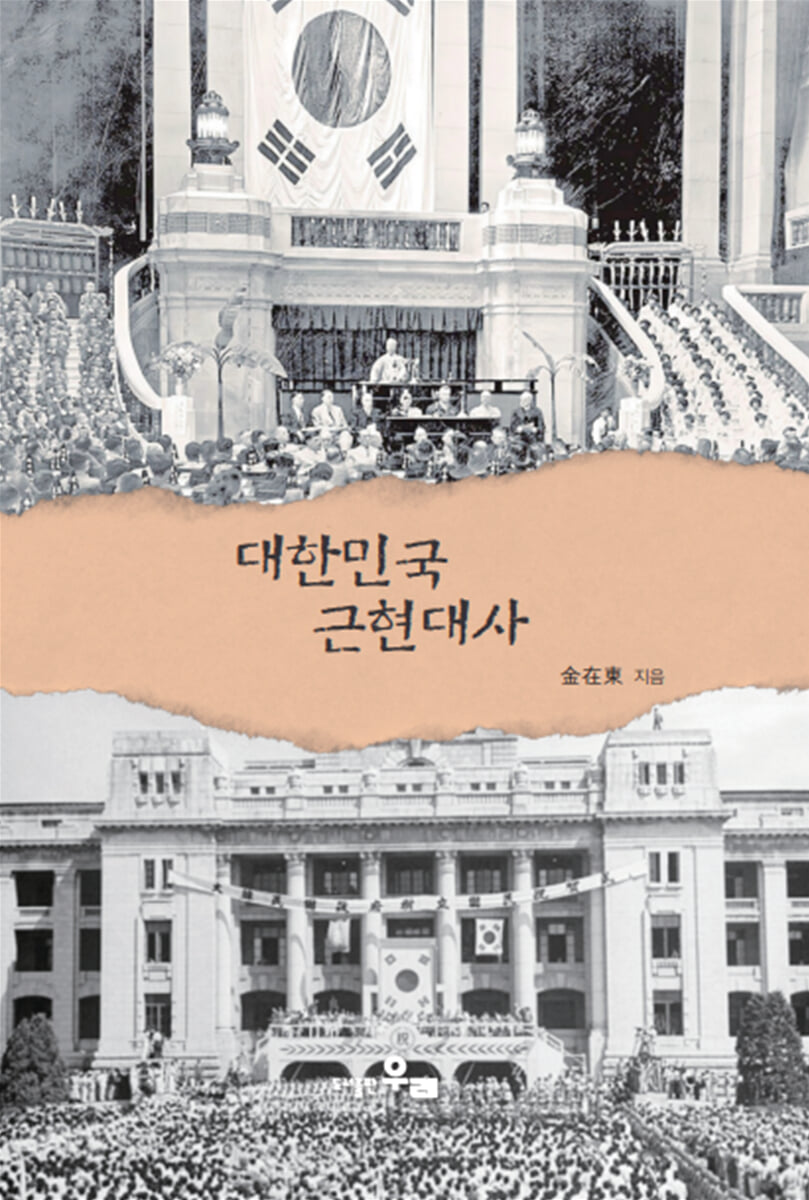 |
Description
Book Introduction
The purpose of writing this book is threefold:
First, it is to accurately inform people about modern and contemporary Korean history.
Second, it is to testify to God, the master of history.
Third, it is to publicize the great achievements and achievements of Dr. Syngman Rhee.
Modern and contemporary Korean history is divided into five major periods: the late Joseon Dynasty, the Japanese colonial period, the post-liberation turmoil, the early days of the nation's founding and the Korean War, and the period of establishing the foundations of an advanced Korea. The achievements of Dr. Syngman Rhee in each period are described in detail.
First, it is to accurately inform people about modern and contemporary Korean history.
Second, it is to testify to God, the master of history.
Third, it is to publicize the great achievements and achievements of Dr. Syngman Rhee.
Modern and contemporary Korean history is divided into five major periods: the late Joseon Dynasty, the Japanese colonial period, the post-liberation turmoil, the early days of the nation's founding and the Korean War, and the period of establishing the foundations of an advanced Korea. The achievements of Dr. Syngman Rhee in each period are described in detail.
index
In publishing the 3rd revised edition
Author's Preface
Letter of Recommendation (Professor Lee Yong-hee)
Opening Remarks: Syngman Rhee, the Central Axis of Modern and Contemporary Korean History
Chapter 1: Late Joseon Dynasty
1.
Syngman Rhee's youth
2.
Hanseong Prison, a living hell
3.
The conversion of young Syngman Rhee
4.
The Miracle of Hanseong Prison
5.
The Birth of Christian Immigration Theory
6.
Release from prison and studying abroad in the United States
7.
105 people incident
Chapter 2 Japanese Colonial Period
1.
Syngman Rhee goes to Hawaii
2.
Japan's colonial policy
3.
The origin of the March 1st Movement, Syngman Rhee
4.
March 1st Movement and the Armed Independence Movement
5.
Syngman Rhee's diplomatic policy
6.
Japanese internal affairs and the Japanese attack on Pearl Harbor
7.
Cairo Declaration and August 15 Liberation
Chapter 3: The Chaos After Liberation
1.
The situation after liberation
2.
The biggest obstacle to the establishment of the Republic of Korea: the policy of left-right cooperation.
3.
Syngman Rhee, the only person who saw through the true nature of communism
4.
The Reality of Communism
5.
Kim Gu's Change of Heart and the April 30th Statement
6.
A conversation between Kim Gu and Yoo Eo-man
7.
Replica of the April 30th Statement, the June 15th Declaration, and the October 4th Declaration
Chapter 4: The Founding of the Republic of Korea
1.
Syngman Rhee's last ditch effort: diplomacy to the US
2.
A Great Turning Point in History: The Truman Doctrine
3. UN Temporary Commission on Korea and the May 10 General Election
4.
May 31, 1948, the historic Constitutional Assembly
5.
Enactment of the Constitution
6.
August 15, 1948, the founding of the Republic of Korea
7.
Enactment of the National Security Act
8.
Diplomacy to obtain UN approval
9.
Stalin and Kim Il-sung, the main culprits of the division of North and South Korea
10.
South Korea's first anti-Japanese cabinet
11.
The choice between anti-Japanese and anti-communist
Chapter 5 The Korean War
1.
The nature of the Korean War
2.
Suspicions and Truths Surrounding Syngman Rhee in the Korean War
3.
Major battles and events of the Korean War
1) Battle of the Korea Strait
2) Battle of Chuncheon
3) August 16th National Salvation Prayer Meeting and B-29 Carpet Bombing
4) Battle of Tabudong
5) Battle of Yeongcheon
6) The Choryang Church National Salvation Prayer Meeting and the Victory of the Incheon Landing Operation
7) Battle with the Chinese army
- Battle of Chosin Reservoir
- Battle of Jipyeong-ri
- Battle of Yongmunsan
- Battle of White Horse Hill
8) Release of anti-communist prisoners of war by President Syngman Rhee
Chapter 6: The Period of Establishing the Foundation of an Advanced Korea
1.
ROK-US Mutual Defense Treaty
2.
land reform
3.
Education Revolution
4.
Foundation for the development of heavy chemical industry
5.
The foundation of a world-class nuclear power nation
6.
Three-Year Economic Development Plan
7.
eco-friendly policy
Closing Remarks I know you!
Appendix 1.
Is Syngman Rhee a dictator?
Appendix 2.
What is the truth about the Press Union incident?
Appendix 3.
What is the truth behind the Busan political turmoil?
Author's Preface
Letter of Recommendation (Professor Lee Yong-hee)
Opening Remarks: Syngman Rhee, the Central Axis of Modern and Contemporary Korean History
Chapter 1: Late Joseon Dynasty
1.
Syngman Rhee's youth
2.
Hanseong Prison, a living hell
3.
The conversion of young Syngman Rhee
4.
The Miracle of Hanseong Prison
5.
The Birth of Christian Immigration Theory
6.
Release from prison and studying abroad in the United States
7.
105 people incident
Chapter 2 Japanese Colonial Period
1.
Syngman Rhee goes to Hawaii
2.
Japan's colonial policy
3.
The origin of the March 1st Movement, Syngman Rhee
4.
March 1st Movement and the Armed Independence Movement
5.
Syngman Rhee's diplomatic policy
6.
Japanese internal affairs and the Japanese attack on Pearl Harbor
7.
Cairo Declaration and August 15 Liberation
Chapter 3: The Chaos After Liberation
1.
The situation after liberation
2.
The biggest obstacle to the establishment of the Republic of Korea: the policy of left-right cooperation.
3.
Syngman Rhee, the only person who saw through the true nature of communism
4.
The Reality of Communism
5.
Kim Gu's Change of Heart and the April 30th Statement
6.
A conversation between Kim Gu and Yoo Eo-man
7.
Replica of the April 30th Statement, the June 15th Declaration, and the October 4th Declaration
Chapter 4: The Founding of the Republic of Korea
1.
Syngman Rhee's last ditch effort: diplomacy to the US
2.
A Great Turning Point in History: The Truman Doctrine
3. UN Temporary Commission on Korea and the May 10 General Election
4.
May 31, 1948, the historic Constitutional Assembly
5.
Enactment of the Constitution
6.
August 15, 1948, the founding of the Republic of Korea
7.
Enactment of the National Security Act
8.
Diplomacy to obtain UN approval
9.
Stalin and Kim Il-sung, the main culprits of the division of North and South Korea
10.
South Korea's first anti-Japanese cabinet
11.
The choice between anti-Japanese and anti-communist
Chapter 5 The Korean War
1.
The nature of the Korean War
2.
Suspicions and Truths Surrounding Syngman Rhee in the Korean War
3.
Major battles and events of the Korean War
1) Battle of the Korea Strait
2) Battle of Chuncheon
3) August 16th National Salvation Prayer Meeting and B-29 Carpet Bombing
4) Battle of Tabudong
5) Battle of Yeongcheon
6) The Choryang Church National Salvation Prayer Meeting and the Victory of the Incheon Landing Operation
7) Battle with the Chinese army
- Battle of Chosin Reservoir
- Battle of Jipyeong-ri
- Battle of Yongmunsan
- Battle of White Horse Hill
8) Release of anti-communist prisoners of war by President Syngman Rhee
Chapter 6: The Period of Establishing the Foundation of an Advanced Korea
1.
ROK-US Mutual Defense Treaty
2.
land reform
3.
Education Revolution
4.
Foundation for the development of heavy chemical industry
5.
The foundation of a world-class nuclear power nation
6.
Three-Year Economic Development Plan
7.
eco-friendly policy
Closing Remarks I know you!
Appendix 1.
Is Syngman Rhee a dictator?
Appendix 2.
What is the truth about the Press Union incident?
Appendix 3.
What is the truth behind the Busan political turmoil?
Into the book
The revised edition covers in detail areas that were not covered in the first edition.
For example, it explains what the ‘truth of the Special Committee on Anti-National Activities’ is (disclosure of previously unknown data), what the ‘truth of the bombing of the Han River Bridge’ during the Korean War is, and how to understand the ‘3rd Constitutional Amendment’ and the ‘March 15th Fraudulent Election.’
The surprising and hidden message of Dr. Syngman Rhee's great book, "Persecution of the Korean Church," which criticizes the distorted concept of separation of church and state, is also introduced.
In addition, detailed parts that were not mentioned in the first edition were added.
It is written so that people of all ages can understand it.
There is a saying, “Freedom is not free.”
These words cannot but be a perfect fit for today's Republic of Korea.
The path from the light of freedom to the birth of a liberal democratic nation in this land that had been without freedom for half a millennium, and from the Republic of Korea's survival as a liberal democratic nation for the past 70 years, was long and arduous.
Therefore, there is something that all citizens of the Republic of Korea must know this year, as we celebrate the 70th anniversary of the founding of the nation.
We must know how many people sacrificed and worked hard to make today's free Republic of Korea possible, and at the same time, how many national crises and difficulties we faced before today's free Republic of Korea could be achieved.
This book explains the crucial process of how liberal democracy emerged from the turbulent modern and contemporary history of Korea and how it has developed to this day.”
For example, it explains what the ‘truth of the Special Committee on Anti-National Activities’ is (disclosure of previously unknown data), what the ‘truth of the bombing of the Han River Bridge’ during the Korean War is, and how to understand the ‘3rd Constitutional Amendment’ and the ‘March 15th Fraudulent Election.’
The surprising and hidden message of Dr. Syngman Rhee's great book, "Persecution of the Korean Church," which criticizes the distorted concept of separation of church and state, is also introduced.
In addition, detailed parts that were not mentioned in the first edition were added.
It is written so that people of all ages can understand it.
There is a saying, “Freedom is not free.”
These words cannot but be a perfect fit for today's Republic of Korea.
The path from the light of freedom to the birth of a liberal democratic nation in this land that had been without freedom for half a millennium, and from the Republic of Korea's survival as a liberal democratic nation for the past 70 years, was long and arduous.
Therefore, there is something that all citizens of the Republic of Korea must know this year, as we celebrate the 70th anniversary of the founding of the nation.
We must know how many people sacrificed and worked hard to make today's free Republic of Korea possible, and at the same time, how many national crises and difficulties we faced before today's free Republic of Korea could be achieved.
This book explains the crucial process of how liberal democracy emerged from the turbulent modern and contemporary history of Korea and how it has developed to this day.”
---From the author's preface
Publisher's Review
The purpose of writing this book is threefold:
First, it is to accurately inform people about modern and contemporary Korean history.
Today, the distortion of modern and contemporary Korean history has reached a serious level beyond the limit.
A representative example is the distortion of history regarding the founding of the Republic of Korea.
Currently, South Korea has become a country that not only does not teach the history of its founding, but also does not even commemorate its founding anniversary.
Rather, there is a widespread atmosphere of denying the founding of the nation.
This cannot but be a serious distortion of history.
Second, it is to testify to God, the master of history.
If I were to describe modern and contemporary Korean history in one word, I would say it was "Jultakdongsi" (敄同時).
In order for a chick inside an egg to hatch, it must peck at the shell with all its might with its still-undeveloped beak.
However, no matter how much a young chick pecking at the shell, it is impossible for it to hatch on its own.
The mother hen must hear the chick's feeble cry and break the shell with her strong beak from outside.
At this time, when a chick pecking at the shell, it is called a jul(?), and when the mother hen pecking at the shell with her beak, it is called a tak(啄).
The phrase "Jul-tak-dong-si" means that just as a chick can hatch only when a rope and a table are together, anything can be accomplished only when we work together.
...
Modern and contemporary Korean history can be said to be a history of simultaneous poetry at every turn.
If the line here represents human effort and diligence, then Tak is the history of God's intervention.
The important thing is that there must be a line, but there must also be a table.
A representative example that clearly shows the God of Jultaksimsimun in modern and contemporary Korean history is the history of liberation and the founding of the nation.
From the liberation of our country from 36 years of Japanese colonial rule on August 15, 1945, to the establishment of the Republic of Korea on August 15, 1948, countless people made countless efforts and sacrifices.
However, the liberation on August 15 and the establishment of the Republic of Korea were impossible tasks that could never have been accomplished with only human strength, effort, and sacrifice.
If the God of Jultakdongsi had not intervened, the Republic of Korea would not have been able to be founded, let alone be liberated from Japanese colonial rule.
If the God of Jultak-dong had not worked, our country would have been communized during the chaotic liberation period.
However, thanks to the providence of God of Jultakdongsi, our country was not only liberated but also established as a liberal democratic nation based on the Christian spirit.
....
Third, it is to publicize the great achievements and achievements of Dr. Syngman Rhee.
No matter what anyone says, Dr. Syngman Rhee is the central axis of modern and contemporary Korean history.
You can't talk about modern and contemporary Korean history without him.
He is the person who made the most decisive contribution to the process of our country's liberation from Japanese colonial rule, and to the process of the newly established Republic of Korea becoming a free democratic nation, and further to the process of protecting the Republic of Korea from the crisis of communism.
Dr. Syngman Rhee was also the one who laid an important foundation for the Republic of Korea to become an advanced country.
This book divides modern and contemporary Korean history into five major periods: the late Joseon Dynasty, the Japanese colonial period, the post-liberation turmoil, the early days of the nation's founding and the Korean War, and the period of establishing the foundations of an advanced Korea. It describes in detail the achievements of Dr. Syngman Rhee in each period.
I hope that this book, which is insufficient in its hopes, will contribute even a little to correcting the distorted modern and contemporary history of Korea. I look forward to the publication of this book. Professor Lee Yong-hee, head of the Esther Prayer Movement, who prayed for the publication of this book and constantly encouraged it. Dr. Lee In-soo, the adopted son of President Syngman Rhee, and Director Lee Gyeong-sik of the President Syngman Rhee Memorial Society, who carefully reviewed the contents of this book from beginning to end and encouraged it. My beloved members of the Church of Heaven, who have always been closest to me and have given me their unsparing encouragement... (omitted)
First, it is to accurately inform people about modern and contemporary Korean history.
Today, the distortion of modern and contemporary Korean history has reached a serious level beyond the limit.
A representative example is the distortion of history regarding the founding of the Republic of Korea.
Currently, South Korea has become a country that not only does not teach the history of its founding, but also does not even commemorate its founding anniversary.
Rather, there is a widespread atmosphere of denying the founding of the nation.
This cannot but be a serious distortion of history.
Second, it is to testify to God, the master of history.
If I were to describe modern and contemporary Korean history in one word, I would say it was "Jultakdongsi" (敄同時).
In order for a chick inside an egg to hatch, it must peck at the shell with all its might with its still-undeveloped beak.
However, no matter how much a young chick pecking at the shell, it is impossible for it to hatch on its own.
The mother hen must hear the chick's feeble cry and break the shell with her strong beak from outside.
At this time, when a chick pecking at the shell, it is called a jul(?), and when the mother hen pecking at the shell with her beak, it is called a tak(啄).
The phrase "Jul-tak-dong-si" means that just as a chick can hatch only when a rope and a table are together, anything can be accomplished only when we work together.
...
Modern and contemporary Korean history can be said to be a history of simultaneous poetry at every turn.
If the line here represents human effort and diligence, then Tak is the history of God's intervention.
The important thing is that there must be a line, but there must also be a table.
A representative example that clearly shows the God of Jultaksimsimun in modern and contemporary Korean history is the history of liberation and the founding of the nation.
From the liberation of our country from 36 years of Japanese colonial rule on August 15, 1945, to the establishment of the Republic of Korea on August 15, 1948, countless people made countless efforts and sacrifices.
However, the liberation on August 15 and the establishment of the Republic of Korea were impossible tasks that could never have been accomplished with only human strength, effort, and sacrifice.
If the God of Jultakdongsi had not intervened, the Republic of Korea would not have been able to be founded, let alone be liberated from Japanese colonial rule.
If the God of Jultak-dong had not worked, our country would have been communized during the chaotic liberation period.
However, thanks to the providence of God of Jultakdongsi, our country was not only liberated but also established as a liberal democratic nation based on the Christian spirit.
....
Third, it is to publicize the great achievements and achievements of Dr. Syngman Rhee.
No matter what anyone says, Dr. Syngman Rhee is the central axis of modern and contemporary Korean history.
You can't talk about modern and contemporary Korean history without him.
He is the person who made the most decisive contribution to the process of our country's liberation from Japanese colonial rule, and to the process of the newly established Republic of Korea becoming a free democratic nation, and further to the process of protecting the Republic of Korea from the crisis of communism.
Dr. Syngman Rhee was also the one who laid an important foundation for the Republic of Korea to become an advanced country.
This book divides modern and contemporary Korean history into five major periods: the late Joseon Dynasty, the Japanese colonial period, the post-liberation turmoil, the early days of the nation's founding and the Korean War, and the period of establishing the foundations of an advanced Korea. It describes in detail the achievements of Dr. Syngman Rhee in each period.
I hope that this book, which is insufficient in its hopes, will contribute even a little to correcting the distorted modern and contemporary history of Korea. I look forward to the publication of this book. Professor Lee Yong-hee, head of the Esther Prayer Movement, who prayed for the publication of this book and constantly encouraged it. Dr. Lee In-soo, the adopted son of President Syngman Rhee, and Director Lee Gyeong-sik of the President Syngman Rhee Memorial Society, who carefully reviewed the contents of this book from beginning to end and encouraged it. My beloved members of the Church of Heaven, who have always been closest to me and have given me their unsparing encouragement... (omitted)
GOODS SPECIFICS
- Publication date: November 15, 2023
- Page count, weight, size: 260 pages | 152*224*20mm
- ISBN13: 9788996981282
- ISBN10: 8996981281
You may also like
카테고리
korean


korean

![ELLE 엘르 스페셜 에디션 A형 : 12월 [2025]](http://librairie.coreenne.fr/cdn/shop/files/b8e27a3de6c9538896439686c6b0e8fb.jpg?v=1766436872&width=3840)


