

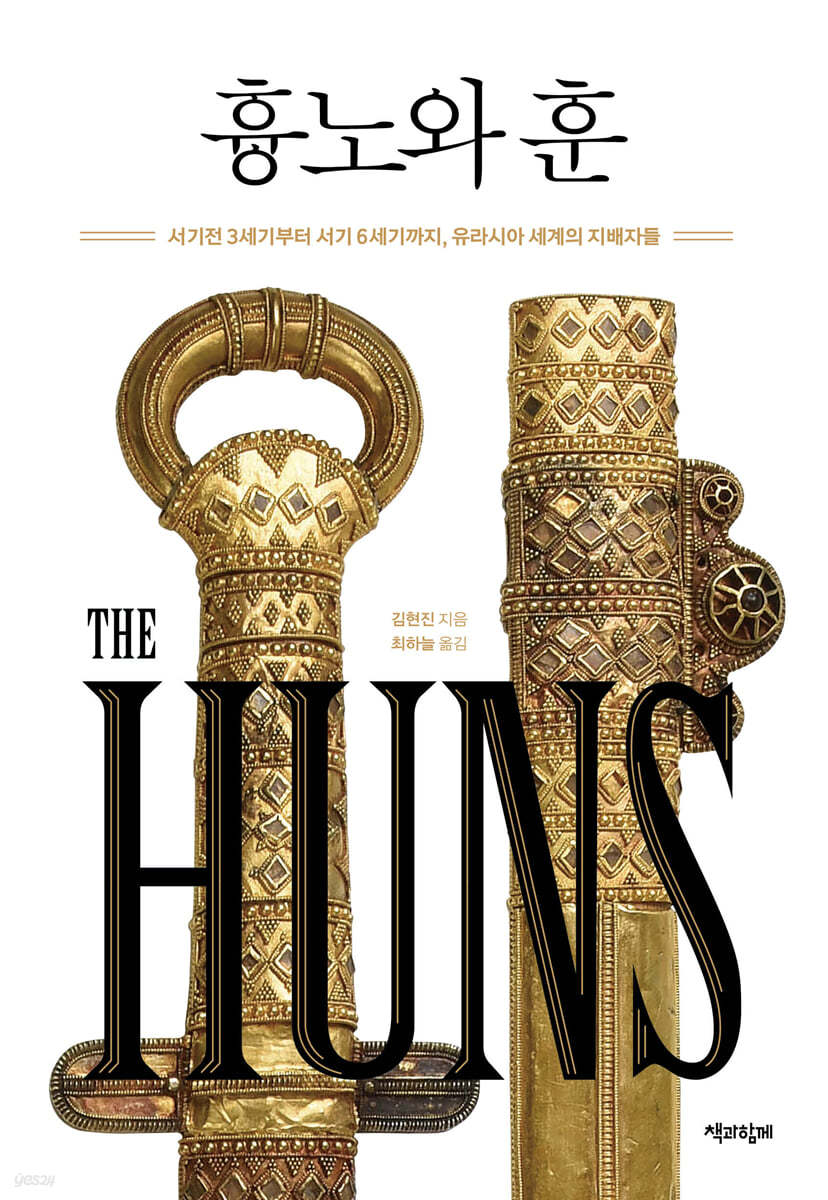
Huns and Huns
 |
Description
Book Introduction
Ancient Eurasian history
Divided into pre- and post-Hun eras
The Huns were called 'barbarians' in the West and 'barbarians' in the East.
Their place in world history is little more than a footnote to the history of the late ancient Roman Empire and the early medieval Germanic peoples.
Professor Kim Hyeon-jin of the University of Melbourne wrote this book to address this imbalance in academic perspectives, directly challenge conventional wisdom, and rectify the status of the Xiongnu/Hun Empire.
This book says two main things.
First, the Xiongnu of the Mongolian Plateau and the Huns of Europe are strongly connected entities that share the same collective name, and their history can only be fully understood when examined from a Eurasian perspective.
Second, the Xiongnu/Hun Empire had a tremendous impact on the formation of the Eurasian world in late antiquity and early medieval times, and they should be ranked as one of the ancient civilizations that changed world history.
This work, which encompasses primary and secondary sources as well as the latest archaeological excavations, examines the geopolitical changes brought about by the Xiongnu/Hun Empire in ancient Eurasia and the traces it left on the civilizations of Europe, Iran, China, and India. It is hoped that this work will open new horizons for historical research.
Divided into pre- and post-Hun eras
The Huns were called 'barbarians' in the West and 'barbarians' in the East.
Their place in world history is little more than a footnote to the history of the late ancient Roman Empire and the early medieval Germanic peoples.
Professor Kim Hyeon-jin of the University of Melbourne wrote this book to address this imbalance in academic perspectives, directly challenge conventional wisdom, and rectify the status of the Xiongnu/Hun Empire.
This book says two main things.
First, the Xiongnu of the Mongolian Plateau and the Huns of Europe are strongly connected entities that share the same collective name, and their history can only be fully understood when examined from a Eurasian perspective.
Second, the Xiongnu/Hun Empire had a tremendous impact on the formation of the Eurasian world in late antiquity and early medieval times, and they should be ranked as one of the ancient civilizations that changed world history.
This work, which encompasses primary and secondary sources as well as the latest archaeological excavations, examines the geopolitical changes brought about by the Xiongnu/Hun Empire in ancient Eurasia and the traces it left on the civilizations of Europe, Iran, China, and India. It is hoped that this work will open new horizons for historical research.
- You can preview some of the book's contents.
Preview
index
Preface to the Korean edition
preface
Inland Asia: The Homeland of the Huns
Nomads? A Hun society with a mix of agriculture and pastoralism
Race and Origin: Who are the Huns?
Chapter 1: The Xiongnu/Hun Empire
Political organization of the Huns
Political history of the Huns
The Southern Xiongnu and Xianbei conquest of China
Xiongnu archaeology
Chapter 2: The So-Called "200-Year Gap"
Chapter 3: Training in Central and South Asia
─ The White Hun Empire of the Kidar Dynasty and the Hephthalite Dynasty
Who is Baek Hoon?
Expansion of the Baekhun Empire and the Kidara Dynasty
The heyday of the White Hun Empire of the Hephthalite Dynasty
Later, the admonished countries of Central Asia and South Asia
Political organization and culture of the Baekhun Empire
The Hun's Legacy in Iran and India
Chapter 4: European Training
Hoon before Hoon?
Europe on the eve of the arrival of the Huns
Huns' invasion
Uldin
Luga and Oktar
Political organization of the European Hun Empire
Chapter 5: Attila's Huns
Bleda and Attila
Attila, the supreme ruler
Attila's western invasion
Chapter 6: The Huns After Attila
Civil war and collapse of the Hun Empire
European kings after Attila
Temporary reunification and final dissolution of the Western Hun Empire
Chapter 7: The Soul of the Pontic Steppes
─ Utigur-Kutrigur 'Bulgar' Hun
Ogur
Political History of the Bulgar Huns, Caucasian Huns, and Avars
Chapter 8: The Legacy of Hoon
Redrawing Europe's Political Map
The influence of the inland Asian political model
The influence of Huns and Alans on European military practices
The cultural and artistic influence of Hun as seen through archaeological evidence
Conclusion
Acknowledgements
Translator's Note
main
References
Search
preface
Inland Asia: The Homeland of the Huns
Nomads? A Hun society with a mix of agriculture and pastoralism
Race and Origin: Who are the Huns?
Chapter 1: The Xiongnu/Hun Empire
Political organization of the Huns
Political history of the Huns
The Southern Xiongnu and Xianbei conquest of China
Xiongnu archaeology
Chapter 2: The So-Called "200-Year Gap"
Chapter 3: Training in Central and South Asia
─ The White Hun Empire of the Kidar Dynasty and the Hephthalite Dynasty
Who is Baek Hoon?
Expansion of the Baekhun Empire and the Kidara Dynasty
The heyday of the White Hun Empire of the Hephthalite Dynasty
Later, the admonished countries of Central Asia and South Asia
Political organization and culture of the Baekhun Empire
The Hun's Legacy in Iran and India
Chapter 4: European Training
Hoon before Hoon?
Europe on the eve of the arrival of the Huns
Huns' invasion
Uldin
Luga and Oktar
Political organization of the European Hun Empire
Chapter 5: Attila's Huns
Bleda and Attila
Attila, the supreme ruler
Attila's western invasion
Chapter 6: The Huns After Attila
Civil war and collapse of the Hun Empire
European kings after Attila
Temporary reunification and final dissolution of the Western Hun Empire
Chapter 7: The Soul of the Pontic Steppes
─ Utigur-Kutrigur 'Bulgar' Hun
Ogur
Political History of the Bulgar Huns, Caucasian Huns, and Avars
Chapter 8: The Legacy of Hoon
Redrawing Europe's Political Map
The influence of the inland Asian political model
The influence of Huns and Alans on European military practices
The cultural and artistic influence of Hun as seen through archaeological evidence
Conclusion
Acknowledgements
Translator's Note
main
References
Search
Into the book
When you hear the word Huns, you probably think of a tribe of uncivilized, leather-clad nomads (usually 'Mongoloid') from the 'backward' steppes of inland Asia.
In fact, most of the Huns who lived in Inner Asia were pastoralists, and at least initially, they may have had a partially or entirely 'Mongoloid' appearance.
However, if the term 'nomad' refers to wandering people without a sense of territory, it cannot be applied to the entire Hun group.
The so-called 'nomads' of the Eurasian steppe all had a clear sense of territory and lived as pastoralists, moving back and forth between fixed pastures.
It should not be assumed that the 'nomads' of the Eurasian steppe lived without any defined territory or political control.
'Nomads' like the Huns were rather rigidly organized politically, and, like other inland Asian groups, were not homogeneous societies in terms of lifestyle or ethnic composition.
--- p.16, from the “Preface”
During his 35-year reign, Emperor Modu founded the Xiongnu Empire, reorganized its administrative system, and greatly expanded its territory, so that his empire was now larger than that of the famous Alexander the Great.
In addition, Mukteuk subjugated the equally large Chinese Empire and reduced it to a tributary state.
In many ways, Muktu was comparable to Alexander the Great, but perhaps surpassed him in the scope of his conquests.
Both monarchs were also similar in that they were suspected of assassinating their fathers (Duman and Philip) to seize the throne.
However, Mukteuk was a much more skilled politician and administrator.
Although Alexander's empire collapsed shortly after his death, the Xiongnu-Hun Empire of Moutou continued for another 400 years under the rule of Moutou's direct descendants.
--- p.47, from “Chapter 1: The Huns/Hun Empire”
It was thought that there was a gap of about 200 years between the mid-2nd century AD and the mid-4th century AD, when the Huns appear in Greco-Roman sources, during which little was known about them.
Because Chinese records of the Northern Xiongnu from this period are so scant, it is impossible to establish a link between the Xiongnu and later Huns.
Fortunately, recent research on Chinese historical sources paints a clearer picture of this '200-year gap'.
Did the Northern Xiongnu become extinct as a political entity? Did they simply disappear over the past two hundred years? Were they completely absorbed into other political entities like the Xianbei? No.
--- p.70, from “Chapter 2: The So-Called ‘200-Year Gap’”
The Book of Wei states that in the early 5th century AD, descendants of the ancient Xiongnu still remained near the Altai Mountains in the northwest of the Rouran Empire (Mongolian Plateau).
The Book of Wei goes into more detail about the ruling clan of Baekhun, Yepdal (Hephthal).
It is often confusing because there are records of them being Indo-Europeans and records of them being a different type of Turkic Gocha/spirit, similar to the Yuezhi. It tells us that they originally originated in the Altai Mountains (where the Wei Lue records the location of the Huns in the 3rd century AD) and migrated southwest and entered Central Asia around 360 AD.
Therefore, the answer to the question of whether the Huns of Central Asia and the Huns of Europe are the same race cannot be confirmed as either positive or negative, but it can be confirmed that the Huns of Central Asia, like the Huns of Europe, originated from the old Xiongnu Empire, and that they both used the name 'Hun' as the name of their country.
--- p.84, from “Chapter 3: The Huns of Central and South Asia”
The subsequent Battle of Chalons is considered one of the most important battles in history.
However, in the larger context of the war between the Huns and the Western Roman Empire, this battle was neither the climax nor the most important.
Despite these historical truths, however, this battle is often considered a "decisive moment" in history that saved Western Christian civilization from the "barbarism" of "Asia."
(…) Behind the emphasis on the ‘victories’ of Rome or the Goths over the Huns is the belief that the Hunnic victory meant that the conquest of Europe would be the utter destruction of civilization.
If this is true, how should we interpret the fact that by this point, virtually all of Europe, except the coastal regions, had been under the Hunnic Empire's control for about seventy years? As we will examine in the final chapter, while the Hunnic conquests were not particularly joyful events (and has any conquest in history ever been so pleasant for its conquered peoples?), their rule over Germanic Europe was not entirely negative.
In fact, most of the Huns who lived in Inner Asia were pastoralists, and at least initially, they may have had a partially or entirely 'Mongoloid' appearance.
However, if the term 'nomad' refers to wandering people without a sense of territory, it cannot be applied to the entire Hun group.
The so-called 'nomads' of the Eurasian steppe all had a clear sense of territory and lived as pastoralists, moving back and forth between fixed pastures.
It should not be assumed that the 'nomads' of the Eurasian steppe lived without any defined territory or political control.
'Nomads' like the Huns were rather rigidly organized politically, and, like other inland Asian groups, were not homogeneous societies in terms of lifestyle or ethnic composition.
--- p.16, from the “Preface”
During his 35-year reign, Emperor Modu founded the Xiongnu Empire, reorganized its administrative system, and greatly expanded its territory, so that his empire was now larger than that of the famous Alexander the Great.
In addition, Mukteuk subjugated the equally large Chinese Empire and reduced it to a tributary state.
In many ways, Muktu was comparable to Alexander the Great, but perhaps surpassed him in the scope of his conquests.
Both monarchs were also similar in that they were suspected of assassinating their fathers (Duman and Philip) to seize the throne.
However, Mukteuk was a much more skilled politician and administrator.
Although Alexander's empire collapsed shortly after his death, the Xiongnu-Hun Empire of Moutou continued for another 400 years under the rule of Moutou's direct descendants.
--- p.47, from “Chapter 1: The Huns/Hun Empire”
It was thought that there was a gap of about 200 years between the mid-2nd century AD and the mid-4th century AD, when the Huns appear in Greco-Roman sources, during which little was known about them.
Because Chinese records of the Northern Xiongnu from this period are so scant, it is impossible to establish a link between the Xiongnu and later Huns.
Fortunately, recent research on Chinese historical sources paints a clearer picture of this '200-year gap'.
Did the Northern Xiongnu become extinct as a political entity? Did they simply disappear over the past two hundred years? Were they completely absorbed into other political entities like the Xianbei? No.
--- p.70, from “Chapter 2: The So-Called ‘200-Year Gap’”
The Book of Wei states that in the early 5th century AD, descendants of the ancient Xiongnu still remained near the Altai Mountains in the northwest of the Rouran Empire (Mongolian Plateau).
The Book of Wei goes into more detail about the ruling clan of Baekhun, Yepdal (Hephthal).
It is often confusing because there are records of them being Indo-Europeans and records of them being a different type of Turkic Gocha/spirit, similar to the Yuezhi. It tells us that they originally originated in the Altai Mountains (where the Wei Lue records the location of the Huns in the 3rd century AD) and migrated southwest and entered Central Asia around 360 AD.
Therefore, the answer to the question of whether the Huns of Central Asia and the Huns of Europe are the same race cannot be confirmed as either positive or negative, but it can be confirmed that the Huns of Central Asia, like the Huns of Europe, originated from the old Xiongnu Empire, and that they both used the name 'Hun' as the name of their country.
--- p.84, from “Chapter 3: The Huns of Central and South Asia”
The subsequent Battle of Chalons is considered one of the most important battles in history.
However, in the larger context of the war between the Huns and the Western Roman Empire, this battle was neither the climax nor the most important.
Despite these historical truths, however, this battle is often considered a "decisive moment" in history that saved Western Christian civilization from the "barbarism" of "Asia."
(…) Behind the emphasis on the ‘victories’ of Rome or the Goths over the Huns is the belief that the Hunnic victory meant that the conquest of Europe would be the utter destruction of civilization.
If this is true, how should we interpret the fact that by this point, virtually all of Europe, except the coastal regions, had been under the Hunnic Empire's control for about seventy years? As we will examine in the final chapter, while the Hunnic conquests were not particularly joyful events (and has any conquest in history ever been so pleasant for its conquered peoples?), their rule over Germanic Europe was not entirely negative.
--- p.170~171, from “Chapter 5: Attila’s Hun”
Publisher's Review
Ancient Eurasian history
Divided into pre- and post-Hun eras
The Huns were called 'barbarians' in the West and 'barbarians' in the East.
Their place in world history is little more than a footnote to the history of the late ancient Roman Empire and the early medieval Germanic peoples.
Professor Kim Hyeon-jin of the University of Melbourne wrote this book to address this imbalance in academic perspectives, directly challenge conventional wisdom, and rectify the status of the Xiongnu/Hun Empire.
This book says two main things.
First, the Xiongnu of the Mongolian Plateau and the Huns of Europe are strongly connected entities that share the same collective name, and their history can only be fully understood when examined from a Eurasian perspective.
Second, the Xiongnu/Hun Empire had a tremendous impact on the formation of the Eurasian world in late antiquity and early medieval times, and they should be ranked as one of the ancient civilizations that changed world history.
Traditional historical writings on the Huns/Xiongnu have tended to focus on either the Central Asian Huns or the European Huns.
However, if we perceive and describe the Xiongnu in the east and the Huns in the west as separate entities, we will not be able to comprehensively perceive the changes that the various Xiongnu/Hun forces brought about throughout ancient Eurasia.
This is why we need to view Europe and Asia as one history, not separate histories.
Born in Seoul and raised in New Zealand, Kim Hyun-jin, who is familiar with both Eastern and Western cultures, wrote this balanced history book, drawing on primary and secondary sources as well as the latest archaeological discoveries, to examine the geopolitical changes brought about by the Xiongnu/Hun Empire in ancient Eurasia and the traces it left on the civilizations of Europe, Iran, China, and India, offering a new perspective on historical research.
Are the Huns and the Huns the same group?
A Eurasian historical book encompassing the Huns of Europe and the Xiongnu of Asia.
In a letter written in 313, the Sogdian merchant Nanai-vande referred to the Southern Xiongnu as the Huns when he mentioned their capture of Luoyang, the capital of the Chinese Empire.
Zhu Fahu, a monk of Bactrian descent from Dunhuang in western China, clearly referred to the Huns as "Huna" (another spelling of "Hun" in Indian historical sources) without any ambiguity in his "Gradually Preparing the Sutra of All Wisdom and Virtue" and "Public Observance Sutra" translated between 280 and 308.
In addition, archaeological excavations and numerous historical evidences indicate that the Xiongnu and Huns used the same group name and were closely connected politically and culturally.
The author begins Chapter 1 by citing the political system of the Xiongnu as described in Sima Qian's Records of the Grand Historian, refuting the academic preconception that the Xiongnu were not a state but rather a politically disordered tribal confederation.
The political system of the Xiongnu, which adopted a complex hierarchical quasi-feudal system with a king and a viceroy, was a highly centralized despotism.
Thus, the Huns, who effectively ruled over many vassal tribes, were a state with a sophisticated political order that did not fit the academic consensus that they were an embryonic state.
The Huns, who originated in the Ordos region, which corresponds to present-day Inner Mongolia, are known to have existed before the unification of China in the 3rd century BC.
After driving the Huns out of the Ordos region, Qin Shi Huang built the famous Great Wall to prevent their invasion.
Under the command of the great ruler Modu, who came to power in 209 BC, the Xiongnu successively conquered the steppe confederations of Donghu, Yuezhi, Honyou, and Jeongling, unified the eastern powers of Inner Asia, and besieged Gaozu Liu Bang's Han Dynasty, demanding tribute, and ascended to the throne as a powerful empire.
Afterwards, the Xiongnu, who suffered a blow from the confrontation with Emperor Wu of Han, split into the Northern Xiongnu and the Southern Xiongnu. The Southern Xiongnu became a vassal state of the Han Dynasty and entered Chinese territory, before overthrowing China in 311.
At this time, the Xiongnu ruler, Rouran, conquered the Chinese Empire, ushering in the era of the Five Hus and Sixteen Kingdoms, a unique period in which the political traditions of the Inland Asia and the administrative traditions of China were synthesized.
In this way, the influence of the Huns on China was wide and deep.
Meanwhile, the Northern Huns, who had stayed in the Altai region in the 2nd and 3rd centuries, split into several groups after the 4th century, and the Huns who moved further west were further divided into two groups: the White Huns of southern Central Asia and the Huns of Europe.
The White Hun Empire, under the rule of the Kidarite dynasty, was replaced by the Hephthalite dynasty in the mid-5th century, and the Hephthalite dynasty left a deep mark on the civilizations of India and Iran as it occupied the territories of Persia and India.
Not uncivilized savages
Ruler and builder of the ancient Eurasian world
The Hoons, who advanced into Europe, conquered all beings before them.
He conquered the Alans, Goths, Scythians and Germans of Eastern Europe, and subjugated both Roman Empires, fundamentally shaking the political landscape of Europe.
Their rise and the dissolution of the Western Roman Empire marked the beginning of a new Europe, 'Medieval Europe'.
Wherever they reached, they introduced a complex and hybrid inland Asian culture, radically transforming the culture and destiny of vast populations.
The Huns/Huns were a far cry from the 'uncivilized and backward barbarians, barbarian hordes' depicted in Chinese and Greek/Roman historical books.
They were politically sophisticated and militarily overwhelming their Western and Eastern adversaries.
Their political system was introduced to Europe as a system of government that would later be called 'feudalism'.
The Germanic tribes of Europe adopted the Xiongnu/Hun hierarchical system and 'joint rule' system.
The cavalry-centered mobile warfare method and the chivalric values that permeated the military elite were also due to the influence of the inland Asian powers, including the Huns.
The western edge of Eurasia was irreversibly separated from the Mediterranean coast after the Hunnic conquest.
This gave birth to the unique identity of Western Europe, now called the 'Western World', completely free from Mediterranean hegemony.
This new European political and cultural climate was a complex blend of the Hunnic traditions of inland Asia, the Greco-Roman and Germanic traditions of the Mediterranean, and the Judeo-Christian traditions and cultures of the Near East.
The Hun Empire led the birth of Western European identity by destroying the Western Roman Empire.
Moreover, the rise of the Hun Empire marked the beginning of a period of monopoly on world hegemony in Inner Asia that would last for the next thousand years, leading, after a brief interlude, to the rise of the Western European powers in the early modern period.
Thus, the Xiongnu/Hun group left behind a legacy that endured into the modern world and radically transformed the face of the ancient world across Eurasia.
Now, as the author says, it is time to re-evaluate the Huns as one of the great ancient civilizations that changed the world in human history.
Divided into pre- and post-Hun eras
The Huns were called 'barbarians' in the West and 'barbarians' in the East.
Their place in world history is little more than a footnote to the history of the late ancient Roman Empire and the early medieval Germanic peoples.
Professor Kim Hyeon-jin of the University of Melbourne wrote this book to address this imbalance in academic perspectives, directly challenge conventional wisdom, and rectify the status of the Xiongnu/Hun Empire.
This book says two main things.
First, the Xiongnu of the Mongolian Plateau and the Huns of Europe are strongly connected entities that share the same collective name, and their history can only be fully understood when examined from a Eurasian perspective.
Second, the Xiongnu/Hun Empire had a tremendous impact on the formation of the Eurasian world in late antiquity and early medieval times, and they should be ranked as one of the ancient civilizations that changed world history.
Traditional historical writings on the Huns/Xiongnu have tended to focus on either the Central Asian Huns or the European Huns.
However, if we perceive and describe the Xiongnu in the east and the Huns in the west as separate entities, we will not be able to comprehensively perceive the changes that the various Xiongnu/Hun forces brought about throughout ancient Eurasia.
This is why we need to view Europe and Asia as one history, not separate histories.
Born in Seoul and raised in New Zealand, Kim Hyun-jin, who is familiar with both Eastern and Western cultures, wrote this balanced history book, drawing on primary and secondary sources as well as the latest archaeological discoveries, to examine the geopolitical changes brought about by the Xiongnu/Hun Empire in ancient Eurasia and the traces it left on the civilizations of Europe, Iran, China, and India, offering a new perspective on historical research.
Are the Huns and the Huns the same group?
A Eurasian historical book encompassing the Huns of Europe and the Xiongnu of Asia.
In a letter written in 313, the Sogdian merchant Nanai-vande referred to the Southern Xiongnu as the Huns when he mentioned their capture of Luoyang, the capital of the Chinese Empire.
Zhu Fahu, a monk of Bactrian descent from Dunhuang in western China, clearly referred to the Huns as "Huna" (another spelling of "Hun" in Indian historical sources) without any ambiguity in his "Gradually Preparing the Sutra of All Wisdom and Virtue" and "Public Observance Sutra" translated between 280 and 308.
In addition, archaeological excavations and numerous historical evidences indicate that the Xiongnu and Huns used the same group name and were closely connected politically and culturally.
The author begins Chapter 1 by citing the political system of the Xiongnu as described in Sima Qian's Records of the Grand Historian, refuting the academic preconception that the Xiongnu were not a state but rather a politically disordered tribal confederation.
The political system of the Xiongnu, which adopted a complex hierarchical quasi-feudal system with a king and a viceroy, was a highly centralized despotism.
Thus, the Huns, who effectively ruled over many vassal tribes, were a state with a sophisticated political order that did not fit the academic consensus that they were an embryonic state.
The Huns, who originated in the Ordos region, which corresponds to present-day Inner Mongolia, are known to have existed before the unification of China in the 3rd century BC.
After driving the Huns out of the Ordos region, Qin Shi Huang built the famous Great Wall to prevent their invasion.
Under the command of the great ruler Modu, who came to power in 209 BC, the Xiongnu successively conquered the steppe confederations of Donghu, Yuezhi, Honyou, and Jeongling, unified the eastern powers of Inner Asia, and besieged Gaozu Liu Bang's Han Dynasty, demanding tribute, and ascended to the throne as a powerful empire.
Afterwards, the Xiongnu, who suffered a blow from the confrontation with Emperor Wu of Han, split into the Northern Xiongnu and the Southern Xiongnu. The Southern Xiongnu became a vassal state of the Han Dynasty and entered Chinese territory, before overthrowing China in 311.
At this time, the Xiongnu ruler, Rouran, conquered the Chinese Empire, ushering in the era of the Five Hus and Sixteen Kingdoms, a unique period in which the political traditions of the Inland Asia and the administrative traditions of China were synthesized.
In this way, the influence of the Huns on China was wide and deep.
Meanwhile, the Northern Huns, who had stayed in the Altai region in the 2nd and 3rd centuries, split into several groups after the 4th century, and the Huns who moved further west were further divided into two groups: the White Huns of southern Central Asia and the Huns of Europe.
The White Hun Empire, under the rule of the Kidarite dynasty, was replaced by the Hephthalite dynasty in the mid-5th century, and the Hephthalite dynasty left a deep mark on the civilizations of India and Iran as it occupied the territories of Persia and India.
Not uncivilized savages
Ruler and builder of the ancient Eurasian world
The Hoons, who advanced into Europe, conquered all beings before them.
He conquered the Alans, Goths, Scythians and Germans of Eastern Europe, and subjugated both Roman Empires, fundamentally shaking the political landscape of Europe.
Their rise and the dissolution of the Western Roman Empire marked the beginning of a new Europe, 'Medieval Europe'.
Wherever they reached, they introduced a complex and hybrid inland Asian culture, radically transforming the culture and destiny of vast populations.
The Huns/Huns were a far cry from the 'uncivilized and backward barbarians, barbarian hordes' depicted in Chinese and Greek/Roman historical books.
They were politically sophisticated and militarily overwhelming their Western and Eastern adversaries.
Their political system was introduced to Europe as a system of government that would later be called 'feudalism'.
The Germanic tribes of Europe adopted the Xiongnu/Hun hierarchical system and 'joint rule' system.
The cavalry-centered mobile warfare method and the chivalric values that permeated the military elite were also due to the influence of the inland Asian powers, including the Huns.
The western edge of Eurasia was irreversibly separated from the Mediterranean coast after the Hunnic conquest.
This gave birth to the unique identity of Western Europe, now called the 'Western World', completely free from Mediterranean hegemony.
This new European political and cultural climate was a complex blend of the Hunnic traditions of inland Asia, the Greco-Roman and Germanic traditions of the Mediterranean, and the Judeo-Christian traditions and cultures of the Near East.
The Hun Empire led the birth of Western European identity by destroying the Western Roman Empire.
Moreover, the rise of the Hun Empire marked the beginning of a period of monopoly on world hegemony in Inner Asia that would last for the next thousand years, leading, after a brief interlude, to the rise of the Western European powers in the early modern period.
Thus, the Xiongnu/Hun group left behind a legacy that endured into the modern world and radically transformed the face of the ancient world across Eurasia.
Now, as the author says, it is time to re-evaluate the Huns as one of the great ancient civilizations that changed the world in human history.
GOODS SPECIFICS
- Date of issue: March 15, 2024
- Page count, weight, size: 360 pages | 478g | 145*210*20mm
- ISBN13: 9791192913629
- ISBN10: 1192913620
You may also like
카테고리
korean


korean

![ELLE 엘르 스페셜 에디션 A형 : 12월 [2025]](http://librairie.coreenne.fr/cdn/shop/files/b8e27a3de6c9538896439686c6b0e8fb.jpg?v=1766436872&width=3840)


