

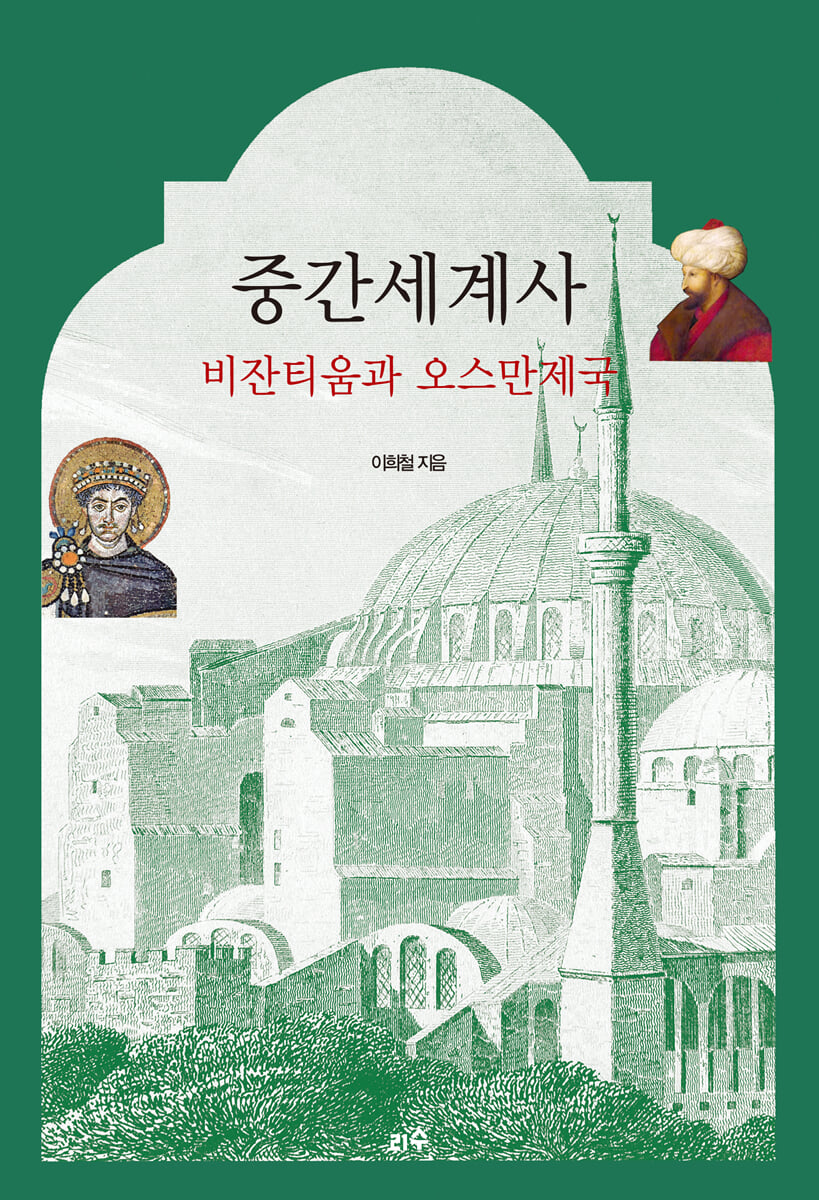
Middle Ages: Byzantium and the Ottoman Empire
 |
Description
Book Introduction
Gaps in World History, Middle World History
Overcoming the prejudice of Orientalism
Now, take a deep breath and read world history in one breath.
It has already been half a century since Edward Said pointed out Westerners' preconceptions about the East in his 1978 book, Orientalism.
Living in the 21st century, can we truly say we're free from the shackles of 19th-century Orientalism? Lee Hee-cheol, a researcher of Turkic history and culture and Korea's leading expert on Turkic history, presents "A History of the Middle Ages: Byzantium and the Ottoman Empire," the first book to examine both Byzantium and the Ottoman Empire together. It sheds new light on Byzantium, the so-called Dark Ages from the fall of the Western Roman Empire to the Renaissance, and the Ottoman Empire, the dawn of the modern era.
This fills in the gaps in world history that had been obscured by Orientalism, and finally shows world history flowing as a single thread through the East and West.
The author, one of only 19 people in the world to serve on the History Correspondence Committee of the National Historical Society of Turkey, proves that even in Byzantium and the Ottoman Empire, which have always been culturally other from a Western-centric perspective, history and culture have always clashed with each other to create the driving force for development, and are passed down and created through imitation and discovery, thereby opening up a richer perspective on world history that transcends historical prejudice.
Overcoming the prejudice of Orientalism
Now, take a deep breath and read world history in one breath.
It has already been half a century since Edward Said pointed out Westerners' preconceptions about the East in his 1978 book, Orientalism.
Living in the 21st century, can we truly say we're free from the shackles of 19th-century Orientalism? Lee Hee-cheol, a researcher of Turkic history and culture and Korea's leading expert on Turkic history, presents "A History of the Middle Ages: Byzantium and the Ottoman Empire," the first book to examine both Byzantium and the Ottoman Empire together. It sheds new light on Byzantium, the so-called Dark Ages from the fall of the Western Roman Empire to the Renaissance, and the Ottoman Empire, the dawn of the modern era.
This fills in the gaps in world history that had been obscured by Orientalism, and finally shows world history flowing as a single thread through the East and West.
The author, one of only 19 people in the world to serve on the History Correspondence Committee of the National Historical Society of Turkey, proves that even in Byzantium and the Ottoman Empire, which have always been culturally other from a Western-centric perspective, history and culture have always clashed with each other to create the driving force for development, and are passed down and created through imitation and discovery, thereby opening up a richer perspective on world history that transcends historical prejudice.
- You can preview some of the book's contents.
Preview
index
Prologue: Why I'm Writing "A History of the Middle Ages: Byzantium and the Ottoman Empire"
What the Two Empires Have in Common / What is Byzantium? / Byzantium, 330–1453 / The Ottoman Empire, 1299–1922
Part 1: Byzantium
Episode 1: The Birth of Byzantium
1.
The storm that hit Europe
The Great Migration of the Barbarians/Germanic Peoples Outside Rome
2.
Key players in the decline of the Roman Empire
The Goths, who heralded the fall of Rome / The Vandals, who ruined Rome's glory / The Huns, the short-lived conquerors of Europe
3.
Division of the Roman Empire
Odoacer and the Fall of the Western Roman Empire / The Rise of the Frankish Kingdom
Chapter 2: The History of Byzantium
1.
The rise and rise of the empire, 4th to 6th centuries
The ancient city of Byzantium / Constantine I, who proclaimed religious freedom / Justinian I, who ushered in a golden age
2.
Crisis and the Struggle for Survival, 7th Century
The Tyrant Phocas / Heraclius, Who Saved the Empire from Crisis / The Long War with Persia / The Conquests of the Islamic Empire
3.
Recovery and Reconstruction, 8th–11th centuries
The Second Macedonian Renaissance, 867–1056 / Scholarly and Reformed Emperors / Basil II Achieves Military Revival / The Rise of the Turkic Seljuk Empire / The First Crusade
4.
The Last Century, 12th century–1453
The weakening of the central government's power / The revolt of Byzantine vassals / The Fourth Crusade and the Latin Empire / The rise and fall of the empire
Episode 3: Byzantine Architecture
1.
Ancient Greek and Roman architecture
Classical architecture / Ancient Greek civilization / Ancient Greek architecture / Ancient Roman architecture
2.
Architecture of medieval Christian states
Byzantium, the land of Christianity / Basilica church style / Pendentive dome structure / Icon
3.
Hagia Sophia Church
Justinian I's Building Project / Byzantium's Largest Temple / Church-Mosque-Museum-Mosque
Episode 4: Byzantine Art
1.
The World of Byzantine Art
Byzantine Christianity and Platonism / Byzantine Philosophy and Academies / Eastern Orthodoxy / Characteristics of Byzantine Art
2.
Icons, symbols of Christian art
Byzantine icons and Madonna and Child / Iconoclasts and Defenders / Iconoclastic Movement
3.
Mosaics, the essence of Byzantine art
Byzantine mosaic / Pantocrator / Chora Church mosaic / Cappadocia cave church fresco
Part 2 Between Byzantium and the Ottoman Empire
Episode 5: The Expansion of Islam
1.
The rise of Islam
The Arabian Peninsula before Islam / Muhammad and the Rise of Islam / The Division of Islam / Dew
The scriptures and basic rituals of the Lamjong religion
2.
Islamic Empire
The Orthodox Caliphate / Umayyad Caliphate / Abbasid Caliphate: From Unity to Division
3.
The Golden Age of Islam
Bait al-Hikma, the Temple of Wisdom / Astronomy and Astrology / Islamic Medicine
Episode 6: Byzantium and the West
1.
The beginning of the modern era
The Fall of Constantinople in 1453 / The End of Medieval Christendom / The Ottoman Empire and the Holy Roman Empire
2.
The Pioneering of New Sea Routes, the Renaissance, and the Reformation
The Age of Spices and Exploration / From Darkness to Light: The Renaissance / The Reformation That Broke the Darkness of the Middle Ages
3.
The Third Rome, Moscow
Kievan Rus's Embracing Eastern Orthodoxy / Moscow's Third Rome Theory / Iconography: The Essence of Russian Orthodox Culture / Our Lady of Vladimir / Russian Orthodox Onion Domes
Episode 7: The Turkic Islamic Empire
1.
The Seljuk Empire, the ruler of the Middle World
Persia, the Middle East, and Anatolia / Rulers of the Sunni Islamic World / Seljuks and Crusaders
2.
Seljuk architecture
Caravanserai and Madrasa / Arabesques and Iwans
3.
Intellectuals who brought glory to the Seljuks
Nizam al-Mulk / Omar Khayyam / Mevlana Jelaleddin Rumi
Part 3: The Ottoman Empire
Episode 8: History of the Ottoman Empire
1.
From the Anatolian frontier to the Balkans
The Ottoman Dream / Exploring the Balkans, the Gateway to Europe
2.
Fall of Constantinople
Mehmed II and Constantine XI / May 29, 1453
3.
Expanding into a world empire
Leader of the Islamic World / Sultan Suleiman the Magnificent / Selim II, Signs of Crisis
4.
Crisis of central government
The 17th century: a time of social turmoil / The path to decline, the Battle of Vienna / The 18th century: a search for change / The 19th century: the intervention of European powers
Episode 9: Governance of the Ottoman Empire
1.
Sultan, the supreme ruler
The state is the common property of the royal family / Types of fratricide / Khanunnameh of Mehmed II / The Kafes system of Ahmed I
2.
slavery
Slavery in the Ottoman Empire / Devshirme system / Ladder of social mobility / Janissaries, the backbone of the nation / Mehter, the military band
3.
Imperial Harem and Women
Topkapi Palace / Kul and Harem / Harem of Topkapi Palace / Empress Dowager 'Valide Sultan' / Sultan's Marriage Ceremony
Episode 10: Islamic Society
1.
The Turks' acceptance of Islam
Contact with the Arab World / Indigenous Shamanism and Islam / The Rise of the Turkic-Islamic Empire from the Arab-Islamic Empire
2.
Orthodox Islam and Sufism
Caliph, ruler of the Islamic world / Orthodox Sunni Islam / Islamic mysticism Sufism
3.
Non-Muslim population and society
The Division of the World According to Islamic Law / Dhimmi (People of the Book) / Coexistence and Discrimination
Episode 11: Ottoman-era Architecture
1.
Changes in architecture
Latecomer's Advantage / Characteristics of Ottoman Architecture / Periodization of Ottoman Architecture / Mosques of the Ottoman Era
2.
Mosque, Kulliye, Grand Bazaar
Coexistence of Byzantium and the Ottoman Empire / Süleymaniye Kulliye / Istanbul Grand Bazaar
3.
Master architect Sinan
Royal Chief Architect, a Stonemason / Masterpiece of the Sinan Dynasty
Episode 12: Art of the Ottoman Empire
1.
Islamic calligraphy and bookbinding
Islamic Calligraphy / Calligraphy and Bookbinding
2.
Detailed paintings depicting the times
Persian Miniature Tradition / Ottoman Miniature
3.
Themes of Ottoman miniatures
Expeditions and Transit / Terrain and Cities / Protocol and Liturgy
Episode 13: The Spread of Turkic Culture to Europe
1.
The spread of Turkish coffee to Europe
Coffee from Yemen / Ottoman society fell in love with the taste and aroma of coffee / Turkish coffee spread to France and Austria / Turkish coffee, representing Turkish culture
2.
The craze for imitating Turkic culture
The phenomenon of Turkic cultural tastes, Turkri / Painters who introduced the Turkic Ottoman Empire / Imagination and spectacle, theater and opera
3.
Western prejudice Orientalism
European Perspectives on the Turks / 19th-Century Orientalism / Said's "Orientalism"
Epilogue
References
Search
What the Two Empires Have in Common / What is Byzantium? / Byzantium, 330–1453 / The Ottoman Empire, 1299–1922
Part 1: Byzantium
Episode 1: The Birth of Byzantium
1.
The storm that hit Europe
The Great Migration of the Barbarians/Germanic Peoples Outside Rome
2.
Key players in the decline of the Roman Empire
The Goths, who heralded the fall of Rome / The Vandals, who ruined Rome's glory / The Huns, the short-lived conquerors of Europe
3.
Division of the Roman Empire
Odoacer and the Fall of the Western Roman Empire / The Rise of the Frankish Kingdom
Chapter 2: The History of Byzantium
1.
The rise and rise of the empire, 4th to 6th centuries
The ancient city of Byzantium / Constantine I, who proclaimed religious freedom / Justinian I, who ushered in a golden age
2.
Crisis and the Struggle for Survival, 7th Century
The Tyrant Phocas / Heraclius, Who Saved the Empire from Crisis / The Long War with Persia / The Conquests of the Islamic Empire
3.
Recovery and Reconstruction, 8th–11th centuries
The Second Macedonian Renaissance, 867–1056 / Scholarly and Reformed Emperors / Basil II Achieves Military Revival / The Rise of the Turkic Seljuk Empire / The First Crusade
4.
The Last Century, 12th century–1453
The weakening of the central government's power / The revolt of Byzantine vassals / The Fourth Crusade and the Latin Empire / The rise and fall of the empire
Episode 3: Byzantine Architecture
1.
Ancient Greek and Roman architecture
Classical architecture / Ancient Greek civilization / Ancient Greek architecture / Ancient Roman architecture
2.
Architecture of medieval Christian states
Byzantium, the land of Christianity / Basilica church style / Pendentive dome structure / Icon
3.
Hagia Sophia Church
Justinian I's Building Project / Byzantium's Largest Temple / Church-Mosque-Museum-Mosque
Episode 4: Byzantine Art
1.
The World of Byzantine Art
Byzantine Christianity and Platonism / Byzantine Philosophy and Academies / Eastern Orthodoxy / Characteristics of Byzantine Art
2.
Icons, symbols of Christian art
Byzantine icons and Madonna and Child / Iconoclasts and Defenders / Iconoclastic Movement
3.
Mosaics, the essence of Byzantine art
Byzantine mosaic / Pantocrator / Chora Church mosaic / Cappadocia cave church fresco
Part 2 Between Byzantium and the Ottoman Empire
Episode 5: The Expansion of Islam
1.
The rise of Islam
The Arabian Peninsula before Islam / Muhammad and the Rise of Islam / The Division of Islam / Dew
The scriptures and basic rituals of the Lamjong religion
2.
Islamic Empire
The Orthodox Caliphate / Umayyad Caliphate / Abbasid Caliphate: From Unity to Division
3.
The Golden Age of Islam
Bait al-Hikma, the Temple of Wisdom / Astronomy and Astrology / Islamic Medicine
Episode 6: Byzantium and the West
1.
The beginning of the modern era
The Fall of Constantinople in 1453 / The End of Medieval Christendom / The Ottoman Empire and the Holy Roman Empire
2.
The Pioneering of New Sea Routes, the Renaissance, and the Reformation
The Age of Spices and Exploration / From Darkness to Light: The Renaissance / The Reformation That Broke the Darkness of the Middle Ages
3.
The Third Rome, Moscow
Kievan Rus's Embracing Eastern Orthodoxy / Moscow's Third Rome Theory / Iconography: The Essence of Russian Orthodox Culture / Our Lady of Vladimir / Russian Orthodox Onion Domes
Episode 7: The Turkic Islamic Empire
1.
The Seljuk Empire, the ruler of the Middle World
Persia, the Middle East, and Anatolia / Rulers of the Sunni Islamic World / Seljuks and Crusaders
2.
Seljuk architecture
Caravanserai and Madrasa / Arabesques and Iwans
3.
Intellectuals who brought glory to the Seljuks
Nizam al-Mulk / Omar Khayyam / Mevlana Jelaleddin Rumi
Part 3: The Ottoman Empire
Episode 8: History of the Ottoman Empire
1.
From the Anatolian frontier to the Balkans
The Ottoman Dream / Exploring the Balkans, the Gateway to Europe
2.
Fall of Constantinople
Mehmed II and Constantine XI / May 29, 1453
3.
Expanding into a world empire
Leader of the Islamic World / Sultan Suleiman the Magnificent / Selim II, Signs of Crisis
4.
Crisis of central government
The 17th century: a time of social turmoil / The path to decline, the Battle of Vienna / The 18th century: a search for change / The 19th century: the intervention of European powers
Episode 9: Governance of the Ottoman Empire
1.
Sultan, the supreme ruler
The state is the common property of the royal family / Types of fratricide / Khanunnameh of Mehmed II / The Kafes system of Ahmed I
2.
slavery
Slavery in the Ottoman Empire / Devshirme system / Ladder of social mobility / Janissaries, the backbone of the nation / Mehter, the military band
3.
Imperial Harem and Women
Topkapi Palace / Kul and Harem / Harem of Topkapi Palace / Empress Dowager 'Valide Sultan' / Sultan's Marriage Ceremony
Episode 10: Islamic Society
1.
The Turks' acceptance of Islam
Contact with the Arab World / Indigenous Shamanism and Islam / The Rise of the Turkic-Islamic Empire from the Arab-Islamic Empire
2.
Orthodox Islam and Sufism
Caliph, ruler of the Islamic world / Orthodox Sunni Islam / Islamic mysticism Sufism
3.
Non-Muslim population and society
The Division of the World According to Islamic Law / Dhimmi (People of the Book) / Coexistence and Discrimination
Episode 11: Ottoman-era Architecture
1.
Changes in architecture
Latecomer's Advantage / Characteristics of Ottoman Architecture / Periodization of Ottoman Architecture / Mosques of the Ottoman Era
2.
Mosque, Kulliye, Grand Bazaar
Coexistence of Byzantium and the Ottoman Empire / Süleymaniye Kulliye / Istanbul Grand Bazaar
3.
Master architect Sinan
Royal Chief Architect, a Stonemason / Masterpiece of the Sinan Dynasty
Episode 12: Art of the Ottoman Empire
1.
Islamic calligraphy and bookbinding
Islamic Calligraphy / Calligraphy and Bookbinding
2.
Detailed paintings depicting the times
Persian Miniature Tradition / Ottoman Miniature
3.
Themes of Ottoman miniatures
Expeditions and Transit / Terrain and Cities / Protocol and Liturgy
Episode 13: The Spread of Turkic Culture to Europe
1.
The spread of Turkish coffee to Europe
Coffee from Yemen / Ottoman society fell in love with the taste and aroma of coffee / Turkish coffee spread to France and Austria / Turkish coffee, representing Turkish culture
2.
The craze for imitating Turkic culture
The phenomenon of Turkic cultural tastes, Turkri / Painters who introduced the Turkic Ottoman Empire / Imagination and spectacle, theater and opera
3.
Western prejudice Orientalism
European Perspectives on the Turks / 19th-Century Orientalism / Said's "Orientalism"
Epilogue
References
Search
Detailed image

Publisher's Review
The powerful suction power of an extremely objective narrative
Scenes from history learned in disjointed ways are organically connected.
This book is based on a multidisciplinary, integrated study of the history, politics, economics, religion, architecture, and art of the Byzantine and Ottoman Empires, and is presented with extremely objective facts.
There is no mention of any compulsion or purpose to combat or educate prejudice against the Middle World.
However, the existence of the Middle World is revealed naturally but clearly through the mutual overlap and influence of cultures and civilizations.
While it is undoubtedly a voluminous task to sequentially cover the various aspects of the Byzantine and Ottoman empires in a single book, the scope of history depicted in this narrative extends beyond the two empires and extends to a larger space and time.
Because it connects to historical moments or common sense that we are all familiar with, it leads to a bigger picture of world history.
The thrill of seeing the puzzle of world history come together piece by piece in an experience where historical scenes learned in disjointed ways are organically connected is left to the reader.
Why Middle World?
Why Read Middle-Earth
Tamim Ansari, author of “A History of the World Through Islamic Eyes,” called the area extending from the Ganges River region in India to Istanbul the Middle World.
The ancient times of this Middle World were not only the Greco-Roman territories, but also the era of Mesopotamia and Persia, the Middle Ages were the Christian era of Byzantium, and the modern times were the Islamic era of the Ottoman Empire.
The Middle World is where the history and culture of the 1,000-year Byzantine Empire, the 600-year Ottoman Empire, and the 600-year Islamic Empire between the two empires unfolded.
However, the Byzantine and Ottoman Empires, which were neither East nor West, but were an intermediate world that was both East and West, and West and East, were overshadowed by world history centered on Europe for a long time and did not receive much attention.
This book sheds new light on the Middle World, a world that possessed the power and cultural capacity to move the world, but was largely unknown to us due to its isolation and lack of attention from the central axis of world history, through the Byzantine and Ottoman Empires.
In a history of conflict and confrontation, the Christian and Islamic empires, seemingly completely different from one another, have shown that they have accumulated and developed their own unique values while influencing each other.
Reading the history of the Middle Ages, which has been in the shadows of world history, is valuable in itself, but it is even more meaningful in that it allows us to understand world history more thoroughly and read it with interest.
"Middle World History: Byzantium and the Ottoman Empire" is a book that will provide a clue to those who want to understand and enjoy the flow of world history, which has often felt too vast.
Reading the Middle Ages
The flow of world history becomes clearer
Constantinople is Istanbul?
What does the Ottoman Empire have to do with the Renaissance?
Byzantium and the Ottoman Empire, which we have already learned and become familiar with in world history.
However, it is strange that the two empires existed in the same space.
In 1453, Mehmed II's conquest of Constantinople brought an end to the thousand-year-old Christian empire of Byzantium and ushered in the Ottoman Empire.
As a result, Constantinople in Byzantium was renamed Istanbul.
This is the history of the Anatolian Peninsula, where present-day Turkey is located.
This history is represented by the Hagia Sophia in Istanbul.
Hagia Sophia was built during the Byzantine Empire, but was converted into a mosque during the Ottoman Empire, with four minarets added.
Afterwards, it was designated as a museum with the founding of the Republic of Turkey in 1923, and was converted back into a mosque in 2020.
The beginning of the Ottoman Empire is an event not unrelated to the beginning of the Renaissance, which aimed to move from a God-centered society to a human-centered society.
As the fall of Constantinople became imminent, Greek classical scholars within the Byzantine Empire began to take their texts and emigrate to nearby Italian city-states such as Genoa, Florence, and Venice.
At this time, the number of Greek classics that were brought to Italy through Constantinople is estimated to be around 40,000.
The Western Renaissance was established thanks to scholars who brought classics to Italy.
Was the Ottoman Empire the starting point of the Age of Exploration?
When we think of the Age of Exploration, the exploration and colonial era of Western powers comes to mind.
Columbus's discovery of the New World was noted as a pivotal event that shook history.
On the other hand, this book introduces the beginnings of the Age of Exploration.
It describes the times leading up to the Age of Exploration, when maritime trade routes were blocked and it was difficult to obtain spices due to the Ottoman Empire's domination and control of the Mediterranean Sea.
The traces of the Middle Ages that reach across world history like this show us that history is a field that requires the wisdom to see both the forest and the trees at the same time.
Were the Turkic Huns the catalyst for the fall of the Roman Empire?
The birth of the Byzantine Empire is described from the fall of the ancient Western Roman Empire.
In this, the tectonic shifts within Europe, including the Great Migration of the Germanic peoples, are mentioned, and the Huns, a Turkic nomadic people, played a catalytic role in the background of the westward movement of the Germanic peoples.
It is interesting to note that the great event of the fall of the Roman Empire, which seemed to have absolute power, was not unrelated to the emergence of nomadic peoples from Central Asia.
Traces of Arabism in our lives
Baghdad, the center of the revival of ancient Greek knowledge
Islam, which was born in the Arabian Peninsula in the 7th century, was divided into Sunni and Shia sects after the death of its founder Muhammad due to differences in views on the qualifications of his successor.
This is also the realm of Middle Ages history, but the deep-rooted conflict between Sunni and Shia is clearly a concern that continues to this day.
The background and specific facts about this part of the Middle Ages are introduced within the overall flow, helping to facilitate a clear understanding.
Moreover, as depicted in Antoine Galland's A Thousand and One Nights, we can see how the Islamic empire centered around Baghdad at the time enjoyed an amazing period of academic and cultural prosperity.
In particular, the 'Bayt al-Hikma' (Hall of Wisdom) invited prominent scholars regardless of religion, including Muslims, Christians, and Jews, to translate classics in the fields of philosophy, astronomy, mathematics, and medicine.
This open atmosphere made Baghdad teeming with scientists, artists, and thinkers, and Bait al-Hikma became a center of learning that revived the knowledge of ancient Greece, which had been neglected in medieval Europe, and sparked an intellectual revival in Islam.
In this way, by translating the world's knowledge into Arabic, Islam was able to introduce ancient Greek science directly into the Islamic world.
Islamic science, which inherited and developed Greek science, was spread to Europe again after the 12th century and also influenced the beginning of the Renaissance.
Unfortunately, the scientific advancements of Islam and Arabs were forgotten in the 13th century when the Mongols devastated Baghdad.
The scientific terms used by modern people today, such as algorithm, alcohol, alkali, alchemy, chemistry, and astronomy, are English words that originated from Arabic at that time.
Scenes from history learned in disjointed ways are organically connected.
This book is based on a multidisciplinary, integrated study of the history, politics, economics, religion, architecture, and art of the Byzantine and Ottoman Empires, and is presented with extremely objective facts.
There is no mention of any compulsion or purpose to combat or educate prejudice against the Middle World.
However, the existence of the Middle World is revealed naturally but clearly through the mutual overlap and influence of cultures and civilizations.
While it is undoubtedly a voluminous task to sequentially cover the various aspects of the Byzantine and Ottoman empires in a single book, the scope of history depicted in this narrative extends beyond the two empires and extends to a larger space and time.
Because it connects to historical moments or common sense that we are all familiar with, it leads to a bigger picture of world history.
The thrill of seeing the puzzle of world history come together piece by piece in an experience where historical scenes learned in disjointed ways are organically connected is left to the reader.
Why Middle World?
Why Read Middle-Earth
Tamim Ansari, author of “A History of the World Through Islamic Eyes,” called the area extending from the Ganges River region in India to Istanbul the Middle World.
The ancient times of this Middle World were not only the Greco-Roman territories, but also the era of Mesopotamia and Persia, the Middle Ages were the Christian era of Byzantium, and the modern times were the Islamic era of the Ottoman Empire.
The Middle World is where the history and culture of the 1,000-year Byzantine Empire, the 600-year Ottoman Empire, and the 600-year Islamic Empire between the two empires unfolded.
However, the Byzantine and Ottoman Empires, which were neither East nor West, but were an intermediate world that was both East and West, and West and East, were overshadowed by world history centered on Europe for a long time and did not receive much attention.
This book sheds new light on the Middle World, a world that possessed the power and cultural capacity to move the world, but was largely unknown to us due to its isolation and lack of attention from the central axis of world history, through the Byzantine and Ottoman Empires.
In a history of conflict and confrontation, the Christian and Islamic empires, seemingly completely different from one another, have shown that they have accumulated and developed their own unique values while influencing each other.
Reading the history of the Middle Ages, which has been in the shadows of world history, is valuable in itself, but it is even more meaningful in that it allows us to understand world history more thoroughly and read it with interest.
"Middle World History: Byzantium and the Ottoman Empire" is a book that will provide a clue to those who want to understand and enjoy the flow of world history, which has often felt too vast.
Reading the Middle Ages
The flow of world history becomes clearer
Constantinople is Istanbul?
What does the Ottoman Empire have to do with the Renaissance?
Byzantium and the Ottoman Empire, which we have already learned and become familiar with in world history.
However, it is strange that the two empires existed in the same space.
In 1453, Mehmed II's conquest of Constantinople brought an end to the thousand-year-old Christian empire of Byzantium and ushered in the Ottoman Empire.
As a result, Constantinople in Byzantium was renamed Istanbul.
This is the history of the Anatolian Peninsula, where present-day Turkey is located.
This history is represented by the Hagia Sophia in Istanbul.
Hagia Sophia was built during the Byzantine Empire, but was converted into a mosque during the Ottoman Empire, with four minarets added.
Afterwards, it was designated as a museum with the founding of the Republic of Turkey in 1923, and was converted back into a mosque in 2020.
The beginning of the Ottoman Empire is an event not unrelated to the beginning of the Renaissance, which aimed to move from a God-centered society to a human-centered society.
As the fall of Constantinople became imminent, Greek classical scholars within the Byzantine Empire began to take their texts and emigrate to nearby Italian city-states such as Genoa, Florence, and Venice.
At this time, the number of Greek classics that were brought to Italy through Constantinople is estimated to be around 40,000.
The Western Renaissance was established thanks to scholars who brought classics to Italy.
Was the Ottoman Empire the starting point of the Age of Exploration?
When we think of the Age of Exploration, the exploration and colonial era of Western powers comes to mind.
Columbus's discovery of the New World was noted as a pivotal event that shook history.
On the other hand, this book introduces the beginnings of the Age of Exploration.
It describes the times leading up to the Age of Exploration, when maritime trade routes were blocked and it was difficult to obtain spices due to the Ottoman Empire's domination and control of the Mediterranean Sea.
The traces of the Middle Ages that reach across world history like this show us that history is a field that requires the wisdom to see both the forest and the trees at the same time.
Were the Turkic Huns the catalyst for the fall of the Roman Empire?
The birth of the Byzantine Empire is described from the fall of the ancient Western Roman Empire.
In this, the tectonic shifts within Europe, including the Great Migration of the Germanic peoples, are mentioned, and the Huns, a Turkic nomadic people, played a catalytic role in the background of the westward movement of the Germanic peoples.
It is interesting to note that the great event of the fall of the Roman Empire, which seemed to have absolute power, was not unrelated to the emergence of nomadic peoples from Central Asia.
Traces of Arabism in our lives
Baghdad, the center of the revival of ancient Greek knowledge
Islam, which was born in the Arabian Peninsula in the 7th century, was divided into Sunni and Shia sects after the death of its founder Muhammad due to differences in views on the qualifications of his successor.
This is also the realm of Middle Ages history, but the deep-rooted conflict between Sunni and Shia is clearly a concern that continues to this day.
The background and specific facts about this part of the Middle Ages are introduced within the overall flow, helping to facilitate a clear understanding.
Moreover, as depicted in Antoine Galland's A Thousand and One Nights, we can see how the Islamic empire centered around Baghdad at the time enjoyed an amazing period of academic and cultural prosperity.
In particular, the 'Bayt al-Hikma' (Hall of Wisdom) invited prominent scholars regardless of religion, including Muslims, Christians, and Jews, to translate classics in the fields of philosophy, astronomy, mathematics, and medicine.
This open atmosphere made Baghdad teeming with scientists, artists, and thinkers, and Bait al-Hikma became a center of learning that revived the knowledge of ancient Greece, which had been neglected in medieval Europe, and sparked an intellectual revival in Islam.
In this way, by translating the world's knowledge into Arabic, Islam was able to introduce ancient Greek science directly into the Islamic world.
Islamic science, which inherited and developed Greek science, was spread to Europe again after the 12th century and also influenced the beginning of the Renaissance.
Unfortunately, the scientific advancements of Islam and Arabs were forgotten in the 13th century when the Mongols devastated Baghdad.
The scientific terms used by modern people today, such as algorithm, alcohol, alkali, alchemy, chemistry, and astronomy, are English words that originated from Arabic at that time.
GOODS SPECIFICS
- Date of issue: March 5, 2024
- Page count, weight, size: 336 pages | 628g | 153*224*19mm
- ISBN13: 9791192753157
- ISBN10: 1192753151
You may also like
카테고리
korean


korean

![GQ KOREA Mark (Monthly): December [2025]](http://librairie.coreenne.fr/cdn/shop/files/8ef265dbbfbf186523ed75ba7319009d.jpg?v=1765340328&width=3840)


