

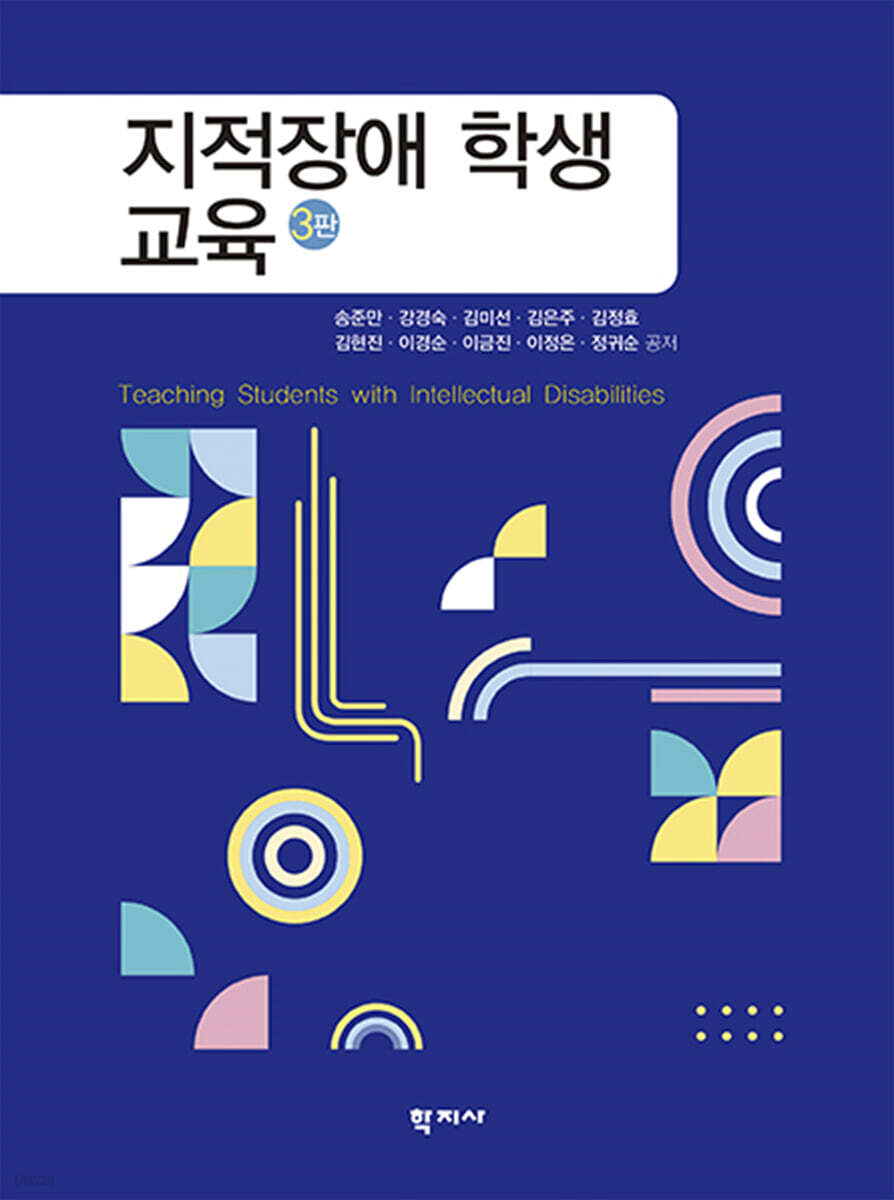
Education for students with intellectual disabilities
 |
Description
Book Introduction
The third edition of 『Education of Students with Intellectual Disabilities』 introduces newly revised or changed parts at the international or national level.
We have tried to cover the content more faithfully based on the latest theories and research across 15 chapters.
To help readers understand, we have tried to change the structure of the content, present relevant examples, and incorporate real-world context.
We have tried to cover the content more faithfully based on the latest theories and research across 15 chapters.
To help readers understand, we have tried to change the structure of the content, present relevant examples, and incorporate real-world context.
index
Preface to the 3rd edition
Preface to the 1st edition
Chapter 1: Understanding the Definition System for Intellectual Disability
1.
Operational Definition of Intellectual Disability
2.
Core components of the operational definition of intellectual disability
3. Historical changes in the AAIDD definition of intellectual disability
4.
A Multidimensional Model of Human Functioning for Defining Intellectual Disability
5.
Understanding the support system
6.
Understanding the Intellectual Disability Classification System
7.
Legal definition of intellectual disability in our country
Chapter 2 Brain Development and Intellectual Disability
1.
Brain structure, function, and dissociation
2.
brain damage and intellectual disability
3.
Brain-related education and training programs
Chapter 3: Causes and Prevention of Intellectual Disability
1.
The importance of understanding the causes of intellectual disability
2.
A multi-risk approach to the causes of intellectual disability
3.
biomedical risk factors
4.
Social, behavioral, and educational risk factors
5.
Support for preventing intellectual disability
Chapter 4 Characteristics of People with Intellectual Disabilities
1.
cognitive development
2.
Learning characteristics
3.
Psychological and social/behavioral characteristics
4.
Linguistic and communicative characteristics
5.
Physical and health characteristics
6.
Support needs based on the characteristics of students with intellectual disabilities
Chapter 5 Diagnosis, Evaluation, and Placement of Intellectual Disabilities
1.
Concept and purpose of diagnosis and evaluation
2.
Diagnosis and Evaluation Procedures: Screening and Referral
3.
Diagnosis and Evaluation Procedures: Diagnosis of Special Education Students
4.
Determination of eligibility and placement as a special education recipient
Chapter 6: Educational Approaches to Early Childhood
1.
Understanding Special Education for Children with Intellectual Disabilities in Early Childhood
2.
Curriculum, teaching methods, and characteristics of special education for children with intellectual disabilities in early childhood
3.
Family involvement
4.
Education of infants and toddlers with intellectual disabilities
5.
Inclusive education for infants and toddlers with intellectual disabilities
6.
Transition Program for Infants and Toddlers with Intellectual Disabilities
Chapter 7: Educational Approaches to School-Age Students: Curriculum
1.
A Basic Understanding of the Curriculum for Students with Intellectual Disabilities
2.
Operating a curriculum for students with moderate to severe intellectual disabilities
3.
Operating a curriculum for students with mild intellectual disabilities
4.
Individualized Education Plan
Chapter 8: Educational Approaches to School-Age Students: Teaching Methods and Strategies
1.
Learning and learning stages
2.
Learning Theory and Evidence-Based Teaching Strategies
3.
Behavioral teaching strategies: direct instruction, incidental instruction, and facilitation
4.
Cognitive teaching strategies: discovery learning, information processing models, and cognitive instruction
5.
Constructivist teaching strategies: peer tutoring, co-teaching, complementary teaching, modeling, and cooperative learning.
Chapter 9: Educational Approaches for School-Age Students: Curriculum Guidance
1.
Integrated curriculum guidance
2.
Korean language department map
3.
Social studies guidance
4.
Mathematics and Maps
5.
Science and Maps
6.
Physical education and arts (music, art) subject guidance
Chapter 10: Transitional Educational Approaches: Transition Education by Life Cycle
1.
Changes in the concept of transition education
2.
Structure of the transition education program
3.
Operation of transition education program
4.
The current state of transition education in our country
Chapter 11: Educational Approaches to Adulthood
1.
Education for adults with intellectual disabilities
2.
Skills for Independent Community Living in Adulthood
3.
Leisure support for adults with intellectual disabilities
4.
Independent living support for adults with intellectual disabilities
5.
Sex and Marriage of People with Intellectual Disabilities
Chapter 12: The Practice of Problem Behavior Guidance
1.
Perspectives on Problem Behavior
2.
Factors that contribute to problem behavior
3.
The Reality of Behavioral Guidance
4.
Specific strategies for behavioral intervention
5.
School-based behavioral guidance
Chapter 13: The Practice of Communication Guidance
1.
Understanding the Language and Communication Characteristics of Children with Intellectual Disabilities
2.
Diagnosis and evaluation of language and communication skills in children with intellectual disabilities
3.
Language and communication instruction methods for children with intellectual disabilities
4.
Augmentative and alternative communication concepts and teaching methods
Chapter 14: The Practice of Social Competence Guidance
1.
Concept and Definition of Social Competence
2.
Characteristics of social abilities in children with intellectual disabilities
3.
Assessment of social abilities in children with intellectual disabilities
4.
Improving social competence and social skills in children with intellectual disabilities
Chapter 15 Special Education Systems and Policies for People with Intellectual Disabilities
1.
Special education system and administrative organization
2.
Special education policy for people with intellectual disabilities
3.
Understanding other laws related to people with intellectual disabilities
Preface to the 1st edition
Chapter 1: Understanding the Definition System for Intellectual Disability
1.
Operational Definition of Intellectual Disability
2.
Core components of the operational definition of intellectual disability
3. Historical changes in the AAIDD definition of intellectual disability
4.
A Multidimensional Model of Human Functioning for Defining Intellectual Disability
5.
Understanding the support system
6.
Understanding the Intellectual Disability Classification System
7.
Legal definition of intellectual disability in our country
Chapter 2 Brain Development and Intellectual Disability
1.
Brain structure, function, and dissociation
2.
brain damage and intellectual disability
3.
Brain-related education and training programs
Chapter 3: Causes and Prevention of Intellectual Disability
1.
The importance of understanding the causes of intellectual disability
2.
A multi-risk approach to the causes of intellectual disability
3.
biomedical risk factors
4.
Social, behavioral, and educational risk factors
5.
Support for preventing intellectual disability
Chapter 4 Characteristics of People with Intellectual Disabilities
1.
cognitive development
2.
Learning characteristics
3.
Psychological and social/behavioral characteristics
4.
Linguistic and communicative characteristics
5.
Physical and health characteristics
6.
Support needs based on the characteristics of students with intellectual disabilities
Chapter 5 Diagnosis, Evaluation, and Placement of Intellectual Disabilities
1.
Concept and purpose of diagnosis and evaluation
2.
Diagnosis and Evaluation Procedures: Screening and Referral
3.
Diagnosis and Evaluation Procedures: Diagnosis of Special Education Students
4.
Determination of eligibility and placement as a special education recipient
Chapter 6: Educational Approaches to Early Childhood
1.
Understanding Special Education for Children with Intellectual Disabilities in Early Childhood
2.
Curriculum, teaching methods, and characteristics of special education for children with intellectual disabilities in early childhood
3.
Family involvement
4.
Education of infants and toddlers with intellectual disabilities
5.
Inclusive education for infants and toddlers with intellectual disabilities
6.
Transition Program for Infants and Toddlers with Intellectual Disabilities
Chapter 7: Educational Approaches to School-Age Students: Curriculum
1.
A Basic Understanding of the Curriculum for Students with Intellectual Disabilities
2.
Operating a curriculum for students with moderate to severe intellectual disabilities
3.
Operating a curriculum for students with mild intellectual disabilities
4.
Individualized Education Plan
Chapter 8: Educational Approaches to School-Age Students: Teaching Methods and Strategies
1.
Learning and learning stages
2.
Learning Theory and Evidence-Based Teaching Strategies
3.
Behavioral teaching strategies: direct instruction, incidental instruction, and facilitation
4.
Cognitive teaching strategies: discovery learning, information processing models, and cognitive instruction
5.
Constructivist teaching strategies: peer tutoring, co-teaching, complementary teaching, modeling, and cooperative learning.
Chapter 9: Educational Approaches for School-Age Students: Curriculum Guidance
1.
Integrated curriculum guidance
2.
Korean language department map
3.
Social studies guidance
4.
Mathematics and Maps
5.
Science and Maps
6.
Physical education and arts (music, art) subject guidance
Chapter 10: Transitional Educational Approaches: Transition Education by Life Cycle
1.
Changes in the concept of transition education
2.
Structure of the transition education program
3.
Operation of transition education program
4.
The current state of transition education in our country
Chapter 11: Educational Approaches to Adulthood
1.
Education for adults with intellectual disabilities
2.
Skills for Independent Community Living in Adulthood
3.
Leisure support for adults with intellectual disabilities
4.
Independent living support for adults with intellectual disabilities
5.
Sex and Marriage of People with Intellectual Disabilities
Chapter 12: The Practice of Problem Behavior Guidance
1.
Perspectives on Problem Behavior
2.
Factors that contribute to problem behavior
3.
The Reality of Behavioral Guidance
4.
Specific strategies for behavioral intervention
5.
School-based behavioral guidance
Chapter 13: The Practice of Communication Guidance
1.
Understanding the Language and Communication Characteristics of Children with Intellectual Disabilities
2.
Diagnosis and evaluation of language and communication skills in children with intellectual disabilities
3.
Language and communication instruction methods for children with intellectual disabilities
4.
Augmentative and alternative communication concepts and teaching methods
Chapter 14: The Practice of Social Competence Guidance
1.
Concept and Definition of Social Competence
2.
Characteristics of social abilities in children with intellectual disabilities
3.
Assessment of social abilities in children with intellectual disabilities
4.
Improving social competence and social skills in children with intellectual disabilities
Chapter 15 Special Education Systems and Policies for People with Intellectual Disabilities
1.
Special education system and administrative organization
2.
Special education policy for people with intellectual disabilities
3.
Understanding other laws related to people with intellectual disabilities
Publisher's Review
The contents of Education for Students with Intellectual Disabilities (3rd Edition) are as follows.
First, we looked for and introduced newly revised or changed parts at the international or national level.
Chapters 1, 6, 7, 11, and 15, which cover the definition system of intellectual disability, curriculum, laws, systems, and policies, have been updated or updated with the latest content.
Chapter 1, which covers the definition system for intellectual disability, introduces the "12th Definition of Intellectual Disability" of the American Association for Intellectual and Developmental Disabilities (AAIDD), revised in 2021, and examines its significance and implications.
In addition, the contents of the support system were strengthened and its results were specified by referring to the latest literature.
Chapter 6 introduces the 2019 revised Nuri Curriculum, and Chapter 7 presents additional information related to the 2015 Revised Special Education Curriculum, a national curriculum, as well as the newly revised 2022 Revised Special Education Curriculum.
Chapter 11, which deals with educational approaches to adulthood, explains higher education, lifelong education, and vocational education for people with intellectual disabilities, taking into account the revision of the Lifelong Education Act, the enactment of the Act on the Guarantee of Rights and Support for Persons with Developmental Disabilities, and the increasing demand for higher education among people with intellectual disabilities.
In addition, reflecting the government's recent deinstitutionalization roadmap, a community care policy for housing for adults with disabilities was introduced.
Chapter 15, which covers laws and policies related to special education in Korea, has revised and supplemented existing content to reflect recently published special education statistics and policy data, and related laws have been comprehensively revised to focus on the revised content.
In addition, we introduced specific policy details according to the '5-Year Plan for Special Education Development' currently being promoted, and analyzed the special education administrative organization of each city/provincial office of education to facilitate an easy understanding of the special education administrative system in the field.
Second, we aimed to cover the content more faithfully based on the latest theories and research across 15 chapters.
For example, Chapter 3, which deals with the causes and prevention of intellectual disabilities, and Chapter 4, which deals with the characteristics of people with intellectual disabilities, have been reorganized to focus on key topics and to make them easier to understand, and the latest research has been added.
Chapter 5 introduces the latest versions of intelligence tests and adaptive behavior tests for diagnosing intellectual disabilities, and also introduces newly developed test tools.
Chapter 6 was written with reference to the latest literature on the necessity, purpose, and goals of special education for infants and toddlers, and the theoretical approach to special education curriculum for infants and toddlers with intellectual disabilities was also based on recent theories to help with understanding.
In addition, the basic principles of the teaching approach for infants and toddlers with disabilities and the teaching strategies for infants and toddlers with disabilities included curriculum modification, activity-centered insertion teaching, natural teaching strategies, teacher-led teaching strategies, and peer-mediated teaching strategies.
Chapter 13 focuses on revising and supplementing the concepts and teaching methods of augmentative and alternative communication. AAC assessment methods include AAC environment and vocabulary surveys, preference surveys, and language and communication ability assessments. Intervention methods include intervention goals and strategies tailored to each communication stage.
Chapter 14 introduces proven effective social skills interventions and programs for infants, elementary school students, and adolescents to improve social skills.
Meanwhile, how can we best teach students with intellectual disabilities, that is, the best teaching method?
The strategy also focused on organizing the content based on ‘evidence-based practice (EBP)’.
For example, Chapter 8, which deals with teaching methods and strategies in school-age educational approaches, systematically explains the theoretical basis, educational practice, research evidence, and application considerations of evidence-based teaching strategies from behaviorist, cognitivist, and constructivist perspectives.
Chapter 10, which deals with transitional educational approaches, also includes many new parts based on evidence-based practice (EBP).
Through various studies, we introduced a classification system of transition programs that have been proven to be evidence-based and have actually been proven, as well as transition programs for each life cycle, and presented specific evidence-based teaching strategies for teaching academic and life skills during the transition period.
In addition, the relevant section was replaced with the latest content in accordance with changes in the current state of transition education in our country.
Third, to help readers understand, we tried to change the content structure, present related cases, and incorporate real-world experiences.
For example, Chapter 5, which deals with the diagnosis and evaluation of intellectual disabilities, structures the content description according to the diagnostic assessment procedure.
The specific screening procedures, legal basis, and screening tools were introduced, and the diagnostic process and selection and placement procedures for special education students in Korea were explained step by step, and examples of diagnostic evaluation results reports were presented.
Chapter 8 also introduced an overall change in the content structure. For example, when introducing each teaching strategy, the basic concept, teaching method, characteristics, practice, and research evidence were presented in detail.
In particular, Chapter 9, which deals with the teaching of intellectually disabled students of school age, has been revised and supplemented many times compared to the second edition through repeated consultations with current special education teachers.
In accordance with the revision of the curriculum, the establishment of an 'integrated subject', the addition of content on career education and linked education with subjects in elementary schools, and the presentation of how teaching methods can be applied in subject-by-subject instruction were added.
And, to enhance readers' understanding of teaching methods for each subject, most of the existing 'tables' and 'figures' presented were replaced with new content.
In addition, Chapter 12 covers positive behavior support at the school level, which is currently being implemented in educational settings, with a focus on positive behavior support, to help understand the reality of problem behavior guidance.
First, we looked for and introduced newly revised or changed parts at the international or national level.
Chapters 1, 6, 7, 11, and 15, which cover the definition system of intellectual disability, curriculum, laws, systems, and policies, have been updated or updated with the latest content.
Chapter 1, which covers the definition system for intellectual disability, introduces the "12th Definition of Intellectual Disability" of the American Association for Intellectual and Developmental Disabilities (AAIDD), revised in 2021, and examines its significance and implications.
In addition, the contents of the support system were strengthened and its results were specified by referring to the latest literature.
Chapter 6 introduces the 2019 revised Nuri Curriculum, and Chapter 7 presents additional information related to the 2015 Revised Special Education Curriculum, a national curriculum, as well as the newly revised 2022 Revised Special Education Curriculum.
Chapter 11, which deals with educational approaches to adulthood, explains higher education, lifelong education, and vocational education for people with intellectual disabilities, taking into account the revision of the Lifelong Education Act, the enactment of the Act on the Guarantee of Rights and Support for Persons with Developmental Disabilities, and the increasing demand for higher education among people with intellectual disabilities.
In addition, reflecting the government's recent deinstitutionalization roadmap, a community care policy for housing for adults with disabilities was introduced.
Chapter 15, which covers laws and policies related to special education in Korea, has revised and supplemented existing content to reflect recently published special education statistics and policy data, and related laws have been comprehensively revised to focus on the revised content.
In addition, we introduced specific policy details according to the '5-Year Plan for Special Education Development' currently being promoted, and analyzed the special education administrative organization of each city/provincial office of education to facilitate an easy understanding of the special education administrative system in the field.
Second, we aimed to cover the content more faithfully based on the latest theories and research across 15 chapters.
For example, Chapter 3, which deals with the causes and prevention of intellectual disabilities, and Chapter 4, which deals with the characteristics of people with intellectual disabilities, have been reorganized to focus on key topics and to make them easier to understand, and the latest research has been added.
Chapter 5 introduces the latest versions of intelligence tests and adaptive behavior tests for diagnosing intellectual disabilities, and also introduces newly developed test tools.
Chapter 6 was written with reference to the latest literature on the necessity, purpose, and goals of special education for infants and toddlers, and the theoretical approach to special education curriculum for infants and toddlers with intellectual disabilities was also based on recent theories to help with understanding.
In addition, the basic principles of the teaching approach for infants and toddlers with disabilities and the teaching strategies for infants and toddlers with disabilities included curriculum modification, activity-centered insertion teaching, natural teaching strategies, teacher-led teaching strategies, and peer-mediated teaching strategies.
Chapter 13 focuses on revising and supplementing the concepts and teaching methods of augmentative and alternative communication. AAC assessment methods include AAC environment and vocabulary surveys, preference surveys, and language and communication ability assessments. Intervention methods include intervention goals and strategies tailored to each communication stage.
Chapter 14 introduces proven effective social skills interventions and programs for infants, elementary school students, and adolescents to improve social skills.
Meanwhile, how can we best teach students with intellectual disabilities, that is, the best teaching method?
The strategy also focused on organizing the content based on ‘evidence-based practice (EBP)’.
For example, Chapter 8, which deals with teaching methods and strategies in school-age educational approaches, systematically explains the theoretical basis, educational practice, research evidence, and application considerations of evidence-based teaching strategies from behaviorist, cognitivist, and constructivist perspectives.
Chapter 10, which deals with transitional educational approaches, also includes many new parts based on evidence-based practice (EBP).
Through various studies, we introduced a classification system of transition programs that have been proven to be evidence-based and have actually been proven, as well as transition programs for each life cycle, and presented specific evidence-based teaching strategies for teaching academic and life skills during the transition period.
In addition, the relevant section was replaced with the latest content in accordance with changes in the current state of transition education in our country.
Third, to help readers understand, we tried to change the content structure, present related cases, and incorporate real-world experiences.
For example, Chapter 5, which deals with the diagnosis and evaluation of intellectual disabilities, structures the content description according to the diagnostic assessment procedure.
The specific screening procedures, legal basis, and screening tools were introduced, and the diagnostic process and selection and placement procedures for special education students in Korea were explained step by step, and examples of diagnostic evaluation results reports were presented.
Chapter 8 also introduced an overall change in the content structure. For example, when introducing each teaching strategy, the basic concept, teaching method, characteristics, practice, and research evidence were presented in detail.
In particular, Chapter 9, which deals with the teaching of intellectually disabled students of school age, has been revised and supplemented many times compared to the second edition through repeated consultations with current special education teachers.
In accordance with the revision of the curriculum, the establishment of an 'integrated subject', the addition of content on career education and linked education with subjects in elementary schools, and the presentation of how teaching methods can be applied in subject-by-subject instruction were added.
And, to enhance readers' understanding of teaching methods for each subject, most of the existing 'tables' and 'figures' presented were replaced with new content.
In addition, Chapter 12 covers positive behavior support at the school level, which is currently being implemented in educational settings, with a focus on positive behavior support, to help understand the reality of problem behavior guidance.
GOODS SPECIFICS
- Publication date: March 25, 2022
- Format: Hardcover book binding method guide
- Page count, weight, size: 688 pages | 1,526g | 195*264*33mm
- ISBN13: 9788999726361
- ISBN10: 8999726363
You may also like
카테고리
korean


korean

![GQ KOREA Mark (Monthly): December [2025]](http://librairie.coreenne.fr/cdn/shop/files/8ef265dbbfbf186523ed75ba7319009d.jpg?v=1765340328&width=3840)


