

Japanese pine
 |
Description
Book Introduction
- A word from MD
- [Park Kyung-ni's Message You Must Hear Clearly] A book containing novelist Park Kyung-ni's sharp theory of Japan, revised 10 years after its publication.
While 『Land』 unravels history through characters, this book tells the true face of Japan as seen and investigated by the author himself, who experienced the Japanese colonial period.
This book clearly conveys her voice, which empowers us not to sympathize with distorted history.
- Essay PD Lee Na-young
“I am a staunchly anti-Japanese writer.”
After 『Land』, author Park Kyung-ri showed the true face of Japan.
Another theory of Japan, deeply ingrained
The epic novel "Land" vividly depicts the lives of the Korean people during the turbulent times from the late Joseon Dynasty to the Japanese colonial period.
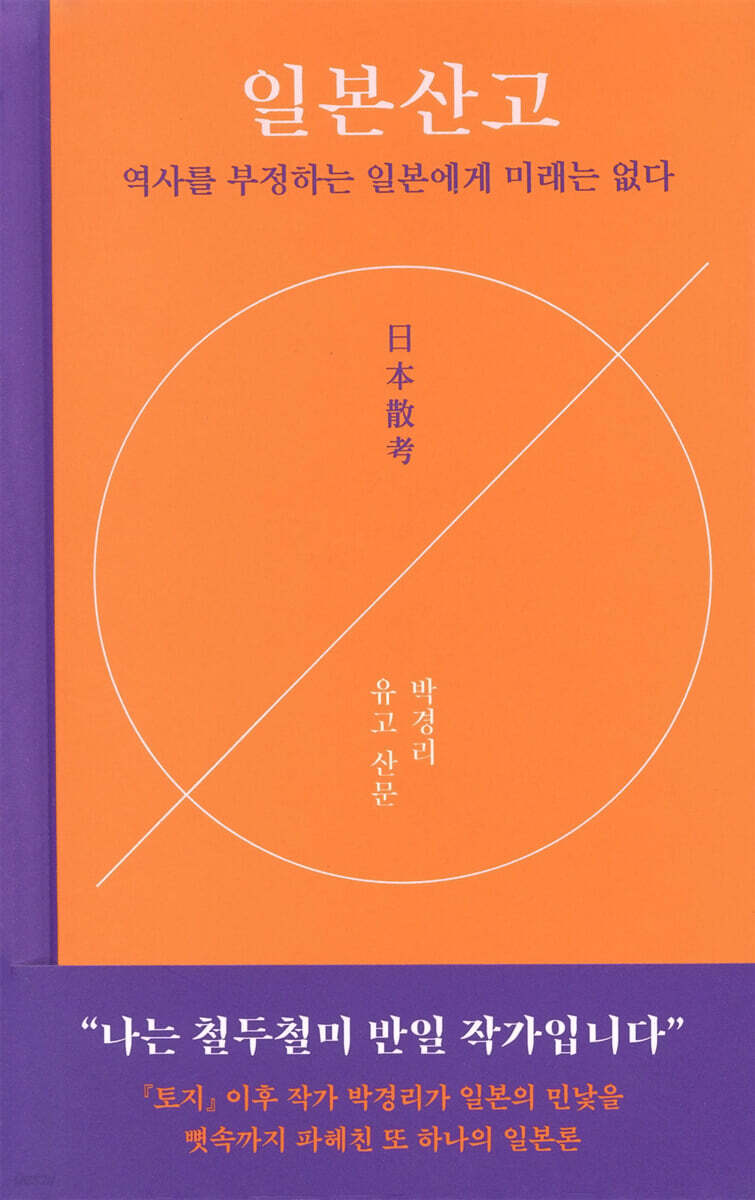
The posthumous prose collection 『Japanese Mountain Go』 by Park Kyung-ni, an author who left behind an unparalleled masterpiece in the history of Korean literature, has been newly published by Dasan Books.
『Japan Mountain』 is a book that compiles unpublished manuscripts written by Park Kyung-ni after completing 『Land』 and her writings on Japan published during her lifetime, under the full-fledged plan for a study of Japan.
Born in 1926 and a member of the colonial era, he expressed his sense of mission to leave behind a theory of Japan for the next generation so that Japan would never speak again, saying in an interview that if his generation disappeared, there would be no one to write such things.
This book, which was almost never published after his death in 2008, was discovered by the deceased's family while sorting through his belongings, and was later published after being edited by cultural critic Professor Lee Seung-yoon and others.
Professor Lee Seung-yoon introduces 『Land』 as a novel-based theory of Japan, while 『Japan Mountain』 is a realistic, ongoing theory of Japan.
Park Kyung-ni, an intellectual who lived through the Japanese colonial period, witnessed Japan's lack of reflection and the phenomenon of spineless intellectuals sympathizing with Japan's viewpoint. Based on a clear understanding of history, she wrote "Japan Sango" through thorough research. This book can be said to be a kind of "Japanese user manual" that she left behind to prevent our community from repeating the tragic history.
After 『Land』, author Park Kyung-ri showed the true face of Japan.
Another theory of Japan, deeply ingrained
The epic novel "Land" vividly depicts the lives of the Korean people during the turbulent times from the late Joseon Dynasty to the Japanese colonial period.
The posthumous prose collection 『Japanese Mountain Go』 by Park Kyung-ni, an author who left behind an unparalleled masterpiece in the history of Korean literature, has been newly published by Dasan Books.
『Japan Mountain』 is a book that compiles unpublished manuscripts written by Park Kyung-ni after completing 『Land』 and her writings on Japan published during her lifetime, under the full-fledged plan for a study of Japan.
Born in 1926 and a member of the colonial era, he expressed his sense of mission to leave behind a theory of Japan for the next generation so that Japan would never speak again, saying in an interview that if his generation disappeared, there would be no one to write such things.
This book, which was almost never published after his death in 2008, was discovered by the deceased's family while sorting through his belongings, and was later published after being edited by cultural critic Professor Lee Seung-yoon and others.
Professor Lee Seung-yoon introduces 『Land』 as a novel-based theory of Japan, while 『Japan Mountain』 is a realistic, ongoing theory of Japan.
Park Kyung-ni, an intellectual who lived through the Japanese colonial period, witnessed Japan's lack of reflection and the phenomenon of spineless intellectuals sympathizing with Japan's viewpoint. Based on a clear understanding of history, she wrote "Japan Sango" through thorough research. This book can be said to be a kind of "Japanese user manual" that she left behind to prevent our community from repeating the tragic history.
- You can preview some of the book's contents.
Preview
index
On the Publication of "Nihon Sango" | "Don't Show Etiquette to the Japanese"
Part 1: Japanese Mountain Go
1.
The source of hatred
2.
The Illusion of the New World I
3.
The Illusion of the New World II
4.
Tokyo Crow
5.
There is no exit
6.
Japanese misunderstandings, our mistakes
Part 2: "I am an anti-Japanese writer."
1.
Japan cannot open the box of truth
2.
The land where gods live
3.
The perspective of beauty
4.
To Mr. Q - Is this a mirage?
5.
Back to Mr. Q - The End of Delusion
Part 3: Debate on the Ground with Japanese Historians
I am disappointed in Koreans' "popular nationalism."
―A letter written by a Japanese intellectual on August 15th
Japanese people are not qualified to give advice to Koreans.
―Rebuttal to the theory of Korean folk nationalism
Appendix: Lifeless Japanese Culture
Part 1: Japanese Mountain Go
1.
The source of hatred
2.
The Illusion of the New World I
3.
The Illusion of the New World II
4.
Tokyo Crow
5.
There is no exit
6.
Japanese misunderstandings, our mistakes
Part 2: "I am an anti-Japanese writer."
1.
Japan cannot open the box of truth
2.
The land where gods live
3.
The perspective of beauty
4.
To Mr. Q - Is this a mirage?
5.
Back to Mr. Q - The End of Delusion
Part 3: Debate on the Ground with Japanese Historians
I am disappointed in Koreans' "popular nationalism."
―A letter written by a Japanese intellectual on August 15th
Japanese people are not qualified to give advice to Koreans.
―Rebuttal to the theory of Korean folk nationalism
Appendix: Lifeless Japanese Culture
Detailed image

Into the book
These days, the younger generation is accepting the history of Japan and our country in an ideological way.
Indirect experiences conveyed from those who have experienced them are bound to be conceptual.
But despite this, the fact that we have been unilaterally treated by Japan, and therefore our resentment cannot but be one-sided, and the thorn of hatred that has lodged deep in our consciousness is difficult to pull out - this is a common feeling and perception among us regardless of generation.
But at some point, I began to feel that they, too, held a grudge against us.
--- p.16
A country without a model or framework, their political ideology has created a nation with a stunted creative vitality.
It's no different today.
The fabricated history textbooks are still a source of controversy in the affected countries, and the shameless, whale-like recklessness continues to extend them without correcting them.
The clear stream of Japan that has continued like a thin stream, the people with a clear conscience that is almost zen-like, the scholars who raise their voices but their voices grow smaller day by day, and on the contrary, the right-wing's cries that are getting louder are our worries and fears.
It is also a tragedy for Japan's future.
There is nothing more frightening than calling something that is not true and calling something that is clear false.
When that fearful thing gradually swells and grows larger, we, humanity, and above all, the Japanese themselves, will experience tribulation.
--- pp.26~27
I introduced myself as “a staunchly anti-Japanese writer.” The two seemed a little surprised.
Why would they be shocked? I've said this before, and the Japanese seemed to listen quietly.
But then I realized.
That a lot of time has passed.
Those who took anti-Japanese sentiment for granted now feel that it is not so.
They and I talked for quite some time.
When the Nanking Massacre was mentioned, their expressions changed, and when I asked if it was the Japanese who were so fearful, they seemed perplexed.
--- p.58
There is a story in Japanese legend about a fisherman named Urashima.
The story is about a man who receives a jade box from the Dragon Palace and returns to his hometown, only to find that his hometown is filled with strangers. Feeling lonely, he disobeys the order not to open it and opens the box at the beach, turning his hair white.
Gray hair is a symbol of the passing of time.
But Japan is afraid to open the jade box, but it must be opened.
Because turning gray and being reborn is the eternal order and truth.
--- p.69
I plan to write about Japan later, but I was so saddened by how little students knew about Japan, and I was also worried by the growing trend of people in society being indifferent to Japan's identity or viewing Japan as a role model. So, I couldn't help but speak hastily and roughly, even if it was just a little.
Of course, it's not the students' fault that they don't know about Japan, but the last thing I want to say is never to use Japan as a model.
--- p.95
He said.
Those were good times, the national spirit of those times was noble, tense, and beautiful.
But what is it now, he says.
We ourselves recall the tragedy of those times as heartbreakingly beautiful.
But longing for those days and wanting to go back is "absolutely not true!" We are anti-Japanese now to avoid going back to those days, to avoid repeating the mistakes of history, and to avoid Japanese people like Tanaka.
Indirect experiences conveyed from those who have experienced them are bound to be conceptual.
But despite this, the fact that we have been unilaterally treated by Japan, and therefore our resentment cannot but be one-sided, and the thorn of hatred that has lodged deep in our consciousness is difficult to pull out - this is a common feeling and perception among us regardless of generation.
But at some point, I began to feel that they, too, held a grudge against us.
--- p.16
A country without a model or framework, their political ideology has created a nation with a stunted creative vitality.
It's no different today.
The fabricated history textbooks are still a source of controversy in the affected countries, and the shameless, whale-like recklessness continues to extend them without correcting them.
The clear stream of Japan that has continued like a thin stream, the people with a clear conscience that is almost zen-like, the scholars who raise their voices but their voices grow smaller day by day, and on the contrary, the right-wing's cries that are getting louder are our worries and fears.
It is also a tragedy for Japan's future.
There is nothing more frightening than calling something that is not true and calling something that is clear false.
When that fearful thing gradually swells and grows larger, we, humanity, and above all, the Japanese themselves, will experience tribulation.
--- pp.26~27
I introduced myself as “a staunchly anti-Japanese writer.” The two seemed a little surprised.
Why would they be shocked? I've said this before, and the Japanese seemed to listen quietly.
But then I realized.
That a lot of time has passed.
Those who took anti-Japanese sentiment for granted now feel that it is not so.
They and I talked for quite some time.
When the Nanking Massacre was mentioned, their expressions changed, and when I asked if it was the Japanese who were so fearful, they seemed perplexed.
--- p.58
There is a story in Japanese legend about a fisherman named Urashima.
The story is about a man who receives a jade box from the Dragon Palace and returns to his hometown, only to find that his hometown is filled with strangers. Feeling lonely, he disobeys the order not to open it and opens the box at the beach, turning his hair white.
Gray hair is a symbol of the passing of time.
But Japan is afraid to open the jade box, but it must be opened.
Because turning gray and being reborn is the eternal order and truth.
--- p.69
I plan to write about Japan later, but I was so saddened by how little students knew about Japan, and I was also worried by the growing trend of people in society being indifferent to Japan's identity or viewing Japan as a role model. So, I couldn't help but speak hastily and roughly, even if it was just a little.
Of course, it's not the students' fault that they don't know about Japan, but the last thing I want to say is never to use Japan as a model.
--- p.95
He said.
Those were good times, the national spirit of those times was noble, tense, and beautiful.
But what is it now, he says.
We ourselves recall the tragedy of those times as heartbreakingly beautiful.
But longing for those days and wanting to go back is "absolutely not true!" We are anti-Japanese now to avoid going back to those days, to avoid repeating the mistakes of history, and to avoid Japanese people like Tanaka.
--- p.157
Publisher's Review
“Don’t be polite to the Japanese.”
The Japanese system that gave birth to a destructive culture
A must-read, full of insight into a world that forgets the past.
For Park Kyung-ni, Japan was a painful memory and a burden, but at the same time, it was also an object of analysis and overcoming.
The ups and downs of the countless characters appearing in "Land," the nature of national discourse, Japan's colonial rule strategy and comparative studies of Korean and Japanese culture, and the countless debates among intellectuals are all the results of this.
When 『Japan Sango』 was first published in 2013, it caused a heated reaction in Korean society due to its self-introduction as “I am a thoroughly anti-Japanese writer,” along with its strong criticism of Japan, Japanese people, and Japanese culture.
Some have reacted cautiously to the author's anti-Japanese arguments, decades after liberation. However, as his harsh warning suggests, Japan's distortion of history and the ignorant domestic figures' sympathy for it have intensified, making the author's remarks even more noteworthy today.
In this book, the author analytically critiques and dismantles Japanese historical books such as the Kojiki and Nihon Shoki, uncovering the true nature of Japan, which has lost its original form and framework and is obsessed with the illusion of a divine nation. He also refutes point by point the fictitiousness, logical leaps, and distortions of their claims about Korean culture and history.
His remarks toward Japan are sharp, but if we look at their core, we can see that they are not limited to simple criticism of Japan and the interests and conflicts between the two countries, but rather touch on universal human values such as courtesy toward others and respect for life.
#Park Kyung-ni 15th Anniversary Memorial Project
#Dasan Bookstore's "Park Kyung-ni Collection" third volume published
This year, marking the 15th anniversary of Park Kyung-ni's passing, Dasan Bookstore is publishing a new edition of his vast works, which touch the heart of Korean society and literature.
This project, which encompasses novels, prose, and poetry, also includes long-lost, unpublished works.
Beginning with the re-publication of the original children's story "The Cat Who Returned" in April after 17 years, the author published the full-length novel "The Daughters of Kim Pharmacy," which established her reputation among the public. In June, the author plans to present her monumental masterpiece "Land" (20 volumes) in a new era-appropriate format.
The third edition of the Park Kyung-ni Collection, 『Japanese Mountain Go』, revised for the first time in ten years, corrects errors in previous editions that arose during the process of transcribing the author's original manuscript, and provides supplementary explanations for expressions that have become unfamiliar over time.
While refining the book to make it accessible to modern readers, I tried to convey the author's voice fully by retaining the author's unique expressions, dialect, and words that reveal the times.
The Japanese system that gave birth to a destructive culture
A must-read, full of insight into a world that forgets the past.
For Park Kyung-ni, Japan was a painful memory and a burden, but at the same time, it was also an object of analysis and overcoming.
The ups and downs of the countless characters appearing in "Land," the nature of national discourse, Japan's colonial rule strategy and comparative studies of Korean and Japanese culture, and the countless debates among intellectuals are all the results of this.
When 『Japan Sango』 was first published in 2013, it caused a heated reaction in Korean society due to its self-introduction as “I am a thoroughly anti-Japanese writer,” along with its strong criticism of Japan, Japanese people, and Japanese culture.
Some have reacted cautiously to the author's anti-Japanese arguments, decades after liberation. However, as his harsh warning suggests, Japan's distortion of history and the ignorant domestic figures' sympathy for it have intensified, making the author's remarks even more noteworthy today.
In this book, the author analytically critiques and dismantles Japanese historical books such as the Kojiki and Nihon Shoki, uncovering the true nature of Japan, which has lost its original form and framework and is obsessed with the illusion of a divine nation. He also refutes point by point the fictitiousness, logical leaps, and distortions of their claims about Korean culture and history.
His remarks toward Japan are sharp, but if we look at their core, we can see that they are not limited to simple criticism of Japan and the interests and conflicts between the two countries, but rather touch on universal human values such as courtesy toward others and respect for life.
#Park Kyung-ni 15th Anniversary Memorial Project
#Dasan Bookstore's "Park Kyung-ni Collection" third volume published
This year, marking the 15th anniversary of Park Kyung-ni's passing, Dasan Bookstore is publishing a new edition of his vast works, which touch the heart of Korean society and literature.
This project, which encompasses novels, prose, and poetry, also includes long-lost, unpublished works.
Beginning with the re-publication of the original children's story "The Cat Who Returned" in April after 17 years, the author published the full-length novel "The Daughters of Kim Pharmacy," which established her reputation among the public. In June, the author plans to present her monumental masterpiece "Land" (20 volumes) in a new era-appropriate format.
The third edition of the Park Kyung-ni Collection, 『Japanese Mountain Go』, revised for the first time in ten years, corrects errors in previous editions that arose during the process of transcribing the author's original manuscript, and provides supplementary explanations for expressions that have become unfamiliar over time.
While refining the book to make it accessible to modern readers, I tried to convey the author's voice fully by retaining the author's unique expressions, dialect, and words that reveal the times.
GOODS SPECIFICS
- Date of issue: May 2, 2023
- Format: Hardcover book binding method guide
- Page count, weight, size: 176 pages | 392g | 128*205*20mm
- ISBN13: 9791130699394
- ISBN10: 1130699390
You may also like
카테고리
korean


korean

![GQ KOREA Mark (Monthly): December [2025]](http://librairie.coreenne.fr/cdn/shop/files/8ef265dbbfbf186523ed75ba7319009d.jpg?v=1765340328&width=3840)


