

History of Consumption
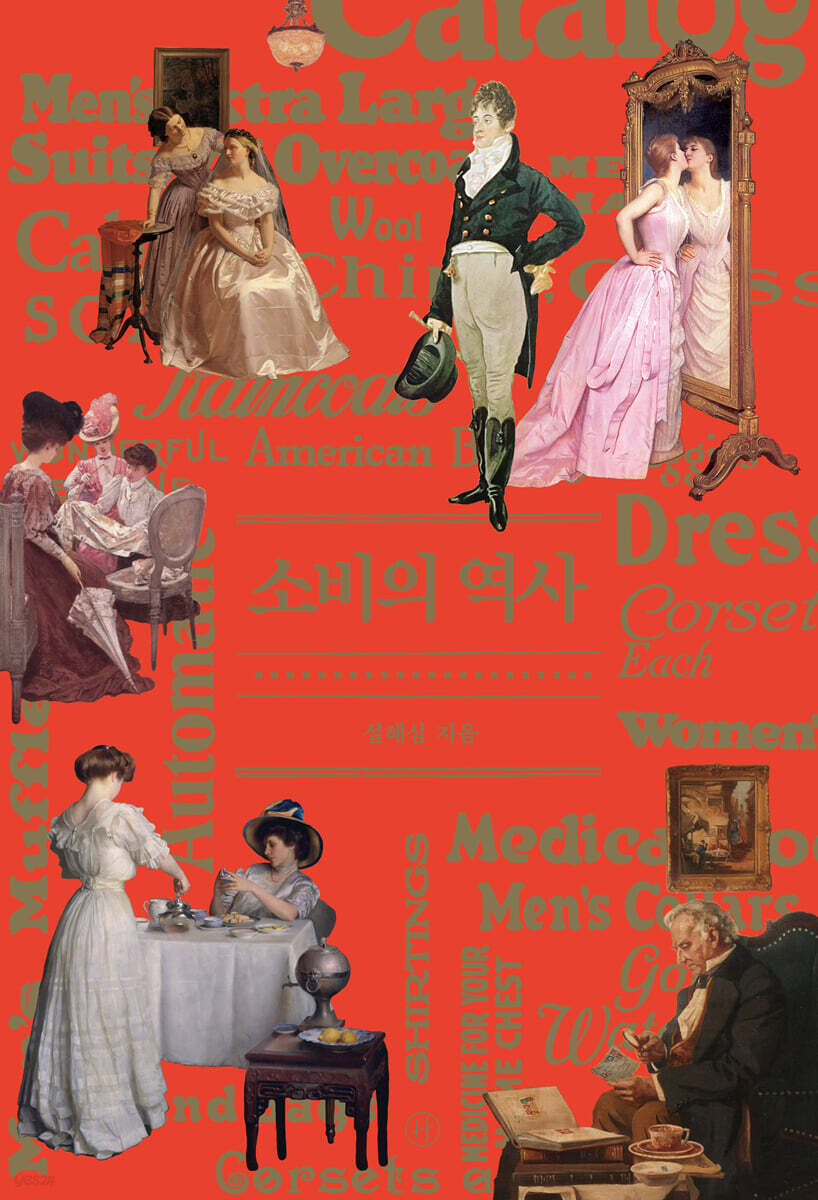 |
Description
Book Introduction
There has never been anything like this in history.
Fitting together the puzzle of history through familiar objects and spaces!
The History of 'Consuming Humans'
Did revolution, war, and labor alone change the world? What would we discover if we read history through the lens of "consumption," something so commonplace that it seems trivial and insignificant? Professor Seol Hye-sim, who reimagines everyday life as a subject of historical scholarship, presents for the first time in Korea the history of "consuming humans," a subject previously overlooked by historians.
Through familiar objects, spaces, and the act of consumption, it analyzes the history of humanity since the modern era in the most intimate and multi-layered way, allowing viewers to experience a history in which 'people' and 'daily life' are vividly revealed.
Fitting together the puzzle of history through familiar objects and spaces!
The History of 'Consuming Humans'
Did revolution, war, and labor alone change the world? What would we discover if we read history through the lens of "consumption," something so commonplace that it seems trivial and insignificant? Professor Seol Hye-sim, who reimagines everyday life as a subject of historical scholarship, presents for the first time in Korea the history of "consuming humans," a subject previously overlooked by historians.
Through familiar objects, spaces, and the act of consumption, it analyzes the history of humanity since the modern era in the most intimate and multi-layered way, allowing viewers to experience a history in which 'people' and 'daily life' are vividly revealed.
- You can preview some of the book's contents.
Preview
index
-While publishing a book
GOODS, Desire
1.
Will | The most treasured possession is given to a widowed friend. Early modern European consumption as shown in the will.
2.
The Birth of the Suit | The Emergence of Bourgeois Ideology and the Ready-to-Wear Industry
3.
Wedding Dresses | Why the Bride's Dress Costs More Than the Groom's Tuxedo: The Essence of the Luxury Debate
4.
Porcelain | The European Transformation of Chinese Porcelain: Europe's Desire to Own the Unknown
5.
Soap | Black Skin, White Soap: The First Colonial Product to Spread the Myth of Whiteness
SALES, seduce
6.
Women Designers | Antoinette's Designers and the Women Who Joined the "Cheap Women" Production
7.
Patented Drugs | The Life of a Quacker, a Pseudo-Doctor, and the Evolution of the Patented Drug Market
8.
Installment Plan | The Success Story and Counterarguments of the First Mass-Sold Home Sewing Machine
9.
Cosmetics Saleswoman | The Original Cosmetics Lady, Avon Lady: A Network of Women Empowered by Economic Activity and Consumption
10.
Trade Cards|The Glamorous Business Cards of Products: Knowledge and Prejudice Distributed by Trade Cards
CONSUMER, consume
11.
Working-class gatherings and conspicuous consumption: things you have to buy even if it means going into debt
12.
Collecting | Is collecting truly a consumer act? The origins of museums and the debate over collecting as consumption.
13.
Double Reading | Written as Medical Texts, Read as Pornography: The Secret Consumption of Early Modern Medical Texts
14.
Department Store Theft | A New Psychosis Born from a Pathological Consumer Society
15.
Plastic Surgery | Nationality of Plastic Surgery Consumption: Argentina for Breast Augmentation, Brazil for Breast Reduction
16.
Senior Consumers | No Products for Seniors? The Rebirth of the Senior Consumer
Market, expanding
17.
Oriental Dress | The Fashion and Decline of Turkic Clothing: The Influence of Turkic Culture on Europe
18.
Hot Springs | 400 Years Ago, Consuming Services at Hot Springs: A Reexamination of the 18th-Century Consumer Revolution Thesis
19.
Fair|A Spectacular Pile of Curious Products: The Crystal Palace Fair and the Birth of Consumers
20.
Catalog | The Origins of Home Shopping: Catalog Shopping and the Equalization of Desire
21.
Shopping Mall | The Ideals and Limitations of Shopping Malls: A Consumption Space that Reconstructs Space and Time
Boycott, refuse
22.
Sugar Boycott Movement | The Abolition of Slavery and the Origins of Ethical Consumption
23.
Boycott Foreign Products | The History of the Patriotic "Buy American" Campaign
24.
Civil Rights Movement | The Story Behind Mississippi Burning: Black Consumerism and the Boycott
25.
Global Consumers' Alliance | The Politics of Consumption: The Birth and Development of the Consumer Movement
Current Status and Prospects of Boron Western Consumers
supplement
Notes in the text
References
Image source and location
Search
GOODS, Desire
1.
Will | The most treasured possession is given to a widowed friend. Early modern European consumption as shown in the will.
2.
The Birth of the Suit | The Emergence of Bourgeois Ideology and the Ready-to-Wear Industry
3.
Wedding Dresses | Why the Bride's Dress Costs More Than the Groom's Tuxedo: The Essence of the Luxury Debate
4.
Porcelain | The European Transformation of Chinese Porcelain: Europe's Desire to Own the Unknown
5.
Soap | Black Skin, White Soap: The First Colonial Product to Spread the Myth of Whiteness
SALES, seduce
6.
Women Designers | Antoinette's Designers and the Women Who Joined the "Cheap Women" Production
7.
Patented Drugs | The Life of a Quacker, a Pseudo-Doctor, and the Evolution of the Patented Drug Market
8.
Installment Plan | The Success Story and Counterarguments of the First Mass-Sold Home Sewing Machine
9.
Cosmetics Saleswoman | The Original Cosmetics Lady, Avon Lady: A Network of Women Empowered by Economic Activity and Consumption
10.
Trade Cards|The Glamorous Business Cards of Products: Knowledge and Prejudice Distributed by Trade Cards
CONSUMER, consume
11.
Working-class gatherings and conspicuous consumption: things you have to buy even if it means going into debt
12.
Collecting | Is collecting truly a consumer act? The origins of museums and the debate over collecting as consumption.
13.
Double Reading | Written as Medical Texts, Read as Pornography: The Secret Consumption of Early Modern Medical Texts
14.
Department Store Theft | A New Psychosis Born from a Pathological Consumer Society
15.
Plastic Surgery | Nationality of Plastic Surgery Consumption: Argentina for Breast Augmentation, Brazil for Breast Reduction
16.
Senior Consumers | No Products for Seniors? The Rebirth of the Senior Consumer
Market, expanding
17.
Oriental Dress | The Fashion and Decline of Turkic Clothing: The Influence of Turkic Culture on Europe
18.
Hot Springs | 400 Years Ago, Consuming Services at Hot Springs: A Reexamination of the 18th-Century Consumer Revolution Thesis
19.
Fair|A Spectacular Pile of Curious Products: The Crystal Palace Fair and the Birth of Consumers
20.
Catalog | The Origins of Home Shopping: Catalog Shopping and the Equalization of Desire
21.
Shopping Mall | The Ideals and Limitations of Shopping Malls: A Consumption Space that Reconstructs Space and Time
Boycott, refuse
22.
Sugar Boycott Movement | The Abolition of Slavery and the Origins of Ethical Consumption
23.
Boycott Foreign Products | The History of the Patriotic "Buy American" Campaign
24.
Civil Rights Movement | The Story Behind Mississippi Burning: Black Consumerism and the Boycott
25.
Global Consumers' Alliance | The Politics of Consumption: The Birth and Development of the Consumer Movement
Current Status and Prospects of Boron Western Consumers
supplement
Notes in the text
References
Image source and location
Search
Publisher's Review
1.
The 'History of Consumption', which no one paid attention to, is making its debut in Korea!
─A history of world-changing discoveries made in everyday life
Professor Seol Hye-sim, a historian who studies human-centered history by constantly uncovering new topics from a vast pile of historical materials.
He has been communicating with the public and introducing Western history through topics that are familiar to us but not easily found in history books, and this time, he has focused on 'consumption' among the numerous human activities and given it a new life as a topic of historical studies.
What would it be like if 'consumption', which has been discussed in the fields of sociology, aesthetics, and management, were treated as a theme in history?
We live our lives consuming something every day, to the point where we can be called 'Homo consummus', the consuming human beings of modern times.
Consumption, which occupies a large part of our lives, has until now been considered a product of superficial materialism aimed solely at desire and pleasure. Furthermore, the social conventions that associate consumption with luxury and debauchery have kept consumption from being a subject of serious study.
This book examines human history in a detailed and multi-layered way, examining familiar objects and spaces that no historian has previously focused on, as well as the human act and motivation of "consumption," and tells a vivid history of "people" and "life."
From the modern era to the present, we examine the history of products that have enriched the basic lives of humans, as well as the history of modern sales methods and spaces such as pharmacists, door-to-door sales, department stores, and shopping malls. Through products influenced by imperialism and actions like boycotts, we encounter the long history of resistance, liberation, and solidarity hidden behind "consumption."
The 200 or so eye-catching illustrations and photographs in this book will vividly portray the modern and contemporary consumer culture.
In addition, in the supplementary article, “The Current State and Prospects of Western Consumer History,” we organize the current state of Western research on consumer history, a field still unfamiliar in Korea, and explore the potential of consumer history to expand the horizons of historical studies.
The study of consumer history, which experienced explosive growth in the 1980s, has established itself as a cutting-edge field of research, clearly demonstrating the critical awareness of postmodern history that modern history had neglected and the academic landscape that transcended national borders.
The definition or scope of consumption is still unknown.
Although there are many unclear issues and challenges such as the convergence of history and other academic fields, Professor Seol Hye-sim points out that these are the characteristics and potential of consumer history.
Consumption is arguably the most realistic and progressive topic, as it offers a starting point for countering global capitalism and draws attention to other forms of solidarity and networks that transcend national, ethnic, and class boundaries.
By examining the act of consumption, we can uncover a more colorful history of humanity by examining the intimate actions and motivations of humans that have been overlooked by history, as well as the social effects they have brought about.
When we encounter the history of unfamiliar things we've never heard of, or look at familiar things with fresh eyes, we can experience the joy of history and feel how deeply it permeates our lives.
Just as the author hopes to awaken readers to the joy of reading history by uncovering forgotten pieces of history waiting to be discovered, let's encounter the history of 'consumer humans' that is both everyday and familiar, yet new and novel, through the stories hidden in the products and spaces we carelessly consume!
(Through this book) I hope to elevate consumption, which occupies a large part of our lives, to a serious academic topic.
By introducing various discussions surrounding consumption and integrating consumption, which has been dealt with separately in marketing, economics, and sociology, with the study of history, we aim to create a much richer forum for discussion.
… … Paying attention to human motivation and purpose in consumption behavior is an extension of the daily life and microhistory that once attracted great attention, and it is also a task of placing humans, who had been submerged in structures, back at the center of history.
I hope this book will serve as a starting point for readers to experience the joy of history.
─From “Publishing a Book”
The late start of the history of consumption is largely due to the common academic belief that consumption is looked down on compared to production.
Since French economist Jean-Baptiste Say's 1803 publication of his Treatise on Political Economy, in which he asserted Say's law that "supply creates demand," academic research has focused solely on production and supply.
Karl Marx called consumption a “commodity fetishism” that conceals human relationships and social characteristics in the capitalist production process, and he disparaged desires such as eating well and dressing well as “animal functions, not human functions.”
Max Weber had pointed out that consumption behavior was an important factor in acquiring social status, but within the logic that viewed the Protestant ethic as the driving force behind the development of capitalism, consumption was regarded as pleasure and was ultimately relegated to a peripheral position.
… … In the 1980s, consumerism began to grow explosively.
As a result, British historian Frank Trentman wrote in 2012, “Consumption has emerged from the shadow of production.
He goes so far as to declare that “homo consumens has replaced homo faber.”
─From “The Current State and Prospects of Western Consumer History”
2.
The many faces hidden behind consumption
─Dispelling the conventional wisdom about "consumption" and rediscovering "Homo consummus."
Consumption does not simply refer to the act of buying and using things.
It includes immaterial elements such as social images and symbols, such as imagination and relationships with objects, ideology, and distinctions, and also encompasses various devices that promote consumption, such as sales, marketing, and advertising.
Moreover, the spectrum of today's consumption has greatly expanded, encompassing consumer desires, shopping behavior, consumption spaces, waste, and recycling.
"The History of Consumption" goes beyond the moral conventions of desire, pleasure, luxury, and debauchery and examines the history of "consuming humans" along with the various elements encompassed by "consumption."
From the modern era to contemporary society, this book examines the history of various products that have shaped cultural life, from inventions that enriched basic human life to fashion items like clothing and cosmetics, printed media like books, and luxury goods of the European upper class. Through detailed case studies, it introduces concepts and discussions surrounding consumption, such as the modern consumer revolution, the birth of the consumer, the luxury debate, and conspicuous consumption.
It also traces the origins and changes in sales methods and consumption spaces that tempt consumers, from the quack pharmacist who traveled the neighborhood, to the door-to-door sales of the original cosmetics lady, the Avon Lady, to the Singer sewing machine that first introduced mass sales and installment payments, to the department stores and shopping malls that transformed consumer lifestyles, and even home shopping.
In addition, we look into the coloniality embedded in products such as soap that spread the myth of whiteness and trade cards containing imperialist prejudice, and the history of resistance and solidarity hidden behind consumption through the sugar boycott movement and black boycott movement that arose as part of the abolition of slavery, and the movement to prefer domestic products in the United States.
In addition, it examines peripheral consumer behaviors such as collecting controversies, pathological kleptomania, plastic surgery consumption, and consumption issues among the elderly.
The topics covered in this book are by no means distant from the concerns about consumption today.
Through the history of consumption, we can remove the mask of modern people passively absorbed into the world of consumption and reflect on the true 'Homo Consumus'.
In 1824, Pierre Parisot, a cloth merchant, opened a shop and began selling ready-made clothes.
It was an innovative system that allowed for the production and sale of clothes in one place, targeting a wide range of customers.
… … The ready-to-wear store founded by Parisot soon opened branches all over France and entered department stores such as Bon Marché.
These ready-to-wear men's clothing, while not necessarily the most luxurious, attracted customers from both those who previously wore tailored suits and those who had to settle for second-hand clothing.
In particular, those who bought new clothes for the first time in their lives by purchasing ready-made clothes experienced the 'true happiness of consumption.'
In fact, these ready-made clothes were cheap imitations of the clothing of the upper class.
Now, lower-level civil servants, somewhat independent small business owners, assistants to freelancers, employees in industry or commerce, and well-off artisans and laborers – in other words, groups belonging to the middle class – have entered the world of ‘mass-reproduced luxury goods.’
─From “The Birth of the Suit - Bourgeois Ideology and the Emergence of the Ready-to-Wear Industry”
Racism against black people stems from traditional prejudices against the color black.
The civilized world has been built on a dichotomous worldview of light and darkness, and in societies that value light over darkness, things of black color have been discriminated against and excluded.
… … From the late 19th century, various soaps produced in the West began to be imported into Southern Africa.
… … There is a record of a young student in Southern Africa at the turn of the 20th century who, diligently washing his face under the teachings of a missionary, complained, “But you are white and we are still black.”
The student thought that if he washed up every morning, he could become white.
Even today, when this episode feels absurd, the hygiene and beauty industries still commodify the white myth.
─From “Black Skin, White Soap—The First Colonial Product to Spread the White Myth”
The success of Singer sewing machines can be attributed, above all, to its pioneering installment plan.
In 1856, Clark, who was the manager of Singer, decided to make sewing machines for general use as well as for factory use and sell them to individual households.
This idea was actually unrealistic because sewing machines were very expensive items at the time.
… … Therefore, a groundbreaking sales method was needed to sell sewing machines to middle-class and lower-income families.
Clark devised an installment plan where a small amount was received as a deposit and the remainder was repaid over a long period of time.
This was the infamous aggressive marketing scheme, the “sign for $1, bet $1 a week” plan.
─From "The First Mass-Sold Household Machine - The Success Myth of the Sewing Machine and Its Counterarguments"
Avon was a very unique company in many ways.
Above all, even today, 95% of salespeople and customers are women.
In the late 19th century, when women had few opportunities to earn money, being a salesperson for Avon was almost the only opportunity for women to enter the business world.
… … In 1954, Avon aired a TV commercial called “Ding-Dong, Avon Calling.”
The first thing Peg says when he knocks on the door of the castle where Edward Scissorhands lives is this advertising slogan.
This commercial was the longest-running commercial in history, running until 1967, and is considered one of the most successful.
─From "The Original Cosmetics Lady, Avon Lady - Women's Network of Economic Activity and Consumption"
The sugar boycott movement began when abolitionists urged consumers to boycott products produced by slave labor, such as sugar, indigo, rice, and cotton.
Sugar, in particular, was embroiled in a particularly large controversy because it was a product closely linked to the British people's daily lives.
Supporters of the sugar trade argued that sugar was not a sensual luxury but a necessity for maintaining health.
Doctors warn that cutting out sugar can be very harmful to your health.
In fact, the British people at the time were practically addicted to sugar, so much so that this discussion seemed natural at first glance. ... ... However, this situation was overturned by William Fox's pamphlet.
Fox argued that sugar consumption should be considered not only from an economic but also an ethical perspective.
In this context, consuming sugar produced by slaves was likened to cannibalism.
─From “Abolition of Slavery and the Sugar Refusal Movement: The Origins of Ethical Consumption”
The 'History of Consumption', which no one paid attention to, is making its debut in Korea!
─A history of world-changing discoveries made in everyday life
Professor Seol Hye-sim, a historian who studies human-centered history by constantly uncovering new topics from a vast pile of historical materials.
He has been communicating with the public and introducing Western history through topics that are familiar to us but not easily found in history books, and this time, he has focused on 'consumption' among the numerous human activities and given it a new life as a topic of historical studies.
What would it be like if 'consumption', which has been discussed in the fields of sociology, aesthetics, and management, were treated as a theme in history?
We live our lives consuming something every day, to the point where we can be called 'Homo consummus', the consuming human beings of modern times.
Consumption, which occupies a large part of our lives, has until now been considered a product of superficial materialism aimed solely at desire and pleasure. Furthermore, the social conventions that associate consumption with luxury and debauchery have kept consumption from being a subject of serious study.
This book examines human history in a detailed and multi-layered way, examining familiar objects and spaces that no historian has previously focused on, as well as the human act and motivation of "consumption," and tells a vivid history of "people" and "life."
From the modern era to the present, we examine the history of products that have enriched the basic lives of humans, as well as the history of modern sales methods and spaces such as pharmacists, door-to-door sales, department stores, and shopping malls. Through products influenced by imperialism and actions like boycotts, we encounter the long history of resistance, liberation, and solidarity hidden behind "consumption."
The 200 or so eye-catching illustrations and photographs in this book will vividly portray the modern and contemporary consumer culture.
In addition, in the supplementary article, “The Current State and Prospects of Western Consumer History,” we organize the current state of Western research on consumer history, a field still unfamiliar in Korea, and explore the potential of consumer history to expand the horizons of historical studies.
The study of consumer history, which experienced explosive growth in the 1980s, has established itself as a cutting-edge field of research, clearly demonstrating the critical awareness of postmodern history that modern history had neglected and the academic landscape that transcended national borders.
The definition or scope of consumption is still unknown.
Although there are many unclear issues and challenges such as the convergence of history and other academic fields, Professor Seol Hye-sim points out that these are the characteristics and potential of consumer history.
Consumption is arguably the most realistic and progressive topic, as it offers a starting point for countering global capitalism and draws attention to other forms of solidarity and networks that transcend national, ethnic, and class boundaries.
By examining the act of consumption, we can uncover a more colorful history of humanity by examining the intimate actions and motivations of humans that have been overlooked by history, as well as the social effects they have brought about.
When we encounter the history of unfamiliar things we've never heard of, or look at familiar things with fresh eyes, we can experience the joy of history and feel how deeply it permeates our lives.
Just as the author hopes to awaken readers to the joy of reading history by uncovering forgotten pieces of history waiting to be discovered, let's encounter the history of 'consumer humans' that is both everyday and familiar, yet new and novel, through the stories hidden in the products and spaces we carelessly consume!
(Through this book) I hope to elevate consumption, which occupies a large part of our lives, to a serious academic topic.
By introducing various discussions surrounding consumption and integrating consumption, which has been dealt with separately in marketing, economics, and sociology, with the study of history, we aim to create a much richer forum for discussion.
… … Paying attention to human motivation and purpose in consumption behavior is an extension of the daily life and microhistory that once attracted great attention, and it is also a task of placing humans, who had been submerged in structures, back at the center of history.
I hope this book will serve as a starting point for readers to experience the joy of history.
─From “Publishing a Book”
The late start of the history of consumption is largely due to the common academic belief that consumption is looked down on compared to production.
Since French economist Jean-Baptiste Say's 1803 publication of his Treatise on Political Economy, in which he asserted Say's law that "supply creates demand," academic research has focused solely on production and supply.
Karl Marx called consumption a “commodity fetishism” that conceals human relationships and social characteristics in the capitalist production process, and he disparaged desires such as eating well and dressing well as “animal functions, not human functions.”
Max Weber had pointed out that consumption behavior was an important factor in acquiring social status, but within the logic that viewed the Protestant ethic as the driving force behind the development of capitalism, consumption was regarded as pleasure and was ultimately relegated to a peripheral position.
… … In the 1980s, consumerism began to grow explosively.
As a result, British historian Frank Trentman wrote in 2012, “Consumption has emerged from the shadow of production.
He goes so far as to declare that “homo consumens has replaced homo faber.”
─From “The Current State and Prospects of Western Consumer History”
2.
The many faces hidden behind consumption
─Dispelling the conventional wisdom about "consumption" and rediscovering "Homo consummus."
Consumption does not simply refer to the act of buying and using things.
It includes immaterial elements such as social images and symbols, such as imagination and relationships with objects, ideology, and distinctions, and also encompasses various devices that promote consumption, such as sales, marketing, and advertising.
Moreover, the spectrum of today's consumption has greatly expanded, encompassing consumer desires, shopping behavior, consumption spaces, waste, and recycling.
"The History of Consumption" goes beyond the moral conventions of desire, pleasure, luxury, and debauchery and examines the history of "consuming humans" along with the various elements encompassed by "consumption."
From the modern era to contemporary society, this book examines the history of various products that have shaped cultural life, from inventions that enriched basic human life to fashion items like clothing and cosmetics, printed media like books, and luxury goods of the European upper class. Through detailed case studies, it introduces concepts and discussions surrounding consumption, such as the modern consumer revolution, the birth of the consumer, the luxury debate, and conspicuous consumption.
It also traces the origins and changes in sales methods and consumption spaces that tempt consumers, from the quack pharmacist who traveled the neighborhood, to the door-to-door sales of the original cosmetics lady, the Avon Lady, to the Singer sewing machine that first introduced mass sales and installment payments, to the department stores and shopping malls that transformed consumer lifestyles, and even home shopping.
In addition, we look into the coloniality embedded in products such as soap that spread the myth of whiteness and trade cards containing imperialist prejudice, and the history of resistance and solidarity hidden behind consumption through the sugar boycott movement and black boycott movement that arose as part of the abolition of slavery, and the movement to prefer domestic products in the United States.
In addition, it examines peripheral consumer behaviors such as collecting controversies, pathological kleptomania, plastic surgery consumption, and consumption issues among the elderly.
The topics covered in this book are by no means distant from the concerns about consumption today.
Through the history of consumption, we can remove the mask of modern people passively absorbed into the world of consumption and reflect on the true 'Homo Consumus'.
In 1824, Pierre Parisot, a cloth merchant, opened a shop and began selling ready-made clothes.
It was an innovative system that allowed for the production and sale of clothes in one place, targeting a wide range of customers.
… … The ready-to-wear store founded by Parisot soon opened branches all over France and entered department stores such as Bon Marché.
These ready-to-wear men's clothing, while not necessarily the most luxurious, attracted customers from both those who previously wore tailored suits and those who had to settle for second-hand clothing.
In particular, those who bought new clothes for the first time in their lives by purchasing ready-made clothes experienced the 'true happiness of consumption.'
In fact, these ready-made clothes were cheap imitations of the clothing of the upper class.
Now, lower-level civil servants, somewhat independent small business owners, assistants to freelancers, employees in industry or commerce, and well-off artisans and laborers – in other words, groups belonging to the middle class – have entered the world of ‘mass-reproduced luxury goods.’
─From “The Birth of the Suit - Bourgeois Ideology and the Emergence of the Ready-to-Wear Industry”
Racism against black people stems from traditional prejudices against the color black.
The civilized world has been built on a dichotomous worldview of light and darkness, and in societies that value light over darkness, things of black color have been discriminated against and excluded.
… … From the late 19th century, various soaps produced in the West began to be imported into Southern Africa.
… … There is a record of a young student in Southern Africa at the turn of the 20th century who, diligently washing his face under the teachings of a missionary, complained, “But you are white and we are still black.”
The student thought that if he washed up every morning, he could become white.
Even today, when this episode feels absurd, the hygiene and beauty industries still commodify the white myth.
─From “Black Skin, White Soap—The First Colonial Product to Spread the White Myth”
The success of Singer sewing machines can be attributed, above all, to its pioneering installment plan.
In 1856, Clark, who was the manager of Singer, decided to make sewing machines for general use as well as for factory use and sell them to individual households.
This idea was actually unrealistic because sewing machines were very expensive items at the time.
… … Therefore, a groundbreaking sales method was needed to sell sewing machines to middle-class and lower-income families.
Clark devised an installment plan where a small amount was received as a deposit and the remainder was repaid over a long period of time.
This was the infamous aggressive marketing scheme, the “sign for $1, bet $1 a week” plan.
─From "The First Mass-Sold Household Machine - The Success Myth of the Sewing Machine and Its Counterarguments"
Avon was a very unique company in many ways.
Above all, even today, 95% of salespeople and customers are women.
In the late 19th century, when women had few opportunities to earn money, being a salesperson for Avon was almost the only opportunity for women to enter the business world.
… … In 1954, Avon aired a TV commercial called “Ding-Dong, Avon Calling.”
The first thing Peg says when he knocks on the door of the castle where Edward Scissorhands lives is this advertising slogan.
This commercial was the longest-running commercial in history, running until 1967, and is considered one of the most successful.
─From "The Original Cosmetics Lady, Avon Lady - Women's Network of Economic Activity and Consumption"
The sugar boycott movement began when abolitionists urged consumers to boycott products produced by slave labor, such as sugar, indigo, rice, and cotton.
Sugar, in particular, was embroiled in a particularly large controversy because it was a product closely linked to the British people's daily lives.
Supporters of the sugar trade argued that sugar was not a sensual luxury but a necessity for maintaining health.
Doctors warn that cutting out sugar can be very harmful to your health.
In fact, the British people at the time were practically addicted to sugar, so much so that this discussion seemed natural at first glance. ... ... However, this situation was overturned by William Fox's pamphlet.
Fox argued that sugar consumption should be considered not only from an economic but also an ethical perspective.
In this context, consuming sugar produced by slaves was likened to cannibalism.
─From “Abolition of Slavery and the Sugar Refusal Movement: The Origins of Ethical Consumption”
GOODS SPECIFICS
- Date of issue: February 27, 2023
- Page count, weight, size: 496 pages | 822g | 150*220*30mm
- ISBN13: 9791160809589
- ISBN10: 1160809585
You may also like
카테고리
korean


korean

![GQ KOREA Mark (Monthly): December [2025]](http://librairie.coreenne.fr/cdn/shop/files/8ef265dbbfbf186523ed75ba7319009d.jpg?v=1765340328&width=3840)


