

A New Theory of Home Economics and Education
 |
Description
Book Introduction
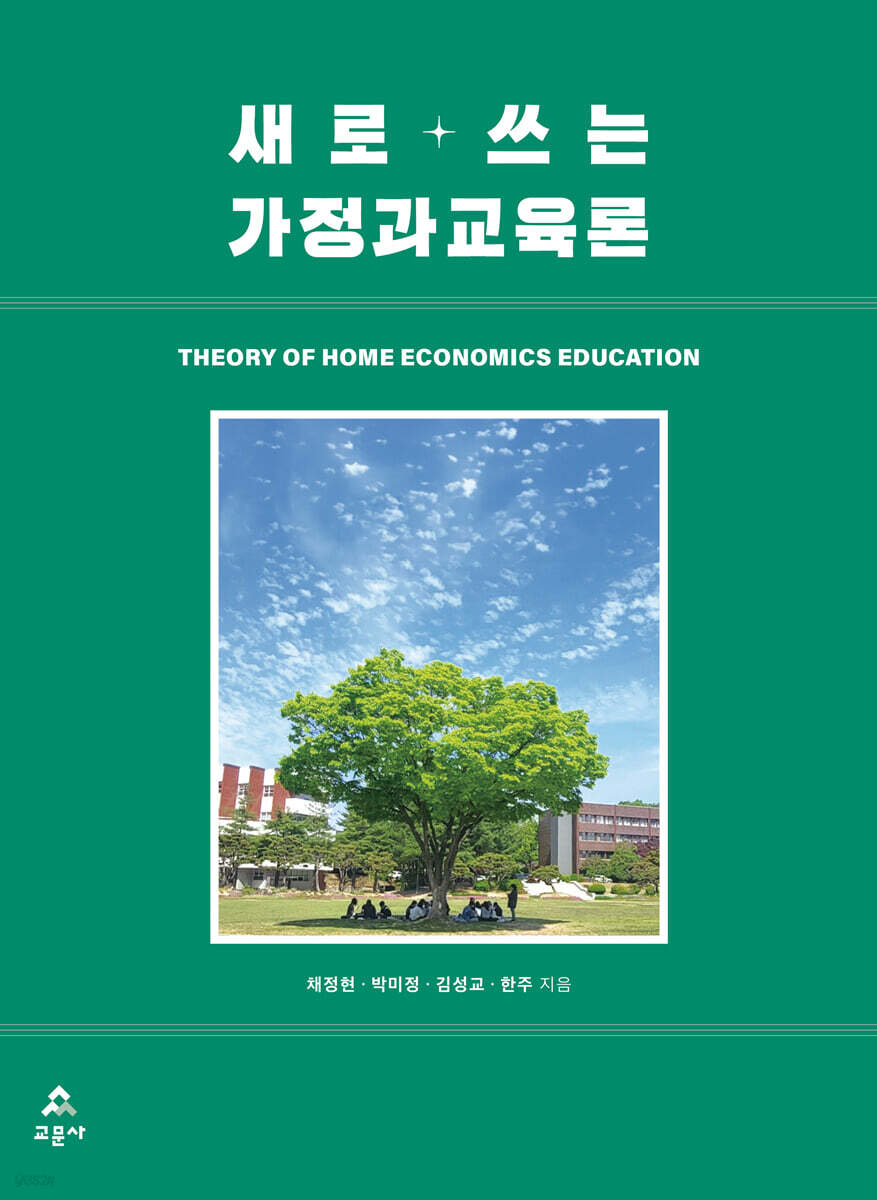
"A New Introduction to Home Economics and Education" is an introductory book on home economics and education. It was first published in 2011 at the recommendation of co-authors who were better than teachers, and a revised edition was published in 2017.
However, since the educational content has changed significantly due to social changes since its publication, we have added a lot of new content and rewritten it as a new book.
This book consists of six chapters and covers a wide range of topics, including the philosophy of home economics education, the home economics curriculum, home economics teaching and learning methods, home economics lesson design, evaluation in home economics education, and the professionalism of home economics teachers.
However, since the educational content has changed significantly due to social changes since its publication, we have added a lot of new content and rewritten it as a new book.
This book consists of six chapters and covers a wide range of topics, including the philosophy of home economics education, the home economics curriculum, home economics teaching and learning methods, home economics lesson design, evaluation in home economics education, and the professionalism of home economics teachers.
index
Chapter 1: Philosophy of Home Economics and Education
Chapter 2 Home Economics Curriculum
Chapter 3: Home Economics Teaching and Learning Methods
Chapter 4: Designing Home Economics Classes
Chapter 5: Assessment in Home Economics and Education
Chapter 6: Professionalism of Home Economics Teachers
Chapter 2 Home Economics Curriculum
Chapter 3: Home Economics Teaching and Learning Methods
Chapter 4: Designing Home Economics Classes
Chapter 5: Assessment in Home Economics and Education
Chapter 6: Professionalism of Home Economics Teachers
Publisher's Review
This book, an introduction to home economics and education, was first published in 2011 at the recommendation of co-authors who were better than teachers, and a revised edition was published in 2017.
However, since the educational content has changed significantly due to social changes since its publication, we have added a lot of new content and rewritten it as a new book.
This book consists of six chapters and covers a wide range of topics, including the philosophy of home economics education, the home economics curriculum, home economics teaching and learning methods, home economics lesson design, assessment in home economics education, and the professionalism of home economics teachers.
Chapter 1, "Philosophy of Home Economics Education," is designed to help prospective teachers understand the foundations and historical roots of home economics education and learn about various philosophical perspectives that influence home economics education, enabling them to understand and practice the identity of home economics education.
Chapter 2, “Home Economics and Curriculum,” introduces various perspectives on the curriculum and presents a clear overview of the changes in the home economics and curriculum in Korea from the past to the present.
Additionally, it provides context and examples of how home economics curricula are implemented around the world, and covers school curriculum development models and theories and principles of home economics curriculum operation and evaluation to foster the capacity of home economics teachers to design curricula.
Chapter 3, "Home Economics Teaching-Learning Methods," examines scholars' definitions of good teaching and introduces nine representative teaching-learning models that can help home economics teachers implement good teaching.
Chapter 4, "Home Economics Lesson Design," examines various lesson design models and covers the core content of each stage of lesson design, from instructional analysis, to the design and development of teaching-learning curriculum and instructional media, to lesson implementation.
This makes it easy to apply to actual home and classroom design.
Chapter 5, 'Assessment in Home Economics and Education', is designed to increase overall understanding of assessment and to enable the development and implementation of home economics assessment items.
We provide guidance on various types of assessment, including performance assessments, and cover specific principles and guidelines for developing each assessment item to enable the implementation of descriptive and argumentative assessments and process-oriented assessments, the importance of which is increasingly being emphasized.
Lastly, in Chapter 6, ‘Professionalism of Home Economics Teachers,’ we looked at the concept of professionalism that home economics teachers should possess, as well as the roles and qualifications required of home economics teachers.
We also wanted to help home economics teachers improve their expertise by providing specific methods of scholarship and field research.
I hope this book will help prospective teachers, home economics teachers in the field, and education professionals broaden their understanding of home economics education and reaffirm the philosophy, beliefs, and vision that home economics education pursues.
I hope to educate students, both those I meet now and those I meet in the future, to plan their lives with dreams and hopes, to lead happy lives in any environment, and to cultivate a generous heart that cares for others and society.
I also hope that home economics education will become a required course at all school levels, making the vision of home economics education, where youth, families, and society all thrive, a reality.
To this end, I hope and expect that home economics teachers will move forward with a sense of mission, excitement, and bright hope, taking on challenges with vigor.
However, since the educational content has changed significantly due to social changes since its publication, we have added a lot of new content and rewritten it as a new book.
This book consists of six chapters and covers a wide range of topics, including the philosophy of home economics education, the home economics curriculum, home economics teaching and learning methods, home economics lesson design, assessment in home economics education, and the professionalism of home economics teachers.
Chapter 1, "Philosophy of Home Economics Education," is designed to help prospective teachers understand the foundations and historical roots of home economics education and learn about various philosophical perspectives that influence home economics education, enabling them to understand and practice the identity of home economics education.
Chapter 2, “Home Economics and Curriculum,” introduces various perspectives on the curriculum and presents a clear overview of the changes in the home economics and curriculum in Korea from the past to the present.
Additionally, it provides context and examples of how home economics curricula are implemented around the world, and covers school curriculum development models and theories and principles of home economics curriculum operation and evaluation to foster the capacity of home economics teachers to design curricula.
Chapter 3, "Home Economics Teaching-Learning Methods," examines scholars' definitions of good teaching and introduces nine representative teaching-learning models that can help home economics teachers implement good teaching.
Chapter 4, "Home Economics Lesson Design," examines various lesson design models and covers the core content of each stage of lesson design, from instructional analysis, to the design and development of teaching-learning curriculum and instructional media, to lesson implementation.
This makes it easy to apply to actual home and classroom design.
Chapter 5, 'Assessment in Home Economics and Education', is designed to increase overall understanding of assessment and to enable the development and implementation of home economics assessment items.
We provide guidance on various types of assessment, including performance assessments, and cover specific principles and guidelines for developing each assessment item to enable the implementation of descriptive and argumentative assessments and process-oriented assessments, the importance of which is increasingly being emphasized.
Lastly, in Chapter 6, ‘Professionalism of Home Economics Teachers,’ we looked at the concept of professionalism that home economics teachers should possess, as well as the roles and qualifications required of home economics teachers.
We also wanted to help home economics teachers improve their expertise by providing specific methods of scholarship and field research.
I hope this book will help prospective teachers, home economics teachers in the field, and education professionals broaden their understanding of home economics education and reaffirm the philosophy, beliefs, and vision that home economics education pursues.
I hope to educate students, both those I meet now and those I meet in the future, to plan their lives with dreams and hopes, to lead happy lives in any environment, and to cultivate a generous heart that cares for others and society.
I also hope that home economics education will become a required course at all school levels, making the vision of home economics education, where youth, families, and society all thrive, a reality.
To this end, I hope and expect that home economics teachers will move forward with a sense of mission, excitement, and bright hope, taking on challenges with vigor.
GOODS SPECIFICS
- Date of issue: September 1, 2024
- Page count, weight, size: 520 pages | 188*257*35mm
- ISBN13: 9788936326098
- ISBN10: 8936326090
You may also like
카테고리
korean


korean

![GQ KOREA Mark (Monthly): December [2025]](http://librairie.coreenne.fr/cdn/shop/files/8ef265dbbfbf186523ed75ba7319009d.jpg?v=1765340328&width=3840)


