

Special Education for Children
 |
Description
Book Introduction
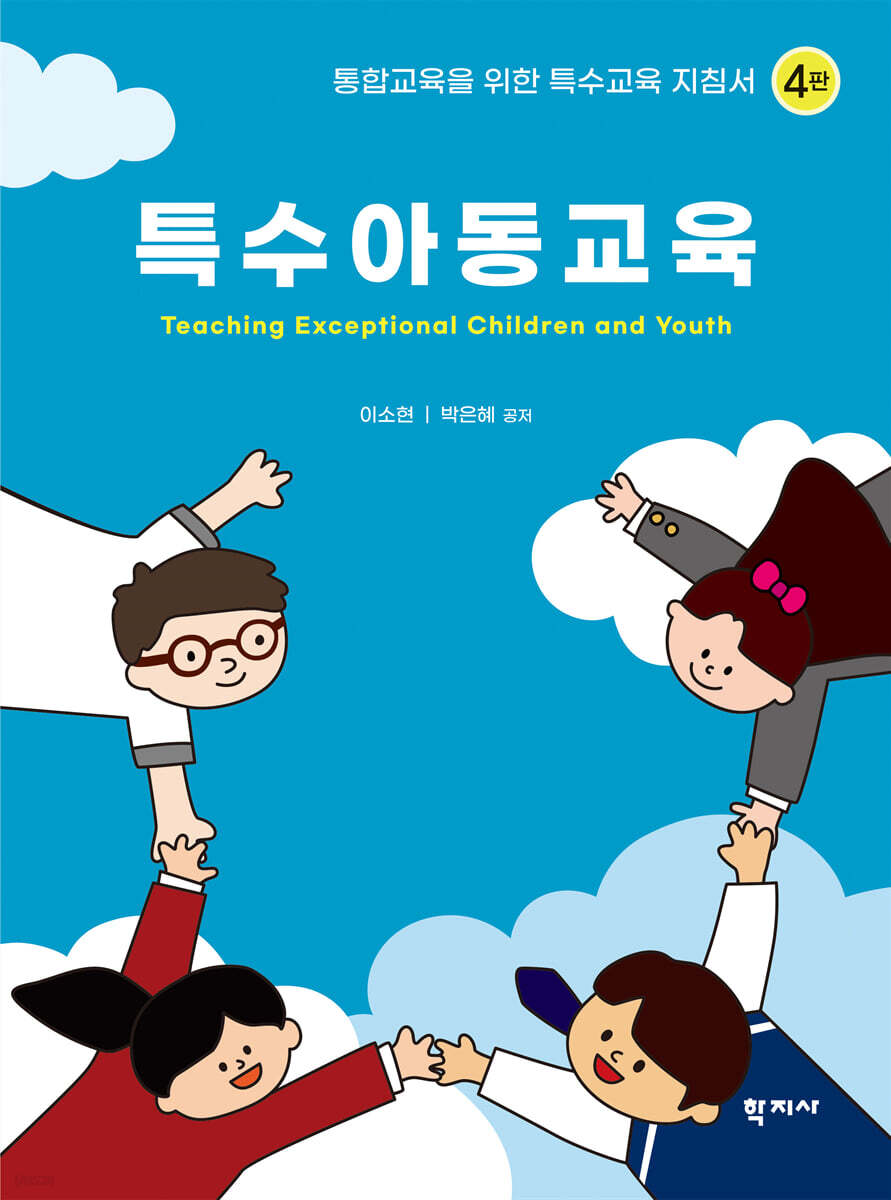
This book is an introductory book on the education of children with special needs, and the major change in this fourth edition is that the structure of the book has been changed from three parts to two parts.
The three chapters of Part 3, ‘Teaching Methods for Special Needs Children,’ ‘Behavioral Support for Special Needs Children,’ and ‘Social Integration,’ which had been maintained up to the third edition, were boldly deleted.
However, rather than completely deleting the content, it was reorganized to fit each chapter that describes the disability.
That is, content on behavioral support such as functional behavior analysis and positive behavior support is covered in Chapter 6 on emotional and behavioral disorders, and content on teaching strategies frequently used in special education and social integration of children with disabilities is covered in each chapter while introducing each type of disability.
Part 3, “A Collaborative Approach to Inclusive Education,” was maintained as a separate chapter, and since it is the foundation of inclusive education in general, it was moved to Part 1, the beginning of the book that introduces special needs children and inclusive education.
Part 1, "Special Children and Inclusive Education," is divided into three chapters: "Special Children and Special Education" (Chapter 1), "Understanding Inclusive Education" (Chapter 2), and "Collaborative Approaches to Inclusive Education" (Chapter 3). It explains the basic concepts of special children, special education, and inclusive education, along with the latest academic trends and changes and current status in the educational field.
Part 2, 'Understanding and Education of Children with Special Needs', is organized by disability area from Chapters 4 to 12, and has a lot of additional information in terms of content.
For cases where international academic definitions have changed, such as intellectual disability (Chapter 4) and autism spectrum disorder (Chapter 7), or where discussions on the concept and definition are ongoing, such as learning disabilities (Chapter 5), the latest theories have been organized and presented. In addition, recent changes, such as revised terms (e.g., support personnel) and added disability areas (severe multiple disabilities) due to the partial revision of the 「Act on Special Education for Persons with Disabilities, etc.」 in Korea in 2022, have been reflected.
In particular, we added and strengthened the description of various instructional approaches that emphasize preventative aspects, such as the school-level Multi-Tiered Systems of Support (MTSS), the Response to Intervention (RTI) model in which special education and general education teachers collaborate to provide systematic instruction prior to the identification of learning disabilities, the Universal Design for Learning (UDL), and Positive Behavior Supports (PBS).
We have added an explanation of recent developments in assistive technology that can effectively help children who experience difficulties in language or physical aspects, such as communication disorders (Chapter 8), hearing impairment (Chapter 9), visual impairment (Chapter 10), and physical and health disabilities (Chapter 11), learn and become independent. We also include an explanation of the use of various augmentative and alternative communication (AAC).
The three chapters of Part 3, ‘Teaching Methods for Special Needs Children,’ ‘Behavioral Support for Special Needs Children,’ and ‘Social Integration,’ which had been maintained up to the third edition, were boldly deleted.
However, rather than completely deleting the content, it was reorganized to fit each chapter that describes the disability.
That is, content on behavioral support such as functional behavior analysis and positive behavior support is covered in Chapter 6 on emotional and behavioral disorders, and content on teaching strategies frequently used in special education and social integration of children with disabilities is covered in each chapter while introducing each type of disability.
Part 3, “A Collaborative Approach to Inclusive Education,” was maintained as a separate chapter, and since it is the foundation of inclusive education in general, it was moved to Part 1, the beginning of the book that introduces special needs children and inclusive education.
Part 1, "Special Children and Inclusive Education," is divided into three chapters: "Special Children and Special Education" (Chapter 1), "Understanding Inclusive Education" (Chapter 2), and "Collaborative Approaches to Inclusive Education" (Chapter 3). It explains the basic concepts of special children, special education, and inclusive education, along with the latest academic trends and changes and current status in the educational field.
Part 2, 'Understanding and Education of Children with Special Needs', is organized by disability area from Chapters 4 to 12, and has a lot of additional information in terms of content.
For cases where international academic definitions have changed, such as intellectual disability (Chapter 4) and autism spectrum disorder (Chapter 7), or where discussions on the concept and definition are ongoing, such as learning disabilities (Chapter 5), the latest theories have been organized and presented. In addition, recent changes, such as revised terms (e.g., support personnel) and added disability areas (severe multiple disabilities) due to the partial revision of the 「Act on Special Education for Persons with Disabilities, etc.」 in Korea in 2022, have been reflected.
In particular, we added and strengthened the description of various instructional approaches that emphasize preventative aspects, such as the school-level Multi-Tiered Systems of Support (MTSS), the Response to Intervention (RTI) model in which special education and general education teachers collaborate to provide systematic instruction prior to the identification of learning disabilities, the Universal Design for Learning (UDL), and Positive Behavior Supports (PBS).
We have added an explanation of recent developments in assistive technology that can effectively help children who experience difficulties in language or physical aspects, such as communication disorders (Chapter 8), hearing impairment (Chapter 9), visual impairment (Chapter 10), and physical and health disabilities (Chapter 11), learn and become independent. We also include an explanation of the use of various augmentative and alternative communication (AAC).
index
Preface to the 4th edition
Preface to the 3rd edition
Part 1: Special Needs Children and Inclusive Education
Chapter 1: Special Needs Children and Special Education
I.
Understanding Special Needs Children
II.
Understanding Special Education
Chapter 2: Understanding Inclusive Education
I.
Theoretical Background of Inclusive Education
II.
Educational outcomes of integrated education
III.
Challenges for Successful Implementation of Inclusive Education
Chapter 3: A Collaborative Approach to Inclusive Education
I.
Theoretical Background of the Collaborative Approach
II.
A collaborative approach to inclusive education in practice
Part 2: Understanding and Educating Children with Special Needs
Chapter 4 Intellectual Disability
I.
Understanding Children with Intellectual Disabilities
II.
Education for children with intellectual disabilities
Chapter 5 Learning Disabilities
I.
Understanding Children with Learning Disabilities
II.
Education for children with learning disabilities
Chapter 6 Emotional and Behavioral Disorders
I.
Understanding Children with Emotional and Behavioral Disorders
II.
Education for children with emotional and behavioral disorders
Chapter 7 Autism Spectrum Disorders
I.
Understanding Children with Autism Spectrum Disorder
II.
Education for children with autism spectrum disorders
Chapter 8 Communication Disorders
I.
Understanding Children with Communication Disorders
II.
Education for children with communication disorders
Chapter 9 Hearing Impairment
I.
Understanding Children with Hearing Impairment
II.
Education for hearing-impaired children
Chapter 10 Visual Impairment
I.
Understanding children with visual impairments
II.
Education for visually impaired children
Chapter 11 Physical and Health Disabilities
I.
Understanding Children with Physical and Health Disabilities
II.
Education for children with physical and health disabilities
Chapter 12: Gifted
I.
Understanding Gifted Children
II.
Gifted Children Education
Search
Preface to the 3rd edition
Part 1: Special Needs Children and Inclusive Education
Chapter 1: Special Needs Children and Special Education
I.
Understanding Special Needs Children
II.
Understanding Special Education
Chapter 2: Understanding Inclusive Education
I.
Theoretical Background of Inclusive Education
II.
Educational outcomes of integrated education
III.
Challenges for Successful Implementation of Inclusive Education
Chapter 3: A Collaborative Approach to Inclusive Education
I.
Theoretical Background of the Collaborative Approach
II.
A collaborative approach to inclusive education in practice
Part 2: Understanding and Educating Children with Special Needs
Chapter 4 Intellectual Disability
I.
Understanding Children with Intellectual Disabilities
II.
Education for children with intellectual disabilities
Chapter 5 Learning Disabilities
I.
Understanding Children with Learning Disabilities
II.
Education for children with learning disabilities
Chapter 6 Emotional and Behavioral Disorders
I.
Understanding Children with Emotional and Behavioral Disorders
II.
Education for children with emotional and behavioral disorders
Chapter 7 Autism Spectrum Disorders
I.
Understanding Children with Autism Spectrum Disorder
II.
Education for children with autism spectrum disorders
Chapter 8 Communication Disorders
I.
Understanding Children with Communication Disorders
II.
Education for children with communication disorders
Chapter 9 Hearing Impairment
I.
Understanding Children with Hearing Impairment
II.
Education for hearing-impaired children
Chapter 10 Visual Impairment
I.
Understanding children with visual impairments
II.
Education for visually impaired children
Chapter 11 Physical and Health Disabilities
I.
Understanding Children with Physical and Health Disabilities
II.
Education for children with physical and health disabilities
Chapter 12: Gifted
I.
Understanding Gifted Children
II.
Gifted Children Education
Search
GOODS SPECIFICS
- Date of issue: March 10, 2024
- Page count, weight, size: 544 pages | 188*255*29mm
- ISBN13: 9788999730726
You may also like
카테고리
korean


korean

![ELLE 엘르 스페셜 에디션 A형 : 12월 [2025]](http://librairie.coreenne.fr/cdn/shop/files/b8e27a3de6c9538896439686c6b0e8fb.jpg?v=1766436872&width=3840)


