

Medical Chosun
 |
Description
Book Introduction
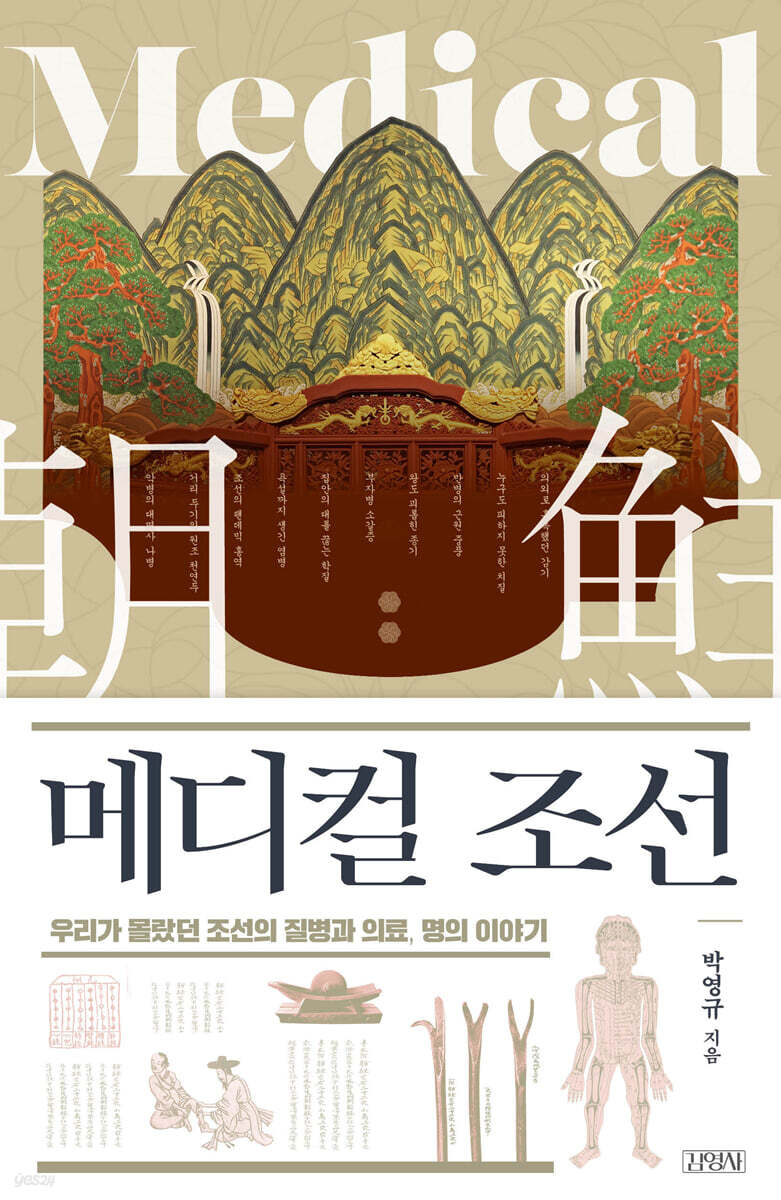
A look at the customs of birth, aging, illness, and death through the ten diseases that shook Joseon.
From colds, boils, and stroke to measles, smallpox, and malaria
How did they survive the invisible threat?
What disease did the Joseon people fear most? How did they cope with illness in a time when even a simple cold could mean the difference between life and death? What would they have used to overcome a nationwide pandemic? From medical facilities like Jeonuigam, the birthplace of medical education, and Hyeminseo, a leading hospital for the common people, to the ten major diseases and their treatments that swept Joseon, including King Sejong's jaundice and Song Si-yeol's hemorrhoids, to the diseases and causes of death suffered by kings, and to renowned physicians and various medical books, we explore this topic.
A story of the Korean people's tenacious struggle against disease, establishing a systematic medical system and saving the people even in harsh environments.
Everything we didn't know about 500 years of Joseon medicine: Joseon Medical Dictionary.
From colds, boils, and stroke to measles, smallpox, and malaria
How did they survive the invisible threat?
What disease did the Joseon people fear most? How did they cope with illness in a time when even a simple cold could mean the difference between life and death? What would they have used to overcome a nationwide pandemic? From medical facilities like Jeonuigam, the birthplace of medical education, and Hyeminseo, a leading hospital for the common people, to the ten major diseases and their treatments that swept Joseon, including King Sejong's jaundice and Song Si-yeol's hemorrhoids, to the diseases and causes of death suffered by kings, and to renowned physicians and various medical books, we explore this topic.
A story of the Korean people's tenacious struggle against disease, establishing a systematic medical system and saving the people even in harsh environments.
Everything we didn't know about 500 years of Joseon medicine: Joseon Medical Dictionary.
- You can preview some of the book's contents.
Preview
index
Introduction_ Publishing the story of the Korean people's struggle against disease
Chapter 1: Joseon's Medical System and Medical Facilities
Jeonuigam, the center of Joseon's medical administration
Work and Organization | Doctor Selection | Medicinal Herbs Cultivation and Management | If You're Pushed Out of Your Internal Medicine Clinic, Will You Become a Jeonuigam Doctor? | Jeonuigam Doctors Who Also Treat Animals
Royal Hospital, Naeuiwon
Work and Organization | The Effective Head of the Royal Hospital, the Royal Physician | Theft Cases That Occurred at the Royal Hospital
Hyeminseo, a hospital dedicated to medical care for the common people
Work and Organization | Selection and Training of Female Doctors | The Duties of Female Doctors | The Role of Hyeminseo as Seen Through Incidents
Hwalinseo, a facility for the relief of traveler sick people
Work and Organization | The Shamans, the Oldest of the Hwalinseo | Abandoned Corpses
A steam room or jjimjilbang from the Joseon Dynasty
A treatment center run by monks|Have steam rooms disappeared?
Jejungwon, Korea's first Western-style national hospital
The Birth and Opening of Jejungwon | Allen Appointed as the First Director | The Beginning and End of Jejungwon
Chapter 2: Ten Major Diseases that Plagued the Joseon People
The common cold, which is perceived as a surprisingly scary disease
The Minister of Justice pleaded with the King to cure his son's cold at a royal meeting | King Sejong avoided the envoy using a cold as an excuse | Medical awareness and treatment of colds
Hemorrhoids, a disease that was not easily avoided from commoners to kings
The chronic disease that plagued Song Si-yeol | Changing the original prefix because of hemorrhoids · 76 | Did King Munjong and King Seongjong, who suffered from hemorrhoids, apply rabbit droppings?
Stroke, which I thought would be the end of my life
It is customary to resign from office if you suffer a stroke. Nuguwon and Sokmyeongtang, used as stroke treatments.
The boil that plagued Sejong and Hwang Hui throughout their lives
King Sejong, who suffered from boils | Hwang Hui, who requested resignation due to boils | Poisonous ointment and leeches used as a cure for boils | The mysterious detoxifying stone
The disease that the rich feared most: exhaustion
A disease that only the rich suffered from|How did they deal with exhaustion?
The pain of death while still alive
The disease most feared by children and the elderly | Jeong Yak-yong, who wrote and sang a song to defeat malaria | Symptoms and treatment of malaria
A plague that made people run away 10 li away just by hearing rumors
The Joseon people's fear of plague | Prisoners dying every day | Countermeasures and folk remedies for plague
Measles, the evil spirit that destroys a family's lineage
The pandemic kills over 100,000 people | Measles in the writings of literary figures | The legendary elixir Baekhwasa-hwan
Smallpox, the original social distancing
The History of Smallpox | Preventing Smallpox Through Strong Social Distancing | The Medical Community's Response to Smallpox | Jeong Yak-yong and Ji Seok-yeong's Introduction of Smallpox Vaccination
Leprosy, the epitome of evil
Diseases considered a punishment from heaven | Leprosy patients burned or abandoned | Officials who treated leprosy patients | A famous remedy used to treat leprosy
Chapter 3: Diseases and Deaths of Joseon Kings
King Taejong, who took the boil lightly and was struck by the wind and collapsed.
Sejong, who suffered from pain all over his body due to various diseases
King Munjong died suddenly after neglecting a boil
King Sejo suffered from atopic dermatitis and chest pain.
King Yeongjong died suddenly from a cold
Seongjong died young from colon cancer
Yeonsangun suffered from facial atopy
King Jungjong, struggling in the swamp of heart disease and boils
A race deliberately malnourished
King Myeongjong, whose mother was the source of all illnesses
Ancestors who met an absurd death
King Gwanghaegun, whose dethronement actually became the secret to his longevity
Injo, who refused even medical treatment due to his delusions of persecution
King Hyojong died from an unexpected medical accident
King Hyeonjong, who suffered from various illnesses throughout his life
King Sukjong enjoyed relatively good health without any minor illnesses.
King Gyeongjong, who could not leave his sickbed, and King Yeongjo, who lived a long and healthy life
King Jeongjo suffered from boils his entire life
Chapter 4: The famous doctor who influenced Joseon
Yang Hong-dal, who revived King Taejo Lee Seong-gye from the brink of death
Pyeong Won-hae, a Japanese doctor who received King Taejong's favor
Noh Jung-rye, who rose to the ranks of the best doctors in the early Joseon Dynasty
Dae Jang Geum, the only female physician who became the king's personal physician
Yang Ye-su, a famous doctor on par with Heo Jun
Heo Jun, known as the "Pyeonjak of the East"
Heo Im, a master of acupuncture and moxibustion
Lee Hyeong-ik, a master of acupuncture who monopolized King Injo's favor
Baek Gwang-hyeon, a dark-eyed man who rose from a mere magician to a royal physician
Jaegil Pi, who became a master at treating boils with just one ointment
Chapter 5: The Medical Book that Became the Cornerstone of Joseon Medicine
The Root of Oriental Medicine, The Yellow Emperor's Classic of Internal Medicine
Korea's oldest medical book, Hyangyak Gugeupbang
Joseon's first Hyangyak dictionary, Hyangyakjipseongbang
Joseon's largest medical encyclopedia, "Uibangyuchui"
A dietary book on medicinal foods, "Sikryo Chanyo"
The most popular folk medicine book, "First Aid Kit"
A concise and essential medical book, "Uirimchalyo"
Donguibogam, a masterpiece representing Oriental medicine
The Roots of Sasang Medicine, Donguisusebowon
Other major medical books
Chapter 1: Joseon's Medical System and Medical Facilities
Jeonuigam, the center of Joseon's medical administration
Work and Organization | Doctor Selection | Medicinal Herbs Cultivation and Management | If You're Pushed Out of Your Internal Medicine Clinic, Will You Become a Jeonuigam Doctor? | Jeonuigam Doctors Who Also Treat Animals
Royal Hospital, Naeuiwon
Work and Organization | The Effective Head of the Royal Hospital, the Royal Physician | Theft Cases That Occurred at the Royal Hospital
Hyeminseo, a hospital dedicated to medical care for the common people
Work and Organization | Selection and Training of Female Doctors | The Duties of Female Doctors | The Role of Hyeminseo as Seen Through Incidents
Hwalinseo, a facility for the relief of traveler sick people
Work and Organization | The Shamans, the Oldest of the Hwalinseo | Abandoned Corpses
A steam room or jjimjilbang from the Joseon Dynasty
A treatment center run by monks|Have steam rooms disappeared?
Jejungwon, Korea's first Western-style national hospital
The Birth and Opening of Jejungwon | Allen Appointed as the First Director | The Beginning and End of Jejungwon
Chapter 2: Ten Major Diseases that Plagued the Joseon People
The common cold, which is perceived as a surprisingly scary disease
The Minister of Justice pleaded with the King to cure his son's cold at a royal meeting | King Sejong avoided the envoy using a cold as an excuse | Medical awareness and treatment of colds
Hemorrhoids, a disease that was not easily avoided from commoners to kings
The chronic disease that plagued Song Si-yeol | Changing the original prefix because of hemorrhoids · 76 | Did King Munjong and King Seongjong, who suffered from hemorrhoids, apply rabbit droppings?
Stroke, which I thought would be the end of my life
It is customary to resign from office if you suffer a stroke. Nuguwon and Sokmyeongtang, used as stroke treatments.
The boil that plagued Sejong and Hwang Hui throughout their lives
King Sejong, who suffered from boils | Hwang Hui, who requested resignation due to boils | Poisonous ointment and leeches used as a cure for boils | The mysterious detoxifying stone
The disease that the rich feared most: exhaustion
A disease that only the rich suffered from|How did they deal with exhaustion?
The pain of death while still alive
The disease most feared by children and the elderly | Jeong Yak-yong, who wrote and sang a song to defeat malaria | Symptoms and treatment of malaria
A plague that made people run away 10 li away just by hearing rumors
The Joseon people's fear of plague | Prisoners dying every day | Countermeasures and folk remedies for plague
Measles, the evil spirit that destroys a family's lineage
The pandemic kills over 100,000 people | Measles in the writings of literary figures | The legendary elixir Baekhwasa-hwan
Smallpox, the original social distancing
The History of Smallpox | Preventing Smallpox Through Strong Social Distancing | The Medical Community's Response to Smallpox | Jeong Yak-yong and Ji Seok-yeong's Introduction of Smallpox Vaccination
Leprosy, the epitome of evil
Diseases considered a punishment from heaven | Leprosy patients burned or abandoned | Officials who treated leprosy patients | A famous remedy used to treat leprosy
Chapter 3: Diseases and Deaths of Joseon Kings
King Taejong, who took the boil lightly and was struck by the wind and collapsed.
Sejong, who suffered from pain all over his body due to various diseases
King Munjong died suddenly after neglecting a boil
King Sejo suffered from atopic dermatitis and chest pain.
King Yeongjong died suddenly from a cold
Seongjong died young from colon cancer
Yeonsangun suffered from facial atopy
King Jungjong, struggling in the swamp of heart disease and boils
A race deliberately malnourished
King Myeongjong, whose mother was the source of all illnesses
Ancestors who met an absurd death
King Gwanghaegun, whose dethronement actually became the secret to his longevity
Injo, who refused even medical treatment due to his delusions of persecution
King Hyojong died from an unexpected medical accident
King Hyeonjong, who suffered from various illnesses throughout his life
King Sukjong enjoyed relatively good health without any minor illnesses.
King Gyeongjong, who could not leave his sickbed, and King Yeongjo, who lived a long and healthy life
King Jeongjo suffered from boils his entire life
Chapter 4: The famous doctor who influenced Joseon
Yang Hong-dal, who revived King Taejo Lee Seong-gye from the brink of death
Pyeong Won-hae, a Japanese doctor who received King Taejong's favor
Noh Jung-rye, who rose to the ranks of the best doctors in the early Joseon Dynasty
Dae Jang Geum, the only female physician who became the king's personal physician
Yang Ye-su, a famous doctor on par with Heo Jun
Heo Jun, known as the "Pyeonjak of the East"
Heo Im, a master of acupuncture and moxibustion
Lee Hyeong-ik, a master of acupuncture who monopolized King Injo's favor
Baek Gwang-hyeon, a dark-eyed man who rose from a mere magician to a royal physician
Jaegil Pi, who became a master at treating boils with just one ointment
Chapter 5: The Medical Book that Became the Cornerstone of Joseon Medicine
The Root of Oriental Medicine, The Yellow Emperor's Classic of Internal Medicine
Korea's oldest medical book, Hyangyak Gugeupbang
Joseon's first Hyangyak dictionary, Hyangyakjipseongbang
Joseon's largest medical encyclopedia, "Uibangyuchui"
A dietary book on medicinal foods, "Sikryo Chanyo"
The most popular folk medicine book, "First Aid Kit"
A concise and essential medical book, "Uirimchalyo"
Donguibogam, a masterpiece representing Oriental medicine
The Roots of Sasang Medicine, Donguisusebowon
Other major medical books
Into the book
During the Joseon Dynasty, veterinarians mainly treated horses, so they were usually called horse doctors.
Horse medicine was a very precious thing in Joseon.
According to records from the early Joseon Dynasty, the number of magicians was at most countable on one hand.
However, at that time, Joseon needed tens of thousands of horses, and among them, the best ones were presented to the Ming Dynasty, so the breeding of horses was urgent.
In addition, whenever an envoy was sent to China, a magician was always required.
Because the messenger and his entourage all rode horses, whenever the messenger went on a procession, two horsemen usually followed him.
--- p.27
It states that if all family members die from an epidemic, the bodies must be removed from the coffin.
This also means that there were many cases where entire families lost their lives due to the plague.
Even when their parents died of plague, there were many cases where children ran away without even holding a funeral, so you can see how much people at the time were afraid of plague.
(…) Because the plague was highly contagious, it spread quickly in places where people lived together, and if the environment was also poor, the situation could only get worse.
Prison was a prime example of a place with a poor environment and group living.
For this reason, epidemics often spread in prisons.
--- p.107
The ghost that spread smallpox was called the 'smallpox god', which gave rise to various taboos.
When smallpox broke out, people were prohibited from performing ancestral rites, banning celebrations such as weddings, and even sexual relations between married couples.
In effect, they were prevented from coming into contact with each other, a practice similar to that used to prevent modern viral epidemics.
Since all events, whether it be ancestral rites, banquets, or marital relations, involve contact, it seems that these taboos were put in place to prevent contact.
In modern terms, this would be considered a strong 'social distancing' measure.
--- p.121
The king was in very good health at the time of his accession to the throne.
There were almost no remaining soldiers.
But why did he suddenly die after ascending to the throne? There's even an unofficial history record that the once healthy King Injong ate poisoned rice cakes offered by Queen Munjeong, fell ill, and then suddenly died.
Is this true?
In fact, the story that he died after eating the rice cake given to him by Queen Munjeong is nothing more than a rumor.
It was no one's fault but the race itself that a healthy race became sick.
(…) At this time, the nation was in mourning.
Because of that, he was not eating properly and was very weak.
Concerned about this, all his subjects asked him to take care of his health, but Injong did not listen.
They were so caught up in morality that they neglected their health.
--- p.180~181
While Yi Seong-gye was on the verge of death, unable to move from his sickbed, Yi Bang-won eliminated his political enemies, including Jeong Do-jeon and Nam Eun, and seized power.
This is what caused the so-called First Prince's Rebellion.
Perhaps Lee Bang-won judged that Lee Seong-gye would never get out of his sickbed.
But Lee Seong-gye miraculously recovered his health.
The person who revived Taejo at this time was Yang Hong-dal.
--- p.231
As King Injo's favor for Lee Hyeong-ik continued, rumors began to spread among the court officials that Lee Hyeong-ik was using magic to deceive the king.
Although some officials advised him to stay away from Lee Hyeong-ik, King Injo became angry and banished them to local government positions.
King Injo's faith in Lee Hyeong-ik's medical skills was so great that he not only gave him the position of county magistrate, but also appointed him as a royal physician by special order.
Lee Hyeong-ik was also close to Lady Soyong Jo, a concubine who was enjoying King Injo's favor at the time.
There were even dirty rumors that the two were in a relationship because of the frequent contact between them and Cho's mother.
But Injo didn't care at all.
--- p.285~286
Although China brought the Donguibogam before Japan, it was not until 1766 that it was printed.
What is surprising is that it was not the state that first planned to publish it, but rather the Qing doctors who requested that the Donguibogam be distributed.
In 1731, Qing Dynasty doctors who had heard of the fame of the Donguibogam submitted a petition to the emperor as a group.
Thirty-five years later, in 1766, the government printed it on woodblocks and distributed it throughout China.
Just looking at the preface of the book, you can see how much the Qing Dynasty doctors at the time valued this book.
“Just as a single ray of sunlight can quickly dispel darkness when it enters through a small hole, the Donguibogam is like a mirror that can clearly see into the body’s inner workings hidden deep within the skin.”
Horse medicine was a very precious thing in Joseon.
According to records from the early Joseon Dynasty, the number of magicians was at most countable on one hand.
However, at that time, Joseon needed tens of thousands of horses, and among them, the best ones were presented to the Ming Dynasty, so the breeding of horses was urgent.
In addition, whenever an envoy was sent to China, a magician was always required.
Because the messenger and his entourage all rode horses, whenever the messenger went on a procession, two horsemen usually followed him.
--- p.27
It states that if all family members die from an epidemic, the bodies must be removed from the coffin.
This also means that there were many cases where entire families lost their lives due to the plague.
Even when their parents died of plague, there were many cases where children ran away without even holding a funeral, so you can see how much people at the time were afraid of plague.
(…) Because the plague was highly contagious, it spread quickly in places where people lived together, and if the environment was also poor, the situation could only get worse.
Prison was a prime example of a place with a poor environment and group living.
For this reason, epidemics often spread in prisons.
--- p.107
The ghost that spread smallpox was called the 'smallpox god', which gave rise to various taboos.
When smallpox broke out, people were prohibited from performing ancestral rites, banning celebrations such as weddings, and even sexual relations between married couples.
In effect, they were prevented from coming into contact with each other, a practice similar to that used to prevent modern viral epidemics.
Since all events, whether it be ancestral rites, banquets, or marital relations, involve contact, it seems that these taboos were put in place to prevent contact.
In modern terms, this would be considered a strong 'social distancing' measure.
--- p.121
The king was in very good health at the time of his accession to the throne.
There were almost no remaining soldiers.
But why did he suddenly die after ascending to the throne? There's even an unofficial history record that the once healthy King Injong ate poisoned rice cakes offered by Queen Munjeong, fell ill, and then suddenly died.
Is this true?
In fact, the story that he died after eating the rice cake given to him by Queen Munjeong is nothing more than a rumor.
It was no one's fault but the race itself that a healthy race became sick.
(…) At this time, the nation was in mourning.
Because of that, he was not eating properly and was very weak.
Concerned about this, all his subjects asked him to take care of his health, but Injong did not listen.
They were so caught up in morality that they neglected their health.
--- p.180~181
While Yi Seong-gye was on the verge of death, unable to move from his sickbed, Yi Bang-won eliminated his political enemies, including Jeong Do-jeon and Nam Eun, and seized power.
This is what caused the so-called First Prince's Rebellion.
Perhaps Lee Bang-won judged that Lee Seong-gye would never get out of his sickbed.
But Lee Seong-gye miraculously recovered his health.
The person who revived Taejo at this time was Yang Hong-dal.
--- p.231
As King Injo's favor for Lee Hyeong-ik continued, rumors began to spread among the court officials that Lee Hyeong-ik was using magic to deceive the king.
Although some officials advised him to stay away from Lee Hyeong-ik, King Injo became angry and banished them to local government positions.
King Injo's faith in Lee Hyeong-ik's medical skills was so great that he not only gave him the position of county magistrate, but also appointed him as a royal physician by special order.
Lee Hyeong-ik was also close to Lady Soyong Jo, a concubine who was enjoying King Injo's favor at the time.
There were even dirty rumors that the two were in a relationship because of the frequent contact between them and Cho's mother.
But Injo didn't care at all.
--- p.285~286
Although China brought the Donguibogam before Japan, it was not until 1766 that it was printed.
What is surprising is that it was not the state that first planned to publish it, but rather the Qing doctors who requested that the Donguibogam be distributed.
In 1731, Qing Dynasty doctors who had heard of the fame of the Donguibogam submitted a petition to the emperor as a group.
Thirty-five years later, in 1766, the government printed it on woodblocks and distributed it throughout China.
Just looking at the preface of the book, you can see how much the Qing Dynasty doctors at the time valued this book.
“Just as a single ray of sunlight can quickly dispel darkness when it enters through a small hole, the Donguibogam is like a mirror that can clearly see into the body’s inner workings hidden deep within the skin.”
--- p.344
Publisher's Review
“Smallpox is widespread in the city,
“Why would Your Majesty dare to go so far away and take such a risk?” _《Sukjong Sillok》
A look at the customs of birth, aging, illness, and death through the ten diseases that shook Joseon.
The Joseon Medical Dictionary: Everything You Need to Know About 500 Years of Joseon Medicine
Although a vaccine has been developed, the world is still not free from COVID-19.
Surprisingly, however, during the Joseon Dynasty, such infectious diseases occurred almost every year, and pandemics were a daily occurrence.
How did the Korean people survive in such extreme conditions, and what were the most devastating diseases? How did they cope with illness in a time when even a cold could mean life or death? What did they do to overcome a nation plunged into chaos by a plague?
"Medical Joseon" is a story of the Joseon people's tenacious struggle against disease, establishing a systematic medical system and saving the people even in harsh environments.
From medical facilities such as Jeonui-gam, the birthplace of medical education, and Hyeminseo, a representative hospital for the common people, to the ten major diseases that swept through Joseon, such as Sejong's diarrhea and Song Si-yeol's hemorrhoids, and their treatments, to the diseases and causes of death suffered by kings, and even famous doctors and various medical books that were renowned for their medical skills.
It contains all the fascinating facts about 500 years of Joseon medicine that we didn't know about before.
Author Park Young-gyu, a best-selling historian who sparked a craze for popularizing history, has written diverse accounts of Joseon history without any boundaries on topics such as politics, society, and culture.
This time, he focused on Joseon's diseases and medical care, shedding light on a new face of our history.
From the stories of the nine palaces, including the kings who suffered from the mental illness of schizophrenia, King Hyojong who died from a medical accident, and King Seonjo who died from choking on sticky rice, to taboos to be observed when catching a cold, and folk remedies such as the mysterious medicinal herb Hapdokseok, to everyday life, it vividly depicts the customs of life and death in Joseon.
It also corrects common misconceptions such as, “Did the king not live long because of overwork and stress?”, “Was King Munjong sickly from the beginning?”, and “Was there a person with boils in the Joseon royal family?”
The disease of the rich, the disease of exhaustion, the original disease of social distancing, smallpox, the disease of evil, leprosy…
How did the Koreans survive this invisible threat?
Meet their tenacious fight against disease
Today, the life expectancy of Koreans is over 80 years.
However, during the Joseon Dynasty, it was difficult to imagine a person living beyond 80 years of age.
The average life expectancy in Joseon was at best in the mid-30s, and the standard for longevity was just past the age of 60.
Diseases that are easily treatable with modern medicine were considered terrifying diseases during the Joseon Dynasty.
Boils that can now be removed with a simple surgical procedure killed kings who had access to the best medical care at the time.
It was considered such a terrible disease that they even established a specialized institution for boils, the Chijongcheong.
A cold is also surprisingly severe, and if it lasts for a long time, it is called a severe cold and is greatly feared.
Kim Jeom (金漸), who was the Minister of Justice during the reign of King Sejong, even requested at a royal meeting that a royal physician be sent as his child had caught a cold.
To counter the threat of these diseases, the government operated several medical institutions, including Hanjeungso, a steam treatment center that was free for the common people, and Hwalinseo, a facility for the relief of sick travelers.
In addition, they systematically trained doctors and female doctors, starting with Jeonuigam and Hyeminseo.
Thanks to this, famous doctors who influenced the times, such as Heo Jun and Dae Jang Geum, were able to be born.
He compiled and distributed medical books such as the most popular medical book among the people, “Gyu-geup-gan-i-bang,” and the masterpiece of oriental medicine, “Dongui-bo-gam,” throughout the country so that all the people could use them.
Koreans were not defenseless against the attacks of disease either.
This tenacious struggle to overcome disease reminds us of ourselves today, living through the pandemic.
This book, which documents the crises faced by the Korean people 500 years ago and the process of overcoming them, will also help us understand some aspects of the conflicts facing our society.
The million-seller Siloksa restored by Park Young-gyu
A new face in our history
A colorful and rich story of previously unknown diseases unfolds.
Pandemic Response: A Korean-Style Social Distancing Policy
How did people survive a pandemic of such magnitude? Without a vaccine, strict social distancing was the only way to combat the disease.
Wealthy nobles sought refuge in the mountains and fled there from time to time, and there were even cases where people abandoned their villages altogether and fled to the mountains because of the epidemic, going beyond the stage of social distancing and lockdown.
Even today, when smallpox, which is classified as a class 1 infectious disease, is prevalent, not only ancestral rites but also wedding bans are prohibited, and even couples are prohibited from sleeping together.
The country has imposed lockdowns and curfews, banning people from going out.
During the reign of King Yeonsangun, when the national mourning period came while the prince was suffering from smallpox, the king stopped weeping and closed the palace gates.
When King Sukjong attempted to meet a Qing envoy in the suburbs during a time when smallpox was rampant, Yun Hyu (尹?), who was the Chief State Councillor at the time, strongly opposed the king's move.
Social distancing was no exception when the Chinese envoy arrived.
Why did King Injo, who refused even medical treatment due to his delusional disorder, fall into witchcraft?
King Injo, who ascended to the throne through a coup, was very suspicious and did not easily trust others.
He did not even send letters in his own handwriting to his children, fearing that someone might imitate his handwriting and use it as a tool for treason.
He also thoroughly hid the fact that he was sick, always refusing to see a doctor even when he was advised to do so. Even when he called a doctor, he strictly controlled his mouth to prevent the information about his illness from leaking out.
The only physician favored by Injo was Lee Hyeong-ik, a master of acupuncture at the time.
Burning acupuncture, which means a needle heated in fire, was an extremely dangerous prescription, and was never used in the royal hospital, considering it a necromantic practice.
However, King Injo said that his long-term illness had improved after receiving acupuncture treatment from him, and he received acupuncture treatment only from Lee Hyeong-ik until the moment of his death.
That is why the Annals of the Joseon Dynasty do not even record what illness King Injo suffered from before he died.
Who introduced the first vaccine in Joseon, and how?
It was not until the late 18th century that the smallpox vaccination method, smallpox vaccination, was first introduced to Joseon.
The main character is Jeong Yak-yong.
He introduced the method of treating phlegm in his medical book, “Magwahoetong.”
This is a method of taking sputum, or pus, from a person suffering from smallpox and injecting it into the body.
The cowpox method, which involves inoculating cow's sap, was also described. Although it was much safer than the inoculation method, it was rejected because it was introduced from the West and was never fully implemented.
Afterwards, the smallpox vaccination was suspended for a while, but after the opening of ports in accordance with the Treaty of Ganghwa in 1876, it was widely spread by Ji Seok-yeong, and became a touchstone for overcoming smallpox.
“Why would Your Majesty dare to go so far away and take such a risk?” _《Sukjong Sillok》
A look at the customs of birth, aging, illness, and death through the ten diseases that shook Joseon.
The Joseon Medical Dictionary: Everything You Need to Know About 500 Years of Joseon Medicine
Although a vaccine has been developed, the world is still not free from COVID-19.
Surprisingly, however, during the Joseon Dynasty, such infectious diseases occurred almost every year, and pandemics were a daily occurrence.
How did the Korean people survive in such extreme conditions, and what were the most devastating diseases? How did they cope with illness in a time when even a cold could mean life or death? What did they do to overcome a nation plunged into chaos by a plague?
"Medical Joseon" is a story of the Joseon people's tenacious struggle against disease, establishing a systematic medical system and saving the people even in harsh environments.
From medical facilities such as Jeonui-gam, the birthplace of medical education, and Hyeminseo, a representative hospital for the common people, to the ten major diseases that swept through Joseon, such as Sejong's diarrhea and Song Si-yeol's hemorrhoids, and their treatments, to the diseases and causes of death suffered by kings, and even famous doctors and various medical books that were renowned for their medical skills.
It contains all the fascinating facts about 500 years of Joseon medicine that we didn't know about before.
Author Park Young-gyu, a best-selling historian who sparked a craze for popularizing history, has written diverse accounts of Joseon history without any boundaries on topics such as politics, society, and culture.
This time, he focused on Joseon's diseases and medical care, shedding light on a new face of our history.
From the stories of the nine palaces, including the kings who suffered from the mental illness of schizophrenia, King Hyojong who died from a medical accident, and King Seonjo who died from choking on sticky rice, to taboos to be observed when catching a cold, and folk remedies such as the mysterious medicinal herb Hapdokseok, to everyday life, it vividly depicts the customs of life and death in Joseon.
It also corrects common misconceptions such as, “Did the king not live long because of overwork and stress?”, “Was King Munjong sickly from the beginning?”, and “Was there a person with boils in the Joseon royal family?”
The disease of the rich, the disease of exhaustion, the original disease of social distancing, smallpox, the disease of evil, leprosy…
How did the Koreans survive this invisible threat?
Meet their tenacious fight against disease
Today, the life expectancy of Koreans is over 80 years.
However, during the Joseon Dynasty, it was difficult to imagine a person living beyond 80 years of age.
The average life expectancy in Joseon was at best in the mid-30s, and the standard for longevity was just past the age of 60.
Diseases that are easily treatable with modern medicine were considered terrifying diseases during the Joseon Dynasty.
Boils that can now be removed with a simple surgical procedure killed kings who had access to the best medical care at the time.
It was considered such a terrible disease that they even established a specialized institution for boils, the Chijongcheong.
A cold is also surprisingly severe, and if it lasts for a long time, it is called a severe cold and is greatly feared.
Kim Jeom (金漸), who was the Minister of Justice during the reign of King Sejong, even requested at a royal meeting that a royal physician be sent as his child had caught a cold.
To counter the threat of these diseases, the government operated several medical institutions, including Hanjeungso, a steam treatment center that was free for the common people, and Hwalinseo, a facility for the relief of sick travelers.
In addition, they systematically trained doctors and female doctors, starting with Jeonuigam and Hyeminseo.
Thanks to this, famous doctors who influenced the times, such as Heo Jun and Dae Jang Geum, were able to be born.
He compiled and distributed medical books such as the most popular medical book among the people, “Gyu-geup-gan-i-bang,” and the masterpiece of oriental medicine, “Dongui-bo-gam,” throughout the country so that all the people could use them.
Koreans were not defenseless against the attacks of disease either.
This tenacious struggle to overcome disease reminds us of ourselves today, living through the pandemic.
This book, which documents the crises faced by the Korean people 500 years ago and the process of overcoming them, will also help us understand some aspects of the conflicts facing our society.
The million-seller Siloksa restored by Park Young-gyu
A new face in our history
A colorful and rich story of previously unknown diseases unfolds.
Pandemic Response: A Korean-Style Social Distancing Policy
How did people survive a pandemic of such magnitude? Without a vaccine, strict social distancing was the only way to combat the disease.
Wealthy nobles sought refuge in the mountains and fled there from time to time, and there were even cases where people abandoned their villages altogether and fled to the mountains because of the epidemic, going beyond the stage of social distancing and lockdown.
Even today, when smallpox, which is classified as a class 1 infectious disease, is prevalent, not only ancestral rites but also wedding bans are prohibited, and even couples are prohibited from sleeping together.
The country has imposed lockdowns and curfews, banning people from going out.
During the reign of King Yeonsangun, when the national mourning period came while the prince was suffering from smallpox, the king stopped weeping and closed the palace gates.
When King Sukjong attempted to meet a Qing envoy in the suburbs during a time when smallpox was rampant, Yun Hyu (尹?), who was the Chief State Councillor at the time, strongly opposed the king's move.
Social distancing was no exception when the Chinese envoy arrived.
Why did King Injo, who refused even medical treatment due to his delusional disorder, fall into witchcraft?
King Injo, who ascended to the throne through a coup, was very suspicious and did not easily trust others.
He did not even send letters in his own handwriting to his children, fearing that someone might imitate his handwriting and use it as a tool for treason.
He also thoroughly hid the fact that he was sick, always refusing to see a doctor even when he was advised to do so. Even when he called a doctor, he strictly controlled his mouth to prevent the information about his illness from leaking out.
The only physician favored by Injo was Lee Hyeong-ik, a master of acupuncture at the time.
Burning acupuncture, which means a needle heated in fire, was an extremely dangerous prescription, and was never used in the royal hospital, considering it a necromantic practice.
However, King Injo said that his long-term illness had improved after receiving acupuncture treatment from him, and he received acupuncture treatment only from Lee Hyeong-ik until the moment of his death.
That is why the Annals of the Joseon Dynasty do not even record what illness King Injo suffered from before he died.
Who introduced the first vaccine in Joseon, and how?
It was not until the late 18th century that the smallpox vaccination method, smallpox vaccination, was first introduced to Joseon.
The main character is Jeong Yak-yong.
He introduced the method of treating phlegm in his medical book, “Magwahoetong.”
This is a method of taking sputum, or pus, from a person suffering from smallpox and injecting it into the body.
The cowpox method, which involves inoculating cow's sap, was also described. Although it was much safer than the inoculation method, it was rejected because it was introduced from the West and was never fully implemented.
Afterwards, the smallpox vaccination was suspended for a while, but after the opening of ports in accordance with the Treaty of Ganghwa in 1876, it was widely spread by Ji Seok-yeong, and became a touchstone for overcoming smallpox.
GOODS SPECIFICS
- Date of issue: May 24, 2021
- Page count, weight, size: 356 pages | 470g | 140*215*17mm
- ISBN13: 9788934988373
- ISBN10: 8934988371
You may also like
카테고리
korean


korean

![GQ KOREA Mark (Monthly): December [2025]](http://librairie.coreenne.fr/cdn/shop/files/8ef265dbbfbf186523ed75ba7319009d.jpg?v=1765340328&width=3840)


