

Authentic Korean-Chinese-Japanese World History 10
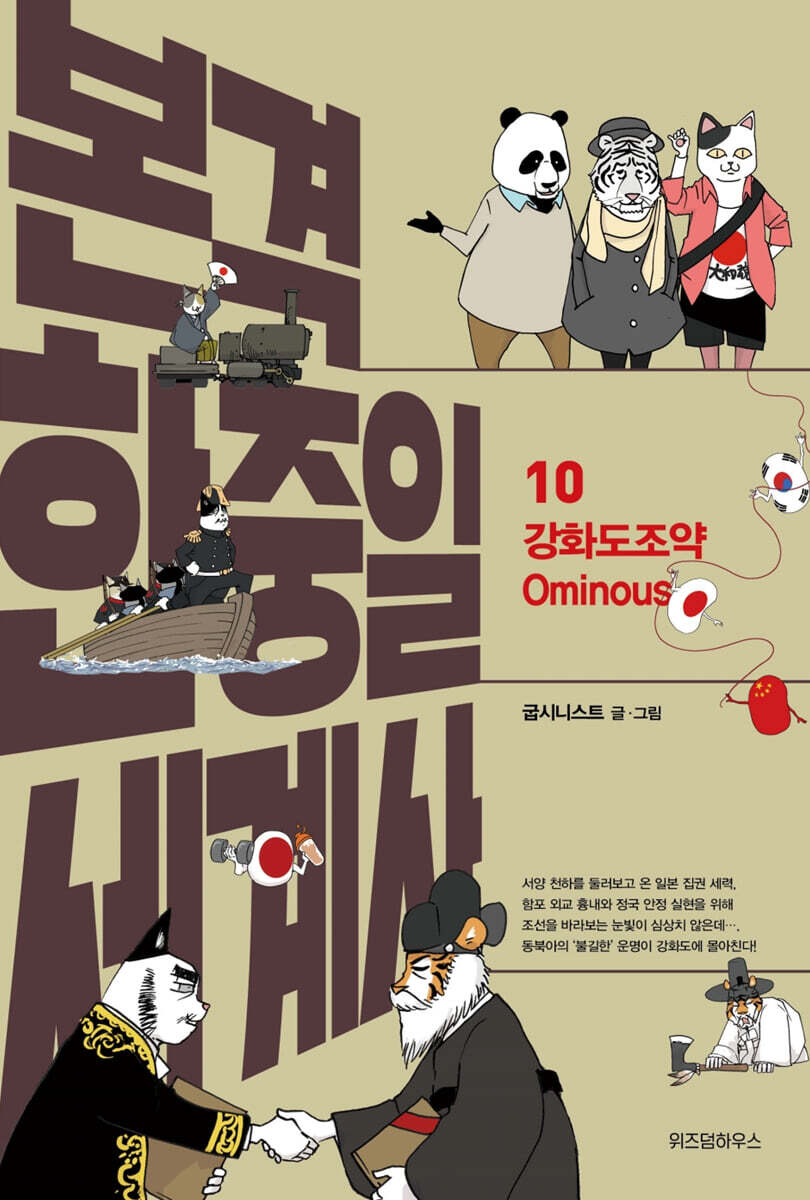 |
Description
Book Introduction
Japan, which gained ‘imperial inspiration’ through its tour of Western powers,
But the first thing to do is to sort out the chaotic domestic situation!
The Iwakura Mission, which had completed a two-year tour of Western powers to gain insights into modernization and renegotiate unequal treaties.
Seeing France in turmoil due to the Paris Commune, he briefly began to doubt Western values such as 'democracy' and 'freedom of thought', but after meeting with the iron-fisted Chancellor Bismarck, he realized the importance of the 'logic of power'.
In other words, in order to fit into the gap between the great powers, one must develop military, diplomatic, and economic power to the point where one can influence the rules that apply in international relations.
They returned to Japan with a heart full of hope for putting their "imperialistic inspiration" into practice, but what awaited the Iwakura delegation was a chaotic domestic political situation.
There was considerable public discontent as Saigo Takamori and his forces, who remained in the country, pushed for various reforms.
Moreover, Saigo was growing increasingly agitated over the need to launch an expedition due to the incident in which Ryukyuans who had drifted ashore in Taiwan were killed by the natives and the incident in which the Dongrae magistrate criticized Japan as a “lawless country.”
The Satsuma and Choshu factions, led by Okubo Toshimichi, a member of the Iwakura delegation, regained power by having the emperor reject Saigo's call for an overseas expedition, and immediately began to make every effort to stabilize the domestic political situation.
Although there were some initial achievements, such as suppressing the Saga clan's rebellion, it failed to quell all the various discontents.
In the end, the Satsuma-Cho faction also sought to secure the legitimacy of its regime by demonstrating Japan's power through overseas expeditions...
What will the future hold for Joseon, which looks upon this with anxious eyes?
But the first thing to do is to sort out the chaotic domestic situation!
The Iwakura Mission, which had completed a two-year tour of Western powers to gain insights into modernization and renegotiate unequal treaties.
Seeing France in turmoil due to the Paris Commune, he briefly began to doubt Western values such as 'democracy' and 'freedom of thought', but after meeting with the iron-fisted Chancellor Bismarck, he realized the importance of the 'logic of power'.
In other words, in order to fit into the gap between the great powers, one must develop military, diplomatic, and economic power to the point where one can influence the rules that apply in international relations.
They returned to Japan with a heart full of hope for putting their "imperialistic inspiration" into practice, but what awaited the Iwakura delegation was a chaotic domestic political situation.
There was considerable public discontent as Saigo Takamori and his forces, who remained in the country, pushed for various reforms.
Moreover, Saigo was growing increasingly agitated over the need to launch an expedition due to the incident in which Ryukyuans who had drifted ashore in Taiwan were killed by the natives and the incident in which the Dongrae magistrate criticized Japan as a “lawless country.”
The Satsuma and Choshu factions, led by Okubo Toshimichi, a member of the Iwakura delegation, regained power by having the emperor reject Saigo's call for an overseas expedition, and immediately began to make every effort to stabilize the domestic political situation.
Although there were some initial achievements, such as suppressing the Saga clan's rebellion, it failed to quell all the various discontents.
In the end, the Satsuma-Cho faction also sought to secure the legitimacy of its regime by demonstrating Japan's power through overseas expeditions...
What will the future hold for Joseon, which looks upon this with anxious eyes?
- You can preview some of the book's contents.
Preview
index
preface
Chapter 1: Don't Commune
Chapter 2: Learning from Europe
Chapter 3: Protecting Saigo's House
Chapter 4: The Meiji 6th Coup
Chapter 5 Saga Wakanda
Chapter 6: The Rebellion of Sagan
Chapter 7 Towards Treasure Island
Chapter 8: Invasion of Taiwan
Chapter 9: The Fall of Daewon-guk
Chapter 10: The Value of Receiving and Peaceful World
Chapter 11: Heaven, Earth, and Sea
Chapter 12: Suit It Up
Chapter 13: The Unyoho Incident
Chapter 14: Towards Ganghwa Island
Chapter 15: Ganghwa Island Conference
Chapter 16: Japan-Korea Treaty of Amity and Friendliness
Chapter 17: Dispatch of Envoys
Major events and people
Chapter 1: Don't Commune
Chapter 2: Learning from Europe
Chapter 3: Protecting Saigo's House
Chapter 4: The Meiji 6th Coup
Chapter 5 Saga Wakanda
Chapter 6: The Rebellion of Sagan
Chapter 7 Towards Treasure Island
Chapter 8: Invasion of Taiwan
Chapter 9: The Fall of Daewon-guk
Chapter 10: The Value of Receiving and Peaceful World
Chapter 11: Heaven, Earth, and Sea
Chapter 12: Suit It Up
Chapter 13: The Unyoho Incident
Chapter 14: Towards Ganghwa Island
Chapter 15: Ganghwa Island Conference
Chapter 16: Japan-Korea Treaty of Amity and Friendliness
Chapter 17: Dispatch of Envoys
Major events and people
Detailed image

Into the book
On March 15th, at a banquet given by Bismarck for the delegation, he said: “I would like to offer a little advice to our Japanese friends who are now making their debut on this difficult international stage.
… … The world, then and now, is a savanna of survival of the fittest!!! The so-called international law is nothing more than a plausible excuse and a facade.
It is the nature of the great powers to take advantage of provisions that are advantageous to them, and to chew over provisions of international law without hesitation and try to resolve the issue by bludgeoning them with cannon fire if they are disadvantageous to them.
… … So, if you, Japanese people, truly want to be respected as equals in the international community, you must first build up your strength.
With such power, treaties will naturally be revised, and we will truly be qualified to stand shoulder to shoulder with the great powers and discuss the world! In this beautiful and cruel world, the only languages that speak are blood and steel! Always be mindful of your iron intake for the sake of your hemoglobin!!
--- p.44~46, from “Chapter 2 Learning from Europe”
After the expulsion of Daewongun, Gojong ordered negotiations to proceed with an open attitude on the issue of the Western world.
… … “Even if you don’t like it, meet me.
Even though it may be difficult to receive the letter, we must maintain a conciliatory attitude.
“Let’s hold a banquet and invite the Japanese to try to appease them.” In April 1875, the Dongrae magistrate invited Moriyama to a banquet.
“I’ll just throw a small makgeolli party, so let’s meet then.” “Okay, thank you~” “Oh, but there’s a dress code, right? No such hideous suits~ Only neat traditional attire is allowed!” “Huh?! No, our official attire is a suit now!! We can’t ignore that, can we?” The diplomatic banquet was canceled due to the dress code issue.
Moriyama, who had been beaten, returned to his home country in frustration and submitted a report calling for the suspension of soft negotiations and a hard-line policy.
"We must mobilize some force to quickly subdue Joseon and restore our lost face!"
--- p.222~227, from “Chapter 12 Suit It Up”
The court was turned upside down after receiving the report of the Yunyoho incident.
… … “Whoa;; Even if it was a very westernized army, how could they get slaughtered this badly by one small ship and 20 men;;” Captain Inoue, who had returned home, gritted his teeth.
“Oh well, we were just hanging up our flags and peacefully trying to get some water, but those uncivilized Joseon people started shelling us!” … … “Oh my, Western brothers!! How can we continue to watch those uncivilized Joseon guys constantly obstructing the navigation of civilized ships, refusing to provide emergency rescue, and firing primitive cannons!” … … Then, in October 1875, they continued their provocations from the Busan area.
On October 12, dozens of Japanese people left the Japanese Embassy without permission.
On October 26, dozens of Japanese soldiers landed at the Jwail-ri Port in Busan and then returned.
--- p.245~248, from “Chapter 13, The Unyoho Incident”
On January 29th and 30th, Oh Gyeong-seok and his party contacted a Japanese ship off the coast of Hwaseong and boarded it to escort Moon Jeong.
Officially, as a minister, he met with Shigeru Moriyama, asked about the Japanese people's intentions, and conveyed the government's position.
“Our government’s position is that entry into Ganghwa Island is not permitted.” Unofficially, off-the-record talks continue.
… … “If internal strength alone is not enough to break out of the shell, I think it wouldn’t be a bad idea to fire some shells from the outside.
… So, if you go to Ganghwa Island, you should just shoot grapes and- Wake up, you old farts in the government- Ugh; save Joseon… "
--- p.276~279, from “Chapter 15 Ganghwa Island Conference”
Kuroda, who had been pressuring Joseon over the Seogye issue and the Unyoho incident, said, “Apologize for the Seogye issue & apologize for the Unyoho incident and punish those responsible!!” “What good is such a fuss about in a meeting to restore friendship?!” From there, he changed his stance to the treaty issue.
“Yeah, we definitely need to restore our friendship~ If we can just restore our friendship, then the Seogye and Unyoho are all secondary issues~” “Uh… right…” “For this, we’ve been preparing a model of a modern-day guardian decrees~” … … “No; we just need to restore the friendship of the past 250 years, so why are you talking about this strange treaty or something;;” “There is no other way to restore friendship.
If you don't accept this, you'll have to accept our military." "Ugh;"
… … The world, then and now, is a savanna of survival of the fittest!!! The so-called international law is nothing more than a plausible excuse and a facade.
It is the nature of the great powers to take advantage of provisions that are advantageous to them, and to chew over provisions of international law without hesitation and try to resolve the issue by bludgeoning them with cannon fire if they are disadvantageous to them.
… … So, if you, Japanese people, truly want to be respected as equals in the international community, you must first build up your strength.
With such power, treaties will naturally be revised, and we will truly be qualified to stand shoulder to shoulder with the great powers and discuss the world! In this beautiful and cruel world, the only languages that speak are blood and steel! Always be mindful of your iron intake for the sake of your hemoglobin!!
--- p.44~46, from “Chapter 2 Learning from Europe”
After the expulsion of Daewongun, Gojong ordered negotiations to proceed with an open attitude on the issue of the Western world.
… … “Even if you don’t like it, meet me.
Even though it may be difficult to receive the letter, we must maintain a conciliatory attitude.
“Let’s hold a banquet and invite the Japanese to try to appease them.” In April 1875, the Dongrae magistrate invited Moriyama to a banquet.
“I’ll just throw a small makgeolli party, so let’s meet then.” “Okay, thank you~” “Oh, but there’s a dress code, right? No such hideous suits~ Only neat traditional attire is allowed!” “Huh?! No, our official attire is a suit now!! We can’t ignore that, can we?” The diplomatic banquet was canceled due to the dress code issue.
Moriyama, who had been beaten, returned to his home country in frustration and submitted a report calling for the suspension of soft negotiations and a hard-line policy.
"We must mobilize some force to quickly subdue Joseon and restore our lost face!"
--- p.222~227, from “Chapter 12 Suit It Up”
The court was turned upside down after receiving the report of the Yunyoho incident.
… … “Whoa;; Even if it was a very westernized army, how could they get slaughtered this badly by one small ship and 20 men;;” Captain Inoue, who had returned home, gritted his teeth.
“Oh well, we were just hanging up our flags and peacefully trying to get some water, but those uncivilized Joseon people started shelling us!” … … “Oh my, Western brothers!! How can we continue to watch those uncivilized Joseon guys constantly obstructing the navigation of civilized ships, refusing to provide emergency rescue, and firing primitive cannons!” … … Then, in October 1875, they continued their provocations from the Busan area.
On October 12, dozens of Japanese people left the Japanese Embassy without permission.
On October 26, dozens of Japanese soldiers landed at the Jwail-ri Port in Busan and then returned.
--- p.245~248, from “Chapter 13, The Unyoho Incident”
On January 29th and 30th, Oh Gyeong-seok and his party contacted a Japanese ship off the coast of Hwaseong and boarded it to escort Moon Jeong.
Officially, as a minister, he met with Shigeru Moriyama, asked about the Japanese people's intentions, and conveyed the government's position.
“Our government’s position is that entry into Ganghwa Island is not permitted.” Unofficially, off-the-record talks continue.
… … “If internal strength alone is not enough to break out of the shell, I think it wouldn’t be a bad idea to fire some shells from the outside.
… So, if you go to Ganghwa Island, you should just shoot grapes and- Wake up, you old farts in the government- Ugh; save Joseon… "
--- p.276~279, from “Chapter 15 Ganghwa Island Conference”
Kuroda, who had been pressuring Joseon over the Seogye issue and the Unyoho incident, said, “Apologize for the Seogye issue & apologize for the Unyoho incident and punish those responsible!!” “What good is such a fuss about in a meeting to restore friendship?!” From there, he changed his stance to the treaty issue.
“Yeah, we definitely need to restore our friendship~ If we can just restore our friendship, then the Seogye and Unyoho are all secondary issues~” “Uh… right…” “For this, we’ve been preparing a model of a modern-day guardian decrees~” … … “No; we just need to restore the friendship of the past 250 years, so why are you talking about this strange treaty or something;;” “There is no other way to restore friendship.
If you don't accept this, you'll have to accept our military." "Ugh;"
--- p.290~291, from “Chapter 16, Japan-Korea Treaty of Amity”
Publisher's Review
An ominous fate hangs over Ganghwa Island.
The new relationship between Joseon and Japan, rocky from the start
While Japan was stirring, a major incident occurred in the Joseon Dynasty.
Gojong succeeded in consolidating the anti-Heungseon Daewongun forces through Empress Myeongseong and her family, and in eliminating the pro-Heungseon Daewongun faction by starting with Choi Ik-hyeon's submission of the Gyeyu Memorial, criticizing Heungseon Daewongun.
As Heungseon Daewongun, who lost his hands and feet in an instant, went into seclusion at his villa in Yangju, King Gojong's personal government began in earnest.
King Gojong, who had seized power, ordered the restoration of relations with Japan.
Although the letter sent by Japan was not accepted, the tone was changed to at least allow negotiations to continue in a friendly atmosphere.
But the problem arises from an unexpected place.
The Dongrae magistrate wanted to invite a Japanese secretary to a banquet in accordance with the court's wishes, but there was a conflict over the 'dress code'.
The Dongrae magistrate insists on wearing traditional clothing instead of the 'strange' suit, and the Japanese secretary strongly protests, saying that this is an act that ignores the new Japan.
The court, which belatedly realized the situation, dismissed the Dongrae magistrate, but public opinion in Japan quickly shifted towards 'we can no longer tolerate this.'
This is a good opportunity for the Japanese government, which has been toying with the overseas expedition card to stabilize the political situation.
Finally, in September 1875, he sent the Unyoho, commanded by the radical Jeong Han-pa, who was “likely to cause an accident,” and destroyed Chojijin and Yeongjongjin under the pretext of Joseon’s warning shots.
This was a typical cannonball diplomacy tactic of the great powers, as they pressured Joseon, which was protesting, to sign the Japan-Korea Treaty of Amity and Commerce to resolve the issue.
Joseon, which had a poor understanding of modern contractual rules, and Japan, which took advantage of this to hide unequal terms and conditions everywhere.
The new relationship between the two countries was fraught with seeds of distrust from the start… .
Where will the 'ominous' fate that will sweep over the three East Asian countries in the late 19th century lead them?
The series "Authentic Korean, Chinese, and Japanese World History"
This is foul play! They're not even losing their sense of humor while still providing profound content!
Easily overcoming the conventional wisdom that history must be memorized to be understood.
When we talk about 'history', we often have the common perception that it is 'boring' and that 'you have to memorize it to understand it'.
This may be because the memories of memorizing the year and event of each event in middle and high school history classes are all that I have of history.
In contrast, this series deviates significantly from the conventional wisdom that history must be memorized.
Cartoonist Gupsi Nist has published a historical cartoon that covers the modern history of Korea, China, and Japan, utilizing his major.
This series describes the modern history of 19th-century East Asia, naturally incorporating various subcultures such as games, military, animation, and dramas into it.
As you slowly follow the author's extensive knowledge of history, the various parodies and wordplay that are sprinkled throughout, the zeitgeist and world situation of the time will naturally come to mind.
Through this series, readers will experience a significant reduction in the barriers to entry into history, which has often been perceived as difficult.
In the face of the tidal wave of Western imperialist powers entering the world,
How did Korea, China, and Japan resist or comply?
Why must we read world history through the lens of "Korea, China, and Japan"? To observe the tree of Korean history, our own history, we must first see the forest of Eastern history. Without understanding this, we cannot grasp the larger picture of world history.
To understand our country's past and present, and the global situation, we will compare the history of three East Asian countries.
World history up to now has not strayed far from the form of a brief description of the history of Western powers and the surrounding nations and peoples within the global historical flow they created.
However, history is not only about the military and diplomacy of powerful nations, but also about the resistance and identity of weak nations.
This series is an attempt to break away from the traditional Western-centric historical narrative and look at history from an East Asian perspective.
Among these, we will take a closer look at the period from the mid-19th century to the mid-20th century, when Korea, China, and Japan were most closely connected.
01.
The beginning of the West Sea branch
02.
Taiping Heavenly Kingdom Rising
03.
Japan's opening
04.
Taiping Heavenly Kingdom Downfall
05.
Archipelago Games
06.
Tsunami of Dawn
07.
Heungseon Daewongun and the Byeongin Yangyo
08.
The fall of the shogunate and the Boshin War
09.
Bloody Sunshine Shinmiyangyo
10.
Ganghwa Island Treaty Ominous
11.
Kyushu and Uyghur (basic)
The new relationship between Joseon and Japan, rocky from the start
While Japan was stirring, a major incident occurred in the Joseon Dynasty.
Gojong succeeded in consolidating the anti-Heungseon Daewongun forces through Empress Myeongseong and her family, and in eliminating the pro-Heungseon Daewongun faction by starting with Choi Ik-hyeon's submission of the Gyeyu Memorial, criticizing Heungseon Daewongun.
As Heungseon Daewongun, who lost his hands and feet in an instant, went into seclusion at his villa in Yangju, King Gojong's personal government began in earnest.
King Gojong, who had seized power, ordered the restoration of relations with Japan.
Although the letter sent by Japan was not accepted, the tone was changed to at least allow negotiations to continue in a friendly atmosphere.
But the problem arises from an unexpected place.
The Dongrae magistrate wanted to invite a Japanese secretary to a banquet in accordance with the court's wishes, but there was a conflict over the 'dress code'.
The Dongrae magistrate insists on wearing traditional clothing instead of the 'strange' suit, and the Japanese secretary strongly protests, saying that this is an act that ignores the new Japan.
The court, which belatedly realized the situation, dismissed the Dongrae magistrate, but public opinion in Japan quickly shifted towards 'we can no longer tolerate this.'
This is a good opportunity for the Japanese government, which has been toying with the overseas expedition card to stabilize the political situation.
Finally, in September 1875, he sent the Unyoho, commanded by the radical Jeong Han-pa, who was “likely to cause an accident,” and destroyed Chojijin and Yeongjongjin under the pretext of Joseon’s warning shots.
This was a typical cannonball diplomacy tactic of the great powers, as they pressured Joseon, which was protesting, to sign the Japan-Korea Treaty of Amity and Commerce to resolve the issue.
Joseon, which had a poor understanding of modern contractual rules, and Japan, which took advantage of this to hide unequal terms and conditions everywhere.
The new relationship between the two countries was fraught with seeds of distrust from the start… .
Where will the 'ominous' fate that will sweep over the three East Asian countries in the late 19th century lead them?
The series "Authentic Korean, Chinese, and Japanese World History"
This is foul play! They're not even losing their sense of humor while still providing profound content!
Easily overcoming the conventional wisdom that history must be memorized to be understood.
When we talk about 'history', we often have the common perception that it is 'boring' and that 'you have to memorize it to understand it'.
This may be because the memories of memorizing the year and event of each event in middle and high school history classes are all that I have of history.
In contrast, this series deviates significantly from the conventional wisdom that history must be memorized.
Cartoonist Gupsi Nist has published a historical cartoon that covers the modern history of Korea, China, and Japan, utilizing his major.
This series describes the modern history of 19th-century East Asia, naturally incorporating various subcultures such as games, military, animation, and dramas into it.
As you slowly follow the author's extensive knowledge of history, the various parodies and wordplay that are sprinkled throughout, the zeitgeist and world situation of the time will naturally come to mind.
Through this series, readers will experience a significant reduction in the barriers to entry into history, which has often been perceived as difficult.
In the face of the tidal wave of Western imperialist powers entering the world,
How did Korea, China, and Japan resist or comply?
Why must we read world history through the lens of "Korea, China, and Japan"? To observe the tree of Korean history, our own history, we must first see the forest of Eastern history. Without understanding this, we cannot grasp the larger picture of world history.
To understand our country's past and present, and the global situation, we will compare the history of three East Asian countries.
World history up to now has not strayed far from the form of a brief description of the history of Western powers and the surrounding nations and peoples within the global historical flow they created.
However, history is not only about the military and diplomacy of powerful nations, but also about the resistance and identity of weak nations.
This series is an attempt to break away from the traditional Western-centric historical narrative and look at history from an East Asian perspective.
Among these, we will take a closer look at the period from the mid-19th century to the mid-20th century, when Korea, China, and Japan were most closely connected.
01.
The beginning of the West Sea branch
02.
Taiping Heavenly Kingdom Rising
03.
Japan's opening
04.
Taiping Heavenly Kingdom Downfall
05.
Archipelago Games
06.
Tsunami of Dawn
07.
Heungseon Daewongun and the Byeongin Yangyo
08.
The fall of the shogunate and the Boshin War
09.
Bloody Sunshine Shinmiyangyo
10.
Ganghwa Island Treaty Ominous
11.
Kyushu and Uyghur (basic)
GOODS SPECIFICS
- Publication date: March 30, 2021
- Page count, weight, size: 332 pages | 612g | 152*225*20mm
- ISBN13: 9791191425901
- ISBN10: 1191425908
You may also like
카테고리
korean


korean

![GQ KOREA Mark (Monthly): December [2025]](http://librairie.coreenne.fr/cdn/shop/files/8ef265dbbfbf186523ed75ba7319009d.jpg?v=1765340328&width=3840)


