

Walking through the history of the Council
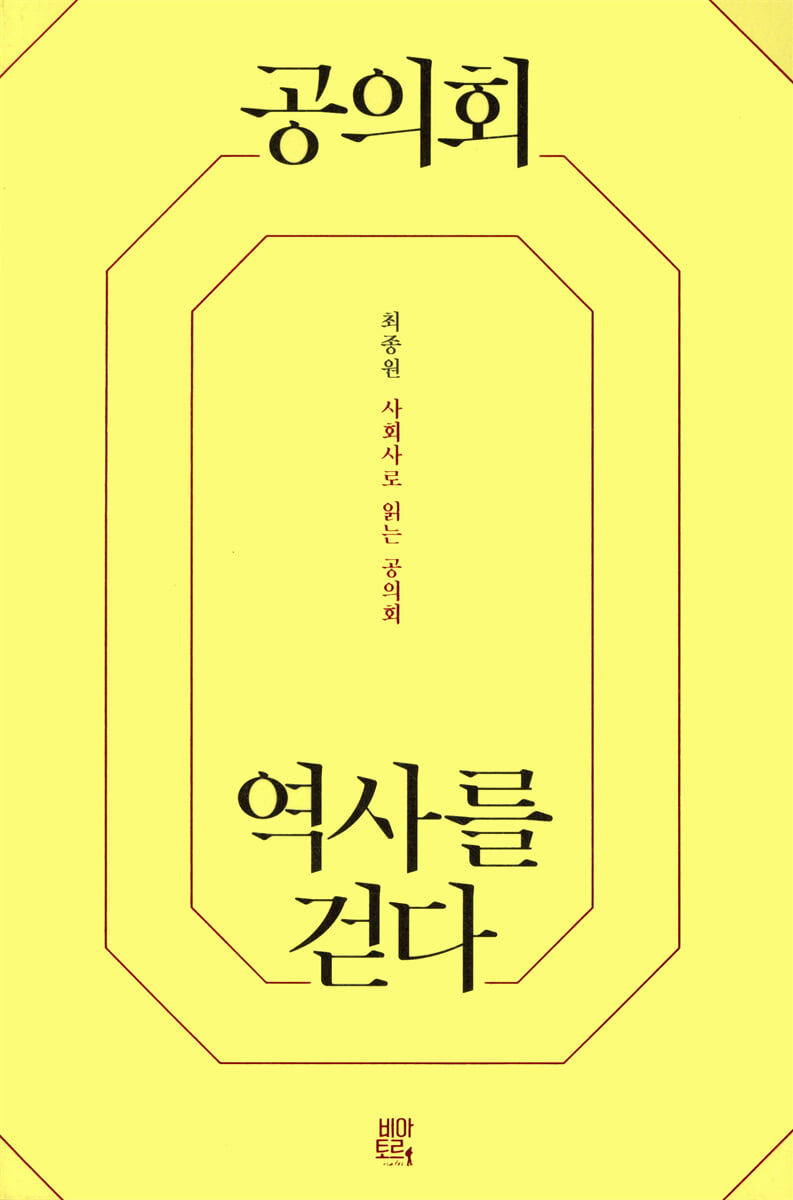 |
Description
Book Introduction
How will the church respond to the questions and challenges of our time?
Read the background, agenda, and social and political implications of the council's convening!
The Church, which has claimed to be the guardian of truth throughout its two-thousand-year history, has had to grapple with the important issues of each era.
During the Middle Ages, when the divine right fiercely competed with secular power; during the Renaissance, when new technologies and ideas threatened the Church's position; and during the modern era, when absolute power was disintegrating in the face of new ideas, what did the Church seek to protect, and what choices did it make to achieve this? This book examines 14 of the 21 councils convened to date from a social historical perspective.
This book shows the process of forming church traditions that took root as a result of interaction with society, rather than the uncompromising process of forming doctrine, while also reflecting on the position the Korean church should stand on and the meaning of its existence.
Read the background, agenda, and social and political implications of the council's convening!
The Church, which has claimed to be the guardian of truth throughout its two-thousand-year history, has had to grapple with the important issues of each era.
During the Middle Ages, when the divine right fiercely competed with secular power; during the Renaissance, when new technologies and ideas threatened the Church's position; and during the modern era, when absolute power was disintegrating in the face of new ideas, what did the Church seek to protect, and what choices did it make to achieve this? This book examines 14 of the 21 councils convened to date from a social historical perspective.
This book shows the process of forming church traditions that took root as a result of interaction with society, rather than the uncompromising process of forming doctrine, while also reflecting on the position the Korean church should stand on and the meaning of its existence.
- You can preview some of the book's contents.
Preview
index
Introduction: In Search of Unfamiliar Traditions
1.
Introduction: Why the 'Council' Now?
Why We Should Read Church History from a Social Perspective
2. Is this the beginning or an expansion of the division between the East and West churches?
- The Fourth Council of Constantinople
A typical example of church reform from above
- The First and Second Lateran Councils
4 The Church at the Pinnacle of Power: Its Light and Shadow
- Third Lateran Council
5 The Catholic Church Completes the Dominion of Life and Death
- The Fourth Lateran Council
6 The Reformation did not happen overnight.
- The First and Second Councils of Lyon
7 Church, can you stand in the lowly position of poverty?
- Council of Vienna
8 Churches, Crossing the River of No Return
- Council of Constance
9 The Church's Experiment with Modern Systems Ended in Failure
- Council of Basel, Ferrara, and Florence
10 If the church cannot change people, people must change the church.
- Fifth Lateran Council
11 Creating a 'New Religion'
- Council of Trent
12 Discussing Heavenly Mysteries in the Face of Suffering in the Modern World
- First Vatican Council
13 Azornamento, Human Dignity and the Common Good of Society
- Second Vatican Council
A new tradition that embodies the spirit of the times
main
Search
1.
Introduction: Why the 'Council' Now?
Why We Should Read Church History from a Social Perspective
2. Is this the beginning or an expansion of the division between the East and West churches?
- The Fourth Council of Constantinople
A typical example of church reform from above
- The First and Second Lateran Councils
4 The Church at the Pinnacle of Power: Its Light and Shadow
- Third Lateran Council
5 The Catholic Church Completes the Dominion of Life and Death
- The Fourth Lateran Council
6 The Reformation did not happen overnight.
- The First and Second Councils of Lyon
7 Church, can you stand in the lowly position of poverty?
- Council of Vienna
8 Churches, Crossing the River of No Return
- Council of Constance
9 The Church's Experiment with Modern Systems Ended in Failure
- Council of Basel, Ferrara, and Florence
10 If the church cannot change people, people must change the church.
- Fifth Lateran Council
11 Creating a 'New Religion'
- Council of Trent
12 Discussing Heavenly Mysteries in the Face of Suffering in the Modern World
- First Vatican Council
13 Azornamento, Human Dignity and the Common Good of Society
- Second Vatican Council
A new tradition that embodies the spirit of the times
main
Search
Into the book
So what was the most important event at the Council of Nicaea? Anyone with even a passing knowledge of church history or theology would say it was the condemnation of Arians, who denied the divinity of Jesus, as heresy and the establishment of the doctrine of the Trinity.
But more importantly from a social historical perspective, the emperor convened and presided over a council to address important church issues.
It set a precedent for secular power to intervene in so-called church affairs.
To justify this intervention, Eusebius of Caesarea, known as the father of church history, called the emperor the 13th apostle.
The foundation of the imperial church theology that justified the emperor's domination of the church was laid.
--- p.18
After the Fourth Council of Constantinople, no councils were convened for 250 years.
The council held in 1123 in the Lateran Palace, where the Pope resided, was the first council led by the Western Church.
It was an expression of Western pride as it was the first council convened by the Pope.
It was perhaps natural that the Donation of Constantine was cited as evidence to justify the convocation of the council.
The forgery of the Donation of Constantine was intended to establish the Pope's supremacy over the Eastern Roman Emperors.
Moreover, the 'Filioque' was a product of the needs of the Western Church.
It can be seen as an inevitable byproduct of the process of forming an independent Latin church amidst the transition of language and culture.
--- p.46
How should we interpret the nature of the Investiture Controversy, which has fueled such a long-standing conflict between religious and secular power? Is it more appropriate to view it as a measure to prevent undue interference by secular power in the church? Rather, shouldn't it be seen as a clear demonstration of the church's political status by establishing its secular role? This debate marked the beginning of a long struggle between ecclesiastical and secular power that continued throughout the Middle Ages and extended into the Reformation.
The conflict between the Pope's dream of a 'state loyal to the church' and the secular monarchs' dream of a 'church existing for the state' is also an important starting point for understanding the Reformation.
In that sense, the Reformation is a historical event that naturally led to the transition to a national church.
--- p.60
Pressure was also put on popular heretical movements, such as the Cathars and Waldenses, another distinctive group that emerged in the 12th century, imposing on secular rulers the duty to suppress heresy (Canon 27).
The strengthening of the papacy and the centralization of power made it possible to transform Europe into an effective Christian republic.
However, behind this trend, darkness took hold, such as the emergence of popular heresy that did not agree with it, the establishment of crusades against heresy, and the establishment of the Inquisition.
So, while the long 12th century is called the '12th-century Renaissance', it is also known as the 'formative period of oppressive society' in Western Europe.
History's assessment of this period is far from clear.
For example, the Dominican Order, which contributed greatly to the development of scholasticism as one of the axes of medieval universities, played a central role in the Inquisition, which took the lead in creating and punishing heretics through its theological knowledge and doctrine.
--- p.85
Frederick II, Holy Roman Emperor, was one of the most pivotal figures in European history during this period.
In addition to his title as Holy Roman Emperor, he actually ruled as King of Sicily, Germany, and Italy.
Moreover, he was the monarch with the largest territory in medieval Europe, having entered Jerusalem bloodlessly through the Crusades and become the King of Jerusalem.
This controversial figure, known to have been fluent in six languages, is highly regarded in history.
He contributed greatly to the Renaissance by supporting Italian literature and artistic activities in Sicily, where he mainly resided, and was also the first monarch to outlaw trials by torture on the grounds that they were superstitious.
A contemporary chronicler praised him as a "wonder of the world", noting not only his exceptional abilities and expansion of power, but also his significant contributions to culture and scholarship.
He is also known as the first European and the first modern monarch.
--- p.113-114
From this perspective, the issue of the Reformation was not the division between Catholics and Protestants.
The balance between religious power, including Catholicism and Protestantism, and secular power has tilted toward secular power.
That is why in European history, the 16th century is called the period when modern nation-states were established.
Reading the church through social history means confirming that the institutional church does not exist apart from the general flow of history.
Just as it is never desirable for the papacy to be at the top, it is not simply a matter of the church's decline that the papacy has been pushed out of competition with secular power.
The same goes for the perspective on the Reformation.
The first and second Councils of Lyon are the starting point of a long narrative that allows us to read the Reformation anew.
--- p.123
The following year, in 1303, Philip IV arrested the Pope while he was staying at the Villa of Agnani, causing him irreparable humiliation.
In the end, Pope Boniface VIII died in despair.
After the death of this Italian pope and the eight-month reign of his successor, Benedict XI, also of Italian descent, the papacy was taken over by a Frenchman.
The next French pope elected after Benedict XI was Clement V, who convened the Council of Vienne.
He is remembered in history not so much for convening the Council of Vienne as for moving the papal court from Rome to Avignon.
It was only natural that all the popes who reigned during the 70 years of the Avignon Papacy were French.
Perhaps it was only natural that the popes would take the lead in benefiting the French king.
--- p.132
As his claims gained public attention and spread, the Catholic Church could not help but feel uncomfortable.
Finally, he was summoned to the Council of Constance in 1414.
At this council, which he attended with safe-conduct from the Holy Roman Emperor, Huss was arrested and tortured.
As a result of the trial, 30 claims were condemned as heresy, and Huss was burned at the stake the following year, in 1415.
After that, Bohemia formed a national church against the Roman Catholic Church and waged war against the Catholic Church.
Furthermore, the Council of Constance condemned 200 of Wycliffe's claims as heresy and ordered his bones to be burned and thrown into the river, after he had died 30 years earlier (1384) and was buried in Lutterworth Church.
--- p.160
But why did this council movement fail to gain sustained support and ultimately collapse? First, the gap between ideals and reality was significant.
The ideal of 'church reform through decentralization of power' put forward by conciliarism resulted in the real world in which power, previously concentrated in the pope, was transferred to the church within the territory of the state.
This is not a decentralization of power, but rather a concentration of power in the church in another form.
It was at this point that the kings and princes who had supported the conciliar movement hesitated.
Thus, the secular powers stopped supporting those who advocated the supremacy of the Council.
Second, the most substantial reason for the defeat of the conciliarists was that the reform agenda they put forward offered no incentive to secular rulers.
If the goal of the conciliar movement was to decentralize the powers concentrated in the Pope and give autonomy to local churches, the interest of secular monarchs went a step further and sought to bring the churches within their jurisdictions under a certain degree of state influence so that they themselves (…)
But more importantly from a social historical perspective, the emperor convened and presided over a council to address important church issues.
It set a precedent for secular power to intervene in so-called church affairs.
To justify this intervention, Eusebius of Caesarea, known as the father of church history, called the emperor the 13th apostle.
The foundation of the imperial church theology that justified the emperor's domination of the church was laid.
--- p.18
After the Fourth Council of Constantinople, no councils were convened for 250 years.
The council held in 1123 in the Lateran Palace, where the Pope resided, was the first council led by the Western Church.
It was an expression of Western pride as it was the first council convened by the Pope.
It was perhaps natural that the Donation of Constantine was cited as evidence to justify the convocation of the council.
The forgery of the Donation of Constantine was intended to establish the Pope's supremacy over the Eastern Roman Emperors.
Moreover, the 'Filioque' was a product of the needs of the Western Church.
It can be seen as an inevitable byproduct of the process of forming an independent Latin church amidst the transition of language and culture.
--- p.46
How should we interpret the nature of the Investiture Controversy, which has fueled such a long-standing conflict between religious and secular power? Is it more appropriate to view it as a measure to prevent undue interference by secular power in the church? Rather, shouldn't it be seen as a clear demonstration of the church's political status by establishing its secular role? This debate marked the beginning of a long struggle between ecclesiastical and secular power that continued throughout the Middle Ages and extended into the Reformation.
The conflict between the Pope's dream of a 'state loyal to the church' and the secular monarchs' dream of a 'church existing for the state' is also an important starting point for understanding the Reformation.
In that sense, the Reformation is a historical event that naturally led to the transition to a national church.
--- p.60
Pressure was also put on popular heretical movements, such as the Cathars and Waldenses, another distinctive group that emerged in the 12th century, imposing on secular rulers the duty to suppress heresy (Canon 27).
The strengthening of the papacy and the centralization of power made it possible to transform Europe into an effective Christian republic.
However, behind this trend, darkness took hold, such as the emergence of popular heresy that did not agree with it, the establishment of crusades against heresy, and the establishment of the Inquisition.
So, while the long 12th century is called the '12th-century Renaissance', it is also known as the 'formative period of oppressive society' in Western Europe.
History's assessment of this period is far from clear.
For example, the Dominican Order, which contributed greatly to the development of scholasticism as one of the axes of medieval universities, played a central role in the Inquisition, which took the lead in creating and punishing heretics through its theological knowledge and doctrine.
--- p.85
Frederick II, Holy Roman Emperor, was one of the most pivotal figures in European history during this period.
In addition to his title as Holy Roman Emperor, he actually ruled as King of Sicily, Germany, and Italy.
Moreover, he was the monarch with the largest territory in medieval Europe, having entered Jerusalem bloodlessly through the Crusades and become the King of Jerusalem.
This controversial figure, known to have been fluent in six languages, is highly regarded in history.
He contributed greatly to the Renaissance by supporting Italian literature and artistic activities in Sicily, where he mainly resided, and was also the first monarch to outlaw trials by torture on the grounds that they were superstitious.
A contemporary chronicler praised him as a "wonder of the world", noting not only his exceptional abilities and expansion of power, but also his significant contributions to culture and scholarship.
He is also known as the first European and the first modern monarch.
--- p.113-114
From this perspective, the issue of the Reformation was not the division between Catholics and Protestants.
The balance between religious power, including Catholicism and Protestantism, and secular power has tilted toward secular power.
That is why in European history, the 16th century is called the period when modern nation-states were established.
Reading the church through social history means confirming that the institutional church does not exist apart from the general flow of history.
Just as it is never desirable for the papacy to be at the top, it is not simply a matter of the church's decline that the papacy has been pushed out of competition with secular power.
The same goes for the perspective on the Reformation.
The first and second Councils of Lyon are the starting point of a long narrative that allows us to read the Reformation anew.
--- p.123
The following year, in 1303, Philip IV arrested the Pope while he was staying at the Villa of Agnani, causing him irreparable humiliation.
In the end, Pope Boniface VIII died in despair.
After the death of this Italian pope and the eight-month reign of his successor, Benedict XI, also of Italian descent, the papacy was taken over by a Frenchman.
The next French pope elected after Benedict XI was Clement V, who convened the Council of Vienne.
He is remembered in history not so much for convening the Council of Vienne as for moving the papal court from Rome to Avignon.
It was only natural that all the popes who reigned during the 70 years of the Avignon Papacy were French.
Perhaps it was only natural that the popes would take the lead in benefiting the French king.
--- p.132
As his claims gained public attention and spread, the Catholic Church could not help but feel uncomfortable.
Finally, he was summoned to the Council of Constance in 1414.
At this council, which he attended with safe-conduct from the Holy Roman Emperor, Huss was arrested and tortured.
As a result of the trial, 30 claims were condemned as heresy, and Huss was burned at the stake the following year, in 1415.
After that, Bohemia formed a national church against the Roman Catholic Church and waged war against the Catholic Church.
Furthermore, the Council of Constance condemned 200 of Wycliffe's claims as heresy and ordered his bones to be burned and thrown into the river, after he had died 30 years earlier (1384) and was buried in Lutterworth Church.
--- p.160
But why did this council movement fail to gain sustained support and ultimately collapse? First, the gap between ideals and reality was significant.
The ideal of 'church reform through decentralization of power' put forward by conciliarism resulted in the real world in which power, previously concentrated in the pope, was transferred to the church within the territory of the state.
This is not a decentralization of power, but rather a concentration of power in the church in another form.
It was at this point that the kings and princes who had supported the conciliar movement hesitated.
Thus, the secular powers stopped supporting those who advocated the supremacy of the Council.
Second, the most substantial reason for the defeat of the conciliarists was that the reform agenda they put forward offered no incentive to secular rulers.
If the goal of the conciliar movement was to decentralize the powers concentrated in the Pope and give autonomy to local churches, the interest of secular monarchs went a step further and sought to bring the churches within their jurisdictions under a certain degree of state influence so that they themselves (…)
--- p.183
Publisher's Review
Councils: A Strange Tradition that Runs Through Church History from the Middle Ages to the Modern Era
Christianity, once persecuted, became recognized as the official religion of the Roman Empire as it expanded and spread throughout Europe.
And Christianity has never been pushed out of mainstream history since then.
Through the Renaissance, a time of new ideas and scientific discoveries, and the modern era, when not only the sanctity of the church but also the absolute power of the secular world was being dismantled, the church had to confront the inexorable threat of Islam, and in the process, it had to constantly compete with each other for secular power and supremacy, experiencing division with Protestantism.
The decisions and proclamations of the church were tantamount to the church's proclamation to society.
As the power of the Pope grew to its peak, the institutional church's oppression of the other became formalized.
What values and traditions did the church try to preserve in the midst of the whirlwind of rapidly changing times?
How has the church responded to social problems?
This book does not view the council solely as a process of consultation that establishes Christian thought and doctrine.
It shows how the church responded to the call of the times in the face of the various problems facing turbulent European society.
The Catholic Church's councils, held once every hundred years, are proof that the Church has struggled to find solutions and find solutions in the face of the demands of the times for change and reform.
For 1,300 years, the decisions made by the Church in the councils have either acquired new authority in the name of tradition or served as a basis for condemning other powers.
This book, which examines the church's unfamiliar traditions within history, offers a humanistic reflection on the values the church must truly uphold at critical crossroads that determine the course of history.
The Church's Choices and Decisions Through European Social History, and the Path We Must Take Today
The religious imagination and new experiments demonstrated by the Catholic Church have been solidified into the framework of tradition, whether in a positive or negative sense.
At a crossroads, Protestantism has pioneered a new path and created another tradition under the banner of Bible-centeredness.
In a world where the call for internal renewal is growing stronger both internally and externally, what can the Korean church learn from history? The author, widely known to both Christians and humanities readers for his masterful writing on medieval church history, clearly illustrates the path the church has taken within its historical context, using accessible language.
In doing so, it presents us with an important topic for discussion, enabling the Church to present a new tradition that embraces the spirit of the times.
How will the Korean church respond to the call of the times for reform?
Christianity, once persecuted, became recognized as the official religion of the Roman Empire as it expanded and spread throughout Europe.
And Christianity has never been pushed out of mainstream history since then.
Through the Renaissance, a time of new ideas and scientific discoveries, and the modern era, when not only the sanctity of the church but also the absolute power of the secular world was being dismantled, the church had to confront the inexorable threat of Islam, and in the process, it had to constantly compete with each other for secular power and supremacy, experiencing division with Protestantism.
The decisions and proclamations of the church were tantamount to the church's proclamation to society.
As the power of the Pope grew to its peak, the institutional church's oppression of the other became formalized.
What values and traditions did the church try to preserve in the midst of the whirlwind of rapidly changing times?
How has the church responded to social problems?
This book does not view the council solely as a process of consultation that establishes Christian thought and doctrine.
It shows how the church responded to the call of the times in the face of the various problems facing turbulent European society.
The Catholic Church's councils, held once every hundred years, are proof that the Church has struggled to find solutions and find solutions in the face of the demands of the times for change and reform.
For 1,300 years, the decisions made by the Church in the councils have either acquired new authority in the name of tradition or served as a basis for condemning other powers.
This book, which examines the church's unfamiliar traditions within history, offers a humanistic reflection on the values the church must truly uphold at critical crossroads that determine the course of history.
The Church's Choices and Decisions Through European Social History, and the Path We Must Take Today
The religious imagination and new experiments demonstrated by the Catholic Church have been solidified into the framework of tradition, whether in a positive or negative sense.
At a crossroads, Protestantism has pioneered a new path and created another tradition under the banner of Bible-centeredness.
In a world where the call for internal renewal is growing stronger both internally and externally, what can the Korean church learn from history? The author, widely known to both Christians and humanities readers for his masterful writing on medieval church history, clearly illustrates the path the church has taken within its historical context, using accessible language.
In doing so, it presents us with an important topic for discussion, enabling the Church to present a new tradition that embraces the spirit of the times.
How will the Korean church respond to the call of the times for reform?
GOODS SPECIFICS
- Publication date: October 13, 2020
- Page count, weight, size: 288 pages | 388g | 140*210*20mm
- ISBN13: 9791188255689
- ISBN10: 1188255681
You may also like
카테고리
korean


korean

![GQ KOREA Mark (Monthly): December [2025]](http://librairie.coreenne.fr/cdn/shop/files/8ef265dbbfbf186523ed75ba7319009d.jpg?v=1765340328&width=3840)


