

Authentic Korean-Chinese-Japanese World History 8
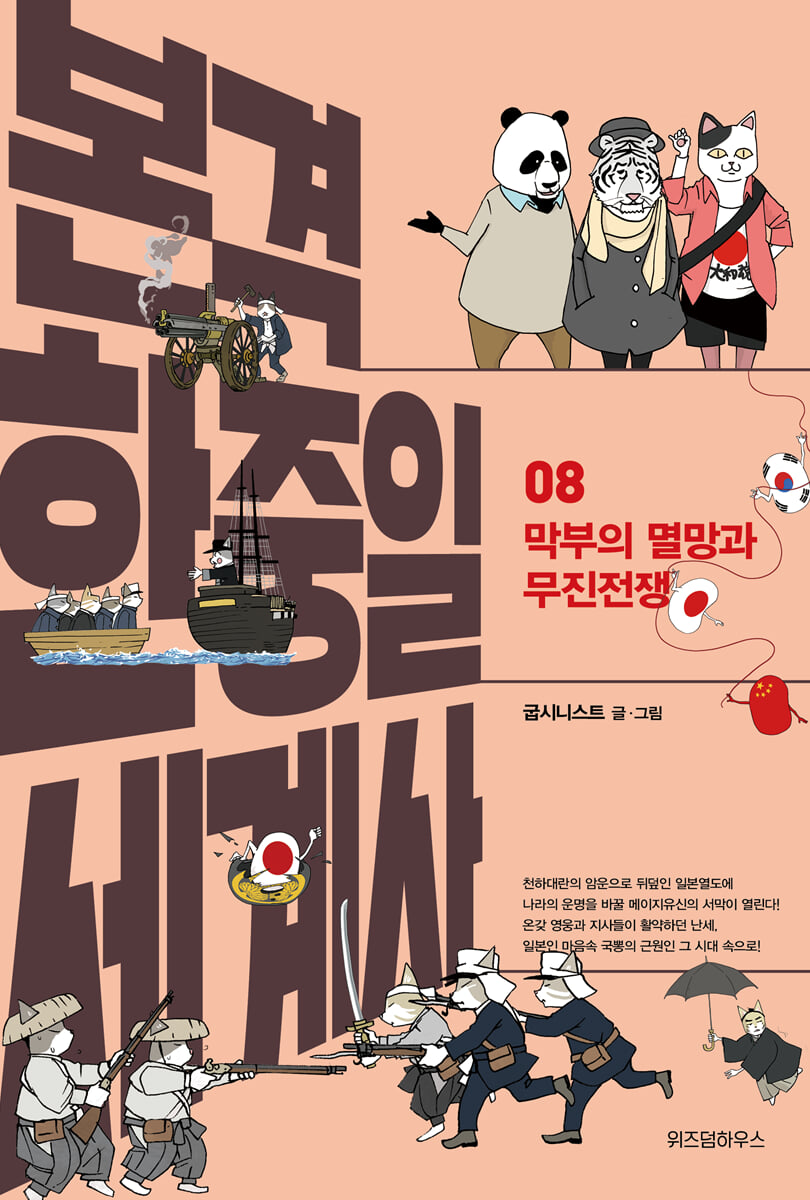 |
Description
Book Introduction
The prelude to the Meiji Restoration, which will change the future of the archipelago, opens!
Volume 8 tells the story of the Edo period, beginning with the ascension of Tokugawa Yoshinobu to the shogunate and the ascension of Emperor Meiji.
Amidst internal and external turmoil, pressured by great powers and threatened by the powerful feudal clans, the shogunate seeks a sudden turnaround with the "Taisei Hohan" (return of power). The Yushin forces, backed by the Satsuma-Choshu Alliance, respond with a coup d'état to restore the monarchy. Who will emerge victorious in this battle? Will Japan finally be able to halt its bloody civil war and embark on a campaign of Westernization and modernization?
Volume 8 tells the story of the Edo period, beginning with the ascension of Tokugawa Yoshinobu to the shogunate and the ascension of Emperor Meiji.
Amidst internal and external turmoil, pressured by great powers and threatened by the powerful feudal clans, the shogunate seeks a sudden turnaround with the "Taisei Hohan" (return of power). The Yushin forces, backed by the Satsuma-Choshu Alliance, respond with a coup d'état to restore the monarchy. Who will emerge victorious in this battle? Will Japan finally be able to halt its bloody civil war and embark on a campaign of Westernization and modernization?
- You can preview some of the book's contents.
Preview
index
Chapter 1.
Conspiracy theory
Chapter 2.
Four Lords Council
Chapter 3.
Seonjung 8 books
Chapter 4.
Daejeong Bonghwan
Chapter 5.
The great decree of the restoration of the monarchy
Chapter 6.
The Beginning of the Boshin War - The Battle of Toba and Fushimi
Chapter 7.
Naniwa's Dream
Chapter 8.
Edo open
Chapter 9.
Resistance of the leftist forces
Chapter 10.
The stage is in the northeast
Chapter 11.
The climax of the Mujin War - the Northeastern War
Chapter 12.
Autumn in the Northeast
Chapter 13.
End of the Northeast War
Chapter 14.
North
Chapter 15.
Stone wall armor
Chapter 16.
End of the Battle of Hakodate
Chapter 17.
Why did the shogunate fall?
Conspiracy theory
Chapter 2.
Four Lords Council
Chapter 3.
Seonjung 8 books
Chapter 4.
Daejeong Bonghwan
Chapter 5.
The great decree of the restoration of the monarchy
Chapter 6.
The Beginning of the Boshin War - The Battle of Toba and Fushimi
Chapter 7.
Naniwa's Dream
Chapter 8.
Edo open
Chapter 9.
Resistance of the leftist forces
Chapter 10.
The stage is in the northeast
Chapter 11.
The climax of the Mujin War - the Northeastern War
Chapter 12.
Autumn in the Northeast
Chapter 13.
End of the Northeast War
Chapter 14.
North
Chapter 15.
Stone wall armor
Chapter 16.
End of the Battle of Hakodate
Chapter 17.
Why did the shogunate fall?
Into the book
Indeed, the emperor greatly disliked the traitors and wanted to continue the conquest of Choshu, but the conquest forces suffered successive defeats, the summoned vassals returned in large numbers, and the shogun died.
Here, the price of rice skyrocketed due to the mobilization for the conquest of Choshu.
Rice riots occur frequently across the country.
October 8, 1866.
End of the Fourth Border War (Second Choshu Conquest).
Amid the shock of the world, the shogunate announced that it would humbly listen to public opinion, and the Second Choshu Expedition ended in a Choshu victory!
--- pp.13~15, from 「Chapter 1_Conspiracy theory」
Since it was a state of emergency, Yoshinobu immediately took over as head of the Tokugawa family, but he pretended not to have any desire for the position of shogun.
There was considerable opposition to Yoshinobu's succession to the Shogunate, so Tenshoin pushed Iesato as the next Shogun, and the Hitotsubashi vassals, Yoshinobu's personal vassals, were also absolutely opposed to their lord's succession to the Shogunate.
The situation also ended up tilting towards Yoshinobu Shogun due to the machinations of the pro-Yoshinobu cabinet members, and in the court, the emperor suppressed all voices calling for anti-Yoshinobu and expressed support for Yoshinobu.
… On January 10, 1867, Tokugawa Yoshinobu (30 years old) assumed the position of Shogun by the Emperor’s order to appoint him as Shogun.
--- pp.16~18, from 「Chapter 1_Conspiracy theory」
The lords of the major feudal clans responded to the court's request for a visit to the Emperor of Heaven and went up to Kyoto in June 1867.
The Four Lords Council, a council formed by the four lords who came to Kyoto.
…The 4th meeting will proceed with coordination and negotiations with Yoshinobu over the next two weeks.
The negotiations between the 4th Council and Yoshinobu at Nijo Castle in Kyoto ended without much progress and only involved a commemorative photo shoot.
In the end, the situation surrounding the treaty approval devolved into a battle of lobbying between the Four Councils and the shogunate.
In the end, the shogunate, which had won by winning over the five families and the upper echelons of the court, led by Prince Asahiko, was victorious.
On June 24th, the treaty was approved.
The 4th Division meeting was dissolved and they returned home.
As the attempt to dismantle the shogunate through political solutions failed, Choshu and Satsuma began to carry out their plan by breaking up the shogunate into pieces through force.
--- pp.40~44, from 「Chapter 2_Four Lords Council」
Even though it is called the Taisei Hokan, for the time being, there is no choice but for the shogunate administrative organization to continue to run the country.
As expected, it was impossible for a government without any administrative hardware or software to immediately begin ruling the country.
The court of Kanpaku Nijo Nariyuki was a pro-shogunate court that was completely embraced by Yoshinobu.
In effect, the court controlled by the shogunate ended up continuing to delegate national governance back to the shogunate.
In diplomacy, as before, the shogunate organization will continue to represent Japan in dealings with foreign countries.
And he gave Yoshinobu full authority to form a new government organization to replace the shogunate system.
Satcho strongly opposed this shogunate-friendly return to power.
--- pp.71~73, from “Chapter 4_The Return of the Crown Prince”
Saigo issues an order to the Satsuma clan in Edo.
The Satsuma clan warriors who received Saigo's orders
Launching a terrorist operation in Edo city.
On January 17th, Edo Castle was set on fire, burning down Ninomaru.
Arson and shootings continue throughout the city.
The enraged shogunate mobilized the Shonai and Kaminoyama clans.
January 19, the Satsuma clan residence in Edo was burned down.
On January 25, Yoshinobu declared the Satsuma Jinto.
The curtain rises on the war.
--- pp.91~93, from “Chapter 5_The Great Decree of the Restoration of the Monarchy”
On May 27, 1868, three weeks after the fall of Edo Castle, Oguri Tadamasa was captured by the new government forces and executed.
However, Oguri Tadamasa's death gave rise to a strange urban legend: upon leaving Edo Castle, Oguri went on a secret mission to smuggle out the Tokugawa family's gold, hiding it somewhere! Even into the 21st century, treasure hunters continue to dig across Gunma Prefecture's Akagi Mountains in search of Tokugawa gold.
Or there is a theory that it was swallowed by the Mitsui Group.
Here, the price of rice skyrocketed due to the mobilization for the conquest of Choshu.
Rice riots occur frequently across the country.
October 8, 1866.
End of the Fourth Border War (Second Choshu Conquest).
Amid the shock of the world, the shogunate announced that it would humbly listen to public opinion, and the Second Choshu Expedition ended in a Choshu victory!
--- pp.13~15, from 「Chapter 1_Conspiracy theory」
Since it was a state of emergency, Yoshinobu immediately took over as head of the Tokugawa family, but he pretended not to have any desire for the position of shogun.
There was considerable opposition to Yoshinobu's succession to the Shogunate, so Tenshoin pushed Iesato as the next Shogun, and the Hitotsubashi vassals, Yoshinobu's personal vassals, were also absolutely opposed to their lord's succession to the Shogunate.
The situation also ended up tilting towards Yoshinobu Shogun due to the machinations of the pro-Yoshinobu cabinet members, and in the court, the emperor suppressed all voices calling for anti-Yoshinobu and expressed support for Yoshinobu.
… On January 10, 1867, Tokugawa Yoshinobu (30 years old) assumed the position of Shogun by the Emperor’s order to appoint him as Shogun.
--- pp.16~18, from 「Chapter 1_Conspiracy theory」
The lords of the major feudal clans responded to the court's request for a visit to the Emperor of Heaven and went up to Kyoto in June 1867.
The Four Lords Council, a council formed by the four lords who came to Kyoto.
…The 4th meeting will proceed with coordination and negotiations with Yoshinobu over the next two weeks.
The negotiations between the 4th Council and Yoshinobu at Nijo Castle in Kyoto ended without much progress and only involved a commemorative photo shoot.
In the end, the situation surrounding the treaty approval devolved into a battle of lobbying between the Four Councils and the shogunate.
In the end, the shogunate, which had won by winning over the five families and the upper echelons of the court, led by Prince Asahiko, was victorious.
On June 24th, the treaty was approved.
The 4th Division meeting was dissolved and they returned home.
As the attempt to dismantle the shogunate through political solutions failed, Choshu and Satsuma began to carry out their plan by breaking up the shogunate into pieces through force.
--- pp.40~44, from 「Chapter 2_Four Lords Council」
Even though it is called the Taisei Hokan, for the time being, there is no choice but for the shogunate administrative organization to continue to run the country.
As expected, it was impossible for a government without any administrative hardware or software to immediately begin ruling the country.
The court of Kanpaku Nijo Nariyuki was a pro-shogunate court that was completely embraced by Yoshinobu.
In effect, the court controlled by the shogunate ended up continuing to delegate national governance back to the shogunate.
In diplomacy, as before, the shogunate organization will continue to represent Japan in dealings with foreign countries.
And he gave Yoshinobu full authority to form a new government organization to replace the shogunate system.
Satcho strongly opposed this shogunate-friendly return to power.
--- pp.71~73, from “Chapter 4_The Return of the Crown Prince”
Saigo issues an order to the Satsuma clan in Edo.
The Satsuma clan warriors who received Saigo's orders
Launching a terrorist operation in Edo city.
On January 17th, Edo Castle was set on fire, burning down Ninomaru.
Arson and shootings continue throughout the city.
The enraged shogunate mobilized the Shonai and Kaminoyama clans.
January 19, the Satsuma clan residence in Edo was burned down.
On January 25, Yoshinobu declared the Satsuma Jinto.
The curtain rises on the war.
--- pp.91~93, from “Chapter 5_The Great Decree of the Restoration of the Monarchy”
On May 27, 1868, three weeks after the fall of Edo Castle, Oguri Tadamasa was captured by the new government forces and executed.
However, Oguri Tadamasa's death gave rise to a strange urban legend: upon leaving Edo Castle, Oguri went on a secret mission to smuggle out the Tokugawa family's gold, hiding it somewhere! Even into the 21st century, treasure hunters continue to dig across Gunma Prefecture's Akagi Mountains in search of Tokugawa gold.
Or there is a theory that it was swallowed by the Mitsui Group.
--- pp.155~156, from 「Chapter 8_Edo open」
Publisher's Review
In a time of chaos, when all kinds of heroes and patriots were active,
Back to that era, the source of nationalism in the hearts of the Japanese!
The Meiji Restoration period of Japan's late Edo period, when countless talented people emerged and various incidents broke out on a monthly basis, is a topic that has the second highest interest among Korean readers after the Warring States period.
The heroic tales of the Restoration patriots who influenced the era, such as Sakamoto Ryoma, Saigo Takamori, and Katsu Kaishu, are fascinating, but it is also because of the self-deprecating curiosity of, "Why did Japan succeed in modernizing while Joseon did not?"
In fact, from this time on, Japan achieved explosive Westernization and modernization, ultimately establishing an 'empire'.
Of course, there were no small number of sacrifices made in the process (the War of the Three Kingdoms), but considering the size of the shogunate army and the nature of its power, which had maintained its power for 265 years, it can be said that it was a peaceful transfer of power.
So how did Japan so effortlessly overthrow the old system and achieve modernization? And why, despite the significant military disparity, did it avoid territorial invasion or annexation by Western powers, instead achieving ally status? Let's delve into that turbulent era in East Asia, a time when political dynamics shifted daily.
The Japanese archipelago is covered with dark clouds of chaos.
The prelude to the Meiji Restoration, which will change the fate of the nation, opens!
In a crisis situation where the Second Choshu Expedition failed and the shogun died, Yoshinobu ascended to the position of shogun despite opposition from the Nanki faction ministers.
As pressure from Western powers surrounding the opening of Hyogo Port intensified, Satsuma and Choshu, among others, attempted to use this to dismantle the shogunate, and the difficult situation continued as the pro-Emperor and anti-Western faction leaders demanded the expulsion of Western powers.
In the end, even Emperor Komei, who had promised to grant permission to open Hyogo, died suddenly…
He tries to somehow untangle the tangled political situation, prevent the imminent Yanggui Invasion, and crush the threat of the Satcho Alliance, but the situation only gets worse.
Just when it seemed that the bloody winds of the Sengoku period would blow through Japan again, Ryoma Sakamoto, a man of great courage during the Meiji Restoration, appeared and published the Eight Books of the Eight Books, which were centered around the return of power to the shogunate.
After much deliberation, Yoshinobu makes a political gamble that will put the future of the shogunate and the archipelago at stake.
Can Japan avoid the dark clouds of chaos and settle into the modern highway designed by Ryoma?
The series "Authentic Korean, Chinese, and Japanese World History"
This is foul play! They're not even losing their sense of humor while still providing profound content!
Easily overcoming the historical convention that "you have to memorize it to understand it."
When we talk about 'history', we often have the common perception that it is 'boring' and that 'you have to memorize it to understand it'.
This may be because the memories of memorizing the years and events that occurred during middle and high school history classes are all that remain of our image of history.
In contrast, this series deviates significantly from the conventional wisdom that history must be memorized.
This time, cartoonist Gupsinist has published a historical cartoon that covers the modern history of Korea, China, and Japan, utilizing his major.
This series describes the modern history of 19th-century East Asia, naturally incorporating various subcultures such as games, military, animation, and dramas into it.
As you slowly follow the author's extensive knowledge of history, the various parodies and wordplay that are sprinkled throughout, the zeitgeist and world situation of the time will naturally come to mind.
Through this series, readers will experience a significant reduction in the barriers to entry into history, which has often been perceived as difficult.
In the face of the tidal wave of Western imperialist powers entering the world,
How did Korea, China, and Japan resist or comply?
Why must we read world history through the lens of "Korea, China, and Japan"? To observe the tree of Korean history, our own history, we must first see the forest of Eastern history. Without understanding this, we cannot grasp the larger picture of world history.
To understand our country's past and present, and the global situation, we will compare the history of three East Asian countries.
World history up to now has not strayed far from the form of a brief description of the history of Western powers and the surrounding nations and peoples within the global historical flow they created.
However, history is not only about the military and diplomacy of powerful nations, but also about the resistance and identity of weak nations.
This series is an attempt to break away from the traditional Western-centric historical narrative and look at history from our East Asian perspective.
Among them, we will take a closer look at the period from the mid-19th century to the mid-20th century, when Korea, China, and Japan were most closely connected.
01.
The beginning of the West Sea branch
02.
Taiping Heavenly Kingdom Rising
03.
Japan's opening
04.
Taiping Heavenly Kingdom Downfall
05.
Archipelago Games
06.
Tsunami of Dawn
07.
Heungseon Daewongun and the Byeongin Yangyo
08.
The fall of the shogunate and the Boshin War
09.
The Steel Age and the Shinmiyangyo (Basis)
Back to that era, the source of nationalism in the hearts of the Japanese!
The Meiji Restoration period of Japan's late Edo period, when countless talented people emerged and various incidents broke out on a monthly basis, is a topic that has the second highest interest among Korean readers after the Warring States period.
The heroic tales of the Restoration patriots who influenced the era, such as Sakamoto Ryoma, Saigo Takamori, and Katsu Kaishu, are fascinating, but it is also because of the self-deprecating curiosity of, "Why did Japan succeed in modernizing while Joseon did not?"
In fact, from this time on, Japan achieved explosive Westernization and modernization, ultimately establishing an 'empire'.
Of course, there were no small number of sacrifices made in the process (the War of the Three Kingdoms), but considering the size of the shogunate army and the nature of its power, which had maintained its power for 265 years, it can be said that it was a peaceful transfer of power.
So how did Japan so effortlessly overthrow the old system and achieve modernization? And why, despite the significant military disparity, did it avoid territorial invasion or annexation by Western powers, instead achieving ally status? Let's delve into that turbulent era in East Asia, a time when political dynamics shifted daily.
The Japanese archipelago is covered with dark clouds of chaos.
The prelude to the Meiji Restoration, which will change the fate of the nation, opens!
In a crisis situation where the Second Choshu Expedition failed and the shogun died, Yoshinobu ascended to the position of shogun despite opposition from the Nanki faction ministers.
As pressure from Western powers surrounding the opening of Hyogo Port intensified, Satsuma and Choshu, among others, attempted to use this to dismantle the shogunate, and the difficult situation continued as the pro-Emperor and anti-Western faction leaders demanded the expulsion of Western powers.
In the end, even Emperor Komei, who had promised to grant permission to open Hyogo, died suddenly…
He tries to somehow untangle the tangled political situation, prevent the imminent Yanggui Invasion, and crush the threat of the Satcho Alliance, but the situation only gets worse.
Just when it seemed that the bloody winds of the Sengoku period would blow through Japan again, Ryoma Sakamoto, a man of great courage during the Meiji Restoration, appeared and published the Eight Books of the Eight Books, which were centered around the return of power to the shogunate.
After much deliberation, Yoshinobu makes a political gamble that will put the future of the shogunate and the archipelago at stake.
Can Japan avoid the dark clouds of chaos and settle into the modern highway designed by Ryoma?
The series "Authentic Korean, Chinese, and Japanese World History"
This is foul play! They're not even losing their sense of humor while still providing profound content!
Easily overcoming the historical convention that "you have to memorize it to understand it."
When we talk about 'history', we often have the common perception that it is 'boring' and that 'you have to memorize it to understand it'.
This may be because the memories of memorizing the years and events that occurred during middle and high school history classes are all that remain of our image of history.
In contrast, this series deviates significantly from the conventional wisdom that history must be memorized.
This time, cartoonist Gupsinist has published a historical cartoon that covers the modern history of Korea, China, and Japan, utilizing his major.
This series describes the modern history of 19th-century East Asia, naturally incorporating various subcultures such as games, military, animation, and dramas into it.
As you slowly follow the author's extensive knowledge of history, the various parodies and wordplay that are sprinkled throughout, the zeitgeist and world situation of the time will naturally come to mind.
Through this series, readers will experience a significant reduction in the barriers to entry into history, which has often been perceived as difficult.
In the face of the tidal wave of Western imperialist powers entering the world,
How did Korea, China, and Japan resist or comply?
Why must we read world history through the lens of "Korea, China, and Japan"? To observe the tree of Korean history, our own history, we must first see the forest of Eastern history. Without understanding this, we cannot grasp the larger picture of world history.
To understand our country's past and present, and the global situation, we will compare the history of three East Asian countries.
World history up to now has not strayed far from the form of a brief description of the history of Western powers and the surrounding nations and peoples within the global historical flow they created.
However, history is not only about the military and diplomacy of powerful nations, but also about the resistance and identity of weak nations.
This series is an attempt to break away from the traditional Western-centric historical narrative and look at history from our East Asian perspective.
Among them, we will take a closer look at the period from the mid-19th century to the mid-20th century, when Korea, China, and Japan were most closely connected.
01.
The beginning of the West Sea branch
02.
Taiping Heavenly Kingdom Rising
03.
Japan's opening
04.
Taiping Heavenly Kingdom Downfall
05.
Archipelago Games
06.
Tsunami of Dawn
07.
Heungseon Daewongun and the Byeongin Yangyo
08.
The fall of the shogunate and the Boshin War
09.
The Steel Age and the Shinmiyangyo (Basis)
GOODS SPECIFICS
- Date of publication: July 24, 2020
- Page count, weight, size: 328 pages | 610g | 154*225*20mm
- ISBN13: 9791190908146
- ISBN10: 119090814X
You may also like
카테고리
korean


korean

![GQ KOREA Mark (Monthly): December [2025]](http://librairie.coreenne.fr/cdn/shop/files/8ef265dbbfbf186523ed75ba7319009d.jpg?v=1765340328&width=3840)


