

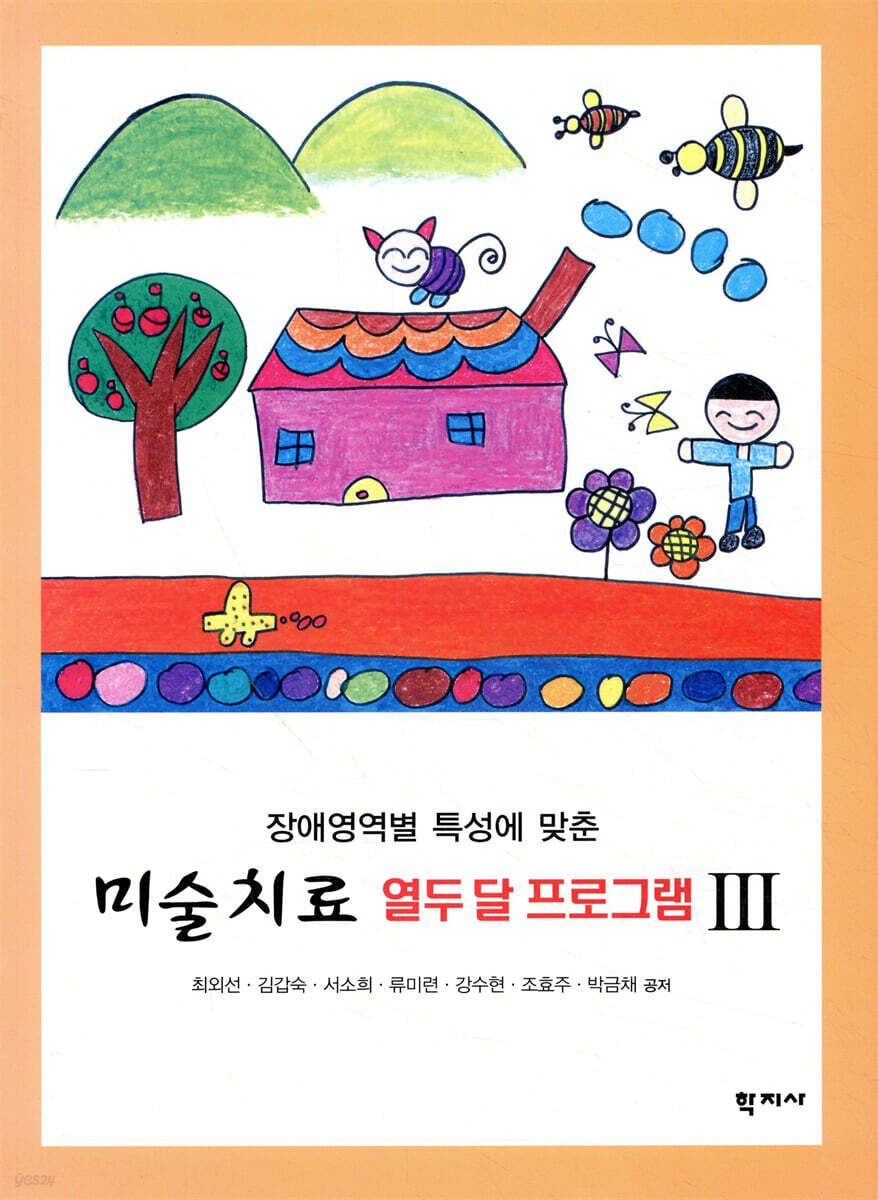
Art Therapy Twelve-Month Program 3
 |
Description
Book Introduction
Art therapy with children with disabilities can have two main goals.
One is to promote development, and the other is to eliminate various psychological, emotional, and behavioral problems caused by the characteristics of the disability.
This book is divided into three stages: Stage 1, Stage 2, and Stage 3, with techniques that can be applied to each topic to reflect the cognitive, language, emotional, and expressive levels of the child the therapist encounters.
One is to promote development, and the other is to eliminate various psychological, emotional, and behavioral problems caused by the characteristics of the disability.
This book is divided into three stages: Stage 1, Stage 2, and Stage 3, with techniques that can be applied to each topic to reflect the cognitive, language, emotional, and expressive levels of the child the therapist encounters.
index
sensory integration disorder
January, February, and March: Sensory Integration Disorder
Go knowing
Go ahead and take a look
Go together
1 Sensory diet for tactile integration
Step 1: Experience the Confectionery Media for 1 Week
2 weeks of experiencing sticky media
Experience 3 weeks of sticky media
2 Draw with full
Step 1 Colored Water Glue Painting 4 weeks
Step 2: Pocket Full Drawing 5 weeks
Step 3 Vinyl Glove Finger Painting 6 weeks
Enjoy the stickiness with 3 strings of orchids
Step 1: Ziploc bag, rubber band, and 7 weeks of insemination
2-step coated paper rope 8 weeks
3-step colored ribbon orchid 9 weeks
4. Nail clippers
Step 1 Nail Decoration 10 Weeks
Step 2 Paper Nail Clippers Week 11
Step 3: 12 weeks of film nail clipping
visual perception disorder
April, May, and June: Meeting Visual Perception Impairment
Go knowing
Go ahead and take a look
Go together
1. Visual-motor coordination (VM)
Step 1 Toy Smoke Drawing Week 1
Step 2 Film Tree Painting 2 weeks
3-step balloon drawing 3 weeks
2. Perception of homeostasis (PC)
Step 1: 4 weeks of stamping
Step 2 Woodrock Melting 5 weeks
3-step human form overlapping 6 weeks
3 Spatial Relationship Perception (SR)
Step 1: Finding the Bubble Blower in 7 Weeks
Step 2: Filling the air cap with paint (8 weeks)
9 weeks of toy making with 3-step punches
4. Spatial Position Perception (PS)
Stage 1 Snail Maze Week 10
2-Step Box Maze Week 11
3-Step Story Map 12 Weeks
intellectual disability
July, August, and September: Encountering Intellectual Disabilities
Go knowing
Go ahead and take a look
Go together
1 Collage for expressing relationships
Step 1: Me and my family, 1 week
Step 2 People and Things 2 weeks
3-Stage Situation and Action 3 Weeks
2. Viewing relationships through character drawing
Step 1: Face Mask Drawing 4 Weeks
Step 2 Partial Mask Expression Creation 5 weeks
Step 3: Draw and Edit a Self-Portrait in 6 Weeks
3. Learning the concept of money
Step 1: Knowing the Names and Prices of Items (7 weeks)
Step 2 Birthday Party Shopping Week 8
Step 3 Receipt Creation in 9 Weeks
4 Sex Education
Step 1: My Growth Album 10 Weeks
Stage 2 Underwear and Clothing Week 11
3-Stage Menstrual Cycle Bracelet 12 Weeks
autism spectrum disorder
October, November, and December: Autism Spectrum Disorder
Go knowing
Go ahead and take a look
Go together
1. Teaching Drawing
Step 1: Understanding Points, Lines, and Planes and Drawing Shapes (Week 1)
2 weeks of expressing objects and composing space through two-step shape combinations
Describing objects and spaces in detail using three-step combination shapes - 3 weeks
2. Use of Landscape Composition Technique (LMT)
Step 1 Report and Drawing 4 weeks
Step 2 Repeat Drawing 5 weeks
6 weeks of 3-step 3D expression
3 User Manual
Step 1: Copy and Draw, 7 weeks
Step 2: Visualize and Create in 8 Weeks
Step 3: Create Your Own Manual in 9 Weeks
4 Right Brain Stimulation and Utilization
Stage 1 proportional transformation 10 weeks
Step 2: Drawing the Rest of the Landscape Week 11
3-Step Silhouette Painting 12 Weeks
January, February, and March: Sensory Integration Disorder
Go knowing
Go ahead and take a look
Go together
1 Sensory diet for tactile integration
Step 1: Experience the Confectionery Media for 1 Week
2 weeks of experiencing sticky media
Experience 3 weeks of sticky media
2 Draw with full
Step 1 Colored Water Glue Painting 4 weeks
Step 2: Pocket Full Drawing 5 weeks
Step 3 Vinyl Glove Finger Painting 6 weeks
Enjoy the stickiness with 3 strings of orchids
Step 1: Ziploc bag, rubber band, and 7 weeks of insemination
2-step coated paper rope 8 weeks
3-step colored ribbon orchid 9 weeks
4. Nail clippers
Step 1 Nail Decoration 10 Weeks
Step 2 Paper Nail Clippers Week 11
Step 3: 12 weeks of film nail clipping
visual perception disorder
April, May, and June: Meeting Visual Perception Impairment
Go knowing
Go ahead and take a look
Go together
1. Visual-motor coordination (VM)
Step 1 Toy Smoke Drawing Week 1
Step 2 Film Tree Painting 2 weeks
3-step balloon drawing 3 weeks
2. Perception of homeostasis (PC)
Step 1: 4 weeks of stamping
Step 2 Woodrock Melting 5 weeks
3-step human form overlapping 6 weeks
3 Spatial Relationship Perception (SR)
Step 1: Finding the Bubble Blower in 7 Weeks
Step 2: Filling the air cap with paint (8 weeks)
9 weeks of toy making with 3-step punches
4. Spatial Position Perception (PS)
Stage 1 Snail Maze Week 10
2-Step Box Maze Week 11
3-Step Story Map 12 Weeks
intellectual disability
July, August, and September: Encountering Intellectual Disabilities
Go knowing
Go ahead and take a look
Go together
1 Collage for expressing relationships
Step 1: Me and my family, 1 week
Step 2 People and Things 2 weeks
3-Stage Situation and Action 3 Weeks
2. Viewing relationships through character drawing
Step 1: Face Mask Drawing 4 Weeks
Step 2 Partial Mask Expression Creation 5 weeks
Step 3: Draw and Edit a Self-Portrait in 6 Weeks
3. Learning the concept of money
Step 1: Knowing the Names and Prices of Items (7 weeks)
Step 2 Birthday Party Shopping Week 8
Step 3 Receipt Creation in 9 Weeks
4 Sex Education
Step 1: My Growth Album 10 Weeks
Stage 2 Underwear and Clothing Week 11
3-Stage Menstrual Cycle Bracelet 12 Weeks
autism spectrum disorder
October, November, and December: Autism Spectrum Disorder
Go knowing
Go ahead and take a look
Go together
1. Teaching Drawing
Step 1: Understanding Points, Lines, and Planes and Drawing Shapes (Week 1)
2 weeks of expressing objects and composing space through two-step shape combinations
Describing objects and spaces in detail using three-step combination shapes - 3 weeks
2. Use of Landscape Composition Technique (LMT)
Step 1 Report and Drawing 4 weeks
Step 2 Repeat Drawing 5 weeks
6 weeks of 3-step 3D expression
3 User Manual
Step 1: Copy and Draw, 7 weeks
Step 2: Visualize and Create in 8 Weeks
Step 3: Create Your Own Manual in 9 Weeks
4 Right Brain Stimulation and Utilization
Stage 1 proportional transformation 10 weeks
Step 2: Drawing the Rest of the Landscape Week 11
3-Step Silhouette Painting 12 Weeks
Publisher's Review
In art therapy, which weaves the warp of therapy with the weft of art, the process of planning and deciding on what art methods to use and what therapeutic goals to set begins with the therapist understanding the child they will encounter.
Art therapy with children with disabilities can have two main goals.
One is to promote development, and the other is to eliminate various psychological, emotional, and behavioral problems caused by the characteristics of the disability.
When choosing specific techniques for these goals, one thing to consider is how ready your child is for art work.
This book is divided into three stages: Stage 1, Stage 2, and Stage 3, with techniques that can be applied to each topic to reflect the cognitive, language, emotional, and expressive levels of the child the therapist encounters.
Stage 1 is the first stage where you can experience and explore the goal of the technique, and as you progress through the stages, your functional level changes to a level where you can apply various media and methods of expression and apply them to yourself.
When meeting people who are struggling psychologically, it is essential to explore their childhood trauma.
Sometimes, when I meet a child with a disability, I have to go back to my childhood.
How far back in childhood do I have to go?
A child grows by climbing the ladder of development.
This staircase is structured around sensation, perception, and cognition.
The problem of senses can only be recovered and completed through sense experience.
Perception is the activity of the brain to discern, interpret, and organize sensory data such as what is seen or heard, and abilities such as visual perception and auditory perception are very important developmental tasks.
Cognition forms language concepts and forms the basis of learning.
For a child with a disability, it requires going down stairs that are so poorly built that they cannot step on them properly, filling in the holes and building them up step by step.
What kind of steps of growth is the child building in his own yard?
Therapists need special skills to understand development and disabilities in order to assess a child's progress.
Although these techniques are designed to suit the characteristics of each disability area, they can be applied to children with other disabilities, children without disabilities, adolescents, or adults, taking into account the subject matter, goals, and media.
It can also be applied as group art therapy as well as individual art therapy.
I hope this book will be a good companion, like a picnic lunchbox, to readers as they explore their child's yard, build the steps of growth together, and help their child.
Moreover, if the techniques introduced in this book are recipes for creating treatment, I hope that each therapist will create a special dish just for the child he or she encounters.
Art therapy with children with disabilities can have two main goals.
One is to promote development, and the other is to eliminate various psychological, emotional, and behavioral problems caused by the characteristics of the disability.
When choosing specific techniques for these goals, one thing to consider is how ready your child is for art work.
This book is divided into three stages: Stage 1, Stage 2, and Stage 3, with techniques that can be applied to each topic to reflect the cognitive, language, emotional, and expressive levels of the child the therapist encounters.
Stage 1 is the first stage where you can experience and explore the goal of the technique, and as you progress through the stages, your functional level changes to a level where you can apply various media and methods of expression and apply them to yourself.
When meeting people who are struggling psychologically, it is essential to explore their childhood trauma.
Sometimes, when I meet a child with a disability, I have to go back to my childhood.
How far back in childhood do I have to go?
A child grows by climbing the ladder of development.
This staircase is structured around sensation, perception, and cognition.
The problem of senses can only be recovered and completed through sense experience.
Perception is the activity of the brain to discern, interpret, and organize sensory data such as what is seen or heard, and abilities such as visual perception and auditory perception are very important developmental tasks.
Cognition forms language concepts and forms the basis of learning.
For a child with a disability, it requires going down stairs that are so poorly built that they cannot step on them properly, filling in the holes and building them up step by step.
What kind of steps of growth is the child building in his own yard?
Therapists need special skills to understand development and disabilities in order to assess a child's progress.
Although these techniques are designed to suit the characteristics of each disability area, they can be applied to children with other disabilities, children without disabilities, adolescents, or adults, taking into account the subject matter, goals, and media.
It can also be applied as group art therapy as well as individual art therapy.
I hope this book will be a good companion, like a picnic lunchbox, to readers as they explore their child's yard, build the steps of growth together, and help their child.
Moreover, if the techniques introduced in this book are recipes for creating treatment, I hope that each therapist will create a special dish just for the child he or she encounters.
GOODS SPECIFICS
- Date of issue: August 10, 2015
- Format: Paperback book binding method guide
- Page count, weight, size: 256 pages | 188*254*20mm
- ISBN13: 9788999707278
- ISBN10: 899970727X
You may also like
카테고리
korean


korean

![GQ KOREA Mark (Monthly): December [2025]](http://librairie.coreenne.fr/cdn/shop/files/8ef265dbbfbf186523ed75ba7319009d.jpg?v=1765340328&width=3840)


