

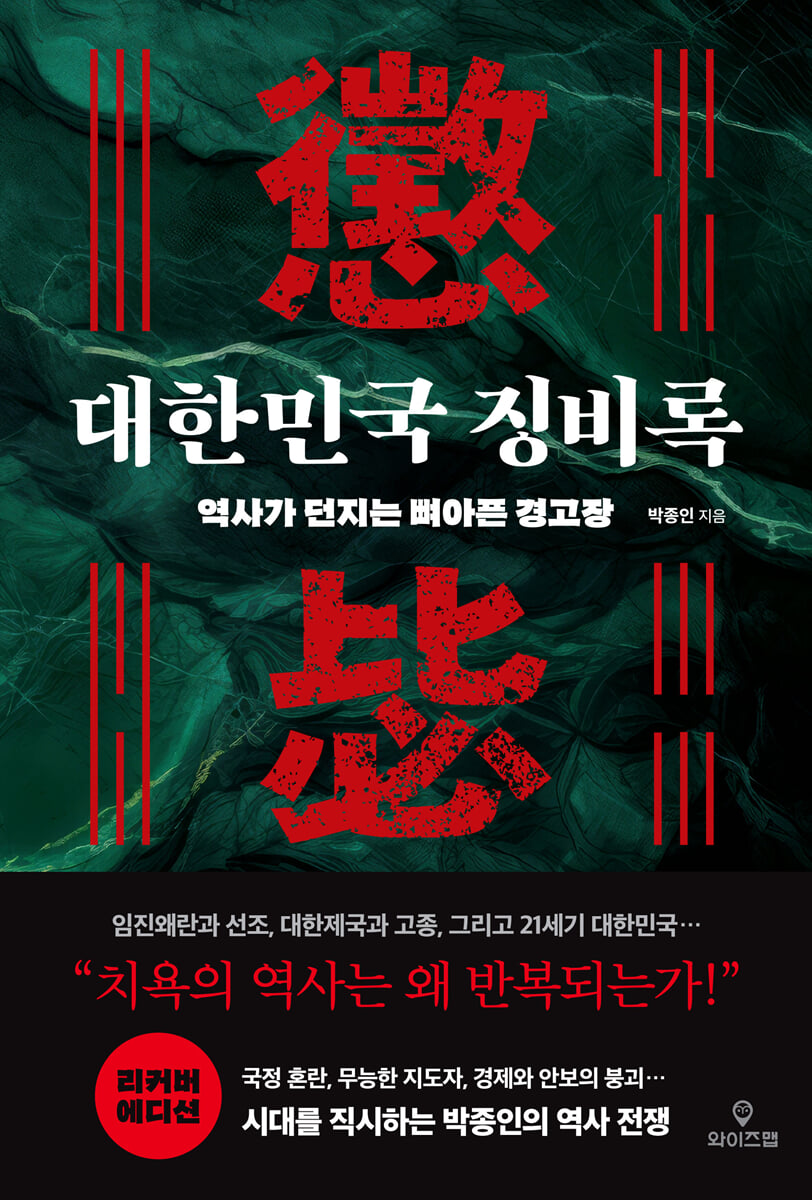
Republic of Korea Jingbirok
 |
Description
Book Introduction
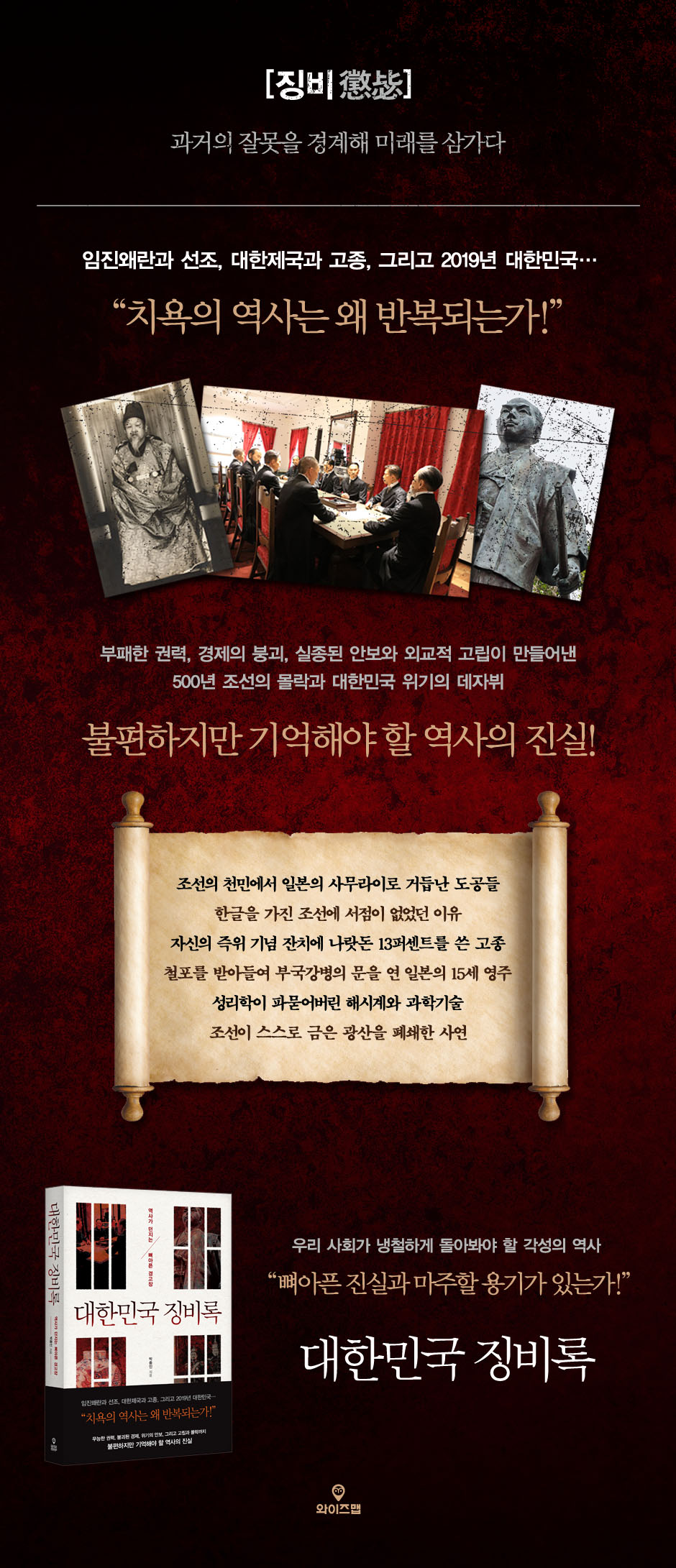
The moment we turn away from the truth, the history of shame repeats itself!
There is something unusual about Korean society.
Signs of an unprecedented crisis are pouring out across all areas: politics, economy, security, and diplomacy.
In particular, Korea-Japan relations are heading towards an endless conclusion, with the exclusion of whitelisted countries, the termination of GSOMIA, economic retaliation, and boycotts.
Moreover, our society is divided into two camps and is engaged in fierce debate.
The 500-year Joseon Dynasty came to an abrupt end due to incompetent leadership, humiliating servility, diplomatic isolation, and economic and security collapse.
And as of 2019, the situation in South Korea is so unsettling that it brings to mind the final days of the Korean Empire.
『Jingbirok』, written by Ryu Seong-ryong, is a book written to look back on the wounds of the tragic Imjin War, warn against mistakes, and avoid future troubles.
In other words, it is a ‘report on the history of failure.’
This book, 『The Record of the Invasion of the Republic of Korea』, was also written to realize the truth of history and prevent the repetition of tragedy.
For us, who have only learned about the glorious history and the history of pride, the truth in the shadows can be uncomfortable.
But the records of failure and traces of regret are also part of our history.
The moment we ignore these past warnings, the tragedy is bound to repeat itself.
There is something unusual about Korean society.
Signs of an unprecedented crisis are pouring out across all areas: politics, economy, security, and diplomacy.
In particular, Korea-Japan relations are heading towards an endless conclusion, with the exclusion of whitelisted countries, the termination of GSOMIA, economic retaliation, and boycotts.
Moreover, our society is divided into two camps and is engaged in fierce debate.
The 500-year Joseon Dynasty came to an abrupt end due to incompetent leadership, humiliating servility, diplomatic isolation, and economic and security collapse.
And as of 2019, the situation in South Korea is so unsettling that it brings to mind the final days of the Korean Empire.
『Jingbirok』, written by Ryu Seong-ryong, is a book written to look back on the wounds of the tragic Imjin War, warn against mistakes, and avoid future troubles.
In other words, it is a ‘report on the history of failure.’
This book, 『The Record of the Invasion of the Republic of Korea』, was also written to realize the truth of history and prevent the repetition of tragedy.
For us, who have only learned about the glorious history and the history of pride, the truth in the shadows can be uncomfortable.
But the records of failure and traces of regret are also part of our history.
The moment we ignore these past warnings, the tragedy is bound to repeat itself.
- You can preview some of the book's contents.
Preview
index
Prologue: Unpleasant Reflections for the Future
Briefing_ 1543: The World's Doors Open
Part 1.
The fateful year of 1543
Chapter 1.
Europe, the continent of greed
-Age of Exploration
The Birth of Fire | The Expulsion of the Jews and the Dividing of Desires
Chapter 2.
It all started that year
-1543 Copernicus moves the Earth
Joshua's Command | The Age of Exploration and Copernicus | The Dark World, Rotation, and Revolution | The Publication and Rebuttal of the Heliocentric Theory | Why He Moved the Earth | Poland, the Land of Revolutionaries
-1543 Japan, two cannons returned to Earth
The shipwreck and the introduction of the musket | The civilization that followed the musket | The musket that passed through Joseon | Our ancestors who created the musket and the officer who criticized it | The return of the spaceship Hayabusa
-1543 Joseon, Seowon established
The new governor's educational indicators | The cost of building a school gifted by the land god | Cow-slaughtering | A civil service system rife with connections | Political strife and the tyranny of King Yeonsangun | Baekundong Seowon, a minority academy | Seowons wreak havoc on politics | Special exams for local universities | A knowledge society trapped in Neo-Confucianism
Part 2.
Closed eyes and ears
Chapter 3.
ominous signs
-The scientific age of the missing King Sejong
King Sejong's New Weapon System Development | Agricultural Promotion, Calendars, and Astronomical Instruments | The Birth of the Chiljeongsan Calendar | From Angbuilgu to Heumgyeonggak | Science Stifled by Neo-Confucianism | Sciences Extinct | Japan Moves Silently
-Joseon's silver that went to Japan
Advanced Silver Refining: "Hoechwibeop" | The Age of Exploration and the Iwami Ginzan Silver Mine | The Order of Korean Engineers and the Counts | King Sejong's Silver Mine Closure | Opportunities Untapped | Silver's Counterattack
-The Children Who Went to Rome and Hideyoshi's Well-Known Madness
God Lands in Japan | Hideyoshi's Mansion, March 3, 1591 | The Children Who Left for Europe | The War Only Joseon Knew | Joseon Was Already Ruined When the Boys Left | The Imjin War: A Collision Between Civilizations
Chapter 4.
The world is in turmoil
-Japan's emergency exit Dejima
The Fall of the Ming Dynasty and the Rise of the Qing Dynasty | The Strange and Absurd Story of Hamel's Drift | The Age of Piracy and Isolation | The British Samurai, Miura Anjin | Isolation and the Opening of Dejima | Rangaku and Open Intellect | "Whether a King is a Tyrant or a Gentleman" | The Prelude to Modernization, the New Book of Dissolution | King Jeongjo's Monopoly on Knowledge
-The reverses of Joseon and Japan without emergency exits
The Joseon Tongsinsa and Rangaku | Joseon's Sinocentrism and National Isolation | The Dejima Rumors, a Japanese Intelligence Source | "Why Are You Wearing Ming Clothing?" | "Killing Confucius" | "Education Is Necessary" | Rangaku Doctors and Joseon Doctors | "How Can Barbarians Enjoy Such Wealth and Honor!"
Chapter 5.
The world has taken a step back
-Abandoned ideology, Neo-Confucianism
Neo-Confucianism, which plunged Joseon into darkness | The Joseon king who studied three times a day | The transition between the Ming and Qing Dynasties and neighboring countries
-Diplomacy: Subservient to the fallen Ming Dynasty
Namhansanseong Fortress in 1637 | Song Si-yeol and Mandongmyo | Why King Hyojong, the Northern Expedition Monarch, Met Song Si-yeol | Song Si-yeol's Refusal to Join the Northern Expedition | The Northern Expedition Lost in Political Logic | Mandongmyo, the End of the Northern Expedition Theory | Daebodan and the Spiritual Victory | The Cowardly Daebodan | King Jeongjo, the 'Reformist Monarch', and Daebodan
-Politics: Knowledge dictatorship and the ignorant
Knowledge Power and Knowledge Dictatorship | The Beginning and End of Song Si-yeol and Zhu Xi | Yun Hyu, the Traitor | Song Si-yeol, Abandoning Friends | Lee Gyeong-seok's Stele and Samjeondo Stele | Lee Gyeong-seok's Birthday Celebration Party and Song Si-yeol | The Split Between the Noron and Soron Factions | The Traitor and Park Se-dang
-Academics: Oppressed Freedom
The Gold of Science and Copernicus | Mancheonmyeongwoljuinong | A book containing the words of Zhu Xi | A policy of banned books that surprised even the Vatican | King Jeongjo, the embodiment of intellectual power | Don't record the "Geojunggi" | Silhak, which never saw the light of day
Part 3.
The beginning of modern times, the prelude to the end
Chapter 6.
The Opium Wars and the Missing Joseon Potters
-1840 Opium War
The Netherlands and the Opium Wars | The Opium Wars and the Collapse of the World | Nagasaki and the Shogunate's Intelligence Power | Learning from the Enemy | "I Thought the Characters Were the Same"
-Japan's rich and powerful nation and the monsters of Hizen
Hizen's Yokai: Nabeshima Naomasa | The Reforms of Shimazu Nariakira, Lord of the Nanbaku | Learning from the Enemy
-The monsters' money bag, Joseon white porcelain
The Honmaru History Museum's Cannons and Great Benefactors | The Captured Joseon Potters | 38,717 Ears, 80 Living | The Joseon Potters Who Became Gods | The Innovation of Japanese Porcelain | The Skills of Joseon Potters Who Built Warships
-The potters who never returned
The Emperor's Gift: Blue and White Porcelain | The Declining White Porcelain Technology | King Yeongjo's Frugal Politics | The Unjust and the Starving Potters | The Hypocrisy of Knowledge Power: The Chaekgado, Songjeong, and Slavery | The Potters Who Returned to Japan
Chapter 7.
Rising Japan
-The attitudes of the two countries in dealing with modern times
-A country risking its life, a country risking its life for isolation
The Cheokhwabi and the Iwakura Mission | "We have no diplomacy by nature" | Persecution of Catholics to maintain power | Treason, national ruin, and national treason | "Japan, beware!" | The majestic and tragic Shinmiyangyo | The Iwakura Mission: The gateway to a modern nation | Modernization at stake
-The Meiji Restoration and the revolutionaries who risked their lives
Alumni of the rural private school, Shokasonjuku | A revenge drama awaited for 260 years | The grand scheme of the Choshu domain: vengeance and nationalism | Takasugi's awakening | The smuggling of the Five Heroes of Choshu | The men of Shokasonjuku and Joseon | Takasugi's devotion and the uprising against the enemy | Revolutionaries who risked their lives | Sakamoto Ryoma, a man of adventure | Ryoma and the alliance of Satsuma and Choshu | The sacrifice of those who gave the offensive first, Katsu Kaishu
-The Great Battle of International Students, the Sino-Japanese War
British Tribute and the Qianlong Emperor's Refusal | Li Hongzhang and Mori's Conversation in 1876 | The Early Study Abroad Project, "Yumi-Yudong" | A Skill Unused | The War of the Students Studying Abroad, Part 1 - The First Sino-Japanese War | The War of the Students Studying Abroad, Part 2 - Shimonoseki | Takasugi Shinsaku's Return to Heaven, Ended in Death
Chapter 8.
Collapsing Joseon
- Joseon, a country without bookstores
The Birth of Hunminjeongeum | Books Published with Hunminjeongeum | State-Monopolized Publishing and Distribution | The Massacre of Booksellers | The Resurrection of Booksellers and Book Rental Shops | A Country with Bookstores and the Progress of Civilization | A Country Without Bookstores and Its Fearful People
-The rusty gun of the winter of the year of Gapshin, the last of the Joseon revolutionaries
The Age of Civil War and the Rebellion of Yi Yang-seon | The Dongrae Rebellion: A Diplomat Who Fled the Japanese | Emperor Gojong's Reign and the Unyo Incident | Modernization Missing the Focus | The Wangsimni Rebellion and the Imo Incident | A History of Reactionary Rebellion and Colonial Joseon | Joseon Revolutionaries Risking Their Lives | A Promise Five Years Early | A Rusty Gun in the Armory | The End of Revolutionaries | Ji Un-yeong, the Dohaepo Bandit
-Shell of the Korean Empire
The Extinct Reformists, the Extinct Talent | The Murder of Empress Myeongseong and a Year in the Russian Legation | The Proclamation of the Korean Empire and the Wongudan | Joseon in Stormy Weather, Offering the Heavenly Rites | "Military Uniforms Are Foreign-Made" | A Poor Empire, a Wealthy Emperor | The Collapse of the Independence Association and the Awakening of a Frustrated Public | Of the Emperor, Only for the Emperor | Life-Prolonging Treatment Forced to End
-The luxury antique warship Yangmuho and the monarch of pretense
The Crown Prince Invites a Birthday Party | The Emperor Orders a Ceremony to Celebrate His Enthronement | Party Medley | Pyongyang Palace and Monument Pavilion | 40th Anniversary of the Proclamation of the Crown | Cholera Spreads, 1 Million Won in Government Funds | The Battleship Yangmuho | A Battleship Decorated with Luxury Items
Chapter 9.
petty destruction
Epilogue_ Opening and Awakening
annotation
Briefing_ 1543: The World's Doors Open
Part 1.
The fateful year of 1543
Chapter 1.
Europe, the continent of greed
-Age of Exploration
The Birth of Fire | The Expulsion of the Jews and the Dividing of Desires
Chapter 2.
It all started that year
-1543 Copernicus moves the Earth
Joshua's Command | The Age of Exploration and Copernicus | The Dark World, Rotation, and Revolution | The Publication and Rebuttal of the Heliocentric Theory | Why He Moved the Earth | Poland, the Land of Revolutionaries
-1543 Japan, two cannons returned to Earth
The shipwreck and the introduction of the musket | The civilization that followed the musket | The musket that passed through Joseon | Our ancestors who created the musket and the officer who criticized it | The return of the spaceship Hayabusa
-1543 Joseon, Seowon established
The new governor's educational indicators | The cost of building a school gifted by the land god | Cow-slaughtering | A civil service system rife with connections | Political strife and the tyranny of King Yeonsangun | Baekundong Seowon, a minority academy | Seowons wreak havoc on politics | Special exams for local universities | A knowledge society trapped in Neo-Confucianism
Part 2.
Closed eyes and ears
Chapter 3.
ominous signs
-The scientific age of the missing King Sejong
King Sejong's New Weapon System Development | Agricultural Promotion, Calendars, and Astronomical Instruments | The Birth of the Chiljeongsan Calendar | From Angbuilgu to Heumgyeonggak | Science Stifled by Neo-Confucianism | Sciences Extinct | Japan Moves Silently
-Joseon's silver that went to Japan
Advanced Silver Refining: "Hoechwibeop" | The Age of Exploration and the Iwami Ginzan Silver Mine | The Order of Korean Engineers and the Counts | King Sejong's Silver Mine Closure | Opportunities Untapped | Silver's Counterattack
-The Children Who Went to Rome and Hideyoshi's Well-Known Madness
God Lands in Japan | Hideyoshi's Mansion, March 3, 1591 | The Children Who Left for Europe | The War Only Joseon Knew | Joseon Was Already Ruined When the Boys Left | The Imjin War: A Collision Between Civilizations
Chapter 4.
The world is in turmoil
-Japan's emergency exit Dejima
The Fall of the Ming Dynasty and the Rise of the Qing Dynasty | The Strange and Absurd Story of Hamel's Drift | The Age of Piracy and Isolation | The British Samurai, Miura Anjin | Isolation and the Opening of Dejima | Rangaku and Open Intellect | "Whether a King is a Tyrant or a Gentleman" | The Prelude to Modernization, the New Book of Dissolution | King Jeongjo's Monopoly on Knowledge
-The reverses of Joseon and Japan without emergency exits
The Joseon Tongsinsa and Rangaku | Joseon's Sinocentrism and National Isolation | The Dejima Rumors, a Japanese Intelligence Source | "Why Are You Wearing Ming Clothing?" | "Killing Confucius" | "Education Is Necessary" | Rangaku Doctors and Joseon Doctors | "How Can Barbarians Enjoy Such Wealth and Honor!"
Chapter 5.
The world has taken a step back
-Abandoned ideology, Neo-Confucianism
Neo-Confucianism, which plunged Joseon into darkness | The Joseon king who studied three times a day | The transition between the Ming and Qing Dynasties and neighboring countries
-Diplomacy: Subservient to the fallen Ming Dynasty
Namhansanseong Fortress in 1637 | Song Si-yeol and Mandongmyo | Why King Hyojong, the Northern Expedition Monarch, Met Song Si-yeol | Song Si-yeol's Refusal to Join the Northern Expedition | The Northern Expedition Lost in Political Logic | Mandongmyo, the End of the Northern Expedition Theory | Daebodan and the Spiritual Victory | The Cowardly Daebodan | King Jeongjo, the 'Reformist Monarch', and Daebodan
-Politics: Knowledge dictatorship and the ignorant
Knowledge Power and Knowledge Dictatorship | The Beginning and End of Song Si-yeol and Zhu Xi | Yun Hyu, the Traitor | Song Si-yeol, Abandoning Friends | Lee Gyeong-seok's Stele and Samjeondo Stele | Lee Gyeong-seok's Birthday Celebration Party and Song Si-yeol | The Split Between the Noron and Soron Factions | The Traitor and Park Se-dang
-Academics: Oppressed Freedom
The Gold of Science and Copernicus | Mancheonmyeongwoljuinong | A book containing the words of Zhu Xi | A policy of banned books that surprised even the Vatican | King Jeongjo, the embodiment of intellectual power | Don't record the "Geojunggi" | Silhak, which never saw the light of day
Part 3.
The beginning of modern times, the prelude to the end
Chapter 6.
The Opium Wars and the Missing Joseon Potters
-1840 Opium War
The Netherlands and the Opium Wars | The Opium Wars and the Collapse of the World | Nagasaki and the Shogunate's Intelligence Power | Learning from the Enemy | "I Thought the Characters Were the Same"
-Japan's rich and powerful nation and the monsters of Hizen
Hizen's Yokai: Nabeshima Naomasa | The Reforms of Shimazu Nariakira, Lord of the Nanbaku | Learning from the Enemy
-The monsters' money bag, Joseon white porcelain
The Honmaru History Museum's Cannons and Great Benefactors | The Captured Joseon Potters | 38,717 Ears, 80 Living | The Joseon Potters Who Became Gods | The Innovation of Japanese Porcelain | The Skills of Joseon Potters Who Built Warships
-The potters who never returned
The Emperor's Gift: Blue and White Porcelain | The Declining White Porcelain Technology | King Yeongjo's Frugal Politics | The Unjust and the Starving Potters | The Hypocrisy of Knowledge Power: The Chaekgado, Songjeong, and Slavery | The Potters Who Returned to Japan
Chapter 7.
Rising Japan
-The attitudes of the two countries in dealing with modern times
-A country risking its life, a country risking its life for isolation
The Cheokhwabi and the Iwakura Mission | "We have no diplomacy by nature" | Persecution of Catholics to maintain power | Treason, national ruin, and national treason | "Japan, beware!" | The majestic and tragic Shinmiyangyo | The Iwakura Mission: The gateway to a modern nation | Modernization at stake
-The Meiji Restoration and the revolutionaries who risked their lives
Alumni of the rural private school, Shokasonjuku | A revenge drama awaited for 260 years | The grand scheme of the Choshu domain: vengeance and nationalism | Takasugi's awakening | The smuggling of the Five Heroes of Choshu | The men of Shokasonjuku and Joseon | Takasugi's devotion and the uprising against the enemy | Revolutionaries who risked their lives | Sakamoto Ryoma, a man of adventure | Ryoma and the alliance of Satsuma and Choshu | The sacrifice of those who gave the offensive first, Katsu Kaishu
-The Great Battle of International Students, the Sino-Japanese War
British Tribute and the Qianlong Emperor's Refusal | Li Hongzhang and Mori's Conversation in 1876 | The Early Study Abroad Project, "Yumi-Yudong" | A Skill Unused | The War of the Students Studying Abroad, Part 1 - The First Sino-Japanese War | The War of the Students Studying Abroad, Part 2 - Shimonoseki | Takasugi Shinsaku's Return to Heaven, Ended in Death
Chapter 8.
Collapsing Joseon
- Joseon, a country without bookstores
The Birth of Hunminjeongeum | Books Published with Hunminjeongeum | State-Monopolized Publishing and Distribution | The Massacre of Booksellers | The Resurrection of Booksellers and Book Rental Shops | A Country with Bookstores and the Progress of Civilization | A Country Without Bookstores and Its Fearful People
-The rusty gun of the winter of the year of Gapshin, the last of the Joseon revolutionaries
The Age of Civil War and the Rebellion of Yi Yang-seon | The Dongrae Rebellion: A Diplomat Who Fled the Japanese | Emperor Gojong's Reign and the Unyo Incident | Modernization Missing the Focus | The Wangsimni Rebellion and the Imo Incident | A History of Reactionary Rebellion and Colonial Joseon | Joseon Revolutionaries Risking Their Lives | A Promise Five Years Early | A Rusty Gun in the Armory | The End of Revolutionaries | Ji Un-yeong, the Dohaepo Bandit
-Shell of the Korean Empire
The Extinct Reformists, the Extinct Talent | The Murder of Empress Myeongseong and a Year in the Russian Legation | The Proclamation of the Korean Empire and the Wongudan | Joseon in Stormy Weather, Offering the Heavenly Rites | "Military Uniforms Are Foreign-Made" | A Poor Empire, a Wealthy Emperor | The Collapse of the Independence Association and the Awakening of a Frustrated Public | Of the Emperor, Only for the Emperor | Life-Prolonging Treatment Forced to End
-The luxury antique warship Yangmuho and the monarch of pretense
The Crown Prince Invites a Birthday Party | The Emperor Orders a Ceremony to Celebrate His Enthronement | Party Medley | Pyongyang Palace and Monument Pavilion | 40th Anniversary of the Proclamation of the Crown | Cholera Spreads, 1 Million Won in Government Funds | The Battleship Yangmuho | A Battleship Decorated with Luxury Items
Chapter 9.
petty destruction
Epilogue_ Opening and Awakening
annotation
Detailed image
Into the book
The Republic of Korea in 2019 is eerily similar to the international relations of Joseon 200 years ago.
What about the leaders?
Are you awake?
Is the power strong?
Joseon, which had been blind for 200 years, was destroyed by Japan, which had awakened.
Aren't the current leaders of South Korea, just like they were 200, no, 400 years ago, turning their backs on the world, being complacent, and leading the country in a complacent manner?
Unless the leaders of the Republic of Korea abandon the behavior of the leaders of the Joseon Dynasty for 500 years, the Republic of Korea will perish.
Joseon was ruled by a wise king armed with a brilliant cultural tradition and a spirit of love for the people, and the philosophy of Neo-Confucianism, but Joseon fell.
There must be a reason.
Joseon perished according to the law of cause and effect, which has no margin of error even by a millimeter.
To avoid a second ruin, I plan to visit and investigate the lands where this country's leaders have erred for 200, no, 500 years.
For the future, it's so unpleasant.
--- From the prologue, "Unpleasant Reflections for the Future"
On September 23, 1543, a large ship arrived in Tanegashima, Japan.
There were over 100 sailors.
The appearance was strange and the language was incomprehensible.
Wu Feng, a Ming scholar who was on board, said that they were merchants from the southwestern Manchuria.
Two days later, the fugitive Tanegashima Tokitaka met them.
…they held two or three-foot sticks in their hands.
The stick had a hole in the middle.
He placed a goblet on a rock and aimed it at his eye. Lightning flashed, thunder rumbled, and the goblet shattered.
It seemed as if it could topple mountains made of silver and penetrate walls made of iron.
Tokitaka said, “This is a rare treasure,” and bought two of them for a large sum of money. He also learned how to make gunpowder and made them his family heirlooms.
Tokitaka, who was fifteen years old, sent it to the monk general Sunoginobo in Kishu, saying, “Everyone wants it, so how can I keep it to myself?”
One of them was given to the blacksmith Yaita Kinbe and ordered to be reverse engineered.
--- From Chapter 2, “Everything Began That Year”
On May 21, 1555, 12 years after Japan acquired firearms, the Office of Military Affairs reported to King Myeongjong.
…Pyeongjangchin, a person from Daema Island, came to Dongrae at that time and said that if Joseon accepted him, he would teach them how to make a general.
…The next day, the Office of the Inspector General suggested to King Myeongjong, “We need to cast a gun, but we don’t have any iron, so please cast a gun using the large bell that was thrown away.”
…Myeongjong answered with a sharp tone.
“Old things are sacred, so it is not right to break and use things that have been passed down from ancient times.”
On July 1, 1589, the people of Tsushima Island visited Gyeongbokgung Palace in Joseon and presented muskets to King Seonjo.
'The Daemadoju Pyeonguiji and others offered three samjeong guns.
It was from this time that our country began to have matchlock guns.’ … That day, Pyeonguiji also presented a peacock.
The Joseon government released the peacocks on an island in the southern sea and put the muskets in the armory.
There is no record of the gun being fired, disassembled, or cleaned.
I just put it in the armory without anyone knowing.
… Three years later, in 1592, the year of Imjin, Toyotomi’s musket troops trampled Joseon.
--- From Chapter 2, “Everything Began That Year”
It is 1852.
The two Angbuilgu installed during the reign of King Sejong disappeared without a trace.
Instead, he said, “There is a square stone in front of the Jongmyo gate, which is said to be the large stone where Angbuilgu was enshrined.”
In early June 1930, that very square stone was excavated from under the sidewalk in front of a noodle restaurant at 45 Jongno 4-jeongmok, Gyeongseong.
It was buried in the ground when tram tracks were laid in Jongno in 1889.
… The scientific spirit and popularization policy contained in Angbuilgu were not things that should simply be buried in history.
… Joseon was the first country in the world to invent and practically use a rain gauge, and it was also the first country in the world to develop metal type and mass-print books.
While the tragedy of Joseon forgetting how to use the science and technology it had developed was unfolding, its neighboring country, Japan, was overtaking Joseon.
Joseon scholars, immersed in the framework of Neo-Confucianism, dismissed all other academic disciplines as mere ‘tools for sages to advise’.
--- From Chapter 3, “Ominous Signs”
Suwon Hwaseong Fortress was completed in 1796.
The subjects asked that the record be left behind.
In particular, he proposed to include the groundbreaking technology of 'Geojunggi', which shortened the air travel time and reduced costs, in the king's anthology, 'Hongjaejeonseo'.
The crane was a machine introduced in the 『Collection of Ancient and Modern Books』, which King Jeongjo purchased from the Qing Dynasty for 2,150 nyang of silver.
King Jeongjo personally selected the 'Gigidosul', which describes the principles of pulleys, from this book and taught it to Jeong Yak-yong, and entrusted him with supervising the construction of Hwaseong Fortress.
The suggestion to include the achievements of King Jeongjo, the general director, in the collection of King Jeongjo's writings was quite natural.
King Jeongjo did not allow this obvious and reasonable suggestion.
The reason was simple and unexpected.
“It is only the most basic of crafts, so how can it be left to future generations?” … Aside from the public discourse of Neo-Confucianism, practical learning and technology were not worth recording for King Jeongjo.
… The geomancy that everyone except Jeongjo had praised was once again thrown into the Hongmungwan, and the scholars, along with the king, took out their books on Neo-Confucianism again.
--- From Chapter 5, "The World Takes a Step Back"
Nabeshima Naoshige, the lord of the Saga Domain, brought in potters to 'make treasures of Japan.'
The treasure is white porcelain.
He had kidnapped his own technician, but had no clay to make his own.
What was needed was a pure white, iron-free magnet that could melt and bond without breaking at temperatures of 1,300 degrees.
In 1616, Joseon man Lee Sam-pyeong discovered white porcelain clay in Izumiyama along with 18 other potters.
Naoshige gave him the surname Kanegae and married him to a maid.
… In 1917, the residents of Arita erected the ‘Dojo Isampyeong Monument’ on the summit of Mount Rengeishi above the shrine.
…Since its founding, the Joseon Dynasty has treated commerce as a pathological abnormality.
The logic is that profit-seeking commerce is evil in the moral society pursued by Neo-Confucianism.
… In a country like this, the cutting-edge technology that had been developed, the porcelain manufacturing technology, was destined to self-destruct.
…the domestic market was suppressed by policy.
The lowly production was undertaken by the common people.
Will you starve to death in contempt, or will you live as a warrior and enjoy life as an expert?
The answer was obvious.
Potter Lee Jak-gwang returned to Joseon and returned to Japan with his younger brother Lee Gyeong.
Another potter, Jon-gye, led his disciples back to Japan and died there.
The anonymous potter Lee Sam-pyeong became a god.
--- From Chapter 6, “The Opium Wars and the Missing Potters”
On the morning of the 30th of that month, a banquet was held at Hamnyeongjeon Hall in Gyeongungung Palace.
The next morning there was another feast, and another feast at night, and another feast on the morning and night of June 1st.
The feast was held again on the 6th and 18th.
On the night of the 19th, at the Imperial Guest House, Daegwanjeong (now behind the Plaza Hotel), 'all ministers, consuls, and gentlemen were invited to a feast with musical instruments.' Eighty gisaengs in charge of dance and music from Pyongyang, Seoncheon, Jinju, and Seoul were mobilized for the palace feast.
According to Maecheon Hwang Hyeon, the Imperial Household Department purchased French candlesticks and rice bowls for the banquet.
That year, starving Gyeonggi-do residents invaded the pine forest of Jangneung Tomb in Injo-reung, Paju, and stripped all the tree bark.
The soldiers could not stop it.
There was a line of dead people crouching under the pine grove.
… On August 10, 1902, the official document sent by the Cheonggyeong Ceremony Office to the State Council stated that the cost of the Cheonggyeong ceremony was 1 million won.
The total budget of the Korean Empire in 1902 was 7,585,877 won (based on expenditures).
13.2% of the national budget disappeared into thin air.
--- From Chapter 8, “The Collapsing Joseon”
The Imjin War, Injo Restoration, Jeongjo's reforms, the Opium War, Emperor Gojong's personal rule, the two Yangyo and Ganghwa Treaty, and the Gapsin Coup and the Independence Association...
Several decisive opportunities came my way.
Each time, the Joseon rulers kicked away that opportunity.
When a crisis came, I didn't have the ability to recognize what the crisis was.
The Japanese powers that be seized every opportunity and put it in their pockets.
When the crisis came, Japan knew it was a crisis and responded quickly.
The way we dealt with opportunities and crises repeated the same pattern.
…openness and exchange, diversity and public awakening.
The attitude of a leader toward these four words has led a nation to hardship and has led a nation to prosperity.
Europe goes without saying.
This is the 'key to Jingbi' that connects the three events that occurred in 1543 AD to 21st century South Korea.
…we were originally brave, and our great artists and craftsmen made good things.
We were originally a people of tenacity and indomitable courage who overcame wind, cold, and snowstorms.
It was a brilliant civilization that breathed life into the stagnant ancient history of Japan.
Now, all that remains is to resurrect everything that was lost through 'awakening' once again.
Let us overcome the history of colonialism and war brought about by incompetent rulers and continue the Republic of Korea created by awakened citizens.
What about the leaders?
Are you awake?
Is the power strong?
Joseon, which had been blind for 200 years, was destroyed by Japan, which had awakened.
Aren't the current leaders of South Korea, just like they were 200, no, 400 years ago, turning their backs on the world, being complacent, and leading the country in a complacent manner?
Unless the leaders of the Republic of Korea abandon the behavior of the leaders of the Joseon Dynasty for 500 years, the Republic of Korea will perish.
Joseon was ruled by a wise king armed with a brilliant cultural tradition and a spirit of love for the people, and the philosophy of Neo-Confucianism, but Joseon fell.
There must be a reason.
Joseon perished according to the law of cause and effect, which has no margin of error even by a millimeter.
To avoid a second ruin, I plan to visit and investigate the lands where this country's leaders have erred for 200, no, 500 years.
For the future, it's so unpleasant.
--- From the prologue, "Unpleasant Reflections for the Future"
On September 23, 1543, a large ship arrived in Tanegashima, Japan.
There were over 100 sailors.
The appearance was strange and the language was incomprehensible.
Wu Feng, a Ming scholar who was on board, said that they were merchants from the southwestern Manchuria.
Two days later, the fugitive Tanegashima Tokitaka met them.
…they held two or three-foot sticks in their hands.
The stick had a hole in the middle.
He placed a goblet on a rock and aimed it at his eye. Lightning flashed, thunder rumbled, and the goblet shattered.
It seemed as if it could topple mountains made of silver and penetrate walls made of iron.
Tokitaka said, “This is a rare treasure,” and bought two of them for a large sum of money. He also learned how to make gunpowder and made them his family heirlooms.
Tokitaka, who was fifteen years old, sent it to the monk general Sunoginobo in Kishu, saying, “Everyone wants it, so how can I keep it to myself?”
One of them was given to the blacksmith Yaita Kinbe and ordered to be reverse engineered.
--- From Chapter 2, “Everything Began That Year”
On May 21, 1555, 12 years after Japan acquired firearms, the Office of Military Affairs reported to King Myeongjong.
…Pyeongjangchin, a person from Daema Island, came to Dongrae at that time and said that if Joseon accepted him, he would teach them how to make a general.
…The next day, the Office of the Inspector General suggested to King Myeongjong, “We need to cast a gun, but we don’t have any iron, so please cast a gun using the large bell that was thrown away.”
…Myeongjong answered with a sharp tone.
“Old things are sacred, so it is not right to break and use things that have been passed down from ancient times.”
On July 1, 1589, the people of Tsushima Island visited Gyeongbokgung Palace in Joseon and presented muskets to King Seonjo.
'The Daemadoju Pyeonguiji and others offered three samjeong guns.
It was from this time that our country began to have matchlock guns.’ … That day, Pyeonguiji also presented a peacock.
The Joseon government released the peacocks on an island in the southern sea and put the muskets in the armory.
There is no record of the gun being fired, disassembled, or cleaned.
I just put it in the armory without anyone knowing.
… Three years later, in 1592, the year of Imjin, Toyotomi’s musket troops trampled Joseon.
--- From Chapter 2, “Everything Began That Year”
It is 1852.
The two Angbuilgu installed during the reign of King Sejong disappeared without a trace.
Instead, he said, “There is a square stone in front of the Jongmyo gate, which is said to be the large stone where Angbuilgu was enshrined.”
In early June 1930, that very square stone was excavated from under the sidewalk in front of a noodle restaurant at 45 Jongno 4-jeongmok, Gyeongseong.
It was buried in the ground when tram tracks were laid in Jongno in 1889.
… The scientific spirit and popularization policy contained in Angbuilgu were not things that should simply be buried in history.
… Joseon was the first country in the world to invent and practically use a rain gauge, and it was also the first country in the world to develop metal type and mass-print books.
While the tragedy of Joseon forgetting how to use the science and technology it had developed was unfolding, its neighboring country, Japan, was overtaking Joseon.
Joseon scholars, immersed in the framework of Neo-Confucianism, dismissed all other academic disciplines as mere ‘tools for sages to advise’.
--- From Chapter 3, “Ominous Signs”
Suwon Hwaseong Fortress was completed in 1796.
The subjects asked that the record be left behind.
In particular, he proposed to include the groundbreaking technology of 'Geojunggi', which shortened the air travel time and reduced costs, in the king's anthology, 'Hongjaejeonseo'.
The crane was a machine introduced in the 『Collection of Ancient and Modern Books』, which King Jeongjo purchased from the Qing Dynasty for 2,150 nyang of silver.
King Jeongjo personally selected the 'Gigidosul', which describes the principles of pulleys, from this book and taught it to Jeong Yak-yong, and entrusted him with supervising the construction of Hwaseong Fortress.
The suggestion to include the achievements of King Jeongjo, the general director, in the collection of King Jeongjo's writings was quite natural.
King Jeongjo did not allow this obvious and reasonable suggestion.
The reason was simple and unexpected.
“It is only the most basic of crafts, so how can it be left to future generations?” … Aside from the public discourse of Neo-Confucianism, practical learning and technology were not worth recording for King Jeongjo.
… The geomancy that everyone except Jeongjo had praised was once again thrown into the Hongmungwan, and the scholars, along with the king, took out their books on Neo-Confucianism again.
--- From Chapter 5, "The World Takes a Step Back"
Nabeshima Naoshige, the lord of the Saga Domain, brought in potters to 'make treasures of Japan.'
The treasure is white porcelain.
He had kidnapped his own technician, but had no clay to make his own.
What was needed was a pure white, iron-free magnet that could melt and bond without breaking at temperatures of 1,300 degrees.
In 1616, Joseon man Lee Sam-pyeong discovered white porcelain clay in Izumiyama along with 18 other potters.
Naoshige gave him the surname Kanegae and married him to a maid.
… In 1917, the residents of Arita erected the ‘Dojo Isampyeong Monument’ on the summit of Mount Rengeishi above the shrine.
…Since its founding, the Joseon Dynasty has treated commerce as a pathological abnormality.
The logic is that profit-seeking commerce is evil in the moral society pursued by Neo-Confucianism.
… In a country like this, the cutting-edge technology that had been developed, the porcelain manufacturing technology, was destined to self-destruct.
…the domestic market was suppressed by policy.
The lowly production was undertaken by the common people.
Will you starve to death in contempt, or will you live as a warrior and enjoy life as an expert?
The answer was obvious.
Potter Lee Jak-gwang returned to Joseon and returned to Japan with his younger brother Lee Gyeong.
Another potter, Jon-gye, led his disciples back to Japan and died there.
The anonymous potter Lee Sam-pyeong became a god.
--- From Chapter 6, “The Opium Wars and the Missing Potters”
On the morning of the 30th of that month, a banquet was held at Hamnyeongjeon Hall in Gyeongungung Palace.
The next morning there was another feast, and another feast at night, and another feast on the morning and night of June 1st.
The feast was held again on the 6th and 18th.
On the night of the 19th, at the Imperial Guest House, Daegwanjeong (now behind the Plaza Hotel), 'all ministers, consuls, and gentlemen were invited to a feast with musical instruments.' Eighty gisaengs in charge of dance and music from Pyongyang, Seoncheon, Jinju, and Seoul were mobilized for the palace feast.
According to Maecheon Hwang Hyeon, the Imperial Household Department purchased French candlesticks and rice bowls for the banquet.
That year, starving Gyeonggi-do residents invaded the pine forest of Jangneung Tomb in Injo-reung, Paju, and stripped all the tree bark.
The soldiers could not stop it.
There was a line of dead people crouching under the pine grove.
… On August 10, 1902, the official document sent by the Cheonggyeong Ceremony Office to the State Council stated that the cost of the Cheonggyeong ceremony was 1 million won.
The total budget of the Korean Empire in 1902 was 7,585,877 won (based on expenditures).
13.2% of the national budget disappeared into thin air.
--- From Chapter 8, “The Collapsing Joseon”
The Imjin War, Injo Restoration, Jeongjo's reforms, the Opium War, Emperor Gojong's personal rule, the two Yangyo and Ganghwa Treaty, and the Gapsin Coup and the Independence Association...
Several decisive opportunities came my way.
Each time, the Joseon rulers kicked away that opportunity.
When a crisis came, I didn't have the ability to recognize what the crisis was.
The Japanese powers that be seized every opportunity and put it in their pockets.
When the crisis came, Japan knew it was a crisis and responded quickly.
The way we dealt with opportunities and crises repeated the same pattern.
…openness and exchange, diversity and public awakening.
The attitude of a leader toward these four words has led a nation to hardship and has led a nation to prosperity.
Europe goes without saying.
This is the 'key to Jingbi' that connects the three events that occurred in 1543 AD to 21st century South Korea.
…we were originally brave, and our great artists and craftsmen made good things.
We were originally a people of tenacity and indomitable courage who overcame wind, cold, and snowstorms.
It was a brilliant civilization that breathed life into the stagnant ancient history of Japan.
Now, all that remains is to resurrect everything that was lost through 'awakening' once again.
Let us overcome the history of colonialism and war brought about by incompetent rulers and continue the Republic of Korea created by awakened citizens.
--- From the epilogue, "Openness and Awakening"
Publisher's Review
An unpleasant reflection on moving towards a true future!
Author Park Jong-in sought to find an answer to the question, “Why do we repeat the same history despite having experienced such a painful past?”
After covering the entire country of Korea and Japan, as well as in Poland, and digging through all kinds of historical materials and books, he encountered a truth that contradicted what we had believed.
The book 『The Record of the Invasion of the Republic of Korea』, completed in this way, is the beginning of a journey to humbly acknowledge the past and set the future right.
What he noticed was the year '1543'.
In this year, Europe entered the Age of Exploration with Copernicus' heliocentric theory being recognized.
As a result, in the same year, firearms were introduced to Japan, which had opened its doors to the world.
It was a 15-year-old lord who bought the cannon for a large sum of money and modified it into a Japanese-style matchlock gun.
And in the same year, Joseon established the Seongrihak Seowon, further closing its doors to the world.
Beginning in 1543, the two countries made diverging choices and began to head toward distinctly different futures.
How the innovative silver smelting technique abandoned by Joseon gave rise to Japan's military power; how Joseon's lowly potters were reborn as Japan's samurai; where did the science and weapons of the brilliant Sejong era disappear to?
Through this book, we will be able to fully experience the other side of history that we were previously unaware of.
Only an awakened public can prevent tragedy!
The 『Records of the Jingbirok of the Republic of Korea』 is a record of the period from 1543, when the futures of Joseon and Japan diverged, to the fall of the Korean Empire.
Part 1, "The Fateful Year of 1543," examines the events of 1543, including the 15-year-old feudal lord who dedicated his entire fortune to introducing firearms to Japan, King Myeongjong who threw away guns that had rolled in on their own, and Joseon's decision to establish a Neo-Confucian academy while claiming to be a vassal state of China.
Part 2, "Closed Eyes and Ears," introduces how Japan accepted the West and advanced civilizations through the world's doors and made them its own.
It also coldly examines how commerce and industry were suppressed and the scientific era was extinguished in Joseon, which was led by Neo-Confucianism.
Part 3, "The Beginning of Modernity, the Prelude to the End," examines the consequences of the choices made by Joseon and Japan in the era of modernization, and details the helpless demise of the Korean Empire.
We will delve into the hidden truths of history, such as why Joseon, which possessed the world's most scientific writing system, had no bookstores; what fate befell Joseon revolutionaries who sacrificed their lives for enlightenment; and the story of Emperor Gojong, who spent 13 percent of the national treasury on his coronation celebrations.
The author's purpose in writing this book was by no means to belittle our history.
Through this book, written with a heartfelt heart, the author emphasizes that only a nation that realizes the truth of history and awakens can prevent a recurrence of tragedy.
Now we have to make a choice.
Will we be swept up in political logic and watch the history of failure repeat itself, or will we face the truth and break the vicious cycle?
Author Park Jong-in sought to find an answer to the question, “Why do we repeat the same history despite having experienced such a painful past?”
After covering the entire country of Korea and Japan, as well as in Poland, and digging through all kinds of historical materials and books, he encountered a truth that contradicted what we had believed.
The book 『The Record of the Invasion of the Republic of Korea』, completed in this way, is the beginning of a journey to humbly acknowledge the past and set the future right.
What he noticed was the year '1543'.
In this year, Europe entered the Age of Exploration with Copernicus' heliocentric theory being recognized.
As a result, in the same year, firearms were introduced to Japan, which had opened its doors to the world.
It was a 15-year-old lord who bought the cannon for a large sum of money and modified it into a Japanese-style matchlock gun.
And in the same year, Joseon established the Seongrihak Seowon, further closing its doors to the world.
Beginning in 1543, the two countries made diverging choices and began to head toward distinctly different futures.
How the innovative silver smelting technique abandoned by Joseon gave rise to Japan's military power; how Joseon's lowly potters were reborn as Japan's samurai; where did the science and weapons of the brilliant Sejong era disappear to?
Through this book, we will be able to fully experience the other side of history that we were previously unaware of.
Only an awakened public can prevent tragedy!
The 『Records of the Jingbirok of the Republic of Korea』 is a record of the period from 1543, when the futures of Joseon and Japan diverged, to the fall of the Korean Empire.
Part 1, "The Fateful Year of 1543," examines the events of 1543, including the 15-year-old feudal lord who dedicated his entire fortune to introducing firearms to Japan, King Myeongjong who threw away guns that had rolled in on their own, and Joseon's decision to establish a Neo-Confucian academy while claiming to be a vassal state of China.
Part 2, "Closed Eyes and Ears," introduces how Japan accepted the West and advanced civilizations through the world's doors and made them its own.
It also coldly examines how commerce and industry were suppressed and the scientific era was extinguished in Joseon, which was led by Neo-Confucianism.
Part 3, "The Beginning of Modernity, the Prelude to the End," examines the consequences of the choices made by Joseon and Japan in the era of modernization, and details the helpless demise of the Korean Empire.
We will delve into the hidden truths of history, such as why Joseon, which possessed the world's most scientific writing system, had no bookstores; what fate befell Joseon revolutionaries who sacrificed their lives for enlightenment; and the story of Emperor Gojong, who spent 13 percent of the national treasury on his coronation celebrations.
The author's purpose in writing this book was by no means to belittle our history.
Through this book, written with a heartfelt heart, the author emphasizes that only a nation that realizes the truth of history and awakens can prevent a recurrence of tragedy.
Now we have to make a choice.
Will we be swept up in political logic and watch the history of failure repeat itself, or will we face the truth and break the vicious cycle?
GOODS SPECIFICS
- Date of issue: October 5, 2019
- Page count, weight, size: 400 pages | 690g | 152*225*30mm
- ISBN13: 9791189328214
- ISBN10: 1189328216
You may also like
카테고리
korean


korean

![GQ KOREA Mark (Monthly): December [2025]](http://librairie.coreenne.fr/cdn/shop/files/8ef265dbbfbf186523ed75ba7319009d.jpg?v=1765340328&width=3840)


