

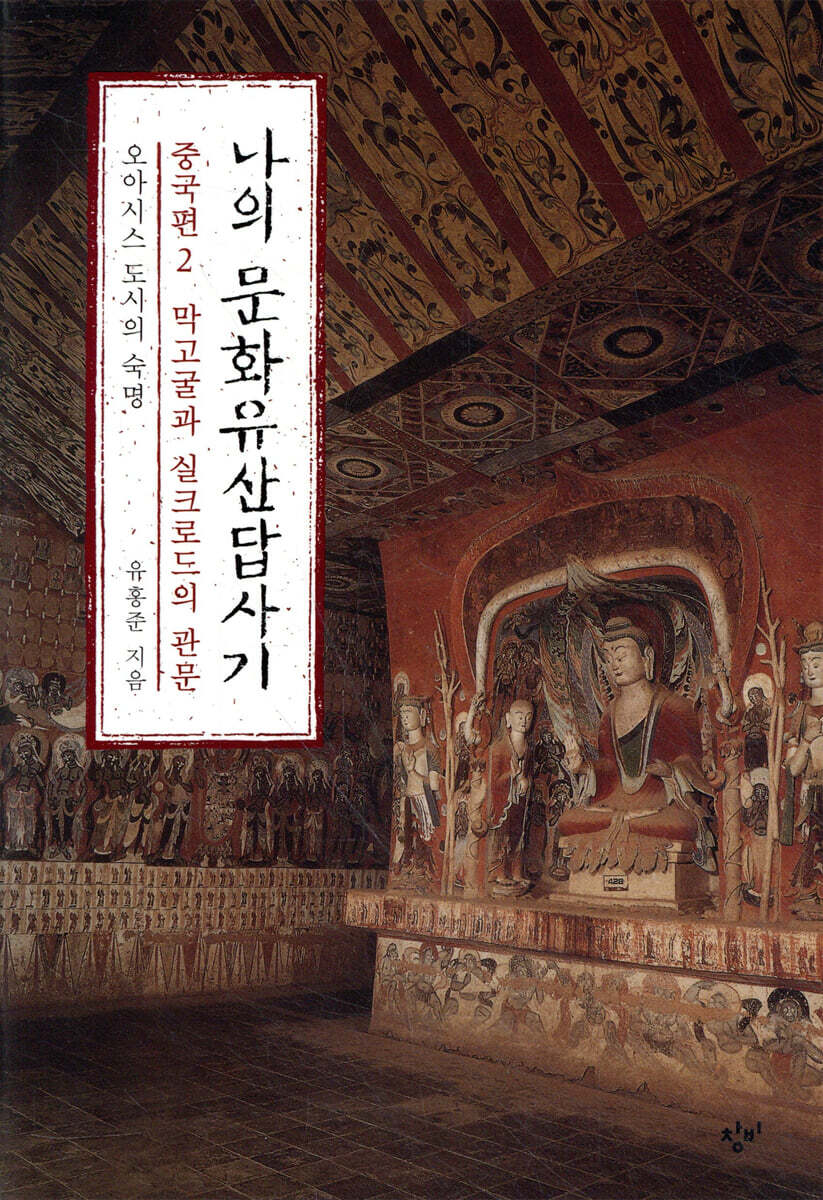
My Cultural Heritage Tour: China Part 2: Mogao Grottoes and the Gateway to the Silk Road
 |
Description
Book Introduction
Yoo Hong-jun's epic "China Travelogue" begins.
Dunhuang and the Silk Road: The No. 1 Chinese Travel Destination
"My Cultural Heritage Tour" finally sets foot on Chinese soil.
We embarked on a brisk journey to discover China's vast cultural heritage, created by the fusion of its vast land and diverse people.
The first place the author set foot on was Dunhuang and Hexi Corridor, places he had long cherished as his dream of visiting, and these can be found in the newly published volumes 1 and 2.
Just as the domestic section's 'Haenam and Gangjin' and the Japanese section's 'Kyushu' were unexpected destinations, this time too the author captures readers' interest with unexpected choices.
The Dunhuang and Silk Road journey, where you can encounter the desert, the oasis, the hidden treasures of Buddhist relics, and the sites of history, is truly a journey that lives up to its reputation.
The history of the Silk Road, which was not only the birthplace of ancient Chinese civilization but also served as a crossroads of civilizations as various ethnic groups fought against each other, is vividly recreated in the China section of the "Travelogue."
In addition to exploring the core of Chinese culture centered around China's eight ancient capitals, we are also planning field trips to major sites in the history of art, thought, and literature.
The history of cultural exchange between Korea and China, including the routes of envoys from ancient Goguryeo and Balhae, the Joseon Dynasty, and the Provisional Government of the Republic of Korea, cannot be left out here.
Dunhuang and the Silk Road are the beginning of this great journey.
China is rising to become a great power today thanks to its accumulated cultural confidence.
It has already emerged as the world's second largest economy, and its former diplomatic prowess is also being demonstrated.
Recently, through the Korean Wave and other factors, they have become closer to us culturally, and in terms of international politics, they are an essential partner for the unification of the Korean Peninsula.
Knowing China is no longer an option, but a necessity.
Through a cultural heritage tour with the China edition of "Trip Journal," we will be able to discover the true face of China and see at a glance its image as a partner leading East Asian culture.
Dunhuang and the Silk Road: The No. 1 Chinese Travel Destination
"My Cultural Heritage Tour" finally sets foot on Chinese soil.
We embarked on a brisk journey to discover China's vast cultural heritage, created by the fusion of its vast land and diverse people.
The first place the author set foot on was Dunhuang and Hexi Corridor, places he had long cherished as his dream of visiting, and these can be found in the newly published volumes 1 and 2.
Just as the domestic section's 'Haenam and Gangjin' and the Japanese section's 'Kyushu' were unexpected destinations, this time too the author captures readers' interest with unexpected choices.
The Dunhuang and Silk Road journey, where you can encounter the desert, the oasis, the hidden treasures of Buddhist relics, and the sites of history, is truly a journey that lives up to its reputation.
The history of the Silk Road, which was not only the birthplace of ancient Chinese civilization but also served as a crossroads of civilizations as various ethnic groups fought against each other, is vividly recreated in the China section of the "Travelogue."
In addition to exploring the core of Chinese culture centered around China's eight ancient capitals, we are also planning field trips to major sites in the history of art, thought, and literature.
The history of cultural exchange between Korea and China, including the routes of envoys from ancient Goguryeo and Balhae, the Joseon Dynasty, and the Provisional Government of the Republic of Korea, cannot be left out here.
Dunhuang and the Silk Road are the beginning of this great journey.
China is rising to become a great power today thanks to its accumulated cultural confidence.
It has already emerged as the world's second largest economy, and its former diplomatic prowess is also being demonstrated.
Recently, through the Korean Wave and other factors, they have become closer to us culturally, and in terms of international politics, they are an essential partner for the unification of the Korean Peninsula.
Knowing China is no longer an option, but a necessity.
Through a cultural heritage tour with the China edition of "Trip Journal," we will be able to discover the true face of China and see at a glance its image as a partner leading East Asian culture.
- You can preview some of the book's contents.
Preview
index
Preface to Volume 2: Dunhuang's Pedestrians and the Gateway to the Silk Road
Part 1: Makgogul Cave
This is how the romance of exploring Makgogul Cave 1 came true.
Dunhuang Museum / Mogao Grottoes Digital Exhibition Center / Cave 23 of the Tang Dynasty / Cave 328 of the Early Tang Dynasty /
Cave 428 of the Northern Zhou Dynasty / Cave 96 of the Northern Giant Buddha of the Early Tang Dynasty / Caves 16 and 17 of the Janggyeongdong
Makgogul 2 I ended up going back again
From Jiayuguan to Dunhuang / Cave 275 of the Northern Liang period / Cave 220 of the Early Tang period /
Cave 45 of the Seongdang period / Cave 148 of the Seongdang period / Cave 61 of the Jo clan's Gwiuigun period
Part 2: The Thieves and Guardians of Dunhuang
Dunhuang Walkers 1: Aurel Stein's Dunhuang Documents Were Discovered and Leaked
The Discovery and Mystery of the Dunhuang Documents / The Dunhuang Document Refuge Theory /
Obruchev of Russia / Le Coq of Germany / Aurel Stein of England
Dunhuang Walkers 2: Paul Pelliot's Dunhuang Documents Are Scattered
The incomparable bibliographer Pelliot / The Guimet Museum and the Orientalist Chavannes /
The Departure of the Pelion Expedition / Pelion Arrives in Dunhuang / Hyecho's "Wang Ocheonchukguk Jeon"
Dunhuang Walkers 3: The Otani Expedition and Langdon Warner: The Destruction of Dunhuang's Documents and Murals Still Leaking
The Otani Expedition's First, Second, and Third Expeditions / The Dispersion of the Otani Collection / Stein Returns to Dunhuang /
Oldenburg and the Russian White Refugees / Langdon Warner / The Dunhuang Manuscripts and the Aftermath
Guardians of Dunhuang: Jang Dae-cheon, Sang Seo-hong, and Han Lian, enter with the resolve to serve life imprisonment.
Li Jinglong's copy of the Dunhuang mural / Zhang Daqian, a master of modern Chinese painting /
Jang Dae-cheon's Journey to Dunhuang / Shang Seo-hong's 40 Years in Dunhuang / The Life of Han Rak-yeon, a Korean Painter
Part 3: Gateway to the Silk Road
The splendid murals of the Western Xia people and their sad end at the Anseo Yulimgul Cave
Summer and Winter in Dunhuang / Dunhuang Night Market / The Bantan Pipa Instrument Shop in Dunhuang / Monk Xuanzang in Guozhou /
The city of Gwaju or Ansu / Yulim Cave in Elm Valley / Cave 25 of Yulim Cave / Tangut's Western Xia
Song of the soul wandering in the Okmun-gwan and Yanggwan deserts
Two gateways to the West / Seochulyangwan Mugoin, Chunpungbudo Okmun Gate /
Nature, History, and Human Geography of Dunhuang and the Western Regions / Monk Xuanzang on his way from Yumen Pass to the Western Regions /
The Great Wall of Han and the Okmun Pass / The Legend of the Okmun Pass and the 'Horse Maze' / Yanggwan / Drawing the Yellow Lantern
supplement
Tour Schedule / Chronology of Chinese Dynasties and Nomadic Peoples / List of Major People and Place Names
Part 1: Makgogul Cave
This is how the romance of exploring Makgogul Cave 1 came true.
Dunhuang Museum / Mogao Grottoes Digital Exhibition Center / Cave 23 of the Tang Dynasty / Cave 328 of the Early Tang Dynasty /
Cave 428 of the Northern Zhou Dynasty / Cave 96 of the Northern Giant Buddha of the Early Tang Dynasty / Caves 16 and 17 of the Janggyeongdong
Makgogul 2 I ended up going back again
From Jiayuguan to Dunhuang / Cave 275 of the Northern Liang period / Cave 220 of the Early Tang period /
Cave 45 of the Seongdang period / Cave 148 of the Seongdang period / Cave 61 of the Jo clan's Gwiuigun period
Part 2: The Thieves and Guardians of Dunhuang
Dunhuang Walkers 1: Aurel Stein's Dunhuang Documents Were Discovered and Leaked
The Discovery and Mystery of the Dunhuang Documents / The Dunhuang Document Refuge Theory /
Obruchev of Russia / Le Coq of Germany / Aurel Stein of England
Dunhuang Walkers 2: Paul Pelliot's Dunhuang Documents Are Scattered
The incomparable bibliographer Pelliot / The Guimet Museum and the Orientalist Chavannes /
The Departure of the Pelion Expedition / Pelion Arrives in Dunhuang / Hyecho's "Wang Ocheonchukguk Jeon"
Dunhuang Walkers 3: The Otani Expedition and Langdon Warner: The Destruction of Dunhuang's Documents and Murals Still Leaking
The Otani Expedition's First, Second, and Third Expeditions / The Dispersion of the Otani Collection / Stein Returns to Dunhuang /
Oldenburg and the Russian White Refugees / Langdon Warner / The Dunhuang Manuscripts and the Aftermath
Guardians of Dunhuang: Jang Dae-cheon, Sang Seo-hong, and Han Lian, enter with the resolve to serve life imprisonment.
Li Jinglong's copy of the Dunhuang mural / Zhang Daqian, a master of modern Chinese painting /
Jang Dae-cheon's Journey to Dunhuang / Shang Seo-hong's 40 Years in Dunhuang / The Life of Han Rak-yeon, a Korean Painter
Part 3: Gateway to the Silk Road
The splendid murals of the Western Xia people and their sad end at the Anseo Yulimgul Cave
Summer and Winter in Dunhuang / Dunhuang Night Market / The Bantan Pipa Instrument Shop in Dunhuang / Monk Xuanzang in Guozhou /
The city of Gwaju or Ansu / Yulim Cave in Elm Valley / Cave 25 of Yulim Cave / Tangut's Western Xia
Song of the soul wandering in the Okmun-gwan and Yanggwan deserts
Two gateways to the West / Seochulyangwan Mugoin, Chunpungbudo Okmun Gate /
Nature, History, and Human Geography of Dunhuang and the Western Regions / Monk Xuanzang on his way from Yumen Pass to the Western Regions /
The Great Wall of Han and the Okmun Pass / The Legend of the Okmun Pass and the 'Horse Maze' / Yanggwan / Drawing the Yellow Lantern
supplement
Tour Schedule / Chronology of Chinese Dynasties and Nomadic Peoples / List of Major People and Place Names
Publisher's Review
The History of the Mogao Grottoes and Gateways to the Silk Road
Volume 2 of the China edition, “The Fate of the Oasis City,” explores the Mogao Grottoes, a treasure trove of Buddhist art, and contains the turbulent history of the Dunhuang manuscripts discovered there.
Next, we plan to embark on a full-scale Silk Road tour and explore the Silk Road gateways, including Yumen Pass and Yang Pass.
Here, the author's long-held dream of traveling came true.
The Mogao Grottoes, located at the foot of Mingsha Mountain in Dunhuang, have been open for hundreds of years since the 4th century, and 492 caves have been discovered to date.
Upon reaching the entrance, through a sophisticated management system worthy of a UNESCO World Heritage Site, you will be greeted by a spectacular view of hundreds of caves carved into a 1.6-kilometer cliff.
Various Buddhist statues and sculptures that are important in the history of Chinese art and Buddhist art, as well as murals depicting various iconography, are contained in this stone cave.
The clear and youthful impression of the Buddhist statues of the Northern and Southern Dynasties (hand-bone blue-and-white statues), the refined and realistic appearance of the Buddhist statues of the Tang Dynasty, and the murals that reproduce profound and interesting Buddhist iconography, including the Buddha's previous lives, captivate visitors.
The highlights of the Mogao Caves tour are the Janggyeong Cave in Cave 17, where the Dunhuang manuscripts were discovered, and the Bodhisattva statues in Cave 45, which display celestial beauty.
Makgogul was forgotten for a while, but it received great attention again in the 20th century.
Over 30,000 Dunhuang documents were discovered in Janggyeong-dong.
These were documents of academic value that could be called the 'great discovery of the century.'
However, the process by which the Dunhuang manuscripts were discovered and dispersed around the world involved a complex intertwining of academic passion and imperialist invasion.
In China, people who took Dunhuang artifacts during this period were called treasure thieves, meaning they stole treasures.
In addition to major figures such as Aurel Stein of Britain, Paul Pelliot of France, Kozui Otani of Japan, and Langdon Warner of the United States, several other "travelers" also took Dunhuang manuscripts and artifacts.
While we feel a sense of shared suffering, having experienced imperialist invasion, this issue is not unrelated to the fact that the Dunhuang documents and relics that came through Japan are on display at our National Museum of Korea.
As the Dunhuang manuscripts and the Mogao Grottoes became known internationally, while 'tourists' came to visit, there were also 'guardians'.
Renowned painter Zhang Daqian, who noticed the artistic value of the Mogao Grottoes; Shang Shuhong, who stopped studying abroad and returned to China to dedicate his life to protecting and researching the Mogao Grottoes; and Han Leyan, a Korean-Chinese painter who was captivated by the beauty of the Mogao Grottoes murals. These and other notable artists in China have worked to protect the Mogao Grottoes from further damage. Today, the Dunhuang Research Institute has carried on this legacy and is contributing to world-class Dunhuang studies.
In addition to the Mogao Grottoes, there are many other places worth visiting near Dunhuang.
The Yulin Grottoes in Gwaju (Anseo) are of a level no less than other grottoes, and are a place where you can see the Buddhist art left behind by the Tangut kingdom of Western Xia.
Yangguan and Yumenguan, located in the southwest and northwest of Dunhuang city respectively, have been gateways to the Silk Road to the West since ancient times.
The Western Regions where the main characters of Journey to the West set out in search of Buddhist scriptures is just beyond here.
The Taklamakan Desert, once called the “place of no return,” where camels, caravans, and monks walked and walked in the past, begins here.
A refreshing first step toward discovering China's splendid cultural heritage!
In the preface to his travelogue to China, the author states, “China is not only a partner leading East Asian culture alongside us, but also a powerful neighbor who is still deeply involved in the fate of our people.
Given this situation, we need to know and understand China more deeply.
In that sense, for me, China has always been a playground for enjoyable travel, a place to learn about history and culture, and further, a stage in world history that makes me think about our coordinates in today's international society," he explains his reason for writing.
This is a proposal to provide an enjoyable and profound appreciation of Chinese cultural heritage while also gaining a deeper understanding of our own culture through connections and comparisons.
Furthermore, with the publication of the China edition of the 'Dapsagi', we can finally compare the cultural heritages of Korea, China, and Japan on one large table.
If you've been evaluating the cultural heritage of neighboring countries with a sense of inferiority or simple patriotism, Yoo Hong-jun's travelogue will allow you to truly appreciate cultural heritage with a broader perspective.
And in the process, you will be able to feel anew that the true value of our culture is something that we can boast about to the world.
Yoo Hong-jun's stories about China will make you yearn for places you haven't been to, and make you revisit places you've already been to with a new perspective.
The exhilarating journey of the China edition of 'Dapsagi' will continue to meet readers in the future.
Volume 2 of the China edition, “The Fate of the Oasis City,” explores the Mogao Grottoes, a treasure trove of Buddhist art, and contains the turbulent history of the Dunhuang manuscripts discovered there.
Next, we plan to embark on a full-scale Silk Road tour and explore the Silk Road gateways, including Yumen Pass and Yang Pass.
Here, the author's long-held dream of traveling came true.
The Mogao Grottoes, located at the foot of Mingsha Mountain in Dunhuang, have been open for hundreds of years since the 4th century, and 492 caves have been discovered to date.
Upon reaching the entrance, through a sophisticated management system worthy of a UNESCO World Heritage Site, you will be greeted by a spectacular view of hundreds of caves carved into a 1.6-kilometer cliff.
Various Buddhist statues and sculptures that are important in the history of Chinese art and Buddhist art, as well as murals depicting various iconography, are contained in this stone cave.
The clear and youthful impression of the Buddhist statues of the Northern and Southern Dynasties (hand-bone blue-and-white statues), the refined and realistic appearance of the Buddhist statues of the Tang Dynasty, and the murals that reproduce profound and interesting Buddhist iconography, including the Buddha's previous lives, captivate visitors.
The highlights of the Mogao Caves tour are the Janggyeong Cave in Cave 17, where the Dunhuang manuscripts were discovered, and the Bodhisattva statues in Cave 45, which display celestial beauty.
Makgogul was forgotten for a while, but it received great attention again in the 20th century.
Over 30,000 Dunhuang documents were discovered in Janggyeong-dong.
These were documents of academic value that could be called the 'great discovery of the century.'
However, the process by which the Dunhuang manuscripts were discovered and dispersed around the world involved a complex intertwining of academic passion and imperialist invasion.
In China, people who took Dunhuang artifacts during this period were called treasure thieves, meaning they stole treasures.
In addition to major figures such as Aurel Stein of Britain, Paul Pelliot of France, Kozui Otani of Japan, and Langdon Warner of the United States, several other "travelers" also took Dunhuang manuscripts and artifacts.
While we feel a sense of shared suffering, having experienced imperialist invasion, this issue is not unrelated to the fact that the Dunhuang documents and relics that came through Japan are on display at our National Museum of Korea.
As the Dunhuang manuscripts and the Mogao Grottoes became known internationally, while 'tourists' came to visit, there were also 'guardians'.
Renowned painter Zhang Daqian, who noticed the artistic value of the Mogao Grottoes; Shang Shuhong, who stopped studying abroad and returned to China to dedicate his life to protecting and researching the Mogao Grottoes; and Han Leyan, a Korean-Chinese painter who was captivated by the beauty of the Mogao Grottoes murals. These and other notable artists in China have worked to protect the Mogao Grottoes from further damage. Today, the Dunhuang Research Institute has carried on this legacy and is contributing to world-class Dunhuang studies.
In addition to the Mogao Grottoes, there are many other places worth visiting near Dunhuang.
The Yulin Grottoes in Gwaju (Anseo) are of a level no less than other grottoes, and are a place where you can see the Buddhist art left behind by the Tangut kingdom of Western Xia.
Yangguan and Yumenguan, located in the southwest and northwest of Dunhuang city respectively, have been gateways to the Silk Road to the West since ancient times.
The Western Regions where the main characters of Journey to the West set out in search of Buddhist scriptures is just beyond here.
The Taklamakan Desert, once called the “place of no return,” where camels, caravans, and monks walked and walked in the past, begins here.
A refreshing first step toward discovering China's splendid cultural heritage!
In the preface to his travelogue to China, the author states, “China is not only a partner leading East Asian culture alongside us, but also a powerful neighbor who is still deeply involved in the fate of our people.
Given this situation, we need to know and understand China more deeply.
In that sense, for me, China has always been a playground for enjoyable travel, a place to learn about history and culture, and further, a stage in world history that makes me think about our coordinates in today's international society," he explains his reason for writing.
This is a proposal to provide an enjoyable and profound appreciation of Chinese cultural heritage while also gaining a deeper understanding of our own culture through connections and comparisons.
Furthermore, with the publication of the China edition of the 'Dapsagi', we can finally compare the cultural heritages of Korea, China, and Japan on one large table.
If you've been evaluating the cultural heritage of neighboring countries with a sense of inferiority or simple patriotism, Yoo Hong-jun's travelogue will allow you to truly appreciate cultural heritage with a broader perspective.
And in the process, you will be able to feel anew that the true value of our culture is something that we can boast about to the world.
Yoo Hong-jun's stories about China will make you yearn for places you haven't been to, and make you revisit places you've already been to with a new perspective.
The exhilarating journey of the China edition of 'Dapsagi' will continue to meet readers in the future.
GOODS SPECIFICS
- Date of issue: April 29, 2019
- Format: Paperback book binding method guide
- Page count, weight, size: 348 pages | 542g | 142*208*30mm
- ISBN13: 9788936477134
- ISBN10: 8936477137
You may also like
카테고리
korean


korean

![GQ KOREA Mark (Monthly): December [2025]](http://librairie.coreenne.fr/cdn/shop/files/8ef265dbbfbf186523ed75ba7319009d.jpg?v=1765340328&width=3840)


