

Greek Tales 1
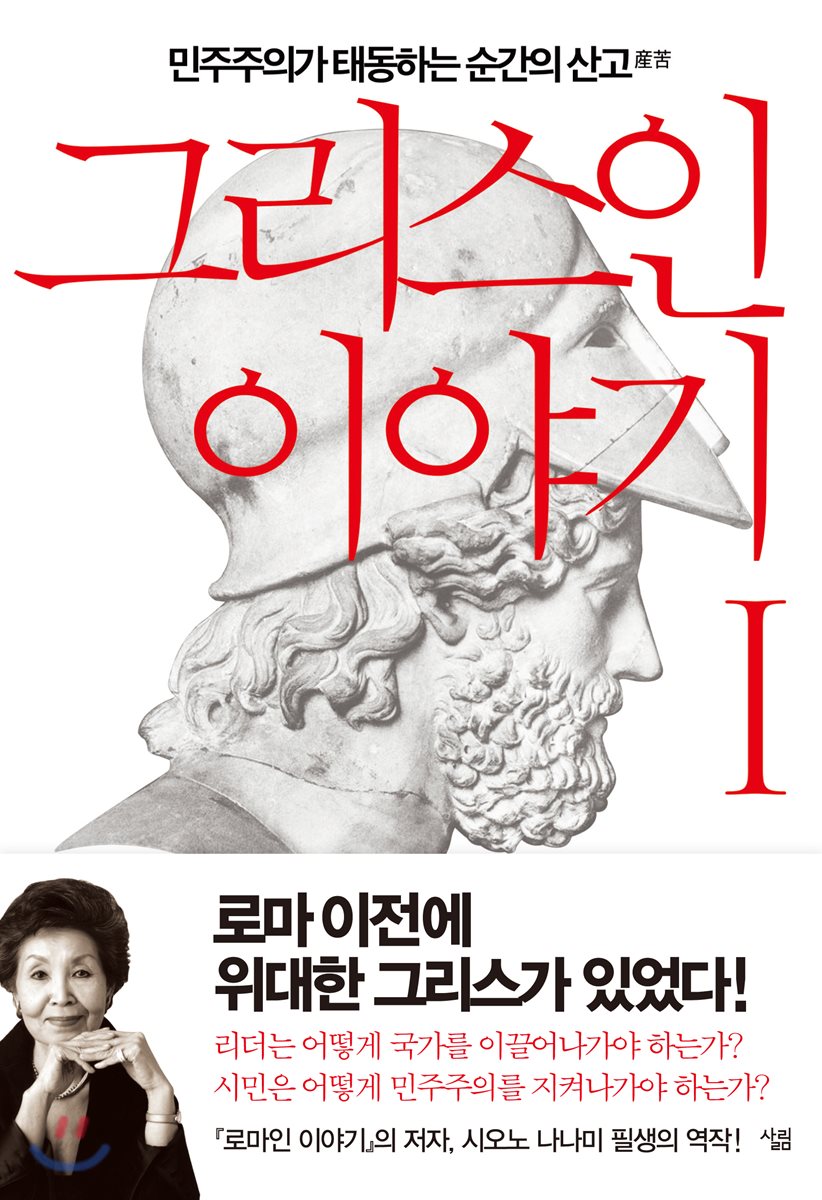 |
Description
Book Introduction
Before Rome, there was great Greece!
The prototype of Western civilization, the founder of democracy
The grand historical spectacle surrounding the Greeks
The masterpiece of Nanami Shiono, author of "Roman Stories"!
The birthplace of Western civilization and democracy
The journey to Greece and the world of the Greeks begins!
A History of the Greeks Through the Eyes of Nanami Shiono, the Greatest History Writer
Shiono Nanami, one of the greatest historical writers of our time.
He takes on a new challenge: exploring the origins of Western civilization and democracy, the history of Greece and the Greeks.
In the three-volume series 『The Greek Story』, the author unfolds the entirety of Greek thought, life, politics, culture, society, and diplomacy with his characteristically dynamic prose.
The first volume, "The Story of the Greeks I: The Birth Pangs of Democracy," tells the story of Greek history and the turbulent lives of its leaders and citizens, from primordial myths and the ancient Olympics to the active establishment of overseas colonies, experiments with democracy, competition, conflict, and cooperation among city-states, and the two Persian Wars that determined the fate of the nation.
By delicately interweaving these two axes—the raging turmoil of war and the birth and development of democracy stirring beneath it—the author vividly portrays the world the Greeks dreamed of and realized, as if in a tangible state.
The Greeks, who transformed geopolitical shortcomings into strengths and built a maritime power, while at the same time developing democracy through constant political experimentation and reform.
Their struggles and efforts 2,500 years ago are very similar to our concerns and aspirations today.
In that sense, their stories transcend time and offer us deep empathy and lessons.
The prototype of Western civilization, the founder of democracy
The grand historical spectacle surrounding the Greeks
The masterpiece of Nanami Shiono, author of "Roman Stories"!
The birthplace of Western civilization and democracy
The journey to Greece and the world of the Greeks begins!
A History of the Greeks Through the Eyes of Nanami Shiono, the Greatest History Writer
Shiono Nanami, one of the greatest historical writers of our time.
He takes on a new challenge: exploring the origins of Western civilization and democracy, the history of Greece and the Greeks.
In the three-volume series 『The Greek Story』, the author unfolds the entirety of Greek thought, life, politics, culture, society, and diplomacy with his characteristically dynamic prose.
The first volume, "The Story of the Greeks I: The Birth Pangs of Democracy," tells the story of Greek history and the turbulent lives of its leaders and citizens, from primordial myths and the ancient Olympics to the active establishment of overseas colonies, experiments with democracy, competition, conflict, and cooperation among city-states, and the two Persian Wars that determined the fate of the nation.
By delicately interweaving these two axes—the raging turmoil of war and the birth and development of democracy stirring beneath it—the author vividly portrays the world the Greeks dreamed of and realized, as if in a tangible state.
The Greeks, who transformed geopolitical shortcomings into strengths and built a maritime power, while at the same time developing democracy through constant political experimentation and reform.
Their struggles and efforts 2,500 years ago are very similar to our concerns and aspirations today.
In that sense, their stories transcend time and offer us deep empathy and lessons.
- You can preview some of the book's contents.
Preview
index
Letter to the Reader
Chapter 1 Who are the Greeks?
Olympics
World of the Gods
Flying overseas
Chapter 2: Various Aspects of Nation-Building
Lycurgus's 'Constitution': Sparta
Solon's Reforms: Athens
The Age of Peisistratus: Athens
coup
Cleisthenes' Reforms: Athens
ostracism
Abstention? And respect for minority opinions?
Chapter 3 Against the Invading Persians
Persian Empire
First Persian War
marathon
The decade between World War I and World War II
Static removal
eve of war
Thermopylae
forced introduction
To Salamis
Battle of Salamis
Battle of Plataea
The Aegean Sea, back to the Greeks' sea
Chapter 4 After the Persian War
Safety guarantee
Unification of Athens and Piraeus
A young Spartan general
Delian League
That Night of Heroes
Chronology
Source of the illustration
Chapter 1 Who are the Greeks?
Olympics
World of the Gods
Flying overseas
Chapter 2: Various Aspects of Nation-Building
Lycurgus's 'Constitution': Sparta
Solon's Reforms: Athens
The Age of Peisistratus: Athens
coup
Cleisthenes' Reforms: Athens
ostracism
Abstention? And respect for minority opinions?
Chapter 3 Against the Invading Persians
Persian Empire
First Persian War
marathon
The decade between World War I and World War II
Static removal
eve of war
Thermopylae
forced introduction
To Salamis
Battle of Salamis
Battle of Plataea
The Aegean Sea, back to the Greeks' sea
Chapter 4 After the Persian War
Safety guarantee
Unification of Athens and Piraeus
A young Spartan general
Delian League
That Night of Heroes
Chronology
Source of the illustration
Into the book
The ancient Olympic Games were held exactly once every four years.
There was a ceasefire for one month, including the seven days during which the games were held.
And the ancient Greeks did not allow the participation of countries that had been defeated in wars, nor did they reject certain countries because they did not like them.
Just as in modern car racing, when a safety car comes in, you can't overtake or anything, even if you were fighting on the battlefield until yesterday, the fighting stops for a month.
This is why the Greeks needed the Olympics.
Otherwise, the ancient Olympics would not have continued for so long.
The idea that humans could not break the oath they made to Zeus may have also supported the continuation of the ancient Olympic Games.
The ancient Olympics were a 'wisdom' deeply rooted in humanity that blossomed among the ancient Greeks who were always fighting.
Page 26
The Spartans were strong enough on their own.
But when they formed a group, their power changed from addition to multiplication.
When I have a colleague by my side, I become a fearless person.
The reason why the fighting power of Spartan heavy infantry was ranked first in Greece was because they fought in groups.
But it is a bit off-topic to attribute these men's strength to the homosexual relationships they have formed.
Regardless of that, I have consistently cultivated the following attitude until I reached adulthood.
'Never turn your back on the enemy.'
'When you go out to war, there is no other way but to win or die.'
Later generations evaluated Sparta as conceived by Lycurgus as a 'state built on weapons.'
Winning the Olympics probably wasn't on Lycurgus's mind.
Page 44
The law proposed by Solon and passed by the citizens' assembly was groundbreaking.
It was a law that abolished the existing law that required those who could not repay their debts to pay with their own bodies, meaning that debtors became slaves to their creditors.
The civic assembly of the city-state of Athens was composed of nobles and commoners.
In those days, commoners did not yet have the right to be elected to state positions, but they had the right to vote and were overwhelmingly numerous.
The law may have been dissatisfactory for the nobles because it destroyed vested interests, but it was the nobles with a broader perspective at the time who recognized the need to resolve the conflict between the nobles and the commoners.
Solon took the first steps toward reform steadily.
Page 57
The Greeks loved physical training itself.
Even though the country did not force them to do so, their parents willingly sent them, and the boys happily visited Palestra.
The establishments established under the name of 'Palestra' from the Roman era to the present day were not only for boys, but were also frequented by adults and served as meeting places for citizens across generations.
In Palestra, it was common practice to train in the nude or semi-nude.
The claim that Greek sculptures depicted nudity for artistic reasons is merely a consequentialist argument.
It is just a depiction of the ‘usual appearance’ that has become ‘art’.
Page 67
Modern and contemporary historians call Peisistratos 'Tyrannus' (dictator).
That is why the period of his reign that will unfold from now on is called 'the era when a dictator ruled Athens.'
Those who do not evaluate it so negatively are called 'tyrants'.
Although it is a natural title since he seized power through a coup d'état, Peisistratus cannot be called a tyrant because the meaning of tyrant is 'one who usurps the name of emperor or monarch'.
He never once called himself king.
Moreover, he did not touch Solon's reforms, which later historians called 'a milestone in democracy'.
all.
It was inherited as is.
It was just a matter of adding some color to the way it was operated.
Pages 80-81
For the Spartans, a citizen meant nothing other than a 'warrior' who dedicated his life to the defense of his homeland, as defined by Lycurgus.
Even the Perioikoi, who engaged in crafts and commerce, which they considered essential for the survival of the city-state of Sparta, and the Helots, who engaged in agriculture, were not considered 'citizens' in their view.
So, the Perioikoi and Helots were not granted citizenship and were not allowed to attend civic assemblies.
Meanwhile, in Athens, as Solon's reforms show, all artisans, merchants, and farmers who made goods were 'citizens.'
Although they were subject to discrimination in their right to be elected based on their income, they were entitled to participate in civic assemblies and, for that reason, had the right to participate in state affairs, making them 'citizens' with proud citizenship rights.
Pages 104-105
There was a ceasefire for one month, including the seven days during which the games were held.
And the ancient Greeks did not allow the participation of countries that had been defeated in wars, nor did they reject certain countries because they did not like them.
Just as in modern car racing, when a safety car comes in, you can't overtake or anything, even if you were fighting on the battlefield until yesterday, the fighting stops for a month.
This is why the Greeks needed the Olympics.
Otherwise, the ancient Olympics would not have continued for so long.
The idea that humans could not break the oath they made to Zeus may have also supported the continuation of the ancient Olympic Games.
The ancient Olympics were a 'wisdom' deeply rooted in humanity that blossomed among the ancient Greeks who were always fighting.
Page 26
The Spartans were strong enough on their own.
But when they formed a group, their power changed from addition to multiplication.
When I have a colleague by my side, I become a fearless person.
The reason why the fighting power of Spartan heavy infantry was ranked first in Greece was because they fought in groups.
But it is a bit off-topic to attribute these men's strength to the homosexual relationships they have formed.
Regardless of that, I have consistently cultivated the following attitude until I reached adulthood.
'Never turn your back on the enemy.'
'When you go out to war, there is no other way but to win or die.'
Later generations evaluated Sparta as conceived by Lycurgus as a 'state built on weapons.'
Winning the Olympics probably wasn't on Lycurgus's mind.
Page 44
The law proposed by Solon and passed by the citizens' assembly was groundbreaking.
It was a law that abolished the existing law that required those who could not repay their debts to pay with their own bodies, meaning that debtors became slaves to their creditors.
The civic assembly of the city-state of Athens was composed of nobles and commoners.
In those days, commoners did not yet have the right to be elected to state positions, but they had the right to vote and were overwhelmingly numerous.
The law may have been dissatisfactory for the nobles because it destroyed vested interests, but it was the nobles with a broader perspective at the time who recognized the need to resolve the conflict between the nobles and the commoners.
Solon took the first steps toward reform steadily.
Page 57
The Greeks loved physical training itself.
Even though the country did not force them to do so, their parents willingly sent them, and the boys happily visited Palestra.
The establishments established under the name of 'Palestra' from the Roman era to the present day were not only for boys, but were also frequented by adults and served as meeting places for citizens across generations.
In Palestra, it was common practice to train in the nude or semi-nude.
The claim that Greek sculptures depicted nudity for artistic reasons is merely a consequentialist argument.
It is just a depiction of the ‘usual appearance’ that has become ‘art’.
Page 67
Modern and contemporary historians call Peisistratos 'Tyrannus' (dictator).
That is why the period of his reign that will unfold from now on is called 'the era when a dictator ruled Athens.'
Those who do not evaluate it so negatively are called 'tyrants'.
Although it is a natural title since he seized power through a coup d'état, Peisistratus cannot be called a tyrant because the meaning of tyrant is 'one who usurps the name of emperor or monarch'.
He never once called himself king.
Moreover, he did not touch Solon's reforms, which later historians called 'a milestone in democracy'.
all.
It was inherited as is.
It was just a matter of adding some color to the way it was operated.
Pages 80-81
For the Spartans, a citizen meant nothing other than a 'warrior' who dedicated his life to the defense of his homeland, as defined by Lycurgus.
Even the Perioikoi, who engaged in crafts and commerce, which they considered essential for the survival of the city-state of Sparta, and the Helots, who engaged in agriculture, were not considered 'citizens' in their view.
So, the Perioikoi and Helots were not granted citizenship and were not allowed to attend civic assemblies.
Meanwhile, in Athens, as Solon's reforms show, all artisans, merchants, and farmers who made goods were 'citizens.'
Although they were subject to discrimination in their right to be elected based on their income, they were entitled to participate in civic assemblies and, for that reason, had the right to participate in state affairs, making them 'citizens' with proud citizenship rights.
Pages 104-105
---From the text
Publisher's Review
Democracy is born from the needs of reality, not from ideology.
In the introduction to 『Greek Stories I』, Shiono Nanami states that the Greeks of the time did not pay any attention to the Romans, who would later become the hegemons of the West, and did not even consider them as opponents.
To that extent, the representative figures of the ancient Western world were Greece and the Greeks.
And on the other side of the world, in the East, the great empire of Persia was wielding its might based on its powerful military power.
In fact, Greece was a country with many flaws.
The country's land area is mainly rocky and mountainous, so its own productivity is low.
Besides, Greece was not one country.
It was a form of chaos with countless large and small city-states.
Moreover, the city-states were constantly at war with each other.
It is a well-known fact that the ancient Olympic Games were created to temporarily put a stop to this arduous war.
The journey of how Greece grew into the cradle of Western civilization, and even modern civilization, is incredibly exciting and refreshing.
In this book, Nanami Shiono asserts that the reason democracy emerged and developed in Greece at the time was the “recognition of necessity.”
At that time, democracy was not an 'ideology' but a measure taken in response to the 'necessity' demanded by 'reality'.
Among the ancient Greek city-states, the most powerful were Athens and Sparta, followed by Corinth and Thebes.
In terms of military power, Sparta was the most powerful, but in terms of state system, Sparta was ruled by a minority, while Athens pursued democracy.
Accordingly, Greek democracy developed with Athens as its center.
But it wasn't accomplished overnight, nor was it achieved smoothly.
The reforms of Athens began with Solon's plutocracy, which overthrew aristocratic rule, followed by the tyranny of Peisistratus, the meritocracy of Cleisthenes, the wartime crisis management system of Themistocles, and the era of Pericles, which led to the golden age of Athenian democracy.
Of course, none of these were perfect or well-directed in themselves.
Therefore, in some ways, elements of dictatorship and undemocratic practices were expressed.
However, its foundation was never shaken.
At each stage, there were various real-world demands, or "needs," such as "resolving class conflict," "stabilizing the system," "improving economic power," and "overcoming national crises." In response to these demands, Athenian democracy continued to develop, adding its own unique color.
In that respect, the following diagnosis by Shiono Nanami is significant.
“Athens’ democracy was not born from a lofty ideology.
Born out of necessity.
It is the result of a cool-headed choice.
In Athens, a time when people were cool-headed and had a sense of need, democracy gained strength and functioned.
“In an era when democracy had become an ideology, all that awaited the city-state of Athens was decline.”
Overcoming the disadvantage of 'quantity' with the excellence of 'quality' and the power of 'utilization'
Along with the establishment of democracy, another major challenge Greece faced was overcoming national crisis.
These are the First and Second Persian Wars.
The Achaemenid Persian Empire grew into a great empire encompassing the Middle East and North Africa, beginning with the conquests of Cyrus the Great.
And by the time of Darius I, the country had become worthy of being called the 'King of Kings'.
Darius, who possessed the most powerful military force of his time, finally extended his conquest to Greece.
At that time, the military power of Greece was far inferior to that of Persia.
Anyone could see that defeat was a sure thing.
Moreover, Greece was a confederation of several city-states.
It was inevitable that there would be a lack of unity and a weak center of gravity.
The person who dramatically overcame this unfavorable situation was the Athenian leader Themistocles.
Themistocles' performance during the Persian Wars was truly dazzling.
As major battles continued, including the Battle of Marathon, the Battle of Thermopylae, the Battle of Artemisium, the Battle of Salamis, the Battle of Plataea, and the conquest of Mycale, Themistocles ultimately led the Persian Wars to victory with his outstanding strategy, crisis management skills, and strong leadership.
When the author calls him “the child of Athenian democracy” and “not only the most famous person in Athens, but also the most famous person in Greece,” it is not in vain.
Even the historian Thucydides praised Themistocles, saying, “The very existence of Themistocles is a marvel that cannot be helped but be admired.”
But when we consider Greece as a whole, not just individual heroes, what was the factor that enabled Greece to defeat the great Persian Empire? Shiono Nanami points out that it was "quality," or, in other words, "the ability to utilize."
“Persia (the East) has been attacking by overwhelming with ‘sheep.’
Greece (West) fought back with 'quality'.
In this case, ‘quality’ refers to comprehensive quality that utilizes the qualities of all citizens rather than the individual aptitudes.
In other words, it can be said that it is the ability to gather and utilize everything.
Through this, Greece won.
“It was only a handful of barley, but it was a victory against a great empire.”
At this time, the 'ability to utilize' is read as 'application ability', 'flexibility', and 'goal orientation'.
For example, the author describes Themistocles as someone who “would use anyone” and “would not care less about the means to achieve his ends.”
In fact, Themistocles 'utilized' the ostracism system, a democratic means introduced to prevent the rise of tyrants, to eliminate political opponents, and further, he 'utilized' the eliminated political opponents by bringing them back for the purpose of winning the war.
The Greeks overcame the enormous crisis of the Persian Wars and emerged victorious, awakening to their own potential, which later became an important element of the European spirit.
The author argues that today's Europe began precisely at the time when the ancient Greeks differentiated themselves from the East, represented by Persia.
In the introduction to 『Greek Stories I』, Shiono Nanami states that the Greeks of the time did not pay any attention to the Romans, who would later become the hegemons of the West, and did not even consider them as opponents.
To that extent, the representative figures of the ancient Western world were Greece and the Greeks.
And on the other side of the world, in the East, the great empire of Persia was wielding its might based on its powerful military power.
In fact, Greece was a country with many flaws.
The country's land area is mainly rocky and mountainous, so its own productivity is low.
Besides, Greece was not one country.
It was a form of chaos with countless large and small city-states.
Moreover, the city-states were constantly at war with each other.
It is a well-known fact that the ancient Olympic Games were created to temporarily put a stop to this arduous war.
The journey of how Greece grew into the cradle of Western civilization, and even modern civilization, is incredibly exciting and refreshing.
In this book, Nanami Shiono asserts that the reason democracy emerged and developed in Greece at the time was the “recognition of necessity.”
At that time, democracy was not an 'ideology' but a measure taken in response to the 'necessity' demanded by 'reality'.
Among the ancient Greek city-states, the most powerful were Athens and Sparta, followed by Corinth and Thebes.
In terms of military power, Sparta was the most powerful, but in terms of state system, Sparta was ruled by a minority, while Athens pursued democracy.
Accordingly, Greek democracy developed with Athens as its center.
But it wasn't accomplished overnight, nor was it achieved smoothly.
The reforms of Athens began with Solon's plutocracy, which overthrew aristocratic rule, followed by the tyranny of Peisistratus, the meritocracy of Cleisthenes, the wartime crisis management system of Themistocles, and the era of Pericles, which led to the golden age of Athenian democracy.
Of course, none of these were perfect or well-directed in themselves.
Therefore, in some ways, elements of dictatorship and undemocratic practices were expressed.
However, its foundation was never shaken.
At each stage, there were various real-world demands, or "needs," such as "resolving class conflict," "stabilizing the system," "improving economic power," and "overcoming national crises." In response to these demands, Athenian democracy continued to develop, adding its own unique color.
In that respect, the following diagnosis by Shiono Nanami is significant.
“Athens’ democracy was not born from a lofty ideology.
Born out of necessity.
It is the result of a cool-headed choice.
In Athens, a time when people were cool-headed and had a sense of need, democracy gained strength and functioned.
“In an era when democracy had become an ideology, all that awaited the city-state of Athens was decline.”
Overcoming the disadvantage of 'quantity' with the excellence of 'quality' and the power of 'utilization'
Along with the establishment of democracy, another major challenge Greece faced was overcoming national crisis.
These are the First and Second Persian Wars.
The Achaemenid Persian Empire grew into a great empire encompassing the Middle East and North Africa, beginning with the conquests of Cyrus the Great.
And by the time of Darius I, the country had become worthy of being called the 'King of Kings'.
Darius, who possessed the most powerful military force of his time, finally extended his conquest to Greece.
At that time, the military power of Greece was far inferior to that of Persia.
Anyone could see that defeat was a sure thing.
Moreover, Greece was a confederation of several city-states.
It was inevitable that there would be a lack of unity and a weak center of gravity.
The person who dramatically overcame this unfavorable situation was the Athenian leader Themistocles.
Themistocles' performance during the Persian Wars was truly dazzling.
As major battles continued, including the Battle of Marathon, the Battle of Thermopylae, the Battle of Artemisium, the Battle of Salamis, the Battle of Plataea, and the conquest of Mycale, Themistocles ultimately led the Persian Wars to victory with his outstanding strategy, crisis management skills, and strong leadership.
When the author calls him “the child of Athenian democracy” and “not only the most famous person in Athens, but also the most famous person in Greece,” it is not in vain.
Even the historian Thucydides praised Themistocles, saying, “The very existence of Themistocles is a marvel that cannot be helped but be admired.”
But when we consider Greece as a whole, not just individual heroes, what was the factor that enabled Greece to defeat the great Persian Empire? Shiono Nanami points out that it was "quality," or, in other words, "the ability to utilize."
“Persia (the East) has been attacking by overwhelming with ‘sheep.’
Greece (West) fought back with 'quality'.
In this case, ‘quality’ refers to comprehensive quality that utilizes the qualities of all citizens rather than the individual aptitudes.
In other words, it can be said that it is the ability to gather and utilize everything.
Through this, Greece won.
“It was only a handful of barley, but it was a victory against a great empire.”
At this time, the 'ability to utilize' is read as 'application ability', 'flexibility', and 'goal orientation'.
For example, the author describes Themistocles as someone who “would use anyone” and “would not care less about the means to achieve his ends.”
In fact, Themistocles 'utilized' the ostracism system, a democratic means introduced to prevent the rise of tyrants, to eliminate political opponents, and further, he 'utilized' the eliminated political opponents by bringing them back for the purpose of winning the war.
The Greeks overcame the enormous crisis of the Persian Wars and emerged victorious, awakening to their own potential, which later became an important element of the European spirit.
The author argues that today's Europe began precisely at the time when the ancient Greeks differentiated themselves from the East, represented by Persia.
GOODS SPECIFICS
- Date of issue: April 10, 2017
- Page count, weight, size: 420 pages | 745g | 152*223*35mm
- ISBN13: 9788952236142
- ISBN10: 8952236149
You may also like
카테고리
korean


korean

![GQ KOREA Mark (Monthly): December [2025]](http://librairie.coreenne.fr/cdn/shop/files/8ef265dbbfbf186523ed75ba7319009d.jpg?v=1765340328&width=3840)


