

Modern Korean History 1
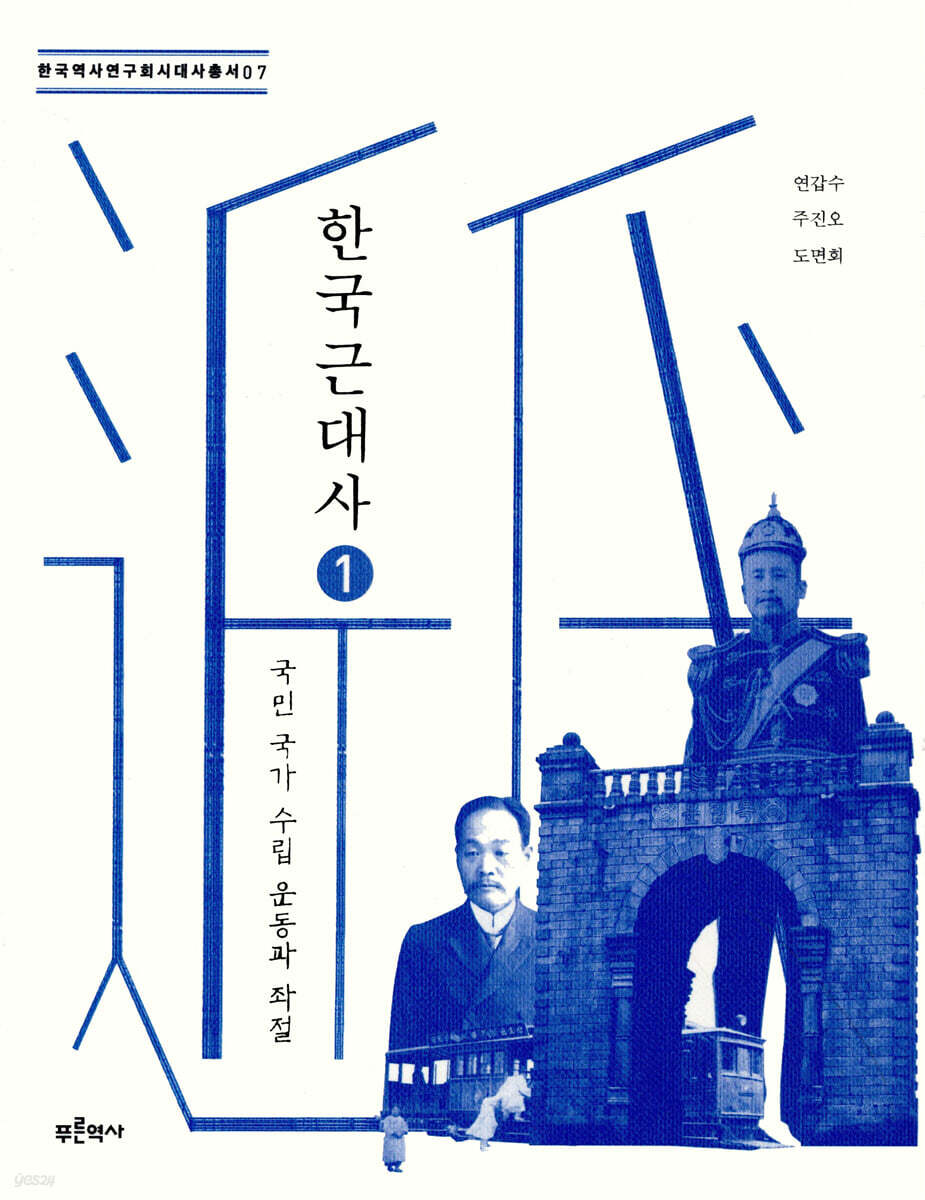 |
Description
Book Introduction
Examining the efforts and processes for modernization
In general, modern times are an era in which capitalism emerged economically and the nation-state system emerged politically.
And it is a time when global imperialist domination is spreading internationally.
What about our modern era? There are several theories about when modernity began in our history.
While most scholars consider the opening of ports in 1876 as the starting point of the modern era, some view it as the anti-imperialist struggle or anti-feudal struggle of the 1860s.
《Modern Korean History 1·2》 sets the beginning of the modern era as the period of power of Heungseon Daewongun, who served as regent in place of King Gojong.
It traces the history of our modern era from the deepening sense of crisis in the late 19th century.
In the 1860s, the feudal ruling order and medieval international relations faced a period of extreme turmoil and unrest.
This crisis signaled the beginning of a modern, irreversible transformation.
A sense of crisis that the country would perish, frustration under imperialist rule, and fear of dealing with an overwhelmingly oppressive system.
In some ways, the sense of crisis can be said to be a characteristic of colonial modernity.
Divided into two volumes, this book covers modern Korean history from the 1860s to 1945 and chronicles how we have struggled through crises and setbacks.
Although painful, the strategies for a future and hope were born in the midst of crisis.
It reflects the advanced research of historical scholarship on the specific aspects of efforts toward modernization and the reality of the national liberation movement, and faithfully and in-depth covers everything from resistance to modern social change to the struggle for independence.
Additionally, it delves into the reality of Japan's colonial policies and forced mobilization, areas not covered in general Korean history textbooks, from an expert's perspective.
In general, modern times are an era in which capitalism emerged economically and the nation-state system emerged politically.
And it is a time when global imperialist domination is spreading internationally.
What about our modern era? There are several theories about when modernity began in our history.
While most scholars consider the opening of ports in 1876 as the starting point of the modern era, some view it as the anti-imperialist struggle or anti-feudal struggle of the 1860s.
《Modern Korean History 1·2》 sets the beginning of the modern era as the period of power of Heungseon Daewongun, who served as regent in place of King Gojong.
It traces the history of our modern era from the deepening sense of crisis in the late 19th century.
In the 1860s, the feudal ruling order and medieval international relations faced a period of extreme turmoil and unrest.
This crisis signaled the beginning of a modern, irreversible transformation.
A sense of crisis that the country would perish, frustration under imperialist rule, and fear of dealing with an overwhelmingly oppressive system.
In some ways, the sense of crisis can be said to be a characteristic of colonial modernity.
Divided into two volumes, this book covers modern Korean history from the 1860s to 1945 and chronicles how we have struggled through crises and setbacks.
Although painful, the strategies for a future and hope were born in the midst of crisis.
It reflects the advanced research of historical scholarship on the specific aspects of efforts toward modernization and the reality of the national liberation movement, and faithfully and in-depth covers everything from resistance to modern social change to the struggle for independence.
Additionally, it delves into the reality of Japan's colonial policies and forced mobilization, areas not covered in general Korean history textbooks, from an expert's perspective.
- You can preview some of the book's contents.
Preview
index
Publishing the Korean History Research Society's Modern History Series
preface
The deepening sense of crisis and the pursuit of a wealthy and powerful nation - 1863-1882, Heungseon Daewongun's expulsion and Emperor Gojong's reform (Yeon Gap-su)
Heungseon Daewongun's rise to power and his policy of strengthening the nation and its military | Emperor Gojong's personal rule and his policy of strengthening the nation and its military | The promotion and resistance of the Enlightenment policy
The Beginning of the Movement to Establish a Modern Nation-State - 1884-1894, from the Gapsin Coup to the Peasant Revolution of 1894 (Jin-Oh Joo)
Joseon and the International Situation in the Early 1880s | October 17, 1884, Coup | International Situation after the 1884 Coup | Royal-Led Policies for Establishing a Modern State 1 | Background and Development of the Peasant War of 1894
The Development of the Movement to Establish a Modern Nation-State - 1894-1898, Conflict and Conflict Surrounding the Leadership in Establishing a Modern Nation-State (Jin-Oh Joo)
The Gabo Reforms and Political Conflict | The Establishment of the Korean Empire and the Independence Association
The Frustration of the Movement to Establish a Modern Nation-State and Japan's Annexation of Korea, 1899-1910: The End of the Book of Imperial-Centered Modernization (Drawings)
The establishment of an absolute monarchy and the reorganization of the state system | Imperial-centered modernization policies | Changes in economic structure and popular movements | The rapidly changing order in East Asia | The decline of imperial power and the rise of constitutional monarchy | Emperor Gojong's forced abdication and Japan's takeover of the Korean state apparatus | The Righteous Army's struggle and Japan's annexation of Korea
preface
The deepening sense of crisis and the pursuit of a wealthy and powerful nation - 1863-1882, Heungseon Daewongun's expulsion and Emperor Gojong's reform (Yeon Gap-su)
Heungseon Daewongun's rise to power and his policy of strengthening the nation and its military | Emperor Gojong's personal rule and his policy of strengthening the nation and its military | The promotion and resistance of the Enlightenment policy
The Beginning of the Movement to Establish a Modern Nation-State - 1884-1894, from the Gapsin Coup to the Peasant Revolution of 1894 (Jin-Oh Joo)
Joseon and the International Situation in the Early 1880s | October 17, 1884, Coup | International Situation after the 1884 Coup | Royal-Led Policies for Establishing a Modern State 1 | Background and Development of the Peasant War of 1894
The Development of the Movement to Establish a Modern Nation-State - 1894-1898, Conflict and Conflict Surrounding the Leadership in Establishing a Modern Nation-State (Jin-Oh Joo)
The Gabo Reforms and Political Conflict | The Establishment of the Korean Empire and the Independence Association
The Frustration of the Movement to Establish a Modern Nation-State and Japan's Annexation of Korea, 1899-1910: The End of the Book of Imperial-Centered Modernization (Drawings)
The establishment of an absolute monarchy and the reorganization of the state system | Imperial-centered modernization policies | Changes in economic structure and popular movements | The rapidly changing order in East Asia | The decline of imperial power and the rise of constitutional monarchy | Emperor Gojong's forced abdication and Japan's takeover of the Korean state apparatus | The Righteous Army's struggle and Japan's annexation of Korea
Publisher's Review
A modern Korean history of crisis and struggle, frustration and hope
-Approaching the Facts of Modern Korean History-
A book has been published that directly addresses our 'modern era', which has become such a hot potato that it brings to mind the word 'war'.
The 'Korean History Research Association's Modern History Series', which includes leading scholars in the field of history, includes 'Modern Korean History 1 - Movement to Establish a Nation-State and Its Frustration' (Yeon Gap-su, Joo Jin-oh, Do Myeon-hoe) and 'Modern Korean History 2 - Colonial Modernity and the National Liberation Movement' (Kim Jeong-in, Lee Jun-sik, Lee Song-sun).
In world history, modernity has had many different faces.
The coexistence of seemingly contradictory aspects, such as violence and order, pain and liberation, crisis and opportunity, is a characteristic of modernity.
So, on the one hand, it also has a dynamic personality.
Our modern history is also full of events and controversies that cannot be explained through simple perspectives.
This is why, for us living today, encountering modern history is itself an intellectual adventure.
Examining the efforts and processes for modernization
In general, modern times are an era in which capitalism emerged economically and the nation-state system emerged politically.
And it is a time when global imperialist domination is spreading internationally.
What about our modern era? There are several theories about when modernity began in our history.
While most scholars consider the opening of ports in 1876 as the starting point of the modern era, some view it as the anti-imperialist struggle or anti-feudal struggle of the 1860s.
《Modern Korean History 1·2》 sets the beginning of the modern era as the period of power of Heungseon Daewongun, who served as regent in place of King Gojong.
It traces the history of our modern era from the deepening sense of crisis in the late 19th century.
In the 1860s, the feudal ruling order and medieval international relations faced a period of extreme turmoil and unrest.
This crisis signaled the beginning of a modern, irreversible transformation.
A sense of crisis that the country would perish, frustration under imperialist rule, and fear of dealing with an overwhelmingly oppressive system.
In some ways, the sense of crisis can be said to be a characteristic of colonial modernity.
Divided into two volumes, this book covers modern Korean history from the 1860s to 1945 and chronicles how we have struggled through crises and setbacks.
Although painful, the strategies for a future and hope were born in the midst of crisis.
It reflects the advanced research of historical scholarship on the specific aspects of efforts toward modernization and the reality of the national liberation movement, and faithfully and in-depth covers everything from resistance to modern social change to the struggle for independence.
Additionally, it delves into the reality of Japan's colonial policies and forced mobilization, areas not covered in general Korean history textbooks, from an expert's perspective.
The characteristics of modernization and the struggles of our people
《Modern Korean History 1 - The Movement to Establish a Nation-State and Its Frustration》 covers the efforts and frustrations to form a modern nation-state from the 1860s until Japan forcibly took away national sovereignty in 1910.
It consists of four chapters in total. Chapter 1 covers the rise and fall of the Daewongun regime in the late 19th century amidst heightened domestic and international crises, and how the policy of enlightenment was implemented after the opening of the country.
Chapters 2 and 3 describe various attempts to establish a nation-state from 1884 to 1898, and Chapter 4 explains the establishment and modernization of the Korean Empire and the process of colonization after the Russo-Japanese War.
It was difficult to achieve modernization under the international conditions of the time when the confrontation and competition between imperialist powers were intense.
People from all walks of life made great efforts, but ultimately their attempts were frustrated.
The cause of failure may be external pressure, or it may be the mistakes of those who attempted to reform to some extent.
Although the causes may be complex, examining the process remains essential to understanding our modern era.
In fact, the period from Emperor Gojong's reign to the fall of the Korean Empire remains a matter of controversy to this day.
The controversy mainly surrounds the main entity that promoted modernization.
The conventional wisdom is that the reformist government that led the Gabo Reform attempted to modernize by modeling itself after the Meiji Restoration of Japan and accepting the Donghak Peasant Army's corrupt reform proposals. However, after the collapse of the government in 1896 due to the Gwanghwamun Incident, Emperor Gojong pursued a modernization policy centered on the imperial family.
The modernization policy, which was implemented while suppressing the opposition of the Independence Association movement, aimed to establish an absolute monarchy through military buildup and a capitalist economic system through the Yangjeon and land development projects and the industrialization policy.
The counterarguments to this are also considerable.
The theory is that the imperial-centered modernization policy was a conservative reactionary policy with only a modern appearance, and that true modernization was promoted by the Independence Association, the Manmin Common Association movement, the new education and new industry movement of reformists outside the government, and the patriotic enlightenment movement.
The Yangjeon and Jigye projects were intended to increase government revenue rather than guarantee land ownership through modern law, and the imperial-centered policies were intended to make the country the emperor's private property, so they could not achieve modernization.
Therefore, the fall of the Korean Empire and its colonization by Japan were inevitable.
《Modern Korean History 1》 takes the latter position, but it also secures a multi-layered perspective, such as viewing the radicalization within the Independence Association as the cause of the movement's failure, or compromising by viewing the Yangjeon and Jigye projects as a process of nationalizing land ownership.
A comprehensive overview of the latest research findings related to the Japanese colonial period.
《Modern Korean History 2 - Colonial Modernity and the National Liberation Movement》 covers the development of our society under Japanese colonial rule and the national liberation movement from 1910 to 1945.
It divides the Japanese colonial period into three parts: the 1910s, the 1920s to mid-1930s, and the wartime period after 1937, and reflects recent research findings on various 'modern' aspects within society.
The debate over the nature of our society during the Japanese colonial period is expressed as a conflict between the 'colonial exploitation theory' and the 'colonial modernization theory.'
The 'colonial exploitation theory' holds that the possibility of independent modernization was suppressed due to Japanese invasion.
Due to Japanese colonial rule's discrimination and exploitation of Koreans, the development of productive capacity was restricted, and the fruits of growth were drained to Japan, forcing political submission and economic collapse.
Therefore, the Japanese colonial period was a time when not only was it not a modern society, but even the survival of the nation could not be guaranteed.
In contrast, the 'colonial modernization theory' argues that it was impossible to find the seeds of capitalism within our society, and that Korea was only able to achieve modernization through the transplantation of Western capitalism.
Japan developed its colonies by building social infrastructure and introducing modern systems, and Korea, stimulated by Japan's development, adopted modern technologies and systems, thereby experiencing a period of high growth that is unparalleled anywhere in the world.
This book is fundamentally based on the perspective of ‘colonial exploitation theory.’
Although it does not deny the phenomenon of capitalism advocated in the 'colonial modernization theory', it points out that such a process was always accompanied by colonial discrimination and oppression, and that national liberation movements had to develop accordingly.
Chapter 1 of the book, the 1910s, is largely devoted to the growing power of the national liberation movement, particularly Christianity, Cheondoism, and the student movement.
Chapter 2, covering the period after the 1920s, examines in detail the emergence of Marxism as a new ideology, the emergence of new classes such as workers, boys, and women through the expansion of education and media, and the rapid spread of books, films, and radio as the vanguard of the spread of popular culture.
Chapter 3 painstakingly demonstrates that the development of capitalism since the 1930s was driven by Japan's war of aggression and wartime mobilization.
It encompasses the latest research findings on not only the Japanese imperial schemes, such as name changes, conscription and military service, and the Japanese military's "sexual slavery," but also the individual struggles of the Korean people who resisted them, and the national unification front at home and abroad.
Recently, as interest in our history, especially modern history, has increased, the number of introductory books and historical books has also increased significantly.
Usually, introductory texts serve as introductory or general texts, and contemporary history is mainly read by specialists.
However, it is true that the readers' increased interest was not satisfied with existing introductory books alone, and that historical books aimed at specialists were burdensome.
The Korean History Research Association's Modern History Series, "Modern Korean History 1·2," can be said to be the result of such considerations.
It has been refined to make historical events, domestic and international situations, and social and economic structures easy to read and understand, and specialized terms and vocabulary have been explained in an easy-to-understand manner.
However, it contains detailed and specific content that cannot be compared to existing introductory books.
This book will not only be a friendly, educational history book for general readers, but will also provide a forefront of in-depth reflection and discussion on the formation of our modern society.
-Approaching the Facts of Modern Korean History-
A book has been published that directly addresses our 'modern era', which has become such a hot potato that it brings to mind the word 'war'.
The 'Korean History Research Association's Modern History Series', which includes leading scholars in the field of history, includes 'Modern Korean History 1 - Movement to Establish a Nation-State and Its Frustration' (Yeon Gap-su, Joo Jin-oh, Do Myeon-hoe) and 'Modern Korean History 2 - Colonial Modernity and the National Liberation Movement' (Kim Jeong-in, Lee Jun-sik, Lee Song-sun).
In world history, modernity has had many different faces.
The coexistence of seemingly contradictory aspects, such as violence and order, pain and liberation, crisis and opportunity, is a characteristic of modernity.
So, on the one hand, it also has a dynamic personality.
Our modern history is also full of events and controversies that cannot be explained through simple perspectives.
This is why, for us living today, encountering modern history is itself an intellectual adventure.
Examining the efforts and processes for modernization
In general, modern times are an era in which capitalism emerged economically and the nation-state system emerged politically.
And it is a time when global imperialist domination is spreading internationally.
What about our modern era? There are several theories about when modernity began in our history.
While most scholars consider the opening of ports in 1876 as the starting point of the modern era, some view it as the anti-imperialist struggle or anti-feudal struggle of the 1860s.
《Modern Korean History 1·2》 sets the beginning of the modern era as the period of power of Heungseon Daewongun, who served as regent in place of King Gojong.
It traces the history of our modern era from the deepening sense of crisis in the late 19th century.
In the 1860s, the feudal ruling order and medieval international relations faced a period of extreme turmoil and unrest.
This crisis signaled the beginning of a modern, irreversible transformation.
A sense of crisis that the country would perish, frustration under imperialist rule, and fear of dealing with an overwhelmingly oppressive system.
In some ways, the sense of crisis can be said to be a characteristic of colonial modernity.
Divided into two volumes, this book covers modern Korean history from the 1860s to 1945 and chronicles how we have struggled through crises and setbacks.
Although painful, the strategies for a future and hope were born in the midst of crisis.
It reflects the advanced research of historical scholarship on the specific aspects of efforts toward modernization and the reality of the national liberation movement, and faithfully and in-depth covers everything from resistance to modern social change to the struggle for independence.
Additionally, it delves into the reality of Japan's colonial policies and forced mobilization, areas not covered in general Korean history textbooks, from an expert's perspective.
The characteristics of modernization and the struggles of our people
《Modern Korean History 1 - The Movement to Establish a Nation-State and Its Frustration》 covers the efforts and frustrations to form a modern nation-state from the 1860s until Japan forcibly took away national sovereignty in 1910.
It consists of four chapters in total. Chapter 1 covers the rise and fall of the Daewongun regime in the late 19th century amidst heightened domestic and international crises, and how the policy of enlightenment was implemented after the opening of the country.
Chapters 2 and 3 describe various attempts to establish a nation-state from 1884 to 1898, and Chapter 4 explains the establishment and modernization of the Korean Empire and the process of colonization after the Russo-Japanese War.
It was difficult to achieve modernization under the international conditions of the time when the confrontation and competition between imperialist powers were intense.
People from all walks of life made great efforts, but ultimately their attempts were frustrated.
The cause of failure may be external pressure, or it may be the mistakes of those who attempted to reform to some extent.
Although the causes may be complex, examining the process remains essential to understanding our modern era.
In fact, the period from Emperor Gojong's reign to the fall of the Korean Empire remains a matter of controversy to this day.
The controversy mainly surrounds the main entity that promoted modernization.
The conventional wisdom is that the reformist government that led the Gabo Reform attempted to modernize by modeling itself after the Meiji Restoration of Japan and accepting the Donghak Peasant Army's corrupt reform proposals. However, after the collapse of the government in 1896 due to the Gwanghwamun Incident, Emperor Gojong pursued a modernization policy centered on the imperial family.
The modernization policy, which was implemented while suppressing the opposition of the Independence Association movement, aimed to establish an absolute monarchy through military buildup and a capitalist economic system through the Yangjeon and land development projects and the industrialization policy.
The counterarguments to this are also considerable.
The theory is that the imperial-centered modernization policy was a conservative reactionary policy with only a modern appearance, and that true modernization was promoted by the Independence Association, the Manmin Common Association movement, the new education and new industry movement of reformists outside the government, and the patriotic enlightenment movement.
The Yangjeon and Jigye projects were intended to increase government revenue rather than guarantee land ownership through modern law, and the imperial-centered policies were intended to make the country the emperor's private property, so they could not achieve modernization.
Therefore, the fall of the Korean Empire and its colonization by Japan were inevitable.
《Modern Korean History 1》 takes the latter position, but it also secures a multi-layered perspective, such as viewing the radicalization within the Independence Association as the cause of the movement's failure, or compromising by viewing the Yangjeon and Jigye projects as a process of nationalizing land ownership.
A comprehensive overview of the latest research findings related to the Japanese colonial period.
《Modern Korean History 2 - Colonial Modernity and the National Liberation Movement》 covers the development of our society under Japanese colonial rule and the national liberation movement from 1910 to 1945.
It divides the Japanese colonial period into three parts: the 1910s, the 1920s to mid-1930s, and the wartime period after 1937, and reflects recent research findings on various 'modern' aspects within society.
The debate over the nature of our society during the Japanese colonial period is expressed as a conflict between the 'colonial exploitation theory' and the 'colonial modernization theory.'
The 'colonial exploitation theory' holds that the possibility of independent modernization was suppressed due to Japanese invasion.
Due to Japanese colonial rule's discrimination and exploitation of Koreans, the development of productive capacity was restricted, and the fruits of growth were drained to Japan, forcing political submission and economic collapse.
Therefore, the Japanese colonial period was a time when not only was it not a modern society, but even the survival of the nation could not be guaranteed.
In contrast, the 'colonial modernization theory' argues that it was impossible to find the seeds of capitalism within our society, and that Korea was only able to achieve modernization through the transplantation of Western capitalism.
Japan developed its colonies by building social infrastructure and introducing modern systems, and Korea, stimulated by Japan's development, adopted modern technologies and systems, thereby experiencing a period of high growth that is unparalleled anywhere in the world.
This book is fundamentally based on the perspective of ‘colonial exploitation theory.’
Although it does not deny the phenomenon of capitalism advocated in the 'colonial modernization theory', it points out that such a process was always accompanied by colonial discrimination and oppression, and that national liberation movements had to develop accordingly.
Chapter 1 of the book, the 1910s, is largely devoted to the growing power of the national liberation movement, particularly Christianity, Cheondoism, and the student movement.
Chapter 2, covering the period after the 1920s, examines in detail the emergence of Marxism as a new ideology, the emergence of new classes such as workers, boys, and women through the expansion of education and media, and the rapid spread of books, films, and radio as the vanguard of the spread of popular culture.
Chapter 3 painstakingly demonstrates that the development of capitalism since the 1930s was driven by Japan's war of aggression and wartime mobilization.
It encompasses the latest research findings on not only the Japanese imperial schemes, such as name changes, conscription and military service, and the Japanese military's "sexual slavery," but also the individual struggles of the Korean people who resisted them, and the national unification front at home and abroad.
Recently, as interest in our history, especially modern history, has increased, the number of introductory books and historical books has also increased significantly.
Usually, introductory texts serve as introductory or general texts, and contemporary history is mainly read by specialists.
However, it is true that the readers' increased interest was not satisfied with existing introductory books alone, and that historical books aimed at specialists were burdensome.
The Korean History Research Association's Modern History Series, "Modern Korean History 1·2," can be said to be the result of such considerations.
It has been refined to make historical events, domestic and international situations, and social and economic structures easy to read and understand, and specialized terms and vocabulary have been explained in an easy-to-understand manner.
However, it contains detailed and specific content that cannot be compared to existing introductory books.
This book will not only be a friendly, educational history book for general readers, but will also provide a forefront of in-depth reflection and discussion on the formation of our modern society.
GOODS SPECIFICS
- Date of publication: February 25, 2016
- Page count, weight, size: 294 pages | 554g | 153*224*17mm
- ISBN13: 9791156120667
- ISBN10: 1156120667
You may also like
카테고리
korean


korean

![GQ KOREA Mark (Monthly): December [2025]](http://librairie.coreenne.fr/cdn/shop/files/8ef265dbbfbf186523ed75ba7319009d.jpg?v=1765340328&width=3840)


