

History of the Balkans
 |
Description
Book Introduction
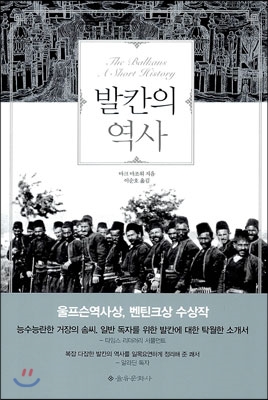
A balanced bird's-eye view of the Balkans, a crossroads of civilizations and Europe's powder keg, depicting their light and dark sides.
Mark Mazower, an authority on Balkan history, presents his masterpiece, A History of the Balkans, with a warm gaze on the Balkan people's tireless struggle to find their identity and escape the clutches of invaders. However, he does not hesitate to criticize them for their inability to overcome the religious and cultural differences imposed by the Eastern and Western powers.
Mark Mazower takes a sober look at the turbulent history of southeastern Europe from these two perspectives.
* This is a new edition of 『History of the Balkans』 published in 2004.
Mark Mazower, an authority on Balkan history, presents his masterpiece, A History of the Balkans, with a warm gaze on the Balkan people's tireless struggle to find their identity and escape the clutches of invaders. However, he does not hesitate to criticize them for their inability to overcome the religious and cultural differences imposed by the Eastern and Western powers.
Mark Mazower takes a sober look at the turbulent history of southeastern Europe from these two perspectives.
* This is a new edition of 『History of the Balkans』 published in 2004.
index
Prologue: Names
1.
The territory and people of the Balkans
2.
Balkans before the establishment of the state
3.
Eastern Problem
4.
nation-building
Epilogue: On Violence
Acknowledgements
main
References
Chronology
Translator's Note
Search
1.
The territory and people of the Balkans
2.
Balkans before the establishment of the state
3.
Eastern Problem
4.
nation-building
Epilogue: On Violence
Acknowledgements
main
References
Chronology
Translator's Note
Search
Into the book
The Turks defeated several Christian powers in southeastern Europe—Byzantium, of course, but also Serbia, Genoa, Hungary, Venice, and other dynasties—and united these conquered regions into a single political and economic empire that they ruled for five centuries.
But the Turkic conquest of the Balkans did not come out of nowhere.
Even before the conquest, they were already actively working as allies or supporters of the Christian forces in the region, which led to the conquest.
The Turks continued to use Christian soldiers in subsequent campaigns, particularly in Anatolia and the Middle East.
In this way, the relationship between Christians and Muslims was based on exchanges over several generations, and the form of conquest and cooperation bears more resemblance to the British conquest of India than to the German invasion of Poland.
-From the text
This coexistence of the two religions (Islam and Christianity) has determined even the most intimate areas of private life.
Even the Christian position on marriage has encountered an unexpectedly strong opponent.
Under Islamic law, both polygamy and temporary marriage were permitted, divorce was easy (especially for women), and sexual relations were not limited to marriage or determined solely by reproduction.
Given these conditions, it was self-evident which religion would seem to have more intrinsic appeal to people.
-From the text
The words 'Romania' and 'Bulgaria' had meaning only to a select few intellectuals and activists until 1830, and 'Albania' and 'Macedonia' were no different in that respect.
Because of this, the leaders of the new states in Southeastern Europe, far removed from the independent nation-states—as romantic nationalists would have it—were faced with the task of creating a new nation in a rural society steeped in the Ottoman worldview.
-From the text
The political landscape of the modern Balkans gradually emerged over the long 19th century, from the French Revolution until the final collapse of the Ottoman Empire in 1923.
Independent states, founded on the principle of nationality, replaced the empire that had lasted 500 years under the Ottoman emperor, the successor to the Romans and the "slave of God and sultan of this world."
This triumph of Balkan nationalism is, in part,
It was achieved through the efforts of the Balkan people themselves, who helped to bring about the collapse of Ottoman rule through uprisings and resistance.
On the other hand, their efforts were also ineffective, not bearing fruit on their own but only with the help of the European powers.
World War I was the culmination of this Balkan struggle for liberation and the complex relationship between the European state system and it.
-From the text
As elsewhere in Europe, the Balkans have found that questions of nationalism and minority rights have shifted from questions of war and peace to questions of border policy and urban coexistence.
The Balkan region spent much of the 20th century engaged in a long struggle for nation-building—the Yugoslav Civil War being the final stage of this struggle.
What is interesting is that immediately after the struggle to build a nation ended, political and economic changes occurred on an international scale, calling into question the very idea of a nation.
The collapse of the communist one-party state brought about the most dramatic crisis of all time for the old idea that socioeconomic transformation could be achieved through the domestic policies of a single state.
-From the text
But the Turkic conquest of the Balkans did not come out of nowhere.
Even before the conquest, they were already actively working as allies or supporters of the Christian forces in the region, which led to the conquest.
The Turks continued to use Christian soldiers in subsequent campaigns, particularly in Anatolia and the Middle East.
In this way, the relationship between Christians and Muslims was based on exchanges over several generations, and the form of conquest and cooperation bears more resemblance to the British conquest of India than to the German invasion of Poland.
-From the text
This coexistence of the two religions (Islam and Christianity) has determined even the most intimate areas of private life.
Even the Christian position on marriage has encountered an unexpectedly strong opponent.
Under Islamic law, both polygamy and temporary marriage were permitted, divorce was easy (especially for women), and sexual relations were not limited to marriage or determined solely by reproduction.
Given these conditions, it was self-evident which religion would seem to have more intrinsic appeal to people.
-From the text
The words 'Romania' and 'Bulgaria' had meaning only to a select few intellectuals and activists until 1830, and 'Albania' and 'Macedonia' were no different in that respect.
Because of this, the leaders of the new states in Southeastern Europe, far removed from the independent nation-states—as romantic nationalists would have it—were faced with the task of creating a new nation in a rural society steeped in the Ottoman worldview.
-From the text
The political landscape of the modern Balkans gradually emerged over the long 19th century, from the French Revolution until the final collapse of the Ottoman Empire in 1923.
Independent states, founded on the principle of nationality, replaced the empire that had lasted 500 years under the Ottoman emperor, the successor to the Romans and the "slave of God and sultan of this world."
This triumph of Balkan nationalism is, in part,
It was achieved through the efforts of the Balkan people themselves, who helped to bring about the collapse of Ottoman rule through uprisings and resistance.
On the other hand, their efforts were also ineffective, not bearing fruit on their own but only with the help of the European powers.
World War I was the culmination of this Balkan struggle for liberation and the complex relationship between the European state system and it.
-From the text
As elsewhere in Europe, the Balkans have found that questions of nationalism and minority rights have shifted from questions of war and peace to questions of border policy and urban coexistence.
The Balkan region spent much of the 20th century engaged in a long struggle for nation-building—the Yugoslav Civil War being the final stage of this struggle.
What is interesting is that immediately after the struggle to build a nation ended, political and economic changes occurred on an international scale, calling into question the very idea of a nation.
The collapse of the communist one-party state brought about the most dramatic crisis of all time for the old idea that socioeconomic transformation could be achieved through the domestic policies of a single state.
-From the text
--- From the text
Publisher's Review
Crossroads of civilization and powder keg of Europe
A balanced bird's-eye view depicting the light and dark sides of the Balkans
Mark Mazower, an authority on Balkan history, presents his masterpiece, A History of the Balkans, with a warm gaze on the Balkan people's tireless struggle to find their identity and escape the clutches of invaders. However, he does not hesitate to criticize them for their inability to overcome the religious and cultural differences imposed by the Eastern and Western powers.
Mark Mazower takes a sober look at the turbulent history of southeastern Europe from these two perspectives.
The book won the prestigious Wolfson History Prize, awarded annually to the most outstanding popular history book in Britain.
The author is currently a professor of history at Columbia University, and received the Great Teacher Award from Columbia University in 2011.
By examining modern European history with a focus on the peripheral regions of Europe, we have challenged existing interpretations of modern European history.
The problems of the Balkan region, known as the 'powder keg of Europe' and the cause of great wars for hundreds of years, are clearly revealed through visual materials from foreign travelers and diplomats.
This book examines the chronic problems of the region, including the characteristics of the Balkans brought about by Ottoman rule, the nation-building process achieved through a "long period of experimentation," and the developed national character rarely found among the Balkan peasantry, through the objective perspective of a distinguished historian.
It also focuses on events that occurred after the founding of the state, sharply exploring the historical roots of the current conflict, while reexamining the entire history of the Balkans, from World Wars I and II and the Cold War, to the collapse of communism, the disintegration of Yugoslavia, and recent stabilization efforts in southeastern Europe.
Why did the racial mixing of the Balkans, a region free of racial conflict for centuries, suddenly emerge as a political issue in the last century or two? Some argue that the recent Balkan conflicts are not much different from those in Western Europe or elsewhere, stemming from the 19th century's pursuit of territorial expansion and national glory.
In this respect, the author's comment that "Europe provided the Balkan countries with a framework for defining their own people, while at the same time providing them with an ideological weapon capable of destroying themselves—a form of modern romantic nationalism—is striking.
For example, the Ottoman Empire actually demonstrated a remarkable ability to regulate ethnic and religious diversity.
Arnold Toynbee, who witnessed the end of the Ottoman Empire, also saw the cause of the conflict as being outside the Balkan region.
He also diagnosed that “the roots of recent atrocities such as ethnic cleansing should not be sought in the Balkans’ way of thinking, but in civil wars waged with modern technological resources.”
The Balkans, which have only appeared on the world map for a mere 200 years, harbor a tangled history of "conquered peoples." The fact that this tragic history was shaped by others rather than by their own will has left them with a chronic problem for which it is difficult to find a clear solution.
Since the time of the Roman Emperor Diocletian, who divided the empire into four administrative districts and implemented the rule of the Four Emperors, and later Emperor Theodosius, who divided the empire in half and passed it on to his two sons, the Balkans have already followed a contradictory historical course with conflicting cultures of East and West, Orthodox and Catholic, Cyrillic and Latin, along the border between Eastern and Western Rome.
This buffering nature of the clash between Eastern and Western cultures continued even as the Balkans formed their modern nation-states, with only the face of the ruling power changing.
The fate of the Balkans was once again passively determined by others, without any time to sort out the tangled past, thus sowing the seeds of future racial, religious, and territorial conflicts.
It includes a detailed bibliography for in-depth study of Balkan history, detailed notes for advanced readers, and a chronological table that provides an overview of the historical events that shaped Balkan civilization, helping readers understand the text.
A balanced bird's-eye view depicting the light and dark sides of the Balkans
Mark Mazower, an authority on Balkan history, presents his masterpiece, A History of the Balkans, with a warm gaze on the Balkan people's tireless struggle to find their identity and escape the clutches of invaders. However, he does not hesitate to criticize them for their inability to overcome the religious and cultural differences imposed by the Eastern and Western powers.
Mark Mazower takes a sober look at the turbulent history of southeastern Europe from these two perspectives.
The book won the prestigious Wolfson History Prize, awarded annually to the most outstanding popular history book in Britain.
The author is currently a professor of history at Columbia University, and received the Great Teacher Award from Columbia University in 2011.
By examining modern European history with a focus on the peripheral regions of Europe, we have challenged existing interpretations of modern European history.
The problems of the Balkan region, known as the 'powder keg of Europe' and the cause of great wars for hundreds of years, are clearly revealed through visual materials from foreign travelers and diplomats.
This book examines the chronic problems of the region, including the characteristics of the Balkans brought about by Ottoman rule, the nation-building process achieved through a "long period of experimentation," and the developed national character rarely found among the Balkan peasantry, through the objective perspective of a distinguished historian.
It also focuses on events that occurred after the founding of the state, sharply exploring the historical roots of the current conflict, while reexamining the entire history of the Balkans, from World Wars I and II and the Cold War, to the collapse of communism, the disintegration of Yugoslavia, and recent stabilization efforts in southeastern Europe.
Why did the racial mixing of the Balkans, a region free of racial conflict for centuries, suddenly emerge as a political issue in the last century or two? Some argue that the recent Balkan conflicts are not much different from those in Western Europe or elsewhere, stemming from the 19th century's pursuit of territorial expansion and national glory.
In this respect, the author's comment that "Europe provided the Balkan countries with a framework for defining their own people, while at the same time providing them with an ideological weapon capable of destroying themselves—a form of modern romantic nationalism—is striking.
For example, the Ottoman Empire actually demonstrated a remarkable ability to regulate ethnic and religious diversity.
Arnold Toynbee, who witnessed the end of the Ottoman Empire, also saw the cause of the conflict as being outside the Balkan region.
He also diagnosed that “the roots of recent atrocities such as ethnic cleansing should not be sought in the Balkans’ way of thinking, but in civil wars waged with modern technological resources.”
The Balkans, which have only appeared on the world map for a mere 200 years, harbor a tangled history of "conquered peoples." The fact that this tragic history was shaped by others rather than by their own will has left them with a chronic problem for which it is difficult to find a clear solution.
Since the time of the Roman Emperor Diocletian, who divided the empire into four administrative districts and implemented the rule of the Four Emperors, and later Emperor Theodosius, who divided the empire in half and passed it on to his two sons, the Balkans have already followed a contradictory historical course with conflicting cultures of East and West, Orthodox and Catholic, Cyrillic and Latin, along the border between Eastern and Western Rome.
This buffering nature of the clash between Eastern and Western cultures continued even as the Balkans formed their modern nation-states, with only the face of the ruling power changing.
The fate of the Balkans was once again passively determined by others, without any time to sort out the tangled past, thus sowing the seeds of future racial, religious, and territorial conflicts.
It includes a detailed bibliography for in-depth study of Balkan history, detailed notes for advanced readers, and a chronological table that provides an overview of the historical events that shaped Balkan civilization, helping readers understand the text.
GOODS SPECIFICS
- Date of publication: February 20, 2014
- Page count, weight, size: 279 pages | 432g | 153*224*20mm
- ISBN13: 9788932472270
- ISBN10: 8932472270
You may also like
카테고리
korean


korean

![GQ KOREA Mark (Monthly): December [2025]](http://librairie.coreenne.fr/cdn/shop/files/8ef265dbbfbf186523ed75ba7319009d.jpg?v=1765340328&width=3840)


