

Biography of Qin Shi Huang
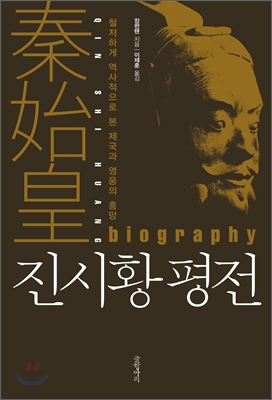 |
Description
Book Introduction
How was the first emperor, Qin Shi Huang, born?
『Biography of Qin Shi Huang』 provides a detailed introduction to each aspect, based on historical materials, including the establishment of the title of 'Emperor,' unification of ideology, establishment of the class system, reorganization of institutions, unification of writing, unification of weights and measures, large-scale civil engineering projects, and reorganization of the legal system.
One thing that runs through the vast content of this book consistently is that Qin Shi Huang did not create something out of nothing.
All the policies and projects he promoted inherited and developed the various reforms implemented in each vassal state during the Spring and Autumn Period and the Warring States Period, the ideology and cultural traditions that regarded the Zhou Dynasty as legitimate, and the various legal and institutional reforms promoted by the previous kings of the Qin Dynasty.
In particular, this book meticulously traces the various titles traditionally used to refer to monarchs or kings in China, the specific reality of the Qin Dynasty's legal system, the examples and discipline within the royal family, and the complex system of the bureaucracy.
It will be a very useful experience to understand the origins of a centralized society based on traditional Chinese thought.
『Biography of Qin Shi Huang』 provides a detailed introduction to each aspect, based on historical materials, including the establishment of the title of 'Emperor,' unification of ideology, establishment of the class system, reorganization of institutions, unification of writing, unification of weights and measures, large-scale civil engineering projects, and reorganization of the legal system.
One thing that runs through the vast content of this book consistently is that Qin Shi Huang did not create something out of nothing.
All the policies and projects he promoted inherited and developed the various reforms implemented in each vassal state during the Spring and Autumn Period and the Warring States Period, the ideology and cultural traditions that regarded the Zhou Dynasty as legitimate, and the various legal and institutional reforms promoted by the previous kings of the Qin Dynasty.
In particular, this book meticulously traces the various titles traditionally used to refer to monarchs or kings in China, the specific reality of the Qin Dynasty's legal system, the examples and discipline within the royal family, and the complex system of the bureaucracy.
It will be a very useful experience to understand the origins of a centralized society based on traditional Chinese thought.
- You can preview some of the book's contents.
Preview
index
introduction
pictorial
Chapter 1: The Qin Shi Huang Dynasty: The Descendants of the Overlord
1.
The Yeongjin surname and the founding of the Jin dynasty
2.
Duke Yang became king and the Jin Dynasty rose to the ranks of vassals
3.
The emergence of woodworking and the rise of the Jin Dynasty
4.
Hyogong's Reforms and the Advancement of Late-Coming Countries
5.
The development of titles from king to emperor
6.
A very unusual dynastic change
Chapter 2: Childhood: The Young King Who Heirs the Line
1.
Yeo Bu-wi, a merchant who sought great profits through political speculation
2.
Confirmation of the crown prince and ascension to the throne
3.
The power of the queen mother, the support of the central government, and the tyranny of the old man
Chapter 3: The Hegemony of a Great Nation Who Seeked to Rule
1.
Suppression of civil war and removal of powerful officials
2.
The talent of the overlord who assisted in the work
3.
Jin generals in charge of strategy and tactics
4.
The relationship between the ruler and his subjects during the reign of Qin Shi Huang
Chapter 4: Unification: Overthrowing the Six Alliances and Conquering the World
1.
Strategies in three directions: politics, military, and diplomacy
2.
The fall of the Han Dynasty
3.
The fall of the Zhao Dynasty
4.
The fall of Wei
5.
The fall of the Chu state
6.
The fall of the Yan Dynasty
7.
The fall of the Qi state
8.
Territorial development and border defense
9.
Key measures to solidify unification
Chapter 5: The Emperor: The Compendium of the Concept of Military Authority in the Qin Dynasty
1.
Create the title 'Emperor'
2.
The emperor is the head of the family under heaven
3.
Concerning the Supreme Being and the Most High
4.
He received the mandate of heaven and his descendants are sacred.
5.
A symbol of morality and cultural authority
Chapter 6: Thought: The Miscellaneous Monarchs Who Favored Legalism
1.
Legal principles and early forms of the imperial system
2.
Main sources and basic structure of Qin Shi Huang's reign ideology
3.
Comprehensive realization of the concept of 'Great Unity'
Chapter 7: The System: The Holy King Who Established a Centralized System (1)
1.
The 'Three Dukes and Nine Kings' system under imperial rule
2.
Centralization and pure county system
Chapter 8: The System: The Holy King Who Established a Centralized System (2)
1.
Bureaucracy and legalized administration
2.
Strengthening the control system and supplementing the inspection and supervision system
Chapter 9 Society: The Head of State Who Reorganized the Ranking Order
1.
The three major political classes: emperor, officials, and commoners
2.
10th grade merit award system
3.
Qin Shi Huang, who protected the family hierarchy
4.
Various social statuses as shown in the laws of the Jin Dynasty
5.
Social class structure and relatively fluid rank order
Chapter 10: Economy: The Supreme Ruler Who Conquered the World
1.
Institutionalized and legislated financial management
2.
How was national land managed?
3.
What were the regulations for collecting taxes?
Chapter 11: The Law: The Supreme Ruler of Ancient Chinese Society
1.
Qin Shi Huang's legalistic ideology and ruling style
2.
The Big Picture and the Little Picture of Jin Dynasty Law
3.
Even minor crimes should be severely punished.
4.
Unification of writing and implementation of clerical script
5.
The historical status of Qin Shi Huang in Chinese legal history
Chapter 12: Civil Engineering: The Emperor Who Launched an Unprecedented Civil Engineering Project
1.
The military facility system symbolized by the Great Wall
2.
Nationwide installation of dental and weightlifting equipment
3.
A waterway network connecting the north and south of the Yeonggeo and Yangtze Rivers
4.
Melting sword blades and arrowheads to make bells
5.
Expansion of Abang Palace and Doseong Hamyang
6.
The Terracotta Army and the pinnacle of splendor at Yeosan Mausoleum
Chapter 13: Life: The Emperor Enjoying Honor
1.
The family system of ancient emperors and the private life of Qin Shi Huang
2.
Court life and daily political activities
3.
Travel around the world and tour widely
Chapter 14: Pride and Luxury: The Tyrannical Monarch Who Wreaked Disaster in an Era
1.
Social, temporal, institutional, and individual cruelty
2.
Bongseon
3.
Find the immortal and seek the elixir of life
4.
The Book of the Bunseo and the Gangsulsa
5.
Qin Shi Huang's political personality
Chapter 15: The End of the Jin Empire under the Second Emperor
1.
Political situation at the end of Qin Shi Huang's reign
2.
The Disaster of the Forfeiture of the Crown and the Degeneration of Imperial Power
3.
The fall of the Jin Dynasty
4.
Implementing Jin's political system and laws for a long time
Chapter 16: Evaluating History: How to View the Qin Shi Huang Phenomenon
1.
A symbol of complete denial and 'tyranny'
2.
A positive assessment of the 'first emperor of all time'
3.
How did Qin Shi Huang's evaluation evolve?
Note/ Author's Note/ Translator's Note/ Search
pictorial
Chapter 1: The Qin Shi Huang Dynasty: The Descendants of the Overlord
1.
The Yeongjin surname and the founding of the Jin dynasty
2.
Duke Yang became king and the Jin Dynasty rose to the ranks of vassals
3.
The emergence of woodworking and the rise of the Jin Dynasty
4.
Hyogong's Reforms and the Advancement of Late-Coming Countries
5.
The development of titles from king to emperor
6.
A very unusual dynastic change
Chapter 2: Childhood: The Young King Who Heirs the Line
1.
Yeo Bu-wi, a merchant who sought great profits through political speculation
2.
Confirmation of the crown prince and ascension to the throne
3.
The power of the queen mother, the support of the central government, and the tyranny of the old man
Chapter 3: The Hegemony of a Great Nation Who Seeked to Rule
1.
Suppression of civil war and removal of powerful officials
2.
The talent of the overlord who assisted in the work
3.
Jin generals in charge of strategy and tactics
4.
The relationship between the ruler and his subjects during the reign of Qin Shi Huang
Chapter 4: Unification: Overthrowing the Six Alliances and Conquering the World
1.
Strategies in three directions: politics, military, and diplomacy
2.
The fall of the Han Dynasty
3.
The fall of the Zhao Dynasty
4.
The fall of Wei
5.
The fall of the Chu state
6.
The fall of the Yan Dynasty
7.
The fall of the Qi state
8.
Territorial development and border defense
9.
Key measures to solidify unification
Chapter 5: The Emperor: The Compendium of the Concept of Military Authority in the Qin Dynasty
1.
Create the title 'Emperor'
2.
The emperor is the head of the family under heaven
3.
Concerning the Supreme Being and the Most High
4.
He received the mandate of heaven and his descendants are sacred.
5.
A symbol of morality and cultural authority
Chapter 6: Thought: The Miscellaneous Monarchs Who Favored Legalism
1.
Legal principles and early forms of the imperial system
2.
Main sources and basic structure of Qin Shi Huang's reign ideology
3.
Comprehensive realization of the concept of 'Great Unity'
Chapter 7: The System: The Holy King Who Established a Centralized System (1)
1.
The 'Three Dukes and Nine Kings' system under imperial rule
2.
Centralization and pure county system
Chapter 8: The System: The Holy King Who Established a Centralized System (2)
1.
Bureaucracy and legalized administration
2.
Strengthening the control system and supplementing the inspection and supervision system
Chapter 9 Society: The Head of State Who Reorganized the Ranking Order
1.
The three major political classes: emperor, officials, and commoners
2.
10th grade merit award system
3.
Qin Shi Huang, who protected the family hierarchy
4.
Various social statuses as shown in the laws of the Jin Dynasty
5.
Social class structure and relatively fluid rank order
Chapter 10: Economy: The Supreme Ruler Who Conquered the World
1.
Institutionalized and legislated financial management
2.
How was national land managed?
3.
What were the regulations for collecting taxes?
Chapter 11: The Law: The Supreme Ruler of Ancient Chinese Society
1.
Qin Shi Huang's legalistic ideology and ruling style
2.
The Big Picture and the Little Picture of Jin Dynasty Law
3.
Even minor crimes should be severely punished.
4.
Unification of writing and implementation of clerical script
5.
The historical status of Qin Shi Huang in Chinese legal history
Chapter 12: Civil Engineering: The Emperor Who Launched an Unprecedented Civil Engineering Project
1.
The military facility system symbolized by the Great Wall
2.
Nationwide installation of dental and weightlifting equipment
3.
A waterway network connecting the north and south of the Yeonggeo and Yangtze Rivers
4.
Melting sword blades and arrowheads to make bells
5.
Expansion of Abang Palace and Doseong Hamyang
6.
The Terracotta Army and the pinnacle of splendor at Yeosan Mausoleum
Chapter 13: Life: The Emperor Enjoying Honor
1.
The family system of ancient emperors and the private life of Qin Shi Huang
2.
Court life and daily political activities
3.
Travel around the world and tour widely
Chapter 14: Pride and Luxury: The Tyrannical Monarch Who Wreaked Disaster in an Era
1.
Social, temporal, institutional, and individual cruelty
2.
Bongseon
3.
Find the immortal and seek the elixir of life
4.
The Book of the Bunseo and the Gangsulsa
5.
Qin Shi Huang's political personality
Chapter 15: The End of the Jin Empire under the Second Emperor
1.
Political situation at the end of Qin Shi Huang's reign
2.
The Disaster of the Forfeiture of the Crown and the Degeneration of Imperial Power
3.
The fall of the Jin Dynasty
4.
Implementing Jin's political system and laws for a long time
Chapter 16: Evaluating History: How to View the Qin Shi Huang Phenomenon
1.
A symbol of complete denial and 'tyranny'
2.
A positive assessment of the 'first emperor of all time'
3.
How did Qin Shi Huang's evaluation evolve?
Note/ Author's Note/ Translator's Note/ Search
Publisher's Review
The definitive study of Qin Shi Huang and the Qin Empire
From the origins, establishment, fall, and influence of the Qin Dynasty… A 1,152-page epic unfolding around Qin Shi Huang.
“Through rigorous comparative research on vast historical materials such as Unmongjingan and later research,
“I did not miss anything from Qin Shi Huang’s great undertakings to his smallest words and actions.”
“If you are truly capable of creating history, you must study it thoroughly.
Of course, the content must be specific and detailed.
Also, we should not only pay attention to the great achievements of that person, but also not miss the small things.
By dealing with great undertakings, we can see the environment, society, customs, and era, and by dealing with small things, we can see the character, family, region, hobbies, and usual words and actions of that person, so we should never overlook even the smallest things.
“The most important thing is to find out how historical figures acquired such abilities.”
(Liang Qichao's words quoted in the text)
“If we were to write a ‘history of the Spring and Autumn Annals and Warring States Period’ with people from the Jin Dynasty as the main characters in terms of the selection of events, plot, and narrative style, I believe we would be able to show the history of that time much better than the ‘Spring and Autumn Annals’ and ‘Records of the Grand Historian’ and accurately trace the historical lineage.
If the history of the Spring and Autumn Period and the Warring States Period were simplified to the history of the Qin Dynasty, many events that are talked about in other countries would be omitted, but the historical essence, major trends, and core and fundamental aspects of this era would not be greatly affected.
“If we were to simplify the history of the Qin Dynasty, especially the lineage and details of the political history of the Qin Dynasty, it would be the story of the family of Qin Shi Huang.”
(/ p.67)
- A thorough analysis of the newly emerging reformist state of Qin, the background of Qin Shi Huang.
- Tracing the reasons why late-comer emerging countries were able to catch up with advanced countries
- Clearly describes the origins of a centralized society based on traditional thought.
- Objectively understand the influence of the politics, law, society, and customs of the Unified Jin Dynasty on later generations.
- A comprehensive historical summary and evaluation of the 'Qin Shi Huang cultural phenomenon' that has continued for thousands of years.
- Rich in implications for modern society, including monetary unification, taxation systems, and governance techniques.
Complete translation of a well-known edition
A full-fledged 1152-page biography of Qin Shi Huang has been published.
Qin Shi Huang is known as the man who created the modern Chinese system, but his image is also polarized as a monarch whose brutal politics contributed to the short-lived 30-year reign.
In Korea, Qin Shi Huang is the most famous emperor of ancient China, but there has been no proper biography of him until now.
This book is a complete translation of 『Biographies of the First Qin Emperor』 (first edition in 2003, original edition in 2007), one of the well-known 『Biographies of the Great Emperors of China』 series published by the People's Press of China. It is a representative result of an objective and unbiased evaluation of everything about Qin Shi Huang.
This book provides a detailed introduction to each aspect, based on historical materials, including the establishment of the title of 'Emperor', unification of ideology, establishment of the class system, institutional reform, unification of writing, unification of weights and measures, large-scale civil engineering projects, and legal reform.
Qin Shi Huang is not a protrusion from the plains.
One thing that runs through the vast content of this book consistently is that Qin Shi Huang did not create something out of nothing.
All the policies and projects he promoted inherited and developed the various reforms implemented in each vassal state during the Spring and Autumn Period and the Warring States Period, the ideology and cultural traditions that regarded the Zhou Dynasty as legitimate, and the various legal and institutional reforms promoted by the previous kings of the Qin Dynasty.
For example, the Great Wall of China was built by each vassal state for military purposes during the Spring and Autumn Period and the Warring States Period, and Qin Shi Huang expanded the Great Wall based on this to prevent invasions by the Xiongnu.
The author also points out that although people call Qin Shi Huang a 'Legalist' emperor, he was actually a 'miscellaneous' emperor.
Regarding the criticism that Qin Shi Huang was a very cruel emperor, he points out that the emperors of the Han Dynasty were much more cruel than him, but they never reduced their punishments.
In particular, this book meticulously traces the various titles traditionally used to refer to monarchs or kings in China, the specific reality of the Qin Dynasty's legal system, the examples and discipline within the royal family, and the complex system of the bureaucracy.
It will be a very useful experience to understand the origins of a centralized society based on traditional Chinese thought.
A New Perspective on the Spring and Autumn Period and Warring States Beyond Biography
To sum up, 『Biography of Qin Shi Huang』 is not an ordinary biography about Qin Shi Huang himself.
It tells the tragic story of how a small vassal state on the western frontier developed into the independent Qin Dynasty during the turbulent Spring and Autumn Period and the Warring States Period, a period marked by war for approximately 500 years; how it ushered in a new era with Qin Shi Huang's unification of the country as its culmination; and how, just as that prelude opened, it inevitably ended in a dramatic and absurd destruction.
People often disparage the history of the Qin Dynasty after unification, saying that it lasted only 30 years, but this book emphasizes that there was a 500-year history of the Qin Dynasty before the unified Qin Dynasty.
The Jin Dynasty is said to have been ruled for over 500 years, starting from the Spring and Autumn Period.
Perhaps it would be more correct to call this book 'The History of the Jin Dynasty'.
Reading numerous ancient books from the perspective of the Jin Dynasty
There are numerous hidden secrets in 『Biography of Qin Shi Huang』.
Reading this biography, which contains rich content, is in itself reading countless ancient books such as 『Records of the Grand Historian』, 『Book of Lord Shang』, 『Han Feizi』, 『Guan Zi』, 『Strategies of the Warring States』, 『Snow Garden』, 『Lüshi Chunqiu』, 『Yan Cheol-lun』, 『Hanshu』, 『Zhenguan Zhengyao』, 『Zizhi Tongjian』, and 『Yunmeng Qin Jian』 from the perspective of the ‘Qin Dynasty.’
Since the only direct source for the Qin Dynasty was the Yunmeng Jingan (a bamboo slip from a Qin tomb excavated in Yunmeng County, Hubei Province, China in December 1975 at Water Margin), the author meticulously reorganized the content about the Qin Dynasty based on the Records of the Grand Historian written during the Han Dynasty and verified it by comparing it with the Yunmeng Jingan.
Furthermore, this exploration of the Qin Dynasty intertwines with the question of how to evaluate the 'Qin Shi Huang phenomenon' from the perspective of the present of history, and forms the final chapter of the book.
Ultimately, it can be said that the author wrote this book to properly see and evaluate Qin Shi Huang.
Proof of the influence of the Jin system, which has been passed down for thousands of years
The influence of the Qin Dynasty system on history is very extensive.
When reading historical documents and research materials, you can often see the expression, “Han inherited many of the systems of the Qin Dynasty.”
Moreover, the basic principles and systems of the 'Qin Dynasty System' have consistently permeated Chinese history for over 2,000 years.
It can be said that the imperial system established by Qin Shi Huang has been passed down for thousands of years without losing its original form.
Reading the socio-historical meaning implied in the figure of Qin Shi Huang
The figure of Qin Shi Huang has a variety of socio-historical implications.
In world history, he is the first person to realize a true theoretical system of state and law and is a representative figure who established an empire on the Eurasian continent.
In the history of ancient Chinese civilization, Qin Shi Huang is the protagonist who completed the social and historical transformation of the Spring and Autumn Period and the Warring States Period.
From a political historical perspective, he is the one who brought about the change of dynasty, and from a political historical perspective, he is the first ruler to achieve true 'Daeiltong' and establish a monarchy.
Also, from the perspective of the history of thought, the concept of a monarch from the pre-Qin period was compiled to create the title of 'Emperor'.
From the perspective of legal history, Qin Shi Huang was the first emperor to practice 'rule of law.'
From a cultural historical perspective, it established the basic framework of Chinese civilization by unifying characters, wheel width, various systems, and theories.
Meanwhile, from the perspective of civil engineering and architecture, his name is associated with the Great Wall of China, which is considered a wonder of the world, and the Terracotta Army of the Qin Shi Huang Mausoleum.
In the history of human civilization, there may be other historical figures whose absolute power rivals his, but in ancient Chinese history, his existence is unique.
Heroes and Tyrants: Unraveling the Janus-like Intertwined Structure
Qin Shi Huang was a Janus-shaped figure, possessing aspects of both a hero and a tyrant.
At that time, only the fierce and courageous Hyo-ung could become a political hero, and in order to rule despotically, one had to be dogmatic and cruel.
Qin Shi Huang committed six evil deeds during his reign.
In other words, he expanded the imperial palace without restraint, built an imperial tomb on an unimaginable scale, and put aside all other work to climb Mount Taishan and offer sacrifices to heaven and earth.
He also mobilized countless people to seek the elixir of immortality, burned countless books including the Book of Songs and the Book of Documents, and implicated innocent people by burying many scholars alive.
Compared to all the emperors of the past, no one can match the achievements of Qin Shi Huang, but the evils he committed were also very serious.
He demonstrated both the strengths and weaknesses of the Chinese monarchy and even became a cultural symbol of the monarchy.
Therefore, some people call him “the emperor who comes once in a thousand years,” while others disparage him as a cruel dictator.
Even today, there are various evaluations of Qin Shi Huang, but it is difficult to say with certainty which one is correct.
Vaguely dismissing Qin Shi Huang and the various institutions of the Qin dynasty as "tyranny" not only fails to provide a comprehensive understanding of the various historical phenomena related to China's monarchy, but also fails to sharply criticize despotic politics.
The perspective of increased productivity and social reform
As a result, 『Biography of Qin Shi Huang』 uniquely recreates Qin Shi Huang from various perspectives and angles based on numerous historical materials.
It objectively introduces the life of Qin Shi Huang and evaluates his achievements and mistakes.
Furthermore, the formation of the Jin Dynasty and the complex history of the empire were clearly explained.
The Qin Empire was not built by a few political heroes, including Qin Shi Huang, according to their own will, but was the result of the rapid development of productivity and a series of social reforms of the time.
From the origins, establishment, fall, and influence of the Qin Dynasty… A 1,152-page epic unfolding around Qin Shi Huang.
“Through rigorous comparative research on vast historical materials such as Unmongjingan and later research,
“I did not miss anything from Qin Shi Huang’s great undertakings to his smallest words and actions.”
“If you are truly capable of creating history, you must study it thoroughly.
Of course, the content must be specific and detailed.
Also, we should not only pay attention to the great achievements of that person, but also not miss the small things.
By dealing with great undertakings, we can see the environment, society, customs, and era, and by dealing with small things, we can see the character, family, region, hobbies, and usual words and actions of that person, so we should never overlook even the smallest things.
“The most important thing is to find out how historical figures acquired such abilities.”
(Liang Qichao's words quoted in the text)
“If we were to write a ‘history of the Spring and Autumn Annals and Warring States Period’ with people from the Jin Dynasty as the main characters in terms of the selection of events, plot, and narrative style, I believe we would be able to show the history of that time much better than the ‘Spring and Autumn Annals’ and ‘Records of the Grand Historian’ and accurately trace the historical lineage.
If the history of the Spring and Autumn Period and the Warring States Period were simplified to the history of the Qin Dynasty, many events that are talked about in other countries would be omitted, but the historical essence, major trends, and core and fundamental aspects of this era would not be greatly affected.
“If we were to simplify the history of the Qin Dynasty, especially the lineage and details of the political history of the Qin Dynasty, it would be the story of the family of Qin Shi Huang.”
(/ p.67)
- A thorough analysis of the newly emerging reformist state of Qin, the background of Qin Shi Huang.
- Tracing the reasons why late-comer emerging countries were able to catch up with advanced countries
- Clearly describes the origins of a centralized society based on traditional thought.
- Objectively understand the influence of the politics, law, society, and customs of the Unified Jin Dynasty on later generations.
- A comprehensive historical summary and evaluation of the 'Qin Shi Huang cultural phenomenon' that has continued for thousands of years.
- Rich in implications for modern society, including monetary unification, taxation systems, and governance techniques.
Complete translation of a well-known edition
A full-fledged 1152-page biography of Qin Shi Huang has been published.
Qin Shi Huang is known as the man who created the modern Chinese system, but his image is also polarized as a monarch whose brutal politics contributed to the short-lived 30-year reign.
In Korea, Qin Shi Huang is the most famous emperor of ancient China, but there has been no proper biography of him until now.
This book is a complete translation of 『Biographies of the First Qin Emperor』 (first edition in 2003, original edition in 2007), one of the well-known 『Biographies of the Great Emperors of China』 series published by the People's Press of China. It is a representative result of an objective and unbiased evaluation of everything about Qin Shi Huang.
This book provides a detailed introduction to each aspect, based on historical materials, including the establishment of the title of 'Emperor', unification of ideology, establishment of the class system, institutional reform, unification of writing, unification of weights and measures, large-scale civil engineering projects, and legal reform.
Qin Shi Huang is not a protrusion from the plains.
One thing that runs through the vast content of this book consistently is that Qin Shi Huang did not create something out of nothing.
All the policies and projects he promoted inherited and developed the various reforms implemented in each vassal state during the Spring and Autumn Period and the Warring States Period, the ideology and cultural traditions that regarded the Zhou Dynasty as legitimate, and the various legal and institutional reforms promoted by the previous kings of the Qin Dynasty.
For example, the Great Wall of China was built by each vassal state for military purposes during the Spring and Autumn Period and the Warring States Period, and Qin Shi Huang expanded the Great Wall based on this to prevent invasions by the Xiongnu.
The author also points out that although people call Qin Shi Huang a 'Legalist' emperor, he was actually a 'miscellaneous' emperor.
Regarding the criticism that Qin Shi Huang was a very cruel emperor, he points out that the emperors of the Han Dynasty were much more cruel than him, but they never reduced their punishments.
In particular, this book meticulously traces the various titles traditionally used to refer to monarchs or kings in China, the specific reality of the Qin Dynasty's legal system, the examples and discipline within the royal family, and the complex system of the bureaucracy.
It will be a very useful experience to understand the origins of a centralized society based on traditional Chinese thought.
A New Perspective on the Spring and Autumn Period and Warring States Beyond Biography
To sum up, 『Biography of Qin Shi Huang』 is not an ordinary biography about Qin Shi Huang himself.
It tells the tragic story of how a small vassal state on the western frontier developed into the independent Qin Dynasty during the turbulent Spring and Autumn Period and the Warring States Period, a period marked by war for approximately 500 years; how it ushered in a new era with Qin Shi Huang's unification of the country as its culmination; and how, just as that prelude opened, it inevitably ended in a dramatic and absurd destruction.
People often disparage the history of the Qin Dynasty after unification, saying that it lasted only 30 years, but this book emphasizes that there was a 500-year history of the Qin Dynasty before the unified Qin Dynasty.
The Jin Dynasty is said to have been ruled for over 500 years, starting from the Spring and Autumn Period.
Perhaps it would be more correct to call this book 'The History of the Jin Dynasty'.
Reading numerous ancient books from the perspective of the Jin Dynasty
There are numerous hidden secrets in 『Biography of Qin Shi Huang』.
Reading this biography, which contains rich content, is in itself reading countless ancient books such as 『Records of the Grand Historian』, 『Book of Lord Shang』, 『Han Feizi』, 『Guan Zi』, 『Strategies of the Warring States』, 『Snow Garden』, 『Lüshi Chunqiu』, 『Yan Cheol-lun』, 『Hanshu』, 『Zhenguan Zhengyao』, 『Zizhi Tongjian』, and 『Yunmeng Qin Jian』 from the perspective of the ‘Qin Dynasty.’
Since the only direct source for the Qin Dynasty was the Yunmeng Jingan (a bamboo slip from a Qin tomb excavated in Yunmeng County, Hubei Province, China in December 1975 at Water Margin), the author meticulously reorganized the content about the Qin Dynasty based on the Records of the Grand Historian written during the Han Dynasty and verified it by comparing it with the Yunmeng Jingan.
Furthermore, this exploration of the Qin Dynasty intertwines with the question of how to evaluate the 'Qin Shi Huang phenomenon' from the perspective of the present of history, and forms the final chapter of the book.
Ultimately, it can be said that the author wrote this book to properly see and evaluate Qin Shi Huang.
Proof of the influence of the Jin system, which has been passed down for thousands of years
The influence of the Qin Dynasty system on history is very extensive.
When reading historical documents and research materials, you can often see the expression, “Han inherited many of the systems of the Qin Dynasty.”
Moreover, the basic principles and systems of the 'Qin Dynasty System' have consistently permeated Chinese history for over 2,000 years.
It can be said that the imperial system established by Qin Shi Huang has been passed down for thousands of years without losing its original form.
Reading the socio-historical meaning implied in the figure of Qin Shi Huang
The figure of Qin Shi Huang has a variety of socio-historical implications.
In world history, he is the first person to realize a true theoretical system of state and law and is a representative figure who established an empire on the Eurasian continent.
In the history of ancient Chinese civilization, Qin Shi Huang is the protagonist who completed the social and historical transformation of the Spring and Autumn Period and the Warring States Period.
From a political historical perspective, he is the one who brought about the change of dynasty, and from a political historical perspective, he is the first ruler to achieve true 'Daeiltong' and establish a monarchy.
Also, from the perspective of the history of thought, the concept of a monarch from the pre-Qin period was compiled to create the title of 'Emperor'.
From the perspective of legal history, Qin Shi Huang was the first emperor to practice 'rule of law.'
From a cultural historical perspective, it established the basic framework of Chinese civilization by unifying characters, wheel width, various systems, and theories.
Meanwhile, from the perspective of civil engineering and architecture, his name is associated with the Great Wall of China, which is considered a wonder of the world, and the Terracotta Army of the Qin Shi Huang Mausoleum.
In the history of human civilization, there may be other historical figures whose absolute power rivals his, but in ancient Chinese history, his existence is unique.
Heroes and Tyrants: Unraveling the Janus-like Intertwined Structure
Qin Shi Huang was a Janus-shaped figure, possessing aspects of both a hero and a tyrant.
At that time, only the fierce and courageous Hyo-ung could become a political hero, and in order to rule despotically, one had to be dogmatic and cruel.
Qin Shi Huang committed six evil deeds during his reign.
In other words, he expanded the imperial palace without restraint, built an imperial tomb on an unimaginable scale, and put aside all other work to climb Mount Taishan and offer sacrifices to heaven and earth.
He also mobilized countless people to seek the elixir of immortality, burned countless books including the Book of Songs and the Book of Documents, and implicated innocent people by burying many scholars alive.
Compared to all the emperors of the past, no one can match the achievements of Qin Shi Huang, but the evils he committed were also very serious.
He demonstrated both the strengths and weaknesses of the Chinese monarchy and even became a cultural symbol of the monarchy.
Therefore, some people call him “the emperor who comes once in a thousand years,” while others disparage him as a cruel dictator.
Even today, there are various evaluations of Qin Shi Huang, but it is difficult to say with certainty which one is correct.
Vaguely dismissing Qin Shi Huang and the various institutions of the Qin dynasty as "tyranny" not only fails to provide a comprehensive understanding of the various historical phenomena related to China's monarchy, but also fails to sharply criticize despotic politics.
The perspective of increased productivity and social reform
As a result, 『Biography of Qin Shi Huang』 uniquely recreates Qin Shi Huang from various perspectives and angles based on numerous historical materials.
It objectively introduces the life of Qin Shi Huang and evaluates his achievements and mistakes.
Furthermore, the formation of the Jin Dynasty and the complex history of the empire were clearly explained.
The Qin Empire was not built by a few political heroes, including Qin Shi Huang, according to their own will, but was the result of the rapid development of productivity and a series of social reforms of the time.
GOODS SPECIFICS
- Date of publication: September 25, 2011
- Page count, weight, size: 1,152 pages | 1,815g | 153*224*60mm
- ISBN13: 9788993905717
- ISBN10: 8993905711
You may also like
카테고리
korean


korean

![GQ KOREA Mark (Monthly): December [2025]](http://librairie.coreenne.fr/cdn/shop/files/8ef265dbbfbf186523ed75ba7319009d.jpg?v=1765340328&width=3840)


