

Joseon Shamanism High School
 |
Description
Book Introduction
It is a pioneering achievement in the study of Korean shamanism, religious history, and socio-cultural history, and is an important resource for understanding the origins of Korean culture, as it not only conducts comparative research on the history, system, and rituals of Korean shamanism, but also on the shamanism of China and Japan.
This book primarily serves as a collection of materials on Korean shamanism, as it organizes materials from ancient times chronologically.
However, it goes beyond simple organization of data and goes so far as to critically review the reliability of various shamanism-related data.
Furthermore, rather than being immersed in the dominant Confucian values of the time that rejected shamanism, the author examines Korean shamanism as a subject of study and examines the overall picture of the shamanism phenomenon from a historical perspective.
This book primarily serves as a collection of materials on Korean shamanism, as it organizes materials from ancient times chronologically.
However, it goes beyond simple organization of data and goes so far as to critically review the reliability of various shamanism-related data.
Furthermore, rather than being immersed in the dominant Confucian values of the time that rejected shamanism, the author examines Korean shamanism as a subject of study and examines the overall picture of the shamanism phenomenon from a historical perspective.
index
Publisher of the Southwest Oriental Studies Data Collection
At the beginning of the book
Note
clear
Translator's Note for Part 1 of "Joseon Shamanism"
Chapter 1: The Origins of Joseon Shamanism
Chapter 2 Shamanism of Goguryeo
Chapter 3 Shamanism of Baekje
Chapter 4 Shamanism of Silla
Chapter 5 Shamanism in the Goryeo Dynasty
Chapter 6 Shamanism in the Joseon Dynasty
Chapter 7 Shamans are also popular in the royal court.
Chapter 8: The Offices to Which Shamans Affiliate
Chapter 9: Shamanism Tax and Divine Cloth Tax
Chapter 10: The Shamanic Soldier System
Chapter 11: Prohibition of Shamans and Sexual Rituals
Chapter 12: Driving the Shamans Out of the City
Chapter 13: The Art of Martial Arts
Chapter 14: Shamanism
Chapter 15: Terminology and Rituals of Shamanism
Chapter 16: Names of Shinto rituals performed by shamans
Chapter 17: The City God
Chapter 18: Shamanism and Shrines in Seoul
Chapter 19: Shamanism and Shrines in the Regions
Chapter 20 Appendix: An Overview of Chinese Shamanism
Part 2: Original Text of "Joseon Shamanism"
Search
At the beginning of the book
Note
clear
Translator's Note for Part 1 of "Joseon Shamanism"
Chapter 1: The Origins of Joseon Shamanism
Chapter 2 Shamanism of Goguryeo
Chapter 3 Shamanism of Baekje
Chapter 4 Shamanism of Silla
Chapter 5 Shamanism in the Goryeo Dynasty
Chapter 6 Shamanism in the Joseon Dynasty
Chapter 7 Shamans are also popular in the royal court.
Chapter 8: The Offices to Which Shamans Affiliate
Chapter 9: Shamanism Tax and Divine Cloth Tax
Chapter 10: The Shamanic Soldier System
Chapter 11: Prohibition of Shamans and Sexual Rituals
Chapter 12: Driving the Shamans Out of the City
Chapter 13: The Art of Martial Arts
Chapter 14: Shamanism
Chapter 15: Terminology and Rituals of Shamanism
Chapter 16: Names of Shinto rituals performed by shamans
Chapter 17: The City God
Chapter 18: Shamanism and Shrines in Seoul
Chapter 19: Shamanism and Shrines in the Regions
Chapter 20 Appendix: An Overview of Chinese Shamanism
Part 2: Original Text of "Joseon Shamanism"
Search
Publisher's Review
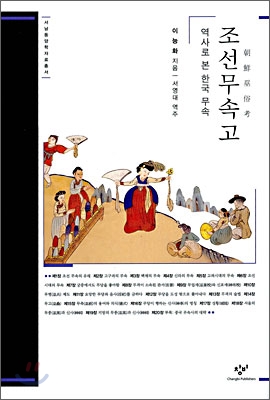
A complete translation and annotated version of Lee Neung-hwa's "Joseon Musokgo (朝鮮巫俗考)", which systematically studied the history of Korean shamanism through extensive literature research and fieldwork from ancient times to the Joseon Dynasty, has been published.
His work, which covers not only the history, systems, and rituals of Korean shamanism but also comparative studies of Chinese and Japanese shamanism, is a pioneering achievement in the study of Korean shamanism, religious history, and socio-cultural history, and is an important resource for understanding the origins of Korean culture.
This complete translation and annotated edition, which was born from the efforts of a translator who meticulously reviewed the original text over many years, is worthy of being considered the only definitive edition of “Joseon Musokgo.”
A full-fledged study of Korean shamanism
Since ancient times, shamans, who presided over ancestral rites and served ghosts in our lives, were objects of both fear and respect.
With the introduction of Confucianism, a movement to understand the history and reality of Korean shamanism, which had been looked down upon and rejected since the mid-Goryeo period, began to emerge in the late Joseon Dynasty, centered around missionaries and national studies researchers.
However, missionaries in the late 19th century who focused on Korean shamanism as a type of shamanism limited their discussions to the purpose of missionary work, and national studies researchers such as Shin Chae-ho, Park Eun-sik, and Choi Nam-seon, in an attempt to establish a spiritual foundation for the anti-Japanese independence movement, referred to shamanism with different expressions such as "Shingyo" and "Seon-yo" and only expressed interest in it as a unique Korean religion.
In contrast, Lee Neung-hwa's "Joseon Shamanism History," published in the magazine "Gyeomyeong" in 1927, not only extracted and organized a massive amount of ancient data on Korean shamanism, numbering as many as 125 types, but also conducted on-site research by visiting shamans, organizing shamanism by region, and conducting comparative studies with shamanism in China and Japan, taking the form of the first full-scale research book on Korean shamanism.
Korean Shamanism: A Look at History, Customs, and Language
"Joseon Shamanism" primarily has the character of a collection of materials on Korean shamanism, as it organizes data from ancient times onwards by period.
However, it goes beyond simple organization of data and goes so far as to critically review the reliability of various shamanism-related data.
Furthermore, rather than being immersed in the dominant Confucian values of the time that rejected shamanism, Lee Neung-hwa showed an academic will to examine the entire shamanism phenomenon historically by researching and verifying Korean shamanism.
Specifically, ‘Local Shamanism and Shinto Shrines’ (Chapter 19) is a separate chapter to organize shamanism by region, and the procedures for the gut performed when contracting smallpox (page 295) and the customs related to Son Gak-ssi (孫閣氏), a female ghost who died without being able to become a monk (page 328) are described in relatively detail, allowing readers to examine the reality of Korean shamanism practiced by our ancestors at the time.
Another unique aspect is the attempt to elucidate the essence and reality of Korean shamanism through a linguistic interpretation based on Chinese characters and the Korean language.
For example, Lee Neung-hwa interprets that the word Dangun (壇君) originated from the practice of setting up an altar and offering sacrifices to heaven (祭壇) (p. 93), and that the term 'good' (good) came to mean 'bad' (p. 282) in the Korean language, where it is used as 'bad day' or 'bad day'.
Complete translation and annotation that has undergone meticulous original text verification
Despite the outstanding achievement of Lee Neung-hwa, who compiled and organized countless materials from Korea, China, and Japan, the original version of “Joseon Musokgo” contained a significant number of typos that differed from the original source, errors such as incorrect book titles in cited materials, and the presentation of unrelated materials.
The previously published complete translations and several partial translations were all based on this incorrect original text, which inevitably led to their limitations.
The translator meticulously compared the original text over several years of lectures, correcting typos and sparing no effort in re-examining unconfirmed sources.
Based on this, this complete translation and annotated edition, published with additional translations and annotations, is without a doubt the only definitive edition of “Joseon Musokgo.”
This book was published as part of the Southwest Asian Studies Materials Series, supported by the Southwest Academic Foundation, with the aim of strengthening the foundation of our East Asian discourse.
His work, which covers not only the history, systems, and rituals of Korean shamanism but also comparative studies of Chinese and Japanese shamanism, is a pioneering achievement in the study of Korean shamanism, religious history, and socio-cultural history, and is an important resource for understanding the origins of Korean culture.
This complete translation and annotated edition, which was born from the efforts of a translator who meticulously reviewed the original text over many years, is worthy of being considered the only definitive edition of “Joseon Musokgo.”
A full-fledged study of Korean shamanism
Since ancient times, shamans, who presided over ancestral rites and served ghosts in our lives, were objects of both fear and respect.
With the introduction of Confucianism, a movement to understand the history and reality of Korean shamanism, which had been looked down upon and rejected since the mid-Goryeo period, began to emerge in the late Joseon Dynasty, centered around missionaries and national studies researchers.
However, missionaries in the late 19th century who focused on Korean shamanism as a type of shamanism limited their discussions to the purpose of missionary work, and national studies researchers such as Shin Chae-ho, Park Eun-sik, and Choi Nam-seon, in an attempt to establish a spiritual foundation for the anti-Japanese independence movement, referred to shamanism with different expressions such as "Shingyo" and "Seon-yo" and only expressed interest in it as a unique Korean religion.
In contrast, Lee Neung-hwa's "Joseon Shamanism History," published in the magazine "Gyeomyeong" in 1927, not only extracted and organized a massive amount of ancient data on Korean shamanism, numbering as many as 125 types, but also conducted on-site research by visiting shamans, organizing shamanism by region, and conducting comparative studies with shamanism in China and Japan, taking the form of the first full-scale research book on Korean shamanism.
Korean Shamanism: A Look at History, Customs, and Language
"Joseon Shamanism" primarily has the character of a collection of materials on Korean shamanism, as it organizes data from ancient times onwards by period.
However, it goes beyond simple organization of data and goes so far as to critically review the reliability of various shamanism-related data.
Furthermore, rather than being immersed in the dominant Confucian values of the time that rejected shamanism, Lee Neung-hwa showed an academic will to examine the entire shamanism phenomenon historically by researching and verifying Korean shamanism.
Specifically, ‘Local Shamanism and Shinto Shrines’ (Chapter 19) is a separate chapter to organize shamanism by region, and the procedures for the gut performed when contracting smallpox (page 295) and the customs related to Son Gak-ssi (孫閣氏), a female ghost who died without being able to become a monk (page 328) are described in relatively detail, allowing readers to examine the reality of Korean shamanism practiced by our ancestors at the time.
Another unique aspect is the attempt to elucidate the essence and reality of Korean shamanism through a linguistic interpretation based on Chinese characters and the Korean language.
For example, Lee Neung-hwa interprets that the word Dangun (壇君) originated from the practice of setting up an altar and offering sacrifices to heaven (祭壇) (p. 93), and that the term 'good' (good) came to mean 'bad' (p. 282) in the Korean language, where it is used as 'bad day' or 'bad day'.
Complete translation and annotation that has undergone meticulous original text verification
Despite the outstanding achievement of Lee Neung-hwa, who compiled and organized countless materials from Korea, China, and Japan, the original version of “Joseon Musokgo” contained a significant number of typos that differed from the original source, errors such as incorrect book titles in cited materials, and the presentation of unrelated materials.
The previously published complete translations and several partial translations were all based on this incorrect original text, which inevitably led to their limitations.
The translator meticulously compared the original text over several years of lectures, correcting typos and sparing no effort in re-examining unconfirmed sources.
Based on this, this complete translation and annotated edition, published with additional translations and annotations, is without a doubt the only definitive edition of “Joseon Musokgo.”
This book was published as part of the Southwest Asian Studies Materials Series, supported by the Southwest Academic Foundation, with the aim of strengthening the foundation of our East Asian discourse.
GOODS SPECIFICS
- Date of issue: October 6, 2008
- Format: Hardcover book binding method guide
- Page count, weight, size: 706 pages | 1,091g | 153*224*40mm
- ISBN13: 9788936413088
- ISBN10: 8936413082
You may also like
카테고리
korean


korean

![GQ KOREA Mark (Monthly): December [2025]](http://librairie.coreenne.fr/cdn/shop/files/8ef265dbbfbf186523ed75ba7319009d.jpg?v=1765340328&width=3840)


