

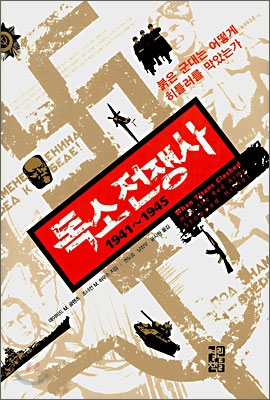
History of the German-Soviet War 1941–1945
 |
Description
Book Introduction
This book is a complete translation of his book, When Titan Clashed: How the Red Army Stopped Hitler, one of many books he wrote about the German-Soviet War. It not only provides an unbiased perspective on the history of war by intelligently explaining the strategies and operations of the Eastern Front, but also guides readers through a new and exciting understanding of the true nature of war.
Unlike existing books on World War II written from a general historical perspective, such as political and diplomatic, this book focuses on the Soviet Union and Germany themselves.
Following the Soviet Union's policy of openness, previously banned or inaccessible materials were introduced to the West, allowing detailed information on the Soviet military's capabilities, tactics, doctrine, and casualties during the war to be revealed, along with a wealth of maps and statistical data.
Moreover, the translators of this book are military science enthusiasts from various professions, and they have systematically organized and translated military science terms and concepts, added commentary on and to help readers understand, and made the value of this book even more understandable through consultation with the editor.
Unlike existing books on World War II written from a general historical perspective, such as political and diplomatic, this book focuses on the Soviet Union and Germany themselves.
Following the Soviet Union's policy of openness, previously banned or inaccessible materials were introduced to the West, allowing detailed information on the Soviet military's capabilities, tactics, doctrine, and casualties during the war to be revealed, along with a wealth of maps and statistical data.
Moreover, the translators of this book are military science enthusiasts from various professions, and they have systematically organized and translated military science terms and concepts, added commentary on and to help readers understand, and made the value of this book even more understandable through consultation with the editor.
index
Recommendation
Acknowledgements
preface
Introduction 1918–1941
1 | The Red Army, 1918–1939
2 | Armed Confrontation of 1939–1941
3 | The confrontation between the two armies in 1941
The first period of the German-Soviet War, 1941.
6.~1942.
11.
4 | German surprise attack
5 | Soviet response
6 | Towards Moscow
7 | The thaw of spring 1942
8 | Operation Blue: The German Advance to Stalingrad
Second period of the German-Soviet War, 1942.
11.~1943.
12.
09 | Operation Uranus: The Destruction of the Sixth Army
10 | The Spring Thaw and Cessation of Operations in 1943
11 | From Kursk to the Dnieper River
Third period of the German-Soviet War, 1944.
1.~1945.
5.
12 | The Third Winter
13 | Operation Bagration: The Destruction of Army Group Center
14 | The Sweep of Yang-Ik
15 | Battles of the Winter of 1945
16 | The Final Battle
17 | Conclusion
statistical data
Literature materials
footnote
commentary
Conversation with the Translator
Search
Acknowledgements
preface
Introduction 1918–1941
1 | The Red Army, 1918–1939
2 | Armed Confrontation of 1939–1941
3 | The confrontation between the two armies in 1941
The first period of the German-Soviet War, 1941.
6.~1942.
11.
4 | German surprise attack
5 | Soviet response
6 | Towards Moscow
7 | The thaw of spring 1942
8 | Operation Blue: The German Advance to Stalingrad
Second period of the German-Soviet War, 1942.
11.~1943.
12.
09 | Operation Uranus: The Destruction of the Sixth Army
10 | The Spring Thaw and Cessation of Operations in 1943
11 | From Kursk to the Dnieper River
Third period of the German-Soviet War, 1944.
1.~1945.
5.
12 | The Third Winter
13 | Operation Bagration: The Destruction of Army Group Center
14 | The Sweep of Yang-Ik
15 | Battles of the Winter of 1945
16 | The Final Battle
17 | Conclusion
statistical data
Literature materials
footnote
commentary
Conversation with the Translator
Search
Publisher's Review
Could Hitler have been stopped in World War II without the Soviet Army?
Through this book, which focuses more on the history of war (the reality of the German-Soviet War) rather than the history in general,
We can re-evaluate the role of the Soviet Army in stopping Hitler during World War II!!
The United States and Britain were unable to properly assess Soviet capabilities due to a lack of intelligence on the Eastern Front, which was a series of large-scale ground battles.
Access to Soviet military data has been limited due to language barriers, limited access to primary sources, and Soviet censorship during the Cold War, hindering accurate assessments of Soviet military operations and achievements during World War II.
Therefore, in books published in the West in the past, the Soviet army was often portrayed as a relatively mysterious force, or as an army that only engaged in ruthless frontal assaults without emotion and using human wave tactics.
Even if this were not the case, the accuracy of information about German movements, battle formations, and order of battle, and the effort expended in studying them, was not comparable to that of the Soviets.
In addition, NATO, led by the United States, lacked information on the post-war Soviet military and relied heavily on the German military's war experience. They also recruited German generals from World War II as advisors to the West German Bundeswehr and NATO, so the Soviet military was bound to appear uneven.
Of course, it is also true that this Western perspective existed because the Soviet Union manipulated its own past or concealed the truth.
David M.
Glantz is attempting to write beyond the limitations, problems, and biased Western perspectives that have always existed in the past, and this book is significant as the first step in that vast undertaking.
The fiercest battle in human history and the battle with the greatest casualties
More than 2,800,000 German casualties occurred in battles against the Soviet Union, while more than 7,500,000 Soviet casualties were confirmed on the battlefield.
The reason for such enormous casualties was that it was a war that involved massive forces mobilized on a vast front, highly mechanized warfare and deep combat, and the use of large-scale air forces, artillery, and tanks.
Non-combat losses caused by Russia's topography and climate cannot be ignored here.
From the beginning of the war, both armies repeatedly engaged in deep breakthroughs followed by encirclement battles, and there are countless instances where both armies suffered more than 100,000 casualties at the end of a single campaign.
Ultimately, this not only meant that Hitler's forces were concentrated on the Eastern Front, but also allowed for a reassessment of the impact that the Soviet victory in this war had on the disintegration of Hitler's forces.
Masters of mobile warfare and deep warfare
When the first tank appeared at the end of World War I, the world was shocked.
However, the innovative concept of a tank-led warfare vehicle was not immediately developed.
However, there were people who took note of the role of these tanks and thought that the concept of the upcoming tank war would require speed and penetration into depth.
In Britain it was Fuller, in Germany it was Guderian, and in the Soviet Union it was Tukhachevsky and Tryandafilov who played a particularly leading role.
Their concepts were far ahead of their Western contemporaries.
Ironically, Germany, a defeated nation in World War I, and the Soviet Union, which was under Western surveillance due to its communist revolution, engaged in secret military exchanges with each other, making up for each other's shortcomings.
In this process, the Soviet Union developed the concept of tanks and deep penetration far ahead of Germany.
However, just before the concept was grafted onto the front lines and embodied, Stalin's relentless purge of all the masters of the theory of deep combat, including Marshal Tukhachevsky, officially destroyed all their books, achievements, and research materials in a predetermined order.
Thus, the Soviet army was drawn into the battle with the German army in 1941 in disarray.
However, the Soviets began to revive the concept of deep operations before the German-Soviet War, laying the foundation for future victories against the Germans.
With Tula almost surrounded and Guderian's 2nd Panzer Army still slowly advancing north, Zhukov ordered the 2nd Cavalry Corps, under the command of General P.
A. BelovP.
A. Belov was ordered to stabilize the situation at any cost.
Stalin and Zhukov sent Belov, from their limited reserves, a tank division (the 112th Tank Division), two independent tank battalions (the 37th and 127th), several anti-aircraft artillery units sent from Moscow, a combat engineer regiment, a unit of the new Katyusha rocket launchers, and instructors and cadets from various military schools.
On November 26, Belov's mixed unit was redesignated the 1st Guards Cavalry Corps and was ordered to attack the German 17th Panzer Division deployed at Kashira.
Given the lack of equipment, the 1st Guards Cavalry Corps was part of a Soviet effort to revive the pre-war doctrine of the "cavalry-mechanized group" for deep-sea operations.
The German forces were spread out over such a wide front that Belov was able to penetrate his cavalry units into the German rear virtually undetected.
On November 27, Belov launched a counteroffensive, forcing back the 17th Panzer Division and relieving the pressure on Tula.
Thus began the 1st Guards Cavalry Corps' five-month campaign behind German lines.
(pp.
123-124)
After the Great Purge, Soviet commanders not only displayed rigid tactics in battle, but also made a series of costly mistakes due to a lack of commanders to develop military doctrine and concepts. However, as the war continued, the Soviet officer corps acquired practical combat skills, and Stalin came to trust these commanders.
The Soviet Army struggled to develop capable commanders, organizations, weapons, and tactics in the process of returning to pre-war concepts.
During the second phase of the war, from late 1942 to 1943, the Army not only thwarted the legendary blitzkrieg, but also transformed itself into a force capable of launching offensives in all climates and terrains.
German documents describing the Soviet advance with overwhelming numerical superiority demonstrate how effectively the Soviets were able to deceive the enemy and concentrate all available forces on the unforeseen front.
As a result, the Soviet forces were able to crush the Germans based on the overwhelming numerical superiority they had demonstrated over the last two years.
(p.
362)
In June 1941, when the seemingly immovable Soviet army was attacked by the widely known German forces, a fundamental law of physics was fundamentally challenged.
The stationary object was bent and bled, but not broken.
The Soviet Union survived and won a four-year war that consumed enormous resources and energy.
In this war, the effects of which Stalin later likened to a "nuclear war," the seemingly invincible German army was utterly destroyed.
(p.
363)
Through this book, which focuses more on the history of war (the reality of the German-Soviet War) rather than the history in general,
We can re-evaluate the role of the Soviet Army in stopping Hitler during World War II!!
The United States and Britain were unable to properly assess Soviet capabilities due to a lack of intelligence on the Eastern Front, which was a series of large-scale ground battles.
Access to Soviet military data has been limited due to language barriers, limited access to primary sources, and Soviet censorship during the Cold War, hindering accurate assessments of Soviet military operations and achievements during World War II.
Therefore, in books published in the West in the past, the Soviet army was often portrayed as a relatively mysterious force, or as an army that only engaged in ruthless frontal assaults without emotion and using human wave tactics.
Even if this were not the case, the accuracy of information about German movements, battle formations, and order of battle, and the effort expended in studying them, was not comparable to that of the Soviets.
In addition, NATO, led by the United States, lacked information on the post-war Soviet military and relied heavily on the German military's war experience. They also recruited German generals from World War II as advisors to the West German Bundeswehr and NATO, so the Soviet military was bound to appear uneven.
Of course, it is also true that this Western perspective existed because the Soviet Union manipulated its own past or concealed the truth.
David M.
Glantz is attempting to write beyond the limitations, problems, and biased Western perspectives that have always existed in the past, and this book is significant as the first step in that vast undertaking.
The fiercest battle in human history and the battle with the greatest casualties
More than 2,800,000 German casualties occurred in battles against the Soviet Union, while more than 7,500,000 Soviet casualties were confirmed on the battlefield.
The reason for such enormous casualties was that it was a war that involved massive forces mobilized on a vast front, highly mechanized warfare and deep combat, and the use of large-scale air forces, artillery, and tanks.
Non-combat losses caused by Russia's topography and climate cannot be ignored here.
From the beginning of the war, both armies repeatedly engaged in deep breakthroughs followed by encirclement battles, and there are countless instances where both armies suffered more than 100,000 casualties at the end of a single campaign.
Ultimately, this not only meant that Hitler's forces were concentrated on the Eastern Front, but also allowed for a reassessment of the impact that the Soviet victory in this war had on the disintegration of Hitler's forces.
Masters of mobile warfare and deep warfare
When the first tank appeared at the end of World War I, the world was shocked.
However, the innovative concept of a tank-led warfare vehicle was not immediately developed.
However, there were people who took note of the role of these tanks and thought that the concept of the upcoming tank war would require speed and penetration into depth.
In Britain it was Fuller, in Germany it was Guderian, and in the Soviet Union it was Tukhachevsky and Tryandafilov who played a particularly leading role.
Their concepts were far ahead of their Western contemporaries.
Ironically, Germany, a defeated nation in World War I, and the Soviet Union, which was under Western surveillance due to its communist revolution, engaged in secret military exchanges with each other, making up for each other's shortcomings.
In this process, the Soviet Union developed the concept of tanks and deep penetration far ahead of Germany.
However, just before the concept was grafted onto the front lines and embodied, Stalin's relentless purge of all the masters of the theory of deep combat, including Marshal Tukhachevsky, officially destroyed all their books, achievements, and research materials in a predetermined order.
Thus, the Soviet army was drawn into the battle with the German army in 1941 in disarray.
However, the Soviets began to revive the concept of deep operations before the German-Soviet War, laying the foundation for future victories against the Germans.
With Tula almost surrounded and Guderian's 2nd Panzer Army still slowly advancing north, Zhukov ordered the 2nd Cavalry Corps, under the command of General P.
A. BelovP.
A. Belov was ordered to stabilize the situation at any cost.
Stalin and Zhukov sent Belov, from their limited reserves, a tank division (the 112th Tank Division), two independent tank battalions (the 37th and 127th), several anti-aircraft artillery units sent from Moscow, a combat engineer regiment, a unit of the new Katyusha rocket launchers, and instructors and cadets from various military schools.
On November 26, Belov's mixed unit was redesignated the 1st Guards Cavalry Corps and was ordered to attack the German 17th Panzer Division deployed at Kashira.
Given the lack of equipment, the 1st Guards Cavalry Corps was part of a Soviet effort to revive the pre-war doctrine of the "cavalry-mechanized group" for deep-sea operations.
The German forces were spread out over such a wide front that Belov was able to penetrate his cavalry units into the German rear virtually undetected.
On November 27, Belov launched a counteroffensive, forcing back the 17th Panzer Division and relieving the pressure on Tula.
Thus began the 1st Guards Cavalry Corps' five-month campaign behind German lines.
(pp.
123-124)
After the Great Purge, Soviet commanders not only displayed rigid tactics in battle, but also made a series of costly mistakes due to a lack of commanders to develop military doctrine and concepts. However, as the war continued, the Soviet officer corps acquired practical combat skills, and Stalin came to trust these commanders.
The Soviet Army struggled to develop capable commanders, organizations, weapons, and tactics in the process of returning to pre-war concepts.
During the second phase of the war, from late 1942 to 1943, the Army not only thwarted the legendary blitzkrieg, but also transformed itself into a force capable of launching offensives in all climates and terrains.
German documents describing the Soviet advance with overwhelming numerical superiority demonstrate how effectively the Soviets were able to deceive the enemy and concentrate all available forces on the unforeseen front.
As a result, the Soviet forces were able to crush the Germans based on the overwhelming numerical superiority they had demonstrated over the last two years.
(p.
362)
In June 1941, when the seemingly immovable Soviet army was attacked by the widely known German forces, a fundamental law of physics was fundamentally challenged.
The stationary object was bent and bled, but not broken.
The Soviet Union survived and won a four-year war that consumed enormous resources and energy.
In this war, the effects of which Stalin later likened to a "nuclear war," the seemingly invincible German army was utterly destroyed.
(p.
363)
GOODS SPECIFICS
- Date of issue: March 20, 2007
- Format: Hardcover book binding method guide
- Page count, weight, size: 512 pages | 848g | Checking size
- ISBN13: 9788932907437
- ISBN10: 8932907439
You may also like
카테고리
korean


korean

![GQ KOREA Mark (Monthly): December [2025]](http://librairie.coreenne.fr/cdn/shop/files/8ef265dbbfbf186523ed75ba7319009d.jpg?v=1765340328&width=3840)


