

Roman Tales 10
 |
Description
Book Introduction
The Romans defined infrastructure as “a major undertaking necessary for a decent life.”
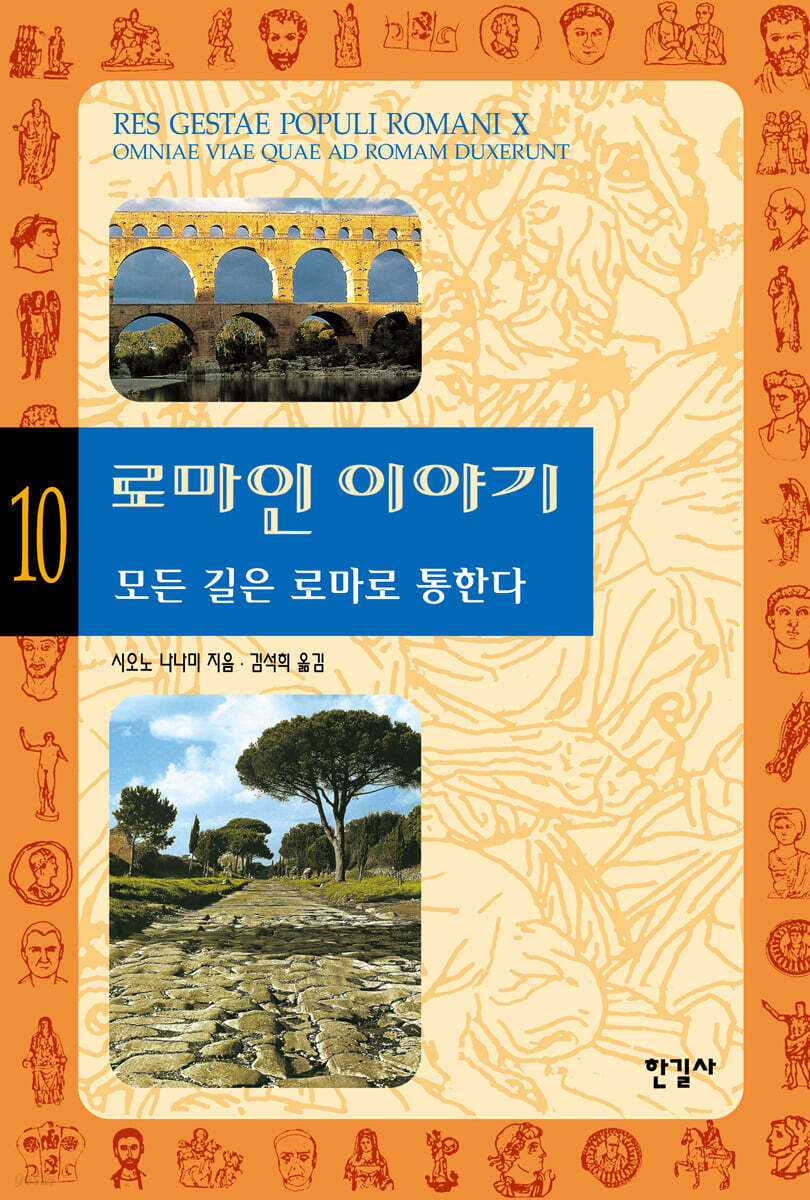
This book comprehensively covers the infrastructure of Rome, which shared the awareness of the importance of infrastructure to the point that modern people called it the 'Father of Infrastructure', by dividing it into hardware infrastructure and software infrastructure. It is not an easy read, as it comprehensively covers such a wide range of concepts that the author himself advises that you 'be prepared'.
This book comprehensively covers the infrastructure of Rome, which shared the awareness of the importance of infrastructure to the point that modern people called it the 'Father of Infrastructure', by dividing it into hardware infrastructure and software infrastructure. It is not an easy read, as it comprehensively covers such a wide range of concepts that the author himself advises that you 'be prepared'.
- You can preview some of the book's contents.
Preview
index
1.
hard infrastructure
street
leg
People who used the road
capital
2.
soft infrastructure
medical treatment
education
hard infrastructure
street
leg
People who used the road
capital
2.
soft infrastructure
medical treatment
education
Into the book
I believe that Pax Romana was the most important infrastructure the Romans ever created.
Pax Romana was by no means just about protecting the Roman Empire from raids by enemy nations or barbarians.
The 'Peace of Rome' can be divided into three types.
First, to protect the Roman Empire and its people from enemies outside its borders.
The bases of the Roman legions, responsible for Rome's security, were located on the border or within easy reach of the border.
It could be said that the soldiers working on the frontier were the main force of the Roman army.
Second, to settle the internal strife within the empire.
The Romans themselves believed that 'Pax Romana' could be established only when domestic conflicts could be resolved.
Rome was already a multi-ethnic, multi-religious, and multi-cultural nation long before it became an empire.
The Roman rulers ruled over a complex of diverse peoples and cultures by promoting "civilization" such as security, a road network, a postal system, the maintenance of aqueducts and public baths, an emphasis on hygiene, and Roman law, while also tolerating the unique "culture" of each people.
The third element of Pax Romana was security.
This best represents the realistic nature of the Romans.
If border defense is the mission of the army and domestic stability is the mission of the government, then public security is the mission of the police.
The first emperor, Augustus, created a police system to ensure public safety, but it was the second emperor, Tiberius, who expanded it to an imperial scale and further strengthened it.
This man seems to be convinced that where there is no order, there is no freedom.
It is clear that they knew that public security was an infrastructure no less important than keeping out foreign enemies.
Pax Romana was by no means just about protecting the Roman Empire from raids by enemy nations or barbarians.
The 'Peace of Rome' can be divided into three types.
First, to protect the Roman Empire and its people from enemies outside its borders.
The bases of the Roman legions, responsible for Rome's security, were located on the border or within easy reach of the border.
It could be said that the soldiers working on the frontier were the main force of the Roman army.
Second, to settle the internal strife within the empire.
The Romans themselves believed that 'Pax Romana' could be established only when domestic conflicts could be resolved.
Rome was already a multi-ethnic, multi-religious, and multi-cultural nation long before it became an empire.
The Roman rulers ruled over a complex of diverse peoples and cultures by promoting "civilization" such as security, a road network, a postal system, the maintenance of aqueducts and public baths, an emphasis on hygiene, and Roman law, while also tolerating the unique "culture" of each people.
The third element of Pax Romana was security.
This best represents the realistic nature of the Romans.
If border defense is the mission of the army and domestic stability is the mission of the government, then public security is the mission of the police.
The first emperor, Augustus, created a police system to ensure public safety, but it was the second emperor, Tiberius, who expanded it to an imperial scale and further strengthened it.
This man seems to be convinced that where there is no order, there is no freedom.
It is clear that they knew that public security was an infrastructure no less important than keeping out foreign enemies.
--- pp.114-115
Now, the world has become one where even Greeks like me, or any other nationality, can freely go wherever they want.
You can travel freely and safely to wherever you want without having to apply for an identity document.
It was enough to be a Roman citizen.
No, you don't necessarily have to be a Roman citizen.
Just living together under Roman hegemony guaranteed freedom and safety.
Long ago Homer sang:
The earth belongs to everyone.
Rome embodied this poet's dream.
You Romans measured and recorded all the lands that came under your control.
And after that, bridges were built on rivers, and roads were constructed not only on plains but also in mountainous areas, so that people could easily travel to any part of the empire.
In addition, a defense system was established to ensure stability throughout the empire, and laws were established to allow people of different races and nationalities to live together.
Through all these things, you Romans taught even non-Roman citizens how important it was to live in an orderly and stable society. (p.
215f.)
- AD 143.
Greek philosopher Aristides Now, the world has become one where even Greeks like me, or any other people, can go wherever they want.
You can travel freely and safely to wherever you want without having to apply for an identity document.
It was enough to be a Roman citizen.
No, you don't necessarily have to be a Roman citizen.
Just living together under Roman hegemony guaranteed freedom and safety.
Long ago Homer sang:
The earth belongs to everyone.
Rome embodied this poet's dream.
You Romans measured and recorded all the lands that came under your control.
And after that, bridges were built on rivers, and roads were constructed not only on plains but also in mountainous areas, so that people could easily travel to any part of the empire.
In addition, a defense system was established to ensure stability throughout the empire, and laws were established to allow people of different races and nationalities to live together.
Through all these things, you Romans taught even non-Roman citizens how important it was to live in an orderly and stable society. (p.
215f.)
- AD 143.
Greek philosopher Aristides
You can travel freely and safely to wherever you want without having to apply for an identity document.
It was enough to be a Roman citizen.
No, you don't necessarily have to be a Roman citizen.
Just living together under Roman hegemony guaranteed freedom and safety.
Long ago Homer sang:
The earth belongs to everyone.
Rome embodied this poet's dream.
You Romans measured and recorded all the lands that came under your control.
And after that, bridges were built on rivers, and roads were constructed not only on plains but also in mountainous areas, so that people could easily travel to any part of the empire.
In addition, a defense system was established to ensure stability throughout the empire, and laws were established to allow people of different races and nationalities to live together.
Through all these things, you Romans taught even non-Roman citizens how important it was to live in an orderly and stable society. (p.
215f.)
- AD 143.
Greek philosopher Aristides Now, the world has become one where even Greeks like me, or any other people, can go wherever they want.
You can travel freely and safely to wherever you want without having to apply for an identity document.
It was enough to be a Roman citizen.
No, you don't necessarily have to be a Roman citizen.
Just living together under Roman hegemony guaranteed freedom and safety.
Long ago Homer sang:
The earth belongs to everyone.
Rome embodied this poet's dream.
You Romans measured and recorded all the lands that came under your control.
And after that, bridges were built on rivers, and roads were constructed not only on plains but also in mountainous areas, so that people could easily travel to any part of the empire.
In addition, a defense system was established to ensure stability throughout the empire, and laws were established to allow people of different races and nationalities to live together.
Through all these things, you Romans taught even non-Roman citizens how important it was to live in an orderly and stable society. (p.
215f.)
- AD 143.
Greek philosopher Aristides
--- p.215
Those who believe that society should be unified under a single ideology tend to think about and implement the problem of reorganizing education and welfare according to their ideas as soon as they gain power.
That is exactly what the Christian Church did after it became the state religion of the Roman Empire.
Half a century later, the Roman Empire fell.
What remained was the Byzantine Empire, which could more properly be called a Christian empire.
The 'Academy' in Athens and the 'Museum' in Alexandria, both located in the eastern part of the Roman Empire, were soon closed.
Doubting is the basis of research, because the world has become filled with the message, "Blessed are those who believe."
Those who believe that society should be unified under a single ideology tend to think about and implement the problem of reorganizing education and welfare according to their ideas as soon as they gain power.
That is exactly what the Christian Church did after it became the state religion of the Roman Empire.
Half a century later, the Roman Empire fell.
What remained was the Byzantine Empire, which could more properly be called a Christian empire.
The 'Academy' in Athens and the 'Museum' in Alexandria, both located in the eastern part of the Roman Empire, were soon closed.
Doubting is the basis of research, because the world has become filled with the message, "Blessed are those who believe."
That is exactly what the Christian Church did after it became the state religion of the Roman Empire.
Half a century later, the Roman Empire fell.
What remained was the Byzantine Empire, which could more properly be called a Christian empire.
The 'Academy' in Athens and the 'Museum' in Alexandria, both located in the eastern part of the Roman Empire, were soon closed.
Doubting is the basis of research, because the world has become filled with the message, "Blessed are those who believe."
Those who believe that society should be unified under a single ideology tend to think about and implement the problem of reorganizing education and welfare according to their ideas as soon as they gain power.
That is exactly what the Christian Church did after it became the state religion of the Roman Empire.
Half a century later, the Roman Empire fell.
What remained was the Byzantine Empire, which could more properly be called a Christian empire.
The 'Academy' in Athens and the 'Museum' in Alexandria, both located in the eastern part of the Roman Empire, were soon closed.
Doubting is the basis of research, because the world has become filled with the message, "Blessed are those who believe."
--- p.332
Since the Roman road was primarily for military purposes, legionaries were mobilized for its construction, and thus no records of its construction costs remain. On the other hand, since the construction of the aqueduct was contracted out to construction companies through bidding, there are some records of its construction costs.
According to the records left by Pliny the Elder, who wrote the Historic Records, the total construction cost of the Claudian and New Anian capitals was 350 million sesterces.
The capital of Claudius was 69 km away, and the new capital was 87 km away.
Since the Roman road was primarily for military purposes, legionaries were mobilized for its construction, and thus no records of its construction costs remain. On the other hand, since the construction of the aqueduct was contracted out to construction companies through bidding, there are some records of its construction costs.
According to the records left by Pliny the Elder, who wrote the Historic Records, the total construction cost of the Claudian and New Anian capitals was 350 million sesterces.
The capital of Claudius was 69 km away, and the new capital was 87 km away.
According to the records left by Pliny the Elder, who wrote the Historic Records, the total construction cost of the Claudian and New Anian capitals was 350 million sesterces.
The capital of Claudius was 69 km away, and the new capital was 87 km away.
Since the Roman road was primarily for military purposes, legionaries were mobilized for its construction, and thus no records of its construction costs remain. On the other hand, since the construction of the aqueduct was contracted out to construction companies through bidding, there are some records of its construction costs.
According to the records left by Pliny the Elder, who wrote the Historic Records, the total construction cost of the Claudian and New Anian capitals was 350 million sesterces.
The capital of Claudius was 69 km away, and the new capital was 87 km away.
--- p.257
Frontinus, who wrote a book summarizing the capital city, which represents the infrastructure of Rome along with the Roman roads, left behind words that only an engineer could say, as he was himself a civil engineer.
'Greek art is famous for its beauty, but it must be said that it is utterly useless for everyday life.' Frontinus, who wrote a book on the capital city, which represents the infrastructure of Rome along with the Roman roads, said this, as he was a civil engineer himself, and left behind words that only an engineer could say.
'Greek art is famous for its beauty, but it must be said that it is completely useless for everyday life.'
'Greek art is famous for its beauty, but it must be said that it is utterly useless for everyday life.' Frontinus, who wrote a book on the capital city, which represents the infrastructure of Rome along with the Roman roads, said this, as he was a civil engineer himself, and left behind words that only an engineer could say.
'Greek art is famous for its beauty, but it must be said that it is completely useless for everyday life.'
--- pp.62-63
Even today, developed countries have well-developed roads and railways, so we can live without forgetting the importance of infrastructure.
But since other countries cannot expect that, they are more acutely aware of the importance of infrastructure.
The reality is that there are still many people in the world who do not have access to sufficient water.
Is it because I don't have much financial freedom?
Or is it because we lack the mindset to consider infrastructure maintenance as an essential task?
Or is it simply a lack of strong political will to implement it?
Or is it because the continuation of ‘peace’ is not guaranteed?
Even today, developed countries have well-developed roads and railways, so we can live without forgetting the importance of infrastructure.
But since other countries cannot expect that, they are more acutely aware of the importance of infrastructure.
The reality is that there are still many people in the world who do not have access to sufficient water.
Is it because I don't have much financial freedom?
Or is it because we lack the mindset to consider infrastructure maintenance as an essential task?
Or is it simply a lack of strong political will to implement it?
Or is it because the continuation of ‘peace’ is not guaranteed?
But since other countries cannot expect that, they are more acutely aware of the importance of infrastructure.
The reality is that there are still many people in the world who do not have access to sufficient water.
Is it because I don't have much financial freedom?
Or is it because we lack the mindset to consider infrastructure maintenance as an essential task?
Or is it simply a lack of strong political will to implement it?
Or is it because the continuation of ‘peace’ is not guaranteed?
Even today, developed countries have well-developed roads and railways, so we can live without forgetting the importance of infrastructure.
But since other countries cannot expect that, they are more acutely aware of the importance of infrastructure.
The reality is that there are still many people in the world who do not have access to sufficient water.
Is it because I don't have much financial freedom?
Or is it because we lack the mindset to consider infrastructure maintenance as an essential task?
Or is it simply a lack of strong political will to implement it?
Or is it because the continuation of ‘peace’ is not guaranteed?
--- p.336
The head of the household was responsible for medical care.
The Roman patriarch had very strong authority, but his responsibilities were also varied and heavy.
The head of the household was responsible for the health of not only his family but also the slaves who worked in the household and on the farm.
In Rome, the reason books on the types of herbs and their effects were distributed before medical books was because there was a readership of the patriarchs of each household.
And the father who treats the patient uses a clever slave in the house as an assistant.
Slaves learn by helping with healing.
Thus, the family doctor, also known as the 'slave doctor', was born.
The reason why the era in which medicine was the role of the 'patriarch' (Pater Familias) lasted for so long was because there was no problem with the head of the household acting as a doctor.
Hippocrates, revered as the 'father of medicine', is essentially a collection of preventive medicine and aims to strengthen the body's resistance.
This required ensuring healthy food, adequate work, sufficient sleep, and hygiene, all of which were matters the father always paid close attention to and supervised.
The fact that it was considered the patriarch's duty to always pay attention to the health of slaves working in the home or on the farm was not out of respect for human rights, but merely a consideration to prevent loss of labor.
Still, in ancient Rome, slaves were also subject to medical treatment.
The head of the household was responsible for medical care.
The Roman patriarch had very strong authority, but his responsibilities were also varied and heavy.
The head of the household was responsible for the health of not only his family but also the slaves who worked in the household and on the farm.
In Rome, the reason books on the types of herbs and their effects were distributed before medical books was because there was a readership of the patriarchs of each household.
And the father who treats the patient uses a clever slave in the house as an assistant.
Slaves learn by helping with healing.
Thus, the family doctor, also known as the 'slave doctor', was born.
The reason why the era in which medicine was the role of the 'patriarch' (Pater Familias) lasted for so long was because there was no problem with the head of the household acting as a doctor.
Hippocrates, revered as the 'father of medicine', is essentially a collection of preventive medicine and aims to strengthen the body's resistance.
This required ensuring healthy food, adequate work, sufficient sleep, and hygiene, all of which were matters the father always paid close attention to and supervised.
The fact that it was considered the patriarch's duty to always pay attention to the health of slaves working in the home or on the farm was not out of respect for human rights, but merely a consideration to prevent loss of labor.
Still, in ancient Rome, slaves were also subject to medical treatment.
The Roman patriarch had very strong authority, but his responsibilities were also varied and heavy.
The head of the household was responsible for the health of not only his family but also the slaves who worked in the household and on the farm.
In Rome, the reason books on the types of herbs and their effects were distributed before medical books was because there was a readership of the patriarchs of each household.
And the father who treats the patient uses a clever slave in the house as an assistant.
Slaves learn by helping with healing.
Thus, the family doctor, also known as the 'slave doctor', was born.
The reason why the era in which medicine was the role of the 'patriarch' (Pater Familias) lasted for so long was because there was no problem with the head of the household acting as a doctor.
Hippocrates, revered as the 'father of medicine', is essentially a collection of preventive medicine and aims to strengthen the body's resistance.
This required ensuring healthy food, adequate work, sufficient sleep, and hygiene, all of which were matters the father always paid close attention to and supervised.
The fact that it was considered the patriarch's duty to always pay attention to the health of slaves working in the home or on the farm was not out of respect for human rights, but merely a consideration to prevent loss of labor.
Still, in ancient Rome, slaves were also subject to medical treatment.
The head of the household was responsible for medical care.
The Roman patriarch had very strong authority, but his responsibilities were also varied and heavy.
The head of the household was responsible for the health of not only his family but also the slaves who worked in the household and on the farm.
In Rome, the reason books on the types of herbs and their effects were distributed before medical books was because there was a readership of the patriarchs of each household.
And the father who treats the patient uses a clever slave in the house as an assistant.
Slaves learn by helping with healing.
Thus, the family doctor, also known as the 'slave doctor', was born.
The reason why the era in which medicine was the role of the 'patriarch' (Pater Familias) lasted for so long was because there was no problem with the head of the household acting as a doctor.
Hippocrates, revered as the 'father of medicine', is essentially a collection of preventive medicine and aims to strengthen the body's resistance.
This required ensuring healthy food, adequate work, sufficient sleep, and hygiene, all of which were matters the father always paid close attention to and supervised.
The fact that it was considered the patriarch's duty to always pay attention to the health of slaves working in the home or on the farm was not out of respect for human rights, but merely a consideration to prevent loss of labor.
Still, in ancient Rome, slaves were also subject to medical treatment.
--- p.286
Publisher's Review
There is no doubt that Shiono Nanami is a sincere and diligent writer.
He has kept his promise to write a comprehensive history of the Roman Empire, one volume per year, totaling 15 volumes, by the year 2006.
Moreover, when we consider that this was not a promise made in a half-hearted manner, but rather a promise made through meticulous preparation and tenacious persistence, we realize anew that we cannot simply dismiss this slender Japanese woman as a writer.
Countless readers awaited the publication of "The Roman Story," and Shiono did not disappoint.
He has prepared a story that is perfect for today, when we are closing the millennium and opening the new one.
"A serious crisis befell the Roman Empire, which lasted five hundred years! How did the Romans overcome it?" This is the theme Shiono explores in Volume 8, "Crisis and Overcoming."
What Shiono possesses as a writer is, above all, his exquisite ability to capture the timeliness of his writing.
Shiono never neglects to read the present and look to the future using the meticulously revealed history of the Romans as a mirror.
He has kept his promise to write a comprehensive history of the Roman Empire, one volume per year, totaling 15 volumes, by the year 2006.
Moreover, when we consider that this was not a promise made in a half-hearted manner, but rather a promise made through meticulous preparation and tenacious persistence, we realize anew that we cannot simply dismiss this slender Japanese woman as a writer.
Countless readers awaited the publication of "The Roman Story," and Shiono did not disappoint.
He has prepared a story that is perfect for today, when we are closing the millennium and opening the new one.
"A serious crisis befell the Roman Empire, which lasted five hundred years! How did the Romans overcome it?" This is the theme Shiono explores in Volume 8, "Crisis and Overcoming."
What Shiono possesses as a writer is, above all, his exquisite ability to capture the timeliness of his writing.
Shiono never neglects to read the present and look to the future using the meticulously revealed history of the Romans as a mirror.
GOODS SPECIFICS
- Date of issue: March 15, 2002
- Page count, weight, size: 344 pages | 565g | 148*210*30mm
- ISBN13: 9788935653249
- ISBN10: 8935653241
You may also like
카테고리
korean


korean

![GQ KOREA Mark (Monthly): December [2025]](http://librairie.coreenne.fr/cdn/shop/files/8ef265dbbfbf186523ed75ba7319009d.jpg?v=1765340328&width=3840)


