

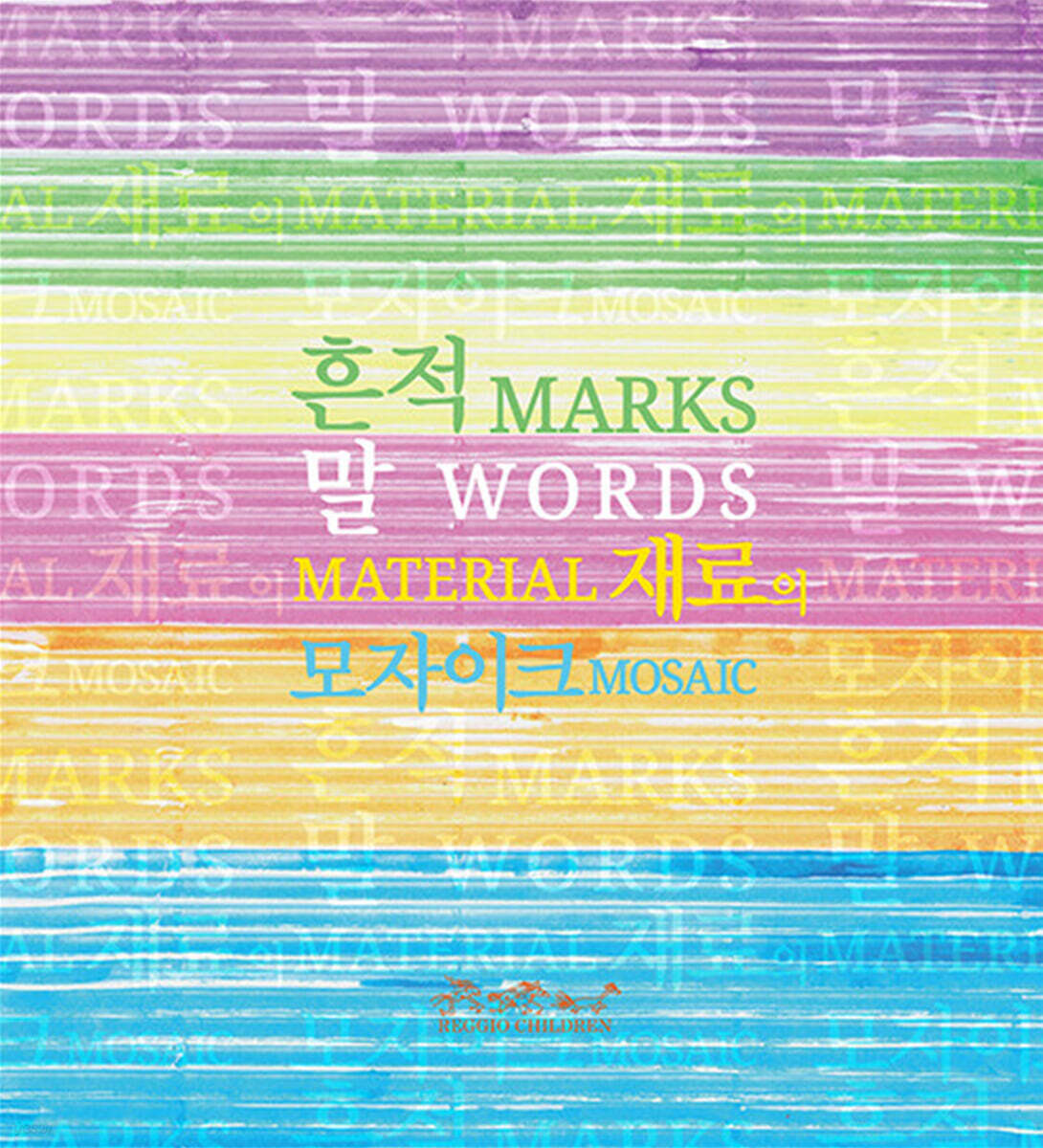
A mosaic of traces, words, and materials
 |
Description
Book Introduction
This catalogue presents the exhibition Mosaic of Traces, Words and Materials, a collection of work by children from the municipal infant and toddler centre and kindergarten in Reggio Emilia.
Drawing and storytelling means imagining, analyzing, and exploring space, form, color, words, metaphors, emotions, rhythm, and pauses, entering the dimension of stories inside and outside the self, and playing around with reality, fiction, and interpretation.
Drawing and speaking are distinct languages, but for children, words and stories, whether silent or spoken, almost always go together or are intertwined with pictures to create an intellectual and often poetic mosaic.
Through this exploration, we sought to better understand this entanglement, to the extent possible, in order to reclaim the cognitive and expressive richness of drawing, materials, words, and all that children produce.
Drawing and storytelling means imagining, analyzing, and exploring space, form, color, words, metaphors, emotions, rhythm, and pauses, entering the dimension of stories inside and outside the self, and playing around with reality, fiction, and interpretation.
Drawing and speaking are distinct languages, but for children, words and stories, whether silent or spoken, almost always go together or are intertwined with pictures to create an intellectual and often poetic mosaic.
Through this exploration, we sought to better understand this entanglement, to the extent possible, in order to reclaim the cognitive and expressive richness of drawing, materials, words, and all that children produce.
index
Weaving the Future Between Reality and Possibility - Paola Cagliari, Claudia Giudici
introduction
quest
Drawing tools and background suggestions
Palettes
Base sample
quest
Sensitive proposals
Variation 1 - Cardboard
Variation 2 - Bubble wrap packaging
Story suggestion
A house that makes a squeaking sound
Fireflies and Dragons
The Golden Room Story
Tales of the Labyrinth City
Various identities
The Tale of the Giraffes
camouflage
Between the visible and the invisible
A trace that stays for a while and then disappears
Re-promotion
A nice darkroom
Black and White Friendship
wind effect
Creative events
Burned trees
Traces of wandering
deformed marks
Trace
Traces of Wandering 2
girl taking off blue dress
The furry monster of the night who tried to eat Heidi
The story of the witch who lost her legs
Big flies and little flies
Research and Work Notes
Drawing materials
Exhibition opening ceremony
atelier
Interweaving of Pictures and Stories - Mirella Ruozzi
Interpretation and Analysis
Interpretive hypotheses
Choreography - Bea Beki
Drawing at the Early Childhood Center - Mirella Luozzi
Commentary on Oral Language - Diana Marzini and Paola Strozzi
The Complex Challenges of Professional Development - Daniela Lanzi and Analiza Labotti
Traces of a Story: Reggionarra - Antonia Monticelli
introduction
quest
Drawing tools and background suggestions
Palettes
Base sample
quest
Sensitive proposals
Variation 1 - Cardboard
Variation 2 - Bubble wrap packaging
Story suggestion
A house that makes a squeaking sound
Fireflies and Dragons
The Golden Room Story
Tales of the Labyrinth City
Various identities
The Tale of the Giraffes
camouflage
Between the visible and the invisible
A trace that stays for a while and then disappears
Re-promotion
A nice darkroom
Black and White Friendship
wind effect
Creative events
Burned trees
Traces of wandering
deformed marks
Trace
Traces of Wandering 2
girl taking off blue dress
The furry monster of the night who tried to eat Heidi
The story of the witch who lost her legs
Big flies and little flies
Research and Work Notes
Drawing materials
Exhibition opening ceremony
atelier
Interweaving of Pictures and Stories - Mirella Ruozzi
Interpretation and Analysis
Interpretive hypotheses
Choreography - Bea Beki
Drawing at the Early Childhood Center - Mirella Luozzi
Commentary on Oral Language - Diana Marzini and Paola Strozzi
The Complex Challenges of Professional Development - Daniela Lanzi and Analiza Labotti
Traces of a Story: Reggionarra - Antonia Monticelli
Into the book
A Mosaic of Traces, Words and Materials is an apt title for an exhibition that offers visitors the opportunity to experience this era.
This mosaic of traces, words, and materials confirms and documents an approach to knowledge that sees language, words, images, stories, and pictures as interwoven to continually construct broader and deeper meanings.
--- p.10
Children were asked to pair drawing tools with papers of different textures and try drawing.
We allowed children to explore each palette at least twice.
Teachers and atelieristas listened to the children, taking note of their perceptions, impressions, approaches, words, stories, and relationships with those around them.
--- p.17
Just as traces and colors transform on the surface of paper into something entirely different, the paint accidentally spilled on the hands becomes a stain, adding a dramatic element to the children's voices and expressions, transforming them into a threatening presence: "I am a monster." This develops into a powerful symbolic game of "what if...", opening up a new world of imagination and language as intersubjectivity is formed, and expanding into a universe full of meanings.
--- p.30
Children are sensitive to the differences in the marks created by drawing tools, and as they explore the tools, they interpret these differences in terms of expression.
If children have the opportunity to spend time in a context that supports their innate sensitivity to traces, their sensitivity to traces will evolve further over time.
Among the flowers Luca draws, there are real flowers “drawn with a marker pen that writes well” and fake flowers “drawn with a pastel pencil that draws lightly.”
--- p.44
The sparkling colors of gold and silver, the aluminum foil that shines in the light, and the children's words that warmly combine with the materials embody the wind: "I'm making a room made entirely of gold.
“Me and my sister’s room”.
The result is so special that this room becomes a hiding place known only to children.
But perhaps this room would also welcome those drawn by the glitter of aluminum foil.
--- p.68
There are traces of tree branches being rubbed off on transparent acetate paper.
Julia's comment on the rubbed marks: "This is the wind that is pushing them." This comment probably inspired her to paint a second picture with a different background and theme: "This is smoke and fire." She then overlaps the two pictures and weaves a new story.
--- p.100
The teacher decides to make a new suggestion to the children in the group.
The teacher thought that the marks left by Maria Elena's drawing accidentally sticking to the paper underneath would create a new story.
This is one of many stories in which children choose the traces on a surface rather than the original drawings as their protagonists.
--- p.108
The story of the Big Fly and the Little Fly demonstrates how images and stories are created in children's minds, encompassing a variety of perceptions, including visual, tactile, auditory, and verbal.
Black is one color that Lorenzo boldly says, “I like it.”
And the black one is a large marker pen that makes flies-shaped blotches.
And “This is...
The joy of a game that says, “It’s the same,” makes us acknowledge the connection between the wings that allow us to fly and the darkness of the forest that darkens the trees.
--- p.122
As we observed and documented how the studios were used, we discovered common approaches and moods across the various groups: a joy in the experience of thinking with one's hands and reflecting with others, a courage to try things without fear of making mistakes, a fascination with rediscovering tools and materials through touching and manipulating them, and a flexibility in the face of chance...
--- p.133
I was amazed by the enthusiasm, seriousness, and joy they displayed while drawing at the infant and toddler center.
We were also impressed by the expressiveness with which the children connected the base.
This expressiveness became the protagonist of the narrative structure of the pictures and oral language, as if it had already been chosen to reflect on the traces and important parts of language that were already depicted in the pictures.
We were amazed by the curious and playful attitudes of these child writers.
They are adept at transforming the technical aspects of the drawing process into creative opportunities.
This mosaic of traces, words, and materials confirms and documents an approach to knowledge that sees language, words, images, stories, and pictures as interwoven to continually construct broader and deeper meanings.
--- p.10
Children were asked to pair drawing tools with papers of different textures and try drawing.
We allowed children to explore each palette at least twice.
Teachers and atelieristas listened to the children, taking note of their perceptions, impressions, approaches, words, stories, and relationships with those around them.
--- p.17
Just as traces and colors transform on the surface of paper into something entirely different, the paint accidentally spilled on the hands becomes a stain, adding a dramatic element to the children's voices and expressions, transforming them into a threatening presence: "I am a monster." This develops into a powerful symbolic game of "what if...", opening up a new world of imagination and language as intersubjectivity is formed, and expanding into a universe full of meanings.
--- p.30
Children are sensitive to the differences in the marks created by drawing tools, and as they explore the tools, they interpret these differences in terms of expression.
If children have the opportunity to spend time in a context that supports their innate sensitivity to traces, their sensitivity to traces will evolve further over time.
Among the flowers Luca draws, there are real flowers “drawn with a marker pen that writes well” and fake flowers “drawn with a pastel pencil that draws lightly.”
--- p.44
The sparkling colors of gold and silver, the aluminum foil that shines in the light, and the children's words that warmly combine with the materials embody the wind: "I'm making a room made entirely of gold.
“Me and my sister’s room”.
The result is so special that this room becomes a hiding place known only to children.
But perhaps this room would also welcome those drawn by the glitter of aluminum foil.
--- p.68
There are traces of tree branches being rubbed off on transparent acetate paper.
Julia's comment on the rubbed marks: "This is the wind that is pushing them." This comment probably inspired her to paint a second picture with a different background and theme: "This is smoke and fire." She then overlaps the two pictures and weaves a new story.
--- p.100
The teacher decides to make a new suggestion to the children in the group.
The teacher thought that the marks left by Maria Elena's drawing accidentally sticking to the paper underneath would create a new story.
This is one of many stories in which children choose the traces on a surface rather than the original drawings as their protagonists.
--- p.108
The story of the Big Fly and the Little Fly demonstrates how images and stories are created in children's minds, encompassing a variety of perceptions, including visual, tactile, auditory, and verbal.
Black is one color that Lorenzo boldly says, “I like it.”
And the black one is a large marker pen that makes flies-shaped blotches.
And “This is...
The joy of a game that says, “It’s the same,” makes us acknowledge the connection between the wings that allow us to fly and the darkness of the forest that darkens the trees.
--- p.122
As we observed and documented how the studios were used, we discovered common approaches and moods across the various groups: a joy in the experience of thinking with one's hands and reflecting with others, a courage to try things without fear of making mistakes, a fascination with rediscovering tools and materials through touching and manipulating them, and a flexibility in the face of chance...
--- p.133
I was amazed by the enthusiasm, seriousness, and joy they displayed while drawing at the infant and toddler center.
We were also impressed by the expressiveness with which the children connected the base.
This expressiveness became the protagonist of the narrative structure of the pictures and oral language, as if it had already been chosen to reflect on the traces and important parts of language that were already depicted in the pictures.
We were amazed by the curious and playful attitudes of these child writers.
They are adept at transforming the technical aspects of the drawing process into creative opportunities.
--- p.141
GOODS SPECIFICS
- Date of issue: May 31, 2023
- Page count, weight, size: 152 pages | 289g | 205*220*20mm
- ISBN13: 9791197032998
- ISBN10: 1197032991
You may also like
카테고리
korean


korean

![GQ KOREA Mark (Monthly): December [2025]](http://librairie.coreenne.fr/cdn/shop/files/8ef265dbbfbf186523ed75ba7319009d.jpg?v=1765340328&width=3840)


