

Introduction to Business Administration
 |
Description
Book Introduction
A company engages in various activities to achieve certain goals.
It is divided into various fields such as marketing, finance, production, human resource management, management information, and accounting.
From small businesses to large corporations, the nature of the activities required for a business organization to continue to grow is the same.
Business administration is a discipline that can provide guidance on how to develop these diverse and difficult organizational activities.
Studying the basic theories of management is not easy.
Of course, studying business administration cannot guarantee that it will lead to excellent business management.
You can build your own management know-how through experience and trial and error.
However, in today's competitive society, this kind of leeway is actually lacking.
Any member of a corporate organization needs to learn the fundamental principles of systematic and meticulous management.
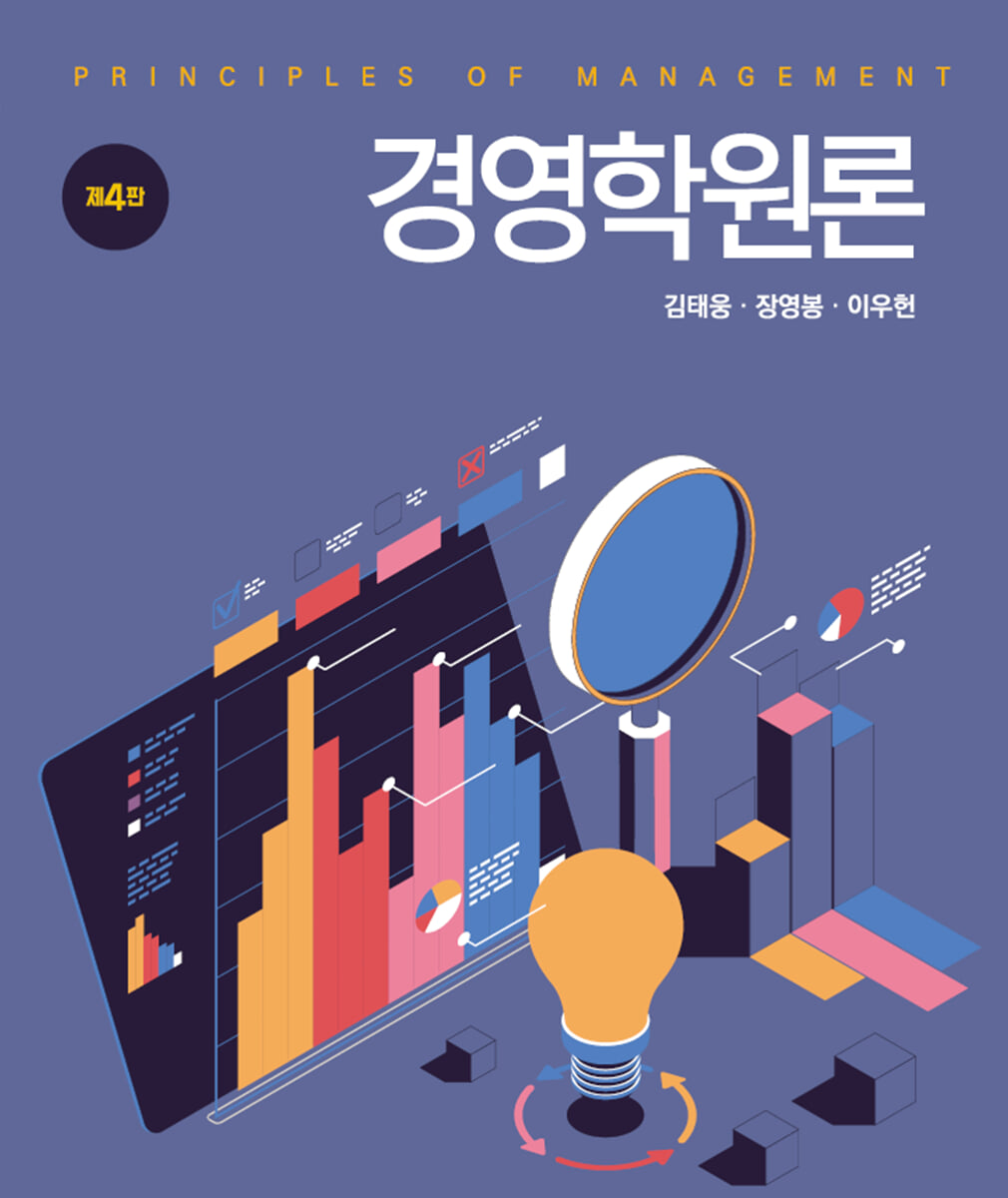
[Principles of Management, 4th Edition] is an introductory book to management theory.
I'm sketching out what activities are unfolding in management and the logic behind how these activities are expanding into a single field of business administration.
It also contains a wide variety of topics and theories, so it is composed of more in-depth content than a business management theory book that is read for light entertainment.
This book consists of 14 chapters.
Chapters 1 through 7 cover issues that arise when thinking of management as a decision-making process.
It's relatively simple and not difficult to understand.
Chapters 8 through 14 cover key issues by function, including marketing, finance, production, human resource management, management information, accounting, information technology, and global management, providing in-depth coverage.
Since a college semester is usually 14 weeks long, excluding exam periods, the book is structured into 14 chapters.
As management theory continues to evolve, we promise to continuously revise and supplement this book to make it both accessible and substantial.
It is divided into various fields such as marketing, finance, production, human resource management, management information, and accounting.
From small businesses to large corporations, the nature of the activities required for a business organization to continue to grow is the same.
Business administration is a discipline that can provide guidance on how to develop these diverse and difficult organizational activities.
Studying the basic theories of management is not easy.
Of course, studying business administration cannot guarantee that it will lead to excellent business management.
You can build your own management know-how through experience and trial and error.
However, in today's competitive society, this kind of leeway is actually lacking.
Any member of a corporate organization needs to learn the fundamental principles of systematic and meticulous management.
[Principles of Management, 4th Edition] is an introductory book to management theory.
I'm sketching out what activities are unfolding in management and the logic behind how these activities are expanding into a single field of business administration.
It also contains a wide variety of topics and theories, so it is composed of more in-depth content than a business management theory book that is read for light entertainment.
This book consists of 14 chapters.
Chapters 1 through 7 cover issues that arise when thinking of management as a decision-making process.
It's relatively simple and not difficult to understand.
Chapters 8 through 14 cover key issues by function, including marketing, finance, production, human resource management, management information, accounting, information technology, and global management, providing in-depth coverage.
Since a college semester is usually 14 weeks long, excluding exam periods, the book is structured into 14 chapters.
As management theory continues to evolve, we promise to continuously revise and supplement this book to make it both accessible and substantial.
- You can preview some of the book's contents.
Preview
index
CHAPTER 1 Business and Management
Section 1 Enterprises and Resources
Section 2 Management and Managers
Take a break
Practice problems
CHAPTER 2: Business and Management Environment
Section 1 Significance of the Management Environment
Section 2 General Environment
Section 3 Task Environment
Practice problems
CHAPTER 3 Corporate Social Responsibility and Sustainable Management
Section 1 Corporate Social Responsibility
Section 2 Stages of Social Responsibility
Section 3 Sustainable Management and Social Responsibility
Section 4 Three Dimensions of Sustainable Management
Section 5 Corporate Citizenship
Take a break
Practice problems
CHAPTER 4 Understanding Management
Section 1 Business Management Functions
Section 2 Types of decision-making problems by hierarchy
Section 3: Changes in mindset toward management
Take a break
Practice problems
CHAPTER 5: PLANNING BUSINESS ACTIVITIES
Section 1 Corporate Planning Process
Section 2 Establishment of a strategic plan
Section 3 Operational Plan
Take a break
Practice problems
CHAPTER 6 ORGANIZING BUSINESS ACTIVITIES
Section 1. Concept and Structure of Organization
Section 2 Types of organizational structure
Section 3: Principles of Organizational Operation and Changes in Organizational Structure
Section 4 Organizational Culture
Take a break
Practice problems
CHAPTER 7 Command and Control of Corporate Activities
Section 1: Leadership and Motivation
Section 2 Leadership
Section 3 Communication
Section 4 Control
Take a break
Practice problems
CHAPTER 8 MANAGEMENT OF MARKETING ACTIVITIES
Section 1. Concept and Category of Marketing
Section 2 Marketing Strategy
Section 3 Product Management
Section 4 Price Management
Section 5 Distribution Channel Management
Section 6 Promotion Management
Take a break
Practice problems
CHAPTER 9 Understanding Corporate Accounting
Section 1. Accounting Cycle Process and Types
Section 2 Composition of Financial Statements
Section 3 Financial Ratio Analysis
Section 4 Accounting Audit
Section 5 Cost and Management Accounting
Take a break
Practice problems
CHAPTER 10 FINANCIAL MANAGEMENT
Section 1. Significance of Financial Management
Section 2 The Time Value of Money
Section 3 Investment Decision
Section 4 Capital Procurement and Capital Structure
Take a break
Practice problems
CHAPTER 11 PRODUCTION AND SUPPLY CHAIN MANAGEMENT
Section 1: The Significance of Production and Supply Chain Management
Section 2 Types and Operation Methods of Production Systems
Section 3 Lead Time Management
Section 4 Inventory Management
Section 5: Supply Chain Management as a Strategic Planning Tool
Take a break
Practice problems
CHAPTER 12 HUMAN RESOURCE MANAGEMENT
Section 1. Significance of Human Resource Management
Section 2 Securing Human Resources
Section 3 Development of Human Resources
Section 4 Motivation and Maintenance of Human Resources
Take a break
Practice problems
CHAPTER 13 Utilizing Information Technology and Information Systems
Section 1 What is an information system?
Section 2: Innovation in Corporate Information Systems through Digitalization
Section 3: Core Competencies in the Digital Age
(Big data analysis, blockchain, platform and business model innovation)
Take a break
Practice problems
CHAPTER 14 Understanding Global Management
Section 1: Globalization and Overseas Market Entry Strategies
Section 2: Overseas Market Entry Strategies through Trade and Intellectual Property Sharing
Section 3: Overseas Market Entry Strategy through Direct Investment
Section 4: Strategies for Strengthening Global Competitiveness
Take a break
Practice problems
Search
Section 1 Enterprises and Resources
Section 2 Management and Managers
Take a break
Practice problems
CHAPTER 2: Business and Management Environment
Section 1 Significance of the Management Environment
Section 2 General Environment
Section 3 Task Environment
Practice problems
CHAPTER 3 Corporate Social Responsibility and Sustainable Management
Section 1 Corporate Social Responsibility
Section 2 Stages of Social Responsibility
Section 3 Sustainable Management and Social Responsibility
Section 4 Three Dimensions of Sustainable Management
Section 5 Corporate Citizenship
Take a break
Practice problems
CHAPTER 4 Understanding Management
Section 1 Business Management Functions
Section 2 Types of decision-making problems by hierarchy
Section 3: Changes in mindset toward management
Take a break
Practice problems
CHAPTER 5: PLANNING BUSINESS ACTIVITIES
Section 1 Corporate Planning Process
Section 2 Establishment of a strategic plan
Section 3 Operational Plan
Take a break
Practice problems
CHAPTER 6 ORGANIZING BUSINESS ACTIVITIES
Section 1. Concept and Structure of Organization
Section 2 Types of organizational structure
Section 3: Principles of Organizational Operation and Changes in Organizational Structure
Section 4 Organizational Culture
Take a break
Practice problems
CHAPTER 7 Command and Control of Corporate Activities
Section 1: Leadership and Motivation
Section 2 Leadership
Section 3 Communication
Section 4 Control
Take a break
Practice problems
CHAPTER 8 MANAGEMENT OF MARKETING ACTIVITIES
Section 1. Concept and Category of Marketing
Section 2 Marketing Strategy
Section 3 Product Management
Section 4 Price Management
Section 5 Distribution Channel Management
Section 6 Promotion Management
Take a break
Practice problems
CHAPTER 9 Understanding Corporate Accounting
Section 1. Accounting Cycle Process and Types
Section 2 Composition of Financial Statements
Section 3 Financial Ratio Analysis
Section 4 Accounting Audit
Section 5 Cost and Management Accounting
Take a break
Practice problems
CHAPTER 10 FINANCIAL MANAGEMENT
Section 1. Significance of Financial Management
Section 2 The Time Value of Money
Section 3 Investment Decision
Section 4 Capital Procurement and Capital Structure
Take a break
Practice problems
CHAPTER 11 PRODUCTION AND SUPPLY CHAIN MANAGEMENT
Section 1: The Significance of Production and Supply Chain Management
Section 2 Types and Operation Methods of Production Systems
Section 3 Lead Time Management
Section 4 Inventory Management
Section 5: Supply Chain Management as a Strategic Planning Tool
Take a break
Practice problems
CHAPTER 12 HUMAN RESOURCE MANAGEMENT
Section 1. Significance of Human Resource Management
Section 2 Securing Human Resources
Section 3 Development of Human Resources
Section 4 Motivation and Maintenance of Human Resources
Take a break
Practice problems
CHAPTER 13 Utilizing Information Technology and Information Systems
Section 1 What is an information system?
Section 2: Innovation in Corporate Information Systems through Digitalization
Section 3: Core Competencies in the Digital Age
(Big data analysis, blockchain, platform and business model innovation)
Take a break
Practice problems
CHAPTER 14 Understanding Global Management
Section 1: Globalization and Overseas Market Entry Strategies
Section 2: Overseas Market Entry Strategies through Trade and Intellectual Property Sharing
Section 3: Overseas Market Entry Strategy through Direct Investment
Section 4: Strategies for Strengthening Global Competitiveness
Take a break
Practice problems
Search
GOODS SPECIFICS
- Date of issue: July 25, 2023
- Format: Hardcover book binding method guide
- Page count, weight, size: 494 pages | 217*261*30mm
- ISBN13: 9788955018370
- ISBN10: 8955018371
You may also like
카테고리
korean


korean

![GQ KOREA Mark (Monthly): December [2025]](http://librairie.coreenne.fr/cdn/shop/files/8ef265dbbfbf186523ed75ba7319009d.jpg?v=1765340328&width=3840)


