

The tumultuous story of integrated education in the United States
 |
Description
Book Introduction
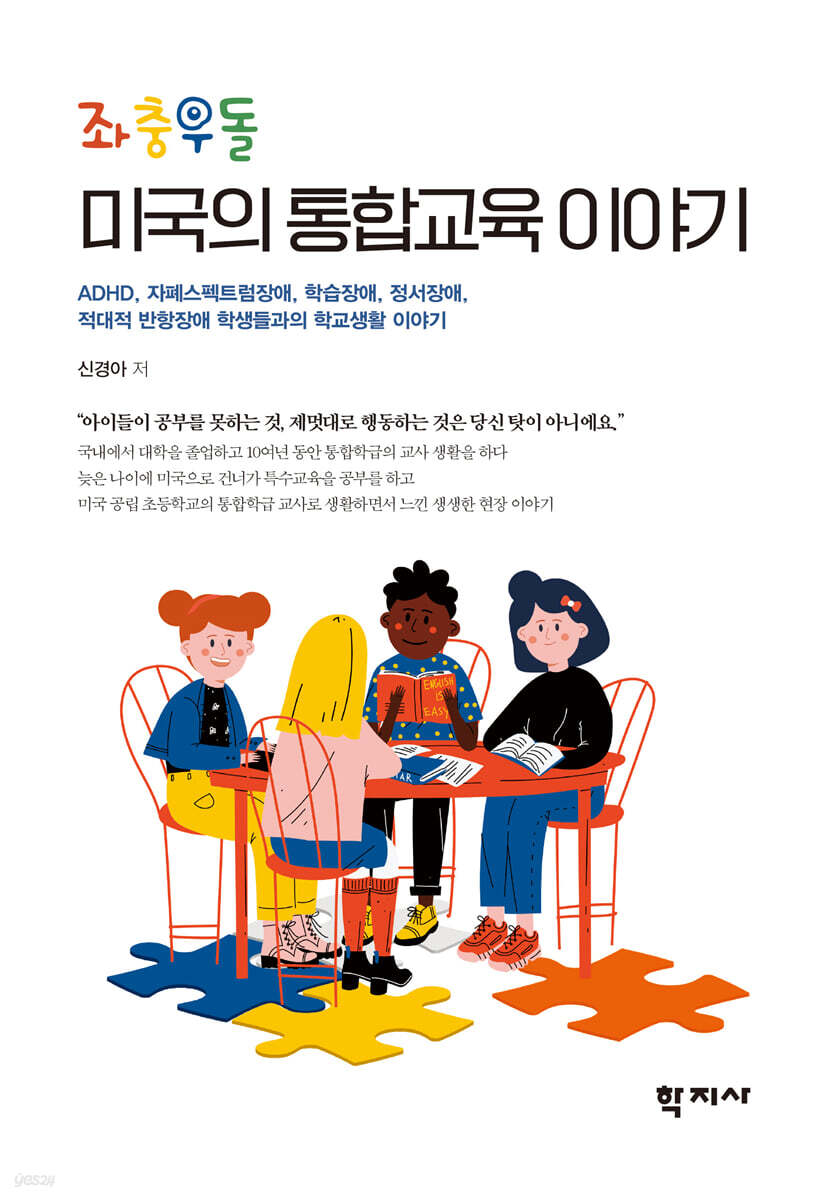
After graduating from college in Korea and working as an inclusive classroom teacher for over 10 years, I moved to the United States at a late age to study special education and lived as an inclusive classroom teacher at a public elementary school in the United States. This book contains vivid stories from the field.
This article introduces how inclusive education is implemented in public elementary schools in Arizona, USA, and how students with ADHD, learning disabilities, emotional disorders, oppositional defiant disorder, and autism spectrum disorder are diagnosed, recognized as special education students, and receive special education services in the school system.
The methods and content presented in this book will serve as an opportunity to broaden the horizons of thought and life for families involved in special education in Korea.
This article introduces how inclusive education is implemented in public elementary schools in Arizona, USA, and how students with ADHD, learning disabilities, emotional disorders, oppositional defiant disorder, and autism spectrum disorder are diagnosed, recognized as special education students, and receive special education services in the school system.
The methods and content presented in this book will serve as an opportunity to broaden the horizons of thought and life for families involved in special education in Korea.
index
Entering
Part 1: Becoming a Special Education Teacher in the United States
01 Becoming a Special Education Teacher
02 Special education that transcends age, race, and gender
03 The Reality of Special Education Teachers
04 Special Education Learning from Children
Part 2: Characteristics of Special Education in the United States
05 「FAPE」
06 Education that Creates First-Class Students vs. Education that Eliminates Last-Class Students
07 Misconceptions about Special Education
08 Words that encourage independence, stepping stones
Special Education Working as a Team Part 3 - Determining Everything Together
09 Resource Room Teacher? Special Education Teacher!
Special Education Working in Teams of 10
11 Confident Parents, Cool Teachers
12 Sharing space, sharing activities - the first step together
Part 4: Stories from the Field
13 Who Can Receive Special Education?
14 If you need special education - the process in the United States
15 IEP meetings
16 King of Anger - Emotional Disorder
17 Mood King - Emotional Disorder
18 Anger King + Mood King = Oppositional Defiant Disorder
19 I can only focus on things I like - ADHD
20 He who has ears to hear, let him hear - Dyslexia
21 Epilepsy
22 Whose fault is it for not being able to study? - Learning disabilities
23 Cognitive function may be impaired due to traffic accidents or psychological trauma.
References
Search
Part 1: Becoming a Special Education Teacher in the United States
01 Becoming a Special Education Teacher
02 Special education that transcends age, race, and gender
03 The Reality of Special Education Teachers
04 Special Education Learning from Children
Part 2: Characteristics of Special Education in the United States
05 「FAPE」
06 Education that Creates First-Class Students vs. Education that Eliminates Last-Class Students
07 Misconceptions about Special Education
08 Words that encourage independence, stepping stones
Special Education Working as a Team Part 3 - Determining Everything Together
09 Resource Room Teacher? Special Education Teacher!
Special Education Working in Teams of 10
11 Confident Parents, Cool Teachers
12 Sharing space, sharing activities - the first step together
Part 4: Stories from the Field
13 Who Can Receive Special Education?
14 If you need special education - the process in the United States
15 IEP meetings
16 King of Anger - Emotional Disorder
17 Mood King - Emotional Disorder
18 Anger King + Mood King = Oppositional Defiant Disorder
19 I can only focus on things I like - ADHD
20 He who has ears to hear, let him hear - Dyslexia
21 Epilepsy
22 Whose fault is it for not being able to study? - Learning disabilities
23 Cognitive function may be impaired due to traffic accidents or psychological trauma.
References
Search
Publisher's Review
“Children are not able to study,
It's not your fault that you're acting out of control.
In Korea, education for the disabled, or special education, is legally mandated.
The goal is to guarantee the right to education for persons with disabilities in accordance with the Special Education Promotion Act.
If you are a special education recipient, you can receive the resources necessary for effective education, including counseling support, family support, treatment cost support, and learning assistance devices.
However, there was a big difference between what was stated in the law and what was in reality.
In Korea, where academic fervor is strangely high, the education system is entrenched and focused on entrance exams, so there is a high probability that the education of the disabled will be neglected, and there is also criticism that the policy is falling short of expectations as it does not improve social perceptions of them.
So, what about special education in the United States? The author of this book, Shin Kyung-ah, who became an inclusive classroom teacher in a public elementary school in the United States later in life, found many differences.
In Korea, when teaching students with disabilities, we thought of them as objects to be educated and changed according to our own framework, and we never thought of understanding them, adapting to them, and changing ourselves.
But as I worked as a teacher in the United States, my thoughts gradually changed.
He added that he was particularly surprised to learn that, especially in the United States, the education of students with disabilities goes beyond the scope of parents or individual families and is the responsibility of schools, communities, and the state.
For example, he expressed that the overwhelming facilities, educational equipment, and abundant human resources of American educational institutions, which provide all educational equipment and even special meals free of charge to students with disabilities, were astonishing.
This book introduces the typical inclusive education system implemented in public elementary schools in the United States. It also details how students with ADHD, learning disabilities, emotional disorders, oppositional defiant disorder, and autism spectrum disorder are diagnosed within the school system, recognized as special education students, and provided with special education services.
We hope that this book will help school teachers, parents, and the general public interested in special education understand the American special education system, and that the methods and content in this book will broaden the spectrum of thinking for special education professionals and families in Korea.
It's not your fault that you're acting out of control.
In Korea, education for the disabled, or special education, is legally mandated.
The goal is to guarantee the right to education for persons with disabilities in accordance with the Special Education Promotion Act.
If you are a special education recipient, you can receive the resources necessary for effective education, including counseling support, family support, treatment cost support, and learning assistance devices.
However, there was a big difference between what was stated in the law and what was in reality.
In Korea, where academic fervor is strangely high, the education system is entrenched and focused on entrance exams, so there is a high probability that the education of the disabled will be neglected, and there is also criticism that the policy is falling short of expectations as it does not improve social perceptions of them.
So, what about special education in the United States? The author of this book, Shin Kyung-ah, who became an inclusive classroom teacher in a public elementary school in the United States later in life, found many differences.
In Korea, when teaching students with disabilities, we thought of them as objects to be educated and changed according to our own framework, and we never thought of understanding them, adapting to them, and changing ourselves.
But as I worked as a teacher in the United States, my thoughts gradually changed.
He added that he was particularly surprised to learn that, especially in the United States, the education of students with disabilities goes beyond the scope of parents or individual families and is the responsibility of schools, communities, and the state.
For example, he expressed that the overwhelming facilities, educational equipment, and abundant human resources of American educational institutions, which provide all educational equipment and even special meals free of charge to students with disabilities, were astonishing.
This book introduces the typical inclusive education system implemented in public elementary schools in the United States. It also details how students with ADHD, learning disabilities, emotional disorders, oppositional defiant disorder, and autism spectrum disorder are diagnosed within the school system, recognized as special education students, and provided with special education services.
We hope that this book will help school teachers, parents, and the general public interested in special education understand the American special education system, and that the methods and content in this book will broaden the spectrum of thinking for special education professionals and families in Korea.
GOODS SPECIFICS
- Date of issue: March 20, 2023
- Page count, weight, size: 216 pages | 290g | 148*210*12mm
- ISBN13: 9788999728488
- ISBN10: 899972848X
You may also like
카테고리
korean


korean

![GQ KOREA Mark (Monthly): December [2025]](http://librairie.coreenne.fr/cdn/shop/files/8ef265dbbfbf186523ed75ba7319009d.jpg?v=1765340328&width=3840)


