

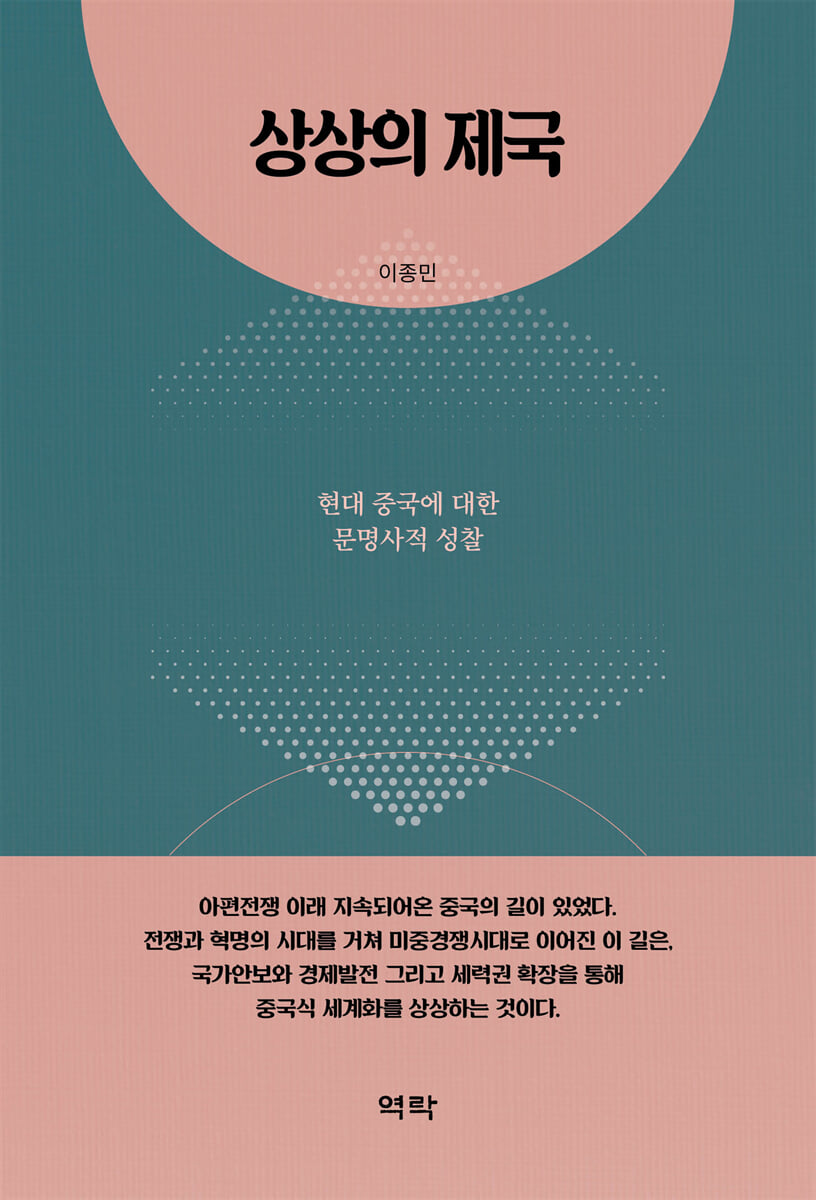
Empire of Imagination
 |
Description
Book Introduction
There has been a Chinese path that has continued since the Opium Wars.
This path, which has led through the era of war and revolution and into the era of US-China competition,
It is to imagine a Chinese-style globalization through national security, economic development, and expansion of spheres of influence.
This book is written to forecast China's path in the era of US-China competition.
Since the Opium Wars, China has passively connected itself to the world, undergoing a modern transformation from an empire to a nation-state, from a Chinese order to a Western world order, from an agricultural civilization to a scientific and technological civilization, and from a tributary system to capitalist globalization.
The current US-China competition is a historical event that emerged from China's long-term modernization transition. To predict its direction, we must comprehensively examine the history of this modernization transition and its driving principles.
To this end, we present the perspective of Liang Qichao, a modern Chinese intellectual, on the new China, along with the dual strategy of globalization and national independence.
The title of this book, 'Imagined Empire,' conceptualizes Liang Qichao's plan to transform the territory of the Qing Empire into a unified nation.
Liang Qichao's New China was a concept of a nation that had never existed before. From the perspective of the Han Chinese nation, it was a vast empire that transcended the Central Plains region, and from the perspective of traditional empires, it was a unified nation that unified the internal structure that had been divided into ethnic groups and regions.
This state was a vision born from the process of Han Chinese elites, who sought to inherit the territory of the Qing Empire, rebuilding modern China along the lines of a Western nation-state.
This path, which has led through the era of war and revolution and into the era of US-China competition,
It is to imagine a Chinese-style globalization through national security, economic development, and expansion of spheres of influence.
This book is written to forecast China's path in the era of US-China competition.
Since the Opium Wars, China has passively connected itself to the world, undergoing a modern transformation from an empire to a nation-state, from a Chinese order to a Western world order, from an agricultural civilization to a scientific and technological civilization, and from a tributary system to capitalist globalization.
The current US-China competition is a historical event that emerged from China's long-term modernization transition. To predict its direction, we must comprehensively examine the history of this modernization transition and its driving principles.
To this end, we present the perspective of Liang Qichao, a modern Chinese intellectual, on the new China, along with the dual strategy of globalization and national independence.
The title of this book, 'Imagined Empire,' conceptualizes Liang Qichao's plan to transform the territory of the Qing Empire into a unified nation.
Liang Qichao's New China was a concept of a nation that had never existed before. From the perspective of the Han Chinese nation, it was a vast empire that transcended the Central Plains region, and from the perspective of traditional empires, it was a unified nation that unified the internal structure that had been divided into ethnic groups and regions.
This state was a vision born from the process of Han Chinese elites, who sought to inherit the territory of the Qing Empire, rebuilding modern China along the lines of a Western nation-state.
index
Introduction: The Three National Imaginaries That Made China
1.
Chinese-style view of history
2.
What is "Imagined Communities" trying to say?
3.
Sapiens and the Imaginary Empire in China
4.
Liang Qichao: Seeing the Future of China from Modern China
5.
Beyond the nationalist/globalist frame
Part 1: Liang Qichao and the National Imagination of Modern China
Chapter 1: World War I, Reflections on Civilization, and China's Path
1.
World War I and the 『Guyusimyeongrok』
2.
The path of mutual aid and human respect
3.
globalist state
4.
Capital-Labor Cooperative Economy
5.
In search of the future China
Chapter 2: The Basis of China's Existence: The Territory of the Qing Empire
1.
The Provisional Constitution of the Republic of China and the Spirit of the Times
2.
The national name China
3.
National foundation
4.
Presentist view of history
5.
Territorial-national community
Chapter 3 National Identity: The Constitutional Chinese Ethnic Community
1.
Kang Youwei and Liang Qichao
2.
The State and the World in Modern China
3.
Globalism and the Great Unified State
4.
New China Imagination and Long-Term Development Strategy
5.
Constitutional State and the Political Capacity of the Chinese People
Chapter 4: The People: Subjects with Virtue
1.
Chinese national character
2.
Shinmin, the future Chinese with virtue
3.
National ideology and national virtues
4.
The power of self-innovation and self-determination
5.
The question of Chinese character and enlightenment
Chapter 5: Civilization Community: The Spirit of Confucius and the Rule of Guan Zhong
1.
Nation-state and civilized state
2.
National character, the force that sustains China
3.
The Spirit of Confucius and Civilization in China
4.
Greater Society and Globalism
5.
The Rule of the Crowd and Reality of China
Chapter 6: Economy: State-Led Mixed Economy
1.
The Era of National Imperialism and the World Economy
2.
Capitalist economic development and prevention of social problems
3.
Rural Economy and Land Reform
4.
Financial issues and tax system
5.
International Finance and Unified Currency
Chapter 7: Future Goals: China's Era in the World Order
1.
Modern times, beyond suffering to an era of revival
2.
The entire planet, a new territory for the empire to pioneer
3.
Science and technology, the knowledge-manufacturing capabilities that lead civilization
4.
The New Economy: A Productive Fusion of Capitalism and Socialism
5.
The era of the Great East World, the world government with the expansion of the Democratic Republic
Part 2: The Empire of Imagination: What Kind of Nation Are We Creating?
Chapter 8: Have the people become the masters of the republic?
1.
The New China Era and the Status of the People
2.
The Mandate of Heaven and the Legitimacy of Rule in Ancient China
3.
Public sentiment, the power that determines the fate of a nation
4.
The sorrow of the peasant
5.
An unstable social safety net
Chapter 9: Is a State-Led Economy Sustainable?
1.
state-led economy
2.
Centralized economy of ancient China
3.
Empire, the Dilemma of Security and Economy
4.
Foreign trade and foreign merchants
5.
The collapse of the agricultural empire and industrial modernization
6.
Reform and Opening Up and the Reform Tasks of the Chinese Economy
Chapter 10: Does Socialism Create an Equal Society?
1.
The paradox of shared wealth
2.
Differential order between urban and rural areas
3.
Taxation and the Origins of Inequality
4.
Reform and Opening Up and the Crisis of Success
5.
The dilemma of a welfare society and small government
Chapter 11: Why Power Is Above the Law
1.
The Constitution and the Communist Party Dilemma
2.
Norms and laws of ancient China
3.
The world ruled by external Confucianism and internal law
4.
China's legal community and interest groups
5.
Chinese-style rule of law society
Chapter 12: Can an Empire Become a Unified Nation?
1.
Creating Authenticity
2.
The Dilemma of a Unified State and an Empire
3.
Political dynamics in ancient China
4.
The debate between centralization and decentralization
5.
Civilized Empires and Regional Protectorate Politics
Chapter 13: Outlook: US-China Power Rivalry and the Imagining of Chinese Globalization
1.
Deep-seated shock and Chinese narrative
2.
Global Trade and Chinese Geopolitics during the Ming and Qing Dynasties
3.
The Opium Wars, Capitalist Globalization, and China's Modernization
4.
World War II, the Refraction of Globalization, and the Birth of State Capitalism
5.
National independence and the Cold War system
6.
The Dual Strategy of Neoliberal Globalization and Reform and Openness
7.
US-China Competition and the Imagining of Chinese-Style Globalization
1.
Chinese-style view of history
2.
What is "Imagined Communities" trying to say?
3.
Sapiens and the Imaginary Empire in China
4.
Liang Qichao: Seeing the Future of China from Modern China
5.
Beyond the nationalist/globalist frame
Part 1: Liang Qichao and the National Imagination of Modern China
Chapter 1: World War I, Reflections on Civilization, and China's Path
1.
World War I and the 『Guyusimyeongrok』
2.
The path of mutual aid and human respect
3.
globalist state
4.
Capital-Labor Cooperative Economy
5.
In search of the future China
Chapter 2: The Basis of China's Existence: The Territory of the Qing Empire
1.
The Provisional Constitution of the Republic of China and the Spirit of the Times
2.
The national name China
3.
National foundation
4.
Presentist view of history
5.
Territorial-national community
Chapter 3 National Identity: The Constitutional Chinese Ethnic Community
1.
Kang Youwei and Liang Qichao
2.
The State and the World in Modern China
3.
Globalism and the Great Unified State
4.
New China Imagination and Long-Term Development Strategy
5.
Constitutional State and the Political Capacity of the Chinese People
Chapter 4: The People: Subjects with Virtue
1.
Chinese national character
2.
Shinmin, the future Chinese with virtue
3.
National ideology and national virtues
4.
The power of self-innovation and self-determination
5.
The question of Chinese character and enlightenment
Chapter 5: Civilization Community: The Spirit of Confucius and the Rule of Guan Zhong
1.
Nation-state and civilized state
2.
National character, the force that sustains China
3.
The Spirit of Confucius and Civilization in China
4.
Greater Society and Globalism
5.
The Rule of the Crowd and Reality of China
Chapter 6: Economy: State-Led Mixed Economy
1.
The Era of National Imperialism and the World Economy
2.
Capitalist economic development and prevention of social problems
3.
Rural Economy and Land Reform
4.
Financial issues and tax system
5.
International Finance and Unified Currency
Chapter 7: Future Goals: China's Era in the World Order
1.
Modern times, beyond suffering to an era of revival
2.
The entire planet, a new territory for the empire to pioneer
3.
Science and technology, the knowledge-manufacturing capabilities that lead civilization
4.
The New Economy: A Productive Fusion of Capitalism and Socialism
5.
The era of the Great East World, the world government with the expansion of the Democratic Republic
Part 2: The Empire of Imagination: What Kind of Nation Are We Creating?
Chapter 8: Have the people become the masters of the republic?
1.
The New China Era and the Status of the People
2.
The Mandate of Heaven and the Legitimacy of Rule in Ancient China
3.
Public sentiment, the power that determines the fate of a nation
4.
The sorrow of the peasant
5.
An unstable social safety net
Chapter 9: Is a State-Led Economy Sustainable?
1.
state-led economy
2.
Centralized economy of ancient China
3.
Empire, the Dilemma of Security and Economy
4.
Foreign trade and foreign merchants
5.
The collapse of the agricultural empire and industrial modernization
6.
Reform and Opening Up and the Reform Tasks of the Chinese Economy
Chapter 10: Does Socialism Create an Equal Society?
1.
The paradox of shared wealth
2.
Differential order between urban and rural areas
3.
Taxation and the Origins of Inequality
4.
Reform and Opening Up and the Crisis of Success
5.
The dilemma of a welfare society and small government
Chapter 11: Why Power Is Above the Law
1.
The Constitution and the Communist Party Dilemma
2.
Norms and laws of ancient China
3.
The world ruled by external Confucianism and internal law
4.
China's legal community and interest groups
5.
Chinese-style rule of law society
Chapter 12: Can an Empire Become a Unified Nation?
1.
Creating Authenticity
2.
The Dilemma of a Unified State and an Empire
3.
Political dynamics in ancient China
4.
The debate between centralization and decentralization
5.
Civilized Empires and Regional Protectorate Politics
Chapter 13: Outlook: US-China Power Rivalry and the Imagining of Chinese Globalization
1.
Deep-seated shock and Chinese narrative
2.
Global Trade and Chinese Geopolitics during the Ming and Qing Dynasties
3.
The Opium Wars, Capitalist Globalization, and China's Modernization
4.
World War II, the Refraction of Globalization, and the Birth of State Capitalism
5.
National independence and the Cold War system
6.
The Dual Strategy of Neoliberal Globalization and Reform and Openness
7.
US-China Competition and the Imagining of Chinese-Style Globalization
Publisher's Review
There has been a Chinese path that has continued since the Opium Wars.
This path, which has led through the era of war and revolution and into the era of US-China competition,
It is to imagine a Chinese-style globalization through national security, economic development, and expansion of spheres of influence.
This book is written to forecast China's path in the era of US-China competition.
Since the Opium Wars, China has passively connected itself to the world, undergoing a modern transformation from an empire to a nation-state, from a Chinese order to a Western world order, from an agricultural civilization to a scientific and technological civilization, and from a tributary system to capitalist globalization.
The current US-China competition is a historical event that emerged from China's long-term modernization transition. To predict its direction, we must comprehensively examine the history of this modernization transition and its driving principles.
To this end, we present the perspective of Liang Qichao, a modern Chinese intellectual, on the new China, along with the dual strategy of globalization and national independence.
The title of this book, 'Imagined Empire,' conceptualizes Liang Qichao's plan to transform the territory of the Qing Empire into a unified nation.
Liang Qichao's New China was a concept of a nation that had never existed before. From the perspective of the Han Chinese nation, it was a vast empire that transcended the Central Plains region, and from the perspective of traditional empires, it was a unified nation that unified the internal structure that had been divided into ethnic groups and regions.
This state was a vision born from the process of Han Chinese elites, who sought to inherit the territory of the Qing Empire, rebuilding modern China along the lines of a Western nation-state.
If Benedict Anderson's imagined community is intended to unite the unfamiliar members who have become independent from the empire into a nation-state, the imagined empire is a concept that reflects the Chinese specificity of inheriting the empire's territory and uniting them into a unified nation.
It is this imaginary empire that China has attempted to make real through historical processes. It is important to note that this imaginary empire is not a real nation, but rather a vision for the future of a real nation.
If we overlook this advantage, we are likely to mistake the imaginary empire for the real China, or to remain stuck in a perspective that emphasizes China's duality.
This perspective not only ignores historical truth, but also prevents us from objectively reflecting on the current state of China.
History tells us that a nation or people that does not reflect has a bright future.
If the purpose of raising the idea of an imaginary empire was to provide insight into these issues, the dual strategy of globalization and national self-reliance is a perspective intended to explain the struggles of China, which has been making a modern transition within the Western-centric world order since the Opium War.
Among the perspectives that examine the macroscopic transformation of 20th-century China into modernity, there is Li Zehou's dual variation of enlightenment and salvation.
Li Zehou's perspective is intended to highlight that the task of enlightenment, which has been pushed to the periphery by the pressure of the old world, is an urgent task for China today.
The dual strategy of globalization and national independence raised in this book is different from Li Zehou's view of anti-imperialism = salvation, and is a perspective that sees the dual mechanism of passive openness and the benefits of globalization in addressing the problem of imperialism, and that national independence was achieved through a dual strategy of criticizing imperialism while utilizing the benefits of globalization.
And, unlike the view that salvation overwhelms enlightenment, it focuses on the role of the state in the process of national independence and the factors that contributed to the success or failure of its policies.
This book views China's ongoing modern transformation as a process of leveraging the benefits of globalization to achieve national independence and, based on this independence, to expand its sphere of influence within the world order.
This process continues even in the era of US-China competition, and it appears likely that China will seek a path to Chinese-style globalization in the future, with the goals of national security, economic development, and expansion of its sphere of influence.
Confucius once said that the tasks of a nation are to enrich the economy, strengthen security, and gain the trust of the people.
Only a nation that can do this can make life comfortable for its people nearby and attract people from far away to live there.
I think this might be Confucius's insight that China should reflect on in the era of US-China competition.
This path, which has led through the era of war and revolution and into the era of US-China competition,
It is to imagine a Chinese-style globalization through national security, economic development, and expansion of spheres of influence.
This book is written to forecast China's path in the era of US-China competition.
Since the Opium Wars, China has passively connected itself to the world, undergoing a modern transformation from an empire to a nation-state, from a Chinese order to a Western world order, from an agricultural civilization to a scientific and technological civilization, and from a tributary system to capitalist globalization.
The current US-China competition is a historical event that emerged from China's long-term modernization transition. To predict its direction, we must comprehensively examine the history of this modernization transition and its driving principles.
To this end, we present the perspective of Liang Qichao, a modern Chinese intellectual, on the new China, along with the dual strategy of globalization and national independence.
The title of this book, 'Imagined Empire,' conceptualizes Liang Qichao's plan to transform the territory of the Qing Empire into a unified nation.
Liang Qichao's New China was a concept of a nation that had never existed before. From the perspective of the Han Chinese nation, it was a vast empire that transcended the Central Plains region, and from the perspective of traditional empires, it was a unified nation that unified the internal structure that had been divided into ethnic groups and regions.
This state was a vision born from the process of Han Chinese elites, who sought to inherit the territory of the Qing Empire, rebuilding modern China along the lines of a Western nation-state.
If Benedict Anderson's imagined community is intended to unite the unfamiliar members who have become independent from the empire into a nation-state, the imagined empire is a concept that reflects the Chinese specificity of inheriting the empire's territory and uniting them into a unified nation.
It is this imaginary empire that China has attempted to make real through historical processes. It is important to note that this imaginary empire is not a real nation, but rather a vision for the future of a real nation.
If we overlook this advantage, we are likely to mistake the imaginary empire for the real China, or to remain stuck in a perspective that emphasizes China's duality.
This perspective not only ignores historical truth, but also prevents us from objectively reflecting on the current state of China.
History tells us that a nation or people that does not reflect has a bright future.
If the purpose of raising the idea of an imaginary empire was to provide insight into these issues, the dual strategy of globalization and national self-reliance is a perspective intended to explain the struggles of China, which has been making a modern transition within the Western-centric world order since the Opium War.
Among the perspectives that examine the macroscopic transformation of 20th-century China into modernity, there is Li Zehou's dual variation of enlightenment and salvation.
Li Zehou's perspective is intended to highlight that the task of enlightenment, which has been pushed to the periphery by the pressure of the old world, is an urgent task for China today.
The dual strategy of globalization and national independence raised in this book is different from Li Zehou's view of anti-imperialism = salvation, and is a perspective that sees the dual mechanism of passive openness and the benefits of globalization in addressing the problem of imperialism, and that national independence was achieved through a dual strategy of criticizing imperialism while utilizing the benefits of globalization.
And, unlike the view that salvation overwhelms enlightenment, it focuses on the role of the state in the process of national independence and the factors that contributed to the success or failure of its policies.
This book views China's ongoing modern transformation as a process of leveraging the benefits of globalization to achieve national independence and, based on this independence, to expand its sphere of influence within the world order.
This process continues even in the era of US-China competition, and it appears likely that China will seek a path to Chinese-style globalization in the future, with the goals of national security, economic development, and expansion of its sphere of influence.
Confucius once said that the tasks of a nation are to enrich the economy, strengthen security, and gain the trust of the people.
Only a nation that can do this can make life comfortable for its people nearby and attract people from far away to live there.
I think this might be Confucius's insight that China should reflect on in the era of US-China competition.
GOODS SPECIFICS
- Date of issue: November 13, 2025
- Page count, weight, size: 516 pages | 153*225*25mm
- ISBN13: 9791173962080
You may also like
카테고리
korean


korean

![GQ KOREA Mark (Monthly): December [2025]](http://librairie.coreenne.fr/cdn/shop/files/8ef265dbbfbf186523ed75ba7319009d.jpg?v=1765340328&width=3840)


