

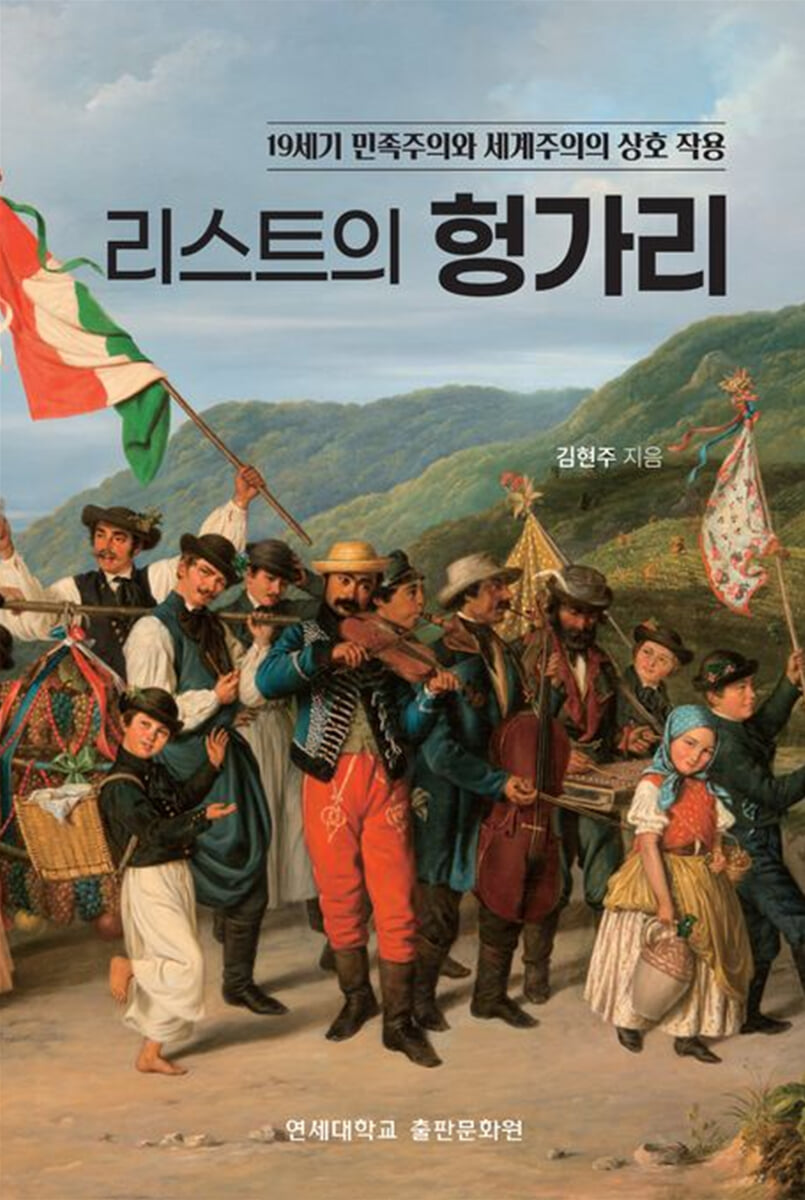
Hungary on the list
 |
Description
Book Introduction
Virtuoso Franz Liszt (1811–1886) was a cosmopolitan Parisian, an international virtuoso, a Hungarian national music composer, and a German classical artist.
In addition, he was a composer who, as a mainstream Romantic artist in Western Europe, brought up 19th-century Hungarian gypsy-style music in a 'bottom-up' manner.
Therefore, he can be evaluated as an artist who crossed the boundaries between Western European art music and Hungarian popular music, and traversed Western European and Central and Eastern European cultures.
He also participated in the combination of Hungarian nationalism and religious reform, making 'Liszt's Hungary' a colorful intersection.
List's 'Hungarian' identity, as discussed in this book, was revealed through various events and activities throughout his life.
His patriotic sentiments, awakened by the plague floods, reached their climax during his official visit to Hungary.
The series of works related to Hungarian Gypsy style music that followed went beyond mere superficial borrowing from Gypsy music and reflected deep affection and learning.
The nationalist controversy surrounding Rist's book on Gypsies has paradoxically shaken his Hungarian identity while also strengthening it.
Moreover, his Hungarian-related religious music was a fusion of Hungarian Catholic and nationalist ideas.
His later contributions to the development of Hungarian cultural and musical institutions were an expression of his enduring patriotism for his homeland.
In the early 20th century, as the question of List's Hungarian identity resurfaced, Bartók attempted to quell the debate.
I would like to conclude this book's journey with Bartók's assertion that List is definitely recognized and accepted as Hungarian.
In addition, he was a composer who, as a mainstream Romantic artist in Western Europe, brought up 19th-century Hungarian gypsy-style music in a 'bottom-up' manner.
Therefore, he can be evaluated as an artist who crossed the boundaries between Western European art music and Hungarian popular music, and traversed Western European and Central and Eastern European cultures.
He also participated in the combination of Hungarian nationalism and religious reform, making 'Liszt's Hungary' a colorful intersection.
List's 'Hungarian' identity, as discussed in this book, was revealed through various events and activities throughout his life.
His patriotic sentiments, awakened by the plague floods, reached their climax during his official visit to Hungary.
The series of works related to Hungarian Gypsy style music that followed went beyond mere superficial borrowing from Gypsy music and reflected deep affection and learning.
The nationalist controversy surrounding Rist's book on Gypsies has paradoxically shaken his Hungarian identity while also strengthening it.
Moreover, his Hungarian-related religious music was a fusion of Hungarian Catholic and nationalist ideas.
His later contributions to the development of Hungarian cultural and musical institutions were an expression of his enduring patriotism for his homeland.
In the early 20th century, as the question of List's Hungarian identity resurfaced, Bartók attempted to quell the debate.
I would like to conclude this book's journey with Bartók's assertion that List is definitely recognized and accepted as Hungarian.
index
preface
Liszt's multicultural identity and his Hungary
Chapter 1: What Was Hungarianness in the 19th Century?: The Interplay of Nationalism and Cosmopolitanism
1-1.
Various Perspectives and Discourses on 19th-Century Cosmopolitanism
1-2.
The Interplay of Hungarian Nationalism and Cosmopolitanism
Chapter 2: The Cosmopolitan List's Hungarian Identity Problem
2-1.
Hungary, the homeland of the list
2-2.
List and Hungarian
2-3.
List and the Gypsy Debate
Chapter 3: In Search of a Model for Liszt's 'Gypsy' Music
3-1.
Choosing a Hungarian Gypsy Musician Model
3-2.
Defining the Hungarian Gypsy Style Model: The Relationship Between Gypsy Music and Folk Music
3-3.
Two Branches of Verbunkos: Nationalism and Hausmusik
3-4.
The Complexity of Hungarian Gypsy Terminology
Chapter 4: The Magnetization of Rakoczi's Musical Materials
4-1.
Verbungkosch and Rakoczi melodies
4-2.
Liszt's "Rakoczi March"
4-3. Rákóczi March
4-4.
The purpose and significance of Rakoczi's rework
Chapter 5: Liszt's "Legend of Saint Elizabeth":
Hungarian nationalism, Catholic reform, and Liszt's philanthropy
5-1.
Again, the interplay of 19th-century Hungarian nationalism and cosmopolitanism
5-2.
Hungarian Nationalism, the Catholic Reformation, and Liszt's Catholic-Nationalism
5-3.
Catholicism on the list
5-4.
Liszt's "Elizabeth Oratorio"
Conclusion References Index
Liszt's multicultural identity and his Hungary
Chapter 1: What Was Hungarianness in the 19th Century?: The Interplay of Nationalism and Cosmopolitanism
1-1.
Various Perspectives and Discourses on 19th-Century Cosmopolitanism
1-2.
The Interplay of Hungarian Nationalism and Cosmopolitanism
Chapter 2: The Cosmopolitan List's Hungarian Identity Problem
2-1.
Hungary, the homeland of the list
2-2.
List and Hungarian
2-3.
List and the Gypsy Debate
Chapter 3: In Search of a Model for Liszt's 'Gypsy' Music
3-1.
Choosing a Hungarian Gypsy Musician Model
3-2.
Defining the Hungarian Gypsy Style Model: The Relationship Between Gypsy Music and Folk Music
3-3.
Two Branches of Verbunkos: Nationalism and Hausmusik
3-4.
The Complexity of Hungarian Gypsy Terminology
Chapter 4: The Magnetization of Rakoczi's Musical Materials
4-1.
Verbungkosch and Rakoczi melodies
4-2.
Liszt's "Rakoczi March"
4-3. Rákóczi March
4-4.
The purpose and significance of Rakoczi's rework
Chapter 5: Liszt's "Legend of Saint Elizabeth":
Hungarian nationalism, Catholic reform, and Liszt's philanthropy
5-1.
Again, the interplay of 19th-century Hungarian nationalism and cosmopolitanism
5-2.
Hungarian Nationalism, the Catholic Reformation, and Liszt's Catholic-Nationalism
5-3.
Catholicism on the list
5-4.
Liszt's "Elizabeth Oratorio"
Conclusion References Index
GOODS SPECIFICS
- Date of issue: October 20, 2025
- Page count, weight, size: 224 pages | 153*224*20mm
- ISBN13: 9788968509179
- ISBN10: 8968509174
You may also like
카테고리
korean


korean

![GQ KOREA Mark (Monthly): December [2025]](http://librairie.coreenne.fr/cdn/shop/files/8ef265dbbfbf186523ed75ba7319009d.jpg?v=1765340328&width=3840)


