

Jeju Taste
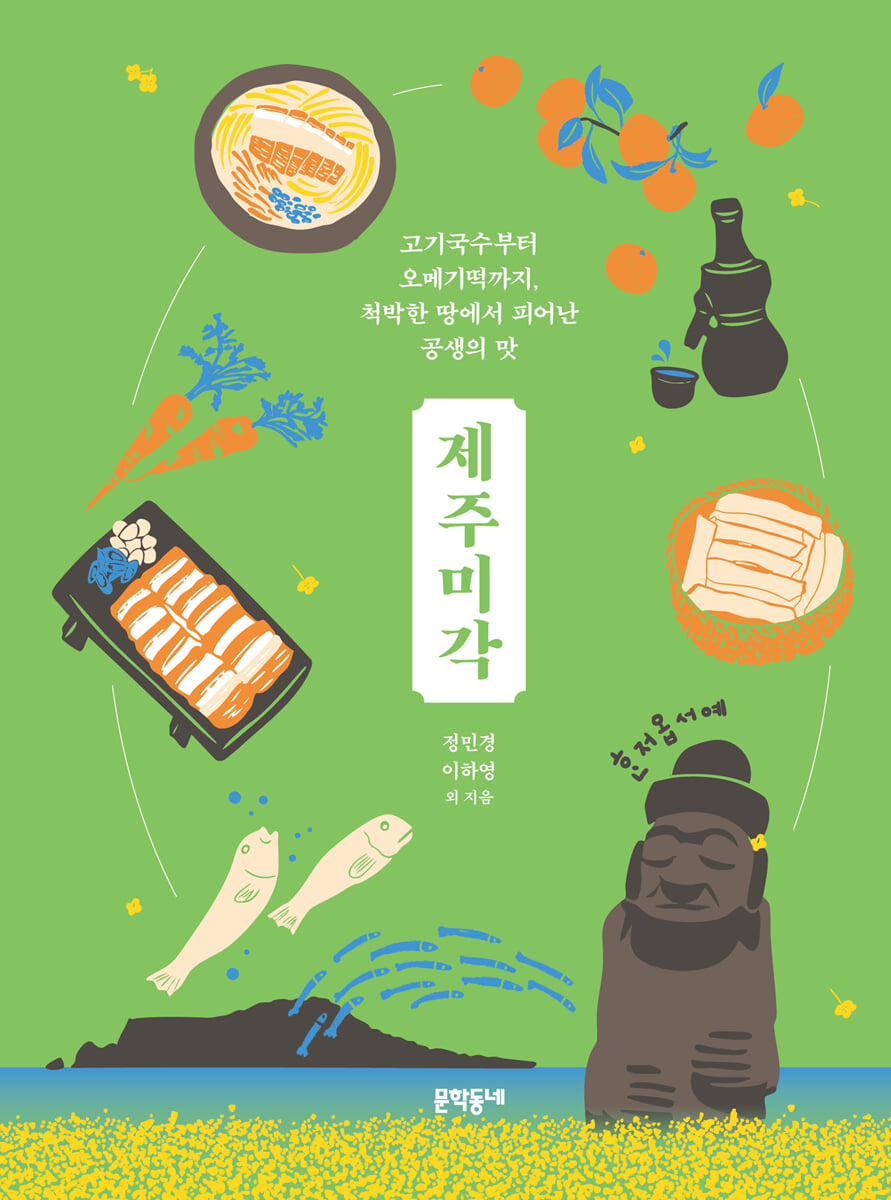 |
Description
Book Introduction
“Have you eaten? The table is full.
“When you’re feeling down, eat some honey.”
A true Jeju culinary tour unknown to mainlanders
"Jeju Taste" is a book that explores the philosophy, history, and culture embedded in the lives of Jeju people through Jeju food.
Eleven Jeju humanists, known as 'Jeollajin', who are from Jeju or have lived in Jeju for a long time, lovingly tell stories that only locals can understand.
Although the entire island boasts beautiful scenery worthy of being designated a UNESCO World Heritage Site, Jeju's land, made up of volcanic ash soil, does not produce an abundance of food.
Since most of the land was floating and the soil was blown away, it was difficult to grow rice, so they mainly planted miscellaneous grains such as millet, buckwheat, barley, and beans, as well as famine relief crops such as sweet potatoes and potatoes. They also made different foods from those on land using ingredients that could be found on land or in the sea at the time, such as bracken, octopus, sea bream, and radish.
The people of Jeju, who lived in a harsh natural environment, sometimes adapted to nature, and sometimes joined forces to develop a unique food culture.
Jeju food, which has been passed down like this, contains not just ‘taste’ but ‘vitality.’
The history and cultural background of Jeju foods that are familiar yet slightly unfamiliar, such as dombe meat, momguk, galchiguk, omegi tteok, grilled octopus, and citrus juice, that you may have encountered at least once while traveling in Jeju, are richly contained in 『Jeju Taste』.
Jeju means a state that exists across the sea.
Perhaps because it is a volcanic island surrounded by the sea, Jeju's table is a blend of products from Hallasan Mountain and the sea.
In addition to the harmony between the Uyeongpat (garden) and Badangpat (sea), traces of interaction with people from other regions cannot be left out.
Because of its strategic location as a hub for East Asian maritime trade, Jeju was once influenced by foreign countries like Mongolia and Japan. However, with the passage of time, young people from the mainland who have settled in Jeju are bringing a new wind of change.
Menus like raw horse meat, gosori liquor, and carrot cake were created when the recipes of these outsiders met with Jeju ingredients.
In this way, Jeju food culture was born for 'survival' amidst constant change, but it continues to 'coexist' with the lives of the people here.
As you read "Jeju Taste," which is a colorful mix of stories from Jeju's natives, myths, and folk songs, you'll find yourself wanting to travel to the island where "Hayoung" has its own charming food.
Jeju women were too busy with material and field work to devote time to preparing food.
A meal can be made in no time with just one ingredient, freshly gathered from the sea or mountains.
I could easily make a dish using vegetables just picked from the garden.
Jeju's harsh environment has created a culture of coexistence, where people adapt to nature and help each other.
During weddings, funerals, and other ceremonies, people helped each other prepare food, and neighbors would bring food in place of the deceased.
Nangpunbap, which is made by filling a bowl with rice and adding several side dishes to it and sharing it, was a struggle to survive together in a harsh environment.
With a steady stream of visitors seeking the island of freshness, Jeju is adding a modern twist to its traditional cuisine, creating a diverse dining experience unique to the island.
As time passes and Jeju's culture becomes more widely known through the media, outsiders who visit Jeju are still surprised by its unique food culture.
This book was created by researchers studying together at the Department of Chinese Language and Literature at Jeju National University for such people.
Page 9
“When you’re feeling down, eat some honey.”
A true Jeju culinary tour unknown to mainlanders
"Jeju Taste" is a book that explores the philosophy, history, and culture embedded in the lives of Jeju people through Jeju food.
Eleven Jeju humanists, known as 'Jeollajin', who are from Jeju or have lived in Jeju for a long time, lovingly tell stories that only locals can understand.
Although the entire island boasts beautiful scenery worthy of being designated a UNESCO World Heritage Site, Jeju's land, made up of volcanic ash soil, does not produce an abundance of food.
Since most of the land was floating and the soil was blown away, it was difficult to grow rice, so they mainly planted miscellaneous grains such as millet, buckwheat, barley, and beans, as well as famine relief crops such as sweet potatoes and potatoes. They also made different foods from those on land using ingredients that could be found on land or in the sea at the time, such as bracken, octopus, sea bream, and radish.
The people of Jeju, who lived in a harsh natural environment, sometimes adapted to nature, and sometimes joined forces to develop a unique food culture.
Jeju food, which has been passed down like this, contains not just ‘taste’ but ‘vitality.’
The history and cultural background of Jeju foods that are familiar yet slightly unfamiliar, such as dombe meat, momguk, galchiguk, omegi tteok, grilled octopus, and citrus juice, that you may have encountered at least once while traveling in Jeju, are richly contained in 『Jeju Taste』.
Jeju means a state that exists across the sea.
Perhaps because it is a volcanic island surrounded by the sea, Jeju's table is a blend of products from Hallasan Mountain and the sea.
In addition to the harmony between the Uyeongpat (garden) and Badangpat (sea), traces of interaction with people from other regions cannot be left out.
Because of its strategic location as a hub for East Asian maritime trade, Jeju was once influenced by foreign countries like Mongolia and Japan. However, with the passage of time, young people from the mainland who have settled in Jeju are bringing a new wind of change.
Menus like raw horse meat, gosori liquor, and carrot cake were created when the recipes of these outsiders met with Jeju ingredients.
In this way, Jeju food culture was born for 'survival' amidst constant change, but it continues to 'coexist' with the lives of the people here.
As you read "Jeju Taste," which is a colorful mix of stories from Jeju's natives, myths, and folk songs, you'll find yourself wanting to travel to the island where "Hayoung" has its own charming food.
Jeju women were too busy with material and field work to devote time to preparing food.
A meal can be made in no time with just one ingredient, freshly gathered from the sea or mountains.
I could easily make a dish using vegetables just picked from the garden.
Jeju's harsh environment has created a culture of coexistence, where people adapt to nature and help each other.
During weddings, funerals, and other ceremonies, people helped each other prepare food, and neighbors would bring food in place of the deceased.
Nangpunbap, which is made by filling a bowl with rice and adding several side dishes to it and sharing it, was a struggle to survive together in a harsh environment.
With a steady stream of visitors seeking the island of freshness, Jeju is adding a modern twist to its traditional cuisine, creating a diverse dining experience unique to the island.
As time passes and Jeju's culture becomes more widely known through the media, outsiders who visit Jeju are still surprised by its unique food culture.
This book was created by researchers studying together at the Department of Chinese Language and Literature at Jeju National University for such people.
Page 9
- You can preview some of the book's contents.
Preview
index
introduction
fish
Okdom (only) is a fish: Okdom grilled
Jeju with silver waves: Galchitguk
A Bowl of Comfort for Those Who Have Lost Their Seas: Jarimulhoe
A salty and savory pork companion: Meljeot
meat
The Life and Wisdom of Jeju People on the Cutting Board: Dombegogi
The Paradox Between Taboo and Custom: Horse Meat Sashimi
Black Sheep Goes to the Truth: Black Beef
How Jeju Remembers Winter: Pheasant Shabu-Shabu
soup
The taste of sharing joy and heart: Momguk
A premium soup made with mountain beef: Bracken Bone Yukgaejang
The Measure of Jeju's Kindness: Sea Urchin and Seaweed Soup
noodles
A master who has surpassed countless Jeju dishes: meat noodle soup
Bomaldo Gwegiyeo: Bomal Kalguksu
snacks
A healthy dessert that you can eat by rolling it around: Bingtteok
Meeting rice cakes, event rice cakes, thank-you rice cakes… … Jeju people’s affection: Omegi rice cakes
A delicacy that brings childhood memories and new experiences: Jireumtteok
Dynamism Rooted in Jeju: Carrot Cake
Beverages and alcohol
A Taste of Summer: Barley Rice
A refreshing drink made with golden fruit: tangerine juice
The majestic transformation of ssambap: ssamdari
A wine filled with the scent and sweat of a mother: Gosorisul
fish
Okdom (only) is a fish: Okdom grilled
Jeju with silver waves: Galchitguk
A Bowl of Comfort for Those Who Have Lost Their Seas: Jarimulhoe
A salty and savory pork companion: Meljeot
meat
The Life and Wisdom of Jeju People on the Cutting Board: Dombegogi
The Paradox Between Taboo and Custom: Horse Meat Sashimi
Black Sheep Goes to the Truth: Black Beef
How Jeju Remembers Winter: Pheasant Shabu-Shabu
soup
The taste of sharing joy and heart: Momguk
A premium soup made with mountain beef: Bracken Bone Yukgaejang
The Measure of Jeju's Kindness: Sea Urchin and Seaweed Soup
noodles
A master who has surpassed countless Jeju dishes: meat noodle soup
Bomaldo Gwegiyeo: Bomal Kalguksu
snacks
A healthy dessert that you can eat by rolling it around: Bingtteok
Meeting rice cakes, event rice cakes, thank-you rice cakes… … Jeju people’s affection: Omegi rice cakes
A delicacy that brings childhood memories and new experiences: Jireumtteok
Dynamism Rooted in Jeju: Carrot Cake
Beverages and alcohol
A Taste of Summer: Barley Rice
A refreshing drink made with golden fruit: tangerine juice
The majestic transformation of ssambap: ssamdari
A wine filled with the scent and sweat of a mother: Gosorisul
Publisher's Review
Body soup, dombae meat, galchi soup, grilled octopus, sea urchin and seaweed soup…
A table setting filled with Jeju's history and culture
Jeju's dining table differs from that of the mainland in many ways.
This is because the climate, soil, natural environment, and even lifestyle were all different from those on land.
Jeju food, which is made with fresh ingredients rather than stored food and may be seen as 'well-being food' from a modern perspective, is based on surprising adaptability and wisdom to the harsh natural conditions.
The most unique part is the development of soup dishes.
Among the 453 traditional Jeju dishes, there are about 78 soup dishes. Since the staple food was coarse grain rice such as barley, millet, and buckwheat, a moist soup was served to make it softer.
Moreover, the soup dish could be made infinitely by simply adding water and boiling it, so it was good for filling the hungry stomachs of many people and quickly warming the bodies and minds of those who were busy working in the fields or doing chores.
In addition to national dishes, I also enjoyed simple dishes that required minimal time and few ingredients.
As the saying goes, “If you don’t have these, you don’t have gums,” we made the most of the ingredients we could get, even when we didn’t have any.
Surrounded by the sea on all sides, it seems likely that fish dishes would have developed, but surprisingly, it is difficult to find records of seafood being eaten in Jeju.
This is because, due to the 'landing ban' issued during the Joseon Dynasty, people were unable to go out to sea for 200 years.
When a significant number of Jeju residents fled to the mainland to escape famine and the loss of local specialties such as horses, abalone, and tangerines, the Joseon government confiscated the Jeju people's ships and blocked their access to the open sea.
Because of this, Jeju people had no choice but to obtain octopus, hairtail, croaker, clams, sea squirts, seaweed, and sea squirts from the coastal fields, and radish, cabbage, water parsley, and seaweed (chopi) from the Uyeongpot near their homes.
Ingredients were scarce, and salt, soybean paste, and soy sauce were also scarce, so simple dishes that did not use excessive seasonings became common in Jeju.
When you look at the struggles of those who have struggled to survive in difficult circumstances, you will find yourself saying, “I was completely fooled.”
On a feast day, a large pot is boiling in one corner of the kitchen.
In this pot, every part of the pig, from head to toe, is boiled, and the unique Jeju sundae, which cannot be found in other regions, is also cooked here.
The 'Dot soup' boiled in this way was an important element of Jeju banquets, marking the beginning and end of the feast.
Since dot soup is a type of broth, the appearance and name of the soup change depending on what is added to it.
The ingredients for making the soup are determined according to the circumstances of each region and household.
For example, if you add seaweed called mojaban, which is harvested from a coastal village, it becomes body soup, and if you add bracken fern picked from a mountainous village, it becomes bracken fern soup.
If not, they also boiled it by adding radish or cabbage (cabbage that is not full inside).
There is one reason for making soup by adding so many different ingredients.
To increase the quantity to provide a generous amount to the many guests who come to the banquet.
So, Dot soup itself is an example of Jeju's spirit of sharing and saving.
Page 135
Jireumtteok, bracken fern soup, carrot cake, bingtteok…
The taste of harmony between tradition and modernity
In 『Jeju Taste』, the historical flow of Jeju food ingredients is examined through old literature such as 『Tamna Sunryeokdo』, 『Tamnaji』, and 『Namhwan Museum』, and Jeju legends and myths such as the Jacheongbi myth, Yeongdeung Halmang myth, and 〈Munjeon Bonpuri〉 and 〈Cheonjiwang Bonpuri〉 are also discussed.
Jeju's unique culture, such as 'Ilryutjanchi' (a wedding ceremony held for seven days), 'Munjeonje' (a ritual performed to the gate god before the main ritual), and 'Dotje' (a shamanic ritual in which a whole pig is offered to the god), is a bit unfamiliar to the 'Yukjitgeots'.
However, as you listen to each and every word of each food and its meaning, you become more familiar with the Jeju people's spirit of sharing and cooperation, as well as their worldview.
The custom of treating ancestors by piling up items such as sirutteok (earth), memiltteok (field), jeolpyeon (sun), half-moon tteok (moon), and jireum tteok (star) on the ancestral rites table shows the Jeju people's view of the universe. The sight of making and bringing bingtteok to someone else's house on the day of their ancestral rites, and the existence of a dogam who prepares a gogitban (a plate containing three pieces of pork, one piece of sundae, and one piece of dried tofu) to ensure that no one is left out during a banquet, give us a glimpse into the Jeju community consciousness.
Rather than simply introducing delicious restaurants, if you broadly examine the meaning behind food, you will get one step closer to Jeju culture.
The 'warm' taste of Jeju, encompassing the past, present, and future, is contained in 'Jeju Taste'.
Listening to the stories of the Jeju 'Samchundul', the authors of this book, will enrich your Jeju trip with culinary delights and allow you to experience the true flavors of Jeju food.
Jeju's holidays and ancestral rites display a unique blend of tradition and modernity.
Traditional rice cakes, once the mainstay of ancestral rites, are giving way to modern breads.
As farming methods changed, mills became mechanized, and lifestyles modernized, the status of traditional rice cakes gradually declined.
Nowadays, we live in an era where castella cakes, roll cakes, donuts, and even cream buns and choco pies are placed on the ancestral rite table.
These changes appear to be the result of the migration and cultural exchange of Jeju people.
It is highly likely that people who crossed over from Jeju to Japan encountered new cultures and foods there, brought them back to Jeju, and changed the ancestral rites table.
The desire to offer good and new things to our ancestors is a common desire among those who prepare ancestral rites.
Accepting new things and offering them to our ancestors may be another way to show respect to them.
_Pages 228~9
A table setting filled with Jeju's history and culture
Jeju's dining table differs from that of the mainland in many ways.
This is because the climate, soil, natural environment, and even lifestyle were all different from those on land.
Jeju food, which is made with fresh ingredients rather than stored food and may be seen as 'well-being food' from a modern perspective, is based on surprising adaptability and wisdom to the harsh natural conditions.
The most unique part is the development of soup dishes.
Among the 453 traditional Jeju dishes, there are about 78 soup dishes. Since the staple food was coarse grain rice such as barley, millet, and buckwheat, a moist soup was served to make it softer.
Moreover, the soup dish could be made infinitely by simply adding water and boiling it, so it was good for filling the hungry stomachs of many people and quickly warming the bodies and minds of those who were busy working in the fields or doing chores.
In addition to national dishes, I also enjoyed simple dishes that required minimal time and few ingredients.
As the saying goes, “If you don’t have these, you don’t have gums,” we made the most of the ingredients we could get, even when we didn’t have any.
Surrounded by the sea on all sides, it seems likely that fish dishes would have developed, but surprisingly, it is difficult to find records of seafood being eaten in Jeju.
This is because, due to the 'landing ban' issued during the Joseon Dynasty, people were unable to go out to sea for 200 years.
When a significant number of Jeju residents fled to the mainland to escape famine and the loss of local specialties such as horses, abalone, and tangerines, the Joseon government confiscated the Jeju people's ships and blocked their access to the open sea.
Because of this, Jeju people had no choice but to obtain octopus, hairtail, croaker, clams, sea squirts, seaweed, and sea squirts from the coastal fields, and radish, cabbage, water parsley, and seaweed (chopi) from the Uyeongpot near their homes.
Ingredients were scarce, and salt, soybean paste, and soy sauce were also scarce, so simple dishes that did not use excessive seasonings became common in Jeju.
When you look at the struggles of those who have struggled to survive in difficult circumstances, you will find yourself saying, “I was completely fooled.”
On a feast day, a large pot is boiling in one corner of the kitchen.
In this pot, every part of the pig, from head to toe, is boiled, and the unique Jeju sundae, which cannot be found in other regions, is also cooked here.
The 'Dot soup' boiled in this way was an important element of Jeju banquets, marking the beginning and end of the feast.
Since dot soup is a type of broth, the appearance and name of the soup change depending on what is added to it.
The ingredients for making the soup are determined according to the circumstances of each region and household.
For example, if you add seaweed called mojaban, which is harvested from a coastal village, it becomes body soup, and if you add bracken fern picked from a mountainous village, it becomes bracken fern soup.
If not, they also boiled it by adding radish or cabbage (cabbage that is not full inside).
There is one reason for making soup by adding so many different ingredients.
To increase the quantity to provide a generous amount to the many guests who come to the banquet.
So, Dot soup itself is an example of Jeju's spirit of sharing and saving.
Page 135
Jireumtteok, bracken fern soup, carrot cake, bingtteok…
The taste of harmony between tradition and modernity
In 『Jeju Taste』, the historical flow of Jeju food ingredients is examined through old literature such as 『Tamna Sunryeokdo』, 『Tamnaji』, and 『Namhwan Museum』, and Jeju legends and myths such as the Jacheongbi myth, Yeongdeung Halmang myth, and 〈Munjeon Bonpuri〉 and 〈Cheonjiwang Bonpuri〉 are also discussed.
Jeju's unique culture, such as 'Ilryutjanchi' (a wedding ceremony held for seven days), 'Munjeonje' (a ritual performed to the gate god before the main ritual), and 'Dotje' (a shamanic ritual in which a whole pig is offered to the god), is a bit unfamiliar to the 'Yukjitgeots'.
However, as you listen to each and every word of each food and its meaning, you become more familiar with the Jeju people's spirit of sharing and cooperation, as well as their worldview.
The custom of treating ancestors by piling up items such as sirutteok (earth), memiltteok (field), jeolpyeon (sun), half-moon tteok (moon), and jireum tteok (star) on the ancestral rites table shows the Jeju people's view of the universe. The sight of making and bringing bingtteok to someone else's house on the day of their ancestral rites, and the existence of a dogam who prepares a gogitban (a plate containing three pieces of pork, one piece of sundae, and one piece of dried tofu) to ensure that no one is left out during a banquet, give us a glimpse into the Jeju community consciousness.
Rather than simply introducing delicious restaurants, if you broadly examine the meaning behind food, you will get one step closer to Jeju culture.
The 'warm' taste of Jeju, encompassing the past, present, and future, is contained in 'Jeju Taste'.
Listening to the stories of the Jeju 'Samchundul', the authors of this book, will enrich your Jeju trip with culinary delights and allow you to experience the true flavors of Jeju food.
Jeju's holidays and ancestral rites display a unique blend of tradition and modernity.
Traditional rice cakes, once the mainstay of ancestral rites, are giving way to modern breads.
As farming methods changed, mills became mechanized, and lifestyles modernized, the status of traditional rice cakes gradually declined.
Nowadays, we live in an era where castella cakes, roll cakes, donuts, and even cream buns and choco pies are placed on the ancestral rite table.
These changes appear to be the result of the migration and cultural exchange of Jeju people.
It is highly likely that people who crossed over from Jeju to Japan encountered new cultures and foods there, brought them back to Jeju, and changed the ancestral rites table.
The desire to offer good and new things to our ancestors is a common desire among those who prepare ancestral rites.
Accepting new things and offering them to our ancestors may be another way to show respect to them.
_Pages 228~9
GOODS SPECIFICS
- Date of issue: September 16, 2025
- Format: Hardcover book binding method guide
- Page count, weight, size: 304 pages | 420g | 145*195*30mm
- ISBN13: 9791141612610
- ISBN10: 1141612615
You may also like
카테고리
korean


korean

![GQ KOREA Mark (Monthly): December [2025]](http://librairie.coreenne.fr/cdn/shop/files/8ef265dbbfbf186523ed75ba7319009d.jpg?v=1765340328&width=3840)


