

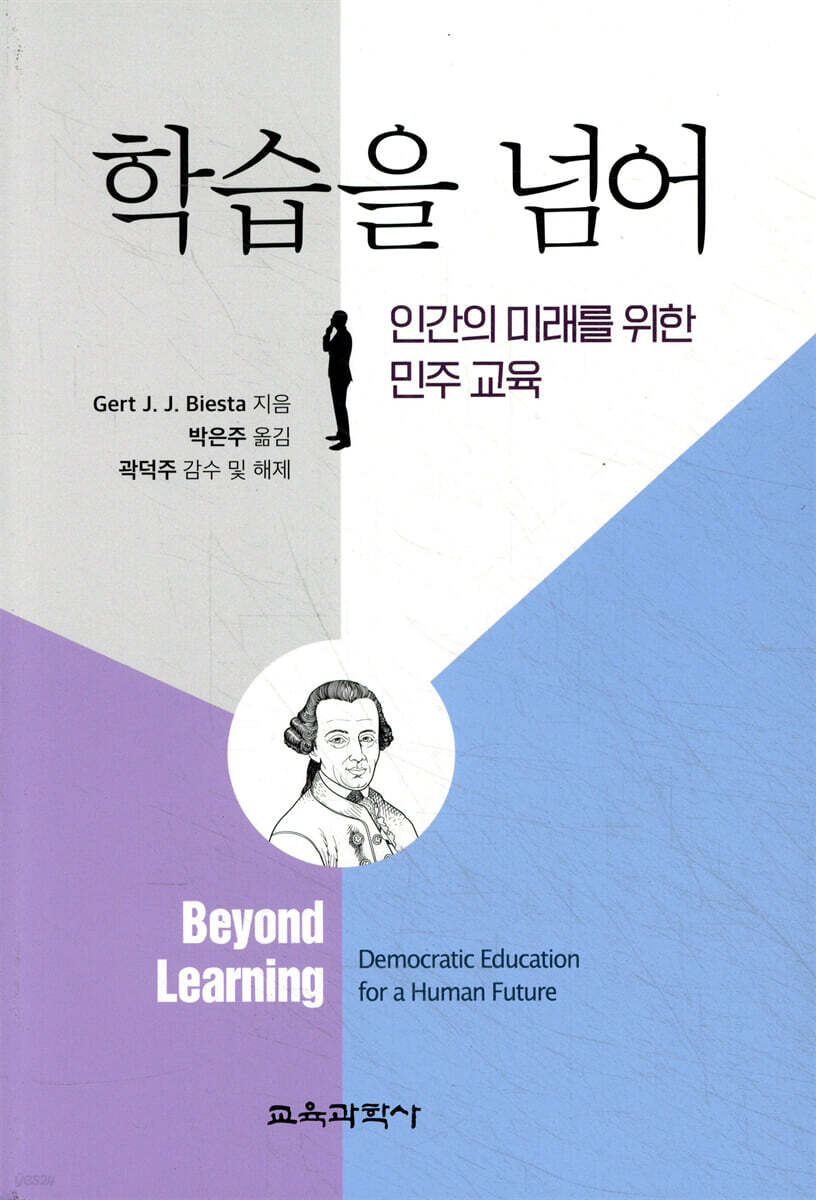
Beyond learning
 |
Description
Book Introduction
It is widely known that education is about nurturing human beings.
But a little closer examination reveals that this statement presents complex issues that cannot be easily resolved.
When we talk about nurturing human beings, what kind of human beings do we assume? What definitions of human beings are embedded in our conception of them? And who are those who do not fit these criteria? In this book, "Beyond Learning," author Gert Biesta challenges us to reexamine the humanism that underpins the grand plan of education—or, more precisely, the very foundation of the modern plan of education.
But a little closer examination reveals that this statement presents complex issues that cannot be easily resolved.
When we talk about nurturing human beings, what kind of human beings do we assume? What definitions of human beings are embedded in our conception of them? And who are those who do not fit these criteria? In this book, "Beyond Learning," author Gert Biesta challenges us to reexamine the humanism that underpins the grand plan of education—or, more precisely, the very foundation of the modern plan of education.
index
□ Translator's Preface … 5
□ Author's Preface … 11
□ Acknowledgments … 19
Prologue: Being Human and Education… 27
Chapter 1: Unlearning: Respeaking the Language of Education in the Age of Learning _ 43
A New Language of Learning _ 48
Unlearning? _ 54
From Learning to Teaching: What Makes Up an Educational Relationship? _ 60
Trust (without foundation) 61
(Transcendental) Violence 63
Responsibility (without knowledge) 67
For Education _ 69
Chapter 2: Emergence: Education After the Death of the Subject _ 73
Subject of Education _ 77
The End of Humanity _ 80
Who comes after the subject? _ 87
Virtual Reality as Objective Space _ 89
The Space of Architecture: The Space of Disjunction _ 91
The Space of the Other: Intersubjective Space _ 94
Space of Responsibility: Ethical Space _ 98
Conclusion _ 102
Chapter 3: A Community of People Without Commonality: The Language of Education and Responsibility _ 105
Modern Society: The Modern Community _ 109
Postmodern Stranger _ 113
A Community of People with Nothing in Common _ 116
The Language of Responsibility _ 120
Rational Communities and “Other” Communities _ 122
Education Community _ 123
Conclusion _ 127
Chapter 4: How Difficult Should Education Be? _ 131
Politics and Political Community _ 137
Hannah Arendt and the Difficulty of Politics _ 142
The Difficulty of Action _ 148
Freedom, Action, and Plurality _ 150
The Space Where Freedom Emerges _ 153
Visit _ 156
How Difficult Should Education Be? _ 160
Chapter 5: The Architecture of Education: Creating Spaces of Globality _ 165
The Tradition of Education and Bildung _ 171
Where Are We Today? _ 174
Bildung: Creating Space for Globality _ 179
Architecture: Creating Spaces of Globality _ 182
Mossbourne Community Academy 183
Alfred Lerner Hall 185
Montessori College Oost 187
Conclusion: The Paradox of Bildung/Architecture _ 191
Chapter 6: Democratic Humanity and Education _ 195
Rethinking Democracy and Education _ 198
Defining Democracy _ 202
Education for Democracy _ 205
Education through Democracy _ 207
Democracy as a Question for Education? _ 209
Kant: The Individual Concept of Democratic Man _ 210
Dewey: The Social Concept of Democratic Man _ 213
Arendt: The Political Concept of Democratic Man _ 218
Democratic Humanity and Education _ 222
Three Questions for Democratic Education _ 225
Conclusion _ 233
Epilogue: The Pedagogy of Intervention … 237
Beyond Learning Release… 245
■ References / 305
■ Search / 318
□ Author's Preface … 11
□ Acknowledgments … 19
Prologue: Being Human and Education… 27
Chapter 1: Unlearning: Respeaking the Language of Education in the Age of Learning _ 43
A New Language of Learning _ 48
Unlearning? _ 54
From Learning to Teaching: What Makes Up an Educational Relationship? _ 60
Trust (without foundation) 61
(Transcendental) Violence 63
Responsibility (without knowledge) 67
For Education _ 69
Chapter 2: Emergence: Education After the Death of the Subject _ 73
Subject of Education _ 77
The End of Humanity _ 80
Who comes after the subject? _ 87
Virtual Reality as Objective Space _ 89
The Space of Architecture: The Space of Disjunction _ 91
The Space of the Other: Intersubjective Space _ 94
Space of Responsibility: Ethical Space _ 98
Conclusion _ 102
Chapter 3: A Community of People Without Commonality: The Language of Education and Responsibility _ 105
Modern Society: The Modern Community _ 109
Postmodern Stranger _ 113
A Community of People with Nothing in Common _ 116
The Language of Responsibility _ 120
Rational Communities and “Other” Communities _ 122
Education Community _ 123
Conclusion _ 127
Chapter 4: How Difficult Should Education Be? _ 131
Politics and Political Community _ 137
Hannah Arendt and the Difficulty of Politics _ 142
The Difficulty of Action _ 148
Freedom, Action, and Plurality _ 150
The Space Where Freedom Emerges _ 153
Visit _ 156
How Difficult Should Education Be? _ 160
Chapter 5: The Architecture of Education: Creating Spaces of Globality _ 165
The Tradition of Education and Bildung _ 171
Where Are We Today? _ 174
Bildung: Creating Space for Globality _ 179
Architecture: Creating Spaces of Globality _ 182
Mossbourne Community Academy 183
Alfred Lerner Hall 185
Montessori College Oost 187
Conclusion: The Paradox of Bildung/Architecture _ 191
Chapter 6: Democratic Humanity and Education _ 195
Rethinking Democracy and Education _ 198
Defining Democracy _ 202
Education for Democracy _ 205
Education through Democracy _ 207
Democracy as a Question for Education? _ 209
Kant: The Individual Concept of Democratic Man _ 210
Dewey: The Social Concept of Democratic Man _ 213
Arendt: The Political Concept of Democratic Man _ 218
Democratic Humanity and Education _ 222
Three Questions for Democratic Education _ 225
Conclusion _ 233
Epilogue: The Pedagogy of Intervention … 237
Beyond Learning Release… 245
■ References / 305
■ Search / 318
Publisher's Review
Modern education, on which our concept of education is largely based, defines a "humane person" as someone who can think independently and possess rational reasoning, and has devoted all its efforts to creating people who meet that standard.
But what we are now witnessing is that the criteria were narrow and biased, catering to a certain class of people with power.
It is no exaggeration to say that human history has been a history of defining a certain humanity as the definition of human, while excluding, discriminating against, and eliminating countless people, such as minorities, children, and women, who do not fit that definition.
The Holocaust, the Rwandan and Bosnian genocides, and other tragedies that we remember as tragedies of the 21st century, were in fact committed based on human definitions of who should be considered human.
In this book, Biesta challenges us to reconsider the foundations of (philosophical) humanism, which have been the solid foundation of modern education.
Thus, we are invited to imagine what happens to education as a way of nurturing human beings when the very foundation of humanism is removed.
I challenge you to think of a different type of education, one that pre-defines the definition of human beings and then creates humans who conform to that definition, or one that incorporates the next generation into the existing order created by the older generation in order to maintain this society.
This bold challenge can only be achieved if we treat the question of the humanity of human existence not as a question that can be answered before we engage in education, but as an open question that can only be answered by engaging in education.
These challenges and questions from Biesta can be seen as bold challenges and questions about how education can be portrayed within the new horizon of postmodernism, moving beyond the modern foundations on which we have been complacent.
Biesta's challenge is radical enough to be somewhat disconcerting in the traditional educational climate that tends to be stable and conservative.
However, it prompts very fundamental thinking about education in that it delves into the deepest foundations of the education we have been pursuing without any doubts, and makes us think about what our education has truly been aiming for.
In particular, Biesta's bold challenge contains important educational terrains that anyone working in education should deeply consider, as it seeks to tread cautiously while pointing out that previous attempts at postmodern education, which sought to break away from the foundations of modern education, have been biased toward a learning-centered trend under the neoliberal economic order.
In that context, the question of what I am doing now and where I am headed is a painful one, but I believe it is a very important question that anyone involved in education must answer seriously and with their own voice.
But what we are now witnessing is that the criteria were narrow and biased, catering to a certain class of people with power.
It is no exaggeration to say that human history has been a history of defining a certain humanity as the definition of human, while excluding, discriminating against, and eliminating countless people, such as minorities, children, and women, who do not fit that definition.
The Holocaust, the Rwandan and Bosnian genocides, and other tragedies that we remember as tragedies of the 21st century, were in fact committed based on human definitions of who should be considered human.
In this book, Biesta challenges us to reconsider the foundations of (philosophical) humanism, which have been the solid foundation of modern education.
Thus, we are invited to imagine what happens to education as a way of nurturing human beings when the very foundation of humanism is removed.
I challenge you to think of a different type of education, one that pre-defines the definition of human beings and then creates humans who conform to that definition, or one that incorporates the next generation into the existing order created by the older generation in order to maintain this society.
This bold challenge can only be achieved if we treat the question of the humanity of human existence not as a question that can be answered before we engage in education, but as an open question that can only be answered by engaging in education.
These challenges and questions from Biesta can be seen as bold challenges and questions about how education can be portrayed within the new horizon of postmodernism, moving beyond the modern foundations on which we have been complacent.
Biesta's challenge is radical enough to be somewhat disconcerting in the traditional educational climate that tends to be stable and conservative.
However, it prompts very fundamental thinking about education in that it delves into the deepest foundations of the education we have been pursuing without any doubts, and makes us think about what our education has truly been aiming for.
In particular, Biesta's bold challenge contains important educational terrains that anyone working in education should deeply consider, as it seeks to tread cautiously while pointing out that previous attempts at postmodern education, which sought to break away from the foundations of modern education, have been biased toward a learning-centered trend under the neoliberal economic order.
In that context, the question of what I am doing now and where I am headed is a painful one, but I believe it is a very important question that anyone involved in education must answer seriously and with their own voice.
GOODS SPECIFICS
- Date of issue: January 25, 2022
- Page count, weight, size: 328 pages | 153*224*30mm
- ISBN13: 9788925416588
- ISBN10: 8925416581
You may also like
카테고리
korean


korean

![GQ KOREA Mark (Monthly): December [2025]](http://librairie.coreenne.fr/cdn/shop/files/8ef265dbbfbf186523ed75ba7319009d.jpg?v=1765340328&width=3840)


