

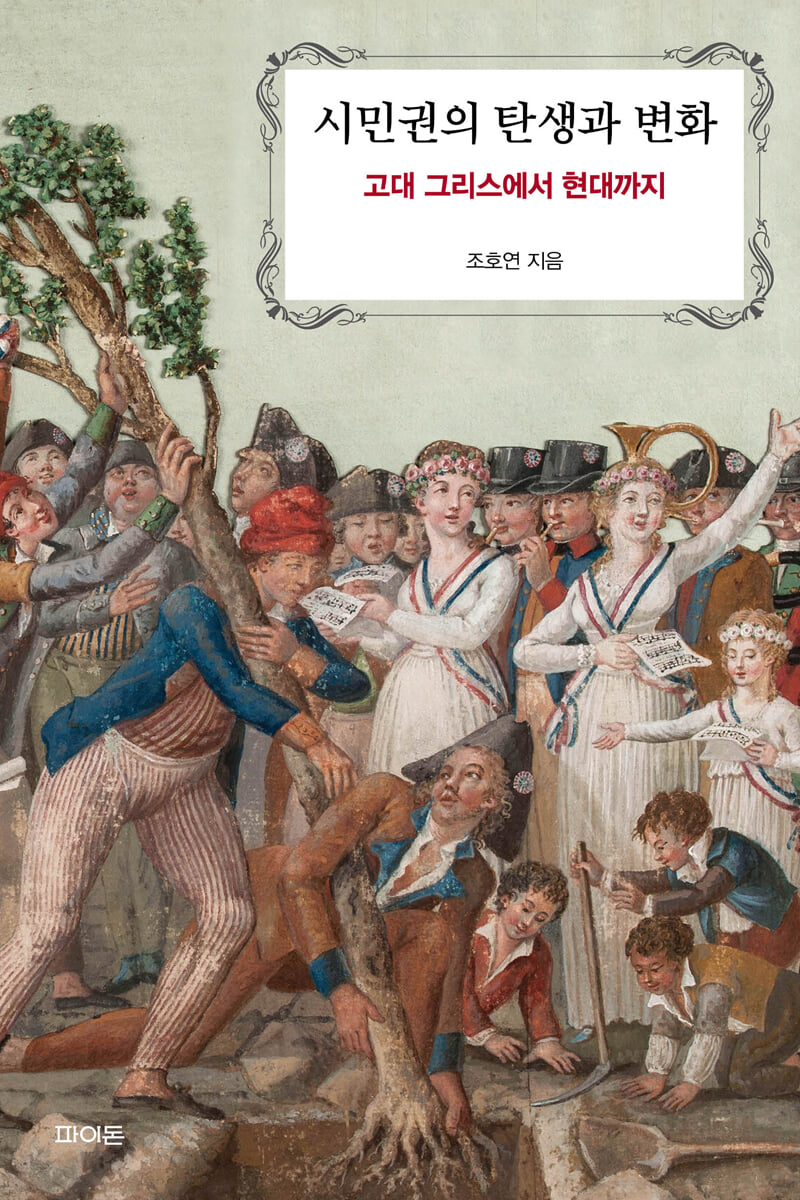
The Birth and Transformation of Citizenship
 |
Description
Book Introduction
A feast of intellectual history that vividly and deeply depicts the history and flow of the concept of citizenship!
This book systematically examines the historical trajectory along which the concept of citizenship in the West was formed and expanded from ancient Greece to the present day.
Citizenship has been universally granted to all members of a nation since the 20th century, but today, with immigration, multiculturalism, and global citizenship becoming increasingly controversial, the question, “Who is a citizen, and what is citizenship?” is once again gaining importance.
In seeking answers to these questions, the author provides readers with a feast of intellectual history by clearly exploring the major historical trends surrounding citizenship and meticulously examining the arguments of thinkers on the topic.
Therefore, this book can be used not only as a basic textbook for university and civic education, debates over citizenship in modern society, and courses on the constitution and the history of political thought, but also as a useful tool for policy and educational materials and discussions, as well as for key cases and thinkers from each era in each chapter.
For example, the author examines the meaning of citizenship in the early days of its birth through Plato and Aristotle of ancient Greece, Cicero and Aurelius of Rome, and discusses the role and changes of citizenship in Christian society based on the thoughts of Chrysostom and Augustine of early Christianity, and Aquinas and Marsilius of the Middle Ages.
Furthermore, through the works of modern figures like Machiavelli, Bodin, and Hobbes, we explore the meaning of citizenship during the decline of feudalism and the turmoil of religious wars. Based on the ideas and writings of Locke, Montesquieu, and Rousseau, we examine how they emphasized the necessity of citizenship when restrained power was needed in the era of absolutism.
It also explores the dynamic changes that occurred in the relationship between the state and civil society through thinkers such as Hegel, Tocqueville, Mill, and Marx in the 19th century.
This book systematically examines the historical trajectory along which the concept of citizenship in the West was formed and expanded from ancient Greece to the present day.
Citizenship has been universally granted to all members of a nation since the 20th century, but today, with immigration, multiculturalism, and global citizenship becoming increasingly controversial, the question, “Who is a citizen, and what is citizenship?” is once again gaining importance.
In seeking answers to these questions, the author provides readers with a feast of intellectual history by clearly exploring the major historical trends surrounding citizenship and meticulously examining the arguments of thinkers on the topic.
Therefore, this book can be used not only as a basic textbook for university and civic education, debates over citizenship in modern society, and courses on the constitution and the history of political thought, but also as a useful tool for policy and educational materials and discussions, as well as for key cases and thinkers from each era in each chapter.
For example, the author examines the meaning of citizenship in the early days of its birth through Plato and Aristotle of ancient Greece, Cicero and Aurelius of Rome, and discusses the role and changes of citizenship in Christian society based on the thoughts of Chrysostom and Augustine of early Christianity, and Aquinas and Marsilius of the Middle Ages.
Furthermore, through the works of modern figures like Machiavelli, Bodin, and Hobbes, we explore the meaning of citizenship during the decline of feudalism and the turmoil of religious wars. Based on the ideas and writings of Locke, Montesquieu, and Rousseau, we examine how they emphasized the necessity of citizenship when restrained power was needed in the era of absolutism.
It also explores the dynamic changes that occurred in the relationship between the state and civil society through thinkers such as Hegel, Tocqueville, Mill, and Marx in the 19th century.
- You can preview some of the book's contents.
Preview
index
introduction
Chapter 1: Citizenship in Ancient Greece
1.
The Birth of Citizenship
1) Sparta 2) Athens
2.
thinkers
1) Plato 2) Aristotle
Chapter 2: Hellenistic and Roman Citizenship
1.
Hellenistic period
2.
Ancient Rome
1) From the founding of ancient Rome to the Republic period
2) From the fall of the Western Roman Empire to the fall of the Roman Empire
3.
thinkers
1) Cicero 2) Marcus Aurelius
Chapter 3: Citizenship in the Transition from Rome to the Middle Ages
1.
Christianity and Citizenship
2.
The Fall of the Western Roman Empire and Its Aftermath
3.
thinkers
1) Johannes Chrysostom 2) Augustine
Chapter 4: Citizenship in the Middle Ages
1.
migration of peoples
2.
Frankish Kingdom period
3.
The Decline of the City and the Florence Theses
4.
Urban development and the commune movement
5.
Citizenship of major regions
6.
Development of law
7.
thinkers
1) John Salisbury 2) Thomas Aquinas
3) Marsilius 4) Azo and Bartolus
Chapter 5: Citizenship in the Renaissance
1.
Renaissance and Citizenship
2.
Florence and civic humanism
3.
thinkers
1) Leonardo Bruni 2) Machiavelli 3) Guicciardini
Chapter 6: Modern Citizenship (1)
1.
The emergence of absolute monarchy
2.
The French Wars of Religion and Bodin
1) Huguenot Wars 2) Bodin
3.
The English Civil War and Hobbes
1) Civil War and the Putney Debate 2) Hobbes
4.
The Glorious Revolution and Locke
1) Glorious Revolution 2) Locke
Chapter 7: Modern Citizenship (2)
1.
Natural Law and Citizenship
2.
Montesquieu and Citizenship
3.
Rousseau and Citizenship
4.
The American Revolution and Civil Rights
5.
The French Revolution and Civil Rights
Chapter 8: Modern Citizenship (3)
1.
Citizenship issues in the 19th century
2.
thinkers
1) Hegel: State and Civil Society
2) Tocqueville: Democracy in America
3) John Stuart Mill: Liberty and Civil Society
4) Marx: Civil Society and Class
5) Socialists after Marx
Chapter 9: Citizenship Issues Since the 20th Century
1.
The rise of social rights
2.
Citizenship in the Soviet era
3.
European integration movement and citizenship
4.
World Citizenship Movement
conclusion
References
Search
Chapter 1: Citizenship in Ancient Greece
1.
The Birth of Citizenship
1) Sparta 2) Athens
2.
thinkers
1) Plato 2) Aristotle
Chapter 2: Hellenistic and Roman Citizenship
1.
Hellenistic period
2.
Ancient Rome
1) From the founding of ancient Rome to the Republic period
2) From the fall of the Western Roman Empire to the fall of the Roman Empire
3.
thinkers
1) Cicero 2) Marcus Aurelius
Chapter 3: Citizenship in the Transition from Rome to the Middle Ages
1.
Christianity and Citizenship
2.
The Fall of the Western Roman Empire and Its Aftermath
3.
thinkers
1) Johannes Chrysostom 2) Augustine
Chapter 4: Citizenship in the Middle Ages
1.
migration of peoples
2.
Frankish Kingdom period
3.
The Decline of the City and the Florence Theses
4.
Urban development and the commune movement
5.
Citizenship of major regions
6.
Development of law
7.
thinkers
1) John Salisbury 2) Thomas Aquinas
3) Marsilius 4) Azo and Bartolus
Chapter 5: Citizenship in the Renaissance
1.
Renaissance and Citizenship
2.
Florence and civic humanism
3.
thinkers
1) Leonardo Bruni 2) Machiavelli 3) Guicciardini
Chapter 6: Modern Citizenship (1)
1.
The emergence of absolute monarchy
2.
The French Wars of Religion and Bodin
1) Huguenot Wars 2) Bodin
3.
The English Civil War and Hobbes
1) Civil War and the Putney Debate 2) Hobbes
4.
The Glorious Revolution and Locke
1) Glorious Revolution 2) Locke
Chapter 7: Modern Citizenship (2)
1.
Natural Law and Citizenship
2.
Montesquieu and Citizenship
3.
Rousseau and Citizenship
4.
The American Revolution and Civil Rights
5.
The French Revolution and Civil Rights
Chapter 8: Modern Citizenship (3)
1.
Citizenship issues in the 19th century
2.
thinkers
1) Hegel: State and Civil Society
2) Tocqueville: Democracy in America
3) John Stuart Mill: Liberty and Civil Society
4) Marx: Civil Society and Class
5) Socialists after Marx
Chapter 9: Citizenship Issues Since the 20th Century
1.
The rise of social rights
2.
Citizenship in the Soviet era
3.
European integration movement and citizenship
4.
World Citizenship Movement
conclusion
References
Search
Into the book
Citizenship was not simply a legal instrument that determined membership; it defined the rights of the member to the state or city and provided protection for the member from the state or city.
Citizenship also meant that those who held citizenship were given the possibility and opportunity to participate in various community activities with a sense of responsibility for that community.
--- p.11
Although various interpretations of the development of citizenship have been attempted, we still do not have a clear answer to what citizenship is and how it developed.
Moreover, as globalization progressed in the latter half of the 20th century, the concept of citizenship became more fluid and complex.
--- p.13
Spartan citizenship held a greater influence on European thinkers than Athens until the French civil revolution of the late eighteenth century.
Sparta introduced a citizenship system because of its tense relationship with the Messenians, and to achieve the goal of national security, it implemented the first public education in the ancient Western world for all Spartan citizens.
--- p.24
In Athens, there were differences in civic rights based on property, but Rome showed the characteristic of differentiating citizenship rights in the process of integrating neighboring peoples.
--- p.62
Monasteries offered a kind of religious citizenship as an alternative to the secular city.
…monastic citizenship no longer meant rational calculation or participation on the part of individuals, but rather submission to the moral intelligence of the abbot according to the law of obedience.
A characteristic of ancient citizenship survived in a religious form in a society where such discipline was valued.
--- p.98
Since the concept of organism was dominant in Christianity, this provided the primary cause for the disappearance of the concept of citizenship.
In Christianity, all power was considered divinely derived, and people's freedom was curtailed.
--- p.102
In a country where an absolute monarchy was established, all citizens became subjects.
Even so, the concept of citizenship has not completely disappeared in Europe.
The term citizen continues to encompass several subconcepts and traditions.
--- p.160
Our rights as human beings and our rights as citizens had to be aligned.
However, even in the 18th century, the relationship between the two was still not clearly defined.
In effect, humans gave up their natural rights and then created customary laws that guaranteed their freedom as citizens.
In this way, citizens replaced humans.
--- p.202
The first time the word 'citizen' was used in modern times to mean a member of a nation rather than a member of a city was in North America, which had won independence from Britain.
The term citizen in this sense was not used in the Encyclopædia Britannica until 1910.
So Palmer (R.
R. Palmer) said, “The word ‘citizen’ in the modern sense of the word in English is Americanism.”
--- p.232
Perhaps the most striking feature of American citizenship was its spatial duality.
In the United States, a composite republic, citizenship is dual.
A citizen is a citizen of both his state and the federal government, subject to the federal laws and also a legislator of those laws.
--- p.247
The United Nations has been consistently criticized not only for its undemocratic nature but also for its relative ineffectiveness in promoting the rights and duties of world citizens.
This phenomenon is a result of the deep-rooted principle of national sovereignty, and also a result of this organization being manipulated by powerful countries.
Citizenship also meant that those who held citizenship were given the possibility and opportunity to participate in various community activities with a sense of responsibility for that community.
--- p.11
Although various interpretations of the development of citizenship have been attempted, we still do not have a clear answer to what citizenship is and how it developed.
Moreover, as globalization progressed in the latter half of the 20th century, the concept of citizenship became more fluid and complex.
--- p.13
Spartan citizenship held a greater influence on European thinkers than Athens until the French civil revolution of the late eighteenth century.
Sparta introduced a citizenship system because of its tense relationship with the Messenians, and to achieve the goal of national security, it implemented the first public education in the ancient Western world for all Spartan citizens.
--- p.24
In Athens, there were differences in civic rights based on property, but Rome showed the characteristic of differentiating citizenship rights in the process of integrating neighboring peoples.
--- p.62
Monasteries offered a kind of religious citizenship as an alternative to the secular city.
…monastic citizenship no longer meant rational calculation or participation on the part of individuals, but rather submission to the moral intelligence of the abbot according to the law of obedience.
A characteristic of ancient citizenship survived in a religious form in a society where such discipline was valued.
--- p.98
Since the concept of organism was dominant in Christianity, this provided the primary cause for the disappearance of the concept of citizenship.
In Christianity, all power was considered divinely derived, and people's freedom was curtailed.
--- p.102
In a country where an absolute monarchy was established, all citizens became subjects.
Even so, the concept of citizenship has not completely disappeared in Europe.
The term citizen continues to encompass several subconcepts and traditions.
--- p.160
Our rights as human beings and our rights as citizens had to be aligned.
However, even in the 18th century, the relationship between the two was still not clearly defined.
In effect, humans gave up their natural rights and then created customary laws that guaranteed their freedom as citizens.
In this way, citizens replaced humans.
--- p.202
The first time the word 'citizen' was used in modern times to mean a member of a nation rather than a member of a city was in North America, which had won independence from Britain.
The term citizen in this sense was not used in the Encyclopædia Britannica until 1910.
So Palmer (R.
R. Palmer) said, “The word ‘citizen’ in the modern sense of the word in English is Americanism.”
--- p.232
Perhaps the most striking feature of American citizenship was its spatial duality.
In the United States, a composite republic, citizenship is dual.
A citizen is a citizen of both his state and the federal government, subject to the federal laws and also a legislator of those laws.
--- p.247
The United Nations has been consistently criticized not only for its undemocratic nature but also for its relative ineffectiveness in promoting the rights and duties of world citizens.
This phenomenon is a result of the deep-rooted principle of national sovereignty, and also a result of this organization being manipulated by powerful countries.
--- p.361
Publisher's Review
The discussion surrounding citizenship is ultimately related to the question, 'What is a nation?'
The fundamental question the author raises in the book, illuminating the development of citizenship from ancient times, is:
First, who were citizens when citizenship was established in ancient Greece and Rome? Second, since the concept of citizenship in the ancient sense disappeared in the early Middle Ages, what differences did medieval citizenship have with ancient citizenship? Third, how was modern citizenship established, and how did it acquire universal meaning? Fourth, how does the concept of citizenship relate to globalization in the 20th century, and what topics are being discussed? These questions lead to the fundamental question of how to understand the expansion of citizenship and the prospects for its future development.
The debate surrounding citizenship is ultimately an extension of the question, "What is a nation?"
The main interest of the thinkers covered in this book, including Plato, Aristotle, Augustine, Machiavelli, Hobbes, Locke, Montesquieu, Rousseau, Hegel, Tocqueville, and Marx, was also in the theory of the state.
How do we define 'citizen' today?
The history of the debate surrounding citizens and citizenship, citizenship and nationality, is deep-rooted.
According to the author, the topic of citizenship has been a subject of heated debate since the late 20th century.
That is, it is related to the so-called 'end of history' that occurred with the collapse of the socialist bloc around 1990. As efforts to build a state based on ideology were frustrated after the Russian Revolution of 1917, the question of what a state is and what it should be was raised, and at the core of this question was the concept of citizenship.
Habermas summarized the issues surrounding citizenship in the contemporary context into three: the future of the nation-state, the relationship between the nation-state and democracy following the launch of the European Union and the European Single Market, and the conflict between the universal principles of constitutional democracy and the special circumstances of maintaining a community society due to the influx of large-scale immigration.
The questions Habermas raised over 30 years ago are even more acute today.
However, the question of citizenship was not first raised in the 20th century; it has had a lasting significance ever since mankind began organizing nations and urban communities.
What is citizenship, and why does the difference between citizenship and nationality matter?
Many people have heard of citizenship.
Few people know the difference between citizenship and nationality.
The author argues that it is no exaggeration to say that the fundamental reason the United States has become a superpower and has come to dominate world history today lies in its citizenship system.
The institution of citizenship originated in ancient Greece, played a crucial role in the expansion of Rome, and formed the foundation of the autonomous cities of the Middle Ages and modern Europe and the United States.
Citizenship not only means the legal rights of a citizen of a country, but is also a core means of internal sovereignty.
Most countries in the world, including our country, have adopted a nationality system, but some countries, such as the United States, Canada, and Australia, use the term citizenship.
The reason why these countries use the term citizenship instead of nationality is because of a complex historical background.
Meanwhile, the word "citizenship" carries with it many potential for misunderstanding.
This word is a translation of the English word 'citizenship', but strictly speaking, citizenship and 'citizenship' are not the same.
The Chinese character word citizenship (市民權) refers to the rights one has as a citizen, but 'citizenship' encompasses not only the rights and status of a citizen, but also the qualities and conditions.
The Four Concentric Circles Model: Understanding the Expansion of Citizenship
The author introduces the 'Four Concentric Circles Model' as a conceptual tool to most effectively understand citizenship.
Michel Troper, in explaining the French Revolution, divided the French population into four concentric circles.
The outermost circle contains all residents, while the next circle contains most men, women, and minors born to French parents.
The third circle includes the active citizens who pay property taxes and have the right to vote, which is granted to adult males over a certain age, and finally, the smallest circle is made up of the few people who are eligible to be elected.
According to the author, Tropper's argument can be applied not only to the French Revolution but also to understanding the expansion of citizenship throughout history.
For example, in most countries belonging to the Western intellectual tradition in the early 20th century, citizens and people were identified, class distinctions within the state were abolished, and boundaries based on gender and race disappeared.
To use the analogy of concentric circles, in the case of ancient Greece, the small central circle containing the citizens expanded outward, eventually erasing all boundaries between the concentric circles.
In the first half of the 20th century, when citizenship became universal, a fundamental change occurred in the nature of citizenship.
If before, citizenship could be explained with concentric circles, now the concentric circles have become a single circle, capable of containing all the citizens of each country.
Of course, the controversy surrounding citizenship has not disappeared.
Now that the relationships between the circles of the peoples of each country are gaining attention, a movement has emerged toward a single, grand circle encompassing all the circles.
That is, it is a movement toward regional citizenship that transcends the citizenship of individual countries, and toward global citizenship.
The author argues that, given the growing problems of immigration and the increasing nationalism of individual nations, the realistic possibility of individual nations' citizenships, existing as separate circles in the world we live in in the first half of the 21st century, being integrated into one large circle is unlikely.
The fundamental question the author raises in the book, illuminating the development of citizenship from ancient times, is:
First, who were citizens when citizenship was established in ancient Greece and Rome? Second, since the concept of citizenship in the ancient sense disappeared in the early Middle Ages, what differences did medieval citizenship have with ancient citizenship? Third, how was modern citizenship established, and how did it acquire universal meaning? Fourth, how does the concept of citizenship relate to globalization in the 20th century, and what topics are being discussed? These questions lead to the fundamental question of how to understand the expansion of citizenship and the prospects for its future development.
The debate surrounding citizenship is ultimately an extension of the question, "What is a nation?"
The main interest of the thinkers covered in this book, including Plato, Aristotle, Augustine, Machiavelli, Hobbes, Locke, Montesquieu, Rousseau, Hegel, Tocqueville, and Marx, was also in the theory of the state.
How do we define 'citizen' today?
The history of the debate surrounding citizens and citizenship, citizenship and nationality, is deep-rooted.
According to the author, the topic of citizenship has been a subject of heated debate since the late 20th century.
That is, it is related to the so-called 'end of history' that occurred with the collapse of the socialist bloc around 1990. As efforts to build a state based on ideology were frustrated after the Russian Revolution of 1917, the question of what a state is and what it should be was raised, and at the core of this question was the concept of citizenship.
Habermas summarized the issues surrounding citizenship in the contemporary context into three: the future of the nation-state, the relationship between the nation-state and democracy following the launch of the European Union and the European Single Market, and the conflict between the universal principles of constitutional democracy and the special circumstances of maintaining a community society due to the influx of large-scale immigration.
The questions Habermas raised over 30 years ago are even more acute today.
However, the question of citizenship was not first raised in the 20th century; it has had a lasting significance ever since mankind began organizing nations and urban communities.
What is citizenship, and why does the difference between citizenship and nationality matter?
Many people have heard of citizenship.
Few people know the difference between citizenship and nationality.
The author argues that it is no exaggeration to say that the fundamental reason the United States has become a superpower and has come to dominate world history today lies in its citizenship system.
The institution of citizenship originated in ancient Greece, played a crucial role in the expansion of Rome, and formed the foundation of the autonomous cities of the Middle Ages and modern Europe and the United States.
Citizenship not only means the legal rights of a citizen of a country, but is also a core means of internal sovereignty.
Most countries in the world, including our country, have adopted a nationality system, but some countries, such as the United States, Canada, and Australia, use the term citizenship.
The reason why these countries use the term citizenship instead of nationality is because of a complex historical background.
Meanwhile, the word "citizenship" carries with it many potential for misunderstanding.
This word is a translation of the English word 'citizenship', but strictly speaking, citizenship and 'citizenship' are not the same.
The Chinese character word citizenship (市民權) refers to the rights one has as a citizen, but 'citizenship' encompasses not only the rights and status of a citizen, but also the qualities and conditions.
The Four Concentric Circles Model: Understanding the Expansion of Citizenship
The author introduces the 'Four Concentric Circles Model' as a conceptual tool to most effectively understand citizenship.
Michel Troper, in explaining the French Revolution, divided the French population into four concentric circles.
The outermost circle contains all residents, while the next circle contains most men, women, and minors born to French parents.
The third circle includes the active citizens who pay property taxes and have the right to vote, which is granted to adult males over a certain age, and finally, the smallest circle is made up of the few people who are eligible to be elected.
According to the author, Tropper's argument can be applied not only to the French Revolution but also to understanding the expansion of citizenship throughout history.
For example, in most countries belonging to the Western intellectual tradition in the early 20th century, citizens and people were identified, class distinctions within the state were abolished, and boundaries based on gender and race disappeared.
To use the analogy of concentric circles, in the case of ancient Greece, the small central circle containing the citizens expanded outward, eventually erasing all boundaries between the concentric circles.
In the first half of the 20th century, when citizenship became universal, a fundamental change occurred in the nature of citizenship.
If before, citizenship could be explained with concentric circles, now the concentric circles have become a single circle, capable of containing all the citizens of each country.
Of course, the controversy surrounding citizenship has not disappeared.
Now that the relationships between the circles of the peoples of each country are gaining attention, a movement has emerged toward a single, grand circle encompassing all the circles.
That is, it is a movement toward regional citizenship that transcends the citizenship of individual countries, and toward global citizenship.
The author argues that, given the growing problems of immigration and the increasing nationalism of individual nations, the realistic possibility of individual nations' citizenships, existing as separate circles in the world we live in in the first half of the 21st century, being integrated into one large circle is unlikely.
GOODS SPECIFICS
- Date of issue: July 30, 2025
- Page count, weight, size: 392 pages | 142*210*30mm
- ISBN13: 9791199104723
- ISBN10: 1199104728
You may also like
카테고리
korean


korean

![GQ KOREA Mark (Monthly): December [2025]](http://librairie.coreenne.fr/cdn/shop/files/8ef265dbbfbf186523ed75ba7319009d.jpg?v=1765340328&width=3840)


