

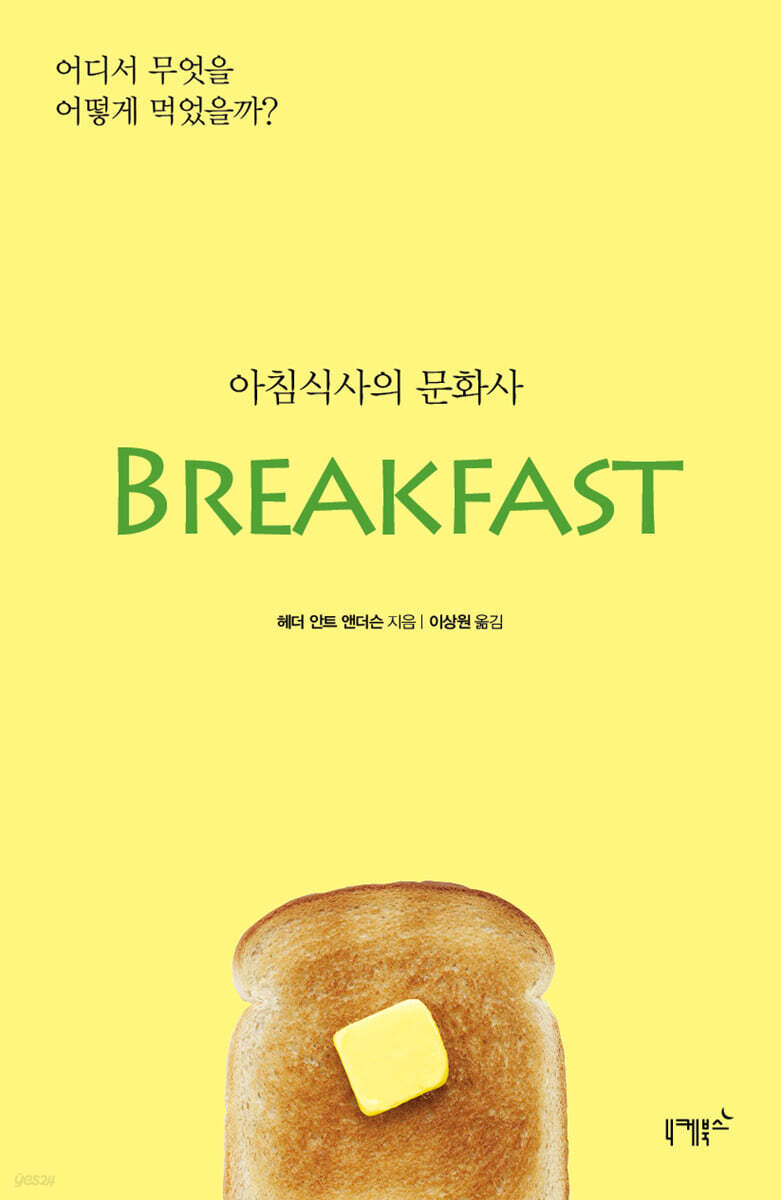
The Cultural History of Breakfast
 |
Description
Book Introduction
When did we start eating breakfast, the most important meal of the day?
Where, what and how did you eat it?
Is it good or bad to eat breakfast?
From sin to life's last meal, breakfast has many faces.
Extreme moralists in medieval and early modern Europe condemned breakfast as one of the seven deadly sins.
For healthy people, except for children, the elderly, the sick, and manual laborers, eating breakfast was considered a sin and a symbol of vulgarity.
Breakfast, once considered a sin, finally gained recognition in the mid-15th century.
Because King Francis I of France was a champion of breakfast.
As everyone took the king as a role model, breakfast became a trend, and in the late 16th century, thanks to Queen Elizabeth, who had the habit of waking up early in the morning, breakfast became a part of the daily routine of diligent morning people.
Breakfast is the first meal of the day, but sometimes it can also be the last meal of life.
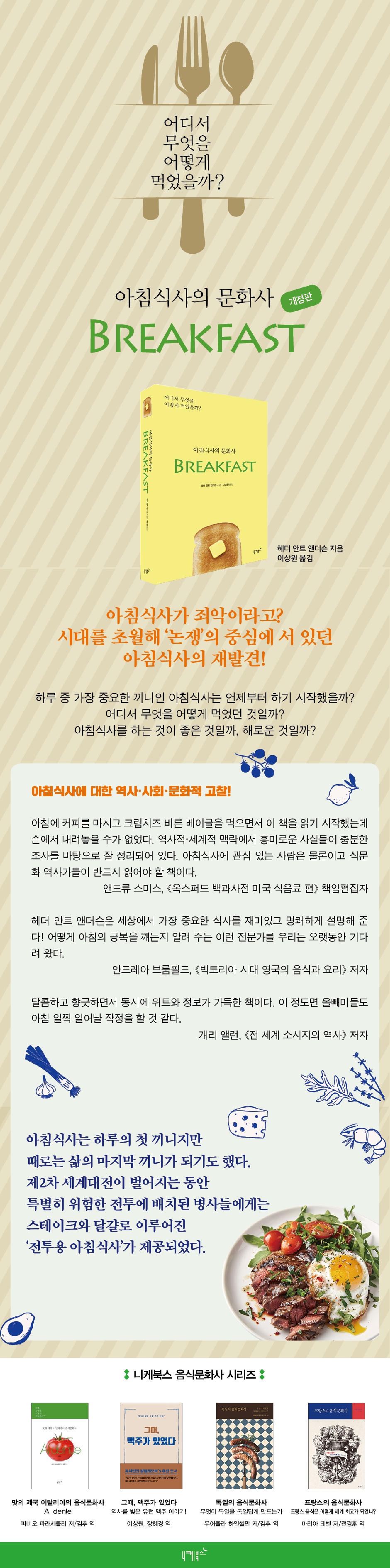
During World War II, soldiers deployed to particularly dangerous combat positions were provided with a "battle breakfast" consisting of steak and eggs.
Twenty years later, astronauts were given the same table before launching their spacecraft.
A bacon-wrapped sirloin steak and fried eggs was perhaps the last supper for someone who might never return.
Even death row inmates are given steak and eggs as their last meal unless they request otherwise.
Where, what and how did you eat it?
Is it good or bad to eat breakfast?
From sin to life's last meal, breakfast has many faces.
Extreme moralists in medieval and early modern Europe condemned breakfast as one of the seven deadly sins.
For healthy people, except for children, the elderly, the sick, and manual laborers, eating breakfast was considered a sin and a symbol of vulgarity.
Breakfast, once considered a sin, finally gained recognition in the mid-15th century.
Because King Francis I of France was a champion of breakfast.
As everyone took the king as a role model, breakfast became a trend, and in the late 16th century, thanks to Queen Elizabeth, who had the habit of waking up early in the morning, breakfast became a part of the daily routine of diligent morning people.
Breakfast is the first meal of the day, but sometimes it can also be the last meal of life.
During World War II, soldiers deployed to particularly dangerous combat positions were provided with a "battle breakfast" consisting of steak and eggs.
Twenty years later, astronauts were given the same table before launching their spacecraft.
A bacon-wrapped sirloin steak and fried eggs was perhaps the last supper for someone who might never return.
Even death row inmates are given steak and eggs as their last meal unless they request otherwise.
- You can preview some of the book's contents.
Preview
index
CHAPTER 1 Breakfast: A History of Endless Debate
1. Etymology of breakfast
2. The beginning of grain cultivation
3 An early breakfast prepared before dawn
4 Breakfast is a sin?
5 The Birth of the English Breakfast
CHAPTER 2 Breakfast: What and How Did You Eat?
1 rice porridge bread
Porridge | Cereal | Bread | Rolls and Muffins | Sandwiches | Pancakes and Waffles | Breakfast Cakes | Pastries | Donuts
2 Dairy products to start your morning lightly
Yogurt | Cheese | Fresh Cheese
3 Infinite Transformations of Eggs
Boiled egg | Poached egg | Pickled egg | Baked egg | Scrambled egg | Fried egg
4 Meat that is delicious even when eaten in the morning
Pork | Beef and Lamb | Poultry | Seafood
5 Soul-warming soups
Soups and Stews | Leftovers from the Day Before
6 Best Times to Eat Fruit
Fruits and Vegetables
7 If you think coffee is the best morning drink, you're wrong!
Alcohol | Caffeine | Juice
CHAPTER 3 Breakfast, a Meal for the Whole Family
1 Don't spill breadcrumbs on the bed!
2 Breakfast-only restaurant on the east side
Setting the Breakfast Table|Breakfast Meeting
3 A housewife's dream: a modernized kitchen
4 Upgrade your toaster and packaged bread!
5 Cereals Take Over the Breakfast Table!
6 Breakfast table set by children
7 Men entering the kitchen
8 Just like mother's cooking
9 Breakfasts for Special Occasions
10 What's your morning routine after satisfying sex?
CHAPTER 4 Breakfast: Simple is best when you're away from home!
1. A taste of home in a foreign country
2 You can't starve even on a stagecoach running through the wasteland
3 The worst breakfast on the train
4. Attack the driver
5 Why is hotel breakfast a buffet?
6 Boarding Houses and Bed and Breakfasts (B&Bs)
7 Breakfast Tips: Eat a generous amount
Coffee House | Western Country Diner | Breakfast Specialty Shop | Fast Food | Cafeteria and Automat
8 Donut Girls, Roaming the Battlefield
Cooking Wagons and Camping Cooking | Mess Hall | Combat Rations
9 Breakfast in Space
10 Dove Tarts and Spread-Winged Eagles
Breakfast on campus
11 Death Row Inmate's Breakfast
12 Symbols of Intimacy: Breakfast Invitations
Wedding Day Breakfast | Peyote Breakfast
CHAPTER 5 Breakfast, Embracing Art and the World
1 Literature
2 Breakfast Scenes as Seen by Painters
Dutch Breakfast Painting|Portrait
3 The many faces of the breakfast table
4 Conflict Scenes in Movies, Breakfast Table
5 Why do children's TV programs air in the morning?
Children and cereal commercials
6 Play Breakfast
Breakfast in the News
8 The Future of Breakfast
1. Etymology of breakfast
2. The beginning of grain cultivation
3 An early breakfast prepared before dawn
4 Breakfast is a sin?
5 The Birth of the English Breakfast
CHAPTER 2 Breakfast: What and How Did You Eat?
1 rice porridge bread
Porridge | Cereal | Bread | Rolls and Muffins | Sandwiches | Pancakes and Waffles | Breakfast Cakes | Pastries | Donuts
2 Dairy products to start your morning lightly
Yogurt | Cheese | Fresh Cheese
3 Infinite Transformations of Eggs
Boiled egg | Poached egg | Pickled egg | Baked egg | Scrambled egg | Fried egg
4 Meat that is delicious even when eaten in the morning
Pork | Beef and Lamb | Poultry | Seafood
5 Soul-warming soups
Soups and Stews | Leftovers from the Day Before
6 Best Times to Eat Fruit
Fruits and Vegetables
7 If you think coffee is the best morning drink, you're wrong!
Alcohol | Caffeine | Juice
CHAPTER 3 Breakfast, a Meal for the Whole Family
1 Don't spill breadcrumbs on the bed!
2 Breakfast-only restaurant on the east side
Setting the Breakfast Table|Breakfast Meeting
3 A housewife's dream: a modernized kitchen
4 Upgrade your toaster and packaged bread!
5 Cereals Take Over the Breakfast Table!
6 Breakfast table set by children
7 Men entering the kitchen
8 Just like mother's cooking
9 Breakfasts for Special Occasions
10 What's your morning routine after satisfying sex?
CHAPTER 4 Breakfast: Simple is best when you're away from home!
1. A taste of home in a foreign country
2 You can't starve even on a stagecoach running through the wasteland
3 The worst breakfast on the train
4. Attack the driver
5 Why is hotel breakfast a buffet?
6 Boarding Houses and Bed and Breakfasts (B&Bs)
7 Breakfast Tips: Eat a generous amount
Coffee House | Western Country Diner | Breakfast Specialty Shop | Fast Food | Cafeteria and Automat
8 Donut Girls, Roaming the Battlefield
Cooking Wagons and Camping Cooking | Mess Hall | Combat Rations
9 Breakfast in Space
10 Dove Tarts and Spread-Winged Eagles
Breakfast on campus
11 Death Row Inmate's Breakfast
12 Symbols of Intimacy: Breakfast Invitations
Wedding Day Breakfast | Peyote Breakfast
CHAPTER 5 Breakfast, Embracing Art and the World
1 Literature
2 Breakfast Scenes as Seen by Painters
Dutch Breakfast Painting|Portrait
3 The many faces of the breakfast table
4 Conflict Scenes in Movies, Breakfast Table
5 Why do children's TV programs air in the morning?
Children and cereal commercials
6 Play Breakfast
Breakfast in the News
8 The Future of Breakfast
Detailed image
Into the book
In the Middle Ages, when all pleasures related to the body, such as overeating and overdrinking, were suppressed, fasting was an essential virtue.
Medieval moralists considered two meals a day—a light lunch and a slightly more substantial dinner—sufficient.
Therefore, from the Catholic Church's perspective, breakfast was vulgar and vulgar.
The extravagant 'after-dinner' meal, eaten late at night, accompanied by copious amounts of wine, was also to be avoided by any respectable person.
The critical view of breakfast may have been partly due to the beer or wine that usually accompanies the meal.
Because I thought I was eating breakfast to drink alcoholic beverages.
Conversely, eating breakfast also meant that the poor had to consume enough calories to do the hard work of farming.
This was the basis for allowing breakfast to be enjoyed by some people.
Lower-class peasants and manual laborers needed energy to get through the first few hours of hard work, so they were allowed breakfast.
Also, people who were too weak to wait until the midday meal, such as children, the elderly, or the sick, could fill their stomachs with a bowl of porridge.
Ultimately, whatever the reason, eating breakfast was a laughing matter.
--- From "Breakfast, a History of Endless Debate"
The kaiseki breakfast at a ryokan, a traditional Japanese inn, is a feast of 14 perfectly harmonious courses, although the portions are small.
On the other hand, Italian breakfast usually consists of coffee and bread with butter or jam.
Despite these regional differences, breakfast tables around the world are surprisingly similar.
Most people who eat breakfast every day eat grains, dairy products, and protein foods, with some variation in how they are prepared, and drink a hot caffeinated beverage on the side.
--- From "What and How Did I Eat Breakfast?"
Before the concept of 'eating out' emerged, all meals, including breakfast, were eaten at home.
Even after restaurants became popular, most people still ate breakfast at home.
In the 17th century, when breakfast was not common in England, people often had a light meal in their bedroom before starting their day.
Then, in the 18th century, large mansions began to have dedicated breakfast rooms where guests could be entertained or family members could gather for breakfast of toast and tea.
A dedicated breakfast room was also an architectural feature of colonial American mansions.
As the 20th century progressed, American Craftsman style wooden houses began to incorporate a small separate dining area off the kitchen.
--- From "Breakfast, a meal the whole family enjoys together"
The American tradition of eating breakfast on the go began with the Mayflower.
Of course, even before the arrival of Europeans, Native Americans had been eating beef jerky and other foods for breakfast on their way to a morning hunt or to farm work for thousands of years.
Those who sailed to the New World suffered from poor food.
Maggots swarming in biscuits and oatmeal were the only source of protein.
In the latter half of the 20th century, a large number of portable breakfast foods appeared.
There were even vitamin-fortified canned shakes, cereal bars, and fruit-flavored yogurts you could squeeze straight from the tube into your mouth.
--- From "Breakfast, when you're out and about, simple is best!"
As a part of daily life, morning has become an important subject of art, no less than any other.
Although there are no plays or operas about breakfast, several film directors have chosen the breakfast table as the backdrop for key scenes.
The 17th century in Europe was not only the golden age of breakfast but also the golden age of Dutch still life painting.
The most convincing evidence for this can be found in the fact that 17th-century Dutch still life paintings were given the nickname 'breakfast paintings'.
Medieval moralists considered two meals a day—a light lunch and a slightly more substantial dinner—sufficient.
Therefore, from the Catholic Church's perspective, breakfast was vulgar and vulgar.
The extravagant 'after-dinner' meal, eaten late at night, accompanied by copious amounts of wine, was also to be avoided by any respectable person.
The critical view of breakfast may have been partly due to the beer or wine that usually accompanies the meal.
Because I thought I was eating breakfast to drink alcoholic beverages.
Conversely, eating breakfast also meant that the poor had to consume enough calories to do the hard work of farming.
This was the basis for allowing breakfast to be enjoyed by some people.
Lower-class peasants and manual laborers needed energy to get through the first few hours of hard work, so they were allowed breakfast.
Also, people who were too weak to wait until the midday meal, such as children, the elderly, or the sick, could fill their stomachs with a bowl of porridge.
Ultimately, whatever the reason, eating breakfast was a laughing matter.
--- From "Breakfast, a History of Endless Debate"
The kaiseki breakfast at a ryokan, a traditional Japanese inn, is a feast of 14 perfectly harmonious courses, although the portions are small.
On the other hand, Italian breakfast usually consists of coffee and bread with butter or jam.
Despite these regional differences, breakfast tables around the world are surprisingly similar.
Most people who eat breakfast every day eat grains, dairy products, and protein foods, with some variation in how they are prepared, and drink a hot caffeinated beverage on the side.
--- From "What and How Did I Eat Breakfast?"
Before the concept of 'eating out' emerged, all meals, including breakfast, were eaten at home.
Even after restaurants became popular, most people still ate breakfast at home.
In the 17th century, when breakfast was not common in England, people often had a light meal in their bedroom before starting their day.
Then, in the 18th century, large mansions began to have dedicated breakfast rooms where guests could be entertained or family members could gather for breakfast of toast and tea.
A dedicated breakfast room was also an architectural feature of colonial American mansions.
As the 20th century progressed, American Craftsman style wooden houses began to incorporate a small separate dining area off the kitchen.
--- From "Breakfast, a meal the whole family enjoys together"
The American tradition of eating breakfast on the go began with the Mayflower.
Of course, even before the arrival of Europeans, Native Americans had been eating beef jerky and other foods for breakfast on their way to a morning hunt or to farm work for thousands of years.
Those who sailed to the New World suffered from poor food.
Maggots swarming in biscuits and oatmeal were the only source of protein.
In the latter half of the 20th century, a large number of portable breakfast foods appeared.
There were even vitamin-fortified canned shakes, cereal bars, and fruit-flavored yogurts you could squeeze straight from the tube into your mouth.
--- From "Breakfast, when you're out and about, simple is best!"
As a part of daily life, morning has become an important subject of art, no less than any other.
Although there are no plays or operas about breakfast, several film directors have chosen the breakfast table as the backdrop for key scenes.
The 17th century in Europe was not only the golden age of breakfast but also the golden age of Dutch still life painting.
The most convincing evidence for this can be found in the fact that 17th-century Dutch still life paintings were given the nickname 'breakfast paintings'.
--- From "Breakfast, Embracing Art and the World"
Publisher's Review
The four most important factors influencing breakfast: religion, trade, technology, and convenience.
This book takes a multifaceted approach to breakfast, examining its historical, cultural, and social aspects.
This fascinating book explores how and why breakfast originated, and how the world's most popular breakfast menu has evolved and changed over time, through a variety of case studies.
From the Neolithic Age, when agriculture developed and people began grinding grains into flour using stones, to today's kitchens, where commercially available oatmeal and egg dishes are the mainstay, the four most important factors that have influenced human attitudes toward breakfast can be summarized as 'religion', 'trade', 'technology', and 'convenience'.
- religion
Ancient Roman and Greek literature frequently records people enjoying breakfast.
It was during the Middle Ages, known as the Dark Ages, that records began to be written about religiously being very cautious about eating anything in the morning.
From the perspective of the medieval Catholic Church, breakfast was considered vulgar and vulgar.
There were exceptions where breakfast was permitted, such as for farmers and manual laborers who had to do hard physical labor, children, the elderly, and the sick who were too weak to wait until the midday meal.
After all, whatever the reason, eating breakfast back then was almost laughable.
This dark age of breakfast lasted for centuries.
- Trade
It was in the 17th century that trade began to have a significant impact on the European breakfast.
Black tea, coffee, and cocoa were all introduced to Europe through trade during this period.
Europeans were so fascinated by these exotic drinks that the Catholic Church even changed its canon to state that “drinks do not violate the rules of fasting.”
- technology
The Industrial Revolution and the subsequent rise of the middle class between 1760 and 1840 brought about significant changes in breakfast culture.
In the United States, thanks to rail transportation, smoked salmon from Oregon and citrus fruits from Florida could end up on breakfast tables in New York.
Also, with electricity supplied to every household, the time it takes to prepare breakfast has been greatly reduced.
- Convenience
Breakfast cereals were developed in the late 19th century.
As mass production of cereal became possible, it became very popular among the public because it saved time in the busy morning.
The importance of cereal was further solidified during World War I and II due to severe food shortages.
The dynamic evolution of breakfast
The image of breakfast, examined through art and media in this book, is not simply a meal to satisfy hunger, but a cultural icon representing the times, a symbol for understanding art, and even a subject for creating a genre of art called "breakfast painting."
And that's not all.
The creation of a dedicated space for breakfast influenced housing styles, and media transformed middle-class breakfast time into a time to read the world.
The variety of breakfasts presented in this book, from those eaten while running through the wilderness during the American Wild West era, to those served in boarding houses, schools, and military group meals, to those eaten by death row inmates and astronauts, exceeds our imagination.
Author Heather Arndt Anderson not only culturally reinvents breakfast, but also makes it a compelling meal with her engaging themes and writing.
Different Approaches to Breakfast
This book, which is also an ode to breakfast, focuses primarily on American and British breakfasts, but also covers foods traditionally eaten in many parts of the world, including Asia, the Middle East, and Europe.
Moreover, it is full of interesting stories, such as the case of Kellogg's, which invented cornflakes, the most popular breakfast food today, and the story of its competition with Post, Kellogg's biggest rival.
This book will provide a wealth of information not only to readers who want to gain knowledge about 'food', but also to those who have regarded breakfast as a simple meal to be hastily eaten.
This book takes a multifaceted approach to breakfast, examining its historical, cultural, and social aspects.
This fascinating book explores how and why breakfast originated, and how the world's most popular breakfast menu has evolved and changed over time, through a variety of case studies.
From the Neolithic Age, when agriculture developed and people began grinding grains into flour using stones, to today's kitchens, where commercially available oatmeal and egg dishes are the mainstay, the four most important factors that have influenced human attitudes toward breakfast can be summarized as 'religion', 'trade', 'technology', and 'convenience'.
- religion
Ancient Roman and Greek literature frequently records people enjoying breakfast.
It was during the Middle Ages, known as the Dark Ages, that records began to be written about religiously being very cautious about eating anything in the morning.
From the perspective of the medieval Catholic Church, breakfast was considered vulgar and vulgar.
There were exceptions where breakfast was permitted, such as for farmers and manual laborers who had to do hard physical labor, children, the elderly, and the sick who were too weak to wait until the midday meal.
After all, whatever the reason, eating breakfast back then was almost laughable.
This dark age of breakfast lasted for centuries.
- Trade
It was in the 17th century that trade began to have a significant impact on the European breakfast.
Black tea, coffee, and cocoa were all introduced to Europe through trade during this period.
Europeans were so fascinated by these exotic drinks that the Catholic Church even changed its canon to state that “drinks do not violate the rules of fasting.”
- technology
The Industrial Revolution and the subsequent rise of the middle class between 1760 and 1840 brought about significant changes in breakfast culture.
In the United States, thanks to rail transportation, smoked salmon from Oregon and citrus fruits from Florida could end up on breakfast tables in New York.
Also, with electricity supplied to every household, the time it takes to prepare breakfast has been greatly reduced.
- Convenience
Breakfast cereals were developed in the late 19th century.
As mass production of cereal became possible, it became very popular among the public because it saved time in the busy morning.
The importance of cereal was further solidified during World War I and II due to severe food shortages.
The dynamic evolution of breakfast
The image of breakfast, examined through art and media in this book, is not simply a meal to satisfy hunger, but a cultural icon representing the times, a symbol for understanding art, and even a subject for creating a genre of art called "breakfast painting."
And that's not all.
The creation of a dedicated space for breakfast influenced housing styles, and media transformed middle-class breakfast time into a time to read the world.
The variety of breakfasts presented in this book, from those eaten while running through the wilderness during the American Wild West era, to those served in boarding houses, schools, and military group meals, to those eaten by death row inmates and astronauts, exceeds our imagination.
Author Heather Arndt Anderson not only culturally reinvents breakfast, but also makes it a compelling meal with her engaging themes and writing.
Different Approaches to Breakfast
This book, which is also an ode to breakfast, focuses primarily on American and British breakfasts, but also covers foods traditionally eaten in many parts of the world, including Asia, the Middle East, and Europe.
Moreover, it is full of interesting stories, such as the case of Kellogg's, which invented cornflakes, the most popular breakfast food today, and the story of its competition with Post, Kellogg's biggest rival.
This book will provide a wealth of information not only to readers who want to gain knowledge about 'food', but also to those who have regarded breakfast as a simple meal to be hastily eaten.
GOODS SPECIFICS
- Date of issue: June 30, 2025
- Page count, weight, size: 496 pages | 662g | 140*215*33mm
- ISBN13: 9791194706175
- ISBN10: 1194706177
You may also like
카테고리
korean


korean

![GQ KOREA Mark (Monthly): December [2025]](http://librairie.coreenne.fr/cdn/shop/files/8ef265dbbfbf186523ed75ba7319009d.jpg?v=1765340328&width=3840)


