

Histophera
 |
Description
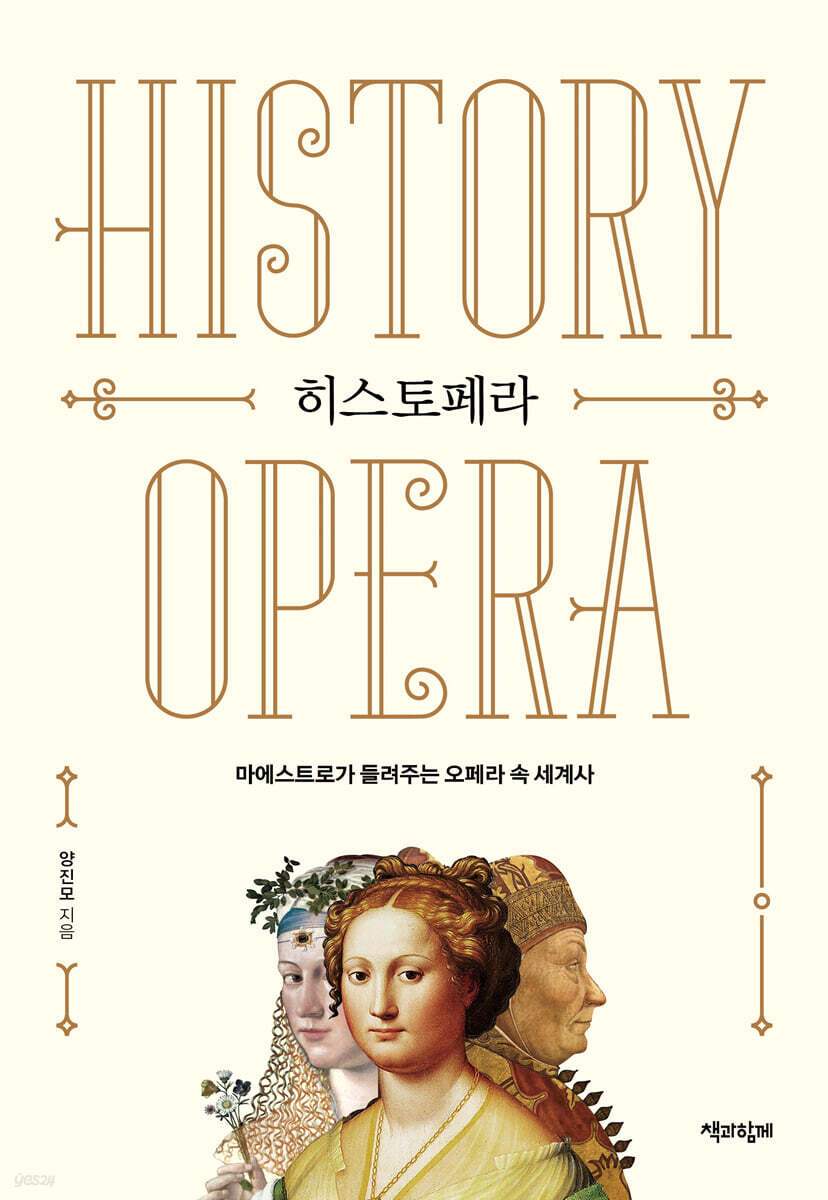
Book Introduction
“Art is a product of its time and a mirror of history.”
From Monteverdi's Orfeo to John Adams' Nixon in China
An invitation to a unique humanities class combining history and music.
Opera is one of the most complex and original art forms ever created by humans.
It is a comprehensive art form that combines music, literature, theater, fine art, and dance, combining the essence of each art form to express the depth of human experience.
In this way, opera has been an excellent tool for simultaneously exploring historical events and the inner workings of humanity.
Verdi's "Don Carlo" delicately depicts the religious conflict and power structure of Spain, while Puccini's "Madame Butterfly" seriously illuminates the cultural clashes and tragedies of the imperialist era.
These works go beyond simply recreating a period, deeply exploring how historical events impact individual lives and emotions.
As can be seen from the title, “Histopera,” which combines “history” and “opera,” this book is the result of a journey to examine the essential value of opera through the new perspective of history.
Author Yang Jin-mo, Korea's only opera conductor, selects ten operas with deep historical significance, including works he personally conducted, and delicately and elegantly unravels the historical background contained within them.
As you read this book, you will vividly experience how the spirit and turbulent history of each era, from the twilight of the Renaissance to the Cold War, permeate the art form of opera. Furthermore, you will realize that opera is not merely an art form; it can also be a humanistic tool for understanding and reflecting on history.
A special moment where history and music meet, let's embark on a unique humanities journey with 『Histopera』.
From Monteverdi's Orfeo to John Adams' Nixon in China
An invitation to a unique humanities class combining history and music.
Opera is one of the most complex and original art forms ever created by humans.
It is a comprehensive art form that combines music, literature, theater, fine art, and dance, combining the essence of each art form to express the depth of human experience.
In this way, opera has been an excellent tool for simultaneously exploring historical events and the inner workings of humanity.
Verdi's "Don Carlo" delicately depicts the religious conflict and power structure of Spain, while Puccini's "Madame Butterfly" seriously illuminates the cultural clashes and tragedies of the imperialist era.
These works go beyond simply recreating a period, deeply exploring how historical events impact individual lives and emotions.
As can be seen from the title, “Histopera,” which combines “history” and “opera,” this book is the result of a journey to examine the essential value of opera through the new perspective of history.
Author Yang Jin-mo, Korea's only opera conductor, selects ten operas with deep historical significance, including works he personally conducted, and delicately and elegantly unravels the historical background contained within them.
As you read this book, you will vividly experience how the spirit and turbulent history of each era, from the twilight of the Renaissance to the Cold War, permeate the art form of opera. Furthermore, you will realize that opera is not merely an art form; it can also be a humanistic tool for understanding and reflecting on history.
A special moment where history and music meet, let's embark on a unique humanities journey with 『Histopera』.
- You can preview some of the book's contents.
Preview
index
Entering
Chapter 1 The Twilight of the Renaissance and Monteverdi's Orfeo
Chapter 2: Venice, the Republic of the Sea and Verdi's "The Two Foscari"
Chapter 3 The Borgia Family's Dark Ambition and Donizetti's Lucrezia Borgia
Chapter 4: The Bloody Tudor Dynasty and Donizetti's Anna Bolena
Chapter 5: The Spanish Armada That Shook the Atlantic and Verdi's Don Carlo
Chapter 6: Tsarist Russia and Mussorgsky's Boris Godunov
Chapter 7: The Birth of Popular Sovereignty: The French Revolution and Giordano's Andrea Chénier
Chapter 8: Napoleon at the Peak of Power and Puccini's "Tosca"
Chapter 9: Western Powers' Colonial Invasion and Puccini's "Madame Butterfly"
Chapter 10: The Fierce Cold War and Adams's "Nixon in China"
References
Chapter 1 The Twilight of the Renaissance and Monteverdi's Orfeo
Chapter 2: Venice, the Republic of the Sea and Verdi's "The Two Foscari"
Chapter 3 The Borgia Family's Dark Ambition and Donizetti's Lucrezia Borgia
Chapter 4: The Bloody Tudor Dynasty and Donizetti's Anna Bolena
Chapter 5: The Spanish Armada That Shook the Atlantic and Verdi's Don Carlo
Chapter 6: Tsarist Russia and Mussorgsky's Boris Godunov
Chapter 7: The Birth of Popular Sovereignty: The French Revolution and Giordano's Andrea Chénier
Chapter 8: Napoleon at the Peak of Power and Puccini's "Tosca"
Chapter 9: Western Powers' Colonial Invasion and Puccini's "Madame Butterfly"
Chapter 10: The Fierce Cold War and Adams's "Nixon in China"
References
Into the book
Leonardo Bruni's "Homage to Florence," written by a representative humanist of the Renaissance era, is one of the important documents in Western political history that served as the theoretical foundation for republican politics, but behind it is also a history of the city's development that enumerates the various charms of Florence, the starting point of the Renaissance movement.
Bruni described in detail not only the geographical advantages of the city that developed in the hills of the Tuscan region, but also the grandeur of the city's architecture, the cleanliness of the streets, and the efforts of its ancestors to create such a great city.
Because the Florence where Bruni lived is not that different from the Florence of today, many travelers still make pilgrimages to Florence and are captivated by the city's charm.
--- From “Chapter 1│The Twilight of the Renaissance and Monteverdi’s Orfeo”
Machiavelli's meeting with Cesare gave him the opportunity to observe his ruling strategies firsthand.
Cesare focused on going beyond mere military victories and establishing a system for effectively governing the conquered territories.
He was adept at using brutality effectively when necessary, but also at strategically limiting it to win the support of the populace.
Machiavelli highly praised Cesare's ability and believed that a ruler need not simply be moral, but rather be able to use immoral means to achieve his goals.
--- From “Chapter 3│The Dark Ambition of the Borgia Family and Donizetti’s Lucrezia Borgia”
In Anna Bolena, Donizetti expressed Anna's inner conflict and agony through arias, chorus, and colorful orchestral performances, and effectively expressed the psychological changes of the characters through music.
For example, the songs expressing Anna's feelings of betrayal and despair expanded the amplitude of those emotions through complex musical compositions, moving beyond simple emotional descriptions.
This can be seen as an example of opera moving beyond being a simple medium for storytelling and expressing the psychology of emotions more precisely through music.
--- From “Chapter 4│The Blood-Stained English Tudor Dynasty and Donizetti’s Anna Bolena”
Don Carlo is a well-combined work of various forms, including arias, choruses, and duets, and the way music supports the development of the story and emotional lines allows us to glimpse Verdi's outstanding dramatic sense.
Each scene heightens the tension through musical transitions and contrasts, leading to a great emotional explosion at the climax.
The duet between Don Carlo and Rodrigo beautifully portrays the friendship and conflict between the two characters.
In particular, it well expresses the depth of emotion that unfolds in Act 2 (Act 5 version) with the line, “We will live together, we will die together,” and the two people’s voices are beautifully intertwined while clearly revealing their respective conflicts.
As Don Carlo's desperation contrasts with Rodrigo's calm conviction, their relationship becomes more complex, and their fates are foreshadowed.
--- From “Chapter 5│The Spanish Armada that shook the Atlantic and Verdi’s “Don Carlo””
The French Revolution was historically inevitable.
France's financial crisis, which is considered the biggest cause, was a silent time bomb that had been publicly known for a long time, and the amount was so enormous that no one could solve it.
When Louis XVI ascended the throne in 1774, the debt he had received from his predecessors had already reached 1.5 billion rubles, and by 1789, when the revolution broke out, this had tripled to 4.5 billion rubles.
In particular, the burden of national debt, which increased every year, was significant, with national debt repayment and interest payments accounting for more than 50 percent of total expenditures.
--- From “Chapter 7│The Birth of Popular Sovereignty: The French Revolution and Giordano’s Andrea Chénier”
France was ecstatic about Napoleon's victories.
Although Napoleon skipped the triumphal procession and returned secretly to Paris at dawn on July 2nd after his victory at Marengo, he was greeted by a huge crowd when he arrived at the Tuileries Palace.
Napoleon was forced to appear several times that night to the excited crowd.
The celebrations continued until July 14th, Bastille Day.
With his victory at the Battle of Marengo, Napoleon placed France in a position of undisputed leadership in Europe.
Until his downfall, he used his power to divide European nations among themselves, appointing his close associates as commanders-in-chief of the countries he conquered.
Bruni described in detail not only the geographical advantages of the city that developed in the hills of the Tuscan region, but also the grandeur of the city's architecture, the cleanliness of the streets, and the efforts of its ancestors to create such a great city.
Because the Florence where Bruni lived is not that different from the Florence of today, many travelers still make pilgrimages to Florence and are captivated by the city's charm.
--- From “Chapter 1│The Twilight of the Renaissance and Monteverdi’s Orfeo”
Machiavelli's meeting with Cesare gave him the opportunity to observe his ruling strategies firsthand.
Cesare focused on going beyond mere military victories and establishing a system for effectively governing the conquered territories.
He was adept at using brutality effectively when necessary, but also at strategically limiting it to win the support of the populace.
Machiavelli highly praised Cesare's ability and believed that a ruler need not simply be moral, but rather be able to use immoral means to achieve his goals.
--- From “Chapter 3│The Dark Ambition of the Borgia Family and Donizetti’s Lucrezia Borgia”
In Anna Bolena, Donizetti expressed Anna's inner conflict and agony through arias, chorus, and colorful orchestral performances, and effectively expressed the psychological changes of the characters through music.
For example, the songs expressing Anna's feelings of betrayal and despair expanded the amplitude of those emotions through complex musical compositions, moving beyond simple emotional descriptions.
This can be seen as an example of opera moving beyond being a simple medium for storytelling and expressing the psychology of emotions more precisely through music.
--- From “Chapter 4│The Blood-Stained English Tudor Dynasty and Donizetti’s Anna Bolena”
Don Carlo is a well-combined work of various forms, including arias, choruses, and duets, and the way music supports the development of the story and emotional lines allows us to glimpse Verdi's outstanding dramatic sense.
Each scene heightens the tension through musical transitions and contrasts, leading to a great emotional explosion at the climax.
The duet between Don Carlo and Rodrigo beautifully portrays the friendship and conflict between the two characters.
In particular, it well expresses the depth of emotion that unfolds in Act 2 (Act 5 version) with the line, “We will live together, we will die together,” and the two people’s voices are beautifully intertwined while clearly revealing their respective conflicts.
As Don Carlo's desperation contrasts with Rodrigo's calm conviction, their relationship becomes more complex, and their fates are foreshadowed.
--- From “Chapter 5│The Spanish Armada that shook the Atlantic and Verdi’s “Don Carlo””
The French Revolution was historically inevitable.
France's financial crisis, which is considered the biggest cause, was a silent time bomb that had been publicly known for a long time, and the amount was so enormous that no one could solve it.
When Louis XVI ascended the throne in 1774, the debt he had received from his predecessors had already reached 1.5 billion rubles, and by 1789, when the revolution broke out, this had tripled to 4.5 billion rubles.
In particular, the burden of national debt, which increased every year, was significant, with national debt repayment and interest payments accounting for more than 50 percent of total expenditures.
--- From “Chapter 7│The Birth of Popular Sovereignty: The French Revolution and Giordano’s Andrea Chénier”
France was ecstatic about Napoleon's victories.
Although Napoleon skipped the triumphal procession and returned secretly to Paris at dawn on July 2nd after his victory at Marengo, he was greeted by a huge crowd when he arrived at the Tuileries Palace.
Napoleon was forced to appear several times that night to the excited crowd.
The celebrations continued until July 14th, Bastille Day.
With his victory at the Battle of Marengo, Napoleon placed France in a position of undisputed leadership in Europe.
Until his downfall, he used his power to divide European nations among themselves, appointing his close associates as commanders-in-chief of the countries he conquered.
--- From “Chapter 8│Napoleon at the Peak of Power and Puccini’s “Tosca””
Publisher's Review
From the conductor's perspective
A turbulent world history on the opera stage
How did this novel attempt, "Histopera," which combines history and opera, come about? Behind its origins lies the author's life, growing up in a unique environment where history and art coexist.
My grandfather, a historian and aesthetician, had a study full of books on history and art, and my conversations with him were always filled with stories about how history and art intersect.
My father was also a passionate classical music lover, so our home was always filled with music. He taught me that I should go beyond simply listening to music and look into the background of the piece's creation, the composer's life, and the context of the times.
The author's childhood experiences have been instrumental in forming his unique and profound perspective on opera and history.
Moreover, the author holds a firm belief that opera is an art form that embodies human emotions, desires, sacrifices, and love, and that it is a genre through which history can be experienced and understood most sensually.
This belief is naturally incorporated throughout the book, enriching the interpretation of Histopera.
What is most special about this book is the author's perspective.
As a conductor, my experience on stage adds a vivid sense and depth to my analysis of each piece.
For example, he vividly portrays the creative spirit and musical innovation of the Renaissance that he personally experienced while conducting “Orfeo,” the intense emotions of the French Revolution that he encountered in “Andrea Chénier,” and the turmoil and true love story of the Napoleonic era that were revived in “Tosca.”
Moreover, it meticulously examines the opera's structure, musical form, stage direction, and even the language of the libretto, persuasively demonstrating how historical background permeates art.
This is an interpretation that goes beyond simple commentary and harmonizes the artist's intuition and humanistic insight.
And at the end of each chapter, the author personally recommends albums and video content, allowing readers to experience the emotions of opera more deeply.
In addition, the QR code is designed to link directly to a YouTube video, organically connecting reading and appreciation.
Ten carefully selected operas
Scenes of power, love, and revolution recorded through music
This book introduces ten operas.
We have carefully selected operas that have been mainly introduced in Korea, as well as operas that are not widely known but are based on important historical events.
First, Chapter 1, 'The Twilight of the Renaissance and Monteverdi's Orfeo', explains the birth and musical style of Orfeo, which is considered the first full-fledged opera born against the backdrop of the humanistic spirit and artistic innovation of the late Renaissance, along with the Medici family of Florence and the development of Renaissance art and music.
Chapter 2, 'Venice, the Republic of the Sea, and Verdi's 'The Two Foscari', deals with the tragic fate of a father and son based on the political system of the Republic of Venice and the power struggles of the nobles.
In this work, Verdi musically depicts the agony of human sacrifice to power, and presents a point of contact between the historical significance of the city of Venice and personal narrative.
Chapter 3, 'The Dark Ambition of the Borgia Family and Donizetti's Lucrezia Borgia', illuminates the power and conspiracy of the Borgia family, an infamous noble family in Renaissance Italy, and Lucrezia's inner suffering.
Lucrezia in the opera, who shows human emotions even in a cruel reality, is reinterpreted as a complex character, breaking away from the image of a simple villainess.
And in Chapter 4, 'The Bloody Tudor Dynasty of England and Donizetti's Anna Bolena', the power struggle of the Tudor Dynasty is depicted through the fate of Anna, who was sacrificed in the conflict between royal power, love, and religious reform.
In this work, composer Donizetti poignantly depicts the tragedy of a woman who does not lose her dignity even in extreme situations.
Next, Chapter 5, 'The Spanish Armada that Shook the Atlantic and Verdi's Don Carlo', tells the story of the love triangle between King Philip II, Crown Prince Carlo, and Queen Elizabeth against the backdrop of political tension and religious conflict in 16th-century Spain.
This work complexly explores the religious inquisition, dictatorial power, and the inner anguish of human nature, and the author also sheds light on the Spanish Armada and the Battle of Lepanto, which were the historical backgrounds of the time.
Chapter 6, 'The Age of Tsarism in Russia and Mussorgsky's Boris Godunov', deals with the political isolation of Russian Tsar Boris Godunov, the anxiety of the people, and the instability of power.
Unlike Western opera, Mussorgsky expressed the collective psychology and historical reality of the Russian people through realistic music, and showed a unique national color.
Next, Chapter 7, 'The Birth of National Sovereignty, the French Revolution, and Giordano's 'Andrea Chénier'' is a work that sings of freedom, equality, love, and sacrifice through the life and death of the poet Chénier amidst the fervor of the French Revolution.
It beautifully portrays the dramatic tension between the clash of terror and idealism, and the intersection of popular aspirations and individual tragedy.
We will also look at how the French Revolution, which serves as the background for the work, occurred.
Chapter 8, 'Napoleon at the Peak of Power and Puccini's Tosca', introduces the political intrigues that unfold in Rome during the Napoleonic Wars and the tragic fates of artists and lovers.
In this work, Puccini portrayed an artist's struggle against power and sacrificial love with realistic music, and it is characterized by extreme tension and emotional explosion.
Chapter 9, 'Colonial Invasion by Western Powers and Puccini's Madame Butterfly', deals with the tragic love story between an American sailor and a Japanese woman during the imperialist era of the late 19th century.
This work is an opera that artistically melts colonial perspectives and cultural clashes, and the fate of Madame Butterfly contrasts Western fantasies about Eastern women with reality.
Finally, Chapter 10, 'The Fierce Cold War and Adams's 'Nixon in China', is a modern opera based on US President Nixon's visit to China in 1972.
Based on real people, this work explores the theatricality of politics, cultural misunderstandings, and the restructuring of world order, and presents a unique attempt to combine minimalist music with historical imagination.
Penetrating emotions and history
Discovering Today in the Language of Art
The works introduced in this book are not simply operas.
It is a portrait of an era that records the aspirations and fears, the loves and struggles of each era, and carries a message that still holds true for us today.
The author traces the intersection of opera, history, life, and artistic journeys, delicately unraveling the human emotions and events imbued in the melodies.
Opera is not just an art to be heard, but a memory of the conflicts, choices, losses, and salvation that humans have experienced.
The melodies and lines of each piece vividly revive the emotions of the time, and we are able to reflect on ourselves today through the joys and sorrows of the characters on stage.
"Histopera" closely connects the reverberations of emotion with historical context, profoundly showing how art speaks to us across time.
The author hopes that this book will provide readers with an opportunity to discover a new charm of opera and to reflect on the present through stories from the past.
Like that wind, 『Histopera』 will be an interesting and friendly guide for those new to opera, and for those familiar with it, a lens of insight that sheds new light on the meaning hidden behind the familiar stage.
Especially for readers who are curious about how the various layers of the humanities, such as history, politics, philosophy, art, and literature, are fused and realized within the complex art form of opera, 『Histopera』 will be the best choice.
A turbulent world history on the opera stage
How did this novel attempt, "Histopera," which combines history and opera, come about? Behind its origins lies the author's life, growing up in a unique environment where history and art coexist.
My grandfather, a historian and aesthetician, had a study full of books on history and art, and my conversations with him were always filled with stories about how history and art intersect.
My father was also a passionate classical music lover, so our home was always filled with music. He taught me that I should go beyond simply listening to music and look into the background of the piece's creation, the composer's life, and the context of the times.
The author's childhood experiences have been instrumental in forming his unique and profound perspective on opera and history.
Moreover, the author holds a firm belief that opera is an art form that embodies human emotions, desires, sacrifices, and love, and that it is a genre through which history can be experienced and understood most sensually.
This belief is naturally incorporated throughout the book, enriching the interpretation of Histopera.
What is most special about this book is the author's perspective.
As a conductor, my experience on stage adds a vivid sense and depth to my analysis of each piece.
For example, he vividly portrays the creative spirit and musical innovation of the Renaissance that he personally experienced while conducting “Orfeo,” the intense emotions of the French Revolution that he encountered in “Andrea Chénier,” and the turmoil and true love story of the Napoleonic era that were revived in “Tosca.”
Moreover, it meticulously examines the opera's structure, musical form, stage direction, and even the language of the libretto, persuasively demonstrating how historical background permeates art.
This is an interpretation that goes beyond simple commentary and harmonizes the artist's intuition and humanistic insight.
And at the end of each chapter, the author personally recommends albums and video content, allowing readers to experience the emotions of opera more deeply.
In addition, the QR code is designed to link directly to a YouTube video, organically connecting reading and appreciation.
Ten carefully selected operas
Scenes of power, love, and revolution recorded through music
This book introduces ten operas.
We have carefully selected operas that have been mainly introduced in Korea, as well as operas that are not widely known but are based on important historical events.
First, Chapter 1, 'The Twilight of the Renaissance and Monteverdi's Orfeo', explains the birth and musical style of Orfeo, which is considered the first full-fledged opera born against the backdrop of the humanistic spirit and artistic innovation of the late Renaissance, along with the Medici family of Florence and the development of Renaissance art and music.
Chapter 2, 'Venice, the Republic of the Sea, and Verdi's 'The Two Foscari', deals with the tragic fate of a father and son based on the political system of the Republic of Venice and the power struggles of the nobles.
In this work, Verdi musically depicts the agony of human sacrifice to power, and presents a point of contact between the historical significance of the city of Venice and personal narrative.
Chapter 3, 'The Dark Ambition of the Borgia Family and Donizetti's Lucrezia Borgia', illuminates the power and conspiracy of the Borgia family, an infamous noble family in Renaissance Italy, and Lucrezia's inner suffering.
Lucrezia in the opera, who shows human emotions even in a cruel reality, is reinterpreted as a complex character, breaking away from the image of a simple villainess.
And in Chapter 4, 'The Bloody Tudor Dynasty of England and Donizetti's Anna Bolena', the power struggle of the Tudor Dynasty is depicted through the fate of Anna, who was sacrificed in the conflict between royal power, love, and religious reform.
In this work, composer Donizetti poignantly depicts the tragedy of a woman who does not lose her dignity even in extreme situations.
Next, Chapter 5, 'The Spanish Armada that Shook the Atlantic and Verdi's Don Carlo', tells the story of the love triangle between King Philip II, Crown Prince Carlo, and Queen Elizabeth against the backdrop of political tension and religious conflict in 16th-century Spain.
This work complexly explores the religious inquisition, dictatorial power, and the inner anguish of human nature, and the author also sheds light on the Spanish Armada and the Battle of Lepanto, which were the historical backgrounds of the time.
Chapter 6, 'The Age of Tsarism in Russia and Mussorgsky's Boris Godunov', deals with the political isolation of Russian Tsar Boris Godunov, the anxiety of the people, and the instability of power.
Unlike Western opera, Mussorgsky expressed the collective psychology and historical reality of the Russian people through realistic music, and showed a unique national color.
Next, Chapter 7, 'The Birth of National Sovereignty, the French Revolution, and Giordano's 'Andrea Chénier'' is a work that sings of freedom, equality, love, and sacrifice through the life and death of the poet Chénier amidst the fervor of the French Revolution.
It beautifully portrays the dramatic tension between the clash of terror and idealism, and the intersection of popular aspirations and individual tragedy.
We will also look at how the French Revolution, which serves as the background for the work, occurred.
Chapter 8, 'Napoleon at the Peak of Power and Puccini's Tosca', introduces the political intrigues that unfold in Rome during the Napoleonic Wars and the tragic fates of artists and lovers.
In this work, Puccini portrayed an artist's struggle against power and sacrificial love with realistic music, and it is characterized by extreme tension and emotional explosion.
Chapter 9, 'Colonial Invasion by Western Powers and Puccini's Madame Butterfly', deals with the tragic love story between an American sailor and a Japanese woman during the imperialist era of the late 19th century.
This work is an opera that artistically melts colonial perspectives and cultural clashes, and the fate of Madame Butterfly contrasts Western fantasies about Eastern women with reality.
Finally, Chapter 10, 'The Fierce Cold War and Adams's 'Nixon in China', is a modern opera based on US President Nixon's visit to China in 1972.
Based on real people, this work explores the theatricality of politics, cultural misunderstandings, and the restructuring of world order, and presents a unique attempt to combine minimalist music with historical imagination.
Penetrating emotions and history
Discovering Today in the Language of Art
The works introduced in this book are not simply operas.
It is a portrait of an era that records the aspirations and fears, the loves and struggles of each era, and carries a message that still holds true for us today.
The author traces the intersection of opera, history, life, and artistic journeys, delicately unraveling the human emotions and events imbued in the melodies.
Opera is not just an art to be heard, but a memory of the conflicts, choices, losses, and salvation that humans have experienced.
The melodies and lines of each piece vividly revive the emotions of the time, and we are able to reflect on ourselves today through the joys and sorrows of the characters on stage.
"Histopera" closely connects the reverberations of emotion with historical context, profoundly showing how art speaks to us across time.
The author hopes that this book will provide readers with an opportunity to discover a new charm of opera and to reflect on the present through stories from the past.
Like that wind, 『Histopera』 will be an interesting and friendly guide for those new to opera, and for those familiar with it, a lens of insight that sheds new light on the meaning hidden behind the familiar stage.
Especially for readers who are curious about how the various layers of the humanities, such as history, politics, philosophy, art, and literature, are fused and realized within the complex art form of opera, 『Histopera』 will be the best choice.
GOODS SPECIFICS
- Date of issue: June 25, 2025
- Page count, weight, size: 360 pages | 588g | 145*210*19mm
- ISBN13: 9791194263456
- ISBN10: 1194263453
You may also like
카테고리
korean


korean

![GQ KOREA Mark (Monthly): December [2025]](http://librairie.coreenne.fr/cdn/shop/files/8ef265dbbfbf186523ed75ba7319009d.jpg?v=1765340328&width=3840)


